That’s just the easy way to say it. The title David Brooks actually gave to his column in the New York Times is “Livin’ Bernie Sanders’ Danish Dream” but I think the title I used captures Brooks’ message more clearly. You can see Brooks article here.
 In this piece, I would like to contrast what Brooks likes about America [1] with what he is willing to “pay” to have it. “Pay” is in quotation marks because for the most part, it isn’t Brooks who will do the paying. So here is another way to say it. Brooks thinks you should like the things he likes about America so much that you will be willing to continue to pay the price of keeping them—and it really is you, not Brooks, who will be paying the price.
There is another way of looking at this, of course. I am going to be relying on information that I found first in Richard Wilkinson’s TED lecture. If you want to invest a few minutes in understanding why Brooks’ cozy attitude toward “America” is so perverse, this lecture will do the job for you. Go to TED.com and enter the search term “Wilkinson.” [2]
Wilkinson begins with the radical and distorting inequality in the United States and looks at the conditions that follow it statistically. It’s a powerful argument because these data simply don’t line up along the line of rich states and poor states. It is the relatively equal (egalitarian) states and the relatively unequal (inegalitarian) states that fit the data.

This chart is set up so that the most unequal states (“highest in inequality” are furthest to the right. You can find the U. S. way up there in the top right corner. This particular chart is calibrated on the left margin in infant deaths. The higher we are in the chart, the worse off we are. We are the only nation even approaching 7–that’s seven infant deaths per 1000 live births. Denmark is relatively high for the social democracies of Europe. I think it would be really nice to be below the line, like Germany, the Netherlands, France, Norway, and Sweden (at barely above 3). When I talk about “being willing to pay the price” for Brooks’ coziness about “America,” this is part of the price I am talking about.
Brooks
I think it was that coziness that first snagged my attention. You have the hyperlink to the whole column so I’ll just pick a few of the coziest.
There’s nothing wrong with [Denmark]. It’s just not the homeland we’ve always known.
First, “homeland” is the affection-word you use for the country of your birth. It’s “the Fatherland” or “Mother Russia.” [3] It’s “the South” with “our peculiar institution.” That’s the term by which slavery was known in the South before the Civil War. “Homeland” is not a word calculated to invite thought.
Second, “what we’ve always known” is backward-looking. What if we are on the brink of becoming something extraordinary, something much closer to our aspirations than our political institutions have allowed us to be? Would we really choose “what we’ve always known” to “what we could become if we worked together?” Really?
Here’s note of reality for you. The United States’ rank in the list of nations who assess how happy they are is #69. You can download the whole report if you’d like here.
The hyperlinked source is a lot of work. The Wikipedia chart is easier. Google “rank order happiness of nations” and pick the first one listed. Here’s the short version. Denmark is #3. All the northern European social democracies are in the top 10. We are at #69. Hello?That is two below Russia; 10 below Uzbekistan; 20 below Ecuador; 30 below the Czech Republic; 40 below France; and 50 below Belgium.
To me, that makes “the homeland we’ve always known” look like we could do better if we tried. Of course, happiness isn’t everything and, in fact, Wilkinson doesn’t include it in his report. That was just an appetizer.
Brooks
There has always been a broad consensus that a continent-size nation like ours had to be diverse and decentralized, with a vibrant charitable sector and a great variety of spending patterns and lifestyles.
I think I would put it differently. There has always been a broad consensus that we want to make decisions for ourselves, rather than having them made way off in Washington. We don’t really value “diversity;” we value autonomy. But we have been willing to give up some of that autonomy to gain other things we value. We traded away some autonomy for social justice (civil rights); for an economic safety net (social security); and for protection against terrorists (airport security provisions).
The question is always “What could we get if we were willing to allow more decisions that benefit the society as a whole? Is it worth letting go of some local control to gain those benefits for the whole society?” People will say Yes or No as their inclinations move them, but to focus only on what we would give up, as Brooks does, without even considering what we would get in return, is not a reasonable way to ask the question. It is, in fact, a bad question–and that’s not something I am often willing to say about a question.
We do have a “vibrant charitable sector” and we desperately need one because if those sources were actually taxed, we could provide services for citizens as a matter of right as they do in…let’s see…Denmark. All over northern Europe, actually. They do the same in Germany and for the same reason. “Charity” turns out not to be something you can count on and people who are poor and hungry and homeless and under-skilled really do need something they can count on. Charity is nice, but it isn’t getting the job done. I think even Brooks would concede that much.
What could we get if we were willing to tax ourselves—not just the rich, as Brooks is careful to point out, but the middle class as well ?[4] We could do some wonderful things. Here’s a gesture toward “middle class,” just so we don’t get lost. The three middle bars on this table account for 46.49% of aggregate income in the U. S. That is a plausible understanding of “middle class.”
And if you look at what is happening to the gold colored bars across the dates shown, you will see that everything is headed down. The middle fifth of the distribution had 17.30% of the aggregate income in 1967. By 1979, that was down to 16.80%. And by 2010, it was down to 14.60%. And I am quite sure it is still going down. In fact, you might notice that all the colors are going down–except, of course, for purple, which keeps going up

We could be a more egalitarian (less unequal) society if we chose to. We could limit incomes, as Japan has. That would do it. Or we could redistribute them through taxation as Denmark has. That would do it, too. Would it be worth it? What would we get for that?

Again, begin by finding the United States. We are at the intersection of High (lots of income inequality) and Worse (bad outcomes). You can read them as well as I can. What would you like to have? Fewer homicides? I would too. Denmark, by the way–bad Denmark to which and Un-American Bernie Sanders aspires–is down at the other end of the chart at the intersection of Low (not so much inequality) and Better. What else? Social mobility? More at the lower left. Life expectancy? More at the lower left. Trust? There’s vastly more in Denmark.
Do you really think that Americans, asked to choose the outcomes they would prefer for their country, wouldn’t say, “Sure, we’d like to have more homicides and more social mobility and higher life expectancies, and more trust. Who wouldn’t?” I think that’s what they would say. It’s what I say, too.
But we don’t get that question. We get names like Socialism, which a lot of Americans think refers to Soviet-style dictatorships. Where do you suppose they got that idea? The presidential candidate who says it would be great to move in that direction is told, as nicely as possible–David Brooks is very polite–to move to Denmark, where he can have all he wants.
[1] When we are talking emotionally, as in “land of the free and home of the brave” we say “America.” When we are talking politically, we say, “The United States.” That also distinguishes Democratic presidents from Republican presidents, by the way. The last line of the State of the Union is “God bless America” if the president is Republican and “God bless the United States of America” if the president is a Democrat. The single recent exception is the time Barack Obama ended with “God bless these United States of America,” an exception for which I have no explanation at all.
[2] The whole argument is in book form as well. See Richard Wilkinson and Kate Pickett’s book The Spirit Level: Why Greater Equality Makes Societies Stronger. A “spirit level,” by the way is a carpenter’s level, where you keep the bubble between the lines.
[3]There is a World War II joke that fits here. Hitler decided to attack the Soviet Union, only to discover that he had attacked Mother Russia by mistake.
[4] “Middle class” is a notoriously inexact term, but recently, it has been capped at $250,000. You really aren’t “middle” if you are making more than $250,000 a year.
 opponents rather than enemies. You can make one particular characteristic of them the vital and significant difference rather than all the characteristics of them. [2]. You can oppose them because you are competitors for a common and scarce resource.
 Sarah, the principal character in this scene, is an academic and a political activist, but she is disguised as a fundamentalist Muslim woman, which means that she is under the direct authority of the submission police. She is at the Good Woman net café to send a coded message and she is hiding in a chador. (I hope she is better disguised than this Barbie.) She knows how to be “a good woman” as we will see; in fact, her answers are so orthodox that they bring suspicion on her.
 “flaunting her hair.” And flaunting her hair suggests to Black Robe that she is representing herself as “a Catholic whore,” [5] rather than “a devout Muslim woman.”
 duties. Had he been dutiful, she would have been obedient in thought, word, and deed.
 because he justified it to me one day when I was visiting. “These stories,” he said, “are deeply philosophical.” [1]
 Now we cut to a third segment in which a moderator sits in an easy chair, taking occasional sips of coffee from a mug on the little round table in front of him. He is flanked by two philosophers. (This picture shows a different table, but otherwise it is what I had in mind.) Their job is to treat the episode and the audiences’s reaction to the episode as the familiar conflict between consequentialist and deontological ethics. Deontological ethics can be borne, they agree, by societies where there is fundamental agreement on the rules underlying social interaction, but that kind of agreement is not present in the episode from which this instance is drawn. That argues for the priority of consequentialist ethics—Laura was right to lie to her husband. But, says the deontologist, the real cost will be seen more clearly in future episodes.
 I studied “episodes” like whether the common room of the dorm was “too loud” for people trying to study and whether a girl in the dorm was taking advantage of her roommate (the roommate was the one I was working with). I showed, to the satisfaction of my committee, that the cognitive and emotional routines by which these events were handled were politically significant in two important ways.
 etter of it and left. Something will have to happen for him to re-turn, to be re-conciled, to be brought back to the table and back into discussion with the others. This is a table that keeps showing up. Interesting.
 The New York Times headline warns of “a lasting split.” In my metaphor, that means that reconciliation is either not attempted, or that it fails. So…who is at the table? The short answer is that the Republican establishment is at the table. They are the people who told angry Republican populists to swallow their emotions and vote for John McCain and Mitt Romney. Here are a few descriptions of this group from the Times article.
 Laura Ingraham, a conservative talk-show host, says, “All the things the voters want have been shoved off to sidelines by Republican leaders…and the voters [Republican primary election voters] finally have a couple of people here who are saying this table has to be turned over.”

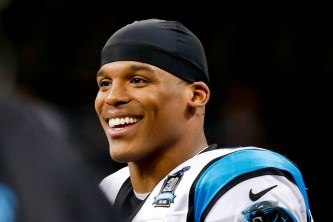 man. He is very demonstrative during games, both on the sidelines and on the field. The manner of his demonstrative actions is very much like some other black athletes.
 popularity of the gesture spreads. After black athletes have established it as black and therefore “cool”—I’m sure that isn’t the current term for what I am talking about—then white athletes take it up. You could watch end zone celebrations over the last 20 years and just watch it spread. Even linemen celebrate now. And after them, white athletes, then black and white non-athletes. Eventually, old white women in nursing homes can be seen exchanging high fives and fist bumps, gestures that were invented as symbols of black solidarity.
 nator of some as well. Here is his famous Superman pose. My own expertise does not extend to first uses. So Cam Newton does all these things and he is black and so what could possibly be wrong with saying that he acts ‘the way blacks act?”
 Let’s imagine for a moment that the issue before us is not race, simply, but some unholy amalgam of race and class and let’s use “working class” and “middle class” as our category names. Those are crude categories, but they allow us to ask some simpleminded and useful questions. What percent of successful trial lawyers are black? What percent of successful CEOs are black? This is Ursula Burns, who was CEO of Xerox at the time. Black enough? What percent of tenured faculty are black? What percent of NASA engineers and scientists are black? I don’t know the answers to any of those and frankly I don’t care.
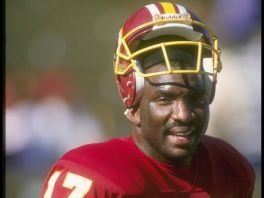 Newton is not the first black Superbowl quarterback, of course. The most recent being Seattle’s Russell Wilson of the Seahawks and we could go back to Doug Williams of the Washington Redskins, the first black Superbowl quarterback, in 1988. But they weren’t black enough for the commentators I was listening to. The first explanation they used was that Williams “felt the pressure of the system” (to act “professional” rather than “black”). But both commentators knew that wasn’t true of Doug Williams. Of course, they said (second explanation) that wasn’t really what he was like anyway. He looked at the game and his place in it “in a more professional manner.” Their words, not mine.
 h you wisely rejected. Here is why B was not possible. C might have saved the victim, but you would have lost three members of your squad. Continuing to BELIEVE that you could have done something is wrong and you will not return to wholeness until you give it up.”
 all. I don’t have any sports experiences that approach this kind of bonding intensity. Because I have lived a long time, I have fought in quite a few theaters of operation. If they gave awards for wounds suffered in these operations, I would have quite a collection. I know why there is a scar on my left shoulder and on my left knee, for instance. I wouldn’t want to say that living is combat, but my experience is that living includes combat and combat produces casualties.
 I don’t have any of those problems N—Q to the extent my friends have them and I don’t have problem M at all. My paint job has been chipped here and there, but I can still drive the car. If I can’t come up with a good answer to the question Why me? (and I can’t) I could very well feel guilty about it. The fuel for guilt is there and I have already expressed my doubts about eliminating the fuel and a way of putting out the fire. You will likely need that fuel for some other task.


 whoever titled our pamphlet, “Going Home….” then we have another set of questions to ask. If “home” is “where I belong,” as in the John Denver imagery, what if the home where I belong is hideously bad? Let’s start on the wrong side of the tracks for once. Tell me what this means. This is Matthew 25:41: “Go away from me…to the eternal fire prepared for the devil and his angels.”
 relationship; it is “being in relationship with God,” (whatever that means) that is the goal. [4] God created us for relationship with Himself. We chose to trust our own judgment rather than to obey God and so set ourselves up as an alternative form of life. We called it “autonomy,” not understanding that it was, in fact, rebellion. That’s the story of our separation from God as the book of Genesis gives it. God has continued to pursue us, to court us; refusing to take NO as an answer because God knows what NO means, and God knows that we do not. So we continue to have opportunities to say YES; we may still choose a relationship of love and trust and obedience, which are the the meaning of “heaven” that is based on relationship.
 ut the NFL’s suppression of information about concussions. It is about capitalism and its disregard for the costs incurred by the workers. [2] It is about the aspirations of a young Nigerian doctor to continue to be Nigerian (Igbo, really) while becoming American. It is about the courage of a public servant enduring physical harassment and retaliation by his professional colleagues and vulnerability to punishment by the law—and still continuing to offer his adopted homeland the gift he has to offer.
 Let’s pick up Dr. Omalu at the point where he “meets”—that’s Omalu’s word—Mike Webster. They wheel the body of Hall of Fame Steeler Center Mike Webster into the autopsy room for Omalu to examine. Everyone but Omalu is very conscious of the honor that is being bestowed upon them. Why is Omalu not conscious of it? Well, he has never heard of Mike Webster. Or the NFL Hall of Fame. He doesn’t know what a “center” is. He doesn’t even know what a Steeler is. In Allegheny County, Pennsylvania!