
Of course, they don’t tell the truth either.
The New York Times/CBS poll came out last week. I discarded the rest of my electronic New York Times and called up the poll. What do these 1,252 potential voters have to tell us about how things are? [1] Particularly, what do they have to tell us about Democratic and Republican candidates and the current look of the general election in November?
Reading Polls
Maybe just a note about these polls would be in order. Polling is a science. The mathematics alone is way past my understanding and the people who study polls seem to agree about the math. Interpreting polls is not a science. At the most favorable, you can say it is an art but there are less inspiring things it can be called.
 I’ll make two brief points here. The first is that these questions [Do you approve of the way Barack Obama is handling his job as President?] may seem simple-minded, but a good deal can be learned from the fact that they ask the same question in the same form year after year. [2] So in these polls, I can look at the responses to this question from from February 2—4, 2009 to this most recent one. Sometimes the fluctuation is the most interesting thing.
The second point is that I don’t read polls to see what they have to say. I have questions in mind and I read polls to find the answers to the questions I am asking. When I saw how low the “trust in Hillary” numbers were, I went back to see when they were higher. “Why are they so low RIGHT NOW?” is the question I was asking. The poll was not conducted to deal with that question, although it provies all the information.
OK. Now to the poll itself.

First, this isn’t really a good time to be president. Most people (61%) feel that things in this country [3] are not going in the right direction, but rather that things have pretty seriously gotten off on the wrong track. It would be nice, if you were thinking of being the head of the executive branch of the federal government to think that your people had hope; to find that half or more thought that things were generally going in the right direction. To do that, you would have to go back to March and April 2003. It has been less that 50% percent ever since then.
Or, if things are not going in the right direction and you still wanted to be the president, it would be nice if there were things you could do to put things back on the right track. But probably there is nothing an executive can do.
In April 2015, I wrote an essay called “Hillary’s Last Chance to Prepare for 2020.” In it, I
imagined that Hillary might be elected in 2016, in part because she was not seen to be  responsible for the poor showing of the economy. The economy is still going to be bad in 2020, according to my argument, and President Hillary is going to be swept away by the popular anger UNLESS she provides, by 2020, when she would be up for re-election, someone else for people to be angry at.
People are not going to say that things are going in the right direction when their own financial circumstances get worse and worse and particularly as inequality gets worse and worse. The president, no matter who it is, will not be able to change that trend so, I argued in April of last year, the only thing a president can affect is who gets blamed for it. So I argued that Hillary needed to start immediately because once she’s President in 2017, it’s going to be too late.
So I learned from the answers to Question 2 that things are headed in the wrong direction according to 61% of the people. I supplemented that by my own theories about why things are so tight economically and why they are going to continue to get worse and it left me wondering why anyone would want to be elected president this year.
That is especially true if you are a Republican candidate. The people in this survey think of the Republican party as “divided” (88% to 10%); they think the campaign is “negative” (58% to 10%); and they are “embarrassed” about the campaign (60% rather than “proud” (27%). I don’t think that looks good for whoever gets the Republican nomination, particularly if there is a fight at the convention in Cleveland and particularly if it gets ugly in public at the convention.
 There is not that same circus atmosphere on the Democratic side, but the difficulties of a Democratic candidate are already plain—people don’t know Bernie and they don’t trust Hillary. The favorable opinion about Hillary—Is your opinion of Hillary Clinton favorable—peaked in 2008 and 2009 during and just after her run for the Democratic nomination. She was above 50% approval for five polls in a row: that’s from September of 2008 until February of 2013. Something happened—the Benghazi controversy, probably—which resulted in here approval rating plummeting from 57% to 26% in just a little over a month. She has been, with a single exception, in the 20s and 30’s ever since. She was at 31% in this most recent poll. “Not favorable” is now over 50%. [4]
I don’t trust Bernie Sanders’ numbers because the time has been so short and the numbers so volatile, but for what it is worth, 84% of the sample say he is “honest and trustworthy” and only 11% say he is not.
For Sanders, the Achilles heel is “realism.” Only 56% think Sanders is “realistic.” The question is: From what you’ve heard or read, generally, would you describe Bernie Sanders’s policy proposals as realistic or not realistic? And 38% say his proposals are not realistic. That compares to the 78% who say Hillary’s proposals are “realistic.”
So on the Democratic side, people don’t trust Hillary and they think Bernie is a dreamer. Now you might ask whether this “don’t trust Hillary” feeling is one of the great achievements of 30 or so years of Republican pot-banging. Of course it is. But the electoral question is not whether Hillary is trustworthy; it is whether people FEEL (I didn’t say THINK) she is trustworthy. She needs to show that she is—I have no idea what would do that—and Bernie needs to show that his policies could actually be enacted. I have no idea how he would do that either, but I think I would start by urging every potential voter to go see Michael Moore’s new movie, Where to Invade Next. (I posted a review of sorts on March 21.)
I began by saying that things were “volatile.”This morning, The Donald “revoked” his pledge to support whoever the Republican Convention chooses. Amazing!
[1] This number included 362 Republican primary voters and 388 Democratic primary voters.
[2] If you run across a question that says, “How is PRESIDENT OBAMA handling foreign policy?” you are reading a poll put out by the Democratic party. The Times/CBS polls are exactly the same, word for word, decade after decade. And they don’t say “President Obama.” Ever.
[3] I will put the actual language of the question in italics, as here.
[4] The “trustworthy” numbers—do you think Hillary Clinton is honest and trustworthy—are a little better: 56% say she is and 40% say she is not. All the Republican candidates are at (Cruz) or below 40%. Kasich is at 16%!
 I think that is why we say “He is risen.” But that’s not the way I say it when I have a chance to say it by myself. I say “He is risen” along with everyone else, but I mean, “He was raised.”
 I think C. S. Lewis comes at this question best when he comes at it indirectly. In The Lion, the Witch, and the Wardrobe, he includes a scenesin which Aslan, the lion, who is the Christ-figure, is humiliated, tortured, and killed on a stone Table. And then one in which he is alive again. The witch figured she had Aslan dead to rights because he gave up his life to save the life of a traitor. But, Aslan says, the next morning, “There was a deeper magic that the witch did not know. She did not know that when a willing victim was killed in a traitor’s stead, the Table would crack and Death itself would start working backwards.”
 eturn to life of the story they had thought, up until the death of Jesus, they were part of. When he died, they thought they must have been mistaken. Then when they experienced him again, they said first, “So it was all true!.” Then they said, “Look, these scriptures—as we now understand them—show that this was the plan all along.” Then they said, “OK then. Let’s get to work.”
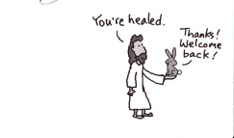 pretty simple, as you can see. “You’re healed,” Jesus says. “Thanks!” replies the bunny, “Welcome back!” This bunny knows from the beginning what the church struggled even to begin to grasp. It’s so easy for the bunny. It isn’t easy because he was healed although I think we could say that not being dead is an advantage. It is easy because it is easy. It is easy in the way it was easy for the girls in The Lion, the Witch, and the Wardrobe.
 Here’s how I get there. If you treat “orthodoxy” as “believing the right things,” then you have to be able to believe something in order to be orthodox. Not to get rigorously etymological or anything, but the -doxy part of orthodox comes from the Greek verb (dokein) meaning “to think” and the ortho- part from the Greek adjective (orthos) meaning “straight.” So “thinking the right things” is a pretty good indicator of orthodoxy, especially if we allow “straight” to be defined by the local community.
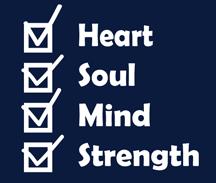 I think a much better measure of being Christian, of being, as Christians understand it, a part of God’s family, is saying Yes to God with every available resource. Here’s a handy checklist. (See Deuteronomy 6 and Mark 12) To know what the authors of Deuteronomy meant, you would have to have a better grasp than I do of the crucial terms. What did they mean by “heart” or by “soul,” for instance? When I run a checklist of that kind for myself, I use these four categories: what I think, what I intend, how I feel, and what I do. That is a series that is meaningful to me. [4]
 The only question that verse asks of the person living in that house is, “Are you going to open the door?” It doesn’t ask if you know who is knocking. It doesn’t ask if you had intended to have a visitor. It doesn’t ask if you are anxious about who is knocking. It asks whether you are going to open the door.
 “Where to Invade Next.” That’s not a headline. We don’t look good in any of the Michael Moore movies. It’s just a statement about what I want to think about today.
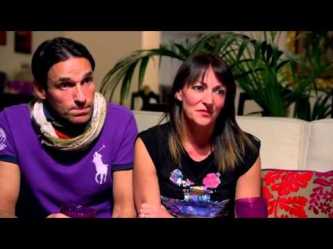 The Italian couple pictured here who are accustomed to eight weeks of vacation every year are astounded to learn that American workers get none at all—by law. Moore does admit that vacation hours are negotiated in contracts. She is in a mid-level business; he’s a cop. They both look very good in the vacation pictures that someone takes of them nearly everywhere in the world it is sunny and warm.
 meal we see at the elementary school is charming. It is served by kitchen staff. On china. A four-course meal. For less per child than we spend. And they get an hour to eat it.

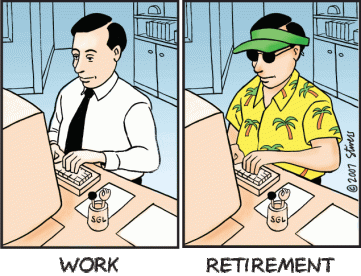 is as good a thing as she thinks it is.
 Another difficulty that the notion of “uselessness” hands us is, “What do we mean when we say ‘useful’?” Society is a rough and ready kind of enterprise so far as meanings go. Society is possible because “close enough” is the standard for giving and receiving meaning. But every now that then, “good enough” really isn’t good enough and I think this is one. What if, for instance, our common definitions of “useful” are merely conventional? What is these common definitions are not “useful?” What if another notion of “useful,” on being presented, would be welcomed and would benefit us all?
 member of the group who is willing to ask the “Why is grass green?” kind of question. No one knows the answer, but we all think we should so all of us pass the opportunity by and none of us asks it. But this one guy does. He would be very much surprised, I think, to learn that his contribution is “useful” to the group; it is, in fact, much more than useful. It is vital.
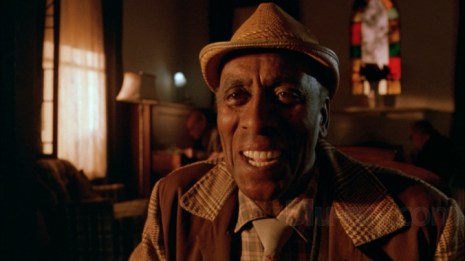 One night, all the residents (except the one holdout) are magically transformed into themselves as children. They run and play and laugh. But before the night is over, they have begun to remember also the wonderful relationships and events of which they were a part and which they will not have any access to unless they go back to their old selves. And Mr. Bloom gives them that. You can go back, he says, to “your old comfortable bodies,” but with “fresh young minds.” The next morning these old people nearly erupt from the senior center, bursting with things to do and places to go that were there all along, but which they had not been willing to contemplate.
 Amending the soil, so that the kinds of plants you want in your yard really would help. If the moisture retention of clay is my problem, then amending it with organic matter to improve drainage is the solution.
 Montana in August 1991. A professor from the University of Montana had just given a talk opposing President George H. W. Bush’s “Operation Desert Shield.” It was a pro-Bush crowd so there was a lot of conversation afterwards. During the conversation, an old German man came up to me and said, in broken English, something that chilled my blood at the time and that I have never forgotten. He said, “I haff heard all ziss before,” and he went away shaking his head sadly. It chilled my blood because I knew who he had heard it from. He had heard if from Hermann Goering.
 Germany. For me, Mauthausen is the name of the camp, a place where Jews and other “enemies of the state” were to be sent to die. [5] The camp is now a tourist attraction, of course, complete with a very good bookstore. That was where I found The Logic of Evil: the Social Origins of the Nazi Party, by William Brustein of the University of Minnesota. These are “the stairs of death” at Mauthausen when the camp was in full operation. I walked these steps on a beautiful sunny day and could scarcely believe they were the same steps.
 But as the fear and anger are jacked up, what was once the vital middle of the spectrum comes to seem “politics as usual,” or, even worse, as “the status quo.” You hear people ay they are “against the status quo” as if it were one thing and as if whatever broke it would be better. Clearly politics as usual is not giving us back the America that was stolen from us under the leadership of the moderates. (Ronald Reagan, by the way, was one of those “moderates.”) Politics as usual is not protecting us from the threat of—in the U. S. today, that means “the existence of”—extremist groups who will count no cost too high if they can inflict even a minor wound on the U. S. It’s time to elect a “strong man.” This is a real Trump rally picture. Let’s hope it isn’t really representative.
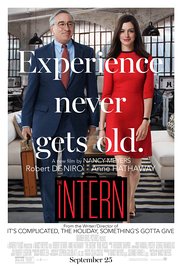 Then the question of what “empties himself” means, both in the case of Jesus and in the case of Ben Whittaker. Then, second, there is the question of what is actually emptied. I don’t know what that means for Jesus, but what it means for Ben is what the movie is about. Finally, there is the question of what is not–can not be?–emptied.
 My problem is not with understanding it. I can’t. My problem is with not caring about it. I’m not really critical of myself for failing to care, but I think all Christians are poorer if they fail to care about this fundamentally important mystery. I think we need to live with it and care about it. I would really like to understand it; that’s the kind of person I am. But even failing to understand it, I am not prepared to stop caring. How to do that?
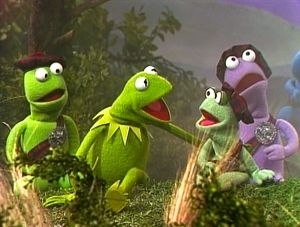 Sir Robin’s problem is the tiniest fragment of the dilemma Jesus faced in “giving up the form of God,” but since I have no idea what “the form of God” means, I don’t really feel anything about it. I really get the little frog’s problem. I can feel that one.
 The second interviewer picks up at college and asks about work history. This is the first time we, as viewers, hear that Ben was V.P. for Sales and Advertising and later was in charge of the production of the physical phone book. For New York. The second interviewer wants to know why people don’t just google phone numbers. Ben is unflappable. “Well yes, but back then people needed phone books.”
 He doesn’t “empty” those things. They were part of his old self and they are part of his current self. And they save him. They save the company, too. And Jules Ostin, the company’s founder, whose intern he is. It is not hard to track those traits in the story. [4] Ben goes into a conference room to perform a very simple task that Becky, Jules’ secretary, has summoned him to do. While there, he hears crisis discussed—a crisis for the company and also for the founder. When he reports back to the secretary, she says, “So…what were they talking about in there.” Ben replies, “I really couldn’t say.” Becky prompts, “You were in there a long time…” Ben comes back with, “I couldn’t hear a thing.” Not true, of course, because he did hear; but also not a lie because Becky knows exactly what he means.

 Second, I will really miss living in a country that is respected in the community of nations. Apart from the damage a Trump administration would do, simply winning the Republican nomination and/or the general election would be a blow to our prestige. Bette is in Germany at the moment, communing with three of her grandchildren, and she reports that the question the Germans want most to ask her is, “What are you people DOING?” This is orders of magnitude worse that Reagan who was, after all, a governor and, before that, a long time political activist. [1]
 want to argue that we are culpable. When you take a look at what would have had to happen to prevent it, it is really hard even to imagine it. We are, however, the cause. Culpable or not, we are the stewards under whose “care” this soil developed. If “sovereignty of the people” means anything at all, surely it means that.
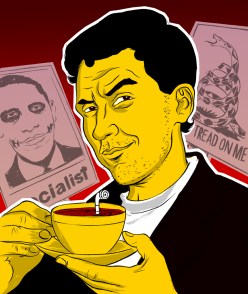 There is a thoroughgoing tribalism that makes policymakers who cooperate with each other to support policies that would be good for all, into “traitors.” It is only a small step to an Inquisition that begins with “Are you now compromising, or have you ever compromised with [a member of the other party.]” If you hear the House Un-American Activities Committee language there then I wrote it properly. “They” are evil and consorting with “them” is evil and you deserve punishment.
 In the first scene in which Geoff Mercer and his wife Kate appear together, Geoff gets a letter. The rest of the movie is about the ramifications of message the letter contains. I am not really certain what the ultimate effect of the news is on the Mercers. David Constantine, who wrote the short story on which the movie is based, has no interest in our knowing what it will be. Google [David Constantine, telegraph, interview] for the whole pitch by the author. Andrew Haigh, the director, doesn’t care either.
 The marriage that director Haigh shows us is not bad, really. Geoff and Kate are still interested in each other. A little. They offer all the everyday courtesies that allow for domestic tranquility. [3] She is especially attentive to him, but it to his getting through the day and his taking his meds that she is attentive. If she knows there is more in there—and maybe there isn’t—it doesn’t show up. Getting through the day seems to take all the attention Geoff has to give.
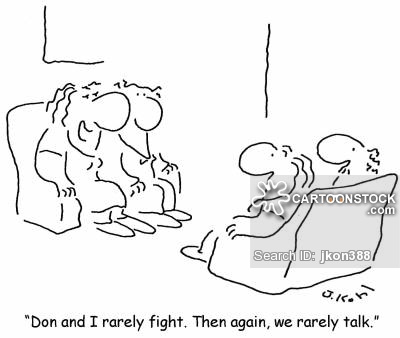
 Finally, they could have practiced the full restoration of relationship after the friction has stopped fricking. [6] You can look at the week of Geoff and Kate’s relationship that is treated in the movie and imagine that they have never so much as exchanged a heartfelt endearment. But it’s a lot more likely that they used to do that, back in the old days, and they one friction and another occurred, like so much tread wearing off a tire. A strong marriage has ways of restoring the lost tread; of repairing the wounds any marriage will suffer. And if you don’t do that, the tire will blow when you hit something unexpected on the road.

