
I want to write a little about the relationships between men and women at the senior center where I live. And I will. I just want to play with a couple of words first.
Words
The first word is “dominate.” It has become popular, when there are more of one kind of thing than another, to say that the more numerous, “dominates.” The most popular kind of pizza, probably pepperoni [1] is the “dominant” kind of pizza. You could say that Caucasians are the “dominant” ethnic group meaning only that there are more of us than there are of any other ethnic group. Of course, you might mean more than that.
But if “more” is what you really mean, I suggest “predominant” as the adjective form and “predominate” as the verb.
So here where I live, women predominate. There are twice as many of them as there are of us. There are lots of reasons why men die earlier than women and I don’t want to explore them here. It is simply a fact that if a collection of old people—the kind of collection you would expect to find in a Continuing Care Retiarement Center (a CCRC)—there are going to be more women than men.
The rarity of men as a tension
That sets up an interesting tension. There is a tendency to value—possibly to overvalue—rarity. There is nothing particularly meritorious about a postage stamp of which only 100 were ever printed, yet stamp collectors lust after such stamps because there are so few of them. Similarly, there is a tendency for a man—pretty much any man—to be valued inordinately in a setting where women predominate. [2]
There are a few ways the women could take unearned value that is accorded to men. I have three in mind because I have experienced these three. I’m sure there are more, but I am not sure I am eager to encounter them. Similarly, there are a few ways the men can handle being given a level of “attention”—whether it is positive or negative will vary with the woman doing the attending—that they don’t deserve.
The problem for men
The instance of how the men might respond is easier, so I’ll start with them. As always, the first thing to do is to know what is going on. If you are accustomed to being treated like a 5 (on the familiar ten point scale) and suddenly are treated like an 8, you need to know that. The second thing is to acknowledge that you don’t deserve that automatic little three point bump. There is no reason why you have to say you don’t like it; only that, in all fairness, it is not merited. The third thing is to decide what you are going to do with it. It’s a windfall. It isn’t something you deserve; it is something that happened to you.
 There are three common kinds of responses to this kind of undeserved benefit. One of them is really hard to do, so I will mention it first and then dismiss it. It is experiencing these undeserved (that’s the three point bump you get for not being the predominant sex in this setting) benefits as an artifact of the system. It isn’t about you. It’s nice, but it comes and goes and the only thing that would be really wrong would be to try to hang onto it, rather than allowing it its own rhythm. I note that as a possible response—difficult and rare—and I now dismiss it.
There are two more common responses. One is deciding that this extra three points are points that you deserve in some way. Think about it. You are receiving a benefit and all you have to do to make it morally acceptable is to think of something about you, or about males as a category, that justifies the preferential treatment. How hard could that be? Our brains were built for the specific purpose of coming up with rationales like that at the drop of a hat. [3]
The other one is deciding that since you had no part in earning this bonus, it is not really yours to keep, so you invest it in those parts of the social system which really don’t get the appreciation they deserve. That has two good outcomes. One is that it serves as a reminder that being specially recognized is nice—except, as you will see below, when it is not—but it is not a fair assessment. It really isn’t about you. The other is that it automatically reinvests the windfall into social capital.
The problem for women
Now let’s look at the women’s side. They see the same thing I see. Men are accorded positive evaluations they do not deserve. All these guys being treated as if they were 8’s when any sober assessment would put them at 5 at the most. It just isn’t fair.
No. It isn’t. They are right. Now there is the question of how to respond to it and now I get to tell the stories I have been holding back, but which are the real reason I wanted to write this particular essay.
Story #1
Very shortly after I moved here, I had a conversation with a neighbor who lives just down the hall. One of the reasons Bette and I chose Holladay Park Plaza (HPP) was that the people who lived there were friendly. With this in mind, I gave my new neighbor the example that I had attended a group for the second time and was pleased and surprised that everyone remembered my name.
“Of course they did,” she snapped. “You’re a man.”
I was unprepared for the venom, certainly, but in addition to that, I didn’t know how to assess the charge. I get that now. I am the recipient of strokes I don’t deserve. The reason I got these strokes has nothing to do with who I am, I as a person, but can be attributed only to my sexual identity and it isn’t fair. All that is true and this neighbor resented it. None of the illustrations here are supposed to represent the people; only the sentiments that came to mind as I told the stories.
Story #2
On the other hand, there are women here who are not attracted to the fairness or unfairness that grows out of the disproportion between the number of women and the number of men. The just don’t pay any attention to it.
I will use as an example, the remark of a woman I was having dinner with one night. “I like men,” she said. “I just don’t want to own one.” And we both laughed. She is a woman whose husband died some years ago. That’s why “owning one” was funny. She is still attracted to the match of styles and perspectives that men and women bring to a relationship. She takes for what they are worth, the little frictions and enjoyments that belong to those conversations and that’s the end of it.
Her perspective isn’t any more fair or unfair that the first woman’s perspective, but it is a lot easier to be with.
Story #3
Another friend of mine just turned 90—even here a notable achievement—and devised a really good way to celebrate. She invited a bunch of friends to a dinner tour of the Willamette River on the Portland Spirit. There were 16 of us, it turned out, and I was the only man in the group.
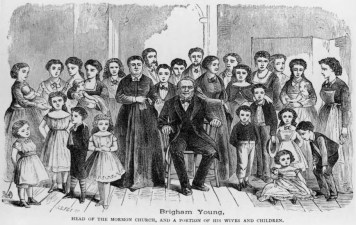 Of course, there are reasons to treat this disproportion as some kind of unfairness or as significant in some way. This was a party in which women predominated. But one of the women across the table from Bette and me saw other possibilities in it. She got my attention and indicated our whole group with a gesture of her head—all 15 women and one man of us. Then, with her hand, she made a gesture that referred to everyone else on the boat. She leaned across the table and said, “Do you suppose they think we are Mormons?”
I loved it. It affirmed our whole party as a single entity, enough, at least the be the butt of the joke. It recognized the disproportion of men and women, well…man and women, but only for the purpose of making a joke of it that all of us could enjoy together.
So, the fact is that there are more women who live here than men, a disproportionate number of the men having already died, is only the occasion for reflecting on how to respond to it.
[1} Just a warning. In Italian, “pepperoni” is a plural noun meaning “bell peppers.” If you order a pepperoni pizza in, say, Milan, be prepared for a vegetarian pizza.
[2] See how handy it is to have the right word. Women do not “dominate” at my CCRC and they are not “dominant”—well…a few are.. They do “predominate,” however, by about 2:1.
[3]Thanks especially to Jonathan Haidt, whose book, The Righteous Mind, makes this argument and substantiates it beyond cavil.
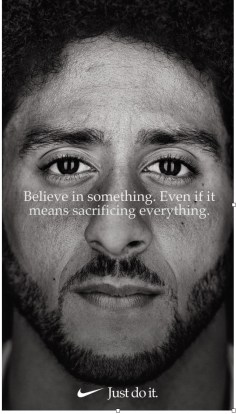 completely appropriate to me.
 I will say that I like this picture of Denver Bronco’s offensive tackle Garrett Boles, who is celebrating his country with one hand and his teammate with the other.
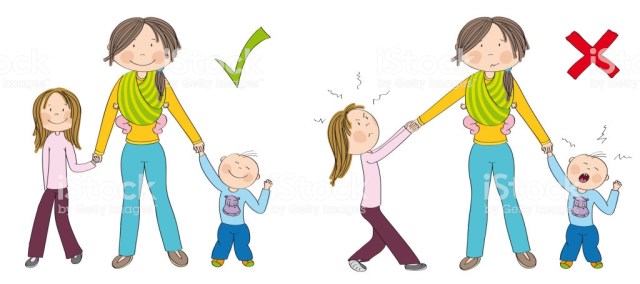 And I think that is why we swing back and forth from criticizing too much and criticizing too little. In this essay, I am going to come out boldly in favor of criticizing just the right amount. I don’t think anyone is going to have trouble with that idea. Goldilocks didn’t. And then I am going to try to justify that standard using an argument I had never heard before today and even today, I didn’t hear it until I heard myself making it.
 The alternatives, as I have seen them and read about them, are distraction and reinforcement of positive behaviors, both of which are good tools. They make the need for explicit criticism less urgent. They make the difference, to return to the pain metaphor, between episodic criticism, which contains valuable information, and endemic criticism, which is just the pain background of your life.
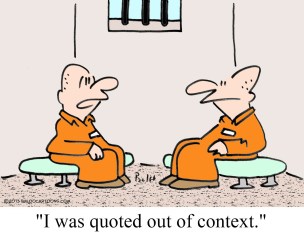 including myself as a young boy, resisted the rules by picking them apart. A fully verbalized and internalized norm would be applied reasonably to the situation. So “Don’t forget to wash your hands” would reasonably apply to anything else that was dirty, especially dirt that would be visible to other family members. The “jailhouse lawyer” kind of kid would happily come to the table with a big smear of dirt on his face and argue, when confronted with his misdeed, that he was asked only to wash his hands.
 As I implied in the last paragraph, the Sweep is the last in line. That is why he or she is called the Sweep. Because it is the Sweep’s job to be last, and there are implications to that to which I will return at the end. I have been a Sweep with IBT any number of times and have even
  is only one God and that all the other “so-called gods” are mere illusions. That means that meat that has been offered as a sacrifice to one of these illusions is not contaminated for anyone who understands what an idol is. The fast riders are those who understand this. And before we look at the slow riders, let’s stop to note that if Paul were a rider on this trip and not the Sweep, he would be a fast rider. Notice the “we” in verse 4. “We (fast riders) are well aware…” Now we will look at the slow riders.
 I think Paul the Sweep would advise that pastor to open the church fully to its women members. Pastors, Session, deacons, lectors…everything. These are the fast riders, remember, so Paul the Sweep might very well prevail on them to be gentle with the slow riders. We would say, using a modern idiom, not to rub their noses in it. He would be as opposed to a flamboyant feminism that demeans all men and drives them out of the church as he would be to a submissive role for women that hoped to keep the men by offering them an illusory (and unchristian) dominance.
 Brown like me
 But when we get away from how good it feels, we need to consider what he actually looked like. If you are a brown person living in a predominantly white society where all the white Christians are expressing their emotional affiliation to a Jesus who looks like them, I’d think it would get wearing after a while. All the emotional affiliations would add up to a factual claim and the claim would be this: Jesus was white. [1] This is the face referred to in the quotation below.
 What Jesus looked like is completely immaterial from a theological standpoint, but people who have strong beliefs about Jesus and strong feelings about Jesus might be expected to want to specify what he looked like. That accounts for the sample “ethnic Jesuses”in this essay. When you get far enough away from the issue, it comes to seem odd that we call these other images of Jesus “ethnic” but do not call the one that looks like us “ethnic.” But our own ethnos is the one we take for granted; it is the standpoint from which we look at the others.
 another motive made his mark. “Jesus was blue,” he says. [3] My first reaction was negative because I had been enjoying the “Jesus was brown” sign. To the extent that the first tagger’s real meaning was “Jesus was not white,” the comment that he is really “blue” does the same work. [4]
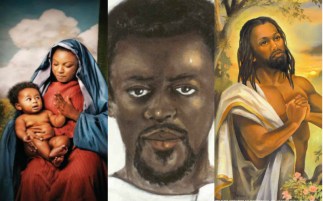 For myself, I like the idea that everyone should feel free to invent an image of Jesus that would be at home in their own ethnic group. It is a claim of affiliation and if the Incarnation means anything at all, it means that. On the other hand, I don’t think anyone but the experts should feel free to make up factual claim about what Jesus did look like. And, considering only the facts of the case, what Jesus looked like really doesn’t matter. When we picture him as tall and handsome and masculine, we are only projecting the values of our culture onto the story of Jesus. No one really thinks that God has definitively manifested Himself to be a Middle Easterner.
 It concerns, Alison Macintosh, called “Tosh” on the show, and played by Alison O’Donnell. [1]
 of her and a bottle of wine is a fancy-looking bag.
 bears no guilt.
 And then yesterday, a little poking around on the internet produced a company that says it will construct a mug to your specifications. [3]
 where you really have to choose.
 are ready to design a mug.
 to tell the truth, they don’t sound so hard when you start with the third one. “Collective sentiments” and fundamental to being human in times of conflict. We circle the wagons, we amp up our message, we jam other messages. I don’t really have any objection to Siegel’s choice of the word “conformity,” but that’s not what it feels like to belong to a team in times of conflict. The supposed one-ness of all our feelings and expressions gives us great comfort. I think I would have said, with less pejoration, “participation in the collective sentiments.”
 That doesn’t work. We can’t manage that much outrage and, of course, we don’t. We begin simply to disattend and deny. We excuse actions, too, if they were committed by members of our tribe. So it is only the officially sanctioned outrages, the ones that “conform to the collective sentiments” that we really have to gear up for.
 me on that. He is going to be said to be morally insensitive. He is going to be said to be complicit. He is going to have Edmund Burke’s most famous saying [1] hung around his neck and he will be made to wear it in public to show his status as an outcast.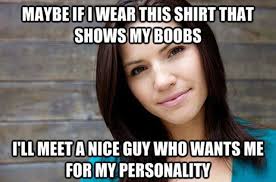

 find that the “left-leaning media” charge is inaccurate.
 genetic element at all in homosexuality and that, consequently, it is completely the choice of the individual—has a problem.
 A common conservative belief, for instance, is that the nations of the world are persistently taking advantage of America.
 The Dilettante's Dilemma