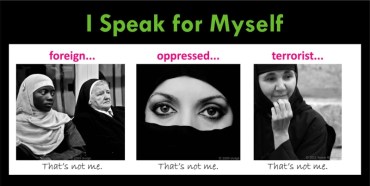
Hating and Fearing Muslims

I am going to want to talk about the American campaign against Islam today. It is going to take me a little while to get there because this campaign mobilizes the power of tribalism; we are going to need to look at that a little. It also explores a crucial determinant of tribalism, which is this: what does “other” mean? Settle in.  The ride is going to get a little bumpy.

Tribalism

I am not opposed to the organization of humans into tribes. That was a very important part of our development as a species. You could argue, following Abraham Maslow, that it is a part of the development of each person as well. [1] It could even be argued that it was a necessary phase of our development as humans—not just that did happen, but that it needed to happen if our development as a species were to continue. And if it was really a necessary phase, then it is a good thing we didn’t skip over it. You don’t just skip developmental phases without dragging the unlearned lessons and the unpracticed skills along with you as you confront the next challenge.

On the other hand, “we” (humankind) are long past the need for that now. It is not only that we don’t need it any more; it is that we can’t afford it any more. Tribalism is like an early defense mechanism tossed up by a threatened child. He feels under attack. He defends himself as he is able with the tools that are at hand. Then he grows beyond any realistic threat of harm. He doesn’t need to defend himself anymore. But now he finds that what was “a defense” in the beginning is a habit or a character trait; some structural part of the self.

I heard someone define “neurotic” that way once. When you don’t need a particular defense mechanism but you keep using it anyway, it becomes a mark of your neurotic condition. Tribalism is, in this analogy, an early and valuable form of human organization, but in today’s world, it is neurotic—it is the characteristic of a common neurosis—and we need to find a way to get rid of it.

Otherness

The crucial mechanism of tribal organization is the division of the world into “us” and “them.” There are quite a few reasonable ways to organize “us” and “them.” You can make “them” assassin 3opponents rather than enemies. You can make one particular characteristic of them the vital and significant difference rather than all the characteristics of them. [2]. You can oppose them because you are competitors for a common and scarce resource.

Sometimes that’s enough. But if you need to mobilize a general public action against them, nothing works quite as well as hatred. If you missed the reference to the Japanese of the World War II era with their “horrible double-lidded eyes” in footnote 2, drop down and take a look at it now. Hatred is just the thing if you are a government that wants to impose a draft for the military or impose a tax to finance a war or to support the development of new weapons systems. [3]

There is not a good word, I regret to say, for this phenomenon. We have made do with xenophobia, but xeno- means “strange,” and that might have worked well when we wanted to fear people we were just coming into contact with. It doesn’t deal at all well with the systematic moving of a people from a category of enemy to friend and then back to enemy. They are “other” whenever we alienate them from ourselves, but they are not strange.

And although we do use phobia sometimes to mean “fear,” (triskaidecaphobia is a fear of the number 13), the political uses all mean “hatred of.” No one imagines, for instance, that “Islamophobia” means anything other than hatred of Muslims. If we were afraid only of those particular Muslims we ought to fear, it wouldn’t be neurotic.

Prayers for the Assassin

I said that today’s focus would be the fear and disgust perpetrated against Muslims in the United States. The example I offer is from Robert Ferrigno’s 2006 novel, Prayers for the Assassin. [4] All you need to know is that Islam has militarily conquered the United States. The book’s cover makes a reference to pledging allegiance to the Islamic States of America. Islamists are now in control of the country and some sections of the country are quite fundamentalist about it. Imagine a Quran belt where the Bible belt is now. The state is now requiring “submission” (that is what Islam means) of all Muslims.

assassin 2Sarah, the principal character in this scene, is an academic and a political activist, but she is disguised as a fundamentalist Muslim woman, which means that she is under the direct authority of the submission police. She is at the Good Woman net café to send a coded message and she is hiding in a chador. (I hope she is better disguised than this Barbie.) She knows how to be “a good woman” as we will see; in fact, her answers are so orthodox that they bring suspicion on her.

Everything that follows is one scene in the book. I have divided it into five scenes so that we can look at it a little more closely. This scene is intended to horrify us and I was horrified, just as Ferrigno intended.

Scene 1

The door to the café opened as [Sarah posted her message], a ripple of anxiety whispering through the room. Sarah looked up, then quickly down, breathing hard now. She faced the computer, slowly lifted her veil into place. She watched the Black Robe pace the room, a short, stout man with small, round glasses perched on the tip of his nose. He would have been comical without the long, flexible cane in his hand, and his aura of power.

We need, first, a caricature of the dweeb as devil. This is pretty good. Notice “short, stout man;” notice “small round glasses” (his eyes are “huge behind his glasses” the author tells us); and finally, notice the whip in his hand and the aura of power. Later, we will see that “his voice is high and reedy” and that he has “a thick black beard.” There is no mention of a hooked nose and bad teeth. I can’t imagine how Ferrigno missed those; they would have been so easy to add.

There is no reason, so far as the narrative is concerned that this could not have been a tall well built blonde with a buzz cut. It is the standards he is enforcing, not the standards he exemplifies, that really matter. The important thing here is that this guy should look like scary people we see on TV and he does that.

Scene 2

Sarah stared straight ahead as the Black Robe approached. Her stomach hurt from holding herself rigid. He stopped in back of the girl next to her.The cane tapped the floor.

The girl folded her hands in her lap, shaking so hard that her chador seemed to shimmy.
The cane lifted a lock of her long, blond hair that had slipped out of her head covering.

She attempted to tuck in the errant curl, but the Black Robe smacked her hand with the cane, made her cry out. “You flaunt your hair for the world to see,” he hissed. “Are you a Catholic whore or a devout Muslim woman?”

Weeping, the girl shoved her hair under the head wrap, a red welt across her hand.

The hair had “slipped out” of the head covering. A simple accident. The accusation takes for granted something much more deliberate. No woman “flaunts” her hair accidentally. And flaunting her hair “for the world to see” displays an attitude toward hair that is not at all characteristic of the West. Here, for instance, is former Muslim Rifka Bary assassin 6“flaunting her hair.” And flaunting her hair suggests to Black Robe that she is representing herself as “a Catholic whore,” [5] rather than “a devout Muslim woman.”
Black Robe is doing, on behalf of fundamentalist Islam what Ferrigno is doing on behalf of neurotic United States. Notice the either/or here: Catholic whore/devout Muslim woman. This is not a conflict between acceptance and rejection of modernity, but between virtue and rebellion. It is a part of the Christian tradition as well, but not a part we pay attention to. [6]

Scene 3

Sarah lowered her gaze. Grateful for the veil.

The Black Robe jerked the permission card off her neck, almost pulled her out of her seat. “Abu Michael Derrick,” he read, his eyes huge behind his glasses. “Your husband has been neglecting his duties.

The Black Robe tapped the back of her chair with the cane. “Does your husband beat you?”

“When I need it,” said Sarah, acquiescent.

“A good answer, sister, but its merit depends on the strictness of your husband.” The Black Robe stood over her.

This may be the place to step back and remember that we are studying the “other-ification” of Muslims. The tormentor (the Black Robe) is, to say the least, physically unimpressive—short, fat, nearsighted. He is in authority over women because the faith he enforces believes in the submission of women to men. What the women may think of themselves is of no value at all because they are what Black Robe says Islam says they are.
It would be the easiest thing in the world to argue that we need to fight people like this “there” so they don’t come “here” and treat our women like this. I would guess that is why stories like this are written and why they are read. No reader will hate Muslims less after reading this book.

And now, as they used to say one the radio shows I listened to as a boy, let’s return to our story. Black Robe thinks Sarah’s attitude is rebellious. That is why he suggests that Sarah’s husband (she is not married, but is pretending to be) has been neglecting hisassassin 5 duties. Had he been dutiful, she would have been obedient in thought, word, and deed.
Sarah knows the right answer to the question of whether her husband beats her and she gives that answer. Black Robe is not mollified. He argues that if her husband is not strict enough, then beating her “when she needs it” is not adequate. This exchange begins with the presupposition that her husband should beat her when he thinks she needs to be beaten.

Scene 4

“Your hands are soft. The hands of an idle, self-centered woman. A woman of many servants, or a woman who does not care about the state of her home.” He let her hand fall, disgusted. “Your husband indulges you. Have you manipulated him with your female wiles? Are you a beauty, sister?”

“If my husband finds me so, all glory goes to God [7], the merciful, who created us.”

‘Another good answer.”

Are you “a beauty?” I think this carries the sense of “a princess.” Note the art of Sarah’s answer. There is only one whose judgment matters and that is my husband. If it is true—not saying that it is—then all praise for it goes to God. It is not something I do (God does it) or something I value (my husband values it) and it is no business of yours.

This is so good a defense that Black Robe recognizes it as impregnable and begins to suspect that it is too good. Two flawlessly perfect answers in a row. Who knows what a woman this good might be capable of?

Scene 5

The cane swished. “Are you an educated woman, sister?”

Sarah hesitated, unsure of how to respond. She felt the attention of the room focused on her. The other women thankful that the Black Robe had selected someone else.

“Answer.”

The cane slammed onto her shoulder, and she groaned, bit her lips shut.

“Have you gone to college? Have you drunk deep from that filthy water?”

“Yes.. . one year, until my husband forbade it. For which I am grateful.”

The Black Robe nodded. “There may be hope for him yet.” He cleared his throat. “I shall speak to your imam. He needs to discuss your behavior with your husband.”

“Thank you,” said Sarah, her head still bowed. Her shoulder ached from the cane.

Black Robe is still looking for the source of the resistance he saw, briefly, in Sarah’s eyes. Education, perhaps?—“that filthy water.” She is very grateful that her husband forbade any college for her after the first year. No question is raised here of her aptitude for or interest in college; no question of just why the husband (purportedly—this is all a lie, remember) wanted her to stop. We learn that college is filthy, presumably for women but not for men, but we don’t learn why.

Reflection

My argument has been that the United States, the most powerful nation in the world, still finds occasions when it wants to think of itself as a tribe. This is neurotic, as I argued above. There is every reason for us to protect ourselves against attack by militants. There is no reason to protect ourselves against Islam. There is no reason to highlight the suppression of women by fundamentalist sects as if it were inherent in Islam and a threat to the U. S.

But if that is what a policy maker or an administration wanted to do, this scene in which “our women” are subject to humiliation by one of “them” ought to do the job. The modern West is a place where women are celebrated for “flaunting their hair.” I am particularly fond of it myself.  Women are supposed to aspire to being thought beautiful in a general way. I like it when other men think that my wife is beautiful even if they follow it up by wondering why a woman like that would want to be married to me: I still like it.  It sounds odd to us to think that it is only the husband’s appreciation that matters at all.

It is horrifying to think that a college education is “that filthy water” for women.
I can picture this scene being read on the floor of the current U. S. Senate as part of the debate about attacking “Islam” now before they do all these horrible things to “our women.” Scarcely any nerve ending representing American tribalism is left untouched.
If “hating and fearing Muslims” is the goal, then I’d say that this scene is very nearly perfect.

[1] Jim Davies, who is the reason I came to Oregon to study, was an admirer of Maslow’s famous developmental hierarchy. Davies used to distinguish the “need to belong” phase from the “need to separate” phase by saying that first we need to be a part. Then we need to be apart.. This essay is built on the former: the “being a part” piece.
[2] I grew up reading young adult fiction based in World War II and afterward. I learned, for instance, that Japanese (but not Chinese) had “horrible double-lidded eyes.” You can just flip the pages of books like that and watch national characteristics—German-ness and Japanese-ness and Russian-ness—grow to encompass the whole people and then shrink to the size of a small habit—just a quirk really. And then, as the world situation changes, grow back to full size again. You can watch the characteristics go from “not the way we would do it” to “Satanic” or “inhuman”—characteristics of the essence of a people.  The word xenophobic doesn’t cover any of this.
[3] Hitler said his war was against “Judeo-Bolshevism.” You have to admire the efficiency of a term like that.
[4] All the scenes I will be using come from pages 74—79 of the paperback.
[5] There is no suggestion here that this woman is a Catholic who is a prostitute. “Catholic” and “whore” are just two words from the pile of available pejoratives.
[6] Paul says (1 Corinthians 11:6) that if a woman goes without her veil, she should have her hair cut off. Those are the options. Veiled and respectful; rebellious and shaved. When we say that attitudes like are “essentially Islamic” it helps us to keep from noticing that they are a part of our own past as well.  I guess we don’t want to be reminded.
[7] The text says Allah here and I have substituted “God.” There is no difference of meaning and all the rest of the sentence is in English, so I have translated Allah to match. I suspect that the author uses Allah to lead readers to conclude that some other god is being referred to.

Posted in Books, Politics | Tagged , , , , | Leave a comment

The Philosophy of “One Life to Live”

My dad had a wonderful mind. That mind, and his gentleness, were perhaps his best features. He kept the gentleness as his mind began to slip away from him so he never became one of those irascible Alzheimer’s patients who are mad all the time and can’t remember why.

Toward the end of his life, he spent a lot of time watching soap operas on TV. He knew that wasn’t a respectable thing to do, apparently,philosophy 5 because he justified it to me one day when I was visiting. “These stories,” he said, “are deeply philosophical.” [1]

“Really?” I said, either inwardly or outwardly rolling my eyes, “One Life to Live? Philosophical?” He knew I wasn’t accepting the claim. He might have just been trying it out. So we didn’t talk any more about whether daytime soaps are deeply philosophical.

So I get to do it today.

So in this imaginary episode,  Laura lies to her husband, Kevin, about whether her mother had offered to hire a detective to find out whether he was having and affair. Pretty standard stuff.  I’m sure there are a Laura and a Kevin somewhere on the show.

Now imagine that there is an audience which is there to respond to this episode. They divide into two responses. The women say she did the right thing because by the end of the episode, it is clear that this lie produced good things for everyone (in that episode) and nothing bad for anyone. The men—both of them [2]—said she did the wrong thing because she lied and lying is wrong.

philosophy 2Now we cut to a third segment in which a moderator sits in an easy chair, taking occasional sips of coffee from a mug on the little round table in front of him. He is flanked by two philosophers. (This picture shows a different table, but otherwise it is what I had in mind.)  Their job is to treat the episode and the audiences’s reaction to the episode as the familiar conflict between consequentialist and deontological ethics. Deontological ethics can be borne, they agree, by societies where there is fundamental agreement on the rules underlying social interaction, but that kind of agreement is not present in the episode from which this instance is drawn. That argues for the priority of consequentialist ethics—Laura was right to lie to her husband. But, says the deontologist, the real cost will be seen more clearly in future episodes.

Is it philosophical yet?

Of course it is. So…when did is start getting philosophical? Is the soap “inherently philosophical” because the plot turns on actions that can be understood differently in different philosophical traditions? Is it “expressly philosophical” because the audience of men and women immediately turned to debating the ethics of an act? If they had argued instead, that Laura could not bear the emotional consequences of admitting what her mother had done, would the discussion have been “inherently psychological?”

What if the deontological approach had been justified on the grounds that consequentialism is only a creeping relativism and that there is no way to keep a firmly rule-oriented society without seeing to it that rule-breakers (Laura) are punished for breaking the rules? Is that “inherently sociological?” Inherently political?

Here’s what I wish I had said to Dad. “What philosophy do you see in the episode you just watched?” And I wish I had prefaced that with, “So…tell me about the episode you just watched.” Then, as he told me the story, I could have run the inner tape of the consequentialist v. deontological discussion [3] myself. Dad could be doing the implicitly philosophical version and I the explicitly philosophical version.

So is “One Life to Live” a program that is “deeply philosophical?” By now, it is easy to see what is wrong with the question. “Philosophical” is the way you approach the issue. It is the language you get to use. It is the presuppositions of the discipline that support the careful use of that language and that judge the worth of rival truth claims.

Is a daytime soap “philosophical” or not turns out to be a silly question. Is a study of the causal attribution patterns of undergraduates, “political?” My dissertation committee thought so. [4] Events that are understood in a certain way become psychological issues; but if you understand them in another way, the path to their becoming political issues is right there in front of you.

philosophy 1I studied “episodes” like whether the common room of the dorm was “too loud” for people trying to study and whether a girl in the dorm was taking advantage of her roommate (the roommate was the one I was working with). I showed, to the satisfaction of my committee, that the cognitive and emotional routines by which these events were handled were politically significant in two important ways.

First, the students would use the same mechanisms to decide whether the roommate was really “that inconsiderate” and to decide whether the Chicago police were really “that violent.” [5] Second, the students who had some idea how they could make those judgments on their own, rather than adopting the judgments of their peers or their professors, would have a basis for active and authentic citizenship. Otherwise, they would be buying their political opinions off the rack like everyone else.

With that kind of understanding in my toolkit, I could have treated Dad’s discovery of the “philosophy” of One Life to Live with a little more grace and I wish I had.

[1] It wasn’t my best moment either. I was busy regretting the loss of the part of the man I had always counted on and when he, because of that loss, said things I thought were stupid, I didn’t move toward compassion. I moved toward anger.
[2] I guess that would be Dad and some other guy.
[3] I had never heard of either of those terms at the time. Fortunately, in the meantime, my niece, Kendy, has become a professor of philosophy and I have learned a lot of new words.  I don’t know much more about these two tendencies of thought that appears in this essay, but I think they are right as far as I have taken them.
[4] They didn’t think so in the beginning. Their openness to the possibility that it MIGHT be “political”gave me the chance to make the case. My dissertation adviser assessed my dissertation as two parts competent and one part “brilliant.” Selling causal attribution to the committee as “really political” was the part he thought was brilliant.
[5] “That” is a major weasel word in determining whether an event needs to be taken seriously. In time, I came to refer to it as “that control,” trying to cue up associations with “thought control.”  And “that control” can be just a form of “thought control.”  Really.


Posted in Living My Life, Political Psychology, Politics, Society, Uncategorized | Tagged , , , , | Leave a comment

Can the Republican Party survive 2016?

This season of primary elections is confusing. I grant that. But it may be the last one like this we see for quite a while, so it might be worth our while to try to get some sense of what is at stake this year.

As so often happens, the sources of the word give us a head start on thinking about the meaning. At the heart of reconcile is council. Let’s start with the Latin noun, concilium, a council. Picture a council table, surrounded by people who are counseling together. That noun gives us the verb conciliare, to bring together, to win over. Easy enough.

But what of the re- in reconcile? There is someone who was at the table, had been won over, but thought breconcile 3etter of it and left. Something will have to happen for him to re-turn, to be re-conciled, to be brought back to the table and back into discussion with the others. This is a table that keeps showing up. Interesting.

The New York Times headline here that sent my mind in this direction was this: For Republicans, Mounting Fears of a Lasting Split. “Lasting” means that attempts at reconciliation have failed. The council is broken. Some of “us” have become “them.”

This has been coming for a long time. Once a substantial portion of the citizens has identified the government as “the enemy,” the process of electing representatives to serve in that government becomes problematic. This is not an easy time. The economy looks like the 1920, when the tiniest minority of the wealthy owned most of the nation’s wealth. The polity looks like the 1850s, when “north” and “south” were translated from regions of the United States to armed and belligerent nations.

The economic difficulties are real and are, in my understanding, well beyond the ability of any government to ease them. That means that the grievances felt by the citizens are real too; not only real, but rational. They have a right to yell, as Howard Beal urged them, “I’m mad as hell and I’m not going to take it any more.” That is, in practical terms, Donald Trump’s stump speech and it is working really well so far.

reconcile 4The New York Times headline warns of “a lasting split.” In my metaphor, that means that reconciliation is either not attempted, or that it fails. So…who is at the table? The short answer is that the Republican establishment is at the table. They are the people who told angry Republican populists to swallow their emotions and vote for John McCain and Mitt Romney. Here are a few descriptions of this group from the Times article.


The Elites

Here are some descriptions of who is at the table, all from the Times article: “wealthy donors and elected officials;” and “traditional power brokers;” and, at a gathering in South Carolina, “a gathering of bankers and lawyers, reliable Republicans;” and, more expansively, “the group of mostly older white men expressed concern that their party was fracturing over free trade, immigration and Wall Street. And they worried that their candidates — mainstream conservatives like Jeb Bush — were losing.”

Here’s how Barry Wynn, who attended that South Carolina meeting, describes what will happen if the dissidents are not (reconciled) brought back to the table where the council is being held. “It’s all really hard to believe that decades of Republican ideas are at risk…”

That’s who is at the table. Who has left the table? Who would have to be re-conciled—notice the re- again—in order for the Republican party to move forward together? Here are some characterizations from the same article.

The Angry Party

Leo Martin, who attended Trump’s rally at Stevens High School in Claremont, New Hampshire, put it this way, “The Republican Party has never done anything for the working man like me…This election is the first in my life where we can change what it means to be a Republican.” Put that on one side of a ledger of emotions and put “decades of Republican ideas” on the other side. Notice any difference?

The dissidents—those who have left the council table—“hunger for an unapologetic brand of conservatism that would confront rather than acquiesce to the political establishment…”

Reconcile 1Laura Ingraham, a conservative talk-show host, says, “All the things the voters want have been shoved off to sidelines by Republican leaders…and the voters [Republican primary election voters] finally have a couple of people here who are saying this table has to be turned over.”
See the image? Return to the table. Turn the table over.

It makes the “reconcile” imagery difficult, but presidential historian Richard Norton Smith said “The nativists aren’t going away. They might, if anything, become more feverish.” What Smith means, if we graft his comment onto my metaphor about the table, is that they have gone away and they aren’t coming back. He means that “the nativist controversy” isn’t going away and that is why the nativists—people for whom controlling immigration is crucially important—aren’t coming back to the table. [1] Except, perhaps, to overturn it.

From the standpoint of the establishment, the Republican party is having its quadrennial circus. From the standpoint of the dissidents and, this year, several candidates who are channeling the anger of those dissidents, this isn’t another round of the same old thing. “It’s time for us, “ they are saying, “to have the candidate WE want. We are tired of your trying to talk us into warmed over Democrats like John McCain (2008) and Mitt Romney (2012). This year, we want our own, not yours.”

I just barely kept myself from printing all that in capitalized bold font. It was close.

reconcile 6

If a flamethrower like Trump or Cruz wins the Republican nomination, then the Republican elites and the Democratic elites will be much closer to each other than the Republican dissidents are to anyone. And the bulk of the Democratic electorate is with those elites or to the left of them. [2]

If the split occurs there, it will divide the Democratic leadership, the bulk of the Democratic voters, the old Republican voters—people like Barry Wynn who see decades of Republican ideas at risk—and the Republican establishment on one side. On the other side will be the current right wing of the Democratic party, all the members of the Angry Party, about a third or so of the current Republican voters [3] and whoever emerges to represent them. Let’s say it’s Donald Trump.

Notice that the split has moved from inside the Republican party to outside. The new Republican/Democratic elites are at the table. The new members of the Angry Party want to overturn the table. No table, no council. No council, no returning to the council i.e., no reconciliation.

This election might be about much more than the anxiety of the Republican elites. It might be about the beginning of a new party era.

[1] They don’t remember the Know Nothing Party of the 1840s and 1850s, I suppose. That party did really well at the polls so long as “what to do with all these foreigners” was the top issue to be decided by voters. When the issue was obscured by more urgent things, they just disappeared. And the Whig Party split in two over those more urgent things. And we were left with just Democrats and Republicans.
[2] There are also voter who go back and forth between the Democratic party and the Republican party, depending on which one has a candidate that best expresses their anger and frustration. They are, to tell the truth, members of “the Angry Party,” and they vote with whoever seems to understand better how angry they are and why.
[3] How many there are depends on which question is asked and on how it is asked. The feelings of this part of the party are notably stable; the policy ideas are pretty volatile once you get beyond the slogans.

Posted in Politics, Uncategorized | Tagged , , , , | 2 Comments

Black Quarterbacks

How do blacks act?

I think that is a genuinely stupid question. I wouldn’t put it in this essay at all if I didn’t hear it on the radio most days.  Ordinarily it isn’t said; it is presumed.

Last weekend, the Carolina Panthers decisively defeated the Arizona Cardinals and became NFC champions. On down the road they will play the AFC champion Denver Broncos in the Super Bowl. One of the major reasons the Panthers won was the play of quarterback, Cam Newton.

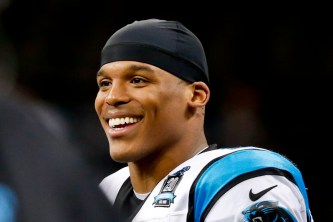
Here are a couple of things you need to know about Cam Newton. [1] He is a young black
black 2.jpgman. He is very demonstrative during games, both on the sidelines and on the field. The manner of his demonstrative actions is very much like some other black athletes.

Let’s stop for a moment and think about the dilemma faced by black social innovators, especially athletes. You devise some gesture, say a raised fist, to symbolize some part of the black experience in the U. S. Maybe defiance, like the sprinters at the Mexico City Olympics, or determination or victory or collegiality or something. It is something “we”—just us young black people—do that “others,” that would be older black people and all white people do not do. [2]

So far, so good. But other people are attracted to the gesture for some reason. [3] And theblack 4 popularity of the gesture spreads. After black athletes have established it as black and therefore “cool”—I’m sure that isn’t the current term for what I am talking about—then white athletes take it up. You could watch end zone celebrations over the last 20 years and just watch it spread. Even linemen celebrate now.  And after them, white athletes, then black and white non-athletes. Eventually, old white women in nursing homes can be seen exchanging high fives and fist bumps, gestures that were invented as symbols of black solidarity.

So something new has to be invented. A newly invented black gesture lives a very short life as a distinguishing mark before the hyenas of white culture move in on it, leaving nothing but the bare bones. So something new has to be invented. It has to be distinctive—it won’t exclude anyone if it is not distinctive—and it has to be expressive. Maybe even “flamboyant” is not too much to require of it.

Cam Newton is not only a master of such actions, but very likely the origiblack 3nator of some as well. Here is his famous Superman pose.  My own expertise does not extend to first uses. So Cam Newton does all these things and he is black and so what could possibly be wrong with saying that he acts ‘the way blacks act?”

Well…let’s see. The last time I looked, we had a black President of the United States. He is quiet, contemplative, understated, rational, careful in his expression of his ideas. Does that make him “not black?” And he chose a black Attorney General with the same social style he has. Neither of them “really black?” Not in my mind. Michelle Obama was taunted, when she was in grade school, for giving good answers in class. “Ooooh,” her critic said, “You talk like a white girl.” This “right answer” stuff, the classmate was saying, is not “racially appropriate.”

You see the problem.

black 5Let’s imagine for a moment that the issue before us is not race, simply, but some unholy amalgam of race and class and let’s use “working class” and “middle class” as our category names. Those are crude categories, but they allow us to ask some simpleminded and useful questions. What percent of successful trial lawyers are black? What percent of successful CEOs are black?  This is Ursula Burns, who was CEO of Xerox at the time.  Black enough?  What percent of tenured faculty are black? What percent of NASA engineers and scientists are black? I don’t know the answers to any of those and frankly I don’t care.
Here’s what I care about. When they take their middle class upbringings and their middle class educations off to do their middle class jobs, do they have to give up their racial identity? Do they still get to be black? I want to say that they do.

If I get to specify that there are different ways of being black—there are many, of course, but we can say that there are at least the working class way and the middle class way—then we can say that the black NASA engineers are still black although they don’t sound like young urban working class black men. If we pay the price of admitting what everyone knows, which is that the characteristic black working class vocabulary and body language are different from those used by the majority of middle class blacks, then we can recognize the difference without being forced to say that the working class style is “the real black style” and that the NASA scientists are “traitors to their race.” [4]

I don’t have a grievance against Cam Newton, apart, of course, from his having beaten my beloved Oregon Ducks in 2011. My grievance is against the sportscasters who celebrate Cam Newton for “being willing to be black.”

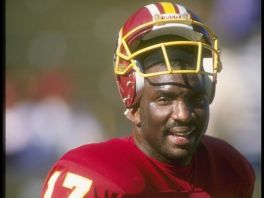
black 6Newton is not the first black Superbowl quarterback, of course. The most recent being Seattle’s Russell Wilson of the Seahawks and we could go back to Doug Williams of the Washington Redskins, the first black Superbowl quarterback, in 1988. But they weren’t black enough for the commentators I was listening to. The first explanation they used was that Williams “felt the pressure of the system” (to act “professional” rather than “black”). But both commentators knew that wasn’t true of Doug Williams. Of course, they said (second explanation) that wasn’t really what he was like anyway. He looked at the game and his place in it “in a more professional manner.” Their words, not mine.

So I began with a really bad question. I would now like to give a good answer to it. The question was, “How do blacks act?” I have been looking at the style of Carolina Panthers’ quarterback Cam Newton as the occasion for the question. Newton is very demonstrative both on the field and on the sidelines. Doug Williams and Russell Wilson do it differently. Their personal style is focused and intense, they seem to be entirely into the game.

And they are all black men. Doug Williams and Russell Wilson get to be “black” in the style that is most natural to them. Cam Newton gets to be “black” in the style that is most natural to him. Couldn’t we just give them that?

[1] Leaving aside for the moment by grievance against him for beating my Oregon Ducks in the National Championship game.
[2] I know there are other shades of Americans—conventionally yellow, red, and brown. I am skipping all those because I believe that “not-black” is the essential meaning of these gestures.
[3] There are so many possibilities and I don’t feel the need, today, to choose among them. There is the possibility that in making “black gestures” i.e. gestures just invented by black innovators for use by their community, I am expressing solidarity with them. It is possible that what is seen to be black is also seen to be more “real” and for that reason, more attractive. It is also possible that the phenomenon I call “downward identification” is at play here. By the magic of “downward identification,” blue collar people are “more real” that white collar people, people whose grasp of the grammar of their native language waxes and wanes like the moon are more “real” than people who are more careful in their speech. And so on. “Blue collar” is now a term connoting “hardworking.” Commentators unthinkingly call very good defensive lines “a blue collar defense;” no one ever, even in disparagement, calls a defensive line “white collar.”
[4] That is what it means when they are called “Uncle Toms”—a character borrowed from Uncle Tom’s Cabin—or “Oreos,” which, as everyone knows are black on the outside and white on the inside. By the same logic, some Asians who act “too white” are called “bananas.”


Posted in Uncategorized, Words | Tagged , , , , , , | Leave a comment

Survivor’s Guilt

It is well known that soldiers who have been through battles together and who have lost members of their group, sometimes feel guilty. “Why were they killed when I was not?” is the basic question. Those who feel guilty—not for something they have done, but just for having survived—are said to have “survivor’s guilt.”

This can be an emotional crisis for the soldier. On the other hand, some soldiers who have been in similar circumstances don’t have it at all. And others have gone through that crisis and have emerged, damaged but whole, on the other side. [1]

At the risk of offending people who have had or are having feelings of guilt that such situations can produce, I want to look at the rational infrastructure of those feelings. There is a very popular and unusually effective kind of therapy called Rational Emotive Therapy (RET). [2] The operating premise of RET is that we believe things that are not rational and some of those beliefs damage us. We need to change our minds about those beliefs. [3] We need to withdraw our consent from the rational infrastructure that gives those feelings their power and that enables them to harm us.

A firefighter suffering PTSD might hang onto the formulation, “I should have done something.” The feelings he is suffering are real feelings and they may be debilitating, but the belief on which those feelings are based is nonsense. A veteran firefighter might sit down with this sufferer and say, “I felt like that too the first time I failed to save a child.” And that might help. But I am thinking that the veteran might also say, “Look. There are three possible responses to the crisis you faced. Three things you might conceivably have done. Here are the costs of A, whicsurvivor 5h you wisely rejected. Here is why B was not possible. C might have saved the victim, but you would have lost three members of your squad. Continuing to BELIEVE that you could have done something is wrong and you will not return to wholeness until you give it up.”

I think that is a wonderful approach, particularly if it works. It removes the reservoir of flammable fuel the fire fighter is carrying in his heart. It doesn’t just put out the fire—which is well worth doing. It removes the fuel.

I want to raise another question now. What if that “fuel”—that persistent and powerful sense of guilt—could be turned into a persistent and powerful sense of obligation? Would that be better?

I think it could be better. I want to be careful not to follow my own metaphor too closely, but I think it might be better to use that fuel for other things than not to have any fuel at all. Imagine, for example, that one of the effects of flattening these feelings of guilt is flattening all feelings. The person’s emotional sensitivity has been the means of his suffering so he has learned to blunt that sensitivity; he has learned not to feel anything at all. I don’t know that literature, but it seems plausible to me that people might “learn not to feel” so that they don’t have to feel THAT.

I’d like to pursue that point in another setting. I don’t have any combat experience atsurvivor 3 all. I don’t have any sports experiences that approach this kind of bonding intensity. Because I have lived a long time, I have fought in quite a few theaters of operation. If they gave awards for wounds suffered in these operations, I would have quite a collection. I know why there is a scar on my left shoulder and on my left knee, for instance. I wouldn’t want to say that living is combat, but my experience is that living includes combat and combat produces casualties.

Let me tell you how I got to thinking about this question. I’m old. If you want to think about the trip from birth to 80 years of age as a walk, I have walked with a lot of people who aren’t walking any more. Some have died. I look at my high school yearbook and see all those 17-year olds. Then I look at the pictures from our recent 60th reunion and I see that more than half of us are not there. [4]

Some have lost their minds. They don’t know who they are or where they are or why they are there. Some have lost their drive. They don’t see one thing as more worth doing than another and have taken on the project of entertaining themselves until they die. They purchase “diversions” as a way of living and no longer wonder what they are being diverted from. They are being diverted from caring deeply about something.

These are no longer walking along with people who were once a crowd. I look around and I see a smaller group of us who are still walking along and we are not walking at the pace we once did. But I could ask—I don’t think it is a good question, but it is the survivor guilt question—“Why me?” It isn’t any merit of mine that spared me from the fatal accident of my friend M or the debilitating sadness of my friend N or the dementia of my friend O, or the purposelessness of my friend P or the despairing emotional flatness of my friend Q.”

survivor 6I don’t have any of those problems N—Q to the extent my friends have them and I don’t have problem M at all. My paint job has been chipped here and there, but I can still drive the car. If I can’t come up with a good answer to the question Why me? (and I can’t) I could very well feel guilty about it. The fuel for guilt is there and I have already expressed my doubts about eliminating the fuel and a way of putting out the fire.  You will likely need that fuel for some other task.

I offered, when I passed this way a few paragraphs up the page, the possibility that a person might by moved to obligation RATHER THAN guilt. I do not bear any guilt for having survived, but I do bear an obligation. What if I were camping with a group of friends, all of whom were damaged by a landslide or a falling tree? Whose job is it to get some water or make a fire or administer first aid before going for help? Mine. On what grounds? Not on the ground that I am guilty for not having been injured when my friends were; on the ground, rather, that I can. I can do those things and they cannot; therefore I am obliged to do them. [5]

Let’s deal with events less catastrophic. My friend O has Alzheimers and loves to have someone read to him. I read to him because he can no longer read and I can. What if I had a close friend who died in a plane crash, leaving behind three little boys who are going to need someone to play the part of a father to them. I could feel guilty for not having died—I was scheduled for that same flight and couldn’t get to the airport in time—or I could use the fuel those feelings provide to help me do the work of taking care of the boys. I could say that my friend would have done the same for my boys had the situation been reversed (and that might be very likely) but I think it would be better to say that he can no longer care for them, but I still can.

If I can still do things that matter to me, things I think are important and that cost me something, then I am really fortunate.

[1] “Damaged but whole” betrays a notion of human functioning that I can’t entirely explain. It has a notion of “wholeness” that it not essentially cosmetic. Using the cosmetic standard, you would say that a new car, having picked up a blemish or two in its paint job, is not “whole.” I’m calling that standard cosmetic. By wholeness, I mean something more like “functional.” Bearing the burden of your experiences does not prevent you from living fully, from making and keeping commitments.
[2] Wikipedia informs me that it is now more often called Rational Emotive Behavior Therapy (REBT). It is not a term I have heard, but I’ve been out of the active study of it since grad school.
[3] “Change your mind” is the literal meaning of the Greek metanoia and often translated “repent” in the New Testament. It would be too much to try to say in modern English that these emotional sufferers need to “repent” of the beliefs that hold their emotional disorder in place, but that expression does open the door to a separate and complementary literature.
[4] And, of course, I notice that all of us 17 year-olds and now old people.
[5] I’m not changing the argument here. We routinely talk about obligation, the noun, and very rarely about the passive verb “to be obliged.” I don’t know how that happened, but if you are “obliged to do something,” then you have “an obligation” to do it. It’s just an alternative phrasing.

Posted in Getting Old | Tagged , , , , | Leave a comment

My “Going Home” Plan

I’ve been in a lot of conversations lately that have to do with death and afterwards. And yesterday, Bette and I met with an “estate planner,” hoping to find a way to leave our property as gently as we hope to leave our lives and our communities. [1]

The planner sent us home with a pamphlet called “My Going Home Plan.” It’s a very useful pamphlet. It deals with writing obituaries and making sure someone knows where your spare change is kept and all that. It’s the title that bothered me, not the pamphlet. “Going Home?” Really?

Let’s start with the language side, just to start somewhere easy. When I was young, the expression I remember being used to refer to someone’s having died is, “Mabel (or someone) died last night.” Then I started to hear that Mabel has “passed on.” And later that Mabel, well shoot, let’s make this Mabel’s daughter, Henrietta, just to suggest the passage of time, had “passed away.” That caught my ear right away because the “on” in “passed on” presupposes that Mabel has gone from one place, here, to another place, there. [2] The “away” in “passed away” makes no such assumptions. We know she was here and now she is not, so we may say she has gone away. “Here” is the place we know; “away”is the place we do not know.

Most recently, the formula I hear is “passed,” which, although it suffers a lack of specificity, does avoid the on/away problem.

going home 3

That brings us to the question of the title again—going home—and how to conceive of “home.” What do we mean by it? John Denver describes a young man, in his Rocky Mountain High, as “comin’ home to a place he’d never been before.” That’s an entirely emotional rendering of “home.” I have no objection to it if the question is “where do you feel most at home.”

“Home” is a much-valued word, for sure. That is why people who build houses like to be called “home builders,” as if it became a home when someone started living there. It doesn’t. The people who actually build homes are the people who build belonging and acceptance in that house. The home is where those relationships begin to be presupposed, to be “the way we do things here.” The home is not the house any more than the building is the church.

going home 4

I’d go more with Billy Joel, You’re My Home. It is wildly romantic, of course, but it does locate the “home” in the relationship and not in the place and I think that’s worth doing. Here’s the line. Billy Joel says, “Well, I never had a place I could call my very own/But that’s all right my love, ‘cause you’re my home.” I have some problems with that, too. I think it is asking a romantic relationship to carry a lot of weight, if the relationship is only romantic. If it is covenantal—solemn promises are exchanged— in addition to being romantic, it’s not so bad.

So we are considering “going home” as if home were a place or as if it were a relationship. Both plausible. I prefer the latter.

When the conversation turns theological, which I am pretty sure was in the mind of going home 1whoever titled our pamphlet, “Going Home….” then we have another set of questions to ask. If “home” is “where I belong,” as in the John Denver imagery, what if the home where I belong is hideously bad? Let’s start on the wrong side of the tracks for once. Tell me what this means. This is Matthew 25:41: “Go away from me…to the eternal fire prepared for the devil and his angels.”

Here is what it means to me so far as it bears on our question of where “home” is. This passage says that there is a place where the devil is and where the angels on the devil’s side are. It is their “home” in the sense that is the place they belong. You who failed in compassion—that’s who is being addressed in the imperative verb “Go…”—have shown yourselves to be on the devil’s side as well, so it is your “home” too. So that’s the devil, the devil’s angels, and you, you hardhearted SOB.

It does stretch it just a little to call Hell a home, but in this context, I am willing to make the stretch. [3] To these, the un-compassionate, the Son of man says, “Go home.” But to the compassionate, he says, “Come home.” That means “Come to where I am” and it implies belonging and acceptance just as the other “home” implies rejection and torment. Both are “homes” in the very limited sense that it is where I belong or, in the case of Hell, where I demand to be.

But this brings us back to choosing between John Denver’s notion that home is a place and Billy Joel’s notion that home is a relationship. I’d have to say that I’m with Billy on that one. If by “going home,” the writer of the pamphlet means “heaven,” then I see him coming down on the “place” side of the answer. I do think that is what he means. I don’t think of it as a place and I don’t think we are required to. Further, I think there are some substantial dangers in that.

What dangers? One of the very few categories of Christians for whom my father allowed himself to express unmitigated scorn is a group I came to call heaven-mongers. Their operating principle, according to Dad, was “How little can I do and still get to heaven?” Heaven is the goal in this formulation. God is something like an inspector or a ticket taker; maybe border patrol. You have to get past God, in this formulation, to get what you really want, which is heaven. Note that it is not God that you really want. This is awkward, to say the least, because you are what God really wants as we shall see.

When you give up heaven as a destination and come over to my side, which is that it is a going home 5relationship; it is “being in relationship with God,” (whatever that means) that is the goal. [4] God created us for relationship with Himself. We chose to trust our own judgment rather than to obey God and so set ourselves up as an alternative form of life. We called it “autonomy,” not understanding that it was, in fact, rebellion. That’s the story of our separation from God as the book of Genesis gives it. God has continued to pursue us, to court us; refusing to take NO as an answer because God knows what NO means, and God knows that we do not. So we continue to have opportunities to say YES; we may still choose a relationship of love and trust and obedience, which are the the meaning of “heaven” that is based on relationship.
According to some New Testament understandings, John’s particularly, we do now have the relationship with God that can be characterized as “eternal life.” We are living in “eternity” right now. One way of understanding “eternal” life is that it is temporal life extended forever. Another way is that it is the significance of life—you might call in the enduring meaning—that is important, then it is the kind of life (not the extent) that is eternal.[5]

So this isn’t anything like a “place” we want to go. It is a kind of life we have been given as a gift. We live in that life now and will continue to live in it so long as God chooses and in whatever way is appropriate. There is no reason, so far as this notion is concerned, that the physical death which occurs somewhere in the middle of that development will alter the relationship in any significant way. The biggest part of that relationship continues as before.

I have no idea how that works. I am describing the relationship, as I understand it, between expressions like “the life of the ages,” on the one hand, and ordinary human mortality on the other. That brings us back to the “now and then” question.

I don’t have much confidence that there is a “then.” The Israelites decisively rejected the idea of a life after this one as a result of their contact with Egyptian religion and they continued to reject it until they were conquered. They got interested in it again as a result of their sojourn in Babylon. One of the advantages of my understanding that it is the relationship, not the place, that is of everlasting significance, is that it reduces the question of “there” (as opposed to here) and the question of “then” (as opposed to now) to very nearly nothing.

So I want to fill out my “going home plan.” It’s a good thing that I can do for my family. But to the best of my understanding, I am now living in an active relationship of love and trust which, in itself, constitutes “home.”

I am home. I don’t have to go anywhere to be there.

[1] We don’t have anything that ought to be called “an estate” in any but the most formal senses. On the other hand, anything out of our family histories can be a source of contention and reducing those sources seems like a good idea.
[2] The angel (Matthew 28) told the disciples that Jesus had “gone on ahead of you to Galilee” but could just as well have said “passed on ahead of you.” Both formulas require that there be a here and a there.
[3] C. S. Lewis does it much better in The Great Divorce, where Hell is a vast grey city of unreality People who are unable to choose Heaven, even being confronted by it and being invited to stay, go “home” to Hell.
[4] I know that is not well formulated. People who continue to say NO to God’s courtship are also in a relationship with God. They are in rebellion; they are antagonists. Those are “relationships” too. It seems to me that orthodox constructions of the Christian faith require that everything is “in relationship” to God. Still, the common meaning of the phrase connotes “a positive relationship with God,” and that is how I intend it.
[5] The Greek is zōēn aiōnion.  People who know more Greek that I do say that can be translated  metaphorically as “eternal life” or literally as “the life of the ages.” It is the notion of “the life of the ages” that I have takes to mean “the kind of life that really matters” or “meaningful.”

Posted in Biblical Studies, Getting Old, Living My Life, Uncategorized | Tagged , , , , , | Leave a comment

Concussion

I have seen the movie Concussion three times now. [1] And I have read the book twice. So I think it would be fair to say that I am a fan. I tend to talk about movies that I liked particularly and part of that conversation, as a rule, is, “What is it about?”

Easy to ask; hard to answer. Ordinarily, I respond by giving a buffet of things different viewers might think it is about. It is aboconcussion 3ut the NFL’s suppression of information about concussions. It is about capitalism and its disregard for the costs incurred by the workers. [2] It is about the aspirations of a young Nigerian doctor to continue to be Nigerian (Igbo, really) while becoming American. It is about the courage of a public servant enduring physical harassment and retaliation by his professional colleagues and vulnerability to punishment by the law—and still continuing to offer his adopted homeland the gift he has to offer.

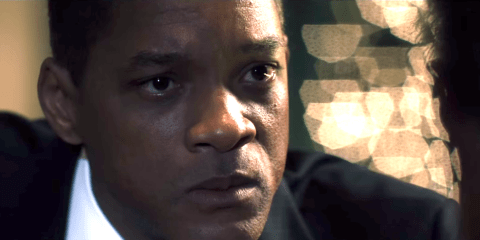
Those are all good answers, but none of them is my answer. I went back to see it again to watch Dr. Bennet Omalu grow. But before I get into that, I have to say that watching Will Smith play Dr. Omalu lets us see the character grow in the way the real Dr. Omalu grew. Will Smith is absolutely wonderful. This is the best work of his career, it seems to me. [3]

Concussion 5Let’s pick up Dr. Omalu at the point where he “meets”—that’s Omalu’s word—Mike Webster. They wheel the body of Hall of Fame Steeler Center Mike Webster into the autopsy room for Omalu to examine. Everyone but Omalu is very conscious of the honor that is being bestowed upon them. Why is Omalu not conscious of it? Well, he has never heard of Mike Webster. Or the NFL Hall of Fame. He doesn’t know what a “center” is. He doesn’t even know what a Steeler is. In Allegheny County, Pennsylvania!

Omalu is thorough. He’s a neurologist and he knows his stuff. But he also believes that “Mike Webster” is still present to him in some way and he wants to learn from Mike, not just from Mike’s body. As part of that thoroughness—paying attention to Webster’s life as well as his death—Omalu discovers the tau tangles in the brain. These are the mind-strangling tangles familiar to anyone who has looked at the brains of old people with Alzheimer’s disease. Webster was 50 years old and had the body of an athlete.

Omalu and some of his colleagues discover Chronic Traumatic Encephalopathy (CTE), the name they give to these Alzheimer-like symptoms which are caused by concussions. Omalu is a doctor and he sees the explanation he has discovered as the kind of thing that will lead to treatment. Mike Webster is not a “center” to Omalu; he is a patient. He knows that future Mike Websters can be forewarned, at least, of the danger. Maybe something can be devised to recognize concussions more quickly and to treat them with more respect; maybe the rules can be changed to lessen the carnage.

concussion 1

But the NFL doesn’t look at things the way Omalu does. Football is a business and massive financial liabilities are bad for business. No one in the NFL, back in those days, talked about “helmet to helmet contact;” they knew that the violence of the collisions was a major selling point for audiences. Those were the days when the violent hits of a safety on receivers and ball carriers earned him the admiring title, “The Assassin.” And Omalu wouldn’t shut up about CTE, so the NFL declared war on Bennet Omalu. [4] Shortly thereafter, Bennet Omalu declared war on the NFL.

The war goes on. A lot of the middle part of the film is about that war. But none of that part of the plot has anything to do with Omalu’s not knowing what a Steeler is or a center—or, as in the case of Jack “The Assassin” Tatum, a safety. [5] The plot that took me back to see the movie again begins when he meets Mike Webster and culminates in his address to the NFLPA—the players’ association. Omalu stands up in front, behind the podium, addressing the men who give and receive concussions for a living.

He begins by saying:

My wife watches the games. She jumps up and down. Through her eyes, I can see the beauty of the game. The grace. The power.

He caresses those words. He says them slowly and with rich meaning. He has come to see the game the way they see the game. There is an instrumental side to his presentation, of course. He needs to let these players know that he sees the game the way they do; it is the only way he can help them see the game the way he does. But watch Will Smith do it. He makes you feel that he knows what those words mean. They sound like words from the heart.

That is where Dr. Bennet Omalu has gotten to. It is an amazing journey. And because he did get there, he can say the other things he has to say:

Forgive them. Forgive yourselves. Be at peace.

That’s where I want to stop. Anyone who is angry at what the NFL has done and continues to do will not want to stop there. I understand. Anyone who sees this as a movie about the rules of football or about the heartlessness of capitalism or the love of violence men seem to have will not want to stop there. I understand.

The movie I went back to see again ends there. [6]

[1] I count it as seeing it twice when I see it with Bette because she sees so many things I miss and, for the relatively small price of a dinner afterwards, she is willing to tell me what I missed. Nicely.
[2] Dr. Cyril Wecht uses the marvelously apt analogy of getting a race car back on the track. That is the kind of “examination” a concussed player gets, says Wecht. How fast can we, the pit crew, get this player (car) back into the game (onto the track). Exactly.
[3] Not to disparage his role as the anti-technology hardass cop Del Spooner in I, Robot. I liked that one too.
[4] “You’re going to war with a corporation that owns a day of the week,” says Cyril Wecht, trying to give Omalu some idea of what he is taking on, “one the church used to own.” Omalu proceeds anyway. We learn from Omalu’s wife that his surname—the longer version from which Omalu is derived—is Onyemalukwube. It means, “If you know, come forth and speak.”
5] You can see the irony, in this context, of the name “safety” as the name of a position. A safety is supposed to make you “safe” from being scored on by the other team. Tatum’s violence made everyone on the other team less safe and therefore made his team more safe, but only from being scored on. Professional football is notorious for its payback norms, so it is entirely possible that Tatum’s teammates were also less safe because of his play. But his team—the team, not the players—was more safe.
[6] Not quite there. Later, Dr. Omalu is offered a position with the U. S. government—a position described as “the medical examiner of the United States.” In the movie, he is offered this job by a very masculine, very handsome bureaucrat. The bureaucrat begins by saying, “Dr. Omalu. We know what you have done. You are a true American.”

Posted in Movies | Tagged , , , , , | Leave a comment

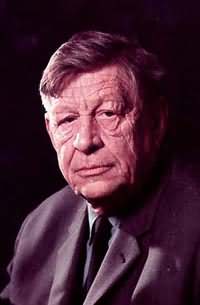
Auden wrote a mountain

Every year I climb a mountain of a poem, getting, each year, a step or two closer to the top. If it has a top. It is W. H. Auden’s, For the Time Being: A Christmas Oratorio. We read it again last night.

My wife, Marilyn, and I were invited to the home of a friend of a friend one January night auden 3somewhere around 1990. We were going to read a poem by Auden. I thought, but didn’t say aloud, “Who’s Auden?” The evening was glorious. I had never heard such highbrow and lowbrow diction together and they didn’t just coexist; they caroused! We waited for an invitation for the next year, but this wasn’t something, it turned out, that was done every year. That is when we started giving the party ourselves. [1]

Marilyn and I had an Auden reading every year thereafter. We held it as near Epiphany as the availability of weekend evenings allowed. When Marilyn died in the summer of 2003, I determined to do it myself that year (that would be January of 2004). I did it myself the next year as well, January 8, 2005. I found it was a lot of work to do by myself, but I was proud that I could do it. I didn’t know that twenty days later, I would meet Bette and that we would plan the 2006 party together. [2]

We had, last night, as good a reading as any I remember. The room was full of competent readers. They were also engaged in the poem, even those reading it for the first time. It is our practice to pause after each of the first eight sections and share observations about what we have just read. Those times stretched on and no one seemed to mind until the end of the evening, when the host noted that it was well past his bedtime—given that Bette and I still had some cleaning up to do.

I keep reading Auden although mostly, I don’t understand him. It’s a systemic problem and I am sure it will never be solved. I don’t understand Auden because Auden builds on Kierkegaard and I don’t understand Kierkegaard. Nevertheless, I do not experience the evening as a frustration because there are so many other kinds of pleasures, simple pleasures, that Auden offers.

But the one I want to use as my example here is a technique that I call “inversion.” I’m sure it has a proper name, but I don’t know what it is. Auden uses this technique in ways that just make my heart soar. Apparently, I don’t need to understand it to be moved by it. The Virgin Mary, for instance, responds to Gabriel’s announcement by saying:

My flesh in terror and fire
Rejoices that the Word
Who utters the world out of nothing,
As a pledge of His word to love her
Against her will, and to turn
Her desperate longing to love,
Should ask to wear me,
From now to their wedding day,
For an engagement ring.

The inversion I see can be extracted like this: “that the Word, who utters the world out of nothing…should ask to wear me…for an engagement ring.”

auden 2God has pledged, Mary says, to love the world and to turn “her desperate longing [into] love and to join with the world in a covenant so strong and so intimate that it can only be compared to a marriage and, Mary says, God wants to wear me until that day, as a pledge of His intention to achieve [3] that ultimate trust and love. Mary is the symbol of that intention as an engagement ring is the symbol of the groom’s promise to the bride.

I have found that passage hard to live with because I am so drawn to Mary and yet Mary is pointing beyond herself as a ring points beyond itself to an initiative and an acceptance, neither of which is directed at her. In this passage, “the world” is pallid and inaccessible; Mary is gloriously real. Yet focusing on Mary causes the whole narrative to crash. It is the reality of the relationship—God and the world—which is clearly offstage at this point, that is supposed to engage us.

Here is a second example from the last few lines of the poem.

He is the Truth
Seek Him in the Kingdom of Anxiety;
You will come to a great city that has expected your return
for years.

Seek God [He is the truth] in the Kingdom of Anxiety. That is where we live, but we are journeying and on our journey, we will come to a great city. This city as expected our return. What? It has expected our return for many years. What?

Again the inversion. Auden gives us the by now familiar project of seeking God, who is the auden 1Truth. That is, presumably, what “the journey” is about. But that is not what happens. The major actor in this little verse is the city. Possibly “the City.” We used to live there. We left it and it has mourned the loss of us so much that now, seeing us return, having refused to give up the hope that we will return, it celebrates our return as the father celebrated the return of the Prodigal.

As in the case of Mary, we are drawn to the focal figure. We are seeking God, who is the Truth. But all the action is somewhere else; that’s what I am calling an “inversion.” We lived, once, in this city. We loved it and it loved us. We left and it mourned but it never gave up hope. Always, there were watchmen on the walls scanning the horizon hoping for a first view of our return. And now we are back, and the confetti is being prepared and possibly a fatted calf.

The technique amazes me. And I fall for it every year. I love it.

[1] The one thing you know about a party you are giving is that you will be invited to it.
[2] Sometimes, if you hold out long enough, the calvary comes.
[3] Theologically, to “restore.”

Posted in Books, Theology | Tagged , , , | Leave a comment

Does a Marriage Ever “End?”

I have had occasions where I felt I needed to explain what kind of a married man I am/was. Here is the distinction I chose: I am romantic, but I am not sentimental.

When I read Lucy Kalanithi’s account in the New York Times (the hyperlink is given below) of her “continuing marriage” to a man who had just died, it seemed odd to me. Today, I want to push at the boundaries of the experience of bereavement just a little and see if it pushes back.  The picture below illustrates why I want to be careful in what I say.

I have had experiences that bear on this question. In the late 1970’s I watched a marriage departed 1that I described as “going through a rough patch” dissolve right before my eyes.[1] That marriage “ended” in the sense that I now have a certificate of divorce to lay next to the certificate of marriage. Today I am asking in what other senses it “ended.”  Early in the new century, I watched a very good marriage end with the death of my wife. That marriage “ended” in the sense that I now have a certificate of death to lay next to the certificate of marriage. Today, I am asking in what other senses it “ended.”  And I am now married again. [2] Bette and I are both healthy and we are happy together, but I “know things” about the end of this marriage that I would not have known had I not survived its predecessors.

Having had those experiences of “ending,” I would like to reflect on how I now understand them and to place my understanding next to Mrs. Kalanithi’s. If one is to mean that a marriage “never ends” in the sense that the effects of having been married to that particular person never end, then certainly that is true. I will always be affected by having been married to these two remarkable women and the wonders continue to pile up in my current marriage.   But I don’t really think that is a plausible implication of the notion “marriage.” Those marriages, I would say, are over even though their effects linger.

After the memorial service of my second wife, her daughters—women who had been my stepdaughters for nearly a quarter of a century—went through her clothes and jewelry and took, with my blessing,  anything that was meaningful to them and then I took the rest to the Goodwill store. Those clothes meant a lot to me when she was in them. I was as romantic about her as anyone (including her) would want me to be, but the clothes she would never wear again didn’t mean anything at all to me and I was happy to have them out of the house. I was completely romantic about my living wife, but I did not hang onto any sentimentality about her clothes.

Here is a passage from Ms. Kalanithi’s column in the New York Times.

One night recently, alone in bed, I read “A Grief Observed” by C.­S. Lewis, and I came across the observation that “bereavement is not the truncation of married love but one of its regular phases.” He writes that “what we want is to live our marriage well and faithfully through that phase, too.”

departed 4I had read A Grief Observed many times before my wife died. In fact, I had read it many times before my first wife and I divorced. But, of course, I read it with a new focus after I watched my wife die. I learned that I experienced the death of a beloved wife differently than Lewis did. Lewis tends, as I do,  to use the language of his Christian faith to do his thinking.  But I learned that as similar as his faith language is to mine, his experience as a widower was very different from mine. He felt different things and he placed what he felt into his theology in a different way than I did.

So when Lewis writes that bereavement is “not the truncation” of married love, I have no idea what he is talking about. Do I still love my wife, who died nearly thirteen years ago? No. Do I remember her fondly, treasure memories of my life with her, thank God for the privilege of having lived so long with such a remarkable woman? You bet I do.

Here is the next section of Ms. Kalanithi’s column.

Yes, I breathed. Bereavement is more than learning to separate from a spouse. Though I can no longer comfort Paul, the other vows I made on our wedding day — to love Paul, to honor and keep him — stretch well beyond death. The commitment and loyalty, my desire to do right by him, especially as I raise our daughter, will never end. And I am keeping another final promise.

So the vows she made on her wedding day apply equally to the living husband Paul and to her memory of Paul? That’s how I read that. [3] She promised to comfort Paul, to love him, to honor him and to keep him. She says she can no longer comfort Paul, but she holds onto her commitment to love, honor, and keep.

departed 3Those are not words I would use about my wife. I honor her memory and so on, but that’s all I can do. Unless, possibly, Ms. Kalanithi is using those words to mean the same thing she says in the next sentence. What if she means that she will continue to honor her desire to “do right by him?”  I want that too, of course, but what does it mean?

That brings me to the other fragment of Lewis’s statement Ms. Kalanithi quotes: “What we want is to live our marriage well and faithfully through that phase too.” That sounds good to me, but again, the phrasing is crucial. Here is what I think Lewis means: “I want to live our marriage…through the phase of [bereavement] and I know that is what you would want if I were to die before you.”  I like every part of that. If you don’t intend to treasure all of your wife who is left to you after her death, then you aren’t loving the whole woman you are married to during her life. And I would say the same thing taking the wife as the reference point and the husband who has died. I don’t hold very much of the marriage relationship to be symmetrical, but I do hold that.

If Lewis means that there is a “we” who continue to interact so as to accomplish the joint project of the loss of one of us to death, then I have to step off the bus. When she died, I lost my partner. I lost the person who proposed ideas to me and I to her; the person who helped me think through how to proceed on a plan. [4] There is no more “we,” as I understand it.

On the other hand, I do continue to feel bound by commitments I made to my wife before she died. I chose “bound” as a word to represent my continuing commitment to her interests because it is an action I took. I actively foreclosed reneging on those commitments. To me, that is a way of honoring what we had, who we were. [5] It is not a way of honoring “her” today, much less “our marriage” today.

As I look back on my two major losses, I would say that I grieved the loss of my first marriage poorly. I think I did as well as I could at the time, but I was angry and disoriented at the time. I think I grieved the loss of my second marriage well. I loved her well in her health and in her sickness. I mourned her death. I cherish my memories and I am grateful for the time I got to spend with her. But the marriage is gone and I don’t feel sentimental about it.

Because I am not a sentimental person, I was free, when I met Bette, to make a commitment to her. I was free to make the same wedding vows I had made twice before. And, in addition, we made wedding “promises” that captured our own sense of who we were and who we hoped to become. If Bette dies before I do, I will mourn her richly. I will live through the bereavement. I will continue to be grateful for the time I got to spend with her. [6]

So does a marriage ever end? Of course it does. Honoring the memory of commitments made and kept is something to look back on with pride: even a commitment to be “each for the other, a fountain of wonderful and unpredictable gifts, freely and generously given….a matrix of generosity and compassion, of understanding and acceptance.” [7]
[1] I know now that for a married couple headed toward divorce, there is a complex set of views, none compatible with the others, that needs to be taken into account. There is his view and her view, of course. But there is also a rub between the inner feelings and the inner understanding. The inner feeling says things like “I just can’t take this any more,” or “What the hell is going on here?” The inner understanding is society’s understanding, but applied to yourself.  All I am saying in this essay will draw on my memories of my own bewilderment when the feelings and the explanations cannot be brought together.
[2] I am married to Bette. I decided, after I started this essay, to use Bette’s name on the grounds that she is the only wife I have and that she makes up a great deal of my current life, while the memory of earlier marriages makes up a very small part of my current life.
[3] If Ms. Kalanithi believed that Paul was just as much alive as ever, but not in any bodily form, then the case for continuing to honor their “marriage” would mean something different. But then, “widow” would also mean something different. Or it might not mean anything at all.
[4] She told me what kind of memorial service she wanted and I promised her that is exactly the kind that would be held. And that is what happened. But notice the past active indicative form of the verb “wanted” and that I am forced to shift into the passive subjunctive to say that is the kind that “would be held.” That’s the difference. That is bereavement.
[5] It does not imply, of course, that she and I agreed on everything. Sometimes I did things I would not have chosen to do had they not been important to her. I don’t do those things anymore. The commitments I made to her, I still keep The compromises have all come unglued.
[6] On January 6, 2013, I wrote and posted an essay called “Borrowing Bette.” The title was playful because Bette is a librarian, but as I got into the body of the essay, I realized what I was saying; I felt the weight of it for a little bit. Then I read it to her and we laughed and cried together and if she were to die before me—that would not be my first choice—I would be ready to continue to celebrate how wonderful our time together was.
[7] That is the way I phrased my hopes for the marriage in my first letter to Bette. We had known each other a month and I had begun to hope that this could become something wonderful.

Posted in Living My Life, Love and Marriage | Tagged , , , , | Leave a comment

Heba Macksoud v. the Victim-Industrial Complex

I am on the verge of saying that America has a Victim-Industrial Complex. Our society teaches  how to be a victim in the same focused and careful way special teams coaches teach punters how to fall down as if they had been hit by a defensive lineman.

On January 17, 1961, President Eisenhower gave his farewell speech to the nation. The speech is famous, justly famous, I think, for his introduction of the term “military-industrial complex.” I’m going to borrow a line or so from that speech at the end. Since then, there have been as many references to an X-industrial complex as there have been to public scandals called Y-gate. [1] I am introducing “victim-industrial complex” here in an attempt to cash in on the familiarity of the phrase. I have a serious point to make, but I want this early reference to indicate just how irked I am by the whole thing.

grocery 1

Still, for as much time as I spend whining about the attractions of victimhood, it is good for me to stop and recognize someone who, in my judgment is doing it right and Ms. Heba Macksoud came to mind. I found this story in the New York Times—a Lutheran pastor provided the hyperlink in one of his blog posts. The story as writer Samuel G. Freedman tells it has a hero and a few villains. Ms. Macksoud is shopping in a Shop-Rite store, one she knows well, when this happened.

“…a couple of middle-age white men talking. One in particular caught her eye with his beer belly, tattooed forearms and large golden cross. As she neared him, she heard the word “Bible.” When she passed him, he said in a raised voice: “not like the Quran those Muslims read.” He included an obscenity to describe Ms. Macksoud and 1.6 billion coreligionists.

So there’s one of the villains—right out of Central Casting:the Bible Bigot.  BB?  And here is the obvious hero, Assistant Manager Mark Eagan, who took the trouble to find out what the issue was and to make it go away without causing any explosions.

I deplore the Bible Bigot, as I should, and I admire the Assistant Manager as I should. And now that I am done with that, I’d like to spend a little time celebrating Heba Macksoud. Here’s why I think she should be celebrated, particularly by anyone who spends as much time as I do worrying about the Victim-Industrial Complex. Heba Macksoud refused to be a victim.

First, she responded directly to the Bible Bigot—you know, the one with the beer belly, the tattoo, and the golden cross [2]. She said, “You didn’t have to say that.” It cost her a lot to hear what she heard and to regrocery 2spond as she did, but I love what she said. It doesn’t attack the man. It expresses her objection to being spoken of in that way. It categorizes his remark as bad manners (which it was) instead of religious bigotry (which it also was).  It

points out that his bad manners were gratuitous. And then she walked on.

Second, when she recognized what the experience had cost her, she didn’t try to deny it: she went for help. Think, for a moment, how much easier it would have been to leave and go somewhere she could be sure she would feel safe. Then she could write a nasty letter to the store about her awful experience. She could call it a “lynching” [3] and call for a boycott. She could make defamatory anti-Christian noises at her mosque.

grocery 6She didn’t do any of that. She identified the kind of help she needed and went and got it. The help she needed was the help that would enable her to finish her job, which was shopping at her favorite Shop-Rite store. She said, as she recalls it, “I’m not done shopping, but I don’t feel safe here.” She didn’t start with being a woman or a Muslim, surely two of the easier starting places for her.   She started with being a customer. The Shop-Rite store had made an effort to attract Muslim customers and beginning by saying that she was one of those customers, she labelled herself as the kind of person the store was trying to attract. She began by presuming her value to the store. She was someone they would put themselves out for if they really had the health of their business in mind. Note that there is nothing remotely victim-like about that.

And Ms. Macksoud didn’t say that she wasn’t safe, which might or might not be true; she said she didn’t feel safe, which was unquestionably true. She reported the facts and the manager took appropriate action. She didn’t call the cops; she didn’t threaten a suit; she didn’t threaten a boycott. She asked for enough help to finish her job.

The next day, she wrote about it on Facebook. I don’t know what she wrote, but if I base my guess on the way she handled the confrontation in the store, I will guess that she didn’t present herself as a victim. She might very well have presented herself as “one of us”—an actual or an incipient group of men and women with shared interests—who had been ill-used. I hope that is what she did. By making herself an instance of a category, possibly Unfazed Muslim Women or something, she strengthens the category. She makes it clearer for others to see. She reaches out to people who know they would have treated that event differently and who admire how Ms. Macksoud handled it.  That’s going to make more Unfazed Muslim Women and that is bad news for bullies, especially Bible Bigots.

She took several steps toward creating or strengthening a category of people who will be more inclined to sense a threat that they themselves did not experience directly.  That’s a good thing if the threat is real.  Heba Macksoud experienced it. And this category of people  were not forced to react directly to the threat, but Ms. Macksoud was.  In identifying with her, they experienced the threat indirectly and they were given the opportunity to measure themselves against it and to prepare themselves to resist both the aggression and the victimhood.

She’s my hero.

But in celebrating what she did, I run the risk of paying too little attention to the Victim grocery 4Industrial Complex and I would like to do that before I put this essay to bed. By praising what Ms. Macksoud did, I risk implying that it is what other people should do. My view is that other people should do what works for them; this is what worked for Ms. Macksoud. If an man who looked Middle Eastern and who was 6’5” and a very lean 250 lbs had been target by the Bible Bigot, it might well be that the best thing for him to do would be to stroll over there and loom over him a little. Let his presence imply the risk the Bigot is running. And then just walk away. Imagine other people with other resources, each one “doing what works.”  This looks like it worked pretty well.

I would also like to say, however, that “works for me” is going to have to include attacking the Victim-Industrial Complex. I want the result of the encounter to be that fewer people will victimize others; that fewer people toward whom victimization is directed accede to being victims; that “playing the vicim” as a passive form of accusation becomes less and less common as other kinds of resistance are modeled and adopted. In saying that I want Ms. Macksoud to do what works for her, I do not want to neglect my own interest in her doing what works for me as well. I hate the Victim Industry.

“…we must not fail to comprehend its grave implications. Our toil, resources and livelihood are all involved; so is the very structure of our society.”

That was what President Eisenhower said. He said it about the Military-Industrial Complex and I agree with him, but I would like to borrow his words to tar the Victim-Industrial Complex as well. [4]

[1] Education writer Diane Ravitch has referred to an “educational-industrial complex,” for instance and the use of under-inflated footballs by the New England Patriots has been called “Inflate-gate.”
[2] He probably had mustard on his beard too. What a guy!
[3] That worked for Associate Justice Clarence Thomas. That is the way he referred to his confirmation hearing in the U. S. Senate.
[4] Ever heard ads from people who will “solve your IRS issue for you,” implying that the government’s interest in your paying the taxes you owe somehow makes you a victim? Ever heard lawyers advertise their expertise in getting people off on DUII charges as if driving while drunk somehow makes you a victim? Ever heard the plea that your wife, having decided to leave the marriage, is not entitled to the settlement the law says she is entitled to and that having to obey that law makes you a victim of some sort? Those are the people I am talking about.


Posted in Political Psychology, Society | Tagged , , , , | 1 Comment