Almost Easter, 2016

Today, the Saturday before Easter, doesn’t have a name so far as I know. In the church Bette and I attend, there are special services for Maundy Thursday [1] and Good Friday [2] and of course, on Easter [3]. At my church, and at English-speaking churches around the world, we will perform this little antiphon. The presiding minister will say, “He is risen” and the congregation will respond, “He is risen indeed”

Every year, I wonder why we say it that way. This year, I have been thinking that we use that language because it is not very specific. Also, because it is archaic and archaic expressions lend themselves very nicely to occasions that have the gravity to bear them. I’d like to explore the lack of specificity just a little, then this essay will take me wherever it wants to go. [4]

Passing On

When we began saying “passed on” to refer to someone who had died, I understood it as a reference to another place. That’s what “on” properly means. [5] You were here on earth and now that you have died, you have gone to “the next place.” Since this was being said out loud about someone we all knew, that was presumed to be heaven, but it is “on” that assured us that it was somewhere.

An alternative form—I think of it as later because I began to hear it later—is “passed away.” Notice that “away” does not require another place. She was here and now she is not here. She is “away.” We could say that of dust on the porch furniture after a windstorm, although we probably wouldn’t because of the associations. The dust was here and now it is not; we would not imagine a “dust heaven” to which it had gone.

But now, the expression I hear most is “passed.” Why is that, I wonder. Why do we not specify the implications of either “on” or “away?” I think we use it because it is imprecise. We don’t have anything precise to say so we choose a form that accommodate all the current meanings.

Being Raised

Easter 1I think that is why we say “He is risen.” But that’s not the way I say it when I have a chance to say it by myself. I say “He is risen” along with everyone else, but I mean, “He was raised.”

My choice of that formulation ought not be taken to mean that I know what happened at the event my church celebrates as “the Resurrection” with a capital R. It means that the form in which the church first began to preach about it is still the form that means the most to me. Here is Luke’s re-creation of the sermon Peter gave to the multitudes. Peter is speaking to the crowd at Pentecost and says this:  “This man [Jesus]…you took and had crucified…but God raised him to life.” [6]
Notice what that says. The event that we celebrate at Easter is something God did. It is not something God did “through Jesus,” which is a way we often characterize his ministry, but something he did “to Jesus.”

Jesus was dead. That’s a very orthodox thing to say. And then he wasn’t. And it is God who accomplished that transition. That’s what Peter says. Later formulations [7] say that Jesus “rose” from the dead as if it is something that he did, rather than something that was done to him. You see now, I hope, why I began with “passing on” and “passing away.” Whatever the resurrectional appearances were like, as the disciples experienced them, they caused the disciples to focus on the implications, rather than on the mechanics of the process. The overwhelming hit for the disciples was, “So it was all true after all.”

In our period of history, so much more in love with knowledge than with trust, we would like to know what actually happened. We would like to have that account in our pockets and we think if we only had that, we could keep track of the expanding role of Christ that the church crafted on his behalf and we could do it with understanding and tolerance. We don’t have that account. We have the early stages of the traditions and the later stages.

What I am saying is the I find the early stages of that process—Peter, as Luke imagines him—more meaningful. On the other hand, I am part of a community here is Portland that really doesn’t care one way or the other whether the verb is active (rose) or passive (was raised) and I’m not saying they should. I am saying that I want to be a part of that community so when I am greeted by a dear old friend or by a relative stranger with “His is risen,” I will say, “He is risen indeed.” It is what I should say and it is what I will say. But some small and inaudible part of myself will say, “Jesus was raised. Thanks be to God.”

Easter 2I think C. S. Lewis comes at this question best when he comes at it indirectly. In The Lion, the Witch, and the Wardrobe, he includes a scenesin which Aslan, the lion, who is the Christ-figure, is humiliated, tortured, and killed on a stone Table. And then one in which he is alive again. The witch figured she had Aslan dead to rights because he gave up his life to save the life of a traitor. But, Aslan says, the next morning, “There was a deeper magic that the witch did not know. She did not know that when a willing victim was killed in a traitor’s stead, the Table would crack and Death itself would start working backwards.”

Lewis, in the children’s stories, contents himself with the notion that there is  “a deeper magic.” I really don’t think that we, as Christians, can do better than that. Something happened. That is solidly historical. The first tellers of the tale were driven by the rHealed 2 (Dale).jpegeturn to life of the story they had thought, up until the death of Jesus, they were part of. When he died, they thought they must have been mistaken. Then when they experienced him again, they said first, “So it was all true!.” Then they said, “Look, these scriptures—as we now understand them—show that this was the plan all along.” Then they said, “OK then. Let’s get to work.”

For me, most of this is captured in a whimsical little cartoon that my dear niece, Lisa Hess, sent to me years ago. She and I have a sense of humor that strikes people as odd on occasion. She thought this card was funny and that I would think it was funny in the same way she did. I did think it was funny that way, but for some reason it also strikes me as true in a powerful and not funny way.

On the front of the card, as you see above, the stone rolls away from the opening to Jesus’s tomb. It rolls over what must be the slowest bunny in the world and kills him. “Easter,” it says on the front of the card. On the inside, it says, “It’s not about a bunny.” Even about the world’s slowest bunny. But then there is this wonderful transaction in the bottom right hand corner of the card.

Jesus, restored now to life (but life of a different sort) heals the bunny. It’s You are healed (Dale).jpegpretty simple, as you can see. “You’re healed,” Jesus says. “Thanks!” replies the bunny, “Welcome back!” This bunny knows from the beginning what the church struggled even to begin to grasp. It’s so easy for the bunny. It isn’t easy because he was healed although I think we could say that not being dead is an advantage. It is easy because it is easy. It is easy in the way it was easy for the girls in The Lion, the Witch, and the Wardrobe.

There is, apparently, a place you can be where Easter is easy. I don’t know where that is. But I celebrate in anyway. A part of my celebration is that every Easter, I wear to church a pair of socks that once belonged to my dad. His name is written on a tape on the socks because in that part of his life, he didn’t know what his name was.

For all the years I knew him, Dad struggled with the Resurrection, as I do. He believed it as he was able, as I do.  He believed with great courage and I would fill his shoes if I could. I can’t. But every Easter, I wear his socks.

[1] From the Latin noun mandatum, “commandment.” Jesus said to his disciples, “A new commandment I give to you. Love one another.” (John 13:34) It is easy to see the English mandate in that.
[2] There is more debate about this than I thought among language people. I always thought it was an extension of God—as it is is “good-bye,” i.e. God be with ye. Apparently not. It appears that a consensus was achieved while I wasn’t looking that it reflects an earlier meaning of good, i.e. “sacred.”
[3] Easter is the only non-Christian word of the bunch. It’s almost ironic. We get the word in English from Eastre, the dawn goddess. It was, my dictionary says, “almost coincident in date with [the] paschal festival of the church.” I’m fine with that. There was already a festival at our Christmas, too. It isn’t as if we are going to run out of significant dates.
[4] My brother, John, and I have a very healthy respect for personalization. John is a biologist and there are moments when is just seems to him the right thing to say about a Roseate Spoonbill (for instance) that it is just beginning to think about heading home. There is something about the expression on the face that evokes that impression from John and he has no qualms about saying it because everyone understands that he is not claiming to know what the Spoonbill is thinking. It is a way of saying what John’s experience of the Spoonbill is. I do the same thing. I know that this essay does not have somewhere is wants to go. “It” does not exist, because I have not created it yet. But it does feel like that. It is like feeling a current in the water and imagining that the stream “wants you to go that way.”
[5] The series of alternative terms for “died” in Monty Python’s skit about the Norwegian Blue Parrot, one of which is Hamlet’s “shuffled off this mortal coil,” comes inevitably to mind.
[6] Those are fragments of Acts 2: 23,24. This is an amazing passage for any number of reasons, one of which is that Luke is giving to Peter a Christology that he himself does not hold, but that he thinks Peter held.
[7] Or Pauline formulations, which are based on a mystical “life and death” of Jesus, not a “following him around Galilee” life.

Posted in Biblical Studies, ways of knowing | Tagged , , | Leave a comment

Dementia and Orthodoxy

I get into trouble more, in my opinion, than I really deserve to. It is true that I do like to have words mean something. I know that is troublesome. I like it even better when the words mean what they are supposed to mean. [1]

But there are, apparently, some questions you are just not supposed to ask.

Just don’t ask

I horrified quite a few people I did not want to horrify by asking whether Marilyn’s children were still my stepchildren after she had died.  The question my friends heard, apparently, was “Do you think I should continue to have friendships with Marilyn’s children?” They embraced me in a truly wonderful way when their mother died.  Each one of them did.  Why I should want to simply drop them was hardly a thinkable thought for me.

So I changed the question so that it sounded more technical. “I was their stepfather,” I would say, “because I was married to their mother. Now that I am no longer married to their mother, how is it that I am still their stepfather?” It didn’t help a bit. The same people who translated my “what is the mechanism by which” question in the first form of the question, did just the same in the second form. There were two prominent results: a) I never did get my question answered and b) I got scolded by at least two sets of friends. I suspect that their estimate of my character was adjusted downward permanently, but you can’t find that kind of thing out by asking.

Dementia and Orthodoxy

I think I may have begun to run into that same trouble again. It’s a religious question this time, but the kind of trouble feels really familiar. Here’s the question. Can a Christian with Alzheimer’s disease be “orthodox?” [2] I think I want to say No.

orthodox 1Here’s how I get there. If you treat “orthodoxy” as “believing the right things,” then you have to be able to believe something in order to be orthodox. Not to get rigorously etymological or anything, but the -doxy part of orthodox comes from the Greek verb (dokein) meaning “to think” and the ortho- part from the Greek adjective (orthos) meaning “straight.” So “thinking the right things” is a pretty good indicator of orthodoxy, especially if we allow “straight” to be defined by the local community.
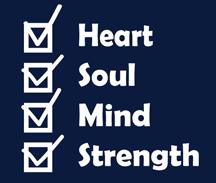
But what if you can’t think? What if you can’t remember whether some statement that you hear is your head is your own or something you heard at lunch? What if the alternatives you pose don’t fit on the same axis? [3] What if you assert the truth of proposition X at 3:00 and the contradictory proposition Y at 4:00? This is where I start to lose people because they think I am being nasty, but really, if you can’t think, you can’t think the right things.

OK, let’s say that topic is concluded. (I know better, I just need to move on.) Is this person, who is no longer orthodox, still Christian?  Of course he is. Did we think that being accepted as a part of God’s family was a matter of believing the right things? Really?

For many years I have treasured the scorn that James (2:19) lays on people who take pride in their orthodoxy. “You believe in One God? Terrific! That makes you as orthodox as the demons, who know it for a fact what you struggle to believe and they shudder.”  It’s my own paraphrase: I just like to work in a little more of the scorn I think the verse carries.

orthodox 6I think a much better measure of being Christian, of being, as Christians understand it, a part of God’s family, is saying Yes to God with every available resource. Here’s a handy checklist. (See Deuteronomy 6 and Mark 12) To know what the authors of Deuteronomy meant, you would have to have a better grasp than I do of the crucial terms. What did they mean by “heart” or by “soul,” for instance?  When I run a checklist of that kind for myself, I use these four categories: what I think, what I intend, how I feel, and what I do.  That is a series that is meaningful to me. [4]

We have already taken thinking off the list, so far as “believing the right things” is concerned, but there may be other ways you can use your mind to say Yes to whatever God is asking from you. Your ability to intend some outcome and to pursue it successfully may have shriveled along with your ability to remember what you intended, but I’d be open to the idea that intending to be truthful or generous or grateful in whatever lucid moments you have meets the “with all your strength” criterion in Deuteronomy.

I don’t know how rich the emotional life of an Alzheimer’s patient is, but my guess is that if you can feel  both the tug of resentment and the invitation to joy, you can still lean in the one direction or the other.

I remember vividly a story my mother used to tell about what happened one day when my brother Mark and his wife Carol visited my father. There wasn’t much left of Dad’s mind by that time. Mark did what I would have done. He treated what was left of Dad as a person deserving of respect. Carol greeted him warmly and went over to the bedside and kissed him on the cheek. Those are both really good things to do.

When they had left, Mother reviewed the event with Dad. She wanted to be sure he understood that his son had come to visit. The way I heard the story, Mom said, “You know who that was, don’t you?” And Dad said, “His wife kissed me.” I have no idea what Dad was thinking or feeling about himself by then, but I’d guess that he understood that he had the choice of opening himself to this gift or of closing himself off from it and that he said Yes.

When the last fragment of you says Yes, you are doing the right thing.

Open the Door

Finally, I think sometimes about the invitation Jesus gives in Revelation 3:20. Here it is in the New Jerusalem Bible:

Look, I am standing at the door, knocking. If one of you hears me calling and opens the door, I will come in to share a meal at that person’s side.

orthodox 5The only question that verse asks of the person living in that house is, “Are you going to open the door?” It doesn’t ask if you know who is knocking. It doesn’t ask if you had intended to have a visitor. It doesn’t ask if you are anxious about who is knocking. It asks whether you are going to open the door.

I’ve always liked that particular scripture because it is so clearly an invitation. It isn’t an invitation matched with a threat. It doesn’t say that Jesus is going to go on banging on the door until your neighbors are up in arms. I like it because it is gentle and because it puts the ball in my court. “What are you going to do?” it asks.

Imagine now that I have had a stroke and can no longer get to the door. Or that I have been gagged and tied to a chair. Or that I have gone next door to help care for a neighbor. Is there any circumstance you can imagine in which the Jesus of this invitation would say, “Well…if you can’t get to the door, the whole deal is off.” Any circumstance at all?

And that is why I imagine that people who have said Yes with all their heart and mind and soul and strength will be welcomed home when only the merest fragments of their “selves” are still at their command.

[1] I’m not talking about dictionary meanings here, but only that among these people, this word is ordinarily accepted as meaning this. That’s what I mean by “supposed to:” I mean that the word is commonly supposed to mean that one thing.
[2] I am not, obviously, using a common abbreviation for the Greek Orthodox church. I just mean “believing what you are supposed to believe in your religious setting or group.” A very very loose definition, you will agree.
[3] A joke I remember from grade school is: “Would you rather walk to work…or carry your lunch.” It was supposed to be funny because things are presented as alternatives that really don’t belong on the same axis.
[4] If you ever have to run that series yourself, you can call them what I called them in grad school: cognition, conation, affect, and behavior.  Or “behavior tendency” if there is a behaviorist in the crowd.

Posted in A life of faith, Getting Old | Tagged , , , | Leave a comment

Michael Moore on “Where to Invade Next”

The United States (hereafter “we”) look really bad in the recent Michael Moore movie, moore 2“Where to Invade Next.” That’s not a headline. We don’t look good in any of the Michael Moore movies. It’s just a statement about what I want to think about today.

According to my own highly personal system of counting, I have seen “Where to Invade Next” three times. I went to see it while Bette was off visiting one of the countries Moore includes in the movie (Germany) and then, last night, saw it again with her. I count seeing a movie with Bette as seeing it twice. She sees it differently than I do and then we talk about it afterwards. It’s like seeing it again, only for free.

Jonathan Kim makes a really interesting point about Michael Moore movies in his Huffington Post article.

But when looking at his filmography, no one can dispute his track record for shining a light on issues several years before they’re noticed by the corporate media or adopted by politicians.

With his first film, 1989’s Roger & Me, Moore showed the devastating effects of offshoring and corporate callousness on his hometown of Flint, Michigan. Bowling For Columbine in 2002 drew attention to America’s uniquely insane gun obsession and its consequences years before mass shootings became commonplace. Moore slammed the door on the Bush administration’s response to 9/11, the catastrophic Iraq war, and the media’s complicity in both with Fahrenheit 9/11 in 2004, and three years before Obamacare was signed into law, Moore skewered the cartoonish cruelty of the health insurance industry in 2007’s Sicko while making a demand for universal healthcare.  And two years before Occupy Wall Street, Moore called out an economy rigged for the rich in 2009’s Capitalism: A Love Story, with the housing meltdown and subsequent bailout as the ultimate crime scene.

The first time I saw it, I paid attention to the material he presented. The Italians have more generous vacation policies than we do; the French serve better (and cheaper) school lunches, the Germans have dealt more courageously with their shameful past [1]; the Portuguese have a better drug policy; the Finns have better schools; the Norwegians have a more enlightened (and more effective) prison system, and so on.

What I noticed in seeing twice more [2] is that the argument he makes is the same for every topic. I’m going to add a bunch of caveats in the next paragraph, so just lay yours aside for now.

Moore compares the outcomes they are getting with the outcomes we are getting here. Theirs are better. Very often, they are also cheaper.

Now the yes buts. Yes, but Moore cherrypicks the issue he wants for every country he visits. Yes. He does. Imagining for the moment that Slovenia, for instance, is not as good at everything as they are at the feature Moore is examining [3], he spends no time at all on what they are not good at. That is not the point he wants to make.

Yes, but Moore does not account for the inevitable decay in the character of the work force when they are no longer driven by poverty or the threat of poverty. No. He does not. He looks at how things are now, not at how things might come to be if the same policies are continued.

Yes, but Moore considers only domestic policies. The only reference to foreign policy in the whole film is his claim that the U. S. spends 60% of its budget on the military. Could these other countries—Norway and Iceland and France, for instance—afford such generous domestic policies if they spend as much as we do on the military. No, probably they couldn’t. But since we are spending it, they don’t have to.

Yes, but Moore does not present a balanced picture. No. He doesn’t. He claims that the coverage of these issues in the U. S. is completely dominated by status quo conservatives and his films are a corrective. He films rebuttals. No one would expect a rebuttal to be fair to all the arguments.

OK, enough of that. I can’t hit all the yes, buts, so I have chosen these as a representative collection.

Moore’s movie is a visual feast. For instance, the sun is always shining in the countries he visits. Even Norway and Finland. The people are happy and productive. Things are good. The best part of the movie for me was seeing and hearing the people who get a chance to tell about their lives—on camera.

moore 3The Italian couple pictured here who are accustomed to eight weeks of vacation every year are astounded to learn that American workers get none at all—by law. Moore does admit that vacation hours are negotiated in contracts. She is in a mid-level business; he’s a cop. They both look very good in the vacation pictures that someone takes of them nearly everywhere in the world it is sunny and warm.

But this guy (below), who runs a Bugati motorcycle factory says that treating the workers well not only insures that they will work productively, but it means he gets to live in a country where people have free time and know how to use it. He agrees that he would make more money if he tightened the screws a little, but he thinks he makes enough money and he likes living in Italy.

I think France is my favorite. He chooses school lunches and sex education in France. Themoore 6 meal we see at the elementary school is charming. It is served by kitchen staff. On china. A four-course meal. For less per child than we spend. And they get an hour to eat it.
I suppose I could find something to criticize if I worked at it, but the whole scene charmed me and I didn’t feel like working at it. Lunch was treated as one of the school learning periods. What to eat. How to eat. How to share food with others at the table. Moore’s best line comes as a very attractive small plate of food is shown. Just that plate of food takes up the whole screen. It looks wonderful. Moore’s line is, “This is just the appetizer.” It turns out that there are three more courses to follow.  In the picture below, Moore, playing the American buffoon, is the only inappropriately dressed person at the table.

The class in sex education was based on the idea that young people are going to engage in sexual activity. The question of whether they should or not was not raised. The teacher wanted to talk about how important it was for each party to attend to the sexual experience of the other; how the sexual part was just a part of a larger relationship, and so on.

moore 5

It is entirely possible, of course, to approach premarital [4] sex from a principally moral point of view. That view can be succinctly summarized: don’t. But, of course, it doesn’t work. Moore brings Texas governor Rick Perry on in a film clip to say that “abstinence only” works as a public policy. He says he has personal experience that it works. The question the interviewer is asking Perry is why, if abstinence only education works so well in Texas, does Texas have the third highest teen pregnancy rates in the country. And lest we miss the point, Moore puts a graph of teen pregnancy rates in France and in the U. S. up on the screen. We have…maybe three times (or so) the number of teen pregnancies.

And this is really Moore’s strategy throughout. He shows what works in the host country. He shows that what they are doing there is working a lot better than what we are doing here. The question, mostly unasked in the movie, is, “Why wouldn’t we want to have those results here?” [5]

And that’s really the feeling I have after my multiple viewings. Watching those French and Finnish and Portuguese and Tunisian and Icelandic and German and Norwegian citizens describing the outcomes of their policies with such pride, I find myself yearning for those kinds of outcome and that kind of pride here in my country.

Bette said, as we sat down to discuss the movie, “What do you think about it?” That’s nearly always a good question for me because what I think about a movie is usually what is available to me first. Not this time. This time, I had to say, “This isn’t a thinking movie for me yet. It’s just a feeling movie so far and it makes me feel sad.”

[1] I’m sure Moore thinks every nation-state has a shameful past. He characterizes ours as “based on genocide and built by slave labor.” That’s not entirely accurate, of course; on the other hand, you can’t say it is wrong.
[2] I’m appreciating this numbering system more as I go on. I bought three tickets and “saw the movie” three times. It doesn’t sound bad at all that way.
[3] It is the free provision of university education to everyone who lives in Slovenia—even the American students who moved there because they could not afford to go to school here.
[4] As marriage continues to decline as a normal state of adult relations, we are going to need a prefix other than pre-. Extramarital could have meant, but it has not, “sex without reference to marriage.” Possibly “non-marital” is still available because, so far as I know, it does not have a meaning.
[5] The official in charge of Portugal’s drug policy tries to warn Moore away from his obvious interest in transplanting Portugal’s drug policy to the U. S. It isn’t just a piece of policy, the official says. You can’t just pick this one up and plunk it down in your country. Our policy requires health care for all our citizens and I know you don’t have that in your country.


Posted in Politics, Society, Sustainability | Tagged , , , , , | Leave a comment

Being “useful”

“We do not take well to uselessness.”

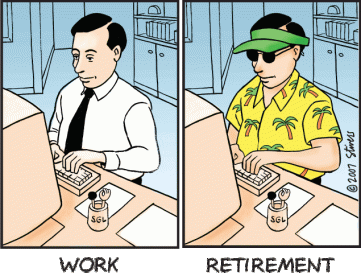
So says Wendy Lustbader in her superb Counting on Kindness: the Dilemmas of Dependency. She has older people in mind, but I would like to explore the idea today in a somewhat broader context. There is no question in my mind that she is right in what she says, but I wonder if the fact that we take so poorly to it retire 1is as good a thing as she thinks it is.

Let’s take retirement first. [1] A common complaint among American men who have “retired” from their jobs is that they feel useless. [2] That kind of “usefulness” relies on the contribution you make to the company and fuses with it the regard for your work that comes from your colleagues. But it could mean that your retirement from that battlefield frees you to choose another battlefield, one that better serves the forces you still have to commit.

If retirement means only that, that you are now free to choose another engagement with other foes with increased odds of “winning,” then there is no reason whatever that a man retiring from his job would need to run the risk of feeling useless.

Unless, of course: a) doing that particular job is the only reason he values himself, b) there are no other commitments that truly engage him, and c) there are no other colleagues who assess his work and value it when it is good. If he doesn’t have any of those, then “not being at work” is not the problem he thinks it is.  His problems are much deeper than he has suspected.

There is a broader context, however. “Usefulness” is a kind of doing. It is not a kind of being. Is doing really all that matters? Really?  The being/doing distinction can be seen as fundamental, but that’s not the way I am thinking of it here. Anyone who engages himself or herself completely in a world (of experience) or in a task, does not rely on the activity, and may scarcely be aware of it.

Mihaly Czickszentmihaly describes the experience as “flow.” [3] When you are in a state of flow, the world goes away. The conversation you are having becomes vivid and all the rest of the world, pallid; the picture you are painting and its possibilities, both chosen and rejected, is the whole world of your experience; the concept you have almost but not quite grasped makes up all of “what you are doing” and peripherals like…oh…eating, sleeping, and being somewhere on time, simply recede into the distance.

No one, in a state of flow, wonders whether he or she is being “useful.”

There is a distinction, as well, between “who I am” and “what I do.” It’s not a simple distinction, obviously, but I would like to drop a pin in the map right there so we can find our way back.

retire 3Another difficulty that the notion of “uselessness” hands us is, “What do we mean when we say ‘useful’?” Society is a rough and ready kind of enterprise so far as meanings go. Society is possible because “close enough” is the standard for giving and receiving meaning. But every now that then, “good enough” really isn’t good enough and I think this is one. What if, for instance, our common definitions of “useful” are merely conventional? What is these common definitions are not “useful?” What if another notion of “useful,” on being presented, would be welcomed and would benefit us all?

Here’s an example. There was quite a bit of time that elapsed between my wife, Marilyn’s cancer diagnosis and her death. During most of that time, she was disabled by cancer treatments of one kind or another and she understood that her obvious frailties made her a problem for her friends. Marilyn didn’t give up on being “useful” and she didn’t demand that her friends give up on it either.  She did something better than either of those.

She actively pursued a sense of easy exchange with her friends. Her friends wanted to be with her and to console her. Marilyn did all the work that made it possible for them to do that. She actively defined the relationship between herself and her friends so that they would know they were “doing it right;” so they would be at ease from the first and would grow more confident and more effective as they went on.

Everyone looking at that scene would agree that her friends were there to “be useful to her.” And they were. And they would have done the things that she needed had she been self-conscious and spiteful or had she grown weary from the persistent demands for gratitude. But Marilyn’s notion of “usefulness” to her friends enabled her to invite them to do things for her and to receive their efforts with generosity.

So she was at least as “useful” to them as they were to her. More useful, as I saw it. I was dumbfounded. I had never considered the possibility that avoiding “uselessness” could look like that. Obviously, I had never seen it either. I filed it away so that should I ever be in that situation, I will have her strength and generosity as a guide.

When I think of “useful” in the conventional ways, what Marilyn did simply does not come into view. That is one of the reasons that conventional meanings need to be expanded from time to time. So here is an example of a different sort entirely.

I am part of a weekly discussion group where the discussion ebbs and flows. There is oneretire 2.png member of the group who is willing to ask the “Why is grass green?” kind of question. No one knows the answer, but we all think we should so all of us pass the opportunity by and none of us asks it. But this one guy does. He would be very much surprised, I think, to learn that his contribution is “useful” to the group; it is, in fact, much more than useful. It is vital.
If he were to learn the value of what he does so that he could do it on purpose when it is needed, I think he should be designated A National Resource and loaned out, when needed, to groups whose discussions are doing more ebbing and less flowing.

Lustbader is right, I think, to point to the phenomenon of “uselessness,” especially in older adults. And the feeling of “being useless” is a very real feeling for many seniors. But we ought to ask, I think, why we have allowed our notion of what is “useful” to shrink so drastically. Why is “working for a wage” a useful thing to do, but making your home an inviting place for the grandkids or a place of refuge for their parents “not useful?” Why is making shrewd and productive investments in bonds “useful,” but making shrewd and productive investments in friendships, not? [4]

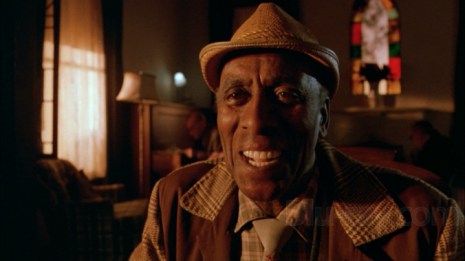
I want to leave you with an image of “retirement” to consider. I have a DVD of the movie The Twilight Zone, which, taken as a whole, is wa-a-a-y too scary for my taste. But there is one episode that features Scatman Crothers as Mr. Bloom. He’s new to this senior center. He apparently doesn’t know how the game is played, because he keeps asking questions that lead the residents to remember who they were and to take pleasure in the memories.

retire 6One night, all the residents (except the one holdout) are magically transformed into themselves as children. They run and play and laugh. But before the night is over, they have begun to remember also the wonderful relationships and events of which they were a part and which they will not have any access to unless they go back to their old selves. And Mr. Bloom gives them that. You can go back, he says, to “your old comfortable bodies,” but with “fresh young minds.” The next morning these old people nearly erupt from the senior center, bursting with things to do and places to go that were there all along, but which they had not been willing to contemplate.
Mr. Bloom watches all this activity with satisfaction, then ambles down the walk and along the street where he turns in at the entrance to another senior center—one that looks remarkably like the one he has just left. The residents are sitting or standing in the front yard staring into a meaningless middle distance. Bloom waves his cane in front of the eyes of one old man, provoking not so much as a blink.

“Oh boy,” says Bloom, facing the camera, “this [new assignment] is going to be a tough one.

I tell that story for two reasons. The first is that we see Mr. Bloom “retire,” leave the field, from the first nursing home. This is the only field of action in the movie until the last few seconds.  Why has he done that? Because he is about to begin his campaign at another nursing home. I think “retirement” can mean that.

And then there is the question of Mr. Bloom and “uselessness.” Mr. Bloom is the antithesis of uselessness. And also the antidote.

[1] I have been waiting for some time now for a chance to return that word to its natural home. When an army “retires” from the field, it may be for any number of reasons, most prominent among them is that they want to take up a stronger defensive position elsewhere. Robert E. Lee’s refusal to “retire” from Gettysburg after the first day brought about the disaster of the third day.  For us, it just means that today’s retirement helps to set the table for tomorrow’s victory.
[2] This has not been so common among American women because they much more frequently have additional commitments and they don’t retire from those. That sounds pretty sensible to me.
[3] In his book by that name.
[4] The friendships you invest in don’t need to include you at all. It is perfectly possible to invest in people so that they are drawn to their friendship with each other. Seeing their friendship flourish, you have every reason to “retire” from it and to be pleased with your work.

Posted in Getting Old | Tagged , , , , | Leave a comment

Why we want to elect “a strong man”

I recently wrote an essay on the theme that Donald Trump, as scary as he is as a candidate, is really only a product of our electoral feelings. The metaphor I used was that Trump is a weed, the plant that grows naturally in the kind of soil we (the U. S.) now have. I used my back yard as an example. The soil in my yard is too “clay-ey” so the water doesn’t drain away as it should [1] so instead of the grass I prefer, I get weeds. I get the plants that grow naturally in the soil I have.

I liked that argument and so did a lot of other people. It is so easy to say nasty things about Trump, especially if you are a liberal Democrat like me, [2] but saying nasty things about weeds doesn’t grow grass.trump b2 Amending the soil, so that the kinds of plants you want in your yard really would help. If the moisture retention of clay is my problem, then amending it with organic matter to improve drainage is the solution.

So let’s turn this ordinary back yard insight toward our politics. Imagine, for instance, that our presidential campaigns pitted the two major parties and their ideas against each other. The people chose on the basis of the platforms provided by the candidates and the united party who nominated that candidate stood ready to put that platform into operation. You could have a party/candidate favoring more centralized power against a party/candidate favoring more freedom for the states to find their own way. You could have a party/candidate who favors the redistribution of income from the poor to the rich running against a party/candidate favoring the redistribution of income from the rich to the poor.

But that’s not what we have in our politics and in this essay, I want to argue that we are up against the limits of soil amendment. I am going to extend the soil analogy in a different direction today. I think that sometimes, historical circumstances so dominate the political reality of a country that the soil cannot be amended, that all efforts at “soil amendment” will fail. And not long after that “trying to amend the soil” will be vilified and the Amenders condemned as “part of the status quo.”

I have Germany in the 1920’s in mind. I think the same forces that produced Hitler in the Germany of the 1920s have made conditions favorable for Trump in 2016. I’m not saying that Trump is Hitler. I am saying that the same soil produces the same weeds.

That means that I don’t have to say that Trump is “like” Hitler or that he is “playing the role” of Hitler. I get to say, instead, that the passionate desire of many Americans to elect a “strong man” is caused by many of the same conditions in the U. S. today that caused it in Germany during Hitler’s candidacy. [3] Over and over, you hear Trump supporters say that the status quo has failed and the country is in danger and now is the time to elect “a strong man.”

Let me pause to tell you a story that I find to be pertinent. I was at a lecture in Missoula, trump 2Montana in August 1991. A professor from the University of Montana had just given a talk opposing President George H. W. Bush’s “Operation Desert Shield.” It was a pro-Bush crowd so there was a lot of conversation afterwards. During the conversation, an old German man came up to me and said, in broken English, something that chilled my blood at the time and that I have never forgotten. He said, “I haff heard all ziss before,” and he went away shaking his head sadly. It chilled my blood because I knew who he had heard it from. He had heard if from Hermann Goering.

“Of course the people don’t want war. But after all, it’s the leaders of the country who determine the policy, and it’s always a simple matter to drag the people along whether it’s a democracy, a fascist dictatorship, or a parliament, or a communist dictatorship. Voice or no voice, the people can always be brought to the bidding of the leaders. That is easy. All you have to do is tell them they are being attacked, and denounce the pacifists for lack of patriotism, and exposing the country to greater danger.”

— Herman Goering at the Nuremberg trials

The German people wanted a strong man as their leader. How could they not want that, given the condition Germany was in? So they elected Hitler and Hitler appointed Goering and Goering told the people that they were being betrayed by their leaders and attacked by their enemies and that those Germans who were not as bellicose as the Nazis were traitors.

Hitler and Goering are the people who would have had a chance to amend the soil once President Hindenburg gave up.  Some responses to my earlier post were that it is “the people who should amend the soil, but in Goering’s statement above, the people ARE the soil. They are not in a position to “amend” anything. They are Germans, they are paying the price for their leaders’ conduct of World War I; their economy is a disaster of hyperinflation; their “Congress,” the Reichstag,  does not seem to be able to stir itself to address the crisis. It is time for “strong measures” and that will require a “strong leader.”

To return briefly to my landscaping metaphor, the costs of World War I and the post-war effects of World War I “fixed” the soil beyond hope of amendment. The Weimar government (1919—1933) could not have amended the soil, under the circumstances, to bring to the front a Chancellor who would negotiate with other nations for a return to prosperity in Germany. [4] It is popular and common to blame the Weimar leaders for their ineffectiveness and there is no question that they were ineffective. The case I am making here is that the powerful desire the German people felt for a “strong leader” was what guaranteed that they would be ineffective.

Maybe it is time for another story. There is a Nazi extermination camp in Mauthausen, KZ Mauthausen, Häftlinge im SteinbruchGermany. For me, Mauthausen is the name of the camp, a place where Jews and other “enemies of the state” were to be sent to die. [5] The camp is now a tourist attraction, of course, complete with a very good bookstore. That was where I found The Logic of Evil: the Social Origins of the Nazi Party, by William Brustein of the University of Minnesota.  These are “the stairs of death” at Mauthausen when the camp was in full operation.  I walked these steps on a beautiful sunny day and could scarcely believe they were the same steps.

Brustein shows that the elections of 1932 in Germany and the United States were remarkably similar. Depression-ridden countries hoping for a new confident strong leader to bring the nation back to health were a similar soil for Roosevelt and for Hitler.  Hitler had another agenda, of course, but he didn’t push it on the campaign trail in 1932.  His campaign speeches sound remarkably like Roosevelt’s.

How about the pathetic ineffectiveness of the Weimar government?  Would anyone like to compare the effectiveness of the German parliament from 1924—1932 with the effectiveness of the American Congress from 2010—2016? As an American, I would be very hesitant to make the comparison. The faith of the German people in moderate, centrist politics was badly frayed by that time. Their plight was so severe that they had begun to call a government by their elected representatives “politics as usual” and to reject it with scorn. They yearned for a strong leader who restore Germany to its former strength and glory.  And they got one.

The passage of the PATRIOT act [6] was not as extreme as the Reichstag Fire Decree or the Enabling Act of 1933, which enabled Hitler to take complete control of the government and to suppress his enemies by means that were clearly forbidden under the German Constitution. The PATRIOT act was passed, however, in a flurry of hyped up fear and it immediately began to erode civil liberties that Americans had taken for granted. Bush’s PATRIOT act, like Hitler’s Enabling Act were “temporary measures,” necessary for “the immediate crisis.”

trump 1But as the fear and anger are jacked up, what was once the vital middle of the spectrum comes to seem “politics as usual,” or, even worse, as “the status quo.” You hear people ay they are “against the status quo” as if it were one thing and as if whatever broke it would be better. Clearly politics as usual is not giving us back the America that was stolen from us under the leadership of the moderates. (Ronald Reagan, by the way, was one of those “moderates.”) Politics as usual is not protecting us from the threat of—in the U. S. today, that means “the existence of”—extremist groups who will count no cost too high if they can inflict even a minor wound on the U. S. It’s time to elect a “strong man.”  This is a real Trump rally picture.  Let’s hope it isn’t really representative.
My argument here is that under those historical circumstances, the nature of the soil is fixed beyond hope of amendment until the conditions favoring amendment return. If the people who want to fix my soil by improving the drainage and declared enemies of the people for their efforts, they will stop making those efforts. That applies as well to parties as to candidates.

The soil which is producing today’s weeds—I described it in the earlier post by using Richard Hofstadter’s term “the paranoid style”—is marked by irrationality and violence. If we are so fearful and so alienated that we will not elect people who will bring about an improvement in our civil soil, then we will keep producing weeds.

I’m looking for some appreciation of how we can move forward together. That was Barack Obama’s appeal. Then it was his promise. Then the promise was systematically derided for partisan advantage. We need to find a way to hope again. I don’t know what will do that for us.

Obviously, as a Democrat, I hope that a Democratic candidate will be elected, but  electing a Democratic candidate won’t amend the soil. It won’t even remove the weeds. And I don’t know what will.


[1] “Should” here is not a term of argument. It means only that I have preferences about what kind of plants (grass) I want in my yard and growing that grass would require better drainage than I have devised.
[2] I’m a pragmatic liberal Democrat. That means that my heart belongs to Bernie, but my vote is going to Hilary.
[3] The rise of Vladimir Putin as a “strong man” ruler in Russia is directly parallel, but adding him in complicates the mix.
[4] Of course, the other nations did not want to help Germany return to prosperity. Hitler’s leadership in restoring Germany to prosperity was done by violating the treaties which had the permanent subjugation of Germany as their goal. How do you think that played on the campaign trail in 1932.
[5] Since it is the name of the town, local businesses have the same name. We rode past a Mauthausen McDonalds, for instance. It is hard to get past the association. Imagine that there is a McDonalds in Auschwitz (also a place name) that features “the Auschwitzburger.” That would be a hard sandwich for an American to order and there is nothing wrong with the name except my own inability to separate the name of the town from the name of the camp.
[6] People forget that the PATRIOT act—always, properly, in caps—is an acronym. It stands for “Uniting and Strengthening America by Providing Appropriate Tools Required to Intercept and Obstruct Terrorism.”

Posted in Political Psychology, Politics | Tagged , , , , | 4 Comments

“The Intern” as a Theological Prop

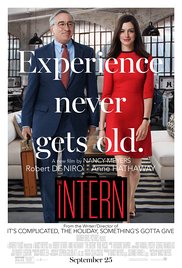
This is a frankly theological take on Nancy Meyers’ movie, The Intern. As always, I absolve the writer, the director (both Nancy Meyers) the producers, and all the actors from having any such intention. I am writing here about the meaning that came to me as I watched this movie over and over, trying to find a name for just what it was about this story that fascinated me so deeply.

We are going to take this in three pieces. There is the theological background in general.intern 1 Then the question of what “empties himself” means, both in the case of Jesus and in the case of Ben Whittaker. Then, second, there is the question of what is actually emptied. I don’t know what that means for Jesus, but what it means for Ben is what the movie is about. Finally, there is the question of what is not–can not be?–emptied.

My overall goal is to give you a clear account of how this movie happened to me. If you can get that, I’ll feel pretty good about this essay. This is not the first movie to have affected me this way. I call it “Reel Theology.”

Theological Background

There is a well-known hymn in Philippians 2, which includes the famous “kenosis” passage.  Here are the first two of the five stanzas, verses 6—17. It goes like this. “Make your own mind [like] the mind of Christ Jesus:

Who, being in the form of God
did not count equality with God
something to be grasped

But he emptied himself
taking the form of a slave
becoming as human beings are…”

Those two stanzas are the basis of a lot of Christian theology. I don’t understand it all, but I’m OK with that. What does “in the form of God” mean in verse 6 for instance or “in the form of a slave” in verse 7? Is the goal to distinguish form from substance? Too deep for me.

intern 12My problem is not with understanding it. I can’t. My problem is with not caring about it. I’m not really critical of myself for failing to care, but I think  all Christians are poorer if they fail to care about this fundamentally important mystery. I think we need to live with it and care about it. I would really like to understand it; that’s the kind of person I am. But even failing to understand it, I am not prepared to stop caring. How to do that?
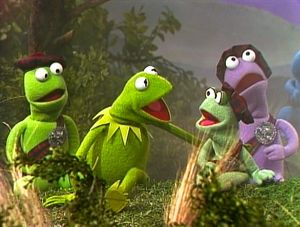
One way I have approached this problem—the problem of understanding and caring— is to take a little piece of it; just a fragment. Maybe I can learn to care about the fragment. Maybe I can attach myself emotionally to the fragment and begin to engage the larger issue from a base of actually caring about it; feeling something about it.

In my view, for instance, the Muppets version of The Frog Prince is a really good treatment of this same passage. You don’t have to know what “in the form of God” means to feel a lot of sympathy with a little frog [1] who doesn’t know where he is (at the moment) or who he is (at the moment) but who is forced to say, when asked, that his name is Sir Robin the Brave. And he has to say that to Kermit, who is open, but skeptical.

I know it is suppose to be funny, but it is also humiliating and I don’t really think humiliation is funny, even when it is managed by the Muppets. I can feel a little bit of the little frog’s confusion and shame. All the other frogs have names derived from the knights of King Arthur’s time and they are big competent (they can swim) and confident frogs. And to them, the scrawny little frog must say, “They call me…Sir Robin the Brave.”  Oh, and by the way, I am really a prince.

intern 5Sir Robin’s problem is the tiniest fragment of the dilemma Jesus faced in “giving up the form of God,” but since I have no idea what “the form of God” means, I don’t really feel anything about it. I really get the little frog’s problem. I can feel that one.

I argue, below, that the dilemma Ben Whittaker faces in The Intern is similar. It is, like The Frog Prince, a tiny piece of a massive theological construct. But my mind, tuned to Paul’s theological rhetoric and the magic of the Muppets, sees in Ben Whittaker’s dilemma, an “emptying” that catches both my mind and my heart. [2]

What is to be emptied?

In the hymn, Jesus is supposed to have “emptied” his divinity. No one knows what that means, so it’s really hard to care about it. Ben has to empty his “self-importance.” Everybody know what that means. For this metaphor to work, you will need to understand that Jesus really was divine and that Ben really was (had been) important. V. P. for Sales and Advertising for a major company qualifies as “important.” But when you think about it, what Ben has done really doesn’t—or really shouldn’t—bear at all on whether he can be a successful “senior intern” with About the Fit, the online clothing company who is hiring the interns.

So Ben, in his interviews, needs to make a complete break. Yes, he used to be important, but now he is not. So the faintest breath of “I used to be a very important person” really should be called “self-importance.” And the faintest breath of it would kill his chances of doing anything worth while.

So let’s try the Philippians hymn again, hoping to keep the relationship between the statuses (form of God/form of a slave) intact, but changing the statuses themselves (VP for Sales and Advertising/intern). Here’s what that gives us.

Ben, who was really VP for Sales and Advertising
did not count “executive status”
as something to be grasped

But emptied himself
taking the form of an intern
being treated as interns are.

If divine/human are categories you care deeply about, this adaptation of the kenosis hymn is not going to be your kind of thing. I am aware that it might be offensive. But if you are like me—unable to really care about divine/human [2]—it is possible that you might really be able to feel the boss/intern dilemma. That’s what this is for: the emotions attach to the small event, the significance can be transferred to the framework of meaning.

How does the movie show that “emptying?”

Here are a few samples.  The first interviewer starts off in a very orthodox manner. “Where did you go to school?” Northwestern. “What did you major in?” Then a very short pause and …”Do you remember?” They don’t show Ben’s face after than, but take it from me, there was no expression of exasperation or impatience. None.

intern 3The second interviewer picks up at college and asks about work history. This is the first time we, as viewers, hear that Ben was V.P. for Sales and Advertising and later was in charge of the production of the physical phone book. For New York. The second interviewer wants to know why people don’t just google phone numbers. Ben is unflappable. “Well yes, but back then people needed phone books.”

His first interview with Jules goes the same way. I think you’d be much better down in “creative” or “sales.” The pace is a little slower.” Ben’s response is that he is here to learn about her world.

Throughout all this, Ben is someone who asks for no special treatment. There is not the merest vestige of “I used to be somebody important” in his words or his manner.

What does Ben keep?

I think it would be fair to say that the Jesus of the Synoptic gospels does not “keep” anything. He is, in that respect, a lot like Jason Bourne in that everybody is trying to kill him and Jason needs desperately to find out who he is so he will know why that is happening and be able to do something about it. [3] Ben isn’t like that. Ben will continue to be the kind of person in this new job that he has always been. So far as appearances go, that means he will stand out in a young-and-grubby culture. He wears a suit and tie every day. He shaves every day. He carries a briefcase that has “old things” in it: a calculator, a couple of pairs of glasses, a clock, and so on.

Ben the executive was like that and Ben the intern is like that. But Ben keeps some other things, too. He keeps his character. In his interview video he says this about himself: I’ve been a company man all my life. I’m loyal. I’m trustworthy. And I’m good in a crisis.

intern 4He doesn’t “empty” those things. They were part of his old self and they are part of his current self. And they save him. They save the company, too. And Jules Ostin, the company’s founder, whose intern he is. It is not hard to track those traits in the story. [4] Ben goes into a conference room to perform a very simple task that Becky, Jules’ secretary, has summoned him to do. While there, he hears crisis discussed—a crisis for the company and also for the founder. When he reports back to the secretary, she says, “So…what were they talking about in there.” Ben replies, “I really couldn’t say.” Becky prompts, “You were in there a long time…” Ben comes back with, “I couldn’t hear a thing.” Not true, of course, because he did hear; but also not a lie because Becky knows exactly what he means.

When he begins as Jules’ driver, she cautions him, “Whatever you hear in this car is completely confidential.” Ben waves it off, “Goes without saying.” She knows what he means and believes him.

There is a lot more story, of course, but the narrative I care most about comes to a satisfying climax somewhere around the middle of the movie. Jules and Ben are working late. Jules brings a box of pizza and a couple of beers over to Ben’s desk because she “doesn’t like to eat alone.” The payoff in this scene comes when you see Jules’ eyes register the truth and then, “No. Surely not.” [4]

Jules already knew that this old building—the one they gutted and wired for online sales—was an old factory. She knew that old factory had made phone books. As they sit there together with their pizza, she learns that Ben used to be an executive in a company that made phone books. That’s when the light of recognition comes into her eyes. That’s when she realizes that About the Fit, her brain child (her heart child too) is built in Ben’s old home and that in coming to work for her, he is coming “home.”

That brings us to the same notion, theologically speaking, but from the other side. The hymn with the Gospel of John begins, includes:

10 He was in the world, and the world came into being through him; yet the world did not know him. 11 He came to what was his own,[c] and his own people did not accept him.

That’s good for Jesus. It’s way too much for Ben Whittaker. But if you have that language in your ears already, it is very nearly irresistible. Ben, who was once a VIP, comes back to the very place where he was a VIP and esteems that past so little that his boss has to discover it herself. She knows what it means. And she knows that if she had not discovered it, no one would ever have known.

And that is my favorite moment in the film.

[1] We know that the little frog is “really” a prince and that an evil witch has enchanted him, but in his case there is no question what “in the form of a frog” means.
[2] The Greek is heauton ekenōsen: “he emptied himself. This passage in Philippians 2 is called the kenosis passage for that reason.
[3] The Jesus of the Gospel of John is an entirely different story. There, Jesus is, for all practical purposes, a tourist here in our world. He still has his citizenship papers and his passport and he can go “home” anytime. Well…any time after his mission is accomplished.
[4] Not hard, particularly, after you have seen it a dozen times, several times just to track the virtues promised in the video to see where in the narrative they are displayed.
[5] I added a few words to this quote because the real meaning in in the way she says it and I don’t know how to convey that.

Posted in Biblical Studies, Theology | Tagged , , , , | Leave a comment

Being Nice (or not)

I had a truly amazing experience this week.  It happened right in front of me in less than a minute and I have been thinking about it ever since.  I was there to buy batteries.  A more complicated sale–the earphones you see on the counter–was going on.  The clerk was explaining–over and over again, using different words each time–how these earphones were going to work once this woman got them home.

.IMG_0096.jpg

I wasn’t doing anything notable.  I was not in a hurry and I was waiting my turn without even fidgeting.  Then this woman turned to me and took a few steps in my direction and said, “When you are old, you have to be nice to people or they won’t like you.”

The event I described, happened.  The photograph is completely untouched.  It is not even cropped, which would make it a better photograph.  Everything else I am going to say is one of two things.  It is a keen observation based on years of careful study of people in interaction with each other or it is sheer fantasy.  I report; you decide. [1]

My impression of this woman is that she is still attractive.  She pays a lot of attention to her appearance.  She has the manner of a woman who has been beautiful all her life.  Or, to say it another way, she has been treated as if she were beautiful all her life.  She has “played the role of a beauty.”  She has expected others to respond to her in that way.

To illustrate what I mean by that, I offer a clip from Neal Stephenson’s Cryptonomicon (pages 696-7 of the Avon edition).  “Mom” is the mother of one of the principal characters.  Note that what we know about her–this is all family lore–is that “her bearing and appearance” had an instant effect on even very unpromising settings, in this case “a biker bar.”

It had been a standing joke among her male offspring that Mom could walk unescorted into any biker bar in the world and simply by her bearing and appearance cause all ongoing fistfights to be instantly suspended, all grubby elbows to be removed from the bar, postures to straighten, salty language to be choked off. The bikers would climb over one another’s backs to take her coat, pull her chair back, address her as ma’am, etc.

This woman expected to be treated that way.  She exhibited the physical prompts that elicit the behavior she expects and she gets it.  We have Neal Stephenson’s word (via the treasure  of  Waterhouse family lore) that this happened.  I cite it to suggest the kind of thing I am talking about when I speculate about the woman in the picture.

So let’s imagine that she treats people badly and doesn’t notice it.  You might think that odd, but it isn’t really.  People who value what she brings to the table–“who she is,” we say–take her behavior as the kind of thing beautiful girls do.  Maybe her status as a beautiful girl is defined, in part, by the fact that she treats people like that and they take it in stride.

Or maybe she notices it and figures that for some reason, she can get away with it.  People attribute a virtue to her that somehow excuses her behavior.  We would expect her to learn that she can get away with it long before she figured out just what “it” was. [2] High school jocks in a school that values sports work the same way.  They really don’t need to be nice to people.  People are nice to them no matter what.

But whatever it was, it isn’t working for her anymore.  I am trying to get to the place she was, conceptually, when it occurred to her that what she had been doing–I am speculating that it was “being beautiful”–no longer carries the day.  She is going to have to pay attention to how she treats people.  Back in the good old days, she treated them any way she wanted to and they simply absorbed it as the cost of being in her presence.  Now, when she treats them badly, they treat her badly.  She doesn’t like that.  It hurts.

And in that kind of social/emotional pain, she discovers a connection she had never had occasion to notice before.  People who are treated badly don’t like it and after a while of your treating them badly, they don’t like you either.  Whoa!  News flash!  People don’t like being mistreated!

I am going to some lengths to make this woman appear to be clueless, but I am doing it for a reason.  We think she should have been picking up the clues all along, but in the scenario I have been sketching, there have not been clues all along.  When you treat people in a certain way and they respond positively to you, everything makes sense.  There is no anomaly to be explained.  Anomalies are clues.  When we call this woman “clueless,” we are imagining that there were anomalies that should have caught her attention and she ignored them.  What if there weren’t any clues?

I know more about this than you might think.  In my first teaching job, I taught eighth graders in a 1–8 elementary school in Ohio.  I was the first male teacher a lot of these fourteen year old girls had ever had.  For the first time in my life, I was faced with girls who thought I was WONDERFUL and based that feeling on nothing I had anything to do with.  It wasn’t me.  It was “it;” whatever you want to call that particular status, the First Male Teacher status.

I didn’t know how to treat these girls.  The whole social feedback system, which I had been thinking I was pretty good at, had shut down.  I was used to tossing off a pun and if it was good, people responded appropriately.  By groaning or rolling their eyes, mostly.  If it was bad, they responded appropriately.  Discouraging words were heard.  Blows were delivered. I got that.  For people who were on my own middle-ish social level, the clues came in and I adjusted my behavior on the fly in response to them.  That’s what I knew how to do.

None of that worked for me so far as these girls were concerned.  They thought I was hilariously funny all the time because they wanted me to like them.  They basked in my attention, whether what I thought was that I was teaching them a civics lesson or complaining about their behavior or commenting on their homework.  I simply wasn’t picking up the clues because they were carefully hiding them.  I was “clueless,” like the beauty I met this week, and it wasn’t my fault.

That makes me just a little wary about saying that it was her fault; that “she should have known.”

In any case, she had learned this particular lesson and she turned to the only other man in the store (not the clerk) and delivered this lesson in a tone of wonder.  Why would she say that to me?  Why would she say it that way?  What kind of a life had protected her from the blindingly obvious playground wisdom that when you treat people badly, they won’t like you?

I don’t know, obviously.  I said at the beginning that I didn’t know and now I have illustrated it at some length. [3] But I have to tell you, it was a strange experience to have an attractive older woman turn to me, a stranger, and lay that bit of wisdom on me.  I took the picture, hoping it would help me work through what the experience meant.

I think I have taken it as far as I can.  To go any further, I will need help.

[1]  It’s never too late to have a little fun at the expense of Fox News, which, in their famous tagline, regards accuracy, context, and meaning and below their high journalistic calling.

[2]  Birdie Pruitt, played by Sandra Bullock in the movie Hope Floats has that experience played out for her.  She was a local beauty in high school and married Mr. Right and moved away.  She came back to her home town in disgrace and discovered that now that she wasn’t the beauty queen anymore, people were letting her know how they felt about the way they had been treated.

[3]  People here in Portland, who know me and who know that Bette has been in Germany for two weeks, will read this essay and say, “So…when is Bette coming home?”


Posted in Getting Old, Living My Life | Tagged , , , , , | Leave a comment

The Donald is just a weed

A lot of people are worried about Donald Trump. As a liberal Democrat, I have many reasons to worry about him, myself. That is not what I am going to write about today, but before I take up my topic, let me list three reasons why I think it is appropriate for people like me to worry.

Introduction

First, I really miss the old days when a Democratic party, which had liberal and conservative wings contended in general elections with a Republican party which has liberal (well…centrist) and conservative wings. The Republicans did this once before. That was in 1964, when the Goldwater Revolution brought electoral catastrophe on the party.

The Republican party came back, thanks in large part to an unpopular war, but the center of gravity had shifted. Today, all the elements of the Republican party that brought it back to competition for the American center are weaker; some are simply absent. If I were to argue that these things happen from time to time, something like a “market correction,” and then the normal bipartisan model returns, I would have to assert that the forces necessary to accomplish this “correction” are still there and are still strong. I don’t think so.

For example, the Republican Establishment was able to insist on Sen. McCain in 2008 although Republican hearts were elsewhere. They were able to insist on Gov. Romney in 2012, although Republican hearts were elsewhere. The Establishment would dearly love to insist on ABT (Anybody But Trump) this year, but they may, finally, have lost control of the party.

trump 6Second, I will really miss living in a country that is respected in the community of nations. Apart from the damage a Trump administration would do, simply winning the Republican nomination and/or the general election would be a blow to our prestige. Bette is in Germany at the moment, communing with three of her grandchildren, and she reports that the question the Germans want most to ask her is, “What are you people DOING?” This is orders of magnitude worse that Reagan who was, after all, a governor and, before that, a long time political activist. [1]

Third, I worry about the voters—including some I care about— who will have violated their own consciences as well as their economic interests to vote for Trump. What will they do with their guilt feelings, based, as they are, in my judgment, on actual guilt. How do members of a lynch mob feel the next morning when the adrenaline has ebbed and they are no longer being egged on by their fellows? How do we deal with the villages that we destroy with Hellfire missiles when we learn, later, that it was the other village that was supposed to have terrorists in it?

The management of those guilt feelings will take some public form. I don’t know what it will be, but I’m pretty sure it will be ugly. It might well be total denial. And what will the rest of us do, knowing ourselves to have been complicit? We are the guys who were not part of the lynch mob, but who didn’t try to stop them either. How are we going to feel?

That was the end of the introduction. I want to begin to make a point about American politics by talking about my back yard. It’s an extended metaphor, but it’s only five paragraphs long. You can do this.

What to do about the weeds

My back yard grows weeds. A little grass, too. [2] I would like for it to grow only grass and no weeds at all and in my heart of hearts, I regard its facility in weed production as a kind of character flaw. I feel that it is “harboring” weeds the way Argentina “harbored” Nazis.

trump b2That’s the heart. What my head knows is that every soil produces the plants it is best equipped to produce. When you look at what grows, you are looking at the soil following its natural tendency. Let’s say, for instance, that the soil in my yard is to heavy—too “clay-ey”—for grass, but is ideal for moss. So I have a lot more moss than I want and not nearly as much grass.

What to do. Well, there are products that deal with that. Scotts makes a 5M Moss Killer, for instance. But as you know, I believe that a “problem” is a construct (not a condition) and that you can place this “problem” in one place or another. I choose, in this instance, to say that my soil is “wrong,” (that’s where the problem should be located) rather than that the weeds are wrong. I have “weed-producing soil” and it is doing what that kind of soil does.

The solution to that particular problem is to change the soil so that it is friendly to the kinds of plants I want in my yard. I need to change the composition of the soil—they call it “amendment;” that’s hard for a political science guy—so that it will naturally produce the plants I want. I need to change the way the soil drains or the nutrition available or the amount of sunlight falling on the plants or something.

If I change the soil properly, it will produce grass every year. If I don’t, I will be out there with Scotts 5M dumping poison in my yard every year. Those are the options as I see them.

Donald Trump is a weed. I feel toward him a revulsion I have never feel toward dock or crabgrass or dandelions or moss. He is so obnoxious and so persistent and so invasive [3] that I want to reach for my Scotts 5M without thinking about it. And then I think about my yard. The weeds aren’t actually culpable. Nor is the soil. It’s the guy who tends the soil, or who doesn’t, who is culpable.

What kind of soil produces people like Donald Trump? I haven’t read anything about it recently, but the best treatment of this phenomenon I have ever seen appeared in Harper’s Magazine in November, 1964. [4] That was “the Goldwater election;” probably not a coincidence. It was Richard Hofstadter’s essay, “The Paranoid Style in American Politics.” Here is the first paragraph.

American politics has often been an arena for angry minds. In recent years we have seen angry minds at work mainly among extreme right-wingers, who have now demonstrated in the Goldwater movement how much political leverage can be got out of the animosities and passions of a small minority. But behind this I believe there is a style of mind that is far from new and that is not necessarily right-wing. I call it the paranoid style simply because no other word adequately evokes the sense of heated exaggeration, suspiciousness, and conspiratorial fantasy that I have in mind. In using the expression “paranoid style” I am not speaking in a clinical sense, but borrowing a clinical term for other purposes. I have neither the competence nor the desire to classify any figures of the past or present as certifiable lunatics. In fact, the idea of the paranoid style as a force in politics would have little contemporary relevance or historical value if it were applied only to men with profoundly disturbed minds. It is the use of paranoid modes of expression by more or less normal people that makes the phenomenon significant.

Hofstadter is talking about a kind of cultural phenomenon. There is a paranoid culture that can be described, as he does—“heated exaggeration, suspiciousness, and conspiratorial fantasy”—which is like the soil in my yard. A paranoid electorate will elect dictators. They will elect people who will “fight for them.” [5] They would produce weeds like Trump because that is what that kind of soil produces.  Here is Glen Beck, for instance; as consistent a supporter of paranoia as we have.

How did we get soil like that? From the hundreds of plausible answers, I am going to choose two. We, the owners of the yard, the ones referred to in the first clause of the preamble to the Constitution, have allowed these two things to happen. I don’ttrump 5 want to argue that we are culpable. When you take a look at what would have had to happen to prevent it, it is really hard even to imagine it. We are, however, the cause. Culpable or not, we are the stewards under whose “care” this soil developed. If “sovereignty of the people” means anything at all, surely it means that.

Here are the two routes by which we got here. The first is economic failure. I am cribbing this directly from Robert Reich’s excellent book, Aftershock: The Next Economy & America’s Future. [6] Chapter 8 is called, “How we got ourselves into the same mess [the Great Depression] again.” We tried to regain our economic balance by adding women to the work force (p. 63), which may have been a wonderful thing for the women, but it did not restore our purchasing power. We worked longer hours. We drew down our savings and maxed out our credit cards (p. 62). That didn’t do it either.

And there is no going back, either, to what Reich calls “the Great Posperity,” 1947—1975. “What’s broken,” says Reich (p. 75) is the basic bargain of linking pay to production. The solution is to remake the bargain.” There are lots of economic “weeds,” of course. The financial institutions were reckless, the consumers overborrowed; the uppermost part of the economy is overpaying itself shamelessly. Those are just weeds. Amending the soil, in Reich’s view, would require “remaking the bargain,” and in that way, avoiding “The Politics of Anger” (Part II, Chapter 7). We have not avoided it. We are there now.

That’s the economic branch of how we got here. I think there is another branch. Something harder to identify. I’m going to call it “cultural,” although a case could be made for “spiritual.” As we have hunkered down, we have begun to allow the paranoid style to affect us all. There is a vicious individualism—mostly illusory, but still vindictive. It is captured by the demand that “the government keep its hands off my Medicare.” I hang around with liberals, mostly, and we all laugh knowingly when that example is used, but there is real pain under there and it is going to get expressed.

trump 4There is a thoroughgoing tribalism that makes policymakers who cooperate with each other to support policies that would be good for all, into “traitors.” It is only a small step to an Inquisition that begins with “Are you now compromising, or have you ever compromised with [a member of the other party.]” If you hear the House Un-American Activities Committee language there then I wrote it properly. “They” are evil and consorting with “them” is evil and you deserve punishment.

I have written a good deal about the lack of trust in government. We are beyond that now. We are into charges of active betrayal. The government promised us this but it was only a come-on. All the time, they knew they were going to take us for all we were worth. There is what Reich calls “Outrage at a rigged game,” Part II, Chapter 6). The dream of the 2008 Barack Obama that we are not Red states and Blue states—we are the United States of America (remember that?) now seems naive but it used to be the way we did business as citizens.

Whatever you want to call this second branch—as I write this, I feel a strong desire to call it “spiritual,” although I am pretty sure that tomorrow, I will wish I had not—it joins with the economic deprivation branch and it produces this ugly and vicious mood that Hofstadter calls “the paranoid style.”

If all we had to do was weed out the Trumps—Trump is a weed, that is my thesis—it wouldn’t be so bad. But it is bad because the soil we now have is a Trump-producing kind of soil and “Trumps” by whatever name will keep coming back as long as we fail to change the soil.

Weeding “the Donald” won’t work. We really need a soil that will not produce Donalds.

[1] And before that, a liberal Democrat.
[2] That’s legal in Oregon now. I’ll just make the “grass” joke once and then I can skip it all the other times. If I could skip thinking it each time I write “grass,” that would be even better, but I know that isn’t going to happen.
[3] That’s what they call weeds that like to move easily from one yard to another, or, in Trump’s case, from one state to another.
[4] Google [hofstadter, paranoid style]. It will take you to Harpers Archives, where you can download a pdf of the whole thing. Be careful not to buy the book if this essay is all you are interested in.
[5] I know that’s standard campaigning language now. Hillary uses it too. But when it is all there is, it engages the paranoia of an electorate that has not been “amended” by hope or by modest successes or by social trust.
[6] This is the book from which I took the “acceptance speech” of “Margaret Jones” upon winning the endorsement of her party—the Independence Party—in the year 2020. Ms. Jones sounds very Trump-like to me.

Posted in Politics | Tagged , , , , , | 2 Comments

A Marriage and a Seismic Upgrade

Last week, Bette and I went to see a British movie called 45 Years. The critics were nearly giddy about it; the viewers not so much. Great direction; great script; great cast. So I had my doubts. It is, in fact, the kind of movie Bette and I like best. It is very slow-paced. The characters are very slowly and richly developed. It is discouraging, though.

I’ve been thinking about it for a few days now and I have settled on an answer to the question, “What was it about?” [1]

45-4In the first scene in which Geoff Mercer and his wife Kate appear together, Geoff gets a letter. The rest of the movie is about the ramifications of message the letter contains. I am not really certain what the ultimate effect of the news is on the Mercers. David Constantine, who wrote the short story on which the movie is based, has no interest in our knowing what it will be. Google [David Constantine, telegraph, interview] for the whole pitch by the author. Andrew Haigh, the director, doesn’t care either.

I do, though. Here is a comment from a reviewer. He says that he saw this movie with his wife and quite a few other couples about their age.

I think that we were all looking for an affirmation that living with the same person decade after decade after decade, in spite of its trials and tribulations and irritations, is richly rewarded by so many shared memories and such deep love.

“Living with the same person decade after decade” is like practicing an athletic skill month after month. If you practice doing it well, you will get better and better at it. If you practice doing it badly, you will not get better. What is it you are doing “decade after decade?” Marking time? Running the marriage on autopilot? It isn’t “the decades” that are going to do what you want done.

Here’s the question I want to pose. “If Geoff and Kate had known that a potentially devastating revelation was going to rock their marriage, the world they had built together, what could they have done to give the marriage every chance to survive? [2] That’s why I want to talk about seismic upgrades.

45-3The marriage that director Haigh shows us is not bad, really. Geoff and Kate are still interested in each other. A little. They offer all the everyday courtesies that allow for domestic tranquility. [3] She is especially attentive to him, but it to his getting through the day and his taking his meds that she is attentive. If she knows there is more in there—and maybe there isn’t—it doesn’t show up. Getting through the day seems to take all the attention Geoff has to give.

I know I am running the risk of seeming grumpy or even of accusing a couple who are down to the hardest part of a life. I don’t want to seem blaming, but I know something they don’t know. I know that a huge earthquake is coming and they don’t look ready for an earthquake. They are badly in need of a seismic upgrade.

When I think about what they are going to need, I picture a marriage that is strong and current; that is resilient and forgiving. In that first scene, Kate learns that Geoff once had a girlfriend that he was really serious about. They both learn that her body has just been recovered from a crevasse in Switzerland. She looks in her mid-20s, just as she did when she fell in. Geoff now looks in his 70s and so does Kate.

Kate learns that at the time of the accident Geoff and Katya were pretending to be married. It was a convenience; it enabled them to get lodging together. And that harmless pretense required that Geoff be listed as the “next of kin,” which is why he is getting this letter. Kate knew none of this and she is now at a loss to understand why the effect on her husband seems to be so very powerful. We wonder how she will respond to what amounts to a “posthumous infidelity” on the part of her husband.

'Don and I rarely fight. Then again, we rarely talk.'

‘

The shock waves are really powerful and Goeff and Kate are unprepared. The trust they had built up in their marriage, which looked adequate for the life they were living, is clearly not up to dealing with this. Geoff withdraws from Kate. Perfectly understandable. But, under the circumstances, Kate is free to imagine that he is withdrawing from her and reattaching himself to Katya. I want to argue that in a strong marriage—I specified both “resilient” and “forgiving” in the picture I gave above—she would not have been drawn in that direction. Geoff faces the vividness of the relationship that was and places it side by side with the care-worn relationship he and Kate have. Both of those reactions are understandable. Both are deeply subversive of the marriage.

So much for the introduction. Just two steps to go, but in one of them Goeff and Kate are naked in their bed, trying to see if they can’t resuscitate some fragment of their earlier erotic relationship. Maybe you can get through this next step if you know that one will conclude this piece. [4]

I have said so far that Geoff and Kate have not built a marriage adequate to withstand the shock wave caused by the discovery of Katya’s body. How could they have done that?

They could have practiced bringing into conversation the small frictions that will become issues if they are not dealt with. I have three practices in mind, but before I tell you what they are, let me defend myself against the eye rolling that always happens at this place in the argument. I’ll pick one. I get accused of devising “marriage goals” that no one could achieve. I plead guilty. The goals are orienting devices. They help you tell whether the marriage is going in the right direction or not. There are extremely achievable markers of progress along the way, each one of which deserves to be jointly and severally celebrated [5]

Here’s something they could do. They could take seriously their failure to achieve their goals as well as their transgressions against each other. Geoff and Kate are careful not to offend each other. They don’t always manage, but they do try. It is as if they think the marriage will become strong and sustaining provided that neither offends the other. That’s like thinking that a bank account will grow nicely if only you can keep from making withdrawals from it.

The marriage, like the bank account, needs to have new resources put into it from time to time. If they had intentions for their marriage, they could look at how things are going (completely apart from whether anyone’s feelings have been hurt). They could see that they are making progress toward the kind of marriage they both want or at least that they are not falling away from what they once had.

45-5Finally, they could have practiced the full restoration of relationship after the friction has stopped fricking. [6] You can look at the week of Geoff and Kate’s relationship that is treated in the movie and imagine that they have never so much as exchanged a heartfelt endearment. But it’s a lot more likely that they used to do that, back in the old days, and they one friction and another occurred, like so much tread wearing off a tire. A strong marriage has ways of restoring the lost tread; of repairing the wounds any marriage will suffer. And if you don’t do that, the tire will blow when you hit something unexpected on the road.

I said I was a fan of marriages that are resilient and forgiving. You get resilient by going to where the friction occurred and finding out why. Geoff and Kate look like their practice is that when it stops hurting, you can stop paying attention to it. [7] Resilience means that you can go through a bad patch and come back from it. But “being” resilient means practicing resilience. In the week of their lives that we see, no one is practicing “bouncing back.”

So much for the general stuff. I want to tell you about the one scene that suggests that sexual intimacy between Geoff and Kate is not really dead. It is fragile, but not dead. After Geoff persuades Kate to dance with him in the living room, they both get into the moment. Something almost celebratory begins to happen. They decide to try lovemaking. It has been a while, apparently. Geoff, particularly is tentative.

Geoff is lying on top of Kate. He is trying—desperately hoping, I imagine—to keep his erection. Kate is encouraging him. Then she sees that Geoff’s eyes are closed. That troubles her. Why are his eyes closed?

There are dozens of innocent possibilities, but this has been a tough week. I think Kate concludes that Geoff is imagining Katya—possibly some torrid scene from the vibrant sex life he and Katya had in their youth. Maybe it’s something else entirely, but under the circumstances that is the one that Kate fears. She tells him to open his eyes. I think she means, “Look at me. Make sure you know who you are in bed with.”

Given the fragility of Geoff’s performance in bed, that one demand is too much. “I lost it,” he says, as he rolls off her and lies there in the bed beside her. Did he hear her say what I think he heard? Did he hear her say, “I need for you to renounce Katya. I want her to be no part of your visual memory and no part of your affection. Not when you are in bed with me!” That’s what I think he heard. When she told him to open his eyes, I think he understood what that meant.

Maybe not. That’s what it looked like to me.

Interpretations vary about what the last scene in the movie means. It happens at the 45th anniversary celebration after an emotional speech by Geoff. I think it means that Kate is no longer willing to live with a man who can’t leave his past behind and live with her in their present. In the last moment, Kate makes a decisive gesture. The question of what that gesture means and how the marriage turns out are the same question.

[1] As always, I don’t pretend to answer that question from the standpoint of the author of the short story (“In Another Country” by David Constantine) on which the movie was based or from the standpoint of the director. They have every right to their views, but I value the movie because of what it was about for me.
[2] Bette wants to say that even if they did everything they could, there is no guarantee that would have been enough. Absolutely right. But making the marriage as strong as you can—as robust, as intimate, as resilient—is still the right thing to do. You never know whether it is going to be “enough.”
[3] It doesn’t seem quite right to crib phrases from the American Constitution and paste them into a British movie, but as recently deceased jurist Antonio Scalia was fond of saying, “Get over it.”
[4] I see that I am trying to suggest that the sex scene is steamy and salacious. The scene is pretty discouraging, actually, as is everything else in their lives.
[5] The phrase “jointly and severally” is usually used to refer to liabilities, but there is no reason it cannot refer to achievements to which each and both have contributed. To “joint and several,” I say, “Hey. Live a little.”
[6] There is no way to say, really, that frictions “frick” a marriage. The Latin is fricare, to rub on, to wear away. You can’t stop frictions without pulling back to a distance that is the enemy of real intimacy. It is recovery from all the fricking that I would have liked to see them aim for.
[7] We used to say that a concussed football player “had his bell rung.” The idea was that when the ringing stops, the danger is over and you can go back into the game and play some more. In fact, concussions are cumulative, both in brains and in marriages. The difference is that you can repair a marriage after it has been concussed.

Posted in Love and Marriage, Uncategorized | Tagged , , , , | Leave a comment

Bernie Sanders is Un-American

That’s just the easy way to say it. The title David Brooks actually gave to his column in the New York Times is “Livin’ Bernie Sanders’ Danish Dream” but I think the title I used captures Brooks’ message more clearly. You can see Brooks article here.

brooks 8In this piece, I would like to contrast what Brooks likes about America [1] with what he is willing to “pay” to have it. “Pay” is in quotation marks because for the most part, it isn’t Brooks who will do the paying. So here is another way to say it. Brooks thinks you should like the things he likes about America so much that you will be willing to continue to pay the price of keeping them—and it really is you, not Brooks, who will be paying the price.

There is another way of looking at this, of course. I am going to be relying on information that I found first in Richard Wilkinson’s TED lecture. If you want to invest a few minutes in understanding why Brooks’ cozy attitude toward “America” is so perverse, this lecture will do the job for you. Go to TED.com and enter the search term “Wilkinson.” [2]

Wilkinson begins with the radical and distorting inequality in the United States and looks at the conditions that follow it statistically. It’s a powerful argument because these data simply don’t line up along the line of rich states and poor states. It is the relatively equal (egalitarian) states and the relatively unequal (inegalitarian) states that fit the data.

brooks 2

This chart is set up so that the most unequal states (“highest in inequality” are furthest to the right.  You can find the U. S. way up there in the top right corner.  This particular chart is calibrated on the left margin in infant deaths.  The higher we are in the chart, the worse off we are.  We are the only nation even approaching 7–that’s seven infant deaths per 1000 live births.  Denmark is relatively high for the social democracies of Europe.  I think it would be really nice to be below the line, like Germany, the Netherlands, France,  Norway, and Sweden (at barely above 3).  When I talk about “being willing to pay the price” for Brooks’ coziness about “America,” this is part of the price I am talking about.

Brooks

I think it was that coziness that first snagged my attention. You have the hyperlink to the whole column so I’ll just pick a few of the coziest.

There’s nothing wrong with [Denmark]. It’s just not the homeland we’ve always known.

First, “homeland” is the affection-word you use for the country of your birth. It’s “the Fatherland” or “Mother Russia.” [3] It’s “the South” with “our peculiar institution.” That’s the term by which slavery was known in the South before the Civil War.  “Homeland” is not a word calculated to invite thought.

Second, “what we’ve always known” is backward-looking. What if we are on the brink of becoming something extraordinary, something much closer to our aspirations than our political institutions have allowed us to be? Would we really choose “what we’ve always known” to “what we could become if we worked together?” Really?

Here’s note of reality for you. The United States’ rank in the list of nations who assess how happy they are is #69. You can download the whole report if you’d like here.

The hyperlinked source is a lot of work.  The Wikipedia chart is easier. Google “rank order happiness of nations” and pick the first one listed. Here’s the short version. Denmark is #3. All the northern European social democracies are in the top 10. We are at #69.  Hello?That is two below Russia; 10 below Uzbekistan; 20 below Ecuador; 30 below the Czech Republic; 40 below France; and 50 below Belgium.

To me, that makes “the homeland we’ve always known” look like we could do better if we tried. Of course, happiness isn’t everything and, in fact, Wilkinson doesn’t include it in his report. That was just an appetizer.

Brooks

There has always been a broad consensus that a continent-size nation like ours had to be diverse and decentralized, with a vibrant charitable sector and a great variety of spending patterns and lifestyles.

I think I would put it differently. There has always been a broad consensus that we want to make decisions for ourselves, rather than having them made way off in Washington. We don’t really value “diversity;” we value autonomy. But we have been willing to give up some of that autonomy to gain other things we value. We traded away some autonomy for social justice (civil rights); for an economic safety net (social security); and for protection against terrorists (airport security provisions).

The question is always “What could we get if we were willing to allow more decisions that benefit the society as a whole?  Is it worth letting go of some local control to gain those benefits for the whole society?”  People will say Yes or No as their inclinations move them, but to focus only on what we would give up, as Brooks does, without even considering what we would get in return, is not a reasonable way to ask the question.  It is, in fact, a bad question–and that’s not something I am often willing to say about a question.

We do have a “vibrant charitable sector” and we desperately need one because if those sources were actually taxed, we could provide services for citizens as a matter of right as they do in…let’s see…Denmark. All over northern Europe, actually. They do the same in Germany and for the same reason. “Charity” turns out not to be something you can count on and people who are poor and hungry and homeless and under-skilled really do need something they can count on.  Charity is nice, but it isn’t getting the job done.  I think even Brooks would concede that much.

What could we get if we were willing to tax ourselves—not just the rich, as Brooks is careful to point out, but the middle class as well ?[4] We could do some wonderful things. Here’s a gesture toward “middle class,” just so we don’t get lost. The three middle bars on this table account for 46.49% of aggregate income in the U. S. That is a plausible understanding of “middle class.”

And if you look at what is happening to the gold colored bars across the dates shown, you will see that everything is headed down.  The middle fifth of the distribution had 17.30% of the aggregate income in 1967.  By 1979, that was down to 16.80%.  And by 2010, it was down to 14.60%.  And I am quite sure it is still going down.  In fact, you might notice that all the colors are going down–except, of course, for purple, which keeps going up

brooks 6

We could be a more egalitarian (less unequal) society if we chose to.  We could limit incomes, as Japan has.  That would do it.  Or we could redistribute them through taxation as Denmark has.  That would do it, too.  Would it be worth it?  What would we get for that?

brooks 4

Again, begin by finding the United States.  We are at the intersection of High (lots of income inequality) and Worse (bad outcomes).  You can read them as well as I can.  What would you like to have?  Fewer homicides?  I would too.  Denmark, by the way–bad Denmark to which and Un-American Bernie Sanders aspires–is down at the other end of the chart at the intersection of Low (not so much inequality) and Better.  What else?  Social mobility?  More at the lower left.  Life expectancy?  More at the lower left.  Trust?  There’s vastly more in Denmark.

Do you really think that Americans, asked to choose the outcomes they would prefer for their country, wouldn’t say, “Sure, we’d like to have more homicides and more social mobility and higher life expectancies, and more trust.  Who wouldn’t?” I think that’s what they would say.  It’s what I say, too.

But we don’t get that question.  We get names like Socialism, which a lot of Americans think refers to Soviet-style dictatorships.  Where do you suppose they got that idea?  The presidential candidate who says it would be great to move in that direction is told, as nicely as possible–David Brooks is very polite–to move to Denmark, where he can have all he wants.

[1] When we are talking emotionally, as in “land of the free and home of the brave” we say “America.” When we are talking politically, we say, “The United States.” That also distinguishes Democratic presidents from Republican presidents, by the way. The last line of the State of the Union is “God bless America” if the president is Republican and “God bless the United States of America” if the president is a Democrat. The single recent exception is the time Barack Obama ended with “God bless these United States of America,” an exception for which I have no explanation at all.

[2] The whole argument is in book form as well. See Richard Wilkinson and Kate Pickett’s book The Spirit Level: Why Greater Equality Makes Societies Stronger.  A “spirit level,” by the way is a carpenter’s level, where you keep the bubble between the lines.
[3]There is a World War II joke that fits here. Hitler decided to attack the Soviet Union, only to discover that he had attacked Mother Russia by mistake.
[4] “Middle class” is a notoriously inexact term, but recently, it has been capped at $250,000. You really aren’t “middle” if you are making more than $250,000 a year.


Posted in Political Psychology, Politics, Society | Tagged , , , , , | Leave a comment