
I had a truly amazing experience this week. It happened right in front of me in less than a minute and I have been thinking about it ever since. I was there to buy batteries. A more complicated sale–the earphones you see on the counter–was going on. The clerk was explaining–over and over again, using different words each time–how these earphones were going to work once this woman got them home.
.
I wasn’t doing anything notable. I was not in a hurry and I was waiting my turn without even fidgeting. Then this woman turned to me and took a few steps in my direction and said, “When you are old, you have to be nice to people or they won’t like you.”
The event I described, happened. The photograph is completely untouched. It is not even cropped, which would make it a better photograph. Everything else I am going to say is one of two things. It is a keen observation based on years of careful study of people in interaction with each other or it is sheer fantasy. I report; you decide. [1]
My impression of this woman is that she is still attractive. She pays a lot of attention to her appearance. She has the manner of a woman who has been beautiful all her life. Or, to say it another way, she has been treated as if she were beautiful all her life. She has “played the role of a beauty.” She has expected others to respond to her in that way.
To illustrate what I mean by that, I offer a clip from Neal Stephenson’s Cryptonomicon (pages 696-7 of the Avon edition). “Mom” is the mother of one of the principal characters. Note that what we know about her–this is all family lore–is that “her bearing and appearance” had an instant effect on even very unpromising settings, in this case “a biker bar.”
It had been a standing joke among her male offspring that Mom could walk unescorted into any biker bar in the world and simply by her bearing and appearance cause all ongoing fistfights to be instantly suspended, all grubby elbows to be removed from the bar, postures to straighten, salty language to be choked off. The bikers would climb over one another’s backs to take her coat, pull her chair back, address her as ma’am, etc.
This woman expected to be treated that way. She exhibited the physical prompts that elicit the behavior she expects and she gets it. We have Neal Stephenson’s word (via the treasure of Waterhouse family lore) that this happened. I cite it to suggest the kind of thing I am talking about when I speculate about the woman in the picture.
So let’s imagine that she treats people badly and doesn’t notice it. You might think that odd, but it isn’t really. People who value what she brings to the table–“who she is,” we say–take her behavior as the kind of thing beautiful girls do. Maybe her status as a beautiful girl is defined, in part, by the fact that she treats people like that and they take it in stride.
Or maybe she notices it and figures that for some reason, she can get away with it. People attribute a virtue to her that somehow excuses her behavior. We would expect her to learn that she can get away with it long before she figured out just what “it” was. [2] High school jocks in a school that values sports work the same way. They really don’t need to be nice to people. People are nice to them no matter what.
But whatever it was, it isn’t working for her anymore. I am trying to get to the place she was, conceptually, when it occurred to her that what she had been doing–I am speculating that it was “being beautiful”–no longer carries the day. She is going to have to pay attention to how she treats people. Back in the good old days, she treated them any way she wanted to and they simply absorbed it as the cost of being in her presence. Now, when she treats them badly, they treat her badly. She doesn’t like that. It hurts.
And in that kind of social/emotional pain, she discovers a connection she had never had occasion to notice before. People who are treated badly don’t like it and after a while of your treating them badly, they don’t like you either. Whoa! News flash! People don’t like being mistreated!
I am going to some lengths to make this woman appear to be clueless, but I am doing it for a reason. We think she should have been picking up the clues all along, but in the scenario I have been sketching, there have not been clues all along. When you treat people in a certain way and they respond positively to you, everything makes sense. There is no anomaly to be explained. Anomalies are clues. When we call this woman “clueless,” we are imagining that there were anomalies that should have caught her attention and she ignored them. What if there weren’t any clues?
I know more about this than you might think. In my first teaching job, I taught eighth graders in a 1–8 elementary school in Ohio. I was the first male teacher a lot of these fourteen year old girls had ever had. For the first time in my life, I was faced with girls who thought I was WONDERFUL and based that feeling on nothing I had anything to do with. It wasn’t me. It was “it;” whatever you want to call that particular status, the First Male Teacher status.
I didn’t know how to treat these girls. The whole social feedback system, which I had been thinking I was pretty good at, had shut down. I was used to tossing off a pun and if it was good, people responded appropriately. By groaning or rolling their eyes, mostly. If it was bad, they responded appropriately. Discouraging words were heard. Blows were delivered. I got that. For people who were on my own middle-ish social level, the clues came in and I adjusted my behavior on the fly in response to them. That’s what I knew how to do.
None of that worked for me so far as these girls were concerned. They thought I was hilariously funny all the time because they wanted me to like them. They basked in my attention, whether what I thought was that I was teaching them a civics lesson or complaining about their behavior or commenting on their homework. I simply wasn’t picking up the clues because they were carefully hiding them. I was “clueless,” like the beauty I met this week, and it wasn’t my fault.
That makes me just a little wary about saying that it was her fault; that “she should have known.”
In any case, she had learned this particular lesson and she turned to the only other man in the store (not the clerk) and delivered this lesson in a tone of wonder. Why would she say that to me? Why would she say it that way? What kind of a life had protected her from the blindingly obvious playground wisdom that when you treat people badly, they won’t like you?
I don’t know, obviously. I said at the beginning that I didn’t know and now I have illustrated it at some length. [3] But I have to tell you, it was a strange experience to have an attractive older woman turn to me, a stranger, and lay that bit of wisdom on me. I took the picture, hoping it would help me work through what the experience meant.
I think I have taken it as far as I can. To go any further, I will need help.
[1] It’s never too late to have a little fun at the expense of Fox News, which, in their famous tagline, regards accuracy, context, and meaning and below their high journalistic calling.
[2] Birdie Pruitt, played by Sandra Bullock in the movie Hope Floats has that experience played out for her. She was a local beauty in high school and married Mr. Right and moved away. She came back to her home town in disgrace and discovered that now that she wasn’t the beauty queen anymore, people were letting her know how they felt about the way they had been treated.
[3] People here in Portland, who know me and who know that Bette has been in Germany for two weeks, will read this essay and say, “So…when is Bette coming home?”
 Second, I will really miss living in a country that is respected in the community of nations. Apart from the damage a Trump administration would do, simply winning the Republican nomination and/or the general election would be a blow to our prestige. Bette is in Germany at the moment, communing with three of her grandchildren, and she reports that the question the Germans want most to ask her is, “What are you people DOING?” This is orders of magnitude worse that Reagan who was, after all, a governor and, before that, a long time political activist. [1]
 That’s the heart. What my head knows is that every soil produces the plants it is best equipped to produce. When you look at what grows, you are looking at the soil following its natural tendency. Let’s say, for instance, that the soil in my yard is to heavy—too “clay-ey”—for grass, but is ideal for moss. So I have a lot more moss than I want and not nearly as much grass.
 want to argue that we are culpable. When you take a look at what would have had to happen to prevent it, it is really hard even to imagine it. We are, however, the cause. Culpable or not, we are the stewards under whose “care” this soil developed. If “sovereignty of the people” means anything at all, surely it means that.
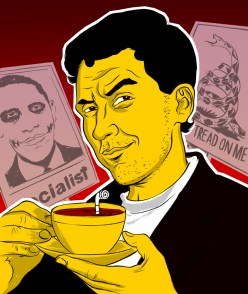 There is a thoroughgoing tribalism that makes policymakers who cooperate with each other to support policies that would be good for all, into “traitors.” It is only a small step to an Inquisition that begins with “Are you now compromising, or have you ever compromised with [a member of the other party.]” If you hear the House Un-American Activities Committee language there then I wrote it properly. “They” are evil and consorting with “them” is evil and you deserve punishment.
 In the first scene in which Geoff Mercer and his wife Kate appear together, Geoff gets a letter. The rest of the movie is about the ramifications of message the letter contains. I am not really certain what the ultimate effect of the news is on the Mercers. David Constantine, who wrote the short story on which the movie is based, has no interest in our knowing what it will be. Google [David Constantine, telegraph, interview] for the whole pitch by the author. Andrew Haigh, the director, doesn’t care either.
 The marriage that director Haigh shows us is not bad, really. Geoff and Kate are still interested in each other. A little. They offer all the everyday courtesies that allow for domestic tranquility. [3] She is especially attentive to him, but it to his getting through the day and his taking his meds that she is attentive. If she knows there is more in there—and maybe there isn’t—it doesn’t show up. Getting through the day seems to take all the attention Geoff has to give.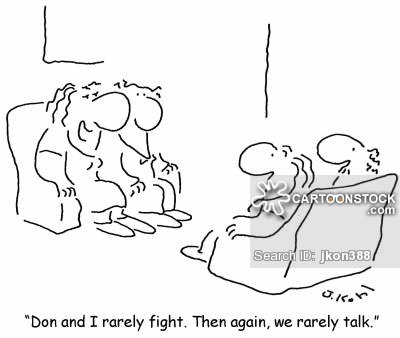
 Finally, they could have practiced the full restoration of relationship after the friction has stopped fricking. [6] You can look at the week of Geoff and Kate’s relationship that is treated in the movie and imagine that they have never so much as exchanged a heartfelt endearment. But it’s a lot more likely that they used to do that, back in the old days, and they one friction and another occurred, like so much tread wearing off a tire. A strong marriage has ways of restoring the lost tread; of repairing the wounds any marriage will suffer. And if you don’t do that, the tire will blow when you hit something unexpected on the road.
 In this piece, I would like to contrast what Brooks likes about America [1] with what he is willing to “pay” to have it. “Pay” is in quotation marks because for the most part, it isn’t Brooks who will do the paying. So here is another way to say it. Brooks thinks you should like the things he likes about America so much that you will be willing to continue to pay the price of keeping them—and it really is you, not Brooks, who will be paying the price.


 opponents rather than enemies. You can make one particular characteristic of them the vital and significant difference rather than all the characteristics of them. [2]. You can oppose them because you are competitors for a common and scarce resource.
 Sarah, the principal character in this scene, is an academic and a political activist, but she is disguised as a fundamentalist Muslim woman, which means that she is under the direct authority of the submission police. She is at the Good Woman net café to send a coded message and she is hiding in a chador. (I hope she is better disguised than this Barbie.) She knows how to be “a good woman” as we will see; in fact, her answers are so orthodox that they bring suspicion on her.
 “flaunting her hair.” And flaunting her hair suggests to Black Robe that she is representing herself as “a Catholic whore,” [5] rather than “a devout Muslim woman.”
 duties. Had he been dutiful, she would have been obedient in thought, word, and deed.
 because he justified it to me one day when I was visiting. “These stories,” he said, “are deeply philosophical.” [1]
 Now we cut to a third segment in which a moderator sits in an easy chair, taking occasional sips of coffee from a mug on the little round table in front of him. He is flanked by two philosophers. (This picture shows a different table, but otherwise it is what I had in mind.) Their job is to treat the episode and the audiences’s reaction to the episode as the familiar conflict between consequentialist and deontological ethics. Deontological ethics can be borne, they agree, by societies where there is fundamental agreement on the rules underlying social interaction, but that kind of agreement is not present in the episode from which this instance is drawn. That argues for the priority of consequentialist ethics—Laura was right to lie to her husband. But, says the deontologist, the real cost will be seen more clearly in future episodes.
 I studied “episodes” like whether the common room of the dorm was “too loud” for people trying to study and whether a girl in the dorm was taking advantage of her roommate (the roommate was the one I was working with). I showed, to the satisfaction of my committee, that the cognitive and emotional routines by which these events were handled were politically significant in two important ways.
 etter of it and left. Something will have to happen for him to re-turn, to be re-conciled, to be brought back to the table and back into discussion with the others. This is a table that keeps showing up. Interesting.
 The New York Times headline warns of “a lasting split.” In my metaphor, that means that reconciliation is either not attempted, or that it fails. So…who is at the table? The short answer is that the Republican establishment is at the table. They are the people who told angry Republican populists to swallow their emotions and vote for John McCain and Mitt Romney. Here are a few descriptions of this group from the Times article.
 Laura Ingraham, a conservative talk-show host, says, “All the things the voters want have been shoved off to sidelines by Republican leaders…and the voters [Republican primary election voters] finally have a couple of people here who are saying this table has to be turned over.”
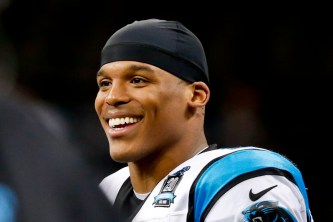 man. He is very demonstrative during games, both on the sidelines and on the field. The manner of his demonstrative actions is very much like some other black athletes.
 popularity of the gesture spreads. After black athletes have established it as black and therefore “cool”—I’m sure that isn’t the current term for what I am talking about—then white athletes take it up. You could watch end zone celebrations over the last 20 years and just watch it spread. Even linemen celebrate now. And after them, white athletes, then black and white non-athletes. Eventually, old white women in nursing homes can be seen exchanging high fives and fist bumps, gestures that were invented as symbols of black solidarity.
 nator of some as well. Here is his famous Superman pose. My own expertise does not extend to first uses. So Cam Newton does all these things and he is black and so what could possibly be wrong with saying that he acts ‘the way blacks act?”
 Let’s imagine for a moment that the issue before us is not race, simply, but some unholy amalgam of race and class and let’s use “working class” and “middle class” as our category names. Those are crude categories, but they allow us to ask some simpleminded and useful questions. What percent of successful trial lawyers are black? What percent of successful CEOs are black? This is Ursula Burns, who was CEO of Xerox at the time. Black enough? What percent of tenured faculty are black? What percent of NASA engineers and scientists are black? I don’t know the answers to any of those and frankly I don’t care.
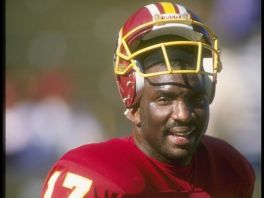 Newton is not the first black Superbowl quarterback, of course. The most recent being Seattle’s Russell Wilson of the Seahawks and we could go back to Doug Williams of the Washington Redskins, the first black Superbowl quarterback, in 1988. But they weren’t black enough for the commentators I was listening to. The first explanation they used was that Williams “felt the pressure of the system” (to act “professional” rather than “black”). But both commentators knew that wasn’t true of Doug Williams. Of course, they said (second explanation) that wasn’t really what he was like anyway. He looked at the game and his place in it “in a more professional manner.” Their words, not mine.
 h you wisely rejected. Here is why B was not possible. C might have saved the victim, but you would have lost three members of your squad. Continuing to BELIEVE that you could have done something is wrong and you will not return to wholeness until you give it up.”
 all. I don’t have any sports experiences that approach this kind of bonding intensity. Because I have lived a long time, I have fought in quite a few theaters of operation. If they gave awards for wounds suffered in these operations, I would have quite a collection. I know why there is a scar on my left shoulder and on my left knee, for instance. I wouldn’t want to say that living is combat, but my experience is that living includes combat and combat produces casualties.
 I don’t have any of those problems N—Q to the extent my friends have them and I don’t have problem M at all. My paint job has been chipped here and there, but I can still drive the car. If I can’t come up with a good answer to the question Why me? (and I can’t) I could very well feel guilty about it. The fuel for guilt is there and I have already expressed my doubts about eliminating the fuel and a way of putting out the fire. You will likely need that fuel for some other task.

 whoever titled our pamphlet, “Going Home….” then we have another set of questions to ask. If “home” is “where I belong,” as in the John Denver imagery, what if the home where I belong is hideously bad? Let’s start on the wrong side of the tracks for once. Tell me what this means. This is Matthew 25:41: “Go away from me…to the eternal fire prepared for the devil and his angels.”
 relationship; it is “being in relationship with God,” (whatever that means) that is the goal. [4] God created us for relationship with Himself. We chose to trust our own judgment rather than to obey God and so set ourselves up as an alternative form of life. We called it “autonomy,” not understanding that it was, in fact, rebellion. That’s the story of our separation from God as the book of Genesis gives it. God has continued to pursue us, to court us; refusing to take NO as an answer because God knows what NO means, and God knows that we do not. So we continue to have opportunities to say YES; we may still choose a relationship of love and trust and obedience, which are the the meaning of “heaven” that is based on relationship.
 The Dilettante's Dilemma