
In Sam Raimi’s film, For the Love of the Game, he sets up a scene in an airport bar. An insensitive boor begins regaling the woman on the barstool next to him with his extensive knowledge of the Yankees. [1] He can name a Yankee for every uniform number. She shuts him down. “Please don’t,” she says. He is offended. “It used to be you can’t smoke in a bar. Now you can’t talk in a bar? This isn’t a church, lady.”
He’s right. Obnoxious as he is, he is right. He is in a bar watching TV and talking baseball.
I was thinking about that scene this morning when a group of us were sitting at our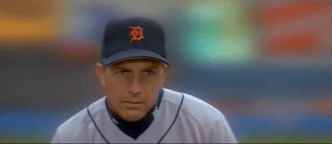 Starbucks grappling with the recent spate of sexual abuse accusations made against public figures. A small party came in to sit at the table next to us: a young couple, a small child and an infant. The mother had scarcely settled in her chair when she came over and asked us to watch our language, there being a small child within earshot.
We were flabbergasted and we didn’t handle it very well. There were six of us; all parents and most of us, grandparents. We had not been using any words that could reasonably have offended this hypervigilant mother; it was the topic itself that made her wary. What did Judge Roy Moore really do? Is that like or unlike what Senator Al Franken is being accused of? How about President Trump? How about former President Clinton?
The clear indication that we were flabbergasted comes in two observations. The first is that although we attempted to change to another topic, we failed. I don’t ever remember this group failing to come up with one topic after another that engaged our interests.
Several of our group were seriously resentful about the request that had been put to us. The resentment distorted what would otherwise have been a more agile management of the conversation. There were recurrent proposals that we return to the old topic, but we didn’t all feel that was the right thing to do.
The second indication is that the lasting topic, the one we did turn to, was: who the hell is she to tell us not to talk about public events in our coffee shop? That’s what reminded me of the garrulous fan.
What’s at stake here?
You can begin at the public discourse end or at the protective mother end. Either way, you get to the place where the rubber meets the road. Here are the two versions.
- Given that public discourse on public issues is crucially important, how much right to prevent that discourse does a mother have who is concerned about what words her preschool child might hear?
- Given that a mother has every right to protect her child from experiences she feels will be detrimental to him/her, how much right does she have to ask that others in a coffee shop exercise a little restraint in the words they use in public?
A little restraint
Two questions bear on the respectability of this mother’r request. The first is, “Is it reasonable?” The second it, “Does she have other options?”
 It’s hard to say that her fears were unreasonable, given that the topic—which, I remind you, was allegations of sexual abuse made about public figures—was potentially offensive. I good way to approach this would be to ask how likely it is that offensive things will be said, how harmful it would be if offensive things were said. Since she didn’t have any way to judge either question, she set the bar for her own action very low. These six old people might say something I would not want my child to hear and it might damage him or her. [2] I am trying to imagine the six of us having the kind of impact on this mother that this picture is intended to have.
Does she have other options? Sure. She could have taken her child to some other kind of place—not a coffee shop. She could have sat at some other part of that coffee shop. She could have invented herself in distracting her child from what was being discussed at the next table. [3]
Public Discourse
This particular group has been gathering at this particular Starbucks for quite a number of years. “Politics,” broadly construed, is a common topic. Although you can’t tell by looking at the group, it’s a pretty well behaved group. We have adopted rules against offensive language in the group (we call it flame throwing) and against moral aggressiveness (we call it proselytizing). There is no way for this mother to know that, but we know it and we took it into account when she warned us to watch our language.
It is not hard to make the case that opposition to the democracy-destroying actions of the Trump administration need urgently to be discussed by the citizens and that is what coffee shops, from the time of the Revolutionary War and before, have been used for. And that’s what we were doing. Being asked not to do that because of the personal qualm of a single hypervigilant mother seems like asking a lot.
 After the woman had gone back to her table and her infant and her preschooler and her husband, some members of our group recovered a little from the shock and engaged in a brisk game of Shoudasaid. We shouldasaid, “Everyone here is a parent and a grandparent. We don’t need your guidance about what kind of language to use.” We shouldasaid, “We will be careful not to say anything we wouldn’t want our own grandchildren to hear.” We shouldasaid, “Thanks for sharing your feelings, but we are going to have the conversation we had begun and if you don’t like it, there are other tables you might occupy.” We shouldsaid, “You want us to what? Really?”
There were other proposals, but those capture the flavor of the main proposals. I felt that way myself. I’m not very tolerant of being shushed, particularly by strangers and particularly when I am not doing anything I think I should be shushed about. So I was feeling pretty aggressive and was thinking of saying something back. I am sure I would have justified it by referring to “preserving the space required for effective public discourse,” but the emotional truth of the matter is that I felt I had been reprimanded and I wanted to hit back. [4]
I think that my own thinking has moved, in the time since that occasion, in the direction of “the PG coffee shop.” Not only is PG the least innocuous of the movie designations, but it also suggests that “parental guidance” is suggested. The mother came to our table to give us the guidance the thought we needed, but she was not our parent. I think I wish most that she had provided for her child the guidance that would have allowed the discussions going on all around her to continue as they were.
[1] The joke for us as viewers is that the pitcher for the Detroit Tigers who is pitching against the Yankees that day is this woman’s husband. The garrulous fan never learns that, but it is a nice touch for us.
[2] This might be the time to ask whether the case would have different if she were worried about being offended herself or her husband being offended. If she herself had been abused by a public figure or if she know that her husband gets violent when he hears such matters being discussed, then she knows things that none of us could possibly know and either of which could justify an action that, otherwise, seems very controlling.
3] This woman didn’t win any point from our group by turning immediately to her phone and ignoring her child (and her husband) completely. We would have thought that was bad behavior anyway, but since she had just slapped our collective wrist, we were inclined to hold this particular action against her.
[4] Had I been so moved, I would have cited political theorist Hannah Arendt:
However, since it is a creation of action, this space of appearance is highly fragile and exists only when actualized through the performance of deeds or the utterance of words.
 the meadow. The first 33 were headed to the woods to cut firewood and bring it back home by the armload. The second 33 were all a man named Per [1] who was sneaking off to meet Par [2], a beautiful Persian girl whom Per’s parents would like him to avoid. The third set of 33 trips were taken by a physicist deep in thought. She found the predictable walk to the woods and back…oh…restful. It cleared her mind to work on the space-time continuum.

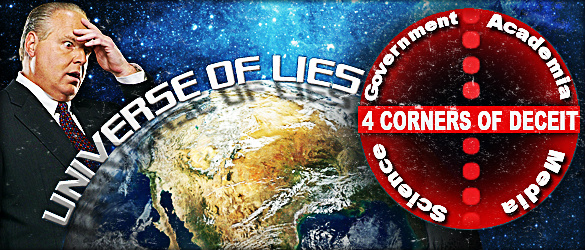
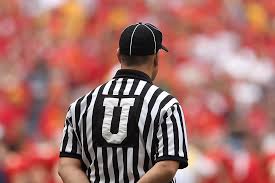 and there are only two teams the left and the right. The people who have been calling themselves umpires, are actually members of the left—they have been “irredeemably corrupted by an alien enemy.”
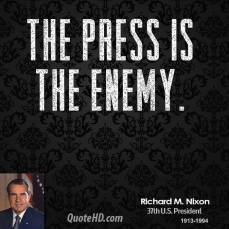 woman could have been raped and her account of what happened to her could be true—UNTIL IT WAS REPORTED IN THE PRESS. Then it isn’t true anymore. When it is reported, it is an act of political aggression and the truth claim is buried in politics.
 missed most of the early discussions, but as I came to understand it, Sartre argues that life has no intrinsic meaning at all and that the task of existentialists, those who are courageous enough, is to live a life of authenticity. Authenticity as a value has the great virtue of being centered in the self and if there really is nothing else, that is a great virtue indeed.
 I have great respect for the effect that poem had on President Mandela. I have been affected in that way from time to time. It is a marvelous experience—not always one that feels good—and I am always grateful to have it. So I am a fan of standing up when all you really want to do is lie down.”
 It is not clear to me just why Julie will never walk alone. Will her husband Billy Bigelow, who killed himself, be walking with her? Will Julie’s cousin, Nettie Fowler, who sings this song to her, be with her? It says to have hope in your heart, which seems like a good thing, but what is one to hope for? Is an unspecified hope, a hope with no home, enough to keep you from being alone? It doesn’t seem like it, but this was the mid 1940s and maybe “hope itself”—hope with no clear referent at all—was thought to be enough.
 fair. Abraham Maslow, whose stages of development are widely cited, says that we need to be a part of a group. But after that, we need to go on to become who we are ourselves, without reference to the group. My grad school mentor, Jim Davies, used to identify these stages by saying that we need to be a part—then we need to be apart.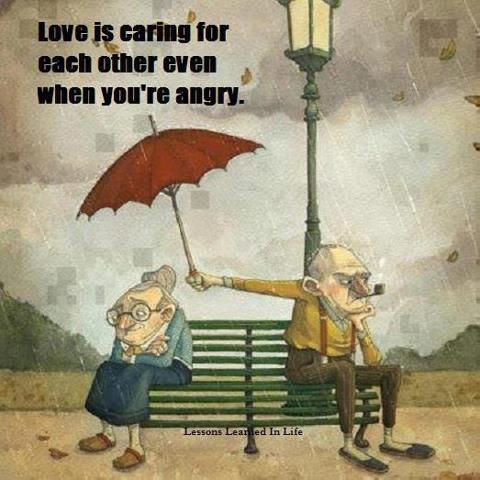
 iconically funny moments. Mother had seen a doctor for her regular checkup that day. On her way home, she stopped to get some groceries, including some milk. When she got home, she put the shopping bag on the table, put the milk in the refrigerator [3], went into the living room, turned on the TV, lay down on the sofa, crossed her ankles, and died. Just like that. But first, she put the milk in the…um…icebox.
 That presupposition is put even further out of conscious reach in the second stage in which you get injured or sick and then recover. You look at the picture of disability as an episode in an otherwise whole and healthy life. You might feel grateful, for a little while, to regain the full use of an injured leg, but you life goes back to normal and you count on the leg to function “normally.”
 round of satisfactions and successes. I can go back to teaching if I teach two courses instead of three. I can get back on the trail because I can still run on soft surfaces, but running on the hard surfaces of my neighborhood are a thing of the past. I can rejoin the book group with the understanding that the “discussions” are now going to include detours of personal reminiscence and repeated stories. It’s “back” you see; it just isn’t all the way back.
 likely to do in the next season.
 respect us. I am concerned entirely with the effects of one kind of assignment of responsibility or another and the first thing I notice about this one is that it is external. It would be entirely possible for this group to say that they are not worthy of respect and that is why they aren’t getting any. It isn’t very likely, of course, but that would be an internal attribution (it’s “us”) rather than an external one (it’s them).
 occasion for the expression of their unhappiness, but the current occasion is not the reason for their unhappiness, just a chance to express it. What kind of formulation of their unhappiness will loosen the borders of the category so that nearly everything “fits” into it? Conversely, what kind of formulation will keep each reason for unhappiness separate and therefore easier to act on?
 Internal: There is no reason, for instance, that the problem described above could not have been formulated as an internal problem. [4] “They” don’t respect us (although they should) is an external problem. There is no reason, absent some context, that the difficulty represented in this picture should be formulated as the bridge being too low or the water being too high. Which way to define it depends entirely on what tools you have at your disposal.


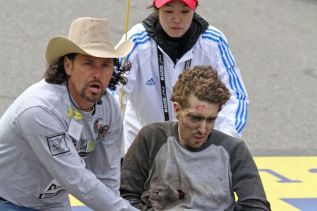 were so badly damaged that they had to be amputated above the knee. He may very well have died from loss of blood had Carlos not intervened. But he didn’t die and a very frightened city declared him to be a hero—just for not dying.
 The help he gets, he gets from his sometime (but not current) girlfriend, Erin (Tatiana Maslany) who sees what he needs and is unwilling to withhold it from him. She is immediately heroic, as I see it, although that is not the way the movie understands her. And when all the crisis is over and Jeff has had a chance to discover in a whole new way just who he is, he gives himself to Erin. That is very satisfying. He says something to her in this scene about “leaning on her.” Yes he does.
 Everything is wrong with the Blackhawks event and it is portrayed so that we see that. Here, for instance, is a picture I didn’t see at the movie and now that I am looking at it, I can hardly believe I missed it. Look at the cage the shadows of the hockey goal make on his face! Then Jeff goes through a lot of development. He learns, for instance, that giving Boston the hero they need so badly is a form of self-transcendence.
 So he does. He plays the hero for them. He throws out the first pitch. [5] Carlos pushes his wheelchair out to the mound and that makes sense because Carlos is a hero in the same sense that Jeff is a hero. (As viewers, we understand Erin’s heroism at the Bruins game, but no one in the film understands it that way.) And then he tries to escape from the setting of the game, having done everything he thinks he can do. But here, his heroism catches up with him—not the phony imputed heroism that Boston lavished on him, but the real personal heroism that is based on his courage in responding to his personal disaster. A man named Larry needs to talk with him about the courage he has shown, and Jeff is willing to talk. We are surprised when Jeff asks the man his name; we are dumbfounded when Jeff reaches up and hugs him.
 man. Also autistic. Also extremely bright. When you hear him diagnosing a medical condition, you think of Sherlock Holmes.
 The second occasion was set up when she comes back outside—where Dr. Murphy is still waiting in the rain—to ask him why he kept recommending an echocardiogram. He gives a plausible reason, but while they are talking, the call comes that the echo revealed nothing at all. Dr. Murphy rejects that reading of the echo and when, through Dr. Brown’s auspices, he is shown the screen, he sees something no one else had seen—why the patient is still in danger. That’s the second occasion, and Dr. Murphy characterizes it as “nicer to me.”
 That brings us to the final two questions. The first is, what can Dr. Murphy do to keep from destroying a very good hospital staff? We pretend with each other. We represent ourselves as more interested than we actually are or as less offended than we actually are. We are expected to do that. We are very nearly required to do that, given the penalties that are meted out for failing. [4]
 doctor is candid, we are going to have to think about what candor is. The Merriam-Webster podcast which featured this word in 2012 gave an illustration like this: “when the job applicant admitted to some indiscretions in his past, the interviewer thanked him for his candor.” Since the root, the Latin adjective candidus, means “white” or “pure,” I think we can see in this interview, the idea that putting your best foot forward is a violation of candor. The “shaping” of your presentation of yourself is a “blot,” let’s say on what would otherwise be a pure unshaped presentation of yourself.
 The Dilettante's Dilemma