
I come from a “set apart” sort of family. I knew that when I was a little boy growing up in what is now a northern suburb of Dayton, Ohio. [1] I was taught that it was a good thing to be “separate,” and I think it was a good thing for a long time, at least for my parents. I don’t think my parents ever really came to grips with what it means for their four boys.
I’ve had trouble coming to grips with it myself. The life that gets into you at that very early level never really gets expressed well in the words that you learn later. There’s always something a little mysterious about the emotional tones out of which those carefully chosen words emerge. The words are all the right words, but you keep feeling that there is more there than the words capture.
I am a “capturing in words” person, as, I suppose, most bloggers are. So I find it just a little uncomfortable that my best accounts of that part of my life never quite squares with the mix of feelings that I remember.
That may be, at least in part, why the notion of “narrative” is so attractive to me. You can lay out—and I am just about to—alternative narratives of an event, each of which is “true” in a sense, but none of which excludes the other narratives. Each narrative is shaped within a particular frame of reference and tells as much of the truth as I know that is available within that frame. Even while I am doing that, I know that there are other frames—other starting points, other sets of categories—that enable me to tell other, very different, also true, stories.
I’m going to try three such frames here. They are: religion-oriented, class-oriented, and culture-oriented and that is the order in which I learned them.
Religion-oriented [3]
“Come out from among them and be ye separate” saith the Lord.
The phrasing is from 2 Corinthians 6:17. Obviously, and nothing could be more appropriate, it is in the language of the King James Version of the Bible. Or just “the Bible” where I grew up. It is one of the easy-to-abuse instructions Paul wrote, but it is all through the Old Testament accounts of Israel in the Promised Land. It is, in fact, fundamental to the notion of what “holy” meant to the Israelite people.
My family had a different notion of what “holy” was than our neighbors; different also than other members of our church. It is nearly impossible to teach your children “not to be like” the other kids, without at the same time teaching them to see themselves as “better than” the other kids. And, if not better in fact, then at least better in aspiration.
I remember, for instance, that my mother used to criticize behavior that did not come up to the family standard as “common.” That made more sense to me when I learned that was what “vulgar” meant. But Mother only meant, “what everybody else does,” and she didn’t understand either that in sacrificing what was “common,” we were sacrificing what was “in common” with our classmates and our neighbors.
I had a very caring upbringing by a loving family and it seems, even to me, a little churlish to criticize it, but in fact, I was raised in a little bubble of self-conferred religious superiority and getting over that has been one of the major jobs of my life. [4]
Class-oriented
So I grew up and moved away and took a lot of courses in the various social sciences, including sociology. And it began to dawn on me that however much my family might have thought about “what is right for the Hesses to do” in religious terms, it is also possible to think of it in terms of social class. In fact, if you take enough sociology, almost everything begins to seem explicable in terms of social class.
I remember how ardently my father wanted at least one of us to play the violin. [5] I don’t think he liked violin music particularly. When he had the choice, he listened to choral music. But violins are so…you know…classy. Dad had a lot of education and aspired to more than the size of his family allowed for. My mother was the daughter of a man who was often a mayor and was also a major business leader. I don’t think she pushed that, but I don’t see how she could have forgotten it either.
Neither of my parents aspired on their own behalf or on ours to be “upper class.” But the current discrepancy between the professional/managerial class and the “working class” really does capture where the rift is. I’m actually just kidding about the castle; it’s a much older notion of class unless these are happy tourists.
 Last year, I discovered Joan Williams’ ideas on the cultural underpinnings of class in our era and she draws the line between the working class (even at fairly high levels of income) and the professional/managerial class. [6] Williams helped me get past the social structural notions of class—there wasn’t room in the small town I grew up in for a complicated class structure—and to consider the cultural infrastructure of the class identity we grew up with.
What does “cultural infrastructure” mean? In part, it means “social capital.” Here is Williams.
Cultural capital is class specific: the kinds of cultural capital required to survive and thrive in non-elite circles differ from the kinds required in professional-managerial contexts…
For example:
Professional-managerial jobs require people skills, which are essential for building and exploiting networks and for enhancing opportunities to advance as a lawyer, doctor, or “organization man.”
The cultural capital required of workers is quite different. While questioning authority and thinking for yourself might get you a promotion in an upper-middle-class job, in a lower-status job it is more likely to get you fired.
It is “class” in that sense of the term, both the “social capital” sense and the aspirational sense, that I substituted for religion and I began to understand my upbringing as “different.”
Culture-oriented
But recently, I came across a way of thinking about the whole matter that is not principally religious and not “classist” either, in the fine-grained sociological sense. This is more like comparative anthropology and I found this in Colin Woodard’s American Nations. Woodard makes a good case that a lot of the enduring regional differences can be traced back to the the various eastern settlements and the changes they took on as they extended themselves westward. And there may be no clearer example of these cultures than Ohio, where there are three.

On the map, you can see that Cleveland is part of the western extension of Yankeedom.
Here is Woodard’s characterization of the Yankee culture.
Yankeedom: Founded by Puritans, residents in Northeastern states and the industrial Midwest tend to be more comfortable with government regulation. They value education and the common good more than other regions.
But the more interesting distinction for me happens as you move south out of Yankeedom. The whole middle section of Ohio is called “the Midlands,” and the people the Midlanders. Culturally, it was formed in eastern Pennsylvania, where my father was raised. It is, in fact, my family’s home culture.
But you can see on the map that all of southern Ohio, including the part where Orville and Wilber Wright and I grew up, is a part of Greater Appalachia. So by this way of looking at it, we were a Midlander family living in a Greater Appalachian culture and that explains a lot to me.
For one thing, it gives the “Come out from among them…” passage a contemporary cultural setting. It translates the fine-grained sociological analysis into a much broader regional interpretation.
Look, for instance, at the way Woodard distinguishes the culture of my family background from the culture where I was raised. The midlands serve as “the old country” for the Hesses.
The Midlands: Stretching from Quaker territory west through Iowa and into more populated areas of the Midwest, the Midlands are “pluralistic and organized around the middle class.” Government intrusion is unwelcome, and ethnic and ideological purity isn’t a priority.
But our family was trying to do all this in Greater Appalachia. Greater Appalachia is a good part of what Mother meant when she said “common.”
Greater Appalachia: Extending from West Virginia through the Great Smoky Mountains and into Northwest Texas, the descendants of Irish, English and Scottish settlers value individual liberty. Residents are “intensely suspicious of lowland aristocrats and Yankee social engineers.”
It is clear to me that the discrepancies I experienced as a young boy growing up can be understood in a variety of ways. I have surveyed three here. As is to be expected, I find the third to be most persuasive because I just came across it and am still infatuated by it.
Every explanatory device has its own strengths and weaknesses, of course. It is true that I was raised in “the holiness tradition,” where “holy” mean separate. I did that.
I was also raised with class mobility in mind and the habits of mind and go with professional and managerial jobs [7]. I did that too, although my path wasn’t quite as straightforward as my brothers’ paths.
And I grew up, we all did, with the presuppositions Woodard describes as typically Midlander—including the part about ideological purity. Woodard is talking about political ideology. We got all the purity we needed from religious doctrine, either from embracing it or from rejecting it.
So I did that, too.
[1] That’s just a little north of Middletown, the site of Hillbilly Elegy, where J. D. Vance grew up. Middletown is different in a lot of ways from Englewood, but we come from the same part of Ohio.
[3] I know that’s awkward, but there is no hope for the title that deals with social class, so I am casting them all in the same form, just to keep the parallelism. I’m open to other solutions.
[4] There is, in fact, one sense in which I don’t want to get over it. I need a way to detect and to critique my own lapses. I know when I could have done better and just didn’t bother.
[5] We all wound up playing brass instruments. Sigh.
[6] See especially Chapter 5 of her marvelous Reshaping the Work-Family Debate: Why Men and Class Matter
[7] I was a professor for most of my “working life.” Of my three brothers, one was also a professor, and two were physicians. We all got where were supposed to go, by one path or another.
 There are three common kinds of responses to this kind of undeserved benefit.
 assess the charge.
 Of course, there are reasons to treat this disproportion as some kind of unfairness or as significant in some way.
 completely appropriate to me.
 I will say that I like this picture of Denver Bronco’s offensive tackle Garrett Boles, who is celebrating his country with one hand and his teammate with the other.
 And I think that is why we swing back and forth from criticizing too much and criticizing too little. In this essay, I am going to come out boldly in favor of criticizing just the right amount. I don’t think anyone is going to have trouble with that idea. Goldilocks didn’t. And then I am going to try to justify that standard using an argument I had never heard before today and even today, I didn’t hear it until I heard myself making it.
 The alternatives, as I have seen them and read about them, are distraction and reinforcement of positive behaviors, both of which are good tools. They make the need for explicit criticism less urgent. They make the difference, to return to the pain metaphor, between episodic criticism, which contains valuable information, and endemic criticism, which is just the pain background of your life.
 including myself as a young boy, resisted the rules by picking them apart. A fully verbalized and internalized norm would be applied reasonably to the situation. So “Don’t forget to wash your hands” would reasonably apply to anything else that was dirty, especially dirt that would be visible to other family members. The “jailhouse lawyer” kind of kid would happily come to the table with a big smear of dirt on his face and argue, when confronted with his misdeed, that he was asked only to wash his hands.
 As I implied in the last paragraph, the Sweep is the last in line. That is why he or she is called the Sweep. Because it is the Sweep’s job to be last, and there are implications to that to which I will return at the end. I have been a Sweep with IBT any number of times and have even
 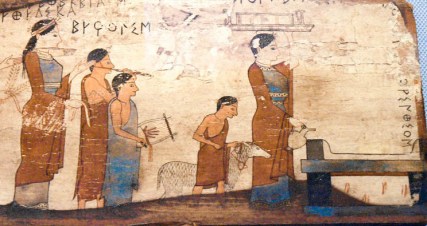 is only one God and that all the other “so-called gods” are mere illusions. That means that meat that has been offered as a sacrifice to one of these illusions is not contaminated for anyone who understands what an idol is. The fast riders are those who understand this. And before we look at the slow riders, let’s stop to note that if Paul were a rider on this trip and not the Sweep, he would be a fast rider. Notice the “we” in verse 4. “We (fast riders) are well aware…” Now we will look at the slow riders.
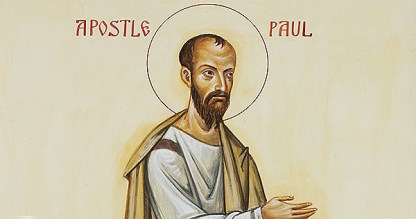 I think Paul the Sweep would advise that pastor to open the church fully to its women members. Pastors, Session, deacons, lectors…everything. These are the fast riders, remember, so Paul the Sweep might very well prevail on them to be gentle with the slow riders. We would say, using a modern idiom, not to rub their noses in it. He would be as opposed to a flamboyant feminism that demeans all men and drives them out of the church as he would be to a submissive role for women that hoped to keep the men by offering them an illusory (and unchristian) dominance.
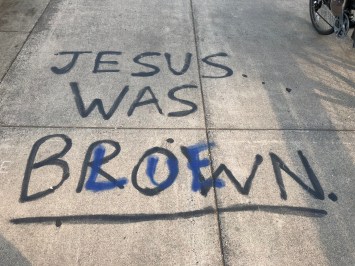 Brown like me
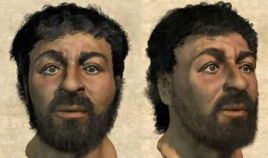 But when we get away from how good it feels, we need to consider what he actually looked like. If you are a brown person living in a predominantly white society where all the white Christians are expressing their emotional affiliation to a Jesus who looks like them, I’d think it would get wearing after a while. All the emotional affiliations would add up to a factual claim and the claim would be this: Jesus was white. [1] This is the face referred to in the quotation below.
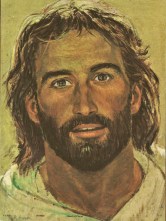
 What Jesus looked like is completely immaterial from a theological standpoint, but people who have strong beliefs about Jesus and strong feelings about Jesus might be expected to want to specify what he looked like. That accounts for the sample “ethnic Jesuses”in this essay. When you get far enough away from the issue, it comes to seem odd that we call these other images of Jesus “ethnic” but do not call the one that looks like us “ethnic.” But our own ethnos is the one we take for granted; it is the standpoint from which we look at the others.
 another motive made his mark. “Jesus was blue,” he says. [3] My first reaction was negative because I had been enjoying the “Jesus was brown” sign. To the extent that the first tagger’s real meaning was “Jesus was not white,” the comment that he is really “blue” does the same work. [4]
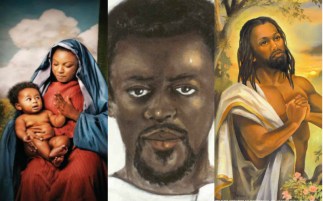 For myself, I like the idea that everyone should feel free to invent an image of Jesus that would be at home in their own ethnic group. It is a claim of affiliation and if the Incarnation means anything at all, it means that. On the other hand, I don’t think anyone but the experts should feel free to make up factual claim about what Jesus did look like. And, considering only the facts of the case, what Jesus looked like really doesn’t matter. When we picture him as tall and handsome and masculine, we are only projecting the values of our culture onto the story of Jesus. No one really thinks that God has definitively manifested Himself to be a Middle Easterner.
 It concerns, Alison Macintosh, called “Tosh” on the show, and played by Alison O’Donnell. [1]
 of her and a bottle of wine is a fancy-looking bag.
 bears no guilt.
 And then yesterday, a little poking around on the internet produced a company that says it will construct a mug to your specifications. [3]
 where you really have to choose.
 are ready to design a mug.
 to tell the truth, they don’t sound so hard when you start with the third one. “Collective sentiments” and fundamental to being human in times of conflict. We circle the wagons, we amp up our message, we jam other messages. I don’t really have any objection to Siegel’s choice of the word “conformity,” but that’s not what it feels like to belong to a team in times of conflict. The supposed one-ness of all our feelings and expressions gives us great comfort. I think I would have said, with less pejoration, “participation in the collective sentiments.”
 That doesn’t work. We can’t manage that much outrage and, of course, we don’t. We begin simply to disattend and deny. We excuse actions, too, if they were committed by members of our tribe. So it is only the officially sanctioned outrages, the ones that “conform to the collective sentiments” that we really have to gear up for.
 me on that. He is going to be said to be morally insensitive. He is going to be said to be complicit. He is going to have Edmund Burke’s most famous saying [1] hung around his neck and he will be made to wear it in public to show his status as an outcast.

 The Dilettante's Dilemma