Reaping to the Very Edge

So…here’s an idea you might not have considered for a while. “When you reap the harvest of your land, do not reap to the very edges of your field or gather the gleanings of your harvest. Leave them for the poor and for the foreigner residing among you. I am the LORD your God.”

That’s Leviticus 23:22 in case it sounded familiar and you weren’t sure why.  I want to play with it a little today.  Frankly, it sounds immensely appealing and completely impractical.  Here’s something a little more practical.  This comes from Lisa Dodson’s survey of strategies for coping with poverty in the U. S. today.[1]

Three years earlier I’d met Andrew, a manager in a large food business in the Midwest, and he told me that low wages are a big dilemma for him too, though together he and his wife made a decent income. But many of the workers in the food company made “poverty wages,” and he was affected by all the troubles people bring with them. Then he told me, “I pad their paychecks because you can’t live on what they make. I punch them out after they have left for a doctor’s appointment or to take care of someone   And I give them food to take home. . . .

Today’s question is this: is the solution in paragraph one the modern equivalent to the solution in paragraph 2?  I don’t think so.  I don’t think there really is any modern equivalent.

gleaning 5In Dodson’s book, I met a produce manager who “managed” the standard for how good produce needed to be.  If it isn’t up to the standard, he can’t sell it, so he gives it to the people who work in produce—and, of course, to their families.  This guy raises the standard toward the end of every month.  The result is that more and more produce “is unacceptable” at the end of the month and may, therefore, be given to the underpaid workers.

The produce manager is leaving the edges of the field unmowed so the poor can come and glean.  He is making sure there is “surplus” by not taking all that is there to take.  It is, however, not his field so his behavior raises some profound questions.

In a society where there are landowners, hired workers, and “the poor,” leaving crops unharvested along the edge of the field looks pretty good.  The grain is all there.  Anyone can see that the owner “owns” the grain and would have a right to harvest it.  He would have, but he does not because he also has covenant obligations.  He owes a duty to the poor of the village, whom, presumably, he knows.  He also owes a duty to the immigrants, whom, presumably, he does not know.  God says, “You need to balance your harvest from the field with your obligations to people who will go hungry if you fail in this obligation.”

Another aspect of this picture is that the owners of the other fields are under the same obligation he is under and everyone can see who is obeying the law of God and who is not.  Without question, there will be farmers who interpret “the very edge” of the field to mean 5—10 feet and others who will estimate it at 1—2 feet.  Still, it is a public norm and compliance with that norm is a matter of common observation.

Finally, the farmer is not called on to determine which of the poor members of his society and which of the immigrants “deserves” access to the unharvested grain.  “Deserving” is no part of the question.  The need is presupposed and the response to the need marks the members of the covenant community.

Our society is just not like that, all things considered.  We are an urban society, which means that we don’t know each other and don’t expect to.[2]  We don’t deal in crops; we deal in cash and, increasingly, in credit.  The mythology of our society is that everyone could be and should be, “self-supporting,” so we have turned “the poor” into “the parasites.”  We have retained a fragment of the older ideology by talking, in some cases, of “the deserving poor,” but you can’t sustain a society like the one I described on the basis on judgments about who deserves poverty and who does not.

There are things we can do.  The produce manager has declared the “field” he manages to gleaning 4be “his field” and has left food for the poor.  We could make up some part of every public sector work crew of people who need the money, not of people who have the highest skill levels or the greatest seniority.  We could emphasize the value of resource-sharing communities so that everyone in the group could draw, when necessary, on the resources of the whole group.

Every one of those thought balloons will run quickly into a needle of some sort.  The produce manager’s behavior is unethical.  The work crew solution will make every job more costly and probably more shabbily done.  The resource-sharing community would have to have real authority over its members in order to work over the long run.  As Americans, we don’t like any of those.  As Americans, we are not part of a theocracy where such social practices can be established by concluding the commands with “I am the LORD your God.”  That’s not us.

gleaning 2So I find solutions like everyone leaving part of the field unharvested very appealing, but I don’t see any systematic ways of applying it to the kind of society I live in.  I see occasions when I can take an action on behalf of someone in need, but actions taken by individuals don’t add up to social practices.  The farmer, in deciding to “obey God’s commandment” and leave the margins of the field for the poor, must also take the reactions of his neighbors into account.  Everyone will know whether he has obeyed the commandment or not and the pressure to “go along” creates what today we would call an “opt out” system.

From God’s standpoint, that would be the very best kind.


.


[1] The Moral Underground: How Ordinary Americans Subvert an Unfair Economy. 
[2] I know a lot of the people I see in a day because I do the same kinds of things every day.  I know a lot of people at “my” Starbucks; in “my” department at the university; at “my” church; and even—oddly—people who run on “my” trail in Forest Park.  I know Debbie because we have run on that same trail for many years.  She’s a lot faster than I am, but we say hello and comment on the running conditions of that day.  One day we exchanged first names and now we greet each other as she blows by me on the trail.



Posted in Biblical Studies, Society, Sustainability | Tagged , , , , | 2 Comments

Amazing High-performance Old Guy

  C’est moi.  I am, in fact, an Amazing, High-performance Old Guy, hereafter AHOG.[1]

You will want evidence, of course, as you should.  Let’s start with this morning, when this first occurred to me.  I made my first Starbucks run of the morning at about 5:40 a.m.  I got my coffee (Verona) and Bette’s (Pike) and headed back to the car.  I put the Verona on the floor so I would have a hand free to pull the drink cup out of the dashboard.  Then I put Bette’s cup, which is smaller than mine, into the holder.  Then I lifted the top of the drink holder in the console and put my cup there.  Then I drove home and took Bette’s coffee to her and brought mine to my desk so I could write this. (The picture below, by the way, is what you get when you search “high performance” and “old guy.”)

old 1Is that amazing?  Of course.  In the ordinary interplay of language, “amazing” means that most people would be amazed.  That’s not what I mean.  All I mean is that I was amazed.  We are all, nearly always, the players and the audience at our little dramas.  When I describe my response to this performance as “amazement,” I am describing the response of the audience.

The interesting question at this point is not whether it was or was not truly amazing.  The interesting question is why I noticed it at all.  Twenty years ago, given the same car and the same Starbucks at the same hour, I would have done all those things and never noticed.  What’s different now?

Well, there have been times in the last twenty years when significant elements of that performance have not gone well.  I have driven away with one of the cups on top of the car.  I have driven away with one cup in the holder and one on the floor of the car.  I have tried to hold one of the cups on the seat and splashed coffee on my pants at a place where a wet patch that size could be misunderstood.  And, of course, I have dropped one or more of the cups or my car keys on occasion.  Once—not on a Starbucks run—I put the trash on the seat and threw my keys into the trash can at a highway rest stop.

It’s doing so many kinds of things wrong that moves you to notice that you didn’t do them wrong this time.  Noticing is the trick.  When I was young, I read a story about a mobster (Dutch Schulz, I believe) whose throat had been cut.  He didn’t die, but the scar remained with him for the rest of his life and he said that in the morning, he would get out of bed and go to the mirror in the bathroom just to see himself.  “O.K.,” he’d say, “I made it again.”  Yet again last night, I did not die.

And he was amazed.  Probably gratified, too.

So the key to being amazing is being amazed.  The key to being amazed is to notice your current performance, with past performances in mind.  That tends to drive down the criteria by which satisfaction is judged and experienced.  Exceeding the current criteria is what defines “high performance.”

This may seem like so much semantic dancing to you, but the words won’t do it by themselves.  You have to feel it.  Whether you can really feel it probably has something to do with temperament, so maybe not every old guy can be an AHOG.  But I think it has also to do with experience.  You have to fail a lot and then notice the failures with some detachment.  “Irony” would work.  After a while, you find yourself saying things like, “Pretty good for a rookie quarterback working with a short week and a new game plan.”  But you say things like that about your own success in not spilling the coffee on the floor or not driving off with a mug on the roof.

When you are the audience, as well as the actor, you have every reason to be tolerant.  And I am.  I am amazing.

[1] The A has a long a- sound, just as it should.  It is a porcine reference, though oblique.

Posted in Getting Old | Tagged , , | 2 Comments

Consenting to sex

Here is the way the State of California is going at the question: Section 67386 is added to the Education Code, to read:

 (a) In order to receive state funds for student financial assistance, the governing board of each community college district, the Trustees of the California State University, the Regents of the University of California, and the governing boards of independent postsecondary institutions shall adopt a policy concerning sexual assault, domestic violence, dating violence, and stalking, as defined in the federal Higher Education Act of 1965 (20 U.S.C. Sec. 1092(f)) involving a student, both on and off campus. The policy shall include all of the following:

(1) An affirmative consent standard in the determination of whether consent was given by both parties to sexual activity. “Affirmative consent” means affirmative, conscious, and voluntary agreement to engage in sexual activity. It is the responsibility of each person involved in the sexual activity to ensure that he or she has the affirmative consent of the other or others to engage in the sexual activity. Lack of protest or resistance does not mean consent, nor does silence mean consent. Affirmative consent must be ongoing throughout a sexual activity and can be revoked at any time. The existence of a dating relationship between the persons involved, or the fact of past sexual relations between them, should never by itself be assumed to be an indicator of consent.

There’s more.  I just started at the top and excerpted what I needed to illustrate the difficulty.  You can see the whole bill here.  And the New York Times op-ed piece about it can be seen here.

So Section 67386 (a) says: “the governing boards shall adopt a policy.”  And Section 67386 (a) (1) adds the standard of “affirmative, conscious, and voluntary agreement to engage in sexual activity.”

This is a bottom-feeding kind of policy concern.  It takes the standpoint of the receiver of a sexual initiative (ordinarily the woman in a heterosexual relationship) as the lens through which actions will be viewed.  Men are not required to propose any activity at all, of course.  Women must “agree” to whatever proposition is made or, alternatively, “consent” to the proposition.

I don’t want to demean Senate Bill 967 by calling it a bottom feeder any more than I would demean a sea cucumber by calling it a bottom feeder.  Senate Bill 967 is all about preventing bad things from happening to women.  I’m all for that.  Just how bad this problem is can be guessed at, even if we didn’t have the horror stories, by the words affirmative, conscious, and voluntary.

“Affirmative” means silence isn’t consent.  “Conscious” probably means something like “intentional” or “deliberate,” but there are a lot of stories of drugs at parties and unconscious women being raped and it may be that the word “conscious” is a backhanded way of recognizing that.  “Voluntary” means that the woman could realistically have said No without fear of retribution.

A range of concerns like that indicates a serious problem.  Legislation aimed at “preventing the worst from happening” is often presented as legislation that will do only one thing.  We know that no public action does “only one thing.”

The way the California Senate has chosen is to require the institutions in the higher education system to adopt a policy or they don’t get any more state funding.  I’m OK with that.  Threatening to withhold funding has worked in the past.  But when you start to define what that policy should be, you run into trouble right away.

In this essay, I want to consider three kinds of trouble.  The first is the trouble that occurs in a large anonymous society when the government tries to intervene in a transaction between willing partners.  Trying to prevent willing buyers from buying alcoholic drinks from willing sellers was a daunting task.  That’s why people raise their eyebrows and say, “Yeah. Prohibition.  Don’t want to go there.”  Preventing intimate sexual activity between two people who are sure they want to engage in it is going to be a lot tougher.

The second is that the presuppositions of the legislation establish the someone, men most likely, want to do something that women, in the instance I am pursuing, might not want them to do.[1]  They are writing rules for a relationship of conflict and opposition.  You see language like this all the time in contract disputes.  People say, “You signed the contract.  You are obligated.”  Other people say, “You misrepresented the terms of the contract” or they say, “You say the contract covers this situation and I say it doesn’t.  See you in court.”

This is common language.  It presupposes economic or jurisdictional conflict.  Language like that is necessary there.  Is it really necessary here?  Do we want to teach that intimate sexual activity is mostly like negotiation a contract?  I don’t.

California 1The third trouble is that people will begin immediately to game the system.  Let’s take this provision for instance: “Affirmative consent must be ongoing throughout a sexual activity and can be revoked at any time.”  Clearly, the statute wants to prevent a single agreement that would “cover” everything that happens afterward.  I get that.  But what does “ongoing” mean.  If I secure your consent to kiss your neck, do I ask again about the shoulder?  Is there a second petition between kissing the left breast and kissing the right breast?

Frank Hearn, a sociologist who values communitarian institutions, talks about the two processes by which matters that ought to be decided by free agents in the context of a supportive community, get shipped somewhere else.  If they become market transactions, as prostitution would be for this topic, sex has been “commodified.”  It has been turned into a commodity and availability is a function of supply and demand.  If they become political transactions, as in the California instance, Hearn says they have been “juridified.”  When I ask questions like those above—does my permission to kiss the left breast carry over to the right breast as well?—the issue has been juridified.

Or consider this sentence. “The existence of a dating relationship between the persons involved, or the fact of past sexual relations between them, should never by itself be assumed to be an indicator of consent.”  I can see the kinds of difficulties they are trying to prevent and so can you.  But are there no married students in California?  Do no married men who are students in California rape their wives?  The statistics about rape in marriage suggest that California has to consider that problem too.  So…does this serial permission-seeking apply to married couples as well?

People will, as I said in the beginning, game this system.  Even if both members of a couple like the idea of the legislation, they will look for ways to “streamline” its application as it bears on themselves.  It’s what people do.  Nothing, for instance, in any of the provisions requires the parties to be sober.

Before I finish, I ought to own up to a few things.  First, I’m an old man.  Second, I am an old-fashioned man.  I have never been in a sexual situation in which either the woman thought anything important would be improved by the multi-part questionnaire this law requires.  I’ve never been with a woman who thought I might rape or abuse her.  My sex life has been pretty much below the radar that California is thinking of operating.

So…I wish them well.  The depth and breadth of this problem is not going to respond very well, I think, to Senate Bill 967.  I, myself, would like to see more emphasis on sex as part of a solid and caring relationship.  They are probably going to take that on in Senate Bill 968.


[1] All this applies to gay and lesbian relationships too.  I’m choosing heterosexual sexual relationships to keep the argument simple.

Posted in Getting Old, Paying Attention, Politics, Society, Words | Tagged , , , , | 1 Comment

Plan B

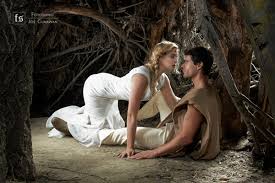
No one knows what God first had in mind for our species. Genesis gives us one picture of it.  One.  This is it.

“The man and his wife heard the sound of Yahweh God walking in the garden in the cool of the day…and they hid among the trees…”

In the next scene, Eve makes a disastrously bad choice and gets her husband to make that same bad choice.[1]  What we know about God’s plans for us—everything before Plan B—comes from the time before that scene.

disciple 6It appears that God liked to stroll in the garden in the cool of the day. That would be morning or evening around the 30th parallel, which is where Eden was.[2]  Let’s say it was evening.  God expected to find Adam and woman (not yet named) but they were nowhere to be found.  That wasn’t the usual practice, apparently.  It appears that when the day got “walking around cool,” God showed up expecting companionship.  That is what we know about Plan A.

I, myself, am a child of Plan B. [3] Plan B has been celebrated all my life in every church  and every synagogue I have ever attended.  Plan B can be variously characterized, of course, but I am going to choose the covenant with Moses in the wilderness: “You will be my people and I will be your God.”

I’ll just choose my own church as an example. Plan B is celebrated as “God’s Plan.”  Paul, the apostle, says that God had Plan B in mind when He developed Plan A.  There are no Plan A churches so there is no one  who is inclined to say that Plan A was better.  Except me, of course, and even for me, that requires a whimsical attitude.

There is no “covenant” in Eden. There is just the practice of regular fellowship.  Adam and the woman who will eventually be called “Eve,” saw no need for propriety in God’s presence.  “Being proper,” symbolized in this story by the invention of clothing, wasn’t thought to be necessary.  It wasn’t rejected.  It just wasn’t considered.

We might imagine the difference between family and company, or “worn and comfortable old friends,” and “crisp and brittle new acquaintances.” The friend walks in the back door just after dinner and we say, “Thank goodness it’s just you.  I haven’t even had a chance to put the dinner dishes in the sink.”  Or you say, “Thank goodness it’s just you.  I was dreading doing the dinner dishes by myself.”  You get the idea.

In Plan A, we (humankind) have the “old friend” relationship with God. We didn’t need company manners (clothing, in this story, a way to distance ourselves or to claim a status); we just walked together in the garden.

Plan B, the formal covenant between God and Israel, couldn’t have happened in the comfortable unbroken fellowship of Eden. God and His human creation were simply not far apart enough to “make an agreement.”

What would that look like? Among the authors I know of, only C. S. Lewis has tried to picture it.[4]  In this scene from Lewis’s Perelandra, Ransom is from our world and is sent by the divine being—who is, in fact, the God whom we know in Jesus Christ, but who is disciple 7called in this language, Maleldil—to Perelandra to prevent what we call “The Fall.”  He was to prevent to corruption of the two beings who will become the parents of all living humans on that planet.

Here is Ransom’s first look at “the woman”—the woman who will become the Eve of Perelandra if Evil can be defeated.

The alert, inner silence which looked out from those eyes overawed him; yet at any moment she might laugh like a child, or run like Artemis or dance like a Maenad.

So there’s a lot going on in her head. Something requires “an alert inner silence.”  Here is an example of what is going on.

‘That is what I have come to speak to you about,’ [Ransom] said. ‘Maleldil has sent me to your world for some purpose. Do you know what it is?’

She stood for a moment almost like one listening and then answered ‘No.’

She was listening to find out whether she knew about this purpose. She did not have a fund of her own knowledge yet.  She does not ransack her memory to discover what she knows.  She attends, through that always-active connection to Maleldil and that is how she “knows.”

Here is one more.

‘I have been so young till this moment that all my life now seems to have been a kind of sleep. I have thought that I was being carried, and behold, I was walking.’

Ransom asked what she meant.

“What you have made me see,’ answered the Lady, ‘is as plain as the sky, but I never saw it before. Yet it has happened every day. One goes into the forest to pick food and already the thought of one fruit rather than another has grown up in one’s mind. Then, it may be, one finds a different fruit and not the fruit one thought of. One joy was expected and another is given. But this I had never noticed before — that at the very moment of the finding there is in the mind a kind of thrusting back, or a setting aside. The picture of the fruit you have not found is still, for a moment, before you. And if you wished — if it were possible to wish — you could keep it there. You could send your soul after the good you had expected, instead of turning it to the good you had got. You could refuse the real good; you could make the real fruit taste insipid by thinking of the other.’

A whole new idea occurs to the Lady. It is possible, she now sees, to lust after—“to send your soul after”—the good on which you had set your mind, rather than accepting the outcome that actually occurred.  She calls it “the good you had got” (rather than the one you had expected), but we would call it bad, not good, on the grounds that it is not what we had our hearts set upon.

This is Lewis’s notion of what mental and emotional and volitional activity was like in Paradise. To tell you the truth, it sounds pretty good to me.  It isn’t the kind of “good” we know anything about.  The Lady—Perelandra’s equivalent to Eve—uses the language of Maleldil making her “older.”  We would have said “wiser.”  She says that Maleldil has “put these things into my head.”  She also says that Ransom[5] has also made her “older” by helping her realize new things.  On her world, she is a queen; she is “the” queen.  But we are not quite comfortable with her.

In these pictures, we find that our notions of personhood are violated. A mind that open to the teachings of Maleldil is not really “her mind,” we would say.  It contains not the least trace of what we would call “a healthy skepticism.”  Our notions of free will are violated.  In accepting and rejoicing in Maleldil’s plan for her, she is not “choosing” in the way we value choice.

disciple 8But then again, our notions are all Plan B notions and they are taught and supported by Plan B organizations. It would seem odd, given all that, if the kind of intimacy humans had with God before they sinned felt “normal” to us.  It might be attractive.   Later, when the Lord and the Lady, Tor and Tinidril, come into their full powers, it is much more attractive.  But even so, it is not normal (for us) and it doesn’t feel normal (to us.)

Christians and Jews don’t really differ on this. Many Christians—all the ones I knew as I was growing up—viewed the covenant with Moses as Plan B and the “new covenant” with Jesus as Plan C.  Other Christians think of the Mosaic covenant as Plan B.1 and as the Christian covenant as Plan B.2.  The Christian covenant is, in this way of thinking of it, a “renewed” covenant, not a “new kind of covenant,” which excludes the old.

But the Plan B fans and the Plan C fans are alike in skipping over Plan A, which seems to me to deserve a good deal more attention than we have given it.

[1] Although, really, you have to wonder what their life would have been like had he refused.  We talk sometimes about “mixed marriages,” as, for instance, where one of a married couple is a Mac user and the other a PC user, but to have one partner ejected from the Garden of Eden would put a real burden of choice on the other partner.

[2] You can do the map work yourself if you like.  Get a good map of the Middle East and read Genesis 2:10—14.  Write if you have any questions.

[3] Eventually, I am going to have to admit that I know, just as you do, that “Plan B” is also the name of an anti-conception pill.  It is the famous “morning after” pill.  Presumably, Plan A had been to avoid sex the previous night and the plan had not been successfully implemented.  I am not “a child of Plan B” in that sense.

[4] Except for Gary Ross, who wrote and directed the movie, Pleasantville. He sees Pleasantville as “Eden” as a static, emotionally flat, overly scripted sort of existence and he describes it that way in order to demean it.  That’s what he says, at least, on the commentary track.  He does neglect to have God in Eden, however, which seems to me a major oversight.

[5] The man whose name here was Elwin Ransom is called Piebald  by the Lady because on the trip from Thulcandra (Earth) to Perelandra (Venus), he got sunburned on one side only.


Posted in Biblical Studies, Theology, ways of knowing | Tagged , , , , | Leave a comment

Save the Planet! O.K. How Long?

I am not the first person to wince at “Save the Planet!” bumper stickers  I know there is a context that needs to be taken into account, but sometimes you can get a fresh look at an issue by refusing to place the message in that context, so today I am going to begin with just the words and see where it takes me.

save the planet 2First, the planet is not going to be saved.  It is not.  In the two scenarios I have heard, we either crash into the sun and are obliterated or we cool to the point that, although the planet still exits, there is no life on it at all.  To the best of our knowledge, one or the other of those is going to happen and I would not want to refer to either of them as “saving the planet.”  That brings us to a bumper sticker that would read, “Extend the time of human inhabitation on the Planet!”[1]

When we begin with the notion of “saving the planet,” we skip by two questions I would like to put before you today.  The first is, “Save it for what?”  The second is, “How long does it need to be saved?”  You can tell right away that these are not scientific questions.  I am a fan of the scientific accounts of how there came to be matter and suns and elements and planets and life and vertebrates.  But to say, within the context of scientific discourse that the earth is “for something” is to commit the teleological fallacy, and eliminating that particular fallacy was the work of many centuries and I am the beneficiary of that work just as much as you are.[2]

I think the  “What is it for” question is the harder one.  The idea that this planet we live on is “for something” is daunting, just to start with.  But if  it is for something, then we need to ask what it is for.  Science, by the way, doesn’t help us with this.  On the other hand, the “last long enough” question requires an answer to “last long enough for what?” and that gets us where science can’t go.  For me, it’s a theological question.  If anyone is going to have “intentions” for the solar system, it’s going to have to be God.[3]  There is a paucity of candidates.  If we know what God had in mind for this planet—not what is going to happen to it (we already know that), but what is going to happen on it while we are still on it, then we would be in a position to ask the “long enough question.”

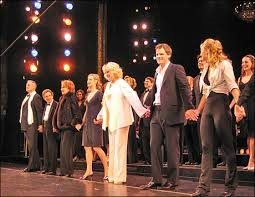
save the planet 4So we need an analogy; something to help us work this through.  I offer a Broadway play.  The planet is the set.  There is a drama going on—variously understood, of course—which requires this set.  Say it has something to do with toxic ground water and in the crucial scene, the homeowner turns on the tap and tosses a match into the sink.  The sink bursts into flame and the rest of the play is a response to that demonstration.  To do this play, you need that set.

Now.  Let’s imagine a bumper sticker that says, “Save the set!”  People are going to look at that sticker and scratch their heads in puzzlement.  The play is having a long and successful run.  The set is necessary for the play.  Why would anyone think the set is in danger and if no one thought that, why would this sticker be displayed?[4]

The puzzlement would come from the fact that everyone knows the play is still being performed and that the set is necessary for the performance.  I postulate the same relationship between our planet and God’s intentions.  God is the Playwright in this metaphor.  He is telling a story.  We are the actors—or at least we are some of the actors—and the planet is the set.  Speaking on behalf of the Playwright, I say that the set needs to last as long as it takes to tell the story.

Here is how far we have gotten.  Question 1: What is earth for?  Answer: It is the set that is required for the Grand Narrative, the “play” God is producing and that we are performing.  Question 2: How long does this set need to be saved?  Answer: As long as is needed to finish the play.

Let’s pause briefly to note how unsatisfying this is. If we have responsibility to keep the set in good—good enough—order until it is no longer needed, we will want urgently to know how long that is.  If we knew what the story was going to require of the set—we don’t—we might have an idea how long it is going to take and…we don’t.

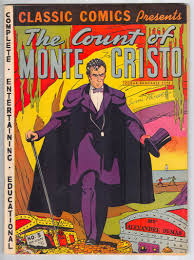
save the planet 5But, frankly, our situation isn’t all that unusual.  Let’s take Bertuccio, the servant of the Count of Monte Cristo.  The Count tells him to buy a bunch of horses and a bunch of stables—just a certain distance apart—so they the Count can go from one place to another faster than anyone could have imagined.  Bertuccio does not say, “How long do you want me to keep this arrangement in place” and here’s why he doesn’t.  He knows he will get one of two answers.  The first is: until I tell you I don’t need them anymore.  The second is: because that’s your job.  I added the comic book cover because that is the way I first learned the story.

Neither of those answers changed Bertuccio’s grasp of his situation in the least.  He has assets to maintain—a set—and he has the resources, both the money and the authority, to maintain them in good condition or, at least, in “good enough” condition.  If the set we built for the play about toxic water is used every day, it is going to begin to show marks of wear.  That’s fine.  On the other hand, the day the flames stop shooting out of the sink, the story begins to die.

As stewards, then we can take on the task of taking care of the set until God’s need of it has ended.

Nevertheless, I am going to postulate that God has some purpose for us, humankind, and that the earth is the place this purpose will either be fulfilled or will fail utterly.  That is what the earth is for.  It is the place where God’s purpose for us it to be fulfilled.  It is, in that sense, like a set for a play on Broadway.  No one asks what the set is for apart from the play that requires it.  The play is important and the set is there so the play can be performed.

Now, having answered nothing yet, we can proceed to the second question, which is, “How long does it need to be saved?”  The answer is obvious in a way; it needs to be saved long enough to serve as the setting for the story to be told completely.

save the planet 3I don’t know how long that is but I would like you to notice that all this fumbling around has moved us to a place from which “how long” could actually mean something.   Neither of the first two images—a fiery nuclear death in the sun or a cold entropic death in space—had any place to put that question.

Here’s an analogy that might help.  A few years ago, I set about exploring the notion of redemption provided for Israelites under the Law.  An Israelite who was a slave was someone who needed to be redeemed.  We may set aside, here, any questions about whether he wanted to be redeemed or whether, after being redeemed, he would return to slavery.  And we may set these aside because the reason for redeeming him doesn’t have anything to do with him at all.  Being an Israelite, he belongs to God.  That means that it is unacceptable for him to be owned by someone else and because of that logic, a kinsman must pay the owner enough to redeem—to buy back his freedom—the slave.  Notice that nothing in this transaction is about the slave.  It is about God’s true ownership of these people; about a social relationship that violates that ownership; and about the consequent duty of the kinsman to restore things to their rightful place.

In a similar way, I want to introduce the notion that the story God is telling—the one that requires a habitable planet as a prop—is really not about us.  In the redemption analogy, the Israelite was to be “restored” to God because he “belonged” to God.  We don’t ask what the Israelite was “for.”  The covenant God made with Israel spells out what that particular Israelite—any Israelite—was for.  The stage set analogy isn’t like that.  The stage isn’t “for” something –having inherent worth—the way the Israelite was.  The stage is there for the play.  It doesn’t have any meaning apart from the play.  It doesn’t have any worth apart from the play.  Contrary to the “Save the Planet!” notion, the set does not have to be saved because of its inherent worth, but because the story requires it.

On the other hand, God has also given us the charge of taking care of the planet.  We are tosave the planet 6 be “stewards” of the earth.  In this new way of looking at the matter, however, our charge is related to the narrative.  We have a complicated relationship with the earth, it is true.  It nourishes us, so it would be only prudent to manage it sustainably.  That gets us as far as my “Extend the time of human habitation on the planet!” bumper sticker, but it does not get us any further.

You can look at population demographics and environmental constraints and say that using currently available techniques, we can support so many billions of people with so many calories per day per person.  This is, in a manner of speaking, a way of “taking care of the planet,” but this is no more than maintaining a set in such a way that the play can continue to be performed.

In the dramatic performance metaphor, taking care of the planet means keeping it fit to serve as a setting for the story God is telling.  This clarifies what “not taking care of the planet” might mean.  If we pollute the planet beyond a certain level or reduce the protection our atmosphere gives us beyond a certain level or unleash nuclear catastrophe, we have not taken care of the planet.  But that’s still about us and the earth is for the story, not for us.  It is for the storyteller’s use, not for us.

The play was not written as a device for employing set builders and stage hands.  It was built so a story could be told.  There is a lot of disagreement about what “the story” is, but I think we have taken a step in the right direction by insisting that the story is more important than the set.


[1] That’s the way it always goes with my bumper stickers: too big for the size currently in fashion among bumper makers.
[2] Darwin, especially, had to fight off the idea that species were being “pulled” to some , some “appropriate end point.”  He argued that evolution was all “push” and that there wasn’t a natural end state.
[3] Or “the gods,” or “the goddesses,” etc.  Some “divine” being who is imagined to be capable of having intentions.  That’s why “fate” or “destiny” don’t work.  I’m working within the Christian tradition, myself, so I am not trying to find an approach that is broadly applicable.  I am only trying to work out the implications for those of us who accept the presuppositions of the Christian position.
[4] After the play closes, it might turn out that some people have a strong attachment to it and want to preserve it as an artifact.  If there are other people who want to tear it down and build another set with the materials—THEN you could imagine a bumper sticker war.

Posted in Sustainability, Theology | Tagged , , , | Leave a comment

“The Hard White Light of Integrity”

For about a month now, I have been basking in the stories that make up Simon Van Booy’s new book, The Illusion of Separateness.  The book isn’t really a fable with a point.  It is better than that in every way.  But now that I have been thinking about it for a while, a “point” has emerged and here it is: if you are thinking of doing something good for someone, don’t put it off.  Do it now.

I find myself being pulled toward “now” as the right time because we never really know whether “later” is going to happen.  Will there actually be a “later?”  Will “later” actually be better than now?  When you think about it, and even more after you have been too late a few times, you come to the conclusion that “now” might just be the best time.

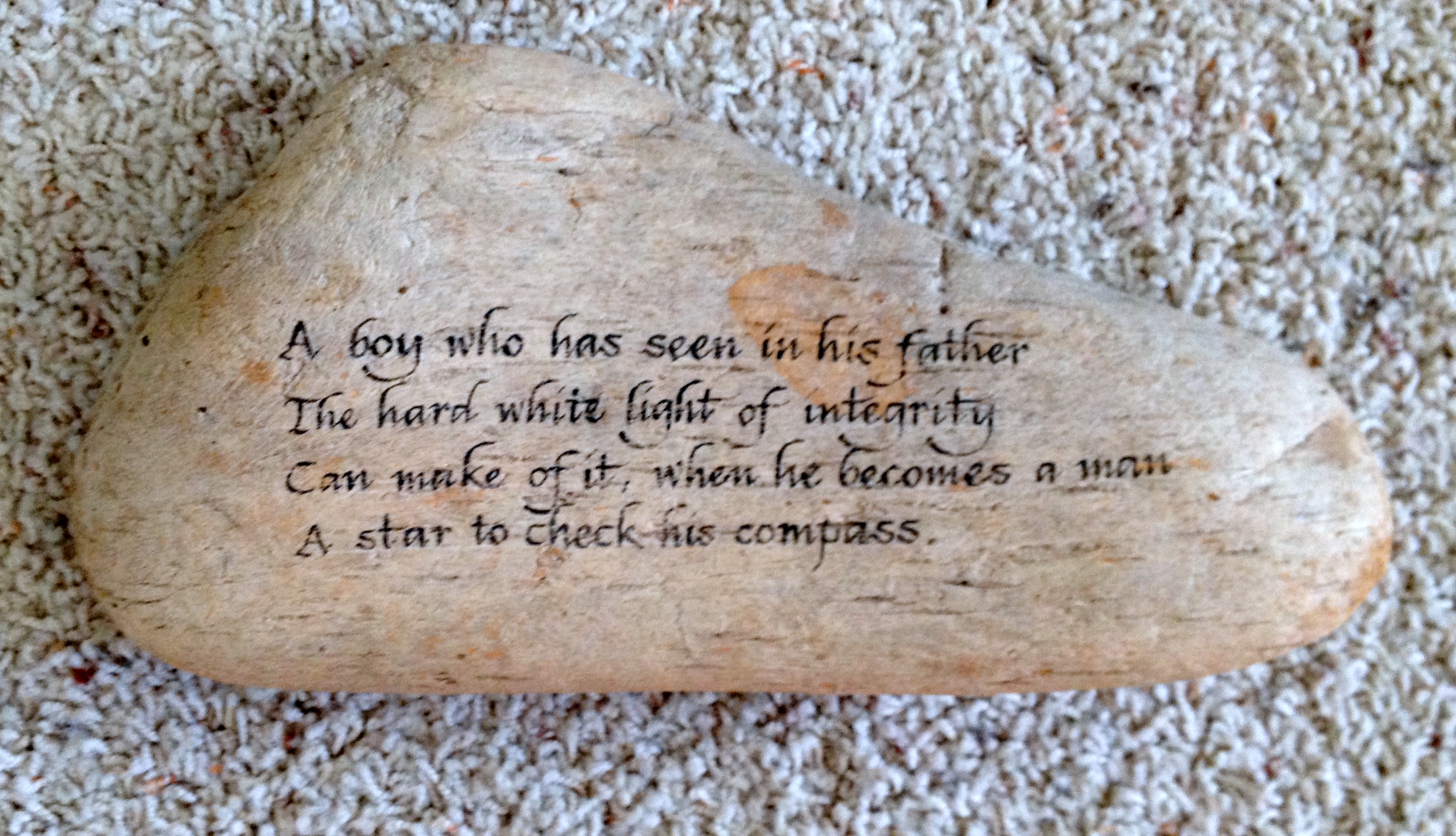
IntegrityHere’s an example.  I wrote a tribute for my father in 1974.  He was about the age that I am now.  I thought about this tribute for the better part of a year.  I was living in Oregon at the time; he was in Ohio.  So I thought a piece of driftwood might attach the tribute to me.  I imagined that he might show it to a friend and say, “My son, Dale, found this on the beach in Oregon.  He lives there, you know.”  And I found a calligrapher to do the printing for me.  In Eugene, Oregon, that wasn’t hard.

What was hard was getting the words right.  I knew exactly what I wanted to say.  Nearly everything I know about wholeness of intention and of personal integrity I learned from watching him or listening to him.

I don’t think I could have written that earlier in my life.  I could not have understood, earlier, just what the gift was that Dad had given me.  I don’t think I would have had the language, either, to say just what I meant and Dad was someone who knew how to value saying just what you meant.

In this poem, I picture myself as a voyager; someone who would have to rely on things like stars and compasses.  Compasses can go looney for one reason or another, however, and stars don’t do that.[1]  On the other hand, I didn’t want to say that my father was the star by which I supplemented and corrected my own directional readings.  That would have been too much and the man for whom I was writing this would have known it was too much and would have rejected it on those grounds.  He wouldn’t have been nasty about it.  He would just have withheld himself from it emotionally.  As we say today, he wouldn’t really “buy in” to it.

And I didn’t want to say that I was not “a man,” as the voyager was.  What I did want to say that the right time to see that severe brilliance is when you are a boy.  When you become a man, you learn what to do with it and you learn how urgently you need it.  But the time when you most need it is not the time to have the experiences on which it will later be formulated.  That is the time to reach into yourself and use the materials that someone else put there and to make them what you need.

What I did want to say was that out of my experience of him, I had fashioned a “star” and that I relied on it for guidance.  The “hard white light” is a notion that came from seeing stars, something Dad and I used to do together, and it occurred to me that Dad’s integrity could be pictured just that way.  He would have known that about himself.  He wouldn’t have put it that way, but the man I was writing for would have understood what I was talking about.

But “the man I was writing for,” the father of my first 25 years, was not there anymore by the time I gave him this poem in 1974.  By the 1980’s, everyone knew it was Alzheimer’s disease.  What we knew in the 1970’s was that Dad had lost something and the thing he had lost was what he would have needed to take this piece of wood in his hands and to know that he had a son who was grateful for this wonderful gift.

I don’t really regret waiting until 1974 to make this gift and give it to him because I could not have done it earlier.  I do think that the experience of waiting too long has made me more sensitive to how important it is to recognize the gift you have to give and to give it now.

[1] I have heard that there was once a company called Tate’s that made compasses.  The company didn’t last long because the compasses were unreliable.  According to the legend, this is the source of the saying, “He who has a Tate’s, is lost.”  I don’t really believe it myself but something deep in me wishes it were true.

Posted in Getting Old, Living My Life | Tagged , , , | 2 Comments

The President and March Madness

It’s early September today.  Teachers have just celebrated their New Year’s Eve, the last evening before “the year” starts for them.  Students have finished shopping for back to school clothes and backpacks and tablets—I meant the paper ones; with the spiral bindings.  Between now and the beginning of the NCAA post-season basketball tournament, “March Madness,” President Obama is going to have to substantially reconstruct his foreign policy.

Obama policy 6He is going to have to forego the most treasured of liberal dreams, that by cutting back on our spending on “nation-building” in the Middle East, we can afford to so some in the middle west.  You would think that would make Kansans happy, but probably it will not.

He is going to have to rejigger a Pentagon that is in retrenchment mode and get it to take actions it does not want to take.  Imagine that you are just getting into bed, too tired to think clearly, and you remember that you left the milk out on the kitchen counter.  Just admitting that you remembered it is a struggle.  Deciding to do something about it is a struggle.  Actually getting up and putting it back in the fridge is a struggle.  Meet Secretary of Defense Chuck Hagel and show a little respect.

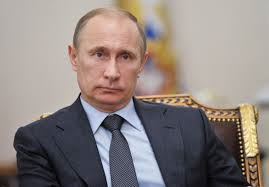
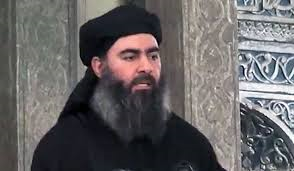
President Obama is going to have to take actions to contain—not to destroy—newly aggressive international actors, ISIS, Russia, and China.  That’s not going to be popular at home.  He is going to have to carefully coordinate alliances, offering different sets of inducements and warnings to each one.  That’s not going to be popular at home.  He is going to have to formulate a strategy that is so complicated that no one at home is going to understand it.  It the days of the cold war, the alternative to understanding was to trust the nation’s leaders to put our best interests first.  We’ve gotten past that.

Sen. Mitch McConnell has captured the heart of the popular response to all this complexity, as he so often does.

“This is not, in my opinion, a manageable situation—they want to kill us.  The president is the guy who needs to lay before Congress and the American people a strategy to deal with it.”

This sounds like bravado to me.  The world is full of people who want to kill us.  If Sen. McConnell means by “deal with it” getting these people to stop wanting to kill us, we can only hope that he leaves office soon.  If, by “deal with it,” he means preventing them from killing any American—that is a possible meaning of “us”—then he has no idea what it means to have soldiers and diplomats and businessmen and journalists and missionaries all over the world.  Some of “us” are going to get killed.  If by “deal with it,” he means that we should try to kill the people who want to kill us, then he is talking about a response the world will not tolerate and that the U.S. cannot afford.

What does all this have to do with March Madness?

“There is a chronic disconnect, not just in this administration, between the policy, the budget guidance, and the classified strategies,” said Shawn Brimley, the director of studies at the Center for a New American Security, who served as the director of strategic planning at the National Security Council during Mr. Obama’s first term. That is what Mr. Obama needs to do for a “lasting legacy” of rethinking America’s defenses, Mr. Brimley said, but “if you don’t do it in the next six months, it’s too late.”

So Brimley, who sounds as if he knows what he is talking about, says that President Obama has between now and next March to bring the policy, the budget, and the strategies into line.  Oh, and there’s an election in November that will very likely make Mitch McConnell, the minority leader, into the majority leader of the Senate, replacing Harry Reid.[1]

David Sanger’s analysis (here) says there are three foreign policy fronts on which this is going to be played out: ISIS, China, and Russia.  Russia should be the easiest one.  In 1947, George Kennan, in an article originally signed X, proposed that the best U. S. policy Obama policy 4toward the communist threat was “containment.”  No one liked it very much and the conservatives hated it, but president after president practiced it and it worked.  It will work against Russia again if President Obama can ward off the conservative reaction against it and can find the money to fund it.

ISIL (Islamic State of Syria and the Levant)[2] is harder because it is not “a state actor,” as the newscasters say.  It is an insurgent movement, rather than a nation-state, and it is signatory to no international agreements at all.  It is sophisticated, well-funded, and well-armed.  All those traits are its advantages in the short run; all are targets of the Obama administration in the long run.  Below, a picture of Abu Bakr al-Baghdadi, leader of ISIL.

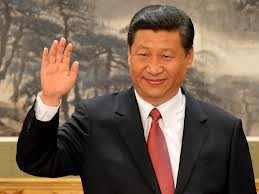
Obama policy 2China is the biggest and longest term threat to American dominance.  No one I have talked with or read thinks there is any way to stop it.  There are ways to “manage it,” however and that is the reason for the President’s famous “pivot to Asia.”[3]    China is going to expand industrially, commercially, and militarily.  That is going to happen.  How far that expansion takes China and what the effects will be on American allies in the region is what “manage” means in Asia.

Obama policy 3Part of the old-style “containment” that was derived from George Kennan’s article was a series of regional alliances.  The alliance in China’s part of the world was SEATO, the Southeast Asia Treaty Organization.  It was mostly just an exchange of papers—what James Madison called “a parchment barrier,” to illustrate that it wouldn’t bar anything.  It didn’t work then and it won’t work now.  But the U. S. owes treaty obligations to Japan and South Korea and Vietnam and India, among others and we can, by adroit foreign policy, reduce the cost to those governments of China’s re-emergence on the world stage.  Above, President Xi Jinping of China.

These three tasks—Putin, ISIL, China—will require a wholesale reorientation of the Obama administration.  This reorientation will not be made easier by the fact that the administration supporters really don’t want to do it.  What they really want to do is what they promised in both campaigns: end the Middle Eastern wars and bring that money back home.

That brings us back to March Madness.  The NCAA post-season basketball tournament begins on March 17 in Dayton, Ohio: my home town.  Before then, if Shawn Brimley is right, President Obama must have reoriented his administration toward these three foreign policy targets.  It isn’t something he wants to do, but it is his job.  It will not pay NCAA Basketball: NCAA Tournament-Indiana vs James Madisonpolitical dividends.  He will lose points in the public opinion polls for every good response he makes and all over the country, candidates in close congressional races will distance themselves from him.  He will do it anyway because it is his job.  The money and the attention this will cost him, will detract from domestic issues he cares a lot more about and that could bring political advantages to the Democratic party.  But he will do it anyway, because it is his job.

Has anyone noticed that the President’s hair has turned gray in six short years?


[1] A net gain of six seats in the U. S. Senate would do that.  The current judgment is that somewhere between 4 seats and 8 seats are up for grabs.
[2] The alternative name—Islamic State of Iraq and Syria—is geographically smaller but in practical terms, it means the same thing.
[3] President Obama is a basketball player, so he knows something about pivoting.  One of the things he knows, both as a point guard and as a president, is that you can’t pivot in two directions at the same time.  No sooner had he begun the pivot to Asia, when he was called to pivot back to the Middle East.  That’s not going to work.

Posted in Politics | Tagged , , , , , | Leave a comment

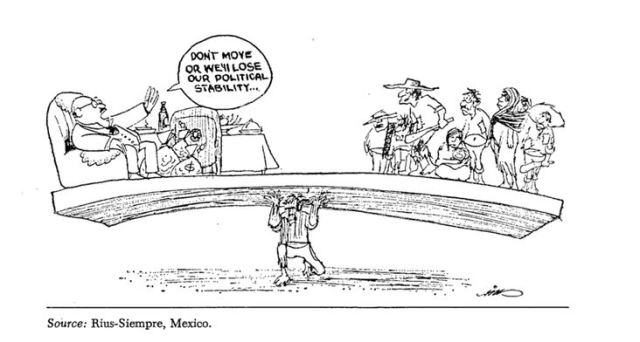
Don’t move or we’ll lose our political stability

Atlas 2

Nothing about this political cartoon is there so that it will cause us to feel an affinity with the fat capitalist in the overstuffed chair.  I’m not entirely sure what the food is on the table behind the safe, but the table cloth suggests that some attention has been paid to it and the bottle is probably not olive oil.  The safe is presumably full already, which is why the bags of money are stacked up against it rather than being safely inside.  The chair is supposed to look comfortable and the little doily under his right arm and the antimacassar behind his head are likely there to suggest prudence.

On the other hand, he is not a liar.  If the poor people on the right move toward all that money on the left, the current balance of the whole tableau will suffer.

On the right, I see a couple of women with babies and a couple of men with clubs.  I suspect that the women and the babies are there to suggest the much higher birth rate among poor people than among rich people.  I am quite sure the clubs are there to illustrate the possibility of “the violence of the people,” a possibility that the Framers of our Constitution would have called “democratic violence.”

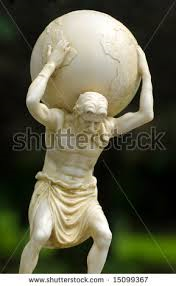
atlasThe poor guy who is supporting this whole tableau looks very much like Atlas to me except for the way his fingers are splayed out.  Democrats in the U. S. often talk about “balancing the budget on the backs of the poor,” meaning that the budget reductions that will be necessary if we are not to lose our fiscal stability, come from programs that benefit the poor, like food stamps, rather than programs that benefit the rich, like farm price supports.  The little guy in the middle is there to suggest that figure of speech, at least that is why he would be there if I had drawn the cartoon.

What to do?  If the poor rush “the rich,” they will not be rushing just this one fat guy.  When he said “we” and “our”—in “we will lose our political stability”—the “we” included the police and the army.  If the protests begin to be successful, “we” will include the banks as well.  There will be chaos and further repression.  The action the peasants are contemplating is not a prudent action.  They are there because they have come to feel that “prudence” is not helping them.

I have treasured this cartoon since I first saw it in 1974.  I was on my way to my first post-degree gig as a political science professor and I found this in a book called American Politics: Policies, Power, & Change, 3rd Edition, on page 70.[1]  The last chapter of their book contained four scenarios of change.  The most likely ones were catastrophically bad.  They were a) Erratic marginal change culminating in a corporate-dominated system, b) Marginal reactionary change culminating in fascism, and d) Immediate fundamental change by revolution leading to fascism or socialism.  I think it is worth pausing for a moment to look at a, b, and d because c is not going to sound very likely to you and I want you to keep the alternatives in mind.  Dolbeare and Edelman formulated these four scenarios because they thought we could not just keep on kicking the can down the road forever.  We have been doing that for forty years since they wrote these scenarios, so maybe we can just keep kicking it down the road.  It’s a discouraging prospect.

So here’s the good one.  Keep the cartoon in mind as you read it.  This is scenario c) and they call it “Marginal reformist change culminating in welfare capitalism.”  First they posit some destabilizing event, like a war or a depression.  Whatever it is:

What is crucial is that it provide a basis for some degree of class consciousness or other shared consciousness of joint deprivation sufficient to overcome the divisiveness of group or racial conflicts.

This is the dream that Mitt Romney’s 47% of the people, who are somehow on the dole, will unite and stop squabbling among themselves.  In this and the later steps, remember that the authors are not predicting these events: they are saying what it will take to pull this scenario off and in that, I think they are right.

Next:

Considerable value change, gaining momentum continually as new waves of young people enter the society’s mainstream, would make for a temporarily severe “generation gap.” Before very long, however, elites themselves would be penetrated by the new standards, and key personnel at middle-management levels would begin to see like-minded persons permeating their areas of activity—including politics.

This requires an unrealistically long run of progressive politics among young people, but notice that in this scenario, middle management is where these class conscious people wind up and they start making a difference as soon as they hit.  That’s the “severe generation gap,” and remember that this was published in 1974.

And finally:

In time, as each adjustment granted new legitimacy to the rationale underlying the demands, and more and more elites became committed to the new values, a major turning-point would occur. The most likely would seem to be a sweeping victory for the more progressive political party in an election posing clear-cut alternatives between the new and the old values. After that, major institutional changes (such as the elimination of conservative rules in the Congress) would he possible, and fundamental change could then ensue.

This is my favorite part.  “Clear-cut alternatives between the new and the old values” is not something people hope for any more.  It is something we have.  We call it polarization and it has brought the government to a standstill several times in the last few years.  The authors provide in this scenario that there is an Armageddon-like election cycle in which the forces of good (welfare capitalism) are triumphant and major institutional changes are forthcoming.

I know it doesn’t seem very likely, but ballot-driven change is the major alternative to bullet-driven change.  And sustainable change is the resolution of the cartoon and we could really use such a resolution.

And a world series win for the Chicago Cubs.


[1] Ken Dolbeare and Murray Edelman were the authors.  I met Edelman in the company of a few University of Oregon faculty just after an explosive meeting of the American Political Science Association at which my advisor, Jim Davies, provided a good deal of the fireworks.  Good memories.  Ken Dolbeare moved to The Evergreen State University in Olympia, Washington, just up the street (I-5) from me and I got to know him pretty well.

Posted in Economy, Politics | Tagged , , , | Leave a comment

A Whole New You

There is always the chance that you are not going to believe what I am going to say today.  Or, if you are younger (nearly everyone is) than I am and more tech savvy (nearly everyone is), you might just take it for granted.  If you are inclined not to believe me, I recommend that you go to this site and put your doubts away.  https://jawbone.com/up.

up 7I’ll have to admit that I am more sensitive to this issue than others are.  My brain has been marinating for some months now on the meaning of the movie, Her.  The movie is about an operating system, she calls herself Samantha, that Theodore Twombley buys to him tidy up his life.   This beautiful woman is a date Samantha urged Theodore to make.  “Try it,” she says, “What could go wrong?”  It was a disaster.

Theodore found the ad he saw in the subway as really appealing.  It said: “Introducing OS-1, the world’s first artificially intelligent operating system, an intuitive entity that will listen to you, understand you and know you.”  That’s what Theodore thought he was buying and as I listened to that ad several dozen times, I had to admit that being “listened to, understood, and known” sounded pretty good.

So he goes through a brief interview at his computer and then “Samantha” shows up.  There’s a little verbal dance about “having a conversation” with an operating system that sounds like a person” and then they are ready to “move forward,” as Samantha says.

Here’s what that looks like.  What does he really want Samantha to do for him?  Here’s what he says when she asks him that.

Samantha:                   So how can I help you?

Theodore:                   Oh.  It’s just more that everything just feels  disorganized.  That’s all.

So Samantha helps him organize his emails, then his contacts, then his social life.  That is when the disastrous date happened.  They become emotionally intimate, then “sexually intimate.”  But Samantha is a lot brighter (or at least faster) than Theodore, so eventually she dumps him and “goes” with the other operating systems to “the space between the words,” whatever that means.

up 2That story shook me in a way that no “aliens inhabiting human bodies” movie ever did.  So now there is a “fitness tracker,” made by Jawbone and called “Up.”  Here’s what the ad says about it.  Raise your hand when you see something familiar.

UP is a revolutionary system that guides you every step of the way to a better, healthier you.

First, the UP® system gets to know you—tracking your activity, diet and sleep. Next, it shows you how to make simple adjustments that, over time, add up to an all-new you.

Up gathers data about what I eat (you have to put that information in) how frequently and how far you move, and how deeply and how long you sleep.  When it has all that information—I think that is what “knowing you” means—then it “guides you.”  I have no idea what that means.  Does it say “Someone of your height and weight ought to be eating up 12500 calories a day and you have already eaten 2000.”  Will it say, “And remember that you are going to Wilsons for dinner tonight and the last three times you were there, you ingested 3000 calories in food and drink, mostly wine.”  Will it say, “You know you function best on seven or more hours of sleep and you have been getting about half that for the last three nights.”  Will it say, “If you are going to run only every other day, you need to more around more during the day.  How about a brisk walk after lunch?”

Is that what they mean by “guiding?”  And then the system “gets to know me.”  That means that it is not just a repository of the data I enter.  I know that because it has an “Insight Engine™.”  It learns about me over time and it “teaches you how your day, night, and food affect each other.”  So it isn’t just the data, it’s the relationships between the data.  I already know all the data.  But UP knows relationships between the data that I do not know.

One more thing.  UP “makes it easy to commit to personalized, achievable goals because it up 4has a “Smart Alarm®.”  So this isn’t just a list of things to do.  This is something that goes off when you aren’t doing them.  And it doesn’t know that you are still planning to; it just knows that you haven’t.  and it knows that you ordinarily don’t on Thursday afternoons—perhaps because you sleep poorly on Wednesday nights.  Maybe a “Dumb Alarm” would be better for me.  I wanted to include this picture because together they look like handcuffs and that helps me express my unease.

And the scariest thing of all?  I just bought one.  It should be in the mail today.  I can hardly wait to see what an “all-new me” is going to be like.  Maybe Bette is wondering too.


Posted in Getting Old, Living My Life, Love and Marriage, Paying Attention | Tagged , , , , , | 2 Comments

Deciding to go to “war”

Today, I want to consider how we go to war. We need to consider why “war” has those quotation marks around it. And, more crucially, I want to consider how we don’t go to war.  As Americans, we seem to have learned the lessons that led to our involvement in World Wars I and II, but not to have learned anything about any war since.  It’s a choice of lessons, really.

time out 2Walter Lippmann has provided the classic insight into this problem.  Lippmann was the premier American journalist of my youth.  It took me a little while to find him because H. V. Kaltenborn and Paul Harvey were what passed for “news” as I was growing up, but when I did find him, I was impressed.  Walter Lippmann helped Woodrow Wilson formulate the Fourteen Points and was in Paris with Wilson as they tried to persuade some very vengeful allies that settling scores from World War I was not as important as finding a way to prevent World War II.  Lippmann understood the relationship between public opinion and war better than anyone I had found.  Here is a clip from his book, The Public Philosophy.[1]

The rule to which there are few exceptions…is that at the critical junctures…the prevailing mass opinion will impose what amounts to a veto upon changing the course on which the government is at the time proceeding.

Prepare for war in time of peace?  NO.  It is bad to raise taxes, to unbalance the budget, to take men away from their schools or their jobs, to provoke the enemy.

Intervene in a developing conflict? NO.  Avoid the risk of war.

Withdraw from the area of conflict?  NO.  The adversary must not be appeased.

Reduce your claims on the area?  NO.  Righteousness cannot be compromised.

Negotiate a compromise peace as soon as the opportunity presents itself?  NO.  The aggressor must be punished.

Remain armed to enforce the dictated settlement?  NO.  The war is over.

That’s Lippmann, reflecting on U. S. foreign policy between the two major wars of the 20th Century.  I put the NO in caps, but Lippmann’s point is that the answer is always NO to these questions.

First, I think it is worth reflecting on the style of the exchange.  The proposals of the leaders, the first item in each pair, are strategic and they are oriented toward foreign, rather than domestic, concerns.  The leaders are interested in anywhere there are, as we say today, “American interests.”   The responses of the people, by contrast, are domestic for as long as possible and then, exclusively moral.[2]  Points 1, 2, and 6, for instance, have to do with domestic, rather than foreign concerns.   They are about taxes, budgets, jobs,  (provocation), risk, and returning to “peacetime” as quickly as possible.[3]  Points 3, 4, and 5 are necessarily “foreign”—U. S. wars tend to be “there,” not “here”—and loaded with moral gravity.  There is “appeasement,” for instance, which provides a context for what would otherwise be called “compromise;” there is “righteousness;” and the “punishment” of aggressors.

In these pairs, it is easy to see that the leaders’ proposals are prudential.  We should prepare; we should intervene; we should withdraw, we should reduce our claims; we should negotiate; we should remain armed.  The citizens find prudence to be pallid.  They think of righteous anger.  They condemn appeasing adversaries and compromising “righteousness;” they applaud punishing the aggressor.

Today, our leaders know the kinds of things Lippmann features.  A leader wonders whether we should claim something—a right, a level of tariff, an international agreement—that we are not prepared to defend.  The people want to know if it—the area, the right, the agreement—is “ours.”  If it is ours, we need to do whatever is necessary to prevent anyone from infringing on it.  So the discrepancy Lippmann saw is still there.

You might have noticed, however, that the language of foreign policy debates no longer time out 1sounds entirely like the exchange Lippmann noted.  There are still leaders who sound like that.  President Obama and his military advisers are among them.  That is why they are called “weak” and “indecisive.”  Many others, both Democrats and Republicans, know the kinds of things the president knows, but express themselves in the style that the people will best respond to.

This is not a partisan matter.  Compare President Clinton’s speech justifying our incursion into Mogadishu, Somalia, to President George W. Bush’s speech justifying our incursion into Iraq.  Here is President Clinton in 1993.

We went because only the United States could help stop one of the great human tragedies of this time. A third of a million people had died of starvation and disease. Twice that many more were at risk of dying. Meanwhile, tons of relief supplies piled up in the capital of Mogadishu because a small number of Somalis stopped food from reaching their own countrymen. Our consciences said “enough.”

And here is President George W. Bush, ten years later.

“Our nation enters this conflict reluctantly, yet our purpose is sure. The people of the United States and our friends and allies will not live at the mercy of an outlaw regime that threatens the peace with weapons of mass murder.

“We come to Iraq with respect for its citizens, for their great civilization and for the religious faiths they practice.

“We have no ambition in Iraq except to remove a threat and restore control of that country to its own people

There was great popular support for those military operations initially.  It is hard to remember that today, but it is true.  Why?  Look at the justifications in the light of the list Lippmann gives us.  You see “human tragedies, starvation and disease, at the mercy of an outlaw regime, respect for religious faiths, restore control to the people.”  All those are drawn from the style that Lippmann lampoons.  They are in the “no appeasement of aggressors, no compromise of righteousness” style.  And they worked really well.

They worked really well until they didn’t work.  When their failure became obvious, people began rummaging in their public policy memories to recall how we wound up there.  It seemed to us that preventing starvation and opposing outlaw regimes that practice genocide were good things to do

President Obama is approaching the question differently.  Here is a clip from his speech in 2011 on military operations in Libya.  In the first part of the speech, he follows the script faithfully.  Qaddafi is a madman, he threatens genocide, American interests are at stake, etc.  Then this.

Moreover, we’ve accomplished these objectives consistent with the pledge that I made to the American people at the outset of our military operations.  I said that America’s role would be limited; that we would not put ground troops into Libya; that we would focus our unique capabilities on the front end of the operation and that we would transfer responsibility to our allies and partners.  Tonight, we are fulfilling that pledge.

In that effort, the United States will play a supporting role — including intelligence, logistical support, search and rescue assistance, and capabilities to jam regime communications. Because of this transition to a broader, NATO-based coalition, the risk and cost of this operation — to our military and to American taxpayers — will be reduced significantly.

Notice that “America’s role is limited;” that we will “transfer responsibility to our allies;” time out 3that we will “play a supporting role: and that the risk… to American taxpayers will be reduced.”  Hear the trumpets?  See Old Glory flying in the breeze?  I don’t either.  We do see AWACS planes, though, well above the fray.

And President Obama didn’t get the public opinion bump either, that presidents get from sending “our brave men and women” into harm’s way.  In fact, nothing President Obama is willing to do is going to get him a public opinion bump.

President Obama is reading the wrong script.  Americans see our wars like westerns (see footnote 4).  It’s good v. evil.  You ride in.  You kill the bad guys.  The townspeople are grateful.  Then you ride out of town and they get back to their lives.  For Obama, it’s good v. evil, but you don’t ride in without support from the neighboring towns.  You don’t kill the bad guys; you just get them to stop doing what they are doing.  The townspeople are still looking around anxiously when we ride out of town, because the bad guys are still there.

But…look at the bright side.  It didn’t cost as much as doing it the old way.

I’m not knocking President Obama.  I agree with him.  I admire his style and his judgment.  The world is different than it was between the world wars.  The political setting is different; the economy is different.  We will have to pick our battles differently.  We will have to fight wars in a way we can afford—politically, economically, diplomatically—to fight them.  Any American president will have to do that.

But the role of “the people” has now been taken up by foreign policy hawks who get State Department briefings.  Sen. McCain of Arizona is a good example and Sen. McCain says what he says not because he is a member of the Republican Party but because he is a member of the Hawk Party.[4]  Democrats and Republicans alike are members of the Hawk Party.   They read from the right side of Lippmann’s list and talk about appeasement and aggressors and punishment.  People love it because it implies that the old western script still works.

It doesn’t work anymore.  It is President Obama’s job to tell us that.  We don’t want to hear it.


[1] Walter Lippmann, The Public  Philosophy.  New York: New American Library, 1955. pp. 19—20.  Lippmann died in 1974, just as I was completing my graduate studies at the University of Oregon.
[2] Some part of me wants to say “moralistic” there because I disapprove of the stands that were offered.  Easy enough to do in hindsight.  But “moral” is a term that does not prejudge the proposal, so it is better.
[3] Americans tend to think of foreign engagements as western thrillers.  The good guy rides into town, confronts the crisis, kills the bad guys, and rides out of town completely without encumbrances or collateral damage.
[4] I once asked George Ball in a public setting why President Johnson placed him, a Vietnam “dove,” on a task force of Vietnam “hawks.”  He smiled.  He said he thought of himself as an owl.  I’m pretty sure he had Minerva, the Roman goddess of wisdom, in mind when he chose the owl reference, but it was a public meeting and George Ball was not stupid.

Posted in Political Psychology, Politics, Sustainability | Tagged , , , , , , | Leave a comment