Thanksgiving at, and for, Starbucks

Thanksgiving 3Tomorrow morning, Thanksgiving morning, Bette and I will go over to “our Starbucks” and meet friends who will have family obligations the rest of the day.  I am tempted to say that we will all have “other family obligations” that day, but that would be getting ahead of the story.

“Our Starbucks,” in the Multnomah Village section of Portland, Oregon, is an amazing place.  It isn’t oriented to people who stop in and get coffee on their way to somewhere else, although of course, they serve them too.  It is oriented to the community of people who meet there, who meet each other there.  And that’s why everybody will be there on Thanksgiving morning.  On Christmas morning, too, if it works the way it has for the last several years.  Very often, the baristas hand around samples of the pastries.  Apparently, that is what is happening in the picture below.

This morning, the usual crew met in the usual space: the northwest corner of the store.  We’ve taken to calling ourselves the Northwest Corner Caucus.  There are very few mornings when “all of us” are there.  Apparently lives have other demands as well as coffee and conversation.  But some of us will be there, for sure, and when we get together in that corner, certain habits of conversation are presumed and, in most cases, practiced as well.
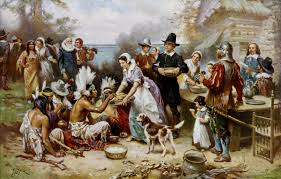
Thanksgiving 1We try pretty hard, for example, to have conversations where there aren’t any losers and where everybody who has a story to tell has a chance to tell it.  That means that while there is a “discussion of political issues” side to the conversations, there is a “soap opera” side as well.  I know you were anxious about that conversation with your boss; how did that go?  I remember that you said you were trying to move over into a new line of work; is that going well?  So…that woman you met on eHarmony…has anything come of that?

This morning, for instance, there were a lot of family stories, partly because everyone is setting up for a Thanksgiving of some sort.  But one son is thinking of a bold new business venture and the Caucus has been following the deliberations.  Does water exercise really offer any hope for rehabbing bad hips and ankles?  Looks pretty good so far.  So I know you have been checking out some local senior centers in anticipation of moving into one.  What have you found out that you’d be willing to share?

And, this morning, we spent a lot of time on Ferguson, Missouri.  Can you really deal with a case like that at the grand jury level?  Wouldn’t it be better to bring it into court where cross examinations can make a difference?  Is there a way to make police more strictly liable for the consequences of their actions and still find people who are willing to be police officers?  Does the culture of the police department exercise a lot of influence over how police behave in crisis circumstances?  Will the commission report about the killing and the burning in Ferguson help at all, or is it just the standard process by which we put things like that behind us.

Are labor unions victims of their own success?  Now that so many workers have pension benefits and weekends off and rights to arbitration, is there really any need for “a labor movement?”  Does the labor interest work better when it is expressed directly through political parties, as in many European social democracies,  or is the American approach of trying to influence policymakers better?

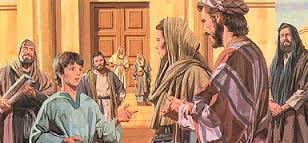
Did the twelve-year-old Jesus of Nazareth get lippy with his mother when she reproved him for hanging around the temple instead of going hope with his parents?  Actually, I introduced that one.  There was a line from a blog I posted yesterday that I was proud of and every time a new member showed up, I would read it again.  Here’s the line: “Jesus, a master rhetorician as many twelve-year-old boys are, knew that if you buy the premise, you are stuck with the question  just the way your mother asked it.”  We don’t actually make it a habit to talk about Jesus of Nazareth, but we did this morning.

There isn’t a starting time for the Caucus.  It starts when the second person arrives and continues thereafter.  I have no idea what we will talk about tomorrow, but the full crew should be there and I am eager to find out.

Thanksgiving 2I decided to write this little note when I realized how genuinely grateful I am for our Starbucks.  The manager understands that this is a neighborhood coffee house and she does everything she can do to make it work.  She teaches each new barista what superb customer service looks like and every day she is there, she is a walking tutorial in how to do it.  She introduces people to each other—people whom she knows but who have not yet met each other—and very often those introductions turn into conversations and sometimes into friendships.  Every current member of the caucus is someone I met at Starbucks, including my wife Bette. [1] So our Starbucks is a gentle and generous place.  It is kept that way by a manager and a corps of baristas who know what kind of gift they can provide—well beyond the rich coffee and the goodies—and greet people by name and start preparing  the drink they always order.  The Caucus is kept that way by a very solid and stable understanding among the members that the levels of trust and understanding we have built up simply can’t be readily duplicated, so they have to be protected.

And they are.  And that’s why, first thing tomorrow, I will remember to give thanks for Starbucks.

[1] When I was dating in January 2005, I met women at Starbucks when I could.  Bette lived right across the street from a Starbucks—not the Multnomah Village Starbucks—so we agreed to meet there.  It was stimulating in a way that had nothing at all to do with the caffeine, although I had a tall dark roast coffee, myself, and I bought Bette a tall latte.

Posted in Living My Life | Tagged , , , , | Leave a comment

In my Father’s house

At my house, this is the year we study Luke’s account of the birth of Jesus.  Every Advent, we focus on one—only one—of the two narratives the Bible gives us about the birth of Jesus.  I’ve been doing this for twenty years or so; I’ve lost count, really.  I hope, by this practice to get “clean and sober.”  That’s what I call it and I call it that because that’s what it has felt like to me over the years.

What most of us call “the Christmas story” is a hopeless hodgepodge.  Matthew’s story, by contrast, is clean and dramatic.  Luke’s story has its own character too: not so clean, but a great deal more dramatic.  But this is true only if you read each story on its own merits.  And given that we all learned, as children, the hodgepodge version, it takes some effort to really invest in one at a time.  For me, that means one a year.  I just ignore the other one.  And this is Luke’s year.

Matthew ends his story when Joseph takes his family to Nazareth so the child will have a chance of not being killed as a child.  It means moving all the way up to the highlands of Nazareth, so 80 miles  from Jerusalem by the most direct route, rather than the more convenient five miles from their home in Bethlehem, but Joseph has his eye on giving Jesus a chance to grow up. And when they move to Nazareth, Matthew’s story is over.

You can’t really do that with Luke.  For Luke, the principal narrative device, the turning point, is Jesus’s baptism by John[1], the son of Zechariah and Elizabeth.  In fact, nearly all the first chapter of “the birth of Jesus” is spent dealing with the birth of John.  So really, Luke’s “birth narrative” is not over until the baptism and given that, the previous scene of the 12-year old Jesus in the temple at Jerusalem is part of Luke’s “Christmas story.”

You are all likely familiar with Luke’s story of the boy, Jesus, who hung around the temple in Jerusalem instead of going back to Nazareth with his parents.  If not, Luke 2:41—52 can serve as Cliff’s Notes.  The question I want to raise today is not why he stayed.  We don’t know that.  I want to look at what account he gave his mother about why he stayed and why Luke wants us to know about that account.

temple 3Mary is angry with the boy for violating his parents’ trust.  Everybody packed up and headed back to Nazareth, but Jesus stayed behind.  He may have been an early practitioner of the maxim that it is better to ask forgiveness than permission.  Had he asked permission to stay in Jerusalem by himself, you know what answer he would have gotten and he probably knew that as well.  He had lived with his parents for more than a decade by that time and none of the gospel writers thinks Jesus was stupid.  I have an alternative picture of this scene below.  What do you think?

So he didn’t ask permission.  He just stayed behind.  And that’s why Mary was so angry with him.  “Why have you done this to us?” is the way the New Jerusalem Bible puts the question and Raymond Brown, my principal source for the underpinnings of this story, says the question is even nastier in Greek.  Jesus’s answer has nothing at all to do with why he has “done this” to them.  Jesus, a master rhetorician as many twelve-year-old boys are, temple 1knew that if you buy the premise, you are stuck with the question as it was asked.  The premise is that Jesus has behaved thoughtlessly to his parents and ought to be apologetic about it.  None of the gospel accounts gives us a Jesus who is any good at being apologetic.  Maybe he didn’t know how; maybe he thought it was inappropriate; maybe the gospel writers combed out all of Jesus’s known apologies because those apologies wouldn’t advance the story they are telling.

In any case, Jesus offers a new premise and embeds it in a new question: “Why were you looking for me?”  The question here does not ask why they wanted to find him; it asks why they were searching aimlessly.  Why did you go from door to door and from person to person when you might have known I would be here?

This gets theological really fast.  The mother asks why the son did not meet her expectations.  The son asks the mother whether she really has no idea at all who he is.

My guess is that this story comes from another source than the birth narrative Luke has been building.  This is the Mary who was visited by the angel Gabriel and whose cousin, Elizabeth, called her “the mother of my Lord,” and who was visited by shepherds, who repeated to her what the angel had told them, and whose baby was referred to by Simeon as “the salvation which You have made ready.”  A Mary who had been through all of that would have been ready to understand the behavior of her 12-year-old son as Who He Is and not as an irresponsible pre-adolescent.  For that reason, I think this story comes from a source where Mary has not had all those not so subtle clues.  The Mary of this story has had no preparation for understanding what Jesus is going to tell her.

Jesus, on the other hand, needs to say, “You were going home to my father’s house (in Nazareth) but this, this stunning temple in Jerusalem is my Father’s house.”  He does not hook a thumb at Joseph and say, “Him?  He’s not my father.”  He says something like, “To be who I am, I must have an earthly father and a heavenly Father.  When I wasn’t on the temple 2way to the one, you should have known I would be at the other.”  Jesus’s answer, please note, counts on the Mary that Luke has been building for nearly two chapters.  Jesus’s answer is not aimed at the hapless Mary who had no way of knowing who her son was.  This little sign indicates a path Mary chose not to take.

Why does Luke give us this story?  I think it is because he wants us to know three things.  The first is that Jesus knew who he was.  Maybe the notion was remote then and got clearer later.  Maybe he doubted it later and rediscovered it at his baptism in the Jordan.  Luke needs to sound that note, however, because the next thing he tells us is that Jesus went back to Nazareth with his parents and “lived under their authority.”[2]  And third, having Jesus live in rural obscurity for—at a rough guess—the next 16 years, enables Jesus to come to John as an unknown and to be baptized.  Luke needs for Jesus to be unknown to his contemporaries, but he doesn’t need him to be unknown to us.  Luke tells us everything.

There isn’t any way for us to know how Jesus thought about the event at the time, but there are lots of other stories in the gospels where people wanted Jesus to be something he was not or to do something before it was time.  The Devil in Luke’s next chapter offers Jesus three really interesting opportunities to bail out of the role God had called him to play.[3]  In Mark’s account, Peter says that Jesus is way too nice a person to have to undergo the suffering and death he had just said was his future.

In this story, Mary says, “Your proper place is at home with your father and me.”  Jesus replies, “I will come with you now, but being with my Father is the home I will ever have.”


[1] Later called John the Baptizer, and whom I grew up hearing as John the Baptist.  That was before I began reading the biblical scholar Raymond E. Brown, who refers to him as JBap and also before I met Charles Svendsen, who has a brother who is a Baptist minister and whose name is John and whom Charles refers to as “my brother, John the Baptist.”
[2] There is a lovely little analogy to this point in the German movie, Vitus.  Vitus is a genius and his parents are very proud of him.  But the life of a genius in not what Vitus wants or needs, so he fakes an accident and then fakes being a boy of normal intelligence until his parents leave him alone.  He lives with them as “a normal boy,” knowing he is not, until he is forced to reveal the truth to his grandfather.  I think Jesus’s experience in Nazareth might have been like that.
[3] Ordinarily we say three temptations because three are described, but the New Jerusalem Bible translates Luke 4:13, “having exhausted every way of putting him to the test, the devil left him.”  If there weren’t more than three, the Devil is really too stupid to worry about.

Posted in Advent, Biblical Studies, Living My Life | Tagged , , , , | Leave a comment

The Beginning Place

I have a few favorite books, not very many, and I read them over and over.  You cannot imagine the grief I take for that.  Nearly all my friends read broadly and with enjoyment and comprehension.  And I’m married to a librarian.  She’s a very nice person, but she is still a librarian and she doesn’t say, “What! You’re reading that book again?”  She says, “Oh, I remember how much you always like that book.”

Today’s book is Ursula Le Guin’s The Beginning Place.[1] Like a lot of my favorite books, itbeginning place 2 is classified as a Young Adult book.  It is about young adults, beyond any question.  As to who it is for, I’d say it is “for” anyone who wants to think about the ideas that are central to this story, or who wants to see amazingly realized characters, or who appreciates a clean uncluttered flow of narrative.  And for me, particularly, there is the wonderful experience of seeing patterns in the story, eventually, that a more perceptive reader might have seen on the first pass.  Sometimes it takes me a dozen passes, but when I get there, I enjoy it a great deal.

Here’s a piece I read yesterday.  I’ll give you the line; then I’ll back up and look at the theme it is a part of.

“And though at first he saw her, like the armchair, as trying hard to do a job she wasn’t up to, he could not keep seeing her from the quiet place…”

“He” is Hugh Rogers, a teenager; a complete loser.  “She” is Hugh’s mother, the only principal character who is given no name at all.  It’s really the armchair I want to talk about.

Hugh has had two very recent experiences with that armchair—one before and one after his discovery of “the quiet place.”  Here’s “before.”

He (Hugh) took the bag (of peanuts) into the living room and turned on the television set and sat down in the armchair.  The chair shook and creaked under his weight.”[2]

Then something happens to Hugh.  He runs out of his house and winds up in a small wooded area with a little creek, where it seems always to be twilight.[3]  In his own mind, he comes to call it “the quiet place,” not only because it is quiet there, but because he is quiet there. When he goes back home, he is, briefly at least, a changed person and has the “after” experience with the armchair.

He finished the peanuts, moved into the living room, turned off the light, turned on the television, instantly turned it off again, and sat down in the armchair.  The chair shook and creaked, but this time he was more aware of its inadequacy as an armchair than of his own clumsy weight…He felt sorry for the poor sleazy shoddy chair, instead of disgusted with himself.

beginning place 3That’s a lot of change, isn’t it, for a life-changing experience that took no clock time at all.  Michael Polanyi says that a newly blind person, using a cane, experiences the cane smacking against his palm and his fingers.  A blind person who is accustomed to the cane, doesn’t feel anything in his hand: he feels a chair leg or a curb, or the wall at the end of the hallway.  For the recently blind person, the cane is the experience.  For the accomplished blind person, the world is the experience and the cane is the means by which he explores it.  The blind person who is good at it attends “from” the cane “to” the world around him.[4]

In the “before” scene, Hugh sits down in the armchair and experiences himself, rather than the chair.  He attends from the chair to himself.  The chair, not being examined at all, is assumed to be as it should be, but Hugh is not as he should be.

It is obvious that there is a discrepancy between how heavy Hugh is and how sturdy the chair is.  The discrepancy is a fact.  Hugh can attend to how great the burden is—he feels himself to be “a heavy animal”—or to how inadequate the chair is.  Neither of those is a fact; they are habits of mind and they act to control what Hugh might focus on.[5]  He condemns himself, you notice, when he focuses on his weight.  He feels a kind of sympathy for the chair when he focuses on the chair.  It is a “poor, sleazy, shoddy chair” and it is probably doing all it can, but the demands of the job are too much for its poor quality construction.

I want to argue in passing—it is hard to do in the context of this novel because Hugh is such a good guy—that not everyone is well served by attending to the inadequacy of the chair.  Hugh is trapped in this place by his duty to his mother and by the hard facts of his life.  Attending to the fragile chair is the only useful thing for Hugh to do.  There are other people, however, who need to pay attention to that part of the difficulty that is contributed by their own values or their own behavior.  They need to change what they are doing and sympathy for the chair will not help them.

Hugh, having attended to the chair from “the quiet place,” which is now a place in him, is presented with a much harder task.  His mother comes home and starts in on him right away.

“Really, Hugh, you cannot manage the simplest thing.  How can I be comfortable about going out after work to have a little time with my friends when you’re so irresponsible?  Where’ the bag of peanuts I bought to take to Durbina’s tomorrow?”

Here’s LeGuin’s account of Hugh’s effort to respond to his mother in the new way; the way he had just hit on that evening.

And though at first he saw her, like the armchair, as simply inadequate, trying hard to do a job she wasn’t up to, he could not keep seeing her from the quiet place but was drawn back, roped in, till all he could do was not listen…”

That is where we started, remember.  “He could not [and so] he was drawn back.”  Nice try, Hugh.  His new awareness of how he might look at things differently and feel differently about them is as inadequate to the provocation his mother presents as the armchair is to Hugh’s weight.  You can see this isn’t going to work and it doesn’t work.  At least not in this world.

In the world, Tembreabrezi, of which the little woods is “the beginning place,” it does work.  Here is the way LeGuin ends the story.

Next morning they left the hospital together.  It was raining again and she [his girlfriend, Irene] wore the patched and battered cloak, he the stained leather coat [both gifts from friends in Tembreabrezi].  They went off in her car together.  There is more than one road to the city.


[1]  You can go to http://en.wikipedia.org/wiki/The_Beginning_Place. For a good deal of useful information about the book, but nothing works quite like reading it.
[2] Earlier in the paragraph, we get this: “He felt heavy, a heavy animal, a thick, wrinkled creature with its lower lip handing open and feel like truck tires.”
[3] Also, his watch won’t run when he is there.  Odd.
[4] If you know what you attend from and what, by means of that, you attend to, then you know a great deal about yourself.  Polanyi’s The Tacit Dimension is an easy introduction to his work on perception.
[5] They could become choices rather than just habits, but that will require some work and the work would benefit greatly from understanding that “the world we live in” is, in many cases, just “the world we are in the habit of seeing.”  You can change habits is you really want to and if you work at it long enough.

Posted in Books, Paying Attention | Tagged , , , | Leave a comment

The President as Cherrypicker in Chief

The Constitution identifies the President as the Chief Executive.  He is Commander in cherrypicker 6Chief of the Armed Forces.  Since the President is the principal source of major congressional considerations, he is often called the Chief Legislator.  It was not until President Obama’s speech yesterday that I began to imagine a Cherrypicker in Chief role.

What is “cherrypicking?”  Here’s a broadly representative description from Wikipedia.

Cherry picking, suppressing evidence, or the fallacy of incomplete evidence is the act of pointing to individual cases or data that seem to confirm a particular position, while ignoring a significant portion of related cases or data that may contradict that position.

If you grew up, as I did, where there were a lot of arguments about just what the Bible cherrypicker 5taught about one thing or another, then “cherrypicking” will mean something more specific to you.  In a debate where the underlying question is, “What does the Bible teach about this?” and where the proponents of one side cite these verses and the opponents cite those verses, each is likely to accuse the other of “cherrypicking.”  You have chosen, each will say, the verses that confirm your position and you have ignored the verses that confirm mine.  That’s “cherrypicking.”

That’s what President Obama did yesterday.

Lately, I’ve been teaching a Bible Study course called Disciple.  So far, we have looked at most of the history of Israel as it is recorded in the Bible.  Part of this curriculum involves taking the scriptures we are studying and asking questions about personal application of those events.  So when we read about the time of the judges in Israel, our Disciple Manual identified this trait as a “mark of discipleship.”

Disciples provide a sense of direction and purpose through godly, obedient leadership.

If you were going to draw lessons from Israelite history, those would be good lessons to draw.  Gideon, for instance, provided godly obedient leadership when he destroyed all the shrines to local gods at his father’s house.  He might have come up a little short in “honoring his father” at that moment, but as long as we are cherrypicking, let’s go with the “God raised up Gideon” theme and not the “Honor your Father” theme.

cherrypicker 7With this conflict in mind, I sent out an email to the Disciple class, asking them to think about this dilemma and to think if they might want to discuss it at our next meeting.  Everything that follows—the red letter text—is my note to them.  Then there is a regular black print conclusion that belongs to this post.

We have been looking more carefully, recently, at the Marks of Discipleship.  We talked about those entries that had to do particularly with “godly leaders.”  With that in mind, let me pass along a passage from President Obama’s immigration speech yesterday.  Here is the passage.

Scripture tells us that we shall not oppress a stranger, for we know the heart of a stranger –- we were strangers once, too.

I thought it might be worth our while to ask whether this might be what the Manual had in mind by “godly leaders,” the kind we are supposed to support.  It’s plausible, at least.

Here’s one: Disciples maintain a perspective on leadership that supports and respects godly leaders but give true allegiance only to God.  And here’s another: Disciples provide a sense of direction and purpose through godly, obedient leadership.

I’m arguing that the people who put our course together might very well have had cherrypicker 2proclamations like this in mind, but I would like to take a stance against it.  I am troubled that President Obama made that claim.  I don’t object as an American.  I don’t object as a liberal.  I don’t object as a student of politics.  I object as a Christian.

Here is why.  Look at the three uses of the word “we” in the cited passage.  Who does that refer to?  It isn’t us.  I don’t want to stand up before a meeting of the Coos Bay council and say that we Coquille Indians want our land back.  People who live in Coos Bay may have different attitudes toward the local Native Americans, but they will all have the same attitude toward a German from Ohio who addresses them as “We Coquilles…”  YOU, they will say to me, are not part of that WE, and they would be right.

The “strangers” in that quotation are the Israelites, not the Americans.  The “scripture” the President refers to is the scripture of the Israelites, not the Americans.  I, for one, do not want the President saying that in his role as First Exegete, he has determined that this passage applies to us, but the one about keeping kosher does not.  I would be more than happy to reduce my federal taxes to a tithe, but I would be very unhappy to learn that the Bible and not the Congress was the authority for my federal taxes.

cherrypicker 3The President as Chief Exegete is the President as Chief Cherrypicker.  Let me say that in English.  If the President’s job is to use his office to say what scripture means, then it will very soon be his job to say that these scriptures apply to us and those do not.

In the same speech, the President argues that immigration gives the U. S. an advantage over other nations and that the immigrants who are here, most of them, are good people who deserve to stay and be protected.  I don’t object to either of those arguments.  They may be true or not true, but they don’t scare me.  The quote from Exodus 22 or Leviticus 19 or Deuteronomy 10—whichever of those relevant sources the President had in mind—really does scare me.

This particular class is not really a Democrats v. Republicans class or a liberals v. conservatives class.  It is a class, however, that returns over and over to the “meaning” of a biblical text and to the associated question of what this text means for us, particularly.  My position is always that the first meanings—the privileged meanings—are the ones that the writer intended for that particular collection of readers/hearers.  When we get some clarity on that–as much as we can–we can began to ask how that meaning ought to apply to us.

If the meeting turns into an O.K. Corral sort of meeting and if I return from the corral, I’ll tell you about it.


Posted in Biblical Studies, Politics | Tagged , , , , | Leave a comment

The Gospel of Matthew in Pleasantville

Halloween fell on November 1 this year.  Costumes, candy, trick or treaters—the whole thing.  On the morning of November 2, Starbucks started using their red “holiday” cups and offering the egg nog latté.  Ho ho ho.

I’ve always been unhappy with the earlier and earlier introduction of Christmas.  It used to be the day after Thanksgiving, you know.  But now, rather than jumping the gun on Christmas, they have invented “the holiday season,” and it starts as soon as Halloween is safely out of the way.[1]  This year, rather than being unhappy, I have decided to start writing about Advent themes whenever they start talking about “the holiday season.”  I don’t know if it will actually work, but today’s essay is my first step in that direction.

As you see, I am going to be poking and prodding at Matthew’s use of scripture.  For myself, I would say “Old Testament scripture,” but those were the only scriptures Matthew had and, not coincidentally, the only ones Jesus had.  Matthew starts his account in Bethlehem.  Luke starts his in Nazareth.  I’m going to start mine in Pleasantville.

Matthew 2In the movie Pleasantville, a “modern” brother and sister (1998) are accidentally transported back to the world of a 1950s sitcom.  The brother (Tobey Maguire) and sister (Reese Witherspoon) are called David and Jennifer in their own world, but when they appear in Pleasantville, they are the two children of the Parker family and their names are Bud and Mary Sue.  In their own world, they are regular full-color people.  In Pleasantville, they are, initially, black and white, as you see in the picture, but some of their friends have already become colored and they will too–eventually.

Here’s what makes it so interesting for me.  David is a Pleasantville nerd.  He has watched all the shows.  He knows all the characters.  He knows what happens in one episode so that something else can happen in the next one.  When he arrives in Pleasantville, he goes to basketball practice because “Bud” is on the basketball team and in Pleasantville, he is Bud.  Here’s what happens when Skip, a fellow team member, does what he needs to do to advance the plot.

Skip:   Could I ask you a question.”

Bud:    Sure

Skip:   Well…if I was to go up to your sister…What I mean is, if I was go up to Mary Sue…

Bud:    Oh my God.  Are we in that episode?”

Skip:   What?

Bud:    Oh, I don’t believe this.

But he does believe it.  He knows why Skip is going to go out with Mary Sue and he knows what he is going to do on the date and he knows how Mary Sue is going to react.  He has seen that episode many times and nothing is going to surprise him.[2]

And how, exactly, is that like Matthew?  Matthew is trying to tell the story of Jesus to people who know the story of Israel pretty well.  They have heard the episodes many times.    Matthew is going to catch the sense of “Oh, are we in that episode?” and use those elements in the story he is telling about Jesus.  Here are two episodes Matthew uses.

Pleasantville 1Matthew is telling the story of Herod and the attempt to snuff out the baby who was born in Bethlehem to be the new king of Israel.  Then something catches Matthew’s attention.  He thinks of the Pharaoh’s attempt to control the Israelites in Egypt by killing all the male children and how Moses was saved through a combination of stealth, deceit, and simple chutzpah.  Oh, Matthew says, are we in that episode?

It seems to Matthew that God is telling the Moses story again; Moses the leader God raised up to deliver his people.  And now God is raising up his son, Jesus, to deliver his people.  It is Matthew who has Joseph take Mary and Jesus into Egypt, hiding out from Herod’s wrath, and then crowning that episode with the prophetic citation, “From Egypt I have called my son.” (Hosea 11:1)

It is Matthew who salvages an episode from Israel’s past to illuminate the meaning of Jesus’s birth.  Matthew tells about the magi from the east.  They saw a star and headed for Jerusalem as quickly as they could.  We don’t know how many of them there were, but there were three gifts, so we have hit on three as the number in the party.  Herod asks them to help find the “new king of the Jews” so he can be killed.  And the magi are OK with helping out with the finding, but after they have found the child, God has a serious talk with them and turns them into accomplices of the divine plan, rather than henchmen of Herod’s plan.

All that sounds familiar to Matthew.  He has an “Oh, are we in that episode?” moment. Pleasantville 2 What episode was Matthew trying to call to mind?  How about the evil king Balak, who recruits a wise man from the East and asks that a curse be put on the nation of Israel, who appear to be set on entering Canaan?  Balaam is a magus (the singular form of magi). But instead, Balaam sees “a star coming out of Jacob” and prophesies the victory of Israel.  You can check Numbers 24 if the story is unfamiliar.  It wasn’t unfamiliar to Matthew’s first hearers.[3]

Matthew doesn’t cite these stories of Israel as proof of anything.  I think he is trying to increase the resonance of the story he is telling by packaging it in a way that will engage the memories of his hearers.  Making the Moses story so broadly similar to the Jesus story may not round it out for us, but it would have made a lot of sense to First Century Jews.  The Balaam story joins the magical (he is a seer) and the world of nature (there is a star) and brings them into the story of what God is doing.  Those emphases don’t hurt the meaning of Jesus’ birth narrative either.  They provide an infrastructure of community memory to support the new story about Jesus.

I think what tickles me most though is the social distance between the two stories I am telling.  The greater the distance–so long as you can still see the similarity–the funnier it is. Seeing an outcast like David, living in a full color contemporary world, being jerked back into Pleasantville, where he is “Bud,” and where the world is black and white and fifty years older than David is—all that requires an adjustment from the viewer.  But then when you see the magi jerked back a thousand years into a history where the tribes of Israel are just arriving at what they are calling “the Promised Land,” you see the same narrative displacement.  I do, anyway.  And you see that just as Pleasantville is the infrastructure of David’s life, so Balaam, the “magus from the east” is the infrastructure of Matthew’s account of the Wise Men.  And you see the two displacements—Pleasantville’s and Matthew’s—as two instances of the same narrative treatment.  I do, anyway.

And then when you pick up the New Testament to read Matthew’s account of the birth of Jesus, you say, “Oh, are we in that episode?”


[1] There are lots of other reasons for preferring “the holiday season,” of course.  It doesn’t privilege a holiday with a Christian name over Winter Solstice holidays from other traditions.  It just includes them all, provided they don’t come after Christmas.  And then too, “the holiday season” provides for a lot more commercial enterprise than would have been accommodated under the old “not until after Thanksgiving” rationale.
[2] He will be surprised, nevertheless, because Jennifer is not Mary Sue—or is Mary Sue only against her will—and she doesn’t want to go out with Skip.  And Pleasantville is never the same again.
[3] I’m trying to get away from saying “readers.”  Nearly all the people who came into contact with Matthew’s story heard it.  Literacy was not common and there were very few manuscripts of Matthew’s gospel.

Posted in Biblical Studies, Movies | Tagged , , , | Leave a comment

The Experience of Competence

In a recent piece, I described myself as an AHOG—an amazing, high-performance old guy.   At first glance, that looks like a substantial and probably incredible claim.  It is not.  I justified “amazing” on the grounds that I was, in fact, amazed.  Surely, I reasoned, if it amazed me, then it was amazing.  I justified “high-performance” by rigging the base line so low that the performance in question was “high” by comparison.

Now I’m back and I want to talk about the piece of being an AHOG that raises the question of attention.

When we talk about “the experience of competence,” as many writers do, we focus on the “competence” part.  I want to focus on the “experience” part.  There is no necessary relationship between the fact of competent performance and the experience I have of my own competent performance.  They are related, of course, but they are different things.  Mihaly Czikszentmihaly wrote in his book Flow, that when you are in a “flow state” you can do the best work of your life for hours at a time and have no awareness of it at all.

I’ve had that happen to me—I almost said I had “had that experience”—and I know how good I felt about it.  But I didn’t experience it while it was happening.  I looked back with gratitude and appreciation on what must have happened during that time.  The work I held in my hand or saved in my document file was some of the best I have ever done and it must have taken quite a few hours because it’s now late afternoon and I am really hungry but of the time itself—nothing.

AHOG 2

This chart is just for fun.  I built literally hundreds of these in grad school while I was trying to find out what I was saying and what the alternatives were and then hundreds more while I was teaching and trying to help students find out what I was saying.  A number of those students read this blog and they will remember that it is true and smile to themselves.  A few of them may email me just to rag me about it.  But this table is entirely unnecessary and I just put it in for fun.  Cell A, or the relationship between Cell A and Cell B is the subject of today’s inquiry.

So the question is, “What calls my mind to an experience so that I become aware of it at all?”  And the answer is: failure.  Here are a few examples that should establish the relationship.    If your ankle hurts most mornings when you swing your legs out of bed and put your feet on the floor, you will notice the mornings when it does not.  “Wow!” you say, “I’m feeling really good today.”  That means that the disability (the painful ankle) comes to your mind—that’s the experience part—and you notice that you are able to do whatever you want with that ankle that day.  If you are usually very anxious about walking into a room of strangers, knowing that you will have to “make conversation,”[1] and today when you walk in, you feel confident and eager to engage, you experience your competence.  Notice the role frequent failure plays.  It calls your attention to the event; it asks you to experience whatever is about to happen—to place whatever is about to happen in one of the mental categories that falls in the “competence” folder.

Here’s a personal one.  My left knee is…um…unpredictable.  I call it crickey; it’s a technicalAHOG 4 term.  By the time I am out of the shower, I have a good idea whether it will round into shape that day and whether I can go for a run on it—soft surfaces only.  When the knee is “promising,” it raises my spirits and when I am able to run without being perpetually wary, it raises everything except my blood pressure.  Woohoo!  An experience of competence.

And, moving ahead to the conclusion of the case, I experience a life I know how to live.  When I lecture, I blank on words—I wish I didn’t, but I do—and I engage the audience in helping me remember what the word is and then I go on.  They like that.  I don’t really mind it.  I feel that overcoming that obstacle is something I know how to do and the practice of overcoming it gives me a sense of satisfaction.  That sense of satisfaction is something I never had before I started to blank on words.  The “experience” never registered.  And I wouldn’t have that satisfaction, either, if I tried and failed to retrieve the word or if I couldn’t remember just why I needed it.  Or why I am standing up in a room where people are writing things in notebooks.

There is a way of walking that seems to stress my left knee less when I remember to do it.  So if I am walking along and get that crickey feeling and start to walk with my left foot toed in a little and the pressure on the inside of the ball of my left foot and the crickiness goes away, I say, “Woohoo!”  An experience of competence.  Needless to say, I never had that experience before I began having trouble with my knee.

AHOG 3My body is like an old car.  There are so many things wrong with it that I am really the only one who knows how to drive it.  “No, no—you bang on the door before you put on the turn signal.  It doesn’t work otherwise.  No, no—you have to start the car and then turn it off and then start it again.  It works really fine if you remember to do that.”  You get the idea.

So my experience of myself as an Amazing High-performance Old Guy is built on the foundation of successes that relate to conditions where I have experienced failures (like the ankle) or to obstacles that I have learned to overcome.  No failure, no attention.  No attention, no “experience” of success.

AHOGS unite, you have nothing to lose but…but…what is it we have nothing to lose but?

[1] At my church, smalltalk after the morning service is called “fellowship.”  I don’t know why.

Posted in Getting Old | Tagged , , , , | Leave a comment

President Obama Doesn’t Get It

This essay is going to wander into some disreputable places, so let me start with the easy stuff.  First, I’ve been blogging for several years now and I have learned that “President Obama Doesn’t Get It” is a better headline than “The President and I see some important structural elements differently.”[1]

Second, these remarks which the President made on November 5 were a sort of pep talk. postelection 3 To reporters assigned to cover the White House?  And who “score points” by asking the President, on TV, questions he can’t afford to answer?  Why would you give people like that a pep talk?  They are paid to be immune to pep talks.[2]

Third, the President has been saying these same things over and over since 2010.  They are diverging farther and farther from a credible and useful account.  I am not saying, of course, that the President is saying things that are factually untrue—and if he were, I wouldn’t care all that much.  The media circus now in operation would pounce on those mistakes like so much red meat in the lion’s cage.  But in these cases, it’s not really the facts that matter; it’s the premises.

I’m unhappy about the premises and they, unlike an errant fact now and then, really do matter.  I was really struck by a remark Noah Chomsky made as the Vietnam war was winding down.  “Now,” he said, “the real war starts.”

That’s the way I remember it.  A more sober version is captured in Question 1 and Answer 1 in this transcript.

The war he was referring to was the war that would be waged to establish once and for all what “the meaning of the war” was.  This is “the war” as it would go down in history books and as it would be learned by generations of schoolchildren and referred to casually, as something we all know, in speeches.

postelection 1So let’s get to it.  We’re looking at the premises that underlie President Obama’s remarks and to which I take such great exception that I am willing to say that, as he is portrayed in these remarks, “he just doesn’t get it.”

What stands out to me, though, is that the American people sent a message, one that they’ve sent for several elections now.  They expect the people they elect to work as hard as they do.  They expect us to focus on their ambitions and not ours.  They want us to get the job done.

The American people elect us to work hard.  The premise there is that our elected politicians are not working hard enough.  No one I know who has seen the schedules that drive our elected representatives thinks that.  There are people, it is true, who seethe with a kind of populist anger and who think that “the politicians” have a sweet deal of some sort that that allows them to loaf around and collect inflated salaries.  That sentiment is a class antagonism.  It applies to everyone, public and private—except prominent entrepreneurs—who has a lot of money.   It is “them.”  That’s not what the President is talking about.

So if the premise is that people expect their elected leaders to “work hard” and that they are expressing their anger at the polls because those leaders are not working hard, I say that is wrong and I think the President knows it is wrong.  It isn’t the amount of effort that is being judged negatively.

We’ll just skip over “as hard as they do.”  This is a version of the casual and unthinking attribution of merit I first began to think about when an expensive hair product was advertised as worth paying for “because you’re worth it.”  The first time I saw that one, I thought, “What would anyone actually do to be worth an expensive hair product?”  And right after that, I thought, “I am so worth this that I get to pay for it?  Wow!”  But now everybody does it and I hardly notice.

Moving on.  The next false premise is in the next sentence: “They expect us to focus on their ambitions and not ours.”  There is a way that could be taken that would make it make sense, but that’s not what the President means.  It could mean that people expect their leaders to play it straight, to refuse to line their pockets with what used to be called “the spoils of victory”[3] and wind up rich at the public’s expense.  That’s not what it means here.  Here, it means that they want political leaders to enact the policies “the people” favor.

This functions as a quick reference to the fact that most of the Obama initiatives are supported by public majorities and yet, somehow, Congress doesn’t move on them.  How could that be?, President Obama pretends to wonder.  He does know, of course, that these same policies are vociferously opposed in many places and that it is the votes of the representatives that matter, not the preferences of the much-polled populace, and that the role of large donors in re-election campaigns is very large.  He does know all that.  Yet somehow “their priorities” are supposed to be credited as if this were a democracy (let’s see a show of hands) rather than the republic the Framers gave us.

All those same difficulties affect “get the job done” in the next sentence.  “Getting the job done” is the Holy Grail to the person who gets to set the agenda.  Having the right to say “No” or “Not yet” or “Not unless there are offsetting reductions” is the Holy Grail to people who have to work on someone else’s agenda.  President Obama knows that.

This country has made real progress since the crisis six years ago.  The fact is more Americans are working; unemployment has come down.  More Americans have health insurance.  Manufacturing has grown.  Our deficits have shrunk.  Our dependence on foreign oil is down, as are gas prices.  Our graduation rates are up.  Our businesses aren’t just creating jobs at the fastest pace since the 1990s, our economy is outpacing most of the world.  But we’ve just got to keep at it until every American feels the gains of a growing economy where it matters most, and that’s in their own lives.

That’s the way the President sees it.  Here’s how the Wall Street Journal sees it.

The median annual household income—the level at which half are above and half below—rose 0.3% in 2013, or a total of $180, to an inflation-adjusted $51,939, the Census Bureau’s latest snapshot of U.S. living standards showed Tuesday. The increase, which wasn’t statistically significant, leaves incomes around 8% below their level of 2007, when the recession officially started.

The government’s annual look at U.S. incomes helps explain why, despite a stock market that has returned to record highs, the economic recovery has been so unsatisfying for the broad swath of Americans who rely primarily on wages for income

President Obama knows all this and yet he says we need to “keep at it.”  In that phrasing, “it” refers principally to the Democratic initiatives that he says will be helpful.  “Keep at it” implies that persistence is going to help.  But if it is true, as I have argued elsewhere, that wages are low because of the collection of business practices that keep them low, then “keeping at it” means one thing for businesses (lower labor costs and higher profits) and another things for governments.

People are frustrated because their economy—not the economy—is not improving and there is no indication it is going to improve for their children.  According to a Rasmussen report, two thirds of Americans think the country is headed in the wrong direction.  If the direction is wrong, “keep on going” (the President’s proposal) is not going to be well received.  And, of course, it was not well received.  This shows the same thing in chart form.  If it is not all clear, the right hand table, showing income quartiles, should illustrate this point.

postelection 2

And the speech goes on from there.  Whatever the private Barack Obama knows, the President Obama who appears in public and talks to the press, clearly doesn’t get it.  And now he gets a Republican Congress to work with.  He’s going to invite them over to the White House and talk strategy with them.  That ought to do it.

[1] I’m not even sure that that statement is true.  It is entirely possible that, if I were to sit down with him to talk, just the two of us, and I pulled his November 5 remarks out of my pocket, that he would wave them away and say, “Oh…that.  Let me tell you what I really think.”  Maybe he would do that.  But I am working with what he said and pretending for the purposes of this thought experiment that he really thinks all those things.
[2] It isn’t that I don’t know the talk is televised, so lots of Obama supporters are watching the press corps grill their president.  I just don’t think it is good TV.
[3] That phrase is the origin of President Andrew Jackson’s “spoils system,” in which the party faithful were rewarded with jobs and contracts.  It is also the origin of Gov. Rob Blagojevich’s idea that appointing an interim senator “belonged to him” and he would sell it to the highest bidder.

Posted in Paying Attention, Political Psychology, Politics, Uncategorized | Tagged , , , | Leave a comment

Today’s Modern World

The course is called “Scientific Secrets for Raising Kids Who Thrive.” I saw it first, today, in the brand new “holiday wish book catalog offered by The Teaching Company.[1]  I’m not going to order it.

I want to move, shortly, to the “headline” on the page that describes this course, but let’s grammar 3pause a little at the “sub-headline,” which is: “Learn the scientifically proven techniques for raising healthy, happy, and smart children in this course, taught by a world-renowned child development expert and father.  I stopped at the sentence that has “scientifically proven techniques” and “happy…children” together.[2]

It is the headline that got me, though.  Here is is: “Gain a Research-Based Toolkit of Best-Practices for Raising Your Children in Today’s Modern World.”  That’s TODAY’S modern world, you understand.  Not yesterday’s modern world.

“But it’s just clunky,” you might say.  “Why make a big deal out of it?”  OK, it’s clunky.  But is it “just” clunky?  Is it worse than clunky?  Here’s why it might be.

From a language standpoint, “today’s modern world” is redundant.  But let’s say that this mistake was caught by the Department of Grammar and sent back for correction to the Department of Marketing.  And let’s say that the Department of Marketing has in hand the results of focus group responses that shows people will be more likely to buy a course with the redundant phrasing than one with the correct phrasing.  Anybody want to guess the outcome of that struggle?

Here’s the truth.  There is a right number of words to convey an idea to a particular audience.  That means that “too many” is a meaningful concept, as is “too few.”

grammar 1Let’s say that another way.  Redundancy is a tax everyone pays.  It’s a small tax.  You hardly notice it.  And the people who benefit from a use like “today’s modern world” receive their benefit immediately and it is a sizeable benefit.  They win.  Let’s say there are 430 million people who speak English as their first language.  They pay; they lose.

Are redundancy and other misuses really like taxes?  Sure, if you think of time unnecessarily spent as a tax.  I do.  Steven Pinker says that we read efficiently because we project meanings.  We read the first part of a sentence, hypothesize a meaning, and “scan” the rest of the sentence quickly to confirm that it says what we thought it said.  That’s not some new model of efficiency.  That’s how we read.  But some sentences mislead us.  Pinker calls them “garden path” sentences because their first words lead the reader “up the garden path” to an incorrect analysis.[3]  The reader starts the sentence, projects a meaningful continuation; hits an impenetrable barrier; and “frantically look back” to the first words to see what went wrong.

Everything that does not guide you along from your first guess to a correct final conclusion is a tax you must pay.  Indefinite pronoun references cost you.  So is the “he” you referred to, the President, his father, or the Secretary of Agriculture?  Novel meanings cost you.  Does the political ad “It’s too extreme” mean that there is a kind of extreme-ness that would be just right?

grammar 4Here’s where we are.  “Today’s modern world” is wrong.  It would fall in the category of “garden path” sentences if it were a sentence.  It would be like one of Pinker’s examples: “Flip said that Squeaky will do the work yesterday.”  It isn’t that you can’t figure out what it means.  It’s just that it takes you a little while to do it and there are several more thousands of sentences where that one came from.  You can see these taxes being paid.  The EEGs show these taxes being paid.  They are not imaginary.

People will argue that I am an old fogey, which is certainly true.  It is also true that they pay these garden path taxes whether they know it or not and whether they like it or not.[4]  The extra effort it causes their brains to run back, over and over, to the starting point of the sentence is visible and measureable on the EEG.  They are paying the tax.

You don’t have to be a fogey to pay the tax.  It helps to be a fogey if you want to complain about it, of course.


[1] Question: What is a holiday?  Answer: Whatever designation will make people think of buying sets of lectures.  The first one I noticed  (page 31) was Dies Natalis Solis Invicti.  You get your choice, really, of what god to celebrate, but the Persian sun god Mithras was celebrated on December 25 and I have that day virtually free.
[2] Had I not stopped there, I could have gone on to celebrate the marvelous cloudiness of English, which takes phrases like “world-renowned child development expert and father” and gives us no clue at all how anyone can become a world-renowned father.  God the Father Almighty is not a world-renowned father.  If it had been up to me, I would have put “father” first and “world-renowned child development expert” second.
[3] This is an amazing analysis.  See Pinker’s The Language Instinct: How the Mind Creates Language, pp. 212—214.  I have had a warm spot in my heart for Pinker since he produced this sentence in the New York Times on February 2, 1999: After the various associates of a word light up in the mental dictionary, the rest of the brain can squelch the unintended ones, thanks to the activity that psycholinguists call “post-lexical-access processing” and that other people call “common sense.”
[4] This is, please recall, a tax you pay for the poor workmanship of the person who built the sentence.  And in most cases—probably not the one I am using as an example where the company benefits from additional sales—no one actually receives the tax.  So you lose and, in most cases, no one wins.  Hell of a way to run a railroad.

Posted in Paying Attention, ways of knowing, Words | Tagged , , , , | Leave a comment

Not a Democrat any more. Maybe.

On November 4, the state of Oregon will start counting votes.[1]  Measure 90 will either Democrats 4win or lose.  If it loses, Oregon will continue to have closed primaries in May, in which Democrats cast their ballots for the candidates they think best represent their party (and/or have a chance to win) and Republicans—and all the other parties—do the same.  Then, in the general election in November, the primary winners face off and someone has to actually take office.  If Measure 90 wins, everyone votes for the nominees and the top two (few?) nominees face off in November.  And if Measure 90 wins, there really isn’t any practical point to my being a Democrat.

I may continue to vote for Democratic candidates for office, of course, but “being” a Democrat has meant being part of the process by which “our” nominee is chosen.  In the Yes on Measure 90 world, there will be no Democratic candidate—although, of course, there might be a candidate who is a Democrat—so I will not be a part of choosing him or her to run.

There are lots of other parties in Oregon.  The environmental side of me likes the Pacific Green Party.  Here’s what they say about themselves: “We are governed by principles and values. Unlike Democrats and Republicans, we do not accept corporate cash.  Our platform is based on our values of peace, sustainability, grassroots democracy and justice for all.”

Is a party like that going to win anything?  Of course not.  And a scouting party never defeats the opposing army.  That’s not what they are for.  Besides, I could join the Pacific Green Party and give them money and still vote for the furthest left electable candidate—which, in Oregon in most instances, will be a Democrat.

The Pacific Green Party also says this about Ballot Measure 90: “BM 90 would create a Democrats 5“Top Two” election system. Top Two has been a complete failure in California where it has been used for two elections. Voter turnout in California hit an all-time low using Top Two. Californians from across the political spectrum are calling for its repeal.”

And if I am freed from the connection between voting and membership, I might also consider the Progressive Party.  Here’s their first “plank.”[2]

1. We work for real campaign finance reform. Oregon Democrats and Republicans have enacted limits on political campaign contributions but have repealed voter-enacted limits 3 times. Campaign spending for Oregon state offices has skyrocketed from $4 million in 1996 to $57 million in 2010. Spending by candidates for Oregon Legislature increased another 13% in 2012. Winning a contested race for the Legislature now typically costs over $600,000, sometimes over $1 million.

Democrats 2I love the idea of “getting money out of politics.”  No party that Democrats 3relies on major donations can afford to say what the Progressive Party is saying.  But remember, I can always vote for Democrats in November if I want to.  Take a look at the difference between Teddy Roosevelt’s Progressive Party and Oregon’s current one.  What does that tell us?

Finally, there is the Working Families Party.  They come at it a little differently.  They have goals as does every other party.  Here’s a statement: “We’re about improving the economy for working people. We fight for new jobs, living wages, workers’ rights, better education, affordable health care for everyone, and a government that listens to working families, not huge corporations or other high-powered special interests.”  Notice the assonance and the nifty rhyme.

Democrats 1But then they do something else.  They endorse “good candidates,” whatever party label those candidates happen to have.  “Good,” of course, is defined by the core values of the party, as it should be. Here’s what they say about how they work:  How do we make sure that politicians listen to us? We research the records of all candidates running for office in Oregon –— Democrats, Republicans or independents. Then we support the ones with a record of standing up for the bread and butter economic issues that really matter to working- and middle-class families.

What does it mean when you see “Working Families” next to a candidate’s name?  It means you know that they have our seal of approval — and you can vote for them with the confidence that they will do the best job of fighting for working people.

Now the Working Families Party has, as I recall, endorsed Democrat Jeff Merkley for U. S. Senate and if they haven’t, they should.  An endorsement by the Working Families Party says that Merkley lines up with the values of the party better than any other candidate.  He is also almost certain to win, so he is a good choice for idealists and pragmatists both—provided that they are left wing idealists and pragmatists.

On the other hand, leaving the Democratic Party might be more than I really want to do, emotionally.  I have been a Democrat and proud to be a Democrat through the Vietnam war protests and the Civil Rights movement and Medicare and Medicaid and Title IX the protection of First Amendment rights and all that.  Am I really willing to look back and say that “they” supported all those efforts or am I going to want to continue to say that “we” supported them?

Honestly, I’m not sure.  That’s why the last line in the title is “Maybe.”  Or maybe Measure 90 will just be defeated and I can just stay a Democrat.  Fox News, Rachel Maddow, Al Jazeera America and the BBC will all tell you the same thing about the outcome on November 5.


[1] In most states, they say Oregonians will “go to the polls,” but we don’t have any polling places in Oregon.  We have drop boxes for people who didn’t mail their ballots in in time.
[2] “Plank” is a joke within a joke within a joke.  You call the principles that you “take your stand on” a “platform” because everyone knows what it means to stand on a platform.  And you call the individual elements that make up the platform, “planks” because if the platform were wooden, it would be composed of separate pieces of wood.  If you said that the planks “constitute” the platform—which is true—you would be doubling back to the first joke because the –stit part of “constitute” comes from the Latin verb meaning “to stand.”

Posted in Politics | Tagged , , , , , , | 2 Comments

The Courtship Marriage

This starts with a really simple premise.  I begin by rejecting “forever answers.”[1]  He says, “Will you marry me?” meaning, “Will you love me forever?”  She says “Yes.” Meaning “Yes, I will love you forever.”  (I know that’s the truth of it; I’ve seen the movies thousands of times.)  I reject that meaning because I know that this is not the first relationship he and she have experienced—they had parents, for instance— and they both know relationships don’t work that way.

courtship 4She says yes because she has been courted.  She has no idea how she is going to react to “not being courted.”  We do, of course, but she doesn’t.  If we assess this situation as one where he will get the responses he wants because he has been “testing the waters” as the relationship developed and has been “making progress” toward that “Yes,” then we are dumbfounded when he stops using the strategy that has been so successful up to now.  Apart from the fact that it requires attention and effort, why would he stop checking on how they are doing and stop planning for the progress they can make together?

The premise, apparently, is that “reality” is fixed at the time he asks the question and she answers affirmatively.  There is a much more realistic premise, of course: she will continue to say yes if she continues to feel that she is being courted.  This isn’t really the kind of question the courts will ever decide.

The danger to the courtship marriage[2] is not that she will start saying No.  It is not even courtshipthat he will stop asking—although that is an important mechanism.  It is that the question will recede into the fog of living a complicated life, so that it no longer seems an urgent question and if he asks it anyway, she will not say yes or no.  She will say, “What?”[3]

In the kind of marriage I am calling a “courtship marriage,” it is understood that that initial Yes isn’t going to last forever.  It needs to be asked over and over and for it to be a meaningful question, i.e., the context within which it can be meaningfully asked needs to be sustained.  Most often, it is not necessary to use words to ask the question.  The question is implicit in all the work that goes on to make sure that the marriage has all the room it needs to grow and all the focus it needs to be seen clearly.

courtship 2Let’s look at the “room to grow” argument.  And it does happen sometimes that providing the room the marriage needs in order to keep growing means cutting back on the room other interests would otherwise take.  If you do it right, your marriage is going to grow.  No matter whether you do it right or not, you are not going to get more than 24 hours in a day.  That means that if some things become more prominent, other things will need to become less prominent.  That’s not “advanced marriage;” that’s arithmetic.

And now the focus argument.  I was thinking of photography when I included the provision about focus.  There is a focal plane—long or short.  That means you can give a marriage a kind of attention that is “too close” and one that is “too distant.”  For me, that metaphor translates into “too detailed” and “too general.”  You need to put the marriage, in the picture you are taking, where you can see all the things you need to see to help to shape it.  You don’t need to see everything and I think, based on some years of experience, that trying to see too much detail is a bad idea.

All that to say that the context in which the “will you love me” question can be meaningfully asked, needs to be maintained.  That has implications for giving the marriage room to grow and it has implications for how to focus on it.  So, given these considerations, the question will not become irrelevant.  And if it continues to be a relevant question, then it needs to keep being asked.

Why?

First, because you and your wife are not the people you were the last time she said Yes.  Thomas Jefferson thought “every twenty years” would be good timing for a political revolution because it was wrong for one generation to have to live with the political decisions of an earlier generation.  I’d have to say that I don’t have Jefferson’s appetite for political revolution, but I do agree that “the consent of the person”[4] cannot be reliably passed from one time to another.  You are not married to the person who said Yes the last time you asked, and if you want a courtship-style marriage, you need to secure the enthusiastic consent of the person you are married to today.

Second, because asking the question and getting a thoughtful answer is the best way I courtship 3know to keep the marriage strong.  As I said earlier, the great danger is not that she is going to say, “Actually…no.”  The great danger is that she is going to say, “Oh yeah…that again.”  If the context of the question is not urgent, than the question itself is going to head over to autopilot, the graveyard of marriages that were once good.

Finally, I confess that I have written this from the standpoint of the husband because that is who I am.  It isn’t that I don’t know that the wife’s part is as important as the husband’s.  What I know for sure is that the question cannot be held in place unless both partners hold it.  I know a woman who responds with pleasure to being courted by her husband is very likely going to continue to be courted.  I know that if she will continue to teach him what kinds of courtship work best, he will continue to get better at it.[5] Husbands are insensitive sometimes, but we aren’t stupid.  And I know that the wife can elicit the question from her husband even when he wasn’t thinking of asking it.

I know those things.  I just know them the way a spectator knows them; not the way a player knows them.

Marriages also fail because bad things happen.  I know that’s true.  I just don’t know how to keep bad things from happening.  This piece is about what I do know, which is how important it is to keep paying attention so the most important relationship of my life doesn’t just drift away because I stopped paying attention to it.


[1] I’m working with “Leave it to Beaver” era presuppositions: heterosexual marriage, marriage as a distinct and honored institution, and long-term romantic interaction as a distinct possibility.  Romance is possible in an ongoing way if you keep putting resources into the emotional account  that sustains the marriage in the same way that ongoing solvency is possible if you keep putting money into your bank account.
[2] It might be worth pausing to say that the kind of relationship I am calling “the courtship marriage” is not the only kind of good marriage.  I know there are other kinds of good marriages that don’t look like this at all.  But this is the kind I like best.
[3] The classic all-time what was given by Tevye’s wife Golde in Fiddler on the Roof, whose first answer is “What?,” followed by “You’re a fool.”, and eventually by “I suppose I do.”
[4] The marital equivalent of the “consent of the people.”
[5] Otherwise, he will “court” her in the style he understands best, whether she actually likes it or not.

Posted in Love and Marriage | Tagged , , , , | Leave a comment