Draft Day

I’d like to tell you about the movie Draft Day.  I liked it a lot.  I don’t think anyone else did.  The critics didn’t, for sure.  Rotten Tomatoes said, “It’s a … dull-witted movie.”  Roger Ebert’s site says, “Both too “inside baseball” for non-NFL fans to care and not nearly character- driven enough at the same time.”

The critics are right.  It’s really not a good movie.  Today, I want to tell you what I liked about it.  It’s a movie that had moments in it.  I’m going to tell you about the moments.  And then, at the end, the one point that actually has some substance to it.

Sonny Weaver Jr. (Kevin Costner)  is general manager of the Cleveland Brown, as was his father before him.  His girlfriend, Ali, (Jennifer Garner) is a Cleveland girl who is passionate about football and whose job with the Browns is keeping track of the team’s salary cap.  They’ve been “going together” for awhile, it seems, and although she doesn’t look it until the last scene, Ali is pregnant.  That’s not a very promising beginning.

Here is the context for the moments I like.  First, Sonny and Ali are having a low-grade lovers’ quarrel.  He keeps trying to patch it up by taking her into a supply closet and saying the right things.  That plays all through the story.  Second, Sonny is ordered by the owner to make a really stupid deal on draft day and Sonny goes along with it for most of the movie.  Then he rejects the whole thing—and very likely his future with the Cleveland Browns—and makes the deal he really wants to make.  Third, on this crucial day, there is a intern manning the desk outside Sonny’s office.  He is treated badly by everyone and responds as if he knows how to be treated badly by everyone—until very near the end.

draft 3

I’m going to take them in reverse order.  Rick (Griffin Newman) has it tough in this movie.  He has been thrown into a job with no preparation and he does a lot of things wrong.  He keeps at it, though, and earns a kind of commendation from Sonny that I am sure he has never had in his life before this.  Sonny puts a hand on Rick’s shoulder and says, “Look, you didn’t deserve this [Sonny just trashed Rick’s computer and this is part of an apology].  You’ve been a soldier today.”  Then, in a “just us soldiers” gesture, he punches Rick gently in the chest and asks, “OK?”  Rick says, “Yeah” and he says it with the beginnings of an “I did the winter at Valley Forge” look on his face.  It is a look that face has never had before. Ever. It is a look that just became possible because of the “soldier” line and the fist to the chest.  That look—that’s one of the moments.

The second moment is the look in Sonny’s eye when it occurs to him that there is still something he can do to save the Browns from the disaster the owner wished on them.  Every move has been determined up to this.  He has had no chance at all to do anything that would a) help the Browns and b) not get him fired.  If he can find a way to get draft 1Jacksonville to trade the #6 pick to Cleveland, there might be a way.  “Who’s the manager at Jacksonville?” asks Sonny.  “Jeff Gordon,” responds scout #1.  “A rookie,” adds scout #2 conspiratorially.

At that point—at that moment right there—a look comes into Sonny’s eyes.  It’s the first time in the entire movie that he has seen himself as the kind of person or as being in the kind of situation where he can take a daring action on his own and possibly, just possibly, pull one off.  That look is the second moment.

All the other moments have to do with Sonny and Ali and they’re all funny.  Max Eastman, in his marvelous book on why things are funny, says that when you expect one thing and get another—in a context where taking it in a humorous way is possible—you think it’s funny.  That’s how these moment are funny.

Here, for instance, is the first of several scenes in the storage closet.  Sonny takes Ali in there just to get a moment’s peace so they can talk.  Sonny is trying to apologize and provide an excuse for himself at the same time.  It’s pretty common.  I once had a friend who, on the rare occasions when he would be late to a meeting, would say, “I’m terribly sorry that I am just a little bit late.”  You see why that doesn’t work, right?

Sonny didn’t “say the right things” when Ali told him he was the father of the baby she was going to have.  And what are the right things?  Oh, “wondering what color to paint the baby’s room.”  Really?  Sonny says he’s never been “one of those Home Depot dads who make the rest of us look like assholes”  Ali give him a really good look at that point.  It’s not warm and tender, but there’s no anger in it, which is what I was expecting.  What I wasn’t expecting is the line, “Those guys are not why you look like an asshole.”

I laughed out loud, thank you Max Eastman.  I’ve seen situations like that in movies a lot of times, just as you have.  The woman tries to reassure the man that it doesn’t really matter or she expresses her anger at him that he really screwed it up this time.  A was already expecting either of those.  I wasn’t expecting what I got and I liked it a lot.
The next of the Sonny and Ali moments comes a little later when Sonny takes Ali by the arm and heads for the storage closet again—the same one.  “Oh no,” she ways, in the perfect self-parody, “Not back in there.”  She’s not saying it to Sonny. She’s saying it to the audience.  It’s almost an aside.  She steps out of her character to deliver that line.

And finally, the Sonny and Ali moment that, to me, actually meant something.  They have been having, as I have said, a low-grade lovers’ quarrel.  And on draft day, too.  “I know,” says Ali, “Shit timing.”  But there is more to the relationship than the lovers’ quarrel.  They are colleagues who work together in Cleveland.  They both love football.  They both love the Cleveland Browns.

So…in addition to their intimacy, (and I’m not talking just about the sexual relationship) they have a collegiality to fall back on.  That’s a very good thing to have.  There are good theoretical grounds for saying that and I have, myself, very good experiential grounds for saying it.

draft 2Sonny comes into her office to talk about draft day difficulties.  This is what that looks like. He thinks he is going to have a hard time getting Ali away from her lover’s grievances.  I would think that too, but that’ not what happens.  Sonny says, “Could we talk football, just football, for fifteen seconds?”  Ali leans back in her chair and says, “We can always talk football.”

A surprise, another one, for me.  Not playing “the tiffed lover,” but the football colleague.  And not just for the moment.  Ali offers collegiality as a permanent part of the relationship, no matter what else is going on.  That’s how she saw the relationship.  Football for sure; other things…we’ll see.

And I liked it.  You’ll notice that I have stayed well short of recommending the movie.  On the other hand, these are things that I have liked a lot and I will keep watching it, now and then, just to enjoy them again.
Posted in Movies, Uncategorized | Tagged , , , , | Leave a comment

Sexism still sells cars

I’d like to spend some of your valuable time today thinking about a topic nearly everyone would call “sexism.” I’m not quite sure what to call it, myself, but when you look at this Buick ad, you will know exactly what I mean. Then we can worry about what to call it.

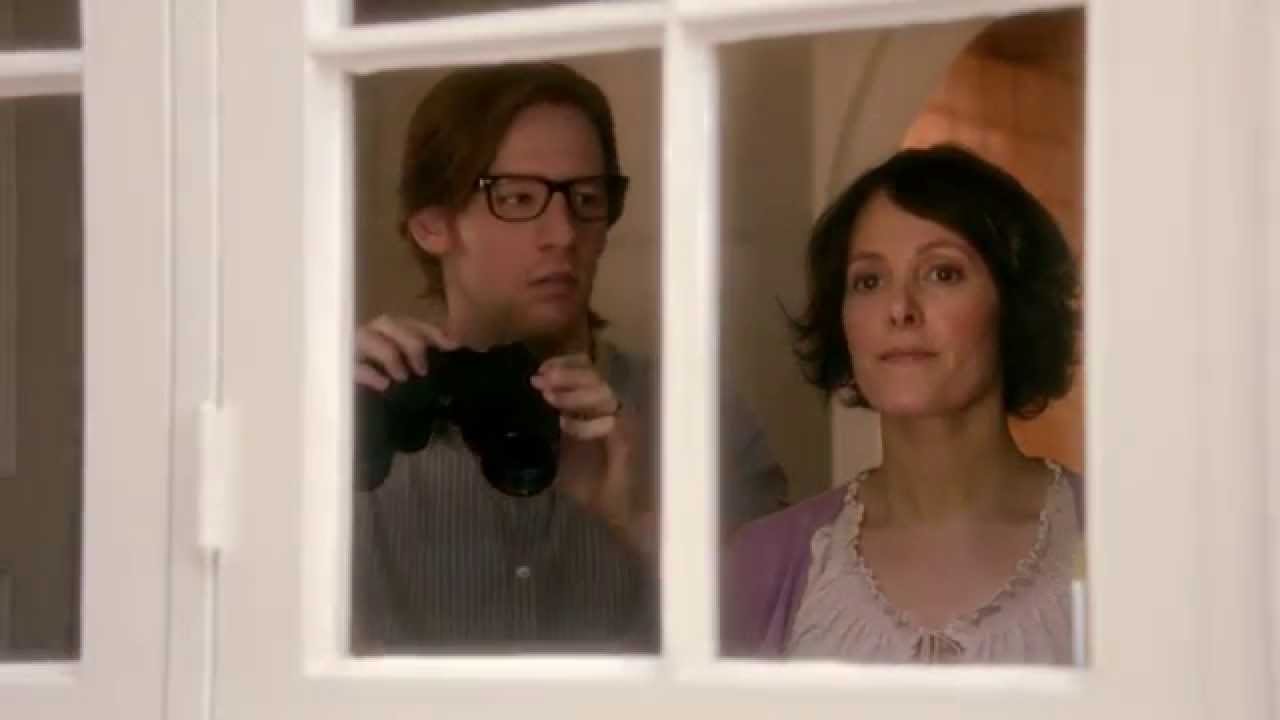
As you see, the ad is 25 seconds long. You can afford to watch it several times. It features a marvelously tolerant neighbor, Mr. Garcia, who waves cheerfully at his neighbors. His neighbors are peering at him through the kitchen window with the aid of binoculars. Very possibly, he knows they are lusting after his new Buick and that the binoculars aren’t for him, but for the car. Or maybe he just assumes that anyone driving that impressive a car is going to get stared at and he’s fine with that.

I wish fervently that I knew more about what Mrs. Garcia looks like. It would make a difference to what kind of ad it is. I am sure there were earlier versions of the ad that showed Mrs. Garcia climbing out of the car and smiling and waving at her neighbors and if there were earlier versions of them, Mrs. Garcia was probably a blonde in one and a redhead in another, rather than the brunette she is in the final version.

I think what I would really have liked is for Mrs. Garcia to have been a spectacular blonde who gets out of the car and looks adoringly at Mr. Garcia, who is her hero because he bought this car and lets her ride in it. The writers probably discussed that and concluded that it was so ham-handed that it would turn people off.

But the rest of the commercial, the part I want to talk about, is ham-handed too. The neighbors—I’m going to call them the Johnson’s because the ad didn’t feel it was important to name them—are ordinary looking people. Mr. Garcia is strikingly handsome; Mrs. Garcia is probably beautiful, though not glamorous.

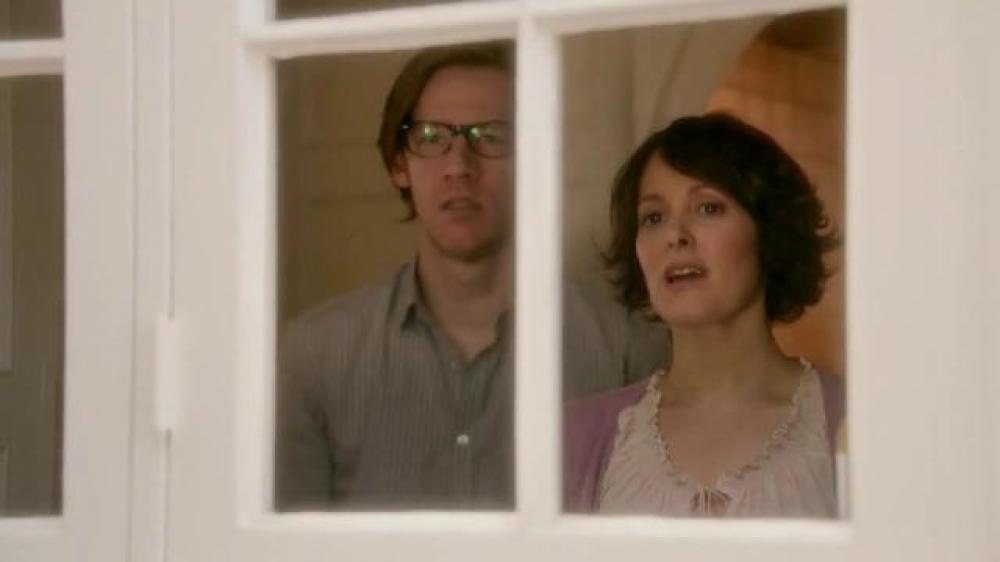
Here are the Johnsons. He’s gawky-looking; she could be very attractive, but that’s not what they did to her for this ad. They are “the clunky neighbors.” Ah! But what would she look like if he had bought her a Buick as he should have? Mr. Garcia has been a good provider; Mr. Johnson has not.

You could probably get all that without the dialogue, but for people, like me, who are tuned to the spoken word, they add a sound track.

Mrs. It looks like the Garcias got a new car.

Mr. What’d they get?

Mrs. I don’t know. It’s pretty nice. Maybe he got a raise.

Mr. Good for him.

Mrs. Good for her.

Pretty plain, right? That’s why there is a video track to go with it. Mrs. Johnson’s “Maybe he got a raise” is speculative. Maybe he did, maybe he didn’t. We have something to explain (this nice new car); what would explain it? “Maybe he got a raise” is in the same mode. Nothing edgy; nothing nasty.

buick 2

Here’s the first picture. Even in this one, you can see her yearning for a better life. This is still in the “Looks like the Garcias got a new car” part of the dialogue. All the attention goes to the car and the glamorous Garcias. But when Mr. Johnson says, “Good for him,” the relationship changes. It is not about the Garcias and their Buick any more; now it is about “Why didn’t you get ME a Buick?”

So Mr. Johnson, in this way of dividing the dialogue, didn’t have any way to understand the peril he was it. Beneath his wife’s simple puzzlement, there is a pit and in the pit are snakes; bad snakes. So when he expresses his approval of Mr. Garcia rather than his apology to his wife for being such a bad provider—although as one critic commented, the Johnson’s kitchen probably cost twice what the Garcia’s car cost.

Take a good look at this second picture. See the tight mouth on her? That’s where the resentment is. The eyes are still on the Garcia’s Buick. See the wary sideward glance by him? He has just heard the barb in “her” in the line, “Good for her.” He has just realized that the solid ground he thought he was standing on was illusory and that he will be falling into the pit any time now. He’s been in that pit before. You can tell by how quickly he picked it up this time. He heard it. It was familiar. He just didn’t hear it fast enough.

buick 1

What makes this all work is that “Good for her” is not the reciprocal of “good for him.” Good for him is neighborly affirmation. Good for her is a spousal rebuke. Here’s how that goes. HE is providing good things for his wife; YOU are not. How can you just approve, as if the Garcia’s new car were not a slap in the face to me? Can’t you tell how humiliated I am, living with you next to the Garcias?

The old sexism of the past is over, we learn in the papers and on TV every day. But the old sexism is still alive in the part of our brains that the ad-makers think of as most important. Her job is to mate and bear healthy children. Her beauty is just a signal that she is healthy enough to do that. His job is to provide her the children and to keep the family safe and well-fed. That’s the old Paleolithic Bargain and it’s the deal the ad-makers are counting on.

In the old deal, his part was killing animals and bringing the meat home so the family didn’t starve, but if you call it “providing for the family,” right away you go to “what does the family need,” and, in an economy that runs on consumer demand, “what does the family want?” She—the only “family” he has, so far as the commercial is concerned—wants a Buick. She doesn’t want to have less than Mrs. Garcia has. That means that Mr. Johnson has to come up with whatever Mr. Garcia has or admit that Mr. Garcia is “a better hunter” and “provides for his family” better than Mr. Johnson.

Mr. Johnson is a “success object.” He is not treated, in this ad, as a person, but only as a provider. The more common, and equally sexist presentation, is for Mrs. Johnson to be a “sex object.” The treatment of women as if their sexual appeal were the only important thing about them is the common language of advertising. Beautiful women show up, as if by magic, for the man who drinks the right whiskey or who shaves with the right razor or who drives the right car. These women are there to imply that if the man buys the right commodity, he “deserves” these women and that the women will see that and flock to him. These women are sex objects only and not persons.

The treatment of men not as persons, but as the providers of whatever toys their wives can successfully demand from them, teaches us that men are “success objects” in a way that is perfectly analogous to the “sex object” role for women. That’s why I call it sexism.

Actually, I wouldn’t mind it so much if it were treated as a stage in the relationship rather than the constitution, the fundamental makeup,  of the relationship. We don’t meet each other as persons; we meet each other as objects. That’s what “putting your best foot forward” is all about. That’s why high school kids agonize about “what to wear to school;” they are using the conventions of society to declare themselves to be sex objects or success objects or “I’m not playing your silly game” objects.  Society provides the titles and we turn ourselves into the pictures.

We present ourselves as objects and then we learn to be persons with each other. So I don’t mind the “object” phase provided that it is superseded, when the time is right, by the “person” phase.

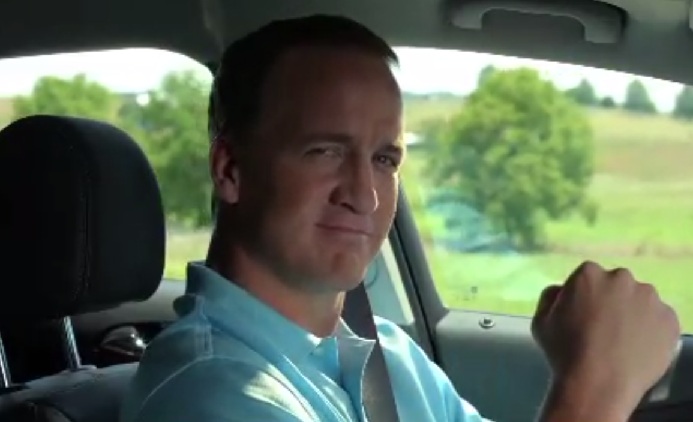
buick 3That doesn’t happen in ads, of course. Here’s Payton Manning driving a Buick. I’ve heard that Payton Manning is a good person, but the reason he’s in the ad is that he’s a football icon; he’s a winner. Therefore, presumably, a provider and he has put his champion provider stamp on this Buick so by buying a Buick, you can be or look like or aspire to being a championship provider yourself for only so much down and so much a month. It isn’t Manning’s personhood that is being presented. There were, after all, a lot of Eli Manning ads until his team started losing a lot of games. Did Eli become a bad person? Nope, just not an iconic “provider.”

So “sexism” turns people into gender-based “objects” who play “roles” according to the Paleolithic Bargain. It has been a very successful bargain for roughly the last 2.5 million years. It has brought human beings to a stable and successful productivity in every known habitat.

And it still sells Buicks.

Posted in Economy, Society, Uncategorized, ways of knowing, Words | Tagged , , , , , , | 2 Comments

Spoiler Alert!

Every word we use has an infrastructure of meaning. That’s why it “means” something. It takes the word’s history and its current uses and the present context all for granted and then it just “means something.”When we accept the word, we accept the infrastructure, and we do so without thinking about it. When the Republicans invented the phrase “tax Spoiler 3relief,” for instance, they did it very deliberately. They knew that once “relief” was established as part of the infrastructure, then “taxes” would necessarily be seen as something bad. “Relief” is what you want from pain or disease.

“Taxes are the price we pay for civilization” is the way Oliver Wendell Holmes put it. He wasn’t calling for “relief” because he saw what the taxes bought to be both necessary and desirable. Calling it “a price” takes for granted that we are buying something and the attention goes to the value of what we are buying.

The expression I have in mind for today is “spoiler alert.” When you buy the phrase, you buy the presuppositions and as long as you are using the phrase—no matter what else you say about it—you are enmeshed in those presuppositions. You can say, “I like spoiler alerts” all you want, but if you keep calling them “something that spoils our pleasure,” it won’t matter. Take my word for that.

Last week, I went looking for something else to call “it.” Usually “it” is “how the story ends.” So here’s the infrastructure that supports it.

The best way to appreciate a narrative is to follow its course from beginning to end.

The tension of unresolved conflicts and nebulous but frightening threats may build up, but leaving them to the very end is the right thing to do.

You might want to cheat and “read the ending first,” but you shouldn’t. It shows a lack of respect for the author and it make you look bad as a reader.

Following the development of the plot so as to maximize the tension—and then to enjoy the glories of the resolution—is really the only way to do it right.

Therefore, I will not “spoil” the narrative by telling you what happens. And if you ask me to, I will refuse because if I did, it would “spoil things.”

Does any of that sound familiar? I used to get it all the time. I have beaten it down among my friends and acquaintances. They still roll their eyes when I ask how the story comes out, but they grant me this little oddity. “We know,” they say, “You like spoilers.”

spoilerActually, I don’t like spoilers; I just define them differently. Let’s start back a little. A “spoiler” would be something that spoils your enjoyment of the narrative, right? So you would think that the first thing we need to know is, “What is it about the narrative—we’ll come back to that expression—that gives you pleasure; that you would want to keep from being spoiled?” What I like best, particularly if the narrative is about a crime to be solved or an escape to be made or a relationship to be successfully begun or a character flaw to be overcome, is to know how it starts and how it ends.

That’s what I like. Then I can watch the intermediate events slide into place just exactly where I know they need to be. It’s the kind of pleasure that many people get when they read the book or see the movie the second time. For many kinds of stories, I get it the first time. So…anything that spoiled that sequence—the first, last, middle sequence—would be a “spoiler.”

Now we will consider, as I promised, “the narrative.” There’s more than one, right? Sometimes, the movie or the book begins with the disaster and the story is about what happens next. Andy Weir’s book, The Martian, for instance begins with these two lines: “I’m f***ed. That’s my considered opinion.” And then the story takes off. And since he is, himself, the narrator, we have every reason to think he survives.

You would think that a commonplace among readers would be that “the right way” to read a book is the way that gives you the most enjoyment and the least anxiety. The right way to read a scientific study is to start with the part you care about the most—the methodology, or the literature survey, or the commentary on the conclusions—and then read whatever other parts you need. “The right way,” in other words, would depend on two things: what kind of a book or movie or journal article it is and what your own needs or preferences are. You would think that. I do.

spoiler 2But if we’re going to look at it that way, we need to find something to call “it” other than a “spoiler alert.” I posed this problem to the Caucus at Starbucks last week. We worked on it for a while and didn’t come up with anything. I called Carissa Cunningham over to the table. She is an outstanding barista in a store that has a reputation for outstanding baristas. “Oh, I see the problem,” she said. “I’ll work on it.”

This morning when I came in, she pointed her finger at me and said, “Sneak peek.” I didn’t even need any context. I got it right away and I knew right away that she was right. I’d show you a picture of her working at my Starbucks, but I wouldn’t want to spoil your actually going there.

A “peek” is something you want. No one forces you to take a peek. In fact, my Mac has a “quick look” feature that does’t really open a document, it just shows you what you would see if you did open it. The infrastructure of “peek” is that it is desirable and for me, usually, it is.

I don’t think “sneak” does anything for anyone with my perspective. I think it is called a “sneak peek” to imply that it is something you really shouldn’t be getting. That ought to make it more attractive. Or maybe it is just a tip of the linguistic hat to those other people—the spoiler alert people—saying, “I know you guys think I shouldn’t be doing this, but, look, I am.” I’m not really sure which of those two it is.

So “sneak peek” has the connotation of something desirable, just as “spoiler alert” has the connotation of something undesirable. It’s just right.

And thank you, Carissa.

Posted in Books, Movies | 2 Comments

Cypher’s Sex Life

One of the commonest and most satisfying events of my life is the sudden realization that X is really a lot like Y if you look at it in just the right way.  That happened to me (again) last week as I was thinking of a minor character in The Matrix and a minor character in The Joneses.  Overcome, I realized, by a common enemy–not something you see about characters in different movies.

This is about that.

You don’t have to watch very much of The Matrix to see that Cypher (Joe Pantoliano) has a serious crush on Trinity (Carrie-Anne Moss), nor to see that Trinity is not similarly enchanted. It turns out later that Trinity is in love with Neo–he is the One for her–and that is why Neo is the battleground of the sparring carried out by Trinity and Cypher.

Under the circumstances, there isn’t much hope for Cypher’s sex life aboard the matrix 9Nebuchadnezzar, but that doesn’t entirely account for the Cypher’s choice to betray all his shipmates to the evil Agent Smith. In The Matrix, only Cypher knows what the Matrix is and chooses to give up his real life in favor of the illusion of a life of splendor and satisfaction of every kind. Real life aboard the Nebuchadnezzar is dreary and dull and difficult. Better an imagined (experienced) life of luxury than an actual life , a meaningful life, of resistance and freedom.  Here he is anticipating the taste of a steak he knows does not exist.

Actually, it isn’t Cypher I want to consider. It’s another guy from another movie. It’s Larry Symonds (Gary Cole)from the movie, The Joneses. His sex problem is tougher in a way. His wife has no interest in him at all. What to do?

It turns out that Larry has a “friendly neighbor,” Steve Jones (David Duchovny).  really is a neighbor, but he is not a friend. Steve’s job is pretending to be part of a family—the Joneses—which is there for the purpose of getting people to aspire to keep up with them. The part of Steve’s life that is showcased for Larry’s benefit is their sex life, which, as they represent it, is everything Larry could possibly want.

Two scenes will illustrate this nicely.

Scene 1: Steve intercepts Larry on the sidewalk in front of the house and shows him some earrings he is planning to give to his “wife.” “Summer would really like those,” Larry admits.

“Do you know how I keep it fresh between Kate and me?” Steve asks.
Larry tries for the “good husband” answer. “Good listening?

Steve pours contempt all over the right answer. “Noooo. No, no. It’s about me never believing that I have her. Being full of surprises and a steady stream of gifts.”

There’s a lot to like in that answer. Steve has some “good husband” lines too. The opposite of “never believing that I have her” is “taking her for granted.,” and it’s never good to take your wife for granted. Then there’s “being full of surprises,” as opposed to being dreary and predictamatrix 6ble. That sounds pretty good too. Then there’s the central pitch, the “steady stream of gifts.” Now Larry is caught. He wants the kind of sex life he thinks Steve has and his wife, Summer, has no interest it him at all. She treats him as an inconvenience.


Why does he think Steve and Kate Jones have such a hot sex life? Because they parade it. Kate signs off a phone call from Steve—she is having her hair done at the time so there’s a receptive audience—“Don’t come home too tired.”

Scene 2:  At the party, which features the earrings Steve has given her, Kate wanders off to the den where Steve is displaying some fantastic electronic equipment. Here’s the way Kate displays their sex life for the group of men in the den.

Kate: Are you showing off your new toy?

Steve: Guilty.

Kate leans over Steve, who is seated on the sofa, and gives him a torrid and extended erotic kiss, clearly for the benefit of her audience.

Kate: And who’s your favorite toy?

Steve: (Appearing befuddled) You are?

Kate: Ummm, hmmm.

We are meant to see this from Larry’s point of view. The camera work makes that clear. What he knows about their sex life is that it is fueled by “a steady stream of gifts” and that the effect of these gifts is to have a wife who chooses to come to her husband surrounded by his buddies in the den and pronounce herself “his favorite toy,” a role she apparently finds very satisfying.

Larry wants so badly what he thinks Steve has that he is willing to do anything to get it. matrix 5The movie turns heartless at this point. Larry does in fact provide Summer with “an endless stream of gifts,” although he can’t afford them, and Summer does, in fact respond with the kind of sex life Larry was hoping for—right up until bankruptcy is imminent. That’s when Larry chooses to drown himself in their swimming pool, weighted to the bottom by a huge and fantastic multi-media lawnmower.  This is a picture of Larry before he catches on to the logic of his choices.

There are the two stories. Cypher and Larry judged that reality was not worth living. Both judged that the illusion of living the life they preferred was preferable to actually living the life they had. Both died in the attempt—Cypher by homicide, Larry by suicide.

Why did they do that? This is one of those ratio questions that I am so fond of. I like questions like “Was the water too high or was the bridge too low?” I like “Was the room too cool or did you underdress for the temperature?” I like “Was the power of the commercial enchantment so great or was your resistance to it too weak?” I like those questions because they are really bad questions and they have the additional virtue of seeming to be just as bad as they really are.

Everyone can see that it is the relationship of the two that causes the trouble. If the bridge were higher or if I had dressed more warmly or if I resisted the commercial appeal with a little more moxie, “the problem” in the form I described it would not be there. So we could ask why Cypher and Larry were so weak. It’s a perfectly good question. I am interested today in the other half: why the illusion of the good life was so strong.

Moses made the list of heroes in Hebrews 11 because he “chose to be ill-treated in company with God’s people rather than to enjoy the transitory pleasures of sin.” This passage is thoroughly religious, of course, but it isn’t the religious part I want. For “God’s people,” I need only “the good guys.” For “the transitory pleasures,” I need only “the illusion of pleasure.” For “sin,” I need only “the experience of conspicuous consumption.”

Why are these illusions so strong that Cypher and Larry choose them, knowing them to be illusory?

I see three reasons. These get really nasty when you find them together. First, they were matrix 10strong because they portrayed an illusion as “an alternative reality,” a reality that could be chosen. Agent Smith helped Cypher get through a deal Cypher knew was false. Cypher demands to be, in his illusory life, “rich;” somebody important, like an actor; and he wants to remember nothing of his present perfidy. Smith keeps replying, “Anything you want.” Steve Jones helped his neighbor, Larry, aspire to a level of sexual gratification that he could achieve only by spending himself into bankruptcy. Larry knew, just as Cypher did, that the life he was choosing was a mirage, but the life each was living had so little to recommend it that the choice of an illusory luxury seemed worth it.

Second, they were strong because they made the present reality untenable by comparison. Cypher living conditions were what they were and he had been living with them for nine years. It was only when he began to think there was an alternative—something better—that he was able to look back on his life and find the sacrifices intolerable. Larry Symonds fell for the same ruse. His life with Summer was what it was—not what he wanted, but worth having—until a flagrantly sexual couple showed up next door. When he saw what they had—it was all illusion remember, he reassessed his own marriage and found it to be intolerable.

They were strong because they promised that action could achieve the desired result, leaving everything else the same. That was actually true for Cypher because although the remainder of his real bodily life would be spent in a tub of goo generating heat and electricity for his masters, his experienced life would be rich beyond the dreams of avarice. Larry Symonds wanted everything to be the same—the same house the same golf club, the same job—except that his wife would stop treating him like a litter box. He had it on Steve Jones’s authority (and example) that he could buy his way to acceptability, leaving everything else the same.

When those three get together, they  are extremely effective. When they do, you lose.

Posted in Movies, Political Psychology | Tagged , , , , | Leave a comment

There must be 50 ways to beat your lover

It took me a long time to get interested in 50 Shades of Gray. I have not yet made it so far as to be interested in reading the books or seeing the movie, but the responses to the movie have started to interest me.

The first was when I read Beth Felker Jones’s review of it in the Christian Century. Jones is ordinarily an insightful viewer and an engaging writer. Not this time. She fairly splutters through the review. If I had been the editor, I would have sent it back to her or on to someone who was willing to actually review the movie. Jones talks about the relationship of the books to the Twilight series. She talks about the commercial success of the books and the movie (100 million copies, for the book, $87.1 million for the first weekend of the film). She cites and disputes Joseph Heschmeyer’s views on the phenomenon as they appeared in the journal First Things. She jumps to the general topic of misogyny and the possible effects of a film like this on society. She even quotes a scripture verse which is quite unusual in Christian Century and which indicates, to me, a state of extreme agitationgray 1.

So what’s going on here? What’s this all about? If this is a film about sexual abuse, why do so many women want to see it? I looked around for awhile to see if I could find anyone who was interested in this question; I couldn’t find anyone in the time I was willing to spend on it. It’s a media event. It’s a commercial success. It has/does not have major effects on society. OK…I get that. Why do women want to see it? There can’t be all that many women who want to have THAT done to them. Can there?

Well…what is THAT? Is it sex for the pleasure of sex without any sentimental and unnecessary romantic feelings? Is it being raped? Is it getting to choose to be raped? Or “spanked” or beaten?

Emma Green says this clip appears in one of the books:

He hits me again … this is getting harder to take. My face hurts, it’s screwed up so tight. He strokes me gently and then the blow comes. I cry out again.
“No one to hear you, baby, just me.”
And he hits me again and again. From somewhere deep inside, I want to beg him to stop. But I don’t. I don’t want to give him the satisfaction.

gray 2I don’t know those answers so let me start with a few things I do know. I know that you can’t find the answer to a question like that by asking. In the course of my varied career, I have found a lot of things pleasurable without being able to say precisely why. There is no evolutionary advantage, a biologist will tell you, in being able to say just why you enjoy producing progeny. Actually producing progeny on the other hand, is what makes a species successful.

I’m sure any researcher could find women who like something—lets say kinky sex, just to get into the topic and to avoid the necessity of defining what we’re talking about—and who can say why. But that raises other questions. These women are certain to be right about whether they liked kinky sex, but how likely are they to know just why? And if they do know, can we say that they fairly represent the many other women who don’t know or who can’t say? Can we safely generalize, in other words, from the few women who can reliably answer the question?

What I’d really like to see is a series of psychological tests taken by women who had some experience of kinky sex—to do this experiment, I would actually have to define it, I suppose—and liked it or didn’t like it. Then we could start defining the pool of people we wanted to talk to. Are the women with the highest self-esteem more or less likely to like it? High or low on an authoritarianism scale? High or low on a self-efficacy scale, which would measure how important it was to them to be able to choose a project and then do it and succeed at it? If we had that kind of testing, we’d know which women to talk to at least.

I’m sure somebody has done that. If I were going to look for it, I’d start with the journal Sex Roles, but I’m not going to. It really isn’t the phenomenon that interests me. It’s the reaction. Why is this a big deal?

Emma Green wrote a really interesting article in the Atlantic about this. The bright pink illustrations in this post were all taken from that article, by the way. She talked to a lot of people, among whom were “the BDSM community.” BDSM is a contraction of bondage and discipline: dominance and submission, and sadism and masochism.

gray 3I’ve been troubled for a long time about the use of the word community to refer to a category of people. Having some similar traits doesn’t make you a “community.” We talk about “the black community,” which makes sense on some issues, but we never talk about “the middle class community,” an expression that would never make sense. It takes more than a common trait to make up a community, even if that trait is very important to the people involved.

Green talks about “the BDSM community.” Really? Say there’s a club in Houston where BDSM sexuality is practiced. I’d be willing to consider that the people who go there regularly are a “community.” I think I’d reject outright the existence of “a BDSM community” if that meant “all such clubs, wherever they are,” much less “all such people, wherever they are.” If Ms. Green had said she had talked to a number of people who were experienced in the practices of BDSM, I would have felt more confident that I knew what she was saying.

Sado-masochism is widely reviled, even as it is widely practiced. The question that the “BDSM community” raises in my mind is: “What if it were not widely reviled?” What if people said, conversationally, “Do you like BDSM sex or are you just conventional?”

gray 4It’s the underpinnings of the question that matter most here. It implies that there are two—for the purposes of this post—kinds of sex. Some like it this way, some that way. What’s your own preference? The way this question sets up is that these two options are acceptable and I am curious about which of these OK options interests you. I’m not ready for BDSM to be one of the OK options.

Adrian Peterson thinks that giving his son a good whupping is the right way to raise him—another good instance of why you don’t want tiny little scripture fragents attached to your argument. I’m sure Mr. Peterson had Proverbs 18:34 in mind. Some think that internalized guilt is better. Some think that rewards and punishments are better.

gray 5So, to follow my worries about “the underpinnings of an argument” out a little, let’s transpose the BDSM strategy, above, to the corporal punishment of children. What if people said, conversationally, “Do you like to beat your children as a way of securing their compliance and affection or are you more a carrot and stick family?” Some like it this way, according to this way of framing the question, and some like it the other way. Both are OK, of course, because we are not interested in being judgmental, but I wonder what your own preferences are.

Once you move practices “out of the shadows” or out of tight little groups of adherents (those are what I would call “communities, by the way), you move them into the public. Now they are matters of “preference,” the presupposition being that there are many acceptable options, of which BDSM is one.  It may be, as some of Emma Green’s respondents said, that “within the BDSM community,” they know how to handle the risks and not get people hurt.  But if it is going mainstream, it is going to be used by people who have no idea what they are doing and don’t know how to stop.

You can see why this troubles me. I have no interest in knowing what kind of sex my neighbors like in their bedrooms on in their clubs, but I am, myself, a part of the public conversation about the mainstream choices and if Fifty Shades is a way of moving conversation into the mainstream, I would rather they didn’t.

The second question is, “Why is this happening now?” Short of finding people to ask and thinking how they might know the answer, I have a very broad theory. Sometimes when social forces push the people further than they want to go in one direction, they push back the other direction. “You can’t make me,” seems to be the sentiment.

The California State University system has adopted a version of “explicit consent” that contains this:

“Affirmative consent must be ongoing throughout a sexual activity and can be revoked at any time.”

The goal is preventing sexual abuse. Good so far. The means, which requires asking Gray 6permission over and over to touch the sex partner here or there or over here—that’s what “ongoing affirmative consent throughout a sexual activity” means— may have seemed just too much. Just guessing. Certainly that approach has been ridiculed a good deal in print.

My theory is that the over the top popularity of 50 Shades of Gray is a way of saying “You can’t make me” to the legislature—and just the opposite to the partner. Think about it. This appetite for bondage and domination and inflicting erotic pain could be the push back from that. Women, having had their noses rubbed in the permission-giving scenario, are backing away from it as fast as they can and are winding up experimenting with BDSM, and that begins with reading the books.

If this new interest is an artifact of a demand for autonomy, we can expect it to die out as the draconian regulation of sexual contact dies out. Or maybe its just an extension of the “bodice-ripper” pulp fiction that has been popular for a long time with women who don’t wear bodices and would not like to have them ripped off if they did.

It’s hard to say. To speculate any further, I’d have to read the books and I really don’t want to do that.

.

Posted in Living My Life, Movies, Society, Words | Tagged , , , | Leave a comment

There are no “social genes”

Well…there are and there aren’t.  If I had seen this title written by someone else, I would have reached into my very large store of “yes, buts” and started replying.  In this particular case, I wrote it myself and I know what I meant.  I meant that there are no mechanisms that affect society (social) in the way genes affect bodies.[1]

You can, of course, devise analogies to the effects of or the mechanisms used by genes—that is the first thing I did—but there are no such genes.  There is no endocannabinoid anxious 5system, despite those who would nominate NFL football;   There are no cannabinoid receptors. There are no FAAH enzymes, although as a political scientist, I am used to assuming that an initial F probably stands for federal and you can do some really interesting things with the AAH if you do start with federal.

There was a really interesting article in last Sunday’s New York Times (here) called “the feel-good gene.”  Author Richard Friedman’s point is that the “good gene” is called anandamide; that it is naturally synthesized by our bodies, and that some people have more than others.  Those people are “lucky.”

But there is another way of understanding my patient’s anxiety and cannabis use. The endocannabinoid system, so named because the active drug in cannabis, THC, is closely related to the brain’s own anandamide, is the target of marijuana and has long been implicated in anxiety. It exists throughout the animal kingdom, though one would be hard-pressed to find a nonhuman animal clever — or foolish — enough to eat solely for the purpose of stimulating its own receptors with cannabis.The major naturally occurring cannabinoid in our brain is anandamide, something our bodies synthesize. Anandamide is, aptly, taken from the Sanskrit word ananda, meaning bliss because, when it binds to the cannabinoid receptor, it has a calming effect.

anxious 2This is why articles like these ought to be written by teams of doctors and sociologists.  This one was written by only the doctor half of that team.  Dr. Friedman has been treating patients and has seen the terrible effects of anxiety levels that are “too high.”   And he has apparently been in contact over the years with people who argue that anxiety is a psychological problem (only) and therefore ought not be taken over by people who study genes.

What the sociologist half of the team would have said is, “What is the ideal distribution of anxiety in a society so that the society will be best served by it?”  The question at the system level is how much anxiety distributed in what way will be best for the system.  I know that would seem heartless to a therapist, but anyone who wants to treat the issue at the system level, as opposed to the individual level, is going to have to be willing to ask that question.

Another question the sociologist who should have been the co-author of the doctor would have asked is, “How much anxiety is too much for this person?”  The enzyme FAAH, referred to above, is an enzyme that deactivates anandamide.  Anandamide has a calming effect on us—an anti-anxiety effect—so too much FAAH is going to mean more anxiety.  We know that and by manipulating the amounts of FAAH, we can manipulate anxiety.  But no deftness of manipulation is going to tell us how much anxiety is “enough.”  Or is “functional.” Or is better than the alternatives.

Do we need to know those things?  Not to treat hyperanxious patients.  When a patient comes to see a doctor and is immobilized by anxiety, the doctor’s job as it pertains to that patient is to treat him or her so that the level of anxiety goes down and the level of functionality that we call “living a life” is restored.  We need to know who we are talking about (the patient) and what direction to take the anxiety level (down).

anxious 4But what about other perspectives?  What about cultivating resilience?  I chose the picture below because it shows precisely what the word means.   What about “appropriate levels of anxiety?”  Imagine that I keep doing an activity that makes me very anxious.  I can wish I were less anxious, but I am still anxious. I can lament that I am not among the 21% of Americans of European descent who have the “feel-good gene.”  Or, in some cases, I can stop doing the activity that makes me anxious.  That third alternative is the one that attracts me.  I know it doesn’t apply to all situations, but nothing applies to all situations and when I hear people lamenting the “bad luck” of the 79% of Americans of European descent, I wonder if the next step isn’t going to be to “change the luck” by synthesizing the “feel good gene” and dumping it into the water supply.

I know that’s a fantasy.  In Portland, we can’t even add fluoride to the water supply.[2]  But I’ve read Brave New World just like you have and in order to not go there, there has to be a counter-logic.  Where is a counter-logic going to come from?  Is it going to come from the place that failed to oppose an explosion in the use of Ritalin that is sometimes estimated at 700%?

Assuming that the Ritalin numbers are just a quantification of “alarming increase,” how did that happen?  Well, some kids were diagnosed as having ADHD and given medicine that helped them.  Good so far.  Now the question for the parents of non-ADHD kids is, “If my child would be helped in school by doses of Ritalin, why should I not provide them for him?”  Good question.

Here’s another good question.  What is “hyperactivity?”  This is your sociologist speaking.anxious 3  “Hyper-,” that means “too much” –activity is too much activity for a given setting or for a given task or for a given time.  So here’s a thought: change the setting.  Modify the task.  Allow for a wider range of “normal behavior.”

I don’t know if those would work in any particular case, but they are all instances of translating medical questions into social questions.  Social questions have the virtue of preserving a place for psychological questions.  Asking whether you have provided a good environment for the children is a really good thing to do, but even after you have, there are kids who are going to be benefitted by drugs like Ritalin and by gene therapy which reduces FAAH.

The social form of the question leaves room for the medical form, but the medical form does not leave room for the social form.  And that’s one big reason why I prefer the social form.


[1] There are ways of framing these things that have a substantial effect on whether they are thought to be social problems or just individual problems.  Constance Nathanson’s work on that has produced the categories, medical problem, moral problem, and social problem.  Today, I am pitting the first against the third.
[2] I came to a vote and the people gave a resounding NO to it.

Posted in Political Psychology, Politics, Society | Tagged , , , , , | Leave a comment

The Loser Edit

I am not a fan of “reality shows.” Shows about realty are another matter, but those showssurvivor 2 raise the question of what is real. The question of the difference between the two was raised to prominence yesterday in the March 8th New York Times article about a phenomenon called “the loser edit.” It’s worth your while and you can see it here.

The church is deeply into the season of Lent by now but everybody knows how that part of the story is going to end. “You killed him,” says Peter at his Pentecost sermon, “but God raised him up” (see fragments from Acts 2: 23—25). And how did Peter know all this? It wasn’t at all apparent during Jesus’s life; at least it wasn’t apparent to Peter.

The church celebrates Easter by waiting for it during Lent. Easter is the story of Jesus’s life as told from the end of it, from the conviction that he was more than he had seemed to be while he was preaching in Galilee and a great deal more that he seemed while he was being crucified in Jerusalem. Jesus had received “the Winner Edit.”

Before we go any further we are going to have to look at Colson Whitehead’s notion of the two “edits.”

The concept first bubbled up out of the pop-cultural ether when competitive reality shows hit upon their formula, in the form of “Survivor” and “The Amazing Race.” TV enthusiasts — part fan, part Roland Barthes with a TiVo — congregated on online message boards like Television Without Pity, creating a new slang with which to dis and deconstruct their favorites.

A new slang with which to dis—that meant “disrespect” once upon a time, but now it doesn’t seem to need the rest of the letters—their [former] favorites. In other words, once someone is shown to be a loser, we can go back over the tape, literally or metaphorically, survivor 4and show that the signs of his eventual loser-dom were obvious to anyone who was paying attention. Examples of Brian Williams, formerly of NBC, and of Bill Cosby, once a wise and loving TV father, are given.  Notice how this picture isn’t funny anymore?

Now that we know, we can find segments of tape that clearly indicate the problems that eventually brought them down. Finding all these tape clips and running them together as “the main narrative” is what Whitehead means by “the Loser Edit.”

But, as he points out, where there is a loser’s edit, there must be a winner’s edit. What is that like?

Over the course of a season, the inevitable winner thrives. He or she will suffer some setbacks for drama and suspense, sure, but the groundwork for victory is established challenge by challenge, week by week. It has been written, by fate or the producers, pick your deity. It cannot be reversed.

I take “pick your deity” as an expression tossed off for effect. In fact, however, “deities” are the beneficiaries of the Winner Edit. Take Jesus, for example. Born in the boonies, had modest successes in the Galilee district, made powerful enemies, made the mistake of going to Jerusalem during a major feast and got himself killed. That’s the Loser Edit and it makes no sense at all the Christians.
survivor 3The Christian church is based on a “winner edit,” of course and the Bible is pellucidly clear about that. Here is the famous “road to Emmaus” encounter from Luke. On Easter Sunday, two of the apostles were walking to Emmaus, about seven miles from Jerusalem, when a man they did not recognize joined them and asked them what they had been talking about. So they told him the whole sad story, including the despairing “…we had hoped that he was the one to redeem Israel.

Jesus then produces an introduction to the Winner Edit. “O foolish men, and slow to heart to believe all that the prophets have spoken! Was it not necessary that the Christ should suffer these things and enter into his glory?” And—here’s the Edit—“…beginning with Moses and all the prophets, he interpreted to them in all the scriptures the things concerning himself.” He took all those little scraps from the Law and the psalms and the prophets and he wove them into an air-tight narrative. Having already won, he could do that. Knowing that he had won, his disciples could do that. And it happened really fast. Peter, in Acts, chapter 2 and again in chapter 3 and Stephen, in chapter 7 give the full Winner’s Edit less than two months after the complete disaster of Jesus’s crucifixion.

What should we make of this? The crucial first point is that it doesn’t bear at all on the question of truth or falsehood. All the facts are what they are and what they were. (Clear memory of these facts is another matter entirely and I’m not getting into that in this post.) No facts have “become true” now that we know who won.

Still, an “edit” has the purpose of explaining something. The Winner Edit and the Loser Edit are the same in that respect. To explain this thing, one assembles the facts that are relevant to the outcome—those are the ones that explain something—and relate them to each other in a satisfying narrative.

If you have a story about how you and your sweetheart met and married, you have probably constructed such an edit. I have. I dated for six months in 2004—2005 before I met Bette. I dated a lot of women who have receded into the shadows of my mind now—not as quickly, probably, as I receded into the shadows of their minds, but still…—because they are not part of the story I tell now. People who have disastrously bad marriage perform the same alchemy along the lines of the Loser Edit. Some “facts” are recalled, others are relocated in time, others are invented to patch a hole in the narrative, and so on.

So it isn’t a question of what is true. It is a question of what is salient—what, as this Latin word asks us, “jumps out” at us.

And we’re almost to Easter and the narrative that sustains a Christian’s faith is being woven tighter and tighter.

Posted in Theology, ways of knowing | Tagged , , , , , , | Leave a comment

What does “moral fact” mean?

One of the great advantages of writing a blog is that you get to decide what the title of a blog is. That is a luxury not shared by people who publish in newspapers, so I don’t really know who is responsible for this headline. On the supposition that it might be Justin McBrayer, the author, I would like to poke at it just a little. This little icon is the emblem of moral 3the philosophy series, The Stone” in the New York Times. That’s where I found McBrayer’s column.

I note, first, that although the headline implies that our children really should think that there are moral facts, McBrayer doesn’t say so directly. Second, what he says is that our children don’t think the notion of “moral fact” has meaning and this column has taken on the task of explaining why that is. Maybe they have been brainwashed. [Footnote 1, “Brainwashed” is never going to be a good word in the U. S., but I learned only recently that the Chinese notion of what brainwashing does is that it “cleanses” the mind. “Cleansing the mind” sounds a lot better. The root of the English word obscene is caenum, “filth, so “washing out the obscenity” is the kind of thing brainwashing might do and that wouldn’t be all bad.] Or they have been lied to. Maybe they are confused and unwilling to commit to a notion that has actual implications for their behavior.

To give McBrayer his due, he does answer the question. The answer is that the schools teach our students that the world of assertions can be divided usefully between “facts” and “opinions.” The curriculum has no place for an opinion I hold which is based on substantial research and consistent findings. I can see the value to McBrayer of setting the world up that way but I think he really does know that he is chasing a phantom.

We would have a better chance of understanding what the schools are doing if we thought about what they might do instead. Whatever they might choose to do, it ought to have the effect of providing a stable and useful vocabulary for discussing value questions and it ought to have a beneficial effect on the actual value choices made by students. If the schools could choose to do that and they do something else instead, surely they are to be censured.

McBrayer thinks that the schools should teach our children that there ARE moral facts. I moral 5don’t have much attraction to the notion of “fact,” myself. “Fact” is a shorthand notion like “sunrise.” All believers in a heliocentric universe agree that the Sun does’t “rise.” We say it anyway because that is the way it appears and, in ordinary conversation, there is no advantage to saying “the earth has continued it’s rotation with the effect that the Sun is now visible from this location.” It is a fact that the Sun doesn’t “rise;” it is also a widely shared opinion.

All “facts” are shorthand expressions for the great likelihood that a phenomenon, on being investigated by appropriately trained people using the right equipment will show a particular outcome. When the general feeling is that the outcome is so likely to be X (the universe really is expanding faster and faster) that there is no reason for continuing the language of “very well supported theory,” then we may call it a “fact” without messing anything up. Think of “fact” as a slang expression.

Morals aren’t like that. Morals are values that are widely shared. While etymology is not meaning, it is worth noting that we get our word moral from the Latin mos (the singular form) and especially mores, the plural. [Footnote 2, the plural word, which I now consider English, is still pronounced in the Latin style, as “more A’s” as if you wanted to have “more A’s on your transcript.  The singular is pronounces with a long o- as in “mos’ likely.”] It means “having to do with the manners or customs of a people.” I abbreviate it as “how we do things here.”

It is easy to fuse the moral and the factual at the most superficial level. “We don’t allow a female member of the family to go out in public unattended,” let’s say. If that rule is followed by everyone, then “we” = 100% of the relevant population (possibly, but not necessarily excluding the women) really don’t allow it; that is a fact about the mores of the society. (You could say it is a mos, just one of the little pieces of the mores, but no one does.) Everyone follows this rule about unaccompanied women because it is a widely shared value.

It is a moral fact. Any anthropologist would confirm that.

But that’s not what McBrayer means. McBrayer wants to say that a “moral fact” is binding on everyone; that it establishes how everyone should behave. McBrayer wants to believe that this value is TRUE, that it lines up, somehow, with a moral universe in the way that “sunrise” lines up with the physical universe. I don’t think so.

There are, of course, ways to get there. Theism is one. There is a God and God says that slavery is wrong so if you engage in being a slave or in owning a slave, you are involved in a moral wrong. I know the “being a slave” element of the formulation sounds odd, but stay with me just a moment. The great problem of this kind of objectivity is showing that there is such a being (God) and that God has distinct and unvarying views about what is permitted and that doing what God does not permit is “wrong.”

That works. But you have to get to this God first.

moral 4I mentioned slavery because there is a covenantal obligation under the Mosaic Code not to allow a fellow Israelite to be a slave. There are some when and how long and to whom complications, but I am interested in the rationale. Here it is. God chose Israel as His people; Israel as a whole nation and every Israelite. The reason it is not right for an Israelite to serve as a slave is that if he is a slave, he has a master—he belongs to someone—and, since he already belongs to God, it is not right that he belong to someone (else). So a fellow Israelite has the obligation to go and redeem this person from slavery because—here’s the rationale—God wants it that way.

Apart from a God who has distinct and knowable preferences, McBrayer’s “moral universe” is hard to know. The advantage is clear, at least. If there are objectively demonstrable values, then not acting in accord with those values is wrong. If you say “This is the way we do it in my culture” and that way does not align with the True Value, then the whole culture is wrong. If a person says that what he is doing is fully in accord with human nature, then you get to say the human nature is wrong. It clarifies things enormously.

It does skip over the transition. When Thomas Hobbes said “there is no way to get from ‘is’ to ‘ought,’” (Hess summary) he was talking about that transition. You can say that acting on a particular value will have horrendous consequences. You can say that it will make ordered society impossible. You can say that it will render the earth unlivable. Those are all good reasons to oppose those acts but they do not establish that they are opposed by a TRUTH, that is, that they are “wrong” in the way an assertion about the nature of the physical world could be wrong.

So I oppose McBrayer’s notion of “moral fact,” by which I think he means “objectively demonstrable value.” I say it can’t be objectively demonstrated and I used the Mosaic code to show how costly a counterexample can be.

On the other hand, I agree with McBrayer that our society is rapidly going to pot and that this can be seen in the decay of traditional ethics. I am an old man who has taught for most of his life. How could I not think that? He cites “Copying homework assignments is wrong” as assertion that his son is supposed to identify as a fact or an opinion. He goes on to say:

It should not be a surprise that there is rampant cheating on college campuses: If we’ve taught our students for 12 years that there is no fact of the matter as to whether cheating is wrong, we can’t very well blame them for doing so later on.

He is right that what my generation called “cheating” is not understood by today’s moral 6generation of students in the same way we did and also that they do not disapprove of it in the categorical way we did. Those things are shown by survey research. But he goes on to argue that this has happened because some factual basis of the wrongness of cheating has not been taught. Really? Factual?

He imagines that there is no other reason for students to reject cheating. If everyone disapproved of cheating, the occasional person who was tempted would not succumb. Why? Because the factual status of the wrong had been established.? Of course not. He would refuse to cheat, if it ever occurred to him, because it contravenes the values of virtually everyone he knows. It puts him beyond the pale. It makes him alien.

I’m fine with that. Very negative consequences should be expected by people who violate values nearly everyone holds and that are seen as crucially important. Neither “nearly everyone holds” nor “crucially important’ adds up to “a moral fact.” And, as I see it, nothing else does either.

Posted in Politics, Society, Theology, Words | Tagged , , , , | 4 Comments

Gladly Teach and Gladly Learn

Let’s say you are young and idealistic and haven’t been married even once. Please accept my sincere congratulations and condolences. You have emotional heights before you that I can remember only with disciplined memory. A dark and quiet room would help as well. And you have some severe challenges ahead, too, because neither your youth nor your idealism are built to last.

I know of only one way to experience and express the fireworks imagined and then expressed and then accepted and then reciprocated. I know of lots of ways to deal with the demise of those hopes and before I get into my proposal, I want to name a few of those. But today I want to describe something better than either. It is not giddy. The explosion of romantic love is a sugar high. What I am going to describe is a balanced diet; something good for year after year after year.

puppet 1Some young people deal with post-romantic catastrophe by turning their love to hate, Some by plugging along in the relationship—trustworthy, don’t ya know—but no longer hoping for something better or mourning the “better” it had once been. Some transfer their real emotional and intellectual investment to something easier to control—financial derivatives or pork futures, say. There are lots of ways to deal with disappointments, but there aren’t many ways not to be disappointed in love.

Here’s one.

I am going to describe a model of married love that I like a lot. This is a model I have some experience with and I say that not because any of my marriages (I’m ten years into my third) have been exactly like this template, but because my marriages have had moments like this. More than moments; episodes. And there will be more such episodes and when they come, they will seem familiar to me and I will stay in that “zone” as long as I can.

I am going to use names—Bette and Dale—because it is easier than “He” and “She.” But these people are not Bette and me. I am putting our names into this template as a convenience. So here’s the setup. Bette wants me to do something for her. It might be idiosyncratic, complicated or unpleasant (ICU).[1] Whatever. I’m committed to doing this thing because I agree it is the best way to get it done, because I am grateful to her for any number of things,[2] and because I will enjoy our common achievement—we did this together—when it’s done.

I know I can do this because I know I can count on Bette’s help. How does she help and why does it matter? She thanks me for agreeing to do this task. She explains it as well as she can, but we both know that because it is ICU (idiosyncratic, complicated, or unpleasant), it is going to be hard for me to learn it and then to internalize it. Every time I try to do this, she expresses her appreciation that I tried and also for the degree to which I succeeded. She counts on our friendship as she explains the parts that aren’t quite right.

puppet 3Presumably, the next time, I do it better. Again, she thanks me for my effort and for my increased success and again points out what remains to be done. This goes on until I get it exactly right and until I have made that pattern of work my own pattern and then we celebrate what we have done; what we have achieved together. And still… every now and then…she remembers that this used to be a problem and  she thanks me for my care in preventing it.  “Telling the Truth” is a good idea, of course, but the truth is in the whole process, not in each statement that makes up the process.

Now I, the “template Dale,” really like this process. I wish it weren’t so ICU, but it is what it is. Bette hasn’t made it seem more onerous than it really is just to amp up her case that I should do something about it. I understand, also, that this isn’t a piece of cake for Bette. One of the things we both value, generally speaking, is authentic expression. Bette has chosen to forego that for a while because “strategic expression”—that’s what all that thanking and explaining is— is going to get the job done better and faster and with less collateral damage. I know giving up the feel-it say-it model is a sacrifice for her.

Besides, I like to be recognized for what I am doing, especially if it is difficult or onerous. There are different “love languages” as Gary Chapman says and what I like best is a style Chapman calls “words of affirmation.”[3] I call it “rich language.” It is the way of expressing love and respect that goes right to my heart and that gives me the resource base to do gladly what I would otherwise be able to do only dutifully. Or that I would regularly “forget” to do at all.

puppet 4Neither the template Bette nor the template Dale looks very good in this caricature. I look like a puppet; Bette looks like a puppet-master. I look credulous and naive; Bette looks manipulative and insincere. If we were actually those templates instead of the actual people we are, we would have to acknowledge, when criticized, that the whole deal looks bad. I don’t think it really is bad, however, because we know what we are doing and we don’t do it all the time and we like the results.  These two young lovers are not us, obviously, but they don’t have pictures of people our age saying “Thank you.”

So there’s the puppet master problem. Besides that, I am guessing that some of you think this is a lot of fuss to make about the simple process by which people adjust to each other, That is what the actual Bette thinks about how I describe the process. She calls is hyper-processing. Here’s why I don’t agree.

First, the easiest response the template Dale might make is to deny that there is anything that needs to be done. It isn’t “that bad,” he might say.[4] Or he might point out that resolving it is impossible because the problem itself is idiosyncratic. Denial comes in lots of flavors.

Second, for the work to continue in the way I have described it, it will need to be focused on for a long time. Dale will have to “pay attention” and he knows how well chosen the “pay” part of that expression is. It is a common thing for someone in his position to agree that there is an issue, to agree to do something about it, and then just to wander off. He isn’t really avoiding it; he is just refusing to do the work of keeping it in focus. It would cost too much to do that, he might say, picking up the “pay” metaphor without thinking about it.

Third, for incremental improvement to be made, he will have to keep trying and will have to accept the guidance Bette is offering him. “Rats!” he might think, “I failed again!” But the guidance, which is necessary if improvements are to be made, comes with the appreciation, which is.. .um. . .necessary if improvements are to be made.

The solution to these common difficulties is the same solution. Dale—this template guy, not me—needs to take Bette’s word for it—the template Bette, not my real wife—that this really matters. It will be easier to do if he knows she will support his efforts at every point. She will not seem exasperated even if she is; she will be generous and appreciative of his efforts no matter how veritasshe is feeling. Dale gets her appreciation for remembering that it is important, for attempting to accomplish it, and for making incremental improvements. Dale gets to look forward to the successful completion of the process, which will be treated as a win for the team, not the triumph of one person over the other.

That’s a pretty good solution, you have to admit. On the other hand, it isn’t for beginners. Here’s why.

  • You have to know what you are doing.
  • You have to be able to play your part, confident that your partner is playing hers.
  • You have to be willing to pay the price. It isn’t a high price compared with the value of the achievement, but the achievement is not until then and the price is right now.
  • You have to be willing to privilege the account you and your partner are using over the different understandings of the process that others might have.
  • You have to really care about the ultimate success and to commit to celebrating it together.

So it isn’t easy. On the other hand, it works. The goal of mutual adaptation is a commonplace in any marriage. This is just the style we use. And not only does it work, but the reasons it works, make sense. And besides, what is the alternative?

Here is a set of alternatives I cribbed from a book on social power.[5] You can overcome your partner and take what you want. I think we can rule that one out as not fitting the kind of marriage we are talking about. You can trade for it. That’s really common and a lot of people take it for granted in marriage. Tit for tat, I call it, meaning nothing really salacious. It’s not a bad solution if there is nothing better. I am arguing in this essay that there is something better. You can resolve to do without the resource the other person has. I’ve seen that in a lot of marriages that are on autopilot or that are coming apart. Finally, you can get “it,” the crucial resource, somewhere else. I know that sounds like outsourcing your sex life, but it could just be outsourcing your house cleaning or your yard work or your management of the kids.

All in all, I don’t like those. There are, after all, things you can outsource and things you can’t and all of the other “solutions” are ones I don’t like.

So I have an idea. Let’s do it my way.

[1] Yup.  Did it on purpose.

[2] See Appeciative Motivation, Vol.3. Just kidding about Vol 3. My piece on appreciative motivation is only a short essay, but it meant a great deal to us 10 years ago when we were trying to get to know each other. Note: This “template Bette” is not a model of consistency. What was ‘right” on the third try might have been superseded by some new notion by the fourth try. That’s fine. She’s gentle and I’m patient.


[3] “Gary Chapman, The Five Love Languages. Bette introduced me to this book. It’s a very simple notion and anyone who has ever made a living selling things understands it at such a deep level that it seems pointless to form it into words and say it out loud. It is that if you want someone to understand what you are saying, you should language “speak” it in a language that person understands. Period. That’s the whole book. Amazing how hard it is to remember all the time.


[4]  ‘I call that specific flavor of denial “that control.”

[5] Peter Blau, Exchange and Power in Social Life. I’ve never seen it applied to a marriage situation, but as I think about it, it works pretty well.

Posted in Getting Old, Love and Marriage, Sustainability | Tagged , , , , | Leave a comment

Jesus and the Lost Velociraptor

Here is a satirical picture that my son Dan passed along to me. I think it is laugh-out-loud funny. He and I enjoyed it together.

I call it “satire.” What is satire? From a collection of similar definitions in the Oxford Jesus Velociraptor
English Dictionary, I harvested this one: “A thing or circumstance which exposes the faults or absurdities of something or someone; a mockery. “

So whose absurdities are being mocked? I think it is fair to say that religious conservatives are being ridiculed (Latin for “laughed at”) in this picture. It isn’t directed at Jesus; it is directed at creationism.

I chose conservatives as the likely target for several reasons. First, of all the kinds of pictures of Jesus there are, this is the kind that shows up in conservative homes and churches. It is a thoroughly Caucasian Jesus wearing a Brooks Brothers robe and looking messianic. I wouldn’t have a picture of Jesus looking like this in my house.

I categorized conservative Christians as the target also because of the cuddly little velociraptor and that’s also part of why I think it is funny. This is the picture that is being spoofed. Everything the same except the “lost sheep” is now a lost velociraptor.

velociraptor 2There is a branch of religious conservatism that argues that all creation happened at the same time. That would mean that humans and dinosaurs existed at the same time. Scientists who study the formation and development of life on our planet say it didn’t happen that way and they have warehouses of data supporting the assertion. [ Footnote 1 A much more challenging evolutionary development is the destruction of all the anaerobic bacteria on earth as oxygen began to be produced in such quantities that it could not be captured and stored. This was about 2.3 billion years ago as scientists calculate it. This is one of the greatest catastrophes earth ever experienced and not just because it cleared the way for oxygen-breathing mammals.] are not persuaded because they calculate that the cost of admitting the validity of the science would be the loss of their faith in the inerrancy of the Bible. Even liberals like me would agree that trading good information about the development of life forms on earth for good information about everything else—why are we here, is life worth living, does God actually give a rip about our lives?—would be a bad trade, but liberals like me argue that you don’t have to trade one for the other. God hates science denial the same way He hates meaningless religious observances (Amos 5:21).

It is this refusal to agree to the conclusion the data demand that so irks everyone else—everyone but the conservatives—and that makes them a target for satire. There is anger in this satire. Ordinarily, ridicule is not thought to be a good thing and the most common justification of it is that they, whoever “they” is, deserve to be ridiculed.

Let’s imagine that the artist who created this picture is named Charlie. Charlie knows he is going to offend a lot of people, but the people he is going to offend aren’t the people he cares about. And a lot of people, the people he does care about, are going to be delighted by what he has done. So it’s all good for Charlie.

Once upon a time there were blasphemy laws in the United States. [Footnote 2 When I think of blasphemy laws, I think of Muslim countries and Shariah law. The federal courts acted on the blasphemy laws of the Commonwealth of Pennsylvania in may of 2010. SeeGeorge Kalman v. Pedro A. Cortés in U. S. District court for the whole story.] is no reason for Charlie to fear prosecution under such laws. Blasphemy is a charge that makes a lot of sense in a society where things are held to be sacred. If nothing is really sacred—we would say “sacrosanct,” I believe, a real demotion—then blasphemy isn’t just a bad idea; it’s impossible.

Charlie also knows that wild-eyed conservatives with double-bitted axes are not going to storm his office and kill his staff. In the U. S., conservatives limit themselves to rearguard gestures. Pretty much anything that gives the finger to the secular majority will do the trick: a few tons of marble bearing the ten commandments in the courtroom, a creation museum next to an interstate highway, a paper banner with scripture quotations for the football team at a public high school to run through. Anything, really, except violent reprisal. So Charlie is safe.

velociraptor crucifiedCharlie does know that there are people who still have some notion of “sacred.” He thinks, I suppose, that they are ridiculous and should not be coddled by having their “sacred images” respected by others. That would make what was once called “empathy” into some notion of “complicity.” People who feel (in the general case) that there are “sacred things” or who feel (in this specific case) that images of Jesus are sacred, need to get over it. [Footnote 3 In my lifetime, “irreverent” has become an entirely positive word. “Irreverent” is why you might want to subscribe to a magazine or join a group. On the other hand, a great deal of reverence has attached itself to NFL football, so it may be more a change of location than any decline in religious fervor. Jonathan Haidt in his, The Righteous Mind, introduces his chapter on “religion” with a long and loving description of pre-game activities at the University of Virginia. He was serious about it, but he wasn’t being Cavalier.] “sensitive” toward their feelings will only postpone the inevitable day of reckoning when they will grow up and join the secular society of adults, having (finally) given up their infantile fantasies.

Now let’s say that Charlie has a friend. The friend could be a person acting on her own. She could be the general counsel for SEAR (the Society for Empathy toward All Religions)—still a friend, but also an attorney with a client. In olden times, she could have been the staff person responsible for writing the rules to implement the legislature’s new blasphemy law. In any case, she comes to Charlie and says, “Please don’t publish that picture.”

On the other side of town, religious conservatives are organizing a rally, then a boycott, then a lawsuit against Charlie’s impiety. But the leader of these churches has a friend and he sits down with the pastor and says, “Please don’t retaliate against Charlie for publishing his picture.” This friend could act on his own behalf or he could be the general counsel for Free Speech in Our Most Basic Liberty.

Our society has institutionalized “satire”—generally, just making fun of people. Our society has institutionalized religious retaliation. No one seems to have taken the trouble to institutionalize good manners. The friends I invented, above, either don’t exist in the real world or they don’t represent organizations that would allow them to do what I have described.

There are some things that really need to be said, even though they are going of offend people. But if the only value is the offense it gives, why would we think it was a good idea to do it? Take the one above, for instance, which I found on the same page. Is it funny? Is it like the Jesus and the Velociraptor picture? Is it just vicious? Does it depend entirely on whose ox is being gored?

I’m willing to go as far as the first picture. I wouldn’t go to Charlie’s office, no matter how well I knew him, and plead with him not to publish it. The second one…I might go. “Charlie,” I would say, “A lot of people are going to think you are making fun of the central reality of their lives. And even if that doesn’t move you, consider that crucifixion real
ly isn’t all that funny.”

I don’t suppose it would work. Je ne suis pas Charlie.

Posted in Getting Old, Society | Tagged , , , , , , , | 2 Comments