
I recently wrote an essay on the theme that Donald Trump, as scary as he is as a candidate, is really only a product of our electoral feelings. The metaphor I used was that Trump is a weed, the plant that grows naturally in the kind of soil we (the U. S.) now have. I used my back yard as an example. The soil in my yard is too “clay-ey” so the water doesn’t drain away as it should [1] so instead of the grass I prefer, I get weeds. I get the plants that grow naturally in the soil I have.
I liked that argument and so did a lot of other people. It is so easy to say nasty things about Trump, especially if you are a liberal Democrat like me, [2] but saying nasty things about weeds doesn’t grow grass. Amending the soil, so that the kinds of plants you want in your yard really would help. If the moisture retention of clay is my problem, then amending it with organic matter to improve drainage is the solution.
So let’s turn this ordinary back yard insight toward our politics. Imagine, for instance, that our presidential campaigns pitted the two major parties and their ideas against each other. The people chose on the basis of the platforms provided by the candidates and the united party who nominated that candidate stood ready to put that platform into operation. You could have a party/candidate favoring more centralized power against a party/candidate favoring more freedom for the states to find their own way. You could have a party/candidate who favors the redistribution of income from the poor to the rich running against a party/candidate favoring the redistribution of income from the rich to the poor.
But that’s not what we have in our politics and in this essay, I want to argue that we are up against the limits of soil amendment. I am going to extend the soil analogy in a different direction today. I think that sometimes, historical circumstances so dominate the political reality of a country that the soil cannot be amended, that all efforts at “soil amendment” will fail. And not long after that “trying to amend the soil” will be vilified and the Amenders condemned as “part of the status quo.”
I have Germany in the 1920’s in mind. I think the same forces that produced Hitler in the Germany of the 1920s have made conditions favorable for Trump in 2016. I’m not saying that Trump is Hitler. I am saying that the same soil produces the same weeds.
That means that I don’t have to say that Trump is “like” Hitler or that he is “playing the role” of Hitler. I get to say, instead, that the passionate desire of many Americans to elect a “strong man” is caused by many of the same conditions in the U. S. today that caused it in Germany during Hitler’s candidacy. [3] Over and over, you hear Trump supporters say that the status quo has failed and the country is in danger and now is the time to elect “a strong man.”
Let me pause to tell you a story that I find to be pertinent. I was at a lecture in Missoula,  Montana in August 1991. A professor from the University of Montana had just given a talk opposing President George H. W. Bush’s “Operation Desert Shield.” It was a pro-Bush crowd so there was a lot of conversation afterwards. During the conversation, an old German man came up to me and said, in broken English, something that chilled my blood at the time and that I have never forgotten. He said, “I haff heard all ziss before,” and he went away shaking his head sadly. It chilled my blood because I knew who he had heard it from. He had heard if from Hermann Goering.
“Of course the people don’t want war. But after all, it’s the leaders of the country who determine the policy, and it’s always a simple matter to drag the people along whether it’s a democracy, a fascist dictatorship, or a parliament, or a communist dictatorship. Voice or no voice, the people can always be brought to the bidding of the leaders. That is easy. All you have to do is tell them they are being attacked, and denounce the pacifists for lack of patriotism, and exposing the country to greater danger.”
— Herman Goering at the Nuremberg trials
The German people wanted a strong man as their leader. How could they not want that, given the condition Germany was in? So they elected Hitler and Hitler appointed Goering and Goering told the people that they were being betrayed by their leaders and attacked by their enemies and that those Germans who were not as bellicose as the Nazis were traitors.
Hitler and Goering are the people who would have had a chance to amend the soil once President Hindenburg gave up. Some responses to my earlier post were that it is “the people who should amend the soil, but in Goering’s statement above, the people ARE the soil. They are not in a position to “amend” anything. They are Germans, they are paying the price for their leaders’ conduct of World War I; their economy is a disaster of hyperinflation; their “Congress,” the Reichstag, does not seem to be able to stir itself to address the crisis. It is time for “strong measures” and that will require a “strong leader.”
To return briefly to my landscaping metaphor, the costs of World War I and the post-war effects of World War I “fixed” the soil beyond hope of amendment. The Weimar government (1919—1933) could not have amended the soil, under the circumstances, to bring to the front a Chancellor who would negotiate with other nations for a return to prosperity in Germany. [4] It is popular and common to blame the Weimar leaders for their ineffectiveness and there is no question that they were ineffective. The case I am making here is that the powerful desire the German people felt for a “strong leader” was what guaranteed that they would be ineffective.
Maybe it is time for another story. There is a Nazi extermination camp in Mauthausen,  Germany. For me, Mauthausen is the name of the camp, a place where Jews and other “enemies of the state” were to be sent to die. [5] The camp is now a tourist attraction, of course, complete with a very good bookstore. That was where I found The Logic of Evil: the Social Origins of the Nazi Party, by William Brustein of the University of Minnesota. These are “the stairs of death” at Mauthausen when the camp was in full operation. I walked these steps on a beautiful sunny day and could scarcely believe they were the same steps.
Brustein shows that the elections of 1932 in Germany and the United States were remarkably similar. Depression-ridden countries hoping for a new confident strong leader to bring the nation back to health were a similar soil for Roosevelt and for Hitler. Hitler had another agenda, of course, but he didn’t push it on the campaign trail in 1932. His campaign speeches sound remarkably like Roosevelt’s.
How about the pathetic ineffectiveness of the Weimar government? Would anyone like to compare the effectiveness of the German parliament from 1924—1932 with the effectiveness of the American Congress from 2010—2016? As an American, I would be very hesitant to make the comparison. The faith of the German people in moderate, centrist politics was badly frayed by that time. Their plight was so severe that they had begun to call a government by their elected representatives “politics as usual” and to reject it with scorn. They yearned for a strong leader who restore Germany to its former strength and glory. And they got one.
The passage of the PATRIOT act [6] was not as extreme as the Reichstag Fire Decree or the Enabling Act of 1933, which enabled Hitler to take complete control of the government and to suppress his enemies by means that were clearly forbidden under the German Constitution. The PATRIOT act was passed, however, in a flurry of hyped up fear and it immediately began to erode civil liberties that Americans had taken for granted. Bush’s PATRIOT act, like Hitler’s Enabling Act were “temporary measures,” necessary for “the immediate crisis.”
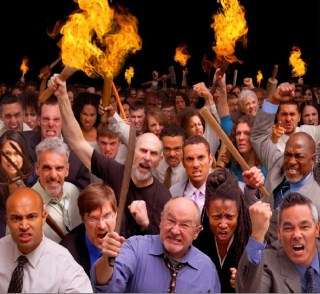
 But as the fear and anger are jacked up, what was once the vital middle of the spectrum comes to seem “politics as usual,” or, even worse, as “the status quo.” You hear people ay they are “against the status quo” as if it were one thing and as if whatever broke it would be better. Clearly politics as usual is not giving us back the America that was stolen from us under the leadership of the moderates. (Ronald Reagan, by the way, was one of those “moderates.”) Politics as usual is not protecting us from the threat of—in the U. S. today, that means “the existence of”—extremist groups who will count no cost too high if they can inflict even a minor wound on the U. S. It’s time to elect a “strong man.” This is a real Trump rally picture. Let’s hope it isn’t really representative.
My argument here is that under those historical circumstances, the nature of the soil is fixed beyond hope of amendment until the conditions favoring amendment return. If the people who want to fix my soil by improving the drainage and declared enemies of the people for their efforts, they will stop making those efforts. That applies as well to parties as to candidates.
The soil which is producing today’s weeds—I described it in the earlier post by using Richard Hofstadter’s term “the paranoid style”—is marked by irrationality and violence. If we are so fearful and so alienated that we will not elect people who will bring about an improvement in our civil soil, then we will keep producing weeds.
I’m looking for some appreciation of how we can move forward together. That was Barack Obama’s appeal. Then it was his promise. Then the promise was systematically derided for partisan advantage. We need to find a way to hope again. I don’t know what will do that for us.
Obviously, as a Democrat, I hope that a Democratic candidate will be elected, but electing a Democratic candidate won’t amend the soil. It won’t even remove the weeds. And I don’t know what will.
[1] “Should” here is not a term of argument. It means only that I have preferences about what kind of plants (grass) I want in my yard and growing that grass would require better drainage than I have devised.
[2] I’m a pragmatic liberal Democrat. That means that my heart belongs to Bernie, but my vote is going to Hilary.
[3] The rise of Vladimir Putin as a “strong man” ruler in Russia is directly parallel, but adding him in complicates the mix.
[4] Of course, the other nations did not want to help Germany return to prosperity. Hitler’s leadership in restoring Germany to prosperity was done by violating the treaties which had the permanent subjugation of Germany as their goal. How do you think that played on the campaign trail in 1932.
[5] Since it is the name of the town, local businesses have the same name. We rode past a Mauthausen McDonalds, for instance. It is hard to get past the association. Imagine that there is a McDonalds in Auschwitz (also a place name) that features “the Auschwitzburger.” That would be a hard sandwich for an American to order and there is nothing wrong with the name except my own inability to separate the name of the town from the name of the camp.
[6] People forget that the PATRIOT act—always, properly, in caps—is an acronym. It stands for “Uniting and Strengthening America by Providing Appropriate Tools Required to Intercept and Obstruct Terrorism.”
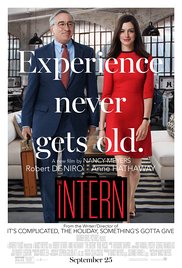 Then the question of what “empties himself” means, both in the case of Jesus and in the case of Ben Whittaker. Then, second, there is the question of what is actually emptied. I don’t know what that means for Jesus, but what it means for Ben is what the movie is about. Finally, there is the question of what is not–can not be?–emptied.
 My problem is not with understanding it. I can’t. My problem is with not caring about it. I’m not really critical of myself for failing to care, but I think all Christians are poorer if they fail to care about this fundamentally important mystery. I think we need to live with it and care about it. I would really like to understand it; that’s the kind of person I am. But even failing to understand it, I am not prepared to stop caring. How to do that?
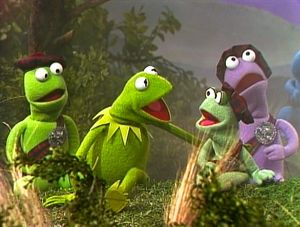 Sir Robin’s problem is the tiniest fragment of the dilemma Jesus faced in “giving up the form of God,” but since I have no idea what “the form of God” means, I don’t really feel anything about it. I really get the little frog’s problem. I can feel that one.
 The second interviewer picks up at college and asks about work history. This is the first time we, as viewers, hear that Ben was V.P. for Sales and Advertising and later was in charge of the production of the physical phone book. For New York. The second interviewer wants to know why people don’t just google phone numbers. Ben is unflappable. “Well yes, but back then people needed phone books.”
 He doesn’t “empty” those things. They were part of his old self and they are part of his current self. And they save him. They save the company, too. And Jules Ostin, the company’s founder, whose intern he is. It is not hard to track those traits in the story. [4] Ben goes into a conference room to perform a very simple task that Becky, Jules’ secretary, has summoned him to do. While there, he hears crisis discussed—a crisis for the company and also for the founder. When he reports back to the secretary, she says, “So…what were they talking about in there.” Ben replies, “I really couldn’t say.” Becky prompts, “You were in there a long time…” Ben comes back with, “I couldn’t hear a thing.” Not true, of course, because he did hear; but also not a lie because Becky knows exactly what he means.
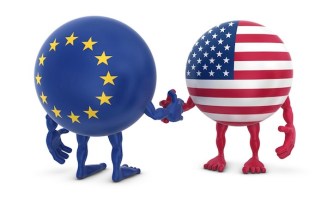 Second, I will really miss living in a country that is respected in the community of nations. Apart from the damage a Trump administration would do, simply winning the Republican nomination and/or the general election would be a blow to our prestige. Bette is in Germany at the moment, communing with three of her grandchildren, and she reports that the question the Germans want most to ask her is, “What are you people DOING?” This is orders of magnitude worse that Reagan who was, after all, a governor and, before that, a long time political activist. [1]
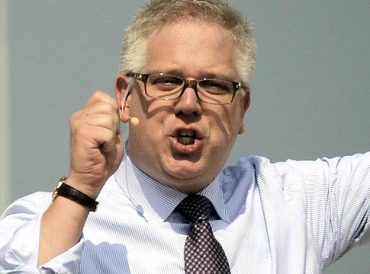 want to argue that we are culpable. When you take a look at what would have had to happen to prevent it, it is really hard even to imagine it. We are, however, the cause. Culpable or not, we are the stewards under whose “care” this soil developed. If “sovereignty of the people” means anything at all, surely it means that.
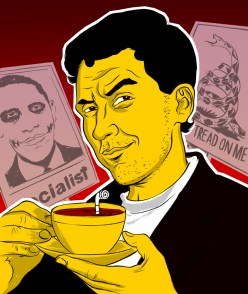 There is a thoroughgoing tribalism that makes policymakers who cooperate with each other to support policies that would be good for all, into “traitors.” It is only a small step to an Inquisition that begins with “Are you now compromising, or have you ever compromised with [a member of the other party.]” If you hear the House Un-American Activities Committee language there then I wrote it properly. “They” are evil and consorting with “them” is evil and you deserve punishment.
 In the first scene in which Geoff Mercer and his wife Kate appear together, Geoff gets a letter. The rest of the movie is about the ramifications of message the letter contains. I am not really certain what the ultimate effect of the news is on the Mercers. David Constantine, who wrote the short story on which the movie is based, has no interest in our knowing what it will be. Google [David Constantine, telegraph, interview] for the whole pitch by the author. Andrew Haigh, the director, doesn’t care either.
 The marriage that director Haigh shows us is not bad, really. Geoff and Kate are still interested in each other. A little. They offer all the everyday courtesies that allow for domestic tranquility. [3] She is especially attentive to him, but it to his getting through the day and his taking his meds that she is attentive. If she knows there is more in there—and maybe there isn’t—it doesn’t show up. Getting through the day seems to take all the attention Geoff has to give.
 Finally, they could have practiced the full restoration of relationship after the friction has stopped fricking. [6] You can look at the week of Geoff and Kate’s relationship that is treated in the movie and imagine that they have never so much as exchanged a heartfelt endearment. But it’s a lot more likely that they used to do that, back in the old days, and they one friction and another occurred, like so much tread wearing off a tire. A strong marriage has ways of restoring the lost tread; of repairing the wounds any marriage will suffer. And if you don’t do that, the tire will blow when you hit something unexpected on the road.
 In this piece, I would like to contrast what Brooks likes about America [1] with what he is willing to “pay” to have it. “Pay” is in quotation marks because for the most part, it isn’t Brooks who will do the paying. So here is another way to say it. Brooks thinks you should like the things he likes about America so much that you will be willing to continue to pay the price of keeping them—and it really is you, not Brooks, who will be paying the price.


 opponents rather than enemies. You can make one particular characteristic of them the vital and significant difference rather than all the characteristics of them. [2]. You can oppose them because you are competitors for a common and scarce resource.
 Sarah, the principal character in this scene, is an academic and a political activist, but she is disguised as a fundamentalist Muslim woman, which means that she is under the direct authority of the submission police. She is at the Good Woman net café to send a coded message and she is hiding in a chador. (I hope she is better disguised than this Barbie.) She knows how to be “a good woman” as we will see; in fact, her answers are so orthodox that they bring suspicion on her.
 “flaunting her hair.” And flaunting her hair suggests to Black Robe that she is representing herself as “a Catholic whore,” [5] rather than “a devout Muslim woman.”
 duties. Had he been dutiful, she would have been obedient in thought, word, and deed.
 because he justified it to me one day when I was visiting. “These stories,” he said, “are deeply philosophical.” [1]
 Now we cut to a third segment in which a moderator sits in an easy chair, taking occasional sips of coffee from a mug on the little round table in front of him. He is flanked by two philosophers. (This picture shows a different table, but otherwise it is what I had in mind.) Their job is to treat the episode and the audiences’s reaction to the episode as the familiar conflict between consequentialist and deontological ethics. Deontological ethics can be borne, they agree, by societies where there is fundamental agreement on the rules underlying social interaction, but that kind of agreement is not present in the episode from which this instance is drawn. That argues for the priority of consequentialist ethics—Laura was right to lie to her husband. But, says the deontologist, the real cost will be seen more clearly in future episodes.
 I studied “episodes” like whether the common room of the dorm was “too loud” for people trying to study and whether a girl in the dorm was taking advantage of her roommate (the roommate was the one I was working with). I showed, to the satisfaction of my committee, that the cognitive and emotional routines by which these events were handled were politically significant in two important ways.
 etter of it and left. Something will have to happen for him to re-turn, to be re-conciled, to be brought back to the table and back into discussion with the others. This is a table that keeps showing up. Interesting.
 The New York Times headline warns of “a lasting split.” In my metaphor, that means that reconciliation is either not attempted, or that it fails. So…who is at the table? The short answer is that the Republican establishment is at the table. They are the people who told angry Republican populists to swallow their emotions and vote for John McCain and Mitt Romney. Here are a few descriptions of this group from the Times article.
 Laura Ingraham, a conservative talk-show host, says, “All the things the voters want have been shoved off to sidelines by Republican leaders…and the voters [Republican primary election voters] finally have a couple of people here who are saying this table has to be turned over.”
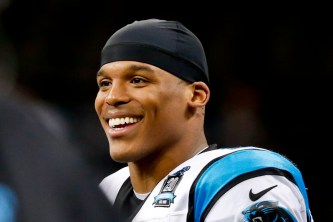 man. He is very demonstrative during games, both on the sidelines and on the field. The manner of his demonstrative actions is very much like some other black athletes.
 popularity of the gesture spreads. After black athletes have established it as black and therefore “cool”—I’m sure that isn’t the current term for what I am talking about—then white athletes take it up. You could watch end zone celebrations over the last 20 years and just watch it spread. Even linemen celebrate now. And after them, white athletes, then black and white non-athletes. Eventually, old white women in nursing homes can be seen exchanging high fives and fist bumps, gestures that were invented as symbols of black solidarity.
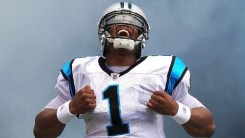 nator of some as well. Here is his famous Superman pose. My own expertise does not extend to first uses. So Cam Newton does all these things and he is black and so what could possibly be wrong with saying that he acts ‘the way blacks act?”
 Let’s imagine for a moment that the issue before us is not race, simply, but some unholy amalgam of race and class and let’s use “working class” and “middle class” as our category names. Those are crude categories, but they allow us to ask some simpleminded and useful questions. What percent of successful trial lawyers are black? What percent of successful CEOs are black? This is Ursula Burns, who was CEO of Xerox at the time. Black enough? What percent of tenured faculty are black? What percent of NASA engineers and scientists are black? I don’t know the answers to any of those and frankly I don’t care.
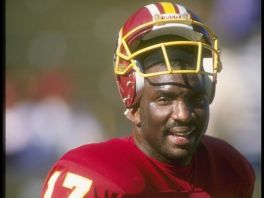 Newton is not the first black Superbowl quarterback, of course. The most recent being Seattle’s Russell Wilson of the Seahawks and we could go back to Doug Williams of the Washington Redskins, the first black Superbowl quarterback, in 1988. But they weren’t black enough for the commentators I was listening to. The first explanation they used was that Williams “felt the pressure of the system” (to act “professional” rather than “black”). But both commentators knew that wasn’t true of Doug Williams. Of course, they said (second explanation) that wasn’t really what he was like anyway. He looked at the game and his place in it “in a more professional manner.” Their words, not mine.
 The Dilettante's Dilemma