
Can Christian persons be autonomous? I have three settings where I would like to place that question. In those three settings, the answers are: absolutely not, of course, and “you’re going to have to be more specific.”
Setting 1: Living in the Garden of Eden
According to the Judeo-Christian myth of our origins, humankind came into being in a  special relationship with God. There isn’t really any way to say precisely what that relationship was. C. S. Lewis in his Perelandra takes a very creditable shot at imagining what it must have been like. What we need to know is that it was a relationship of intimacy and trust.
Here’s a way of picturing the event that Christian theology calls “The Fall.” God starts up a business of His own. Fabrication, let’s say. And he makes the first man and the first woman junior partners in the business. The sign on the truck says Jehovah and Son and Daughter. [1] Then it is suggested by some nefarious force that it is demeaning to be always an employee and that there is no reason why they can’t just set up on their own: Adam and Eve, Fabrication! So they do that and go into business in competition with their father.
Not to play out this farce unnecessarily, the point is that what was once a relationship so close it couldn’t even be quite familial was wrecked by the demand that the son and daughter made for autonomy. In Christian theology, “autonomy” is just another word for rebellion and since, in this story, we were made for relationship, rebellion leads very naturally to alienation and then to anxiety and then to sin.
So “autonomy” in the essential sense of our relationship with God is just a euphemism for rebellion and that is why my answer to the question in this setting is “Absolutely not.”
Setting 2: Living in Oregon
Or anywhere else, of course, but Portland is the heart of “the none zone.” In Portland, we are “spiritual, but not religious.” So I am considering “society” in the secular sense in which sociologists and political scientists consider it. When we talk about “the sovereignty of the people,” for example, we don’t mean that God is not sovereign. We mean that the king is not sovereign. Autonomy is a perfectly appropriate relationship between neighbors. When my neighbor says he doesn’t like the way I have designed my garden, I say, “So…? Is there any reason your ideas about what my garden should look like should be taken in preference to mine?” The rough equality of personhood makes it possible for us to stand in line and (with small exceptions like a husband who was parking the car joining his wife who was standing in line) we take it for granted that the line goes in order of arrival—and not in order of title or rank.
Autonomy is a wonderful presupposition for a society. It means that if you want me to change my mind, you need to persuade me. It means that no one in a marriage is more important that anyone else. It means that if you are going to violate the expectation that it is my life and so I get to choose what I will do, you will need a really good reason for doing that.
So in the context of everyday life, not just in Oregon, I say the answer to my question is, “Of course.”
Setting 3: Living in Collegiality
People who are “colleagues” are people “chosen to work together.” [2] I am going to have churches in mind here. I didn’t choose churches because they are hotbeds of collegiality, but because they are intermediate between the loyalty and obedience we owe God and the individuality and autonomy we demand in society. [3] Churches are, in this location, “working groups,” and they are, in that way, very much like athletic teams, when the chemistry is good, or small groups of soldiers in battle.
My answer here is “you’ll have to be more specific” because in the intimacy of a well-functioning group, each protects the other. I risk my life to save yours because just yesterday you risked yours to save me. We are bonded into a single unit by the trust and the danger. I am not “obedient” to you as in Setting 1 and I am not separate from you as in Setting 2. I am functioning in such harmony with you—it is the kind of relationship that just might allow us to live until tomorrow—that only colleagueship is close enough. This picture came from a search for, “He ain’t heavy; he’s my brother.”
 Sports teams at their best are like that. If they cover me, they won’t be able to cover you, so you get the ball. It doesn’t mean you’re a better shot; it doesn’t mean you’re more important; it means you are open. The best quarterbacks working with the best receivers, look at the coverage and know how it will seem to the receiver and throw the ball to the place where the receiver will decide to go. That’s not obedience. It’s certainly not autonomy. It’s this third thing. It is a unity of purpose and an abundance of trust and experience: it is a relationship that words like “colleagueship” only hint at.
Now, I’ve never been in a church like that, but if I found one, I would want to go there tomorrow. I wouldn’t actually go, probably, because I have relationships of honor and trust with people at my present church and I wouldn’t want to violate those relationships. But I would want to.
In the schema I have devised here, you can see that the church is intermediate between the individualistic society, where individual autonomy may not be breached, and the relationship of Eden, where trust and intimacy were built into the relationship from the beginning. Structurally speaking, the church could be the place where the autonomy is superseded by the obligations of covenantal love and where the oneness of the community is a way of returning to the relationship of love and trust with God.
In a bad church, you would still have to insist on autonomy. Without collegiality, it’s all predators and prey. [4] And both of those are bad. In a good church, you would think that autonomy would only get in the way.
[1] I did once see a moving truck that said Smith & Son (and Daughter).
[2] The immediate Latin predecessor is collega, “partner in office,” and it is derived from com-, “with” and legare, “to choose.”
[3] I know that there are societies where that is not true: “collectivist societies,” they are called. In the U. S. we presume the values of an “individualist society” or, as critics often put it, a “hyperindividualistic” society.
[4] A very small church joke.
 On the other hand, anger is like the first stage of a space shot. The booster rocket has no idea what the mission is; has no ability to guide the space craft; can not even orient the craft in the proper direction. That is not what it is for and it is no criticism of a booster rocket to say that it is dumb. It is strong; that is its job.
 I
I Conclusion: If the terrorist recruiters ever found out who hatched this plan, this series of programs that made their lives so awful, they would hate us (“us” would be me and the American government class, I guess) but we are willing to be judged by the punishment we inflicted on them and which they so richly deserved.
 In 2011, roughly the time when Looking Backward is set, Kim Stanley Robinson wrote 2312: A Novel. His goal is different from Bellamy’s in many ways. Robinson, who also wrote the breathtakingly technical Red Mars, Blue Mars, Green Mars series, is a practitioner of “hard SF.” [2] He’s not a reformer, really. On the other hand, the protagonist, Swan Er Hong, lives on Mercury and when she is forced to visit Earth, she is scandalized by what has become of it. It is what we all know but projected to a catastrophic future.
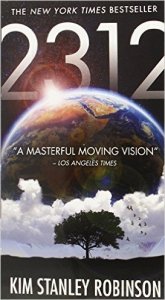 Shortback’s periodization takes off from our present and moves to the present in which the novel is set. I’ll name them all and then I will pay closer attention to three of them. First, The Dithering: 2005 to 2060; then The Crisis: 2060 to 2130.; then The Turnaround: 2130 to 2160; then The Accelerando: 2160 to 2220; then The Ritard: 2220 to 2270; then The Balkanization: 2270 to 2320.
 humanitarian politics in Somalia? There were starving people in Somalia and there were TV cameras. It was the combination that made it hard for U.S., specifically the Clinton Administration, to bear. The Somalis needed food and we had food.
 She told him that she knew she had not been a good wife. She was disappointed in herself. Would he give her six more months, she wondered, and in that time she would be the wife she could be. If she did her best to be the kind of wife she approved of—her standards for her performance—and at the end of six months, he still wanted a divorce, she would raise no obstacles to his dissolving the marriage.
 She said that she was ashamed that she had not met her own standards as a wife. Perhaps you can see, by now, how breathtakingly simple this is; how many self-justifications she walked past in order to get to this statement: I have not met
  This woman and the husband who asked her for a divorce had been happily married for many years before the morning she told me this story. They are married still, and happy still, and their children have grown up and there are grandchildren. So, to use a formula more common among hobbits than among humans, “They lived happily until the end of their days.”
 Early in the second season, an angry mother releases a genetically modified plague bacterium and Tony is the only one who comes down with it. The scientist who designed this bacterium says that Tony has about one chance in fifteen of surviving it. So if you set aside your certain knowledge that Tony appears in the next episode, it seems that he doesn’t have much of a chance.
 The experimenters I read about were studying how to treat athletes at the point of exhaustion. That sounds brutal to me, but there are athletes who really want to know how much they can take. These particular athletes were cycling—on stationary bikes, I suppose. They ride until they are exhausted and then are treated by one or another intervention. In this case the two interventions were: a) drinking sugar water or b) rinsing their mouths with sugar water and then spitting it out.
 So then I got to thinking, “What if there were a “reserve of healing” that functioned by precise analogy with the “reserve of energy?” I don’t know that there is such a thing, but I would guess that there is. What would you call someone who has access to that reserve, someone who can cause the healing response to be produced? I don’t want to be stuffy, but I don’t think it would be out of line to call such a person a healer. If he “causes a healing response,” I’d be willing to call him or her a healer. If this response CAN NOT be called forth—the reserve cannot be released—unless you believe that this particular person can do it, then I would say that person is a “faith healer,” This person is someone who is able to “heal you” (call out the healing reserve) if you believe he or she can do it (if you have faith). Faith healer?
 The counter-instance is made, too. Jesus, having established a reputation as a healer, returns to his home town, Nazareth, and runs into a wall of disbelief. Maybe “dismissal” would be a better word. The villagers said, “Where did this guy get all the religious stuff. He grew up here. We know his family and so he can’t be who he says he is.” And Matthew (13:58) tells us that Jesus “did not work many miracles there because of their lack of faith. Mark says (6:5) that he could not work miracles there because of their lack of faith.
 I’ll make two brief points here. The first is that these questions [Do you approve of the way Barack Obama is handling his job as President?] may seem simple-minded, but a good deal can be learned from the fact that they ask
 responsible for the poor showing of the economy. The economy is still going to be bad in 2020, according to my argument, and President Hillary is going to be swept away by the popular anger UNLESS she provides, by 2020, when she would be up for re-election, someone else for people to be angry at.
 There is not that same circus atmosphere on the Democratic side, but the difficulties of a Democratic candidate are already plain—people don’t know Bernie and they don’t trust Hillary. The favorable opinion about Hillary—Is your opinion of Hillary Clinton favorable—peaked in 2008 and 2009 during and just after her run for the Democratic nomination. She was above 50% approval for five polls in a row: that’s from September of 2008 until February of 2013. Something happened—the Benghazi controversy, probably—which resulted in here approval rating plummeting from 57% to 26% in just a little over a month. She has been, with a single exception, in the 20s and 30’s ever since. She was at 31% in this most recent poll. “Not favorable” is now over 50%. [4]
 I think that is why we say “He is risen.” But that’s not the way I say it when I have a chance to say it by myself. I say “He is risen” along with everyone else, but I mean, “He was raised.”
 I think C. S. Lewis comes at this question best when he comes at it indirectly. In The Lion, the Witch, and the Wardrobe, he includes a scenesin which Aslan, the lion, who is the Christ-figure, is humiliated, tortured, and killed on a stone Table. And then one in which he is alive again. The witch figured she had Aslan dead to rights because he gave up his life to save the life of a traitor. But, Aslan says, the next morning, “There was a deeper magic that the witch did not know. She did not know that when a willing victim was killed in a traitor’s stead, the Table would crack and Death itself would start working backwards.”
 eturn to life of the story they had thought, up until the death of Jesus, they were part of. When he died, they thought they must have been mistaken. Then when they experienced him again, they said first, “So it was all true!.” Then they said, “Look, these scriptures—as we now understand them—show that this was the plan all along.” Then they said, “OK then. Let’s get to work.”
 pretty simple, as you can see. “You’re healed,” Jesus says. “Thanks!” replies the bunny, “Welcome back!” This bunny knows from the beginning what the church struggled even to begin to grasp. It’s so easy for the bunny. It isn’t easy because he was healed although I think we could say that not being dead is an advantage. It is easy because it is easy. It is easy in the way it was easy for the girls in The Lion, the Witch, and the Wardrobe.
 Here’s how I get there. If you treat “orthodoxy” as “believing the right things,” then you have to be able to believe something in order to be orthodox. Not to get rigorously etymological or anything, but the -doxy part of orthodox comes from the Greek verb (dokein) meaning “to think” and the ortho- part from the Greek adjective (orthos) meaning “straight.” So “thinking the right things” is a pretty good indicator of orthodoxy, especially if we allow “straight” to be defined by the local community.
 I think a much better measure of being Christian, of being, as Christians understand it, a part of God’s family, is saying Yes to God with every available resource. Here’s a handy checklist. (See Deuteronomy 6 and Mark 12) To know what the authors of Deuteronomy meant, you would have to have a better grasp than I do of the crucial terms. What did they mean by “heart” or by “soul,” for instance? When I run a checklist of that kind for myself, I use these four categories: what I think, what I intend, how I feel, and what I do. That is a series that is meaningful to me. [4]
 The only question that verse asks of the person living in that house is, “Are you going to open the door?” It doesn’t ask if you know who is knocking. It doesn’t ask if you had intended to have a visitor. It doesn’t ask if you are anxious about who is knocking. It asks whether you are going to open the door.
 “Where to Invade Next.” That’s not a headline. We don’t look good in any of the Michael Moore movies. It’s just a statement about what I want to think about today.
 The Italian couple pictured here who are accustomed to eight weeks of vacation every year are astounded to learn that American workers get none at all—by law. Moore does admit that vacation hours are negotiated in contracts. She is in a mid-level business; he’s a cop. They both look very good in the vacation pictures that someone takes of them nearly everywhere in the world it is sunny and warm.
 meal we see at the elementary school is charming. It is served by kitchen staff. On china. A four-course meal. For less per child than we spend. And they get an hour to eat it.
 is as good a thing as she thinks it is.
 Another difficulty that the notion of “uselessness” hands us is, “What do we mean when we say ‘useful’?” Society is a rough and ready kind of enterprise so far as meanings go. Society is possible because “close enough” is the standard for giving and receiving meaning. But every now that then, “good enough” really isn’t good enough and I think this is one. What if, for instance, our common definitions of “useful” are merely conventional? What is these common definitions are not “useful?” What if another notion of “useful,” on being presented, would be welcomed and would benefit us all?
 member of the group who is willing to ask the “Why is grass green?” kind of question. No one knows the answer, but we all think we should so all of us pass the opportunity by and none of us asks it. But this one guy does. He would be very much surprised, I think, to learn that his contribution is “useful” to the group; it is, in fact, much more than useful. It is vital.
 One night, all the residents (except the one holdout) are magically transformed into themselves as children. They run and play and laugh. But before the night is over, they have begun to remember also the wonderful relationships and events of which they were a part and which they will not have any access to unless they go back to their old selves. And Mr. Bloom gives them that. You can go back, he says, to “your old comfortable bodies,” but with “fresh young minds.” The next morning these old people nearly erupt from the senior center, bursting with things to do and places to go that were there all along, but which they had not been willing to contemplate.
 The Dilettante's Dilemma