
The great thing about fighting a war with intercontinental ballistic missiles is that you don’t have to know a lot about your enemies. You load up a barrel full of destruction and heave it off to “do bad things” to the bad people over there. Of course, there are other things that are incredibly bad—like when an ICBM lands on you, sent by people following the same script. Still, firing them off is a pretty tidy action.
The nuclear exchange model
I discovered just last week that there is a “SlutWalk” in Portland which is supposed to serve as a retaliation for remarks made in Toronto in 2011. Seeing Portland’s response as retaliation is what brought an exchange of ICBMs to mind. In Willamette Week, a local paper, Marty Smith wrote an article about it. He provides this much background.
In 2011, a police officer named Michael Sanguinetti told a campus crowd in Toronto that female students “should avoid dressing like sluts in order not to be victimized.”
First, without going into the merits of his argument, I want to recognize Sanguinetti as a Man of Courage. He went onto a college campus and said either a) that women are sexually abused because they dress provocatively or b) that they would not be abused if they did not dress provocatively. If he said either of those things, then he came very close to saying that “women who dress like that get what they deserve” or that the men who abuse them are free from any blame because they could not help responding.
I don’t know if that is what Sanguinetti had in mind, but if he did, I think that was the initial ICBM strike. Portland’s response was predictably bellicose. Marty Smith puts it this way.
SlutWalk was founded in response to these remarks: The “slutty” attire worn by marchers proudly asserts a woman’s right to wear (or not wear) whatever she chooses without being shamed for it.
looks like an ICBM counterstrike to me. Women have the right to wear anything they want without “being shamed” for it. The interesting thing to me is the sudden shift into the passive voice. The women are “being shamed” by someone. That means at the very least that someone is telling these women that they shouldn’t be wearing such an outfit. It may mean more than that. The great thing about the sudden introduction of the passive voice is that it enables us to single these “shamers” out for…special shame, I suppose.
So the nuclear exchange could be summarize like this. Strike 1: Women who dress like sluts and are abused as a result are getting what they deserve. [1] Strike 2: Women have the right to wear whatever they want without fearing adverse consequences.
The communication model
So I have an idea. Maybe nuclear exchanges aren’t the best way to approach this issue. I think conversation might be a better metaphor. “The way I present myself,” or just “what I wear” for today’s essay, is something I choose to say about who I am and what my intentions are. What I say is not gobbledegook; it relies on broadly accepted meanings. [2]
Here’s a very helpful example from a piece by Peggy Orenstein in the New York Times, which you can see here.
An economics major taking a gender studies class is getting dressed in her college dorm room for a night out, cheerfully discussing sexual stereotyping in advertising with Orenstein — while at the same time grabbing a miniskirt and a bottle of vodka, the better to achieve her evening goal: to “get really drunk and make out with someone.” “You look hot,” her friend tells her — and the student, apparently registering the oddness of the scene, turns to Orenstein. “In my gender class I’m all, ‘That damned patriarchy,’ ” she says. “But . . . what’s the point of a night if you aren’t getting attention from guys?” Her ambition, she explains, “is to be just slutty enough, where you’re not a prude but you’re not a whore. . . . Finding that balance is every college girl’s dream, you know what I mean?”
Please note that what she calls “every college girl’s dream” is not getting laid or not getting laid. It is navigating between two “looks,” each of which will be meaningful to others and both of which she rejects. She wants to say something about herself—“just slutty enough,” is what she is after. She knows the look (or thinks she does) that will convey “whore” and she is trying to avoid it; she knows the look that will convey “prude” and she is trying to avoid that as well.
This girl is a terrific example of the system I would like to see in place—the conversation system— as opposed to the nuclear exchange scenario I described and rejected first. And here’s another one. This one comes from a site called Aggie Catholics and the message I want to share here has been devised by Kristine Cranley for a very conservative setting. The reason for what Cranley calls “modesty” is this:
First of all, I want to assert that the reason we dress modestly is NOT [the caps are in the original] because our feminine bodies are bad or ugly or intrinsically ‘occasions of sin’. Simultaneously, it is NOT because all men think about is sex, or that they are incapable of looking at us without lust. Rather modesty involves speaking the truth with our bodies. …Whether we intend to or not, revealing too much of our bodies sends a message that we are sexually available to them.
The quotation is accurate. I put the bold font in myself.
I like that approach in the sense that it is a communicative, rather than nuclear, approach. Don’t send a message you don’t want to send. Furthermore, as Cranley says later, “modesty involves speaking the truth with our bodies,” and I think she is right for the audience she is addressing.
 The woman who is trying to look “just slutty enough” is an example of the communications paradigm. The women who are dressing modestly so that they will send the message they want to send are, likewise, examples of the communications paradigm. And when Cranley complains: “Too loose. Too tight. Too low. Too high. Who teaches us about these things anymore?,” she is complaining about a lack of the vocabulary that will enable women to say what they mean.
Sooner or later, some reader is going to point out that men have a vocabulary as well. I am inclined on theoretical grounds to say that is very likely true, but i have no idea what it is. My sense of the courtship exchange is—with a notable exception I am going to describe before I give this up—is that women dress in a way that says what they want and men respond by going up and saying, “So…let’s follow up on your suggestion.” I know that is crude, but my understanding of the interaction is crude. [3]
Doing it Right
On the other hand, no man is required to follow the lead a woman provides. I have an example in mind. A student of mine at the University of Oregon was set up on a blind date by some friends of his and her. In preparation for the meeting, her friends—through ignorance or a desire for entertainment—talked the woman into dressing very seductively.
As Kristine Cranley laments, no one teaches anymore about “too loose, too tight, too low, and too high.” And if that was the case here, the woman was being forced to say something about herself by friends with no knowledge of either the vocabulary or the syntax of the situation. She went downstairs to meet this student of mine “dressed slutty” but without any slutty intentions.
The man kept his head and said something that his buddies would have mocked him for if they had ever learned about it. He said, “My friends and your friends said we would like to get to know each other. I don’t think I can get to know you while you’re wearing that. Would you mind changing into something that would give us a better chance to get to know each other?”
I don’t think a date had ever said anything that pleased her as much as that did and she said as much when she told me about it. She presented herself (unwillingly) to him as an “it.” He responded by asking if she would be willing to be addressed as “you.” She happily changed into something that did not detract so forcibly from the project of getting to know each other and they went out together. [4]
This is the best story I know about sexual interaction considered as communication. In the nuclear exchange model, she would have demanded to dress like a slut but not to be treated like a slut. He would have claimed the right to treat her like a slut because that is what she was asking for.
I am not pitching, in this essay, sluttiness or modesty. I am pitching communication. I think it is better than blowing each other up.
[1] With charity toward Mr. Sanguinetti, I think it is only fair to imagine that he might not have said that. He very likely said something that could be caricatured in that manner, and when you speak in public on matters about which other feel strongly, that happens.
[2] Even within the conversation metaphor, we take it for granted that words have common meanings. In the present instance, “slut” means the same thing to both ICBM communities. They want to do different things, but they rely on the word to mean the same thing.
[3] In my defense, I will say that this unsubtle narrative in which the woman signals her readiness for interaction and I respond by opening a conversation is all I know from my own knowledge. Of course, I have read books and seen movies where other, more aggressive, styles of interaction are pursued. Also, I have the stories told by friends and it is always possible that some of those stories are true.
[4] And, several years later, married each other.
 Emily Badger has
 does sound silly. On the other hand, it is a step forward—a step toward an enduring public conversation—better, that is, than debating whether we have any biases or not. This silly exchange focuses on what the effects of the biases are, which is a conversation worth having, rather than whether there are biases.
 sue it over time.
 Or imagine that the standard of behavior of major league baseball players was very high and those of minor leaguers notably lower. When the minor league player is called up to the majors, he does not want to flaunt his ignorance and naiveté. He wants to behave “the way we do it at this level.” He wants to look like the guys he knows belong in the big leagues.
 the whole “old life” construct. My practice used to be to hit Starbucks twice each morning. I would drive over around 5:30 or 6:00. I’d get coffee for Bette and me and come home to write things like this. Then I would walk over (about a mile) intending to get there about 7:30 for the meeting of “the Northwest Corner Caucus.” [2] And then the other caucus participants and I would do whatever happened that morning.
 I was a senior in high school. She was kind of a “practice girl friend” for me and I was a practice boy friend for her. It was a new and exciting kind of relationship but as the school year was winding down, we both looked at the relationship and realized it wasn’t going anywhere. It was a generous and thoughtful and collegial decision and we were both satisfied with it.
 Now, I do not have any girlfriends west of the river. I brought the only girlfriend I have with me to the east side. But I have a lot of friends over there and being with them has reminded me of my first girlfriend and the fading of a relationship with no future. If it is really true, as I learned in high school, that what we call “the experience of a relationship” is in fact part experience and part expectation, then I should have imagined that when you remove the expectation part, the experience part would start to lose its color and snap. [4]
 distinction from a Portland guide book. It opened with a completely straight-faced joke about a man who came to Portland and got a job and worked hard and saved his money and eventually was able to move to the west side. He married and started a family and then began again to save money so he “could bring his mother across.” First I said, they didn’t really mean that and I read it again. I decided that was exactly what they meant. Then I said, “Ooooh. I want to live in a city that thinks that is as funny as I do.”


 This morning, I had a truly wonderful experience at the Multnomah County Courthouse. I was summoned to be part of the pool of potential jurors and I gave them from 8:00 a.m until 11:30 a.m. so I was available to be chosen. I was not chosen, so I will be back at the courthouse at 8:00 tomorrow morning to give them a second chance.
 But this is different. “Women have a better chance…” and this is a good thing. Really? Let’s see: “Men have less of a chance…” and that is a good thing? Really? The first statement is a commonplace. [1] I have never heard the second said out loud although the meaning is exactly the same. This rooting for the comparative success of women is a new thing, it seems to me. Maybe the sports metaphor comes easily to mind because of the Olympic games, but I hear people rooting for the success of women in the same spirit that they root for the success of American athletes generally.
 Granted. Some will say it is easy to mistake hoping for advances for women for hoping for the disproportionate success of women—and, of course, the failure of men. I know it is an easy mistake to make and I don’t hold bad feelings against Judge Walker for making it. At the same time, the standard itself is sexist and reprehensible and I think it deserves to be vilified. Judge Walker does not, but the position that he, perhaps inadvertently, advanced, does deserve it.
 contains [1] objects or events. When your seventh son brings home a girl he is interested in, you do not say, “Wow! What’s going on?” You say “I think these are getting easier,” which places this event into the category “all such events,” meaning what it was like when the six older brothers brought their girl friends home. I don’t have seven sons, myself, but I can speak for these parents. It is extremely difficult to take this seventh iteration on its own terms! Your mind goes to the category and to this event, the seventh girl friend, as an instance of the category. It isn’t fair to the son or to the girlfriend, but first sons have special difficulties too and I think it all evens out.
 So they did it for a few days and then the man said that times were a little tough economically and although they were doing everything they promised, he would be able to pay them only 75 cents each from now on. It’s still free money. Later, he reduced it further. When he got down to a dime for each kid, there was a rebellion. “What! You expect us to come clear over here to insult you for a measly dime? We’re done with this deal. Goodbye!” The old ugly man waved goodbye as cheerfully as he had done everything else and smiled quietly to himself.
 At the crucial moment in such transitions—I am just about to tell you one of mine—the question, “What is happening here?” or sometimes “Why am I doing this?” gets asked. When it gets a different answer than the one you were expecting, you get the feeling Wiley Coyote gets when he runs off a cliff and doesn’t start falling until he notices that he isn’t standing on anything anymore. Here was my Wiley Coyote moment last week and here’s the way I described it when it happened.
 eally has surprised me. There is no relationship I can see between how constraining a disability is and how the person responds to it. I write on our “front porch,” just outside the door of our apartment. The front edge of this picture is a hallway and I sit at one of the tables. And most of the time I am writing, people are walking by–some with the aid of walkers or canes.
 Everyone who knows what blood glucose is would wonder what you were planning on using it for. That is not the question that comes first to mind to people who know what an estate is. But today, I find myself wondering why that is. I think that is a really good question to ask about estates: “What are you going to use it for?”
 stream of stories. I see “children” in their fifties and sixties (and older) seriously encumbered by the process of caring for an aged parent. [1] This parent could have invested in his or her (“”her,” usually) own care by moving to a CCRC, but she did not. She relies, instead, on the daily services of her children to enable her to keep living the kind of life she is used to.
 Buying time like that is what you would get, in this scenario, for using the estate rather than saving it for the kids. But there needs to be a way to say that in less than a page and a half. If it were possible to say, “I would like to estate to you the freedom to use our time together as we choose,” that would do the job. No one will say that.
 He says of his opposite number, the American spy, “I do like him, you know. One can’t help it.” The opposite number in Hopscotch is Miles Kendrick, played by Walter Matthau. Like Yaskov, I just don’t seem to be able to help liking Nicholas Kristof. He writes a lot of things I find fault with (like his September 4 column) but it never occurs to me not to like him. And I liked his father a great deal. [1]
 There really isn’t any way to categorize Jesus simply unless the purpose of the categorization is to turn him into a tool of some sort. The bad guys in this column “weaponize” Jesus as part of their social program: opposed to women, opposed to the poor, wholly without compassion. The good guys in this column “instrumentalize” (I know “weaponize” would keep the parallel, but I just can’t manage it.) Jesus as part of their social program: attentive to the needs of the poor, responsive to the feminism of our time, global in its compassion for those who are suffering. I like the second set of programs much better than the first, but from a Christian standpoint, they are both idolatry
 McLaren continues with a series of examples of beliefs as distractions—actually, he considers only that they will be distractions. He touches on whether biblical miracles are true as a distraction and, of course they can be. They can also be an invitation to modern Christians to place themselves in the 1st Century as receivers of the good news about Jesus. He contrasts questioning whether Jesus actually healed a leper (that’s the miracle) with focusing on Jesus’s “outreach to the most stigmatized of outcasts.”
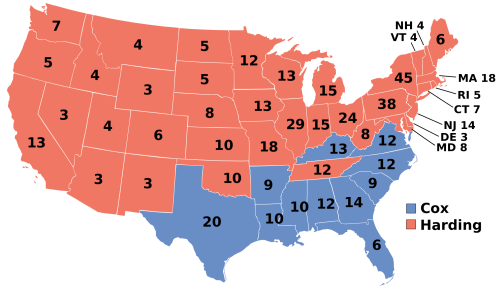 So let’s think back a little. Historically, the Democratic party integrated these two agendas within the party. There was a liberal northern wing, which ran the executive branch, and a conservative southern wing which ran (controlled) the legislative branch. Then there was a Republican legislative party that aligned itself with the liberals sometimes, mostly on supporting business and with the conservatives sometimes, especially on social issues. That blue band across the south, normally including Tennessee, was the natural home of the “Austin” branch of the Democratic party. Notice that everything else has changed a great deal.
 Well, it is different in one way. Sen. Dirksen was famous for “delivering” the Republican vote in the Senate on the 1964 Civil Rights Act. That wasn’t what he wanted to do at the beginning of the process, but he stayed with it and kept talking to his R colleagues and at the end, delivered the votes.

