
There are so many ways for Christians to be unhappy about the way “Christmas” [1] is celebrated today. I have given it up, myself, in favor of Advent. It saves me so much grief. And why, really, should I expect anyone to celebrate my holiday when I don’t celebrate theirs? Really.
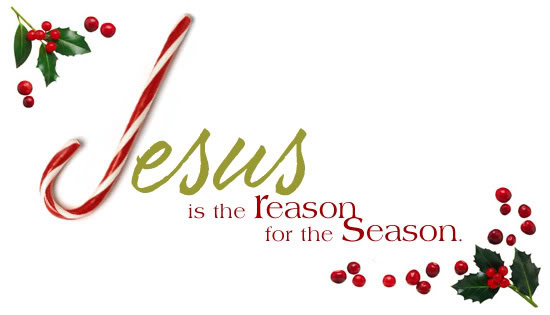
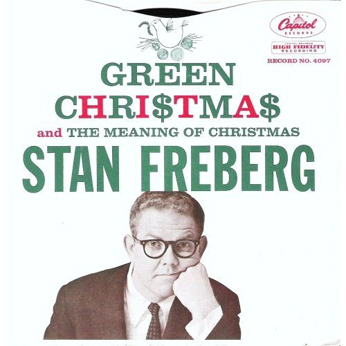 I remember when I first heard that line-Jesus is the reason for the season— and when I first saw it on a billboard. It must have been some time in the 1950s. Surely it was somewhere around the time that Stan Freberg wrote and performed Green Chri$tma$. [2] I was in my teens in the 1950s and America’s culture was in the middle of a post-WWII rebound. [3]
Obviously, I did not accept the messages my culture sent to me as characteristic of a post-war up-tick in conservative positions and sentiments. I took it as “what America is like,” or, really, “how things work” in the broadest sense of the term.
Clearly “Jesus” in the slogan is the alternative to the pervasive commercialism that Scrooge represents. So…Jesus, not shopping, is the reason we celebrate Christmas.
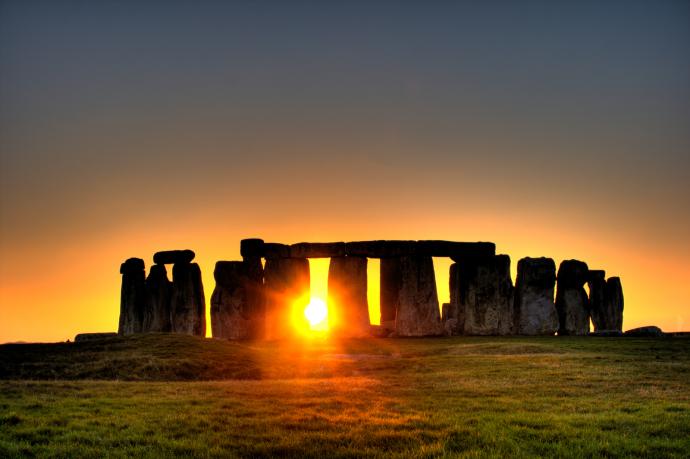
 It is not, however, why we celebrate “the season.” Our forebears, Christian and pagan, worried that the sun, traveling further and further south in the winter, might not decide to come back this year. And when the sun “stands”—which is what the -stice part of solstice means—we could breathe a collective sigh of relief and begin to anticipate the sun’s northward journey. [4] And we would celebrate the anticipation that the present cold and dreariness will not be how the world ends, but that warmth and hope will return again.
That is “the season.” As Christians moved up into Europe, they very sensibly weighed the difficulties of cranking up a brand new festival as opposed to just hijacking a festival already in place. They decided that the celebrations of the winter solstice were a good time to celebrate the birth of Jesus, the Messiah, so they dumped Advent right on top of what Ursula LeGuin (in her Earthsea writings) calls “the festival of sun-return.”
So in Christian countries in traditional times, Christ was “the reason for the season” by virtue of the church’s mandate. No reason, after all, to turn away from figgy pudding if you don’t need to.
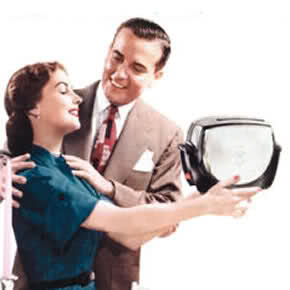
 But then, starting early in the 20th Century, economies in Europe and North America began to rely heavily on consumer demand. The more occasions there are to sell things, the more things we can sell and the better off the economy will be. And after all, in Matthew’s account, the “Wise Men” did bring gifts to the Christ child, so why shouldn’t we give Barbies and Tonka Trucks to our own children? It may not be “the reason for the season,” but it is one of the things we do on Christmas day.
I still remember when “the season” meant “the Christmas season” and good taste required stores to hold off on the paraphernalia of Christmas until after Thanksgiving. I remember active opposition to stores who broke that taboo and “jumped the gun.” But more and more, “the season” has been defined as the time of commercial excess beginning shortly after the back-to-school sales are over.
That’s what “the season” now means. It means Halloween and Thanksgiving and Christmas. And “beginning early” now means beginning that season—roughly the days before Halloween —early. There can be no coherent “reason” for a “season” that begins in October and runs until January. It can be an extended time of appeals to customers, but there is no cultural coherence in that.
And when we have travelled that far, we are in a position to stop and notice the most outrageous word in the slogan. It is “the.” The definite article notoriously requires a single object. A polygynous husband may not introduce any of his wives as “the wife”—only as “a wife.” That’s just how English works.
 And it works the same way, silently and imperiously, in “the reason.” There is, the logic demands, only one reason for this season and we are here to tell you what it is. This will be a revelation and a disappointment to the Druids who celebrated the return of the sun long before Christian missionaries arrived. It will sadden and impoverish a whole swath of merchants who see “the season” shrunk back to the days just before and just after Christmas. Both parties—the Druids and the Retailers—have a lot of reasons to reject the demand that the article “the” places on their reasons.
On the other hand, they have every reason to continue to pretend that there is such a season. A “let’s spend money” season would not be broadly appealing as a cultural meme, but “let’s celebrate THE SEASON by spending money” works just fine.
Last year, for instance, my Starbucks put a banner on the pastry case that said “Tiding so Delicious.” The only word in that banner that has a historical connection to the old celebrations of Christmas is “tidings,” as in the King James Version’s ringing, “good tidings of great joy.” This year there are red cups—they are being used now, still two weeks before Thanksgiving—that say “Share the joy.”
I would love to share the joy. How about I treat you to a grande egg nog latté?
So there is no “reason for the season.” Why would we ever have imagined there would be? There are lots of reasons why we celebrate the October to January period the way we do. And I still get my Advent to celebrate so I’m not complaining.
[1] “Xmas” in C. S. Lewis’s sarcastic account of how the winter solstice is celebrated in countries where commercial secularism is the basic assumption of society.
[2] Although he was a preacher’s kid, Freberg takes the religious argument in this parody only halfway. “But don’t you realize,” he has Bob Cratchit say to Mr. Scrooge, “Christmas has a significance, a meaning.” Freberg doesn’t go so far as to suggest what it is, but he does suggest that there is only one. Still, his little skit was banned on a lot of radio stations as impious.
[3] The role of women, the meaning of work, and the significance of “religion,” largely main stream Protestantism where I lived, were all explicit repudiations of the pre-war hedonism.
[4] When I say forebears, I am thinking of people living in the northern hemisphere. In the southern hemisphere, the solstice marking the shortest day comes in June.



 One of the great pleasures of teaching my Political Psychology class [1] over the years was introducing my students to Martin E. P. Seligman’s marvelous book, Helplessness. The focus of the book was on a particular cognition—something you had learned. And what you had learned is “there is nothing I can do.”
 The educated dog lies there. The light comes on. Eventually, the shock starts. The educated dog lies on the floor looking philosophical. The first dog says, “Hey. Like this. See? The light comes on, I jump over the barrier. Neither of us is wearing a leash. Come on! It’s not hard. Just Do It.” The second dog doesn’t respond because he knows it is no use and he continues to “know” that even when safety is a few easy feet away. This dog in exhibiting “learned helplessness,” which is the subject of Seligman’s early work.
 old people. I had seen a lot of Truly Amazing Elders (TAE) before I came to Holladay Park Plaza, but I had never seen such a concentration of old people before. There is nothing like living in a retirement center to see a lot of old people, after all.
 If I had really wanted a restoration of that relationship, wanted it urgently, I think I would have noticed when the grievance left. So what I called “a failure of attention” at the time (I just didn’t notice when the grievance stopped) may actually have been a failure of will (I just didn’t want it badly enough). So to translate this everyday catastrophe back into the world of Seligman’s dogs, I didn’t want to be free of the leash badly enough to notice when I actually got free.
 The title of this ballot measure is as follows: Limits contributions, expenditures, requires disclosure in Multnomah County candidate elections. The measure in the form of a question (Should the charter require…?) follows, then a Summary, then an Explanatory Statement. Then there are 18 “arguments” in support of the idea. All of the people you expect to weigh in against the perversion of elections by the dominance of big spenders are represented here. All these arguments make good sense to me.

 is that it calls for a comparison of “amounts” or “degrees” of being blessed. It is the word “more” in the maxim that has us comparing one amount of blessedness with another and saying that one amount is larger. That is what “more” means and what it needs to mean. [It says right here than you aren’t allowed to do that.]
 The wife, Parveneh, (Bahar Pars) of Ove’s new neighbor is Persian. That’s a short way of saying that she doesn’t know how to be Swedish. It turns out that she has no intention of becoming culturally Swedish, but that’s another story. [2] Parveneh has to make a quick trip to the hospital and leaves Ove in the waiting room with her two children. [This one picture nails the two characters exactly.]
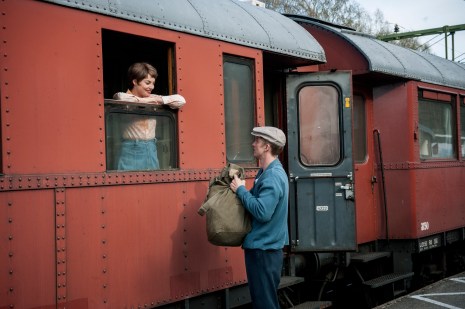 because I think that there is an affinity of some kind between one act of kindness and another. [4] Something like the current of a stream is set up and Ove “drifts downstream” following the implications of the kindnesses he has done, just as he had been following the logic of his refusal to help any of his neighbors. Actually, “who he is to the neighbors” is very much like “who he was to his wife,” who was a marvelous person and the first person ever to really believe in him.

 As I continued thinking about the sign (I do walk by it every day), I began thinking about the premise. That’s just the way my mind works. Negatively, the premise can be put this way: the milk does not belong to you unless you are a calf. Positively, we could say that the milk is the rightful property of the cow’s progeny, not the cow’s owner.
 Another unfunny way to think about the sign is to think about the alternatives the sign offers. Nothing against coconut milk, of course, or soy milk. It isn’t that I have some fantasy that little coconuts or little soy beans are being deprived of milk that would otherwise have been theirs.
 I don’t think the sign would have gotten under my skin the way it has if I had not enjoyed it so much the first few times I saw it. I saw it as a clever pun (de-calf your coffee) rather than as a moral admonition. And when I saw the sign for what it was, I had the feeling that I had been ambushed—as if someone had whacked me on the knuckles while I was still laughing.
 The answer is Yes. First, he needs to do a little defining of terms. Second, he wants to answer the question positively: Yes, you can have a good life even if you don’t have a good job. I’m right with him so far.
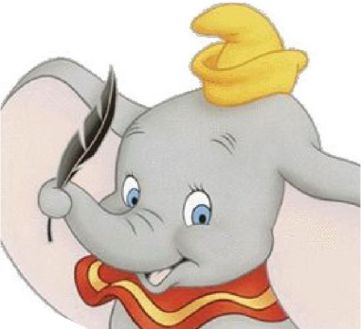
 That’s the feather. That’s how you know you are flying. And I think a “magic feather” is a really good symbol for this effect because this kind of a world is not something that individual workers can do or groups of workers can do. It is not something a candidate supported by the workers can do. It’s “magic” and the symbol of the magic is the feather.
 All we need now is the mouse. But politicians, people who are actually running for office and who tell voters “what they need to hear,” lose . And not only do they lose, but they also take a lot of other candidates down with them, candidates much further down the ballot.

