
Quite a few member of the faculty of Princeton Theological Seminary (PTSem) [1] released a statement that they say represents their views, not the views of the seminary at large. [2] I was glad to hear that because I am preparing to quibble with them and I do not want to quibble with the seminary itself. I really do like the seminary.
Ordinarily, I would provide a hyperlink to their statement, but, as nearly as I can tell, there isn’t one. That means that you have to go to the official seminary website (ptsem.edu) and enter a search term. Hint: “Trump” will serve as the key word. It is so easy to find that I am not going to reproduce it here—saving us all the extra 608 words that make up the declaration. I do think it is well worth the search because it is a very clear statement of the politics and the theological vision of these faculty members.
I call these “quibbles” not because they are insignificant, but because it is hard to tell what values are genuinely proclaimed in the document. There is so much posturing and such profligate borrowing of words from other settings that I am not really sure how much they and I would wind up disagreeing on the substance of their vision. I do feel on better grounds when I criticize the statement for the effects it is going to have on the structure of current politics.
I have four “quibbles” in mind for this essay. I could crank up twenty more if time and space were not constraints. [3]
Quibble 1 Is demonizing the opposition the best course?
Nearly everyone I talk to would be harder to talk to if they had read this piece. I suppose somebody has to do that, but then again somebody needs to talk to real conservatives (not Trump supporters) and genuine independents and Democrats Against Hillary and the job of all those people just got harder.
 Let me just give one example of demonization. The first paragraph of the declaration gives us this gem: “the god [small g-] of Donald Trump’s [ not President Trump’s] “America first” nationalism is not the God [capital G-] revealed in our scriptures.”
This statement begins with a charge of idolatry: Trump’s “god,” that is, the “god” he worships, is not really God. [4] It continues by saying that Trump “worships” nationalism of the kind that prefers American interests to all others. Being a liberal Democrat myself, I am inclined to believe that multinational treaties are better for moving in the direction of many of the policy goals I like. On the other hand, a preference for bilateral over multilateral goals is not idolatry and if the “America first” slogan means that we should be more forceful in seeing to it that the national welfare is protected in our treaties and trade agreements, I am not prepared to call that by a pejorative religious name. “Idolatry,” means “the worship of images.” It’s a serious charge. It’s not about foreign trade agreements. President Trump may also prefer “a white Christian America,” but that is not what this phrase means.
I call that demonization. Once again, if this is an elaborate ballet by which the PTSem faculty are playing “bad cop” and they know who is going to take on the role of “good cop,” I have no objection to it. That does seem sophisticated for a seminary faculty, but I am not there and I don’t know.
Quibble 2 What do we owe to “the stranger?”
Specifically, does it mean that modern nation-state violates God’s law by enacting immigration legislation. Is working for the Immigration and Customs Enforcement (ICE) the rough equivalent to “working for” the Gestapo? That doesn’t make any sense to me at all. I have two problems with this “plank.”
 The first is just exegetical. There are no biblical texts anywhere that deal with how a wealthy national economy should handle the hordes of people who can improve their lives by moving there. None. “The stranger” presupposes an agricultural context in small villages in the highlands of Palestine. It isn’t Ellis Island; it isn’t the Rio Grande. Those scriptures need to be reconsidered in a modern context if they are to be used as first principles. Does “immigrant” really equal “stranger” in the biblical sense? Does even “illegal workers” (as in the angry poster above) equal “the stranger?” Of course not.
The second has to do with policy goals. I think national immigration policy should be enlightened and I think it should serve the cultural and economic interest of the host country and that it should stay within the political constraints by which issues are defined and processed. “The stranger” does none of those things. If “the stranger” meant immigrants who are here illegally and who are now having their life situations upset for no reason beyond partisan advantage, then I applaud the sanctuary movement—both its legal and its illegal forms—as a countermeasure. But realistic immigration policy would make that unnecessary and neither Bible nor catechism tells us what that is. The Congress has not told us either.
Quibble 3 Is President Trump opposed to the “empowerment of women?”
This is a little more complicated because the charge is more complicated. If you look at the causal chain that makes up this charge, you will see that the declaration contains a lot of elements. It begins with “the policies and approach embraced by the Trump administration.” That is the element defining the source of the action. It continues with “executive orders and members of the new administration’s cabinet;” these are the means through which the approach is executed. The goal of this actor and these specified means is a whole series of outcomes, from which I have chosen “the empowerment of women” as my example.
What does “the empowerment of women” mean? I called myself a liberal Democrat,  earlier, but I will have to admit to an exception here. The “empowerment of women” has often meant the demand for the professionalization of women—whether any particular woman is attracted to that style of life or not—and the blanket condemnation of women who choose other kinds of life. If these women don’t want what we (liberal Democrats) think they ought to want, then clearly, they have been brainwashed and we are here to set them straight. I reject that view.
What I would like to see is an aggressive clearing of the way for women to rise in business and government to the levels to which they aspire and to which their talents and their hard work entitle them. Simultaneously, I want every woman to be free to choose the kind of life she aspires to and to be celebrated for that choice. I want, in other words, for some women to be empowered to choose this and for other women to be empowered to choose that. No one I know means that by the phrase “empowerment of women” and when I read these faculty members declaration that they are for “empowerment” and that the Trump administration is against it, I suspect that they mean the old one-sided liberal Democratic pitch. This is the pitch, by the way that caused white women by and large (53%), to vote AGAINST the feminist and FOR the misogynist.
Maybe one more.
Quibble 4 God hates capitalism.
What these authors, quoting Martin Luther King Jr., call “extreme materialism,” is the foundation of the capitalist system. That isn’t the way Adam Smith, the first great theorist of capitalism, thought it ought to be, but that is the way it has been ever since aggregate consumer spending became the principal driver of the economy.
I’m sure “extreme materialism” is bad for the individuals who choose it, but I am not sure it is a proper subject for public policy.
 It can be a personal disease; I do know that. People can strip their lives of virtually everything worthwhile just to get more things. But I don’t think I want to say that it is a fault in an economic system based on consumer spending. No recent Democratic president has taken a stand against “extreme materialism.” Some—President Obama is a good example—have preached and modeled the value of other kinds of goals, but the Federal Reserve System has not been given any guidance about how to reduce the materialism of the American consumer; nor has the Department of the Treasury, nor Commerce, nor Labor.
What we would replace “extreme materialism” with is a complicated matter, particularly if we think of it as national policy. A “happiness metric” such as the one California briefly adopted? A family solidarity standard, such as the one columnist Ross Douthit suggested in his New York Times column on February 26? An increase in national virtue, such that spiritual rather than material values are to be pursued? What executive department would you give that to? I suspect these signatories are thinking of Mar a Lago, President Trump’s Florida showplace—just my suspicion—but remember that this charge started with the Trump administration and its members and their policies; they are thought of as the source of the action.
So, in summary, I am not attracted to the faith proclamations of these PTSem faculty. I don’t disagree with them very much. They and I could sit down and have a very civil and productive discussion about them I am sure. But I really don’t like the religious weaponization; I don’t like the demonization of opponents; I don’t like seeing personal standards being treated as if they were legitimate matters for policy adoption.
And most of all, I don’t like the way they make my job harder than it already is. I favor productive and persistent civil discourse across political positions. I do actually talk to conservatives. It won’t take that much to restore the Democrats to national power, but it is going to take a different direction than these seminarians are choosing to provide Democrats with the popular leeway to do anything.
[1] PTS, which you would think would work, is actually owned by Pittsburgh Theological Seminary, so Princeton has had to adjust.
[2] There are 44 full time faculty at the seminary according to the seminary web site. There were 33 full time faculty among the listed signers, along with 13 emeritus professors and 7 adjuncts. That’s 75% of the full time faculty.
[3] Another famous resident of Princeton, Albert Einstein, said that time and space are not really the constraints we had imagined them to be, but I am an essayist and they are real to me.
[4] This will undoubtedly amaze the 80% of evangelical Christians who voted for him.
 I want to argue that the second interpretation is better. Improving something about the game of one player is a good thing, of course, but improving something about the team is a great deal better. And it sometimes happens, in the world created and sustained by sports analysts, that that loss in the conference finals was a blessing in disguise. “There is no way,” the analyst might say, “that this team wins the NCAA tournament without having suffered that crucial loss and learning how to put it behind them.”
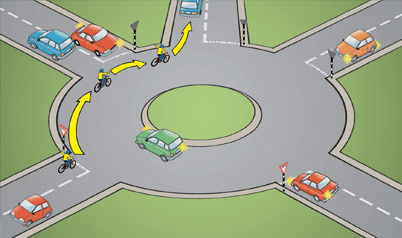 Marilyn was not at her all-forgiving best. She had been in an automobile accident just a few days before we left; she was still badly bruised and was sitting “on the wrong side of the car,” as one does in the UK, and watching cars driving in unfamiliar patterns and heading straight at her door. It was a tough first day. She proposed that we turn the car in and find another way of getting around. I agreed that I would, should it come to that, but I asked if we could try something else first.
 When, some years later, when she was diagnosed with cancer, we had the roundabout process to fall back on. We called our negotiation of the diagnostic marathon, “doing the roundabouts,” and we knew exactly what that meant. It meant an intimate and joint understanding of what we were doing and the full engagement of each of us in some necessary part of the task. And, best of all, we did it on purpose and we knew we were doing it on purpose.
 that lost in the conference finals and met in the locker room to look each other in the eye and vow to trust each other more, the couple that treats a defeat like that has laid the foundation for a successful season. Or a successful program. Or a tradition of winning. Years down the road, some new player will start blaming another for “having lost us the game.” And an older player—ANY older player in that program—will take him aside and say, “That’s not how we do it here.”
 , it functions to protect the staff and it protects the residents and that is why it is good.
 That is, the residents are treated alike because they all share they same status. They are “residents,” the status I stumbled into when I moved here. They are not treated differently because they are so different as persons. And this formal equality is played out as the staff [1] refers to each resident formally as Mr. or Mrs. or Ms. and we refer to them by their first names. There is a status asymmetry, in other words, that is presupposed by the culture and practiced by the staff.
 It’s really just the no tipping rule played out in most forms of face-to-face interaction. Tipping is a great idea in a restaurant because rewarding the staff for extraordinary service is built into the model and works to reward be best servers. There is a very good restaurant within a few blocks of Holladay Park Plaza where there is a superb waitress; I conspire to be seated at one of her tables. She is good at her job and has a great deal of fun in the process and I tip substantially to reflect how well pleased I am. That works just fine in the restaurant setting. It would be just awful at the retirement center.
 within the system, just as the occasional filching of towels from motels is not likely to cause the motel owners to hide all the towels. The behavior of these older residents is, in a sense, the cost of doing business. It is allowable so long as it doesn’t become common.
 The first question we might ask is, “Do you know how you feel?” You wouldn’t know it from reading introductory psychology texts, but emotions don’t come with discrete labels. You feel what you feel, of course, but when you get around to calling it something, you are in the same mess anyone else is. It isn’t quite like the Snickers ad that assures us the we aren’t quite ourselves when we are hungry, but I think the truth is off somewhere in that direction.
 furiously deny that it is true, we are left to our own incomprehensible, unsharable grief. I was told by someone I asked about it yesterday that it was “an arrogant thing to say to another.” [2]
 Here’s the argument. Trump has his heart set on authoritarian control of all the major institutions in the country, not just the political and economic ones. If we just sit back and let him do it, as some self-styled “voices of reason” counsel, we will lose our democratic system and may never get it back. [1]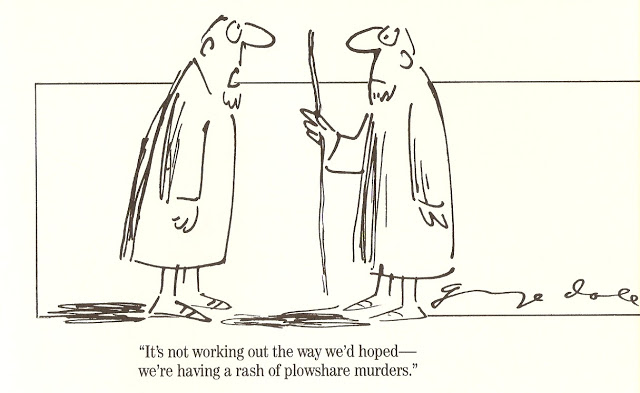
 reading I have done, memories are not “accessed” in the way a filed document is; it is “recreated” each time. One thing that means is that although pulling a document out of a folder—either the paper kind or the electronic kind—doesn’t alter the document at all, recreating a “document” out of the elements of memory most certainly alters it.
 I describe it as a vision so that I can say what the vision was like. All of this is pure invention (except for the obvious debt it owes to Peter’s vision in Acts 10) but it enables me to say that something happened first and something after that, and so on. I say that I saw a great grey filing cabinet [1] coming down from the sky and a voice speaking to me. It might have begun, “Listen up, dummy.” Or not.
 And so on. 2a might be further divided into 2a-1 and 2a-2 by horizontal lines, but that is seldom needed and never very useful. There are, as you can easily see, four major parts to this “chapter;” the introduction and four substantive sections. The first section has seven subsections. The second section has 12, and so on. A, B, C, D provides the “outline” of the “chapter.” Subsections 1—7 provide the “outline” of Section A.
 There is a story I attach to Julian Bond’s first experiences in the Georgia State Legislature. The way the story goes, Rep. Bond was the first black State Representative in Georgia and he wondered whether he would continue to be treated as a pariah when his vote made the difference between a bill passing or failing. He was not. When he carried the passage of a bill in his hand, he was treated the way the bearer of any other irreplaceable resource was treated. He was actively courted.
 use it to draw the threads of this argument together. There is an approach to sociology called “symbolic interactionism.” I got deeply into it in grad school and have profited from it ever since. Here is a line I would like to share from the abstract of a paper presented at the American Society of Criminology. It comes from a paper, the short title of which (the part before the colon) is “Labelling the Labelers,” by Jeffrey Ward. The question is, “What happens to the individual after being labeled?” [2]
 the legislators begin by recognizing that he often voted in a particular way, but they did that for two reasons. The first is that it left them free to argue that he and they had the same goal. Those other votes had to do, according to this strategy, with disagreements about means to achieve that goal, which of course “we all share.” The second is that it frees them to grant that those other votes might have been appropriate, but “this situation is different from those.”
 On the other hand, I live with some people and am related to some others, who think that Trump’s approach is the right way to go. Privately, I call those “misguided hopes.” I assume these people can be talked to if someone on the other side is willing to grant them good motives and to work at showing them that the collateral damage of the movement they are supporting will be unacceptably costly to other things they hold dear. I think I owe them the Julian Bond treatment if there is going to be a time on down the road when we can work together. Besides, they are family and friends, not just fellow citizens.
 (Ellen DeGeneris) and trying to persuade her that his feelings for her are intense. “I’m going to show you how much I love you,” he says as he grasps and breaks his little finger. Martha tries to persuade him not to do it and fails and when he does it, she is horrified. But it was all really clear to him and that is the point I want you to remember.
 He says, “I know there is a guy in science class who keeps hitting on you. To show you how much I love you, I am going to kill him so he won’t do that any more.” Her heart races. “Oh,” she says to herself, “He must love me a lot to be willing to do that for me.” The parents, listening through the window are thinking, “Did he just offer to kill someone to demonstrate the intensity of his love for our daughter?” Was he joking? He didn’t sound like he was joking.”
 dependent populations as opposed to the speeches the Trump/Pence campaign made. The Democrats said that coal is dirty, that getting it out of the ground is environmentally hazardous, and that we need to move to sustainable forms of energy. The Republicans said that coal is wonderful and that people who make their living mining coal are wonderful as are the women who wait hopefully for them to return safely from the mine. We will, the Republicans said, find a way to return coal jobs to the prestige they used to have and to honor the brave men who risk their lives to bring that energy to us.”
 department players, and thought the my President had done something wrong and had entertained feelings of disdain, that would be worth doing. Costly, probably, but worthwhile. You can spare some disdain for members of your own team without doing much harm.
 That means that the Democratic opposition is wasting its time playing defense by using policy. Policy isn’t relevant yet. You beat a political machine by bringing publicity to their operations, by prosecuting them to the full extent of the law, by protecting crucial resources who are vulnerable to threats and threatening people who are vulnerable to bribes. We (Democrats) have to work harder and more consistently and with more discipline than they do and since we represent the majority of the voters so far as political outcomes is concerned, we will “win” in this limited way if we do that.
 This is, as I see it, the Democratic problem. Let’s take income as one example. “Income” is two problems. There is how to have enough of it spread broadly enough to sustain a consumer spending economy. There there is the distribution of revenue, which looks at who has a lot and who has only a little.
 The Dilettante's Dilemma