
Tolerance
June 6
I want you to picture a scene in which a really dumb guy is having his picture taken at the edge of the cliffs of Moher. “I can frame this picture better,” says the picture taker (probably a secret enemy, depending on what kind of movies you are used to seeing) “if you woul d just take one step back. No…one more.” At that point the dumb guy takes that last step back and falls backward off the cliff and dies (saying something funny or something pathetic, depending on the kinds of movies you are used to seeing).
If the dumb guy had asked, “How far back should I go?” he would have saved his life. But then, if he had asked that he would’t have been so dumb after all.
So what’s the difference between those two orientations? One is a direction (“one more step”) and one is a location. There is no way to criticize a direction without reference to a location. You can’t say that tightening up your belt is a good thing unless you know how tight or loose it is now. “Tighten it up” is a direction entirely innocent of location. You can’t say of a direction, “…but it’s too tight now;” nor can you say, “…but if I do that, my pants will fall off.”
Those crucially important protests require a location.
Now let’s talk about tolerance. The idea that some things should be “tolerated” [1] is a di rection, not a location. We are admonished to “be more tolerant” as if tolerance were a good thing all by itself. Obviously, it is not. There is such a thing as too much tolerance, just as there is such a thing as too little.
So “we should be tolerant” is a meaningless admonition. What is it we should tolerate? How long should we tolerate it? This is all obvious is you are willing to take the belt as the master metaphor. “Tighter” and “looser” (directions) make no sense at all by themselves, while “too tight” and “too loose” (locations) do make sense.
The person as agent
Then there is the question of the agent. Just who is it who is being asked to be more tolerant? Is it a person, as in “You should be more tolerant,” or is it society as a whole [2] as in “We should be more tolerant?”
I have treated this question so far as if the content can be filled in later, but most often in the U. S. today, the context of social morals or religious beliefs or immigration is presumed. Someone who thinks we would all be better off if we followed more conservative moral guides or had more orthodox (Christian) beliefs or had fewer unassimilable immigrants will be urged to be more tolerant. This person will respond by saying that those who are criticizing him are too tolerant already.
Let’s follow the tolerant person case first. The belt metaphor leads us to  ask, “How much more tolerant should I be?” Or, to revert to the “carry” meaning of the Latin source of “tolerate,” how much longer must I carry this burden. (Or, alternatively, how much heavier a burden should I carry.)
I don’t remember ever hearing a good answer to this question. [3] I have heard, “It won’t be as onerous as you think.” I have heard, “It’s the right thing to do and whatever the costs to you, they should be paid.” I have never heard, “I think it would not harm you to be a little more tolerant, but not too much or the costs will begin to escalate.” That sounds like something a friend might say; maybe a counselor.
Society as agent
Maybe things will be better if we look at society as the agent, as in “we” should be more tolerant. “How much more tolerant should we be?” is one of the two questions that come immediately to mind. “Tolerant of what?” is the other.
The laws we have are instructions about what kinds of things we should not tolerate. This is played on by people who say of an action that is challenged, “It’s not illegal.” There are widespread conventions that urge against things that are not illegal but that are, nevertheless, said to be wrong. No one argues that we should be tolerant of those things although, considering direction only, there is no reason we should.
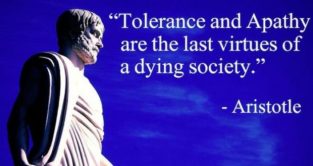 For a society, the question worth asking is “What will happen to society if we tolerate this?” And one possible answer is that it will lose its ability to function. Societies are ongoing propositions. They need to be affirmed and supported and criticized every day and when any of those things fails, the future of that society begins to dim. It is that perspective that Aristotle has in mind in the quote I am showing here. When people withdraw from society as if it will run itself, the society begins to come apart.
This brings us to the belt metaphor one last time. A society can be too tolerant if it tries to carry things too heavy for it and collapses. We will say it is too tolerant if it tolerates the wrong things. We will be wrong, but you get the idea. A society can be too intolerant when it does not carry differences it ought to carry. People will leave such a society if they can or subvert it by opposition either overt or hidden. That society isn’t going to make it either.
I think we would all be better off if the question of how much we can afford to tolerate were brought to the front. People who are already committed to the intolerance of something or other (race, sexual identification, dangling modifiers) will not want to be asked just how much is too much. And, as a matter of fact, there will not be a certain answer to the question.
But I am quite sure we would all be better off if we asked it.
[1] Literally, to be “carried,” from the Latin verb tollere, “to lift up.” Ordinarily, we say things can be borne (or not) and I think the archaic form (bear instead of carry) masks what it costs to carry it. If I said, “How long do I have to carry it?” it would tie back to the cliffs of Moher instantly.
[2] Or any organization within a society. A church might, for instance, decide that they should be more tolerant or less tolerant.
[3] Trying to remember. On the other hand, I’ve had this question in mind for less than 15 minutes.
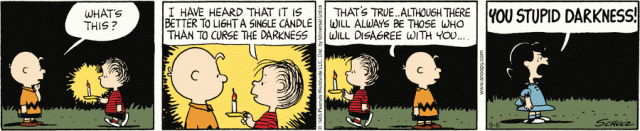 On June 2, Bill led with this cartoon and a sustained argument against “darkness cursing.” I feel a lot of the same things Bill feels, but when I read the column, my mind went off in a different direction. So, with my thanks to Bill for a good column, I would like to pursue that other direction this morning.
 private and public. And when I had gotten that far, I heard George H. W. Bush’s “thousand points of light” speeches (one in accepting the Republican nomination and one in his inaugural address) in which he advocates private activity rather than public (political) activity. Or possibly local rather than national.
 I am loading these examples in favor of cursing the darkness, but if cursing is all you do, it is even less effective that lighting a candle. The question the private response/public solution formula gives us is this: what do you do if the only meaningful resolution of the issue is systemic. No changes, in other words, that are less that systemic will help. Unless something like this assembly of candles means something.
 peace between Protestants and Catholics. [1] Orange is a color that has been associated with Protestantism every since William of Orange defeated James II at the Battle of Boyne in 1690. [2] Green has represented Irish republicanism since March 7, 1848, when it was flown over the Wolf Tone Confederate Club in the city of Waterford by Thomas Meagher. [3]
 We could try to finesse our way out of it. Here is the flag of France. The blue band is on what they call “the hoist side.” According to my quick review of the flags of the world, there is no flag with these colors in this alignment where red is on the hoist side. That would make the new U. S flag unique in the very narrow sense of the word, but you would have to look really hard to see which nation is being represented, and that’s not a good thing for a country’s flag. [4]
 If the flag were to represent liberals and conservatives, it would be representing words that have been with us for a long time, even though the meanings of the words have varied with the times. If the flag were to represent left leaning and right leaning parties, it would, again, be using words that have been with us for a long time—since the French Revolution, in that case.
 If none of those is familiar, I urge you to stop reading right now and go to the New York Times opinion column by Sarah Vowell, which has one of the best opening lines I have seen in a long time: “Greg Gianforte doesn’t represent this state. O.K., he does now, but you get what I mean.” This is not a picture taken at Holladay Park Plaza. We use tablecloths.
 true in the narrow sense. We have paid for those meals and that money is gone. You don’t get any back by not eating all thirty meals here. Getting a refund really would be “saving money” but that’s now how it works. On the other hand, when you set aside what you would really rather do, you are also wasting a valuable resource and you don’t get those opportunities back at the end of the month either.
 If the choices I made are to be embedded in my personality, so that I am expected by those who know me, to make choices based on a well-known standard—“Isn’t it just like him to…”—I would rather not use a standard that I market as being a cheapskate; I would rather be known as a hedonist. For one thing, the outcome of the cheapskate rationale is always the same. Use 30 meal credits a month. But the outcome of the hedonism rationale could vary a good deal from one circumstance to another.
 s/Venus books. She thinks you have committed an offense of some kind. You would like to explain that you have not, but she is miffed and won’t hear anything you say until you apologize. So apologize. Then you get to say the thing that needs to be said.
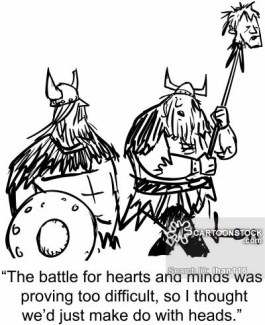 So if the Democrats’ problem is a hearts and minds problem, how do we reach the hearts and minds of the abused and ignored low income voters? They are, as I see it, the only part of the Trump constituency to which the Democrats have access. Besides that, they were part of the the original Democratic coalition.
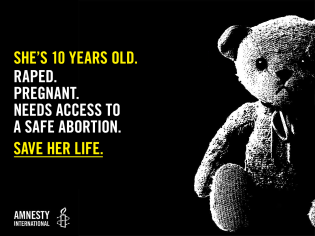 That’s not a hearts and minds view. The actual politics of providing or refusing abortions is complicated by the federal system, which requires the Supreme Court to tell the states what they may do and what they may not do. The Court cannot say that abortion is acceptable if there is a good reason and otherwise it is not. But Democrats could say that. That’s the position President Clinton was widely understood to support when he said that abortions should be “safe, legal, and rare.” That is not a criterion the law can live up to, but it could be the rhetorical home of the Democratic party.
 President Bartlet has been on edge since his daughter Zooey was kidnapped and held for ransom. She was found and rescued, but the event left Bartlet shaken and his marriage in tatters. Going to Oklahoma to “serve people” was what he wanted to do more than anything and he found it so rewarding that he wanted to keep on doing it.
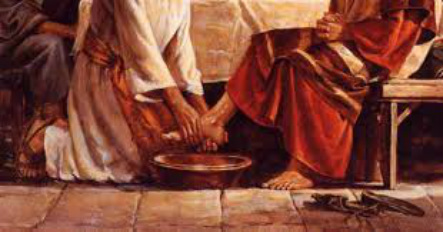 duties of a servant rather than to compete with each other to be the top dog. As always, you get real clarity when you specify the opposite of what you are trying to say. When you say, “Not this, but rather that,” you have made the meaning of “this” much clearer. So it is with “serve others” and “rule over others.” Look at the alternatives in this passage from Matthew 20:
 When he agreed to go back to being President of the United States, he agreed to take on the authority that being of service required of him. Flying back to Washington in Air Force 1 doesn’t look humble, but on this occasion, that is exactly what it was.
 Of these roles, which is best characterized as “serving others?” Neither, if you follow my argument this far. The person who is a natural leader, but who lays those preferences aside to take up the role of healer, is serving others. And so is the person who is a natural healer and takes on the role of healing the casualties that are the natural part of the small group process. It costs the leader more to serve as a healer. If you count his willingness to pay that cost as meritorious, then he has more merit. But he has not served more or better than the person to whom it comes naturally. The confusion I am trying to oppose is graphically represented in this cartoon.
 I first began to be interested in this passage when I noticed that the New Jerusalem Bible (my favorite) has a translation of “knew” that was new to me. Like everyone other Protestant my age, I grew up with the King James Version, which has: “Lord, I knew thee that thou art an hard man…” [2] The Revised Standard Version has a modern version of the same sentiment: “Master, I knew you to be a hard man.” This is something the servant knows to be true and it attaches to the character of the master and is evidenced by the master’s repeated actions that support it.
 It would be asking a lot to ask that the servant put his master’s interests ahead of his own and I am not asking that. I am saying only that if “avoiding punishment” is the servant’s own top priority, then information about what kinds of activity the master will punish is very important. Instead of that, the servant relies on “I had heard.” That doesn’t sound like risk aversion to me.
 The servant is the recipient of his master’s money and the name of the game is investment and profit. I can see that Matthew would have a good deal of interest in that. Matthew would have been troubled by people who “wanted a little piece of Rabbi Jesus’s kingdom” but who wanted to pretend that no obligations went with that “little piece.”
 You could, of course, wish that you had not been given the gift and all the obligations it carries with it. I think about Frodo, who, when he discovered what “Bilbo’s ring” really was and the burden it was going to be to him, said, “I wish it need not have happened in my time.”
 is green, as all Notre Dame fans know, the official color of Ireland is blue. I didn’t know that. The official symbol of Ireland is the harp and I was just playing around when I added the (s) to “symbol of Ireland” because Guinness has great popularity in Ireland and all they had to do is to reverse the direction of the harp. Note the direction of the harp in these two images.
 The harp has been a traditional Irish instrument for a very long time, but I think it has a special status because the English domination of Ireland included a determination to obliterate Irish culture and playing the Irish harp was declared to be a capital crime. When I saw the intensity of Ireland’s love of its harp and of traditional Irish music generally, I realized I was seeing more than just a tradition-loving people. I was seeing an indomitable people.
 not prepared to have–not, everybody assured me, “like the Celtic Tiger years of the 90’s–and a stable socialist democracy that is not dependent on England. It is dependent, however, on the European Union (EU), which funded the Celtic Tiger 90s, and Irish news pays a great deal of attention to the EU. I heard speculation of what the EU flag would look like –the ring of stars on a field of blue–when the U. K. withdraws. There may have been just a little glee mixed in with the speculation.
 When I travel, I am often taken by signs that catch my interest. I had never heard, for instance of the earliest written Irish script, called Ogham (and pronounced ōm). It is just a series of lines representing letters of an alphabet. But that makes this sign in Dingle–Chinese take-out, no less–a four-language sign. Even in Ireland, where two languages per sign are common, this was worth a good laugh. [1]
 There is nothing at all subtle about this statue of Molly Malone in Dublin. It was hard to get a picture of just her–people wanted to have their pictures taken with her as background and who could blame them. On the other hand, if you know the traditional Irish song “The Rose of Tralee,” this picture might catch your fancy. This (see footnote 2) is a rose IN Tralee. We stopped there for dinner on our way back to Adare and I couldn’t resist it.
 I saw more redheads in Ireland than I have ever seen at one place. There was an attempt in Portland to break the Guinness (!) Book of Records for the most redheads in one place and one time and I contributed my redhead to that cause, but I didn’t actually see the gathering itself. It will not surprise you that there are a lot of redheads in Ireland, but this one, in Ennis, is named Éowyn and I sincerely hope there is a Faramir somewhere in her future.
 me all that much because I am, after all, from Oregon and we do green as well as they do. [3] But nothing in Oregon suggests the division of all that green into very small plots of land marked by rock walls or, as here, by hedges, and you see that all over the parts of Ireland (south and west) we saw.
 sources. “Culture” is just things everyone knows and the elements of it don’t come with labels attached. I got a quick lesson in Ireland about how very much of “my culture” is Irish.
 Here’s an example from Genesis 38, the story of Tamar, who is one of my favorite biblical characters. The story of Tamar and Judah, her father in law, is not the easiest story to grasp because it requires an understanding of levirate marriage. [2] Our students were perfectly ready to approve of God’s commands that we should not steal, lie, or kill. God’s commands that the younger brother should mate with the widow of an elder brother was not as easy to approve. It is, however, the basis of the story of Tamar and Judah.
 Let’s pause for a moment to appreciate how difficult and unappetizing this is. We are asking them to grasp a truly foreign concept—levirate marriage—and understand it as part of God’s covenant with Israel. It is, in other words, binding. And having grasped this concept, to care about it; to see why it would have mattered so much to the writer. On the other hand, there is nothing at all foreign about a woman seducing someone else’s husband, as Tamar did—and her father in law, no less. But to stay with the writer and his values, you have to set aside your own condemnation of Tamar’s behavior and see her as going to great lengths to achieve the goal God had in mind. [4]
 of church organization that followed from the Hellenized Jews who first followed Jesus, rather than the kind of church organization that followed from the Hebrews who first followed Jesus. From the split that Luke describes, two entirely different approaches developed and if you are inclined to doubt that, I recommend that you read the book of James, then the book of Galatians. I am reminded here that in our little church in Englewood, Ohio, we used to sing a hymn called “The Church in the Wildwood.” Possibly this woman in on her way to that church.
 If you start with how it must feel to have someone tell you that you should not dress the way you want and have your hair the way you want, much less that you should defer to the authority of “a man” just because he is a man—you arrive at a completely modern and understandable and unscholarly anger. But you can choose not to start there. (You probably cannot choose to ignore your feelings altogether, particularly when you begin to apply it to our own times.) But you can choose not to start there. You can choose to start with the situation the writer faced.
 more more clearly and to evaluate it more thoughtfully. In a way, I am not the ideal person to do this. I am, I need to say, a fan of TWW—the kind of person who was referred to in the chatrooms as a “wing nut.” I participated in the chatrooms. I taught a university course about the West Wing. I own the DVDs of all seven seasons and I do, in fact, refer back to the issues that are raised more urgently and ominously in the Trump administration. [1]
 I’d say there is no blood in that one at all. But it does launch some criticisms. “Fantasia” is not entirely clear, but the relationship with “fantasy” not at all obscured. And the fantasy is founded on “shibboleths” [3]—inside code words that establish membership. These same shibboleths sustain “Beltway liberalism.” By the way, “Beltway” is the adjective of death. Nothing good is modified by the adjective “Beltway.”

