
I’d like to invite you to see one of the most thought-provoking movies I have seen in a long time. It is The Book of Henry, directed by Colin Trevarrow. If you are going to see it, you might want to do it before you read any of the reviews. But since you won’t do that, allow me to present some of the more poignant passages from the first four reviews listed in http://www.mrqe.com [1]
Manohia Dargis of the New York Times
A weepie, a thriller, a tragedy, a sub-Spielbergian pastiche, “The Book of Henry” is mostly a tedious mess.
John DeFore for The Hollywood Reporter
The preposterousness of Gregg Hurwitz’s screenplay isn’t enough to throw star Naomi Watts off her game, and the actor’s sincere performance may suffice to keep a segment of the family-film demographic on board, barely.
Susan Wloszczyna for the RogerEbert.com
For much of the film, I focused on the young actors (even Ziegler shows signs of having performing chops beyond her dance skills) and savored the few moments of dry humor—such as when Henry describes his own diagnosis in great detail and in complex medical terms to his shocked brain surgeon. But every book needs an editor, and there really is no upside in threatening to turn Watts into a mommy assassin. That doesn’t just make Henry look stupid, but his movie, too.
James Berardinelli for ReelViews
If you look hard enough, it’s possible to find worthwhile elements in The Book of Henry, an overwrought, tonally inconsistent drama about cancer, death, and child abuse.
OK, that’s what they say. Here’s what I say. I have never seen a movie with the guts to portray social action based on a child’s empathy in the way The Book of Henry does. And they give you no clue at all that they are going to have the chops to do that. At least, I didn’t pick up any clues. So when they drop the bomb—the stunning and satisfying reversal of everything we have come to expect–I ran into it like a glass door. [2]
So of all the themes I could choose from this movie—which I am sure is not going to be in the theaters very long because the critics were very nearly unanimous in their dismissal of it—I am going to choose the strengths and weaknesses of Henry and his mother. You don’t ever see these at the same time, by the way. When Henry is being strong, his mother is being weak.
Plot
I’m going to tell you everything that mattered to me about this movie, so some of you are going to check out now. Tell you what. Go see the movie and come back and read this.
 Susan Carpenter (Naomi Watts) is trying to raise two small boys: Henry (Jaeden Lieberher) and Peter (Jacob Tremblay). Peter is a perfectly normal little kid, which means he has to come somehow with the fact that Henry is a genius and a competent manager of events and a superb caregiver and an action-oriented empath. Something is fundamentally wrong with Susan. We never find out what it is, but it keeps her in the dead end job she has as a waitress, it keeps her from writing and illustrating the children’s books, for which she has a real gift. It does not keep her from playing war-themed video games.
She puts her two boys to bed every night in a very loving way, but that’s about the limit of her parenting skills. In terms of managing an adult life, she has no skills at all.
Next door is a beautiful girl, who is in Henry’s class at school, and who lives with her stepfather, who is a beast. He has taken, now, to physical abuse. Maybe sexual abuse too. The bruises and the trips to the emergency room and the suddenly listless attendance at school that are all to familiar to social workers are all part of her life.
Henry has tried everything he can to get the authorities to intervene. Nothing ha s worked. So when he dies suddenly—sorry to just drop it in like that—he leaves behind the red notebook you see him with in the picture. This is the Book of Henry. In it, he argues very powerfully that his mother’s job now is to murder the stepfather, having already fraudulently produced a document that says in the event of his death, he would like Susan Carpenter to have custody of the stepdaughter.
Henry has left nothing to chance. He has figured out where his mother can buy the rifle with the scope and silencer, how she can get rid of the evidence, how she can establish a cast iron alibi. From a technical standpoint, Henry’s performance is even more impressive than anything he achieved during his life.
How to be the mother of a superhero
They don’t tell you that this is what the movie is about, but this is what is was about to me. Susan can’t support the family financially, but Henry can and does. He plays the stock market brilliantly. She can’t commit herself to her own artistic talent. She can’t use her time in any meaningful way. She can’t keep the insurance current or pay the bills. She defers to Henry about all those things and Henry comes up a winner in everything. Henry is, in fact, the adult in the family.
And then he dies. And in the Book, he leaves his mother a lot of really difficult things to do. She gets the evil stepfather to sign a document (any document) from which his signature can be forged. She faces down a corrupt arms salesman with a toughness we did not expect from her. Henry wrote all the lines for her, but she delivers them convincingly. She lays out the ambush and establishes the alibi and then, with the villain in her sights, she says No. In fact, she says in her internal dialogue with Henry, “No. You are just a child.” [3]
She’s right. From here on, I want to pursue three things. Two of them are about Susan Carpenter. The other is about the movie itself—which probably means it is about director, Colin Trevarrow.
Susan 1
It is by following Henry’s posthumous instructions that Susan becomes a fully functioning adult. I know that sounds odd. She lived by Henry’s gifts from the beginning of the film. What we see is Susan as a parasite on Henry’s competence. But in setting out to make his mother a murderer, Henry knows he first has to make her competent. It is by accepting his arguments and following his instructions that Susan acquires a sense of herself. The picture below puts the point to Henry’s instructions: “Never leave things undone.” It also shows (far left) the abused little girl next door.
 In fact, the best Susan Line is not “No, you are only a child.” Her best line is just afterward, when she leaves the shelter from which Henry’s ambush should have happened and tells the stepfather that she knows everything about what he has been doing and that she will see to it that he pays the price. The evil stepfather is also the local chief of police, so the likely consequences of saying this are ugly. He waves her off and starts to leave. She orders him to stop and turn around and face her and when he does she gives her best line—the best Susan Line: “I just wanted you to see who you’re up against.” Amazing!
Being up against the person she was before Henry’s death would have been a piece of cake for the Chief. But who is this, speaking his doom with power and certainty?
Susan 2
The movie leads us to believe that Susan is uncaring or weak-willed. We see Henry and Susan and Peter in a grocery store, watching an ill-mannered bully humiliate his wife in public. [4] Henry starts to go over to the couple to “do something.” Susan calls him back. Henry says that what they are seeing is wrong and that “something should be done.” Henry is good at “something.” Susan tells him “It is none of our business.” Which is probably true. It is not true about the abuses going on next door, but no one knows this couple and no overtly violent actions are taken. It could be just the way they fight as husband and wife; something Susan knows a good deal more about than Henry does.
Henry rebukes her, “What if everyone said that?” [5] She has no answer. There is no good answer. A good answer would require context. It would require a consideration of side-effects. It would consider what other tools were available. It would consider the systemic implications on a basis beyond that of individual actors. None of those are what this movie is about. This scene is here to show that Henry is a Moral Superhero as well as a genius and that his mother’s failure to intervene is only another aspect of the hapless life she lives.
Director Trevarrow
I am going to assume that this movie—the one I saw—is built around the point I am about to make. Here’s what it is. I don’t remember ever before seeing a character take Henry’s position, only to see it and him rejected. I have seen “failures to intervene” shown to be cowardly or, at the very least, as failures in empathy. I have seen good-hearted, but ill-considered actions, produce really awful consequences for which the agent can only say, “I’m sorry. I didn’t know it would turn out like that.” Those two lessons sum up my moviegoing experience on this point.
I have never seen an adult like Susan reject the actions urged upon her on the grounds that they are childish. “Extreme empathy,” like nearly everything else called “extreme,” is a good thing. How can it be wrong if it proceeds from the awareness you have of the suffering of another? That’s the film lesson. How can it be right to refuse to intervene when you see someone behaving badly in public? That’s the film lesson.
Until this film.
Susan follows Henry’s wisdom about the checking account and the insurance policies and Henry seems to have the upper hand on the social situations they confront—both the ongoing tragedy next door and the scuffle in the grocery. So we are completely unprepared—even Bette didn’t see it coming—for Susan’s rejection of murder as what she should do AND for her condemning the his urging as childish. “You see things as a child sees them,” she says to Henry in effect, “but I am an adult and I will follow my own wisdom.
 I think that to appreciate the power of Susan’s renunciation of Henry’s thinking—not just of the conclusion Henry reached but the simplicity of the route he took in getting to that conclusion—you have to appreciate how attractive intervention is made to seem. The stepfather next door is a brute and the girl who lives with him is completely helpless. The husband at the grocery is a jerk and “deserves what he gets.” That’s the way the narrative is set up. There is no anxious wrestling with the consequences of other possible choices.
None of that. Everything is set up to follow Henry’s plan until his mother says “No.” And grounds that “No” with, “You are just a child.” That’s where the power comes from. The moviegoer is urged to retrospectively reject Henry’s approach, which seemed so appealing at the time, and which we are now asked to see as “Childish.”
I hope that is what Colin Trevarrow had in mind. I really think that is the bone the reviewers are picking at, whatever the particulars are in their reviews. Trevarrow said No to the engaging empathy of an appealing child and he put that rejection in the mouth of a person whose record had not been that attractive up to that point.
[1] The Movie Review Query Engine, which I highly recommend as a source of movie reviews. There were 50+ reviews of this movie on the site.
[2] Pay It Forward, which was a much better movie in most ways, was not able to climb this particular hill. Trevor, the principal character, was deeply empathetic, like Henry, and also a tyrant, like Henry. But Pay It Forward doesn’t say that.
[3] That may seem an odd way to say it, but Henry’s instructions, now that we are down to the actually killing, are no longer represented as pages in a book, as the earlier ones were, but are delivered in Henry’s own voice.
[4] That’s how I read it. I might have gotten some of the details wrong, but I got the scene right.
[5] In Western philosophy, with which Henry might have been thoroughly familiar, we trace that test back to Kant: “act only in accordance with that maxim through which you can at the same time will that it become a universal law,” or “act as if the maxim of your action were to become by your will a universal law of nature.”
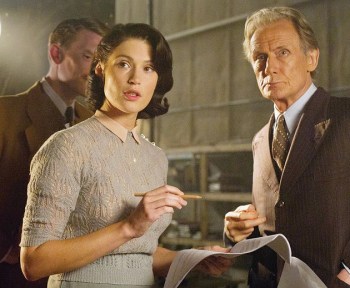 Both plots are there, but the movie can’t be “about” both of them. What to do? There are two early scenes that offer beginnings to this story. In the first, a [2] loutish husband sends his wife off to make enough money to pay the rent. In the second, a group of British moviegoers watches a truly terrible propaganda movie in a theater. If the last scene matches one or the other of those in the way a second parenthesis “matches” the first, then I would say that inclusio is in play and decide in favor of that theme.
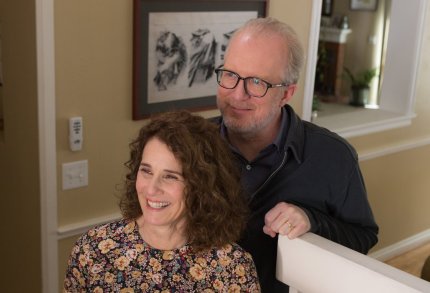 So let me tell you what the last scene means. Michael and Mary are lovers, which is just a little odd, since they just recently divorced and married other people. The people they married Robert (Aiden Gillen) for Mary and Lucy (Melora Walters) for Michael, were their lovers when they were married to each other.
 Historically, Reason was contrasted with Authority, particularly the authority of the Catholic Church, as an alternative basis for society. I don’t think that is the best set of alternatives for today, but even that set is suggestive. Consider, for instance, that “God says everyone shall be paid enough to live on.” We might even throw in “Thou shalt not muzzle the ox that treads the grain. Deuteronomy 25:4 and several New Testament citations). We would say that this is ordering society on the basis of “revelation,” as the Church understands what God is commanding. That is not rational in any narrow sense of the term. [3] On the other hand, the market system isn’t rational either. “People will be paid whatever employers are forced to pay them to insure for themselves a skilled and stable supply of labor” is not rational. Even in an un-distorted market it would not be rational and no one thinks that the current market for labor is “un-distorted.”
 This meets the broader standard of “rationality” you will notice—the one that was met by saying that doing what the Church said God wanted you to do is “rational”—although it does not meet the narrower standard.
 am thinking of it as analogous to the death of the canary in the coal mine, which is a major event for the canary, but for the miners, it is only an indication that things are not safe. But we have decided, apparently, to vote with our hearts, not our heads. And we have decided not to elect someone who will do what the office requires, but instead to take actions that make us feel good. And we have decided that words and acts—anything, really—that shows how angry we are is all we will require of the person we choose to organize the domestic economy and to deploy the military. That is how the majority that chose Donald Trump was assembled.
 “Jews.” [2] The interviewer’s first question had to do with Franken’s home town, a suburb of Minneapolis called St. Louis Park. He observed that a lot of other famous and accomplished people came from that same little suburb and asked Franken what was special about it. “Jews,” said Franken. Great line; great timing; great delivery. The whole place went nuts. [3]
 I know what it costs me, for example, to walk by the expression “your analysis” pretending that I did not also hear it as “urinalysis.” Or to bypass “gray day eggs,”you know, the really large ones, which were apparently laid on overcast days. Or to ignore the liabilities of the Taipei personality, very common in Taiwan, I understand, but associated with vulnerability to heart attacks. I went to see a new doctor last week, an ENT and he hadn’t read Lord of the Rings and I had to just stuff all the Ent jokes for nearly an hour.
 And most of the time it doesn’t matter at all. It makes a better story that way and all the “facts” that really matter are still what they were. No harm, no foul, we say. And that may be true. In that telling.
 mind during this shower. Things like this have happened before, so I wasn’t startled by it and I didn’t rush out of the shower to write it down because I knew I would remember it, like Poincaré’s Conjecture, which came to him as he was getting on a bus and which he didn’t bother to write down until the end of the trip. [3]
 Raymond E. Brown, the Catholic scholar whose lectures and books are very likely the ultimate source for whatever it is that happened in my shower this morning, has a different image of this unity and multiplicity. He imagines that the life of Jesus is like a jewel, whose multifaceted beauty cannot really be fully appreciated until it is seen from all sides. One facet is featured as you look at it from this side; another facet when you look at it from another side. (An-other side, not as we often say today, “the” other side.)
 the significance of Jesus—is a little more aggressive than Brown’s notion of the multifaceted jewel. When, in Brown’s metaphor, you don’t appreciate all the facets, you miss part of the beauty. When, in Hess’s metaphor, you don’t use all the chair’s legs, you get dumped unceremoniously on the floor. So, this notion that came to me this morning is a notion with, as they say today, “an attitude.” It is a response to something.
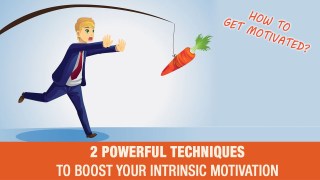 You would think that a rewarded action would be more likely to be repeated than an unrewarded action, and that is certainly true, but how on earth would we know whether an action was rewarded? In the neighborhood where I lived for a long time, there was an old man who walk around with rubber gloves and a plastic bag and picked up trash. It wasn’t his job. He wasn’t paid for it. So far as I know, he wasn’t thanked for it very often. Was his action rewarded?


 one thing from another. It’s a harvest metaphor, so if your mind runs to separating wheat from tares, you are thinking along some very old lines. Also you were raised reading the King James Bible.
 “My kind” is an answer that rejects the notion that there are a few recognizable kinds. And that brings us to the question of how important “kinds” of feminism are. For that, let me take you to Emily Bazelon’s
  But there is another kind of feminism, which Bazelon says commentators have labeled “commodity feminism.” [2] I have more commonly heard it called “lipstick feminism.” It is another “kind” and it is the kind Pamela Frable likes. She seems to have put Hillary Clinton up against Ivanka Trump as alternative visions of where this nation might go and to have chosen Ivanka.
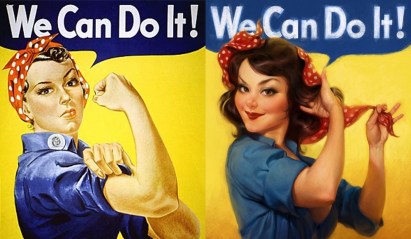 recognize some women as feminist and others not and also to claim women who are pursuing that understanding of feminism as sisters, then it will continue to be powerful as a movement. “We” will refer to “other women who are feminist in the same way I am.” There is no reason to refer to the approach of other women as “wrong,” only as misguided. “We,” my sisters and I, can show them a better way. I think feminism as a movement will require distinctions that function in that way. If the women in this picture call each other “sister,” the movement model will continue to be powerful.
 d just take one step back. No…one more.” At that point the dumb guy takes that last step back and falls backward off the cliff and dies (saying something funny or something pathetic, depending on the kinds of movies you are used to seeing).
 rection, not a location. We are admonished to “be more tolerant” as if tolerance were a good thing all by itself. Obviously, it is not. There is such a thing as too much tolerance, just as there is such a thing as too little.
 ask, “How much more tolerant should I be?” Or, to revert to the “carry” meaning of the Latin source of “tolerate,” how much longer must I carry this burden. (Or, alternatively, how much heavier a burden should I carry.)
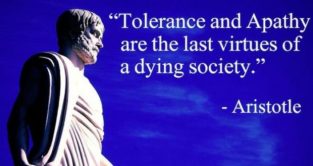 For a society, the question worth asking is “What will happen to society if we tolerate this?” And one possible answer is that it will lose its ability to function. Societies are ongoing propositions. They need to be affirmed and supported and criticized every day and when any of those things fails, the future of that society begins to dim. It is that perspective that Aristotle has in mind in the quote I am showing here. When people withdraw from society as if it will run itself, the society begins to come apart.
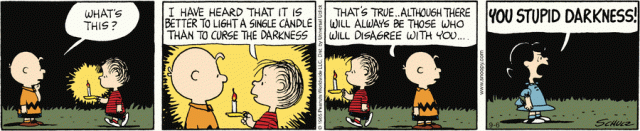 On June 2, Bill led with this cartoon and a sustained argument against “darkness cursing.” I feel a lot of the same things Bill feels, but when I read the column, my mind went off in a different direction. So, with my thanks to Bill for a good column, I would like to pursue that other direction this morning.
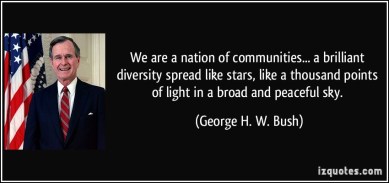 private and public. And when I had gotten that far, I heard George H. W. Bush’s “thousand points of light” speeches (one in accepting the Republican nomination and one in his inaugural address) in which he advocates private activity rather than public (political) activity. Or possibly local rather than national.
 I am loading these examples in favor of cursing the darkness, but if cursing is all you do, it is even less effective that lighting a candle. The question the private response/public solution formula gives us is this: what do you do if the only meaningful resolution of the issue is systemic. No changes, in other words, that are less that systemic will help. Unless something like this assembly of candles means something.
 peace between Protestants and Catholics. [1] Orange is a color that has been associated with Protestantism every since William of Orange defeated James II at the Battle of Boyne in 1690. [2] Green has represented Irish republicanism since March 7, 1848, when it was flown over the Wolf Tone Confederate Club in the city of Waterford by Thomas Meagher. [3]
 We could try to finesse our way out of it. Here is the flag of France. The blue band is on what they call “the hoist side.” According to my quick review of the flags of the world, there is no flag with these colors in this alignment where red is on the hoist side. That would make the new U. S flag unique in the very narrow sense of the word, but you would have to look really hard to see which nation is being represented, and that’s not a good thing for a country’s flag. [4]
 If the flag were to represent liberals and conservatives, it would be representing words that have been with us for a long time, even though the meanings of the words have varied with the times. If the flag were to represent left leaning and right leaning parties, it would, again, be using words that have been with us for a long time—since the French Revolution, in that case.
 The Dilettante's Dilemma