
“Why do we limit the emotional vocabulary of boys?”
In this piece from the New York Times, Andrew Reiner collects some recent research about how infant boys and girls are treated differently. He cites quite a range of research and not all of it seems to fit together. It may well be that this opinion piece is a chopped up version of a longer essay. I have had that happen to me and I am prepared to be sympathetic. Or it may be that he has a critique in mind—the one with which I have begun this reflection on his column—and that he is just grouping around it the research that comes to hand.
I am quite sure that “we” in the question includes teachers like himself. I am reasonably sure that by “limit,” he means that without the actions he and others take, the “emotional vocabulary” of boys would be richer. I suspect that if the “emotional vocabulary” of boys were “richer,” it would be very much more like that of girls.
So then I wonder why that would be a good idea.
Grieving Styles
I come to this question by a devious and personal route. My wife, Marilyn, died in  2003 and I had the kinds of grieving difficulties men have when their wives die. One of the difficulties was confusion. A lot of the things that were being recommended to me didn’t seem to help. Some of them made everything seem worse. That’s why I was confused.
I heard an interview on NPR with author Kenneth Doka, co-author with Terry Martin of a book now called Grieving Beyond Gender: Understanding the Ways that Men and Women Mourn. Doka was saying in this interview that the work he and his co-author had done showed that men and women very often grieved differently. That didn’t surprise me.
Then he said something that did surprise me. He said that the style more commonly used by women—they call it the intuitive style—is also the gold standard among mental health counselors. So if a man is grieving, he has a grief problem to deal with. If he sees a counselor who tells him how he should be grieving, laying out the common elements of the intuitive style, then, Doka said, he has two problems.
Not only is he grieving, but he is doing it wrong.
They call the style men more frequently use, the “instrumental style.” Just hearing Doka describe the kinds of things that many men do with their grief and how helpful they have found it made me relax. Some very large, very intimate tension inside me just gave way at that point. I was so grateful that I went out and bought the book and read it three or four times.
And that is why when I hear lines like “expanding the emotional vocabulary of boys”—which might very well be a good thing once the “How far?” question is answered—I think of my experience with the intuitive and instrumental styles of grieving. [2]
Expressing and suppressing
There are three ways to frame this problem.
- You can say that there is “a right way to do it.”
- You can say that gender styles are too tight (rigid) or too loose (unclear).
- You can say that a particular person should think about gender and emotions differently, that he or she would be benefitted by emoting, lets use that as an example, differently that he or she does now.
Just to shape of the contours of those dilemmas a little, let’s try to imagine what questions they offer us.
- The first setting can be illustrated by saying that suppressing emotions is a bad thing to do. Note that that instance bypasses both the gender-appropriate and the person-appropriate forms of the question. Here’s an example from Reiner’s article.
“…Harvard psychologist Susan David [says]: “Research shows that people who suppress emotions have lower-level resilience and emotional health.”
That may be true. “Suppress” is hard to be sure about. “Suppress” means that an emotion is experienced and prevented from expression. Nothing here says that boys, for instance, who are judged to be “over-expressive” have better emotional health. Nothing says that Charlie, the boy himself, would benefit from suppressing his emotions more or less. Both of those question are bypassed.
- The second way of framing the question is saying that gender roles are too narrow—or alternatively, that the boundaries are too rigid. Clearly, “limit the emotional vocabulary of boys” falls into this pattern. The implication is that the emotional expressions of boys would naturally be broader—i.e. more like those of girls—except for the “limiting” that is done. Most of the studies cited in Reiner’s piece are about how such limiting is done. He does a good job, I think, of posing that question.
 But there is the matter if whether that is the best question to pose. In posing this one, he bypassed the other two question we are keeping in mind. The first is whether “broad allowances for emotional expression” are good for people. In focusing on the possibility that these limits are bad for boys, Reiner bypassed the question of whether people in general are benefitted from rich and unconstrained emotional expression. If that were true, we would expect to find that cultures that presuppose free and unfettered emotional expression would be healthier than cultures that do not. I am not aware of any research that holds that to be true, but I will keep my eyes open.
Then there is the question, also bypassed by Reiner’s choice, of whether a particular boy would be benefitted. If Reiner were a counselor, rather than a professor, his job would be to look after the well-being of his client. Some clients will need to be taught better control, some greater spontaneity, and some finer discrimination between one social setting and another. Under no circumstances should Counselor Reiner allow Professor Reiner to dictate how he handles his clients because clients have such a distressing tendency to differ from each other.
- Finally, there is the question of whether any particular boy would benefit from “a richer emotional vocabulary.” There is no way to deal with this question abstractly and I don’t criticize Reiner for failing to deal with it. I mention it here only because asking it bypasses the other two questions. We cannot begin with a particular boy in mind and ask whether people are healthier if they are more expressive; nor can we ask whether the gender-based expectations for emotionality are too broad or too narrow for boys.
Should boys (men) be different from girls (women)?
My own answer is that they certainly should, but the question isn’t very often asked that way and you will notice that Reiner does not ask it that way either. He asks whether boys would “benefit” from an array of emotional expression that is more like that of girls.
This is a question of the second kind as I explored the three above. It does not ask what is good for “people” or for a particular person, but for the members of one sex, males in this case. That raises the question of what problem of boys the proposal addresses. If it is “limited emotional vocabulary,” as in Reiner’s case, the question we want to ask is what benefit “unlimited”—I know he doesn’t mean that, but “limited” is such a weasel word—would bring to boys. How would they be better off if they expressed themselves more emotionally?
As you would guess by now, my answer is that some boys would benefit and some wouldn’t. Furthermore, some girls would benefit from a more limited emotional vocabulary and others would not. This is the most important kind of question for parents, but I agree with Reiner that it isn’t very good for outsiders. The research Reiner reports has to do with mothers and fathers with young infants. No one is asking what kind of treatment is going to benefit this particular infant. That is not a question that can be asked yet.
A 2014 study in Pediatrics found that mothers interacted vocally more often with their infant daughters than they did their infant sons. In a different study, a team of British researchers found that Spanish mothers were more likely to use emotional words and emotional topics when speaking with their 4-year-old daughters than with their 4-year-old sons.
That’s interesting, but it isn’t important unless it contributes to the “problem” Reiner cares about in this column, which is the “limited emotional vocabulary.” And if I care about the growth and development of little boys and girls, I can’t tell how this finding should matter to me.
Reiner also reports research about the orientation of parents to young children, which is perfectly appropriate, but the research he reports is limited entirely to narrow interactions, rather than to the effects on the person.
What’s more, a 2017 study led by Emory University researchers discovered, among other things, that fathers also sing and smile more to their daughters, and they use language that is more “analytical” and that acknowledges their sadness far more than they do with their sons. The words they use with sons are more focused on achievement — such as “win” and “proud.” Researchers believe that these discrepancies in fathers’ language may contribute to “the consistent findings that girls outperform boys in school achievement outcomes.”
It is not hard to imagine, based on this study that fathers acknowledging the sadness of their daughters validates any inclination they might have had toward emotional expression. Similarly, the fathers’ focus on the achievement of their sons might very well be related to the sons’ focus on task-oriented behavior, rather than on emotional expression.
 Looking at this from my standpoint, I see the precursors of the intuitive style of grieving and the instrumental style of grieving. The lesson I took from that setting is that there is a perfectly good style of grieving that doesn’t require an expanded emotional vocabulary (as well as one that does) and I am inclined to look at Reiner’s piece from that standpoint.
Peer and mate selection
One question an adolescent boy might ask if he were to read Reiner’s piece (OK, what are the chances?) is “How is the emotional style I choose going to affect my life?” Reiner offers two little clips that bear, ominously, on that question. One comes from his own classroom, presumably at Towson University in New Jersey.
Nowhere is this truer than in English classes where, as I’ve witnessed after more than 20 years of teaching, boys and young men police each other when other guys display overt interest in literature or creative writing assignments.
His point in citing this is that the guys in these classes seem to “fear” [3] emotion-rich engagement with poetry, for instance. For whatever reason, saying these kinds of things is likely to get you in trouble with your buddies and everyone in the class knows that. Your options at that point are to endure the trouble, to fight back, or to choose different buddies. [4] None of those is easy, which is why the “policing function” exercised by same sex peers is so effective.
The other question one might ask is how a style of emotional expression might affect your marriage chances. Here’s Reiner on that question.
Indeed, a Canadian study found that college-aged female respondents considered men more attractive if they used shorter words and sentences and spoke less. This finding seems to jibe with Dr. Brown’s research, suggesting that the less men risk emoting verbally, the more appealing they appear.
Or as Brené Brown summarizes it: “Women often say they want men to be emotionally transparent with them [bur]…many grow uneasy or even recoil if men take them up on their offer.”
So as a young man of the college and marriage age—I remember a time when those were very nearly the same—I look at myself and my emotional style and seek the approval of my male friends and the prospective appreciation of my female friends and I say that succinct and task-oriented are the way to go.
Conclusion
That’s not entirely fair to Reiner. He is offering a gender-based critique and he had taken the risk of showing that the research cuts both ways. I am calling into question the research that doesn’t go the way I would like it and using nearly all of the research he reports that does go the way I like it. But those small points aside, in putting the crucial question in the mind of a young man, a particular young may, I am undoing his whole strategy that “boys”—the whole genderful of people—be considered as the subject.
When a particular young man asks this question, he may well come out further down the line than Reiner would like him and closer to what I would like.
There is a problem here that needs to be solved. Surely there is. I am not sure, based on my reading of Andrew Reiner’s piece in the New York Times just what it is.
[1] Nobody wants to deal with the “how far” question. “More” which is just a direction seems safe. I think boys should have more. But “how much more” is a destination, not just a direction, and it asks the question, how much is enough and how much is too much? The critique is often as broad as the gender. The the answer is going to have to come one boy at a time.
[2] I think that in practice, “narrow” and “rigid” are just two visualizations of the same problem. “Narrow” refers to the space of behavior that is allowed. Broad, many kinds of behavior are permitted (not stigmatized) and “narrow,” only a few kinds are permitted. I think that “rigid” refers to the lability of the boundaries. If the boundaries are flexible, the whole question of whether they are broad or narrow is bypassed.
[3] The choice of “fear” is advocacy language. What would be obvious to any observer, the professor included, is that the other guys are disapproving “sensitive” or “emotionally nuanced” interactions with literature. The idea that this disapproval is the product of the “fear” of the other guys is an explanation that advanced Reiner’s view of the problem, but isn’t an “experience” he has had. It is a theory he is pitching.
[4] Of course, it isn’t always gender. Michelle Obama, when she was a little girl, was reproved by one of her classmates for not sounding black enough. “Ooooh,” the friend said, “You sound like a white girl.” The First Lady-in-training responded that she liked the answer she had given and was not going to change it to make it sound blacker.

 which we confess our sins together—have not been able to find a form for that confession. The old style (a very attractive example follows) was bold and without any amelioration at all. “We have sinned in thought, word and deed.” Not much wiggle room there. “We have done that which we ought not to have done and we have left undone those things that we ought to have done.” So again, nowhere to hide.
 unity—as if I were watching the Rockettes in New York and marveling that they kick exactly the same kick at the same time—and being a part of the unity. If it’s visual, you have to do one or the other. The saying/hearing the Lord’s Prayer is aural. Not only can you say it and hear it—hear yourself as one of many—at the same time, but you can try to approximate the way you say it to match the way you are hearing it. [6]
 About his execution, More is reported to have said, “I die the King’s good servant, and God’s first.” It is More’s claim to the ultimate sovereignty of God and the valid, but subordinate, claim King Henry has on his loyalty. More took his stand and paid the price as many honorable men and women have done through the ages. But what he said to the king, cannot be said to a “a truth.” Nor can it be said to be a fact. It is a witness. [2]
 temperatures have been increasing at rates unprecedented in the modern era. The elites have nothing but contempt for “people like us” and will say whatever they want with no concern at all for our welfare. One of those is not “truer,” as we like to say, than another. Each “truth” determines the subsequent actions of one community or another—the scientists by the first truth, the “climate deniers” by the second.
 What we have here is a clash of narratives each supported by experimental data. The narrative supported by Brady’s findings is about the stress of decision making. The monkeys bore the burden of choosing and paid the price. The narrative supported by Weiss’s findings is about the stress brought on by powerlessness. The animals (rats in Weiss’s case) received shocks with no opportunity at all to avoid them and that is what produced the stress and the ulcers.
 not a preacher of sermons, but Matthew is really struck by the insight that Jesus is the new Moses. In order to make the parallel clear, Jesus needs to be a lawgiver and that requires that he give sermons, not just that he drop memorable anecdotes. So Matthew collects the Jesus material he has [1] into longer bodies of text; into sermons. And because these sermons are composites built from the Jesus material, we can’t tell the setting of any one part of the sermon.
 All of these are “don’t get discouraged” (DGD) stories. DGD, sometimes the soil is bad. It’s not your fault. Just keep sowing. DGD, some of the fish are unusable. Just throw the bad ones away and keep on fishing. DGD, it takes only a little yeast to raise a big lump of dough and only a little seed to make a tree so big birds can nest in it. DGD, no matter what this is costing you, the value of the reward is so great that it will be worth it. DGD.
 Matthew understands the message, is concerned about conflict among the preachers of the Way. If we think of the “weeds” as other interpretations of Jesus’s teachings, it may be that Matthew was counting on the continuing context of the Torah to keep the church together. It is only Matthew (13:52) who imagines both the old treasures and the new being brought out of the storehouse.
 I recently heard a sermon in which the preacher identified the “weeds” with “the shadow side” of the self, as Carl Jung calls it. Jung’s use of “the vast part of the self that the ego does not know about or will not accept” is broadly attractive in a lot of ways. It is hard to get a handle on, as you might expect, just as the Freudian unconscious is hard to get a handle on. But it would be deeply unorthodox (heretical) to identify the shadow in psychoanalytic theory with the weeds in Matthew’s story. The shadow side is an inevitable part of us and although it is “dark,” it is not evil.
 I’ve been a fan of Federer’s for a long time now. It’s not just that he is a superb tennis player. I like the way he sees the game. I like the way he sees his life, with the game as part of it, rather than all of it. I like the way he admires and supports the other players, even while he is doing his best to defeat them.
 e front desk at the time and I was checking out Holladay Park Plaza to see if maybe Bette and I wanted to move there. I remember thinking that the lobby looked like the lobby of a really good hotel and I remember thinking that the woman behind the desk looked like she belonged in a really good hotel. I had been touring senior centers at the time and I had never visited one that caused that thought to come to mind. I liked it.
 personally, but educationally as well,” she is talking about the experience she has had. She is talking about the “journey” part of the competition, about the friendships with the other contestants, about all she learned about presenting herself, about, about taking a leadership role in making the contest what it was. These are things that she gets to keep no matter who wins. And when she won the Miss Portland crown, she crowned the journey with the destination.
 All this is coming to a head now because Ms. DeVos (shown here) is bringing this balance up for reconsideration. The New York Times writers refer to the ongoing conflict as “a maelstrom.” [3] She wants to meet with groups who will be willing to represent the men, the disproportionately accused parties. Predictably, the women are not happy with the men who are being included, some of whom they call misogynists. I think it would be reasonable to assume that the men’s groups are going to call the women’s groups misandrists. English makes that pairing available and given the level of intensity this conflict has reached, it would seem almost odd if both were not used.
 been accused have gone through an absolutely horrendous experience, They have had their entire world turned upside down.” He doesn’t say that he is promoting a Twitter campaign called #DearBarack, but if the Civil Rights Division is flooded with letters from women and men who have had their lives ruined by sexual encounters in college, that will be what I mean by an Astroturf campaign.
 On the other hand, if you were the tongue in this picture, you could just as accurately say that you “were” depressed, but you would be referring to the effect that the little popsicle stick is having on you. “It is depressing me,” the tongue would say, “therefore. I am being depressed” Notice that “depressed” is clearly a verb now. The parallel sentence would be, “I am being strangled,” in which “”depressed” and “strangled” each describe an ongoing action being aimed at you.
 This is the way my inner organizer arranges my experiences for me. It is very much as if I had asked for a book called Captain Klutz and was referred to a list of books with that theme. Except these “books” are all about things I have done. These may be things I have never before considered to be related to each other, but somebody—whoever is organizing and presenting these other experiences to me—thinks they are related.
 Some one in the Gorithm family (Al, probably) is monitoring my use of the computer and notices that I was searching for images of attractive older women and concluded that I was in the market not just for the pictures, but for the women. I search for images every time I put an essay up on my blog site. I’d hate to think that each of these searches is taken as an indication of an “interest” that can be commercially exploited. But that is what I do think.
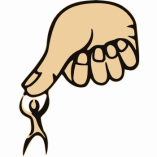 I were not being held down. On the other hand, I know what to do about it. It isn’t instantaneous, which would be nice, but it is reliably effective. There are things I can do that are kind of like “pushing back” or at least “getting out from under the thumb.”
 This is the “Profiles in Courage” rebuttal. The Mayor has said that he couldn’t “do the right thing” because it would cost him his office. The reporter comes back hard, “Maybe you should have made your fight and taken your licking,”
 The Mayor is the exemplar of “democratic accountability” as Banfield sees it. There is no way for voters to choose a party (and the party’s nominee) unless the party makes good on its promises. There is no way for the party to make good on its promises unless its officeholders “do the right thing.” Being so committed to the revitalization of downtown that you cause a race riot is not the right thing. Alienating the working class voters in the inner suburbs and turning the Mayor’s office over to the other party is also “not the right thing.”
 his career, became famous for such books as The Unheavenly City, The Unheavenly City Revisited, The Moral Basis of a Backward Society, Here the People Rule, Political Influence, Civility and Citizenship, and City Politics .Here,very early in his career, I think he was just trying to make a buck. This was written in 1959, which accounts for some of the ethnic stereotypes and some old words (“Negro”), but the political principles work just the same way now that they did then. Here is Banfield as a very young academic.
 represented as performing a series of actions that pointed beyond their plain meaning. For that reason, they are not called miracles; they are called “signs.” [1] That means that they point to some meaning beyond themselves. What they have in common is that they look at some major element of Jewish practice—we are going to be looking at the wedding at Cana for our example—and then declare it to be surpassed by the present ministry of Jesus. So each of the signs “means something” in the same way; they point beyond. The meanings themselves differ as the occasions differ.
 I am calling those tangential. I am not arguing that they are mistaken; only that they don’t help John establish the point he is making. John has a use for this story and for this use, the central symbol is the six jars of water. All this water is necessary because “the Jews” [2] needed to ritually purify themselves. John’s point is that because of Jesus, all that water is superfluous. You can do something else with it, since you don’t need it for ritual ablutions. So why not turn it into some really superior wine?
 It is not only the right of these peoples to throw off the yoke of tyranny, but it is their duty to do so. [4] This is true of all peoples—all collections of politically self-conscious people—so it is the general case. Someone arguing against Jefferson would have to argue that although it is true of mankind generally, it is not true of the British colonies in North America; or he would have to argue that Locke’s notions of contract were not valid even in their general sense.
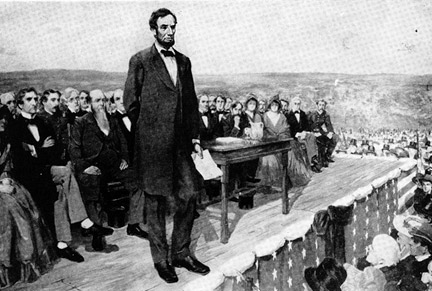 Lincoln has no use at all for the hypothetical equality of peoples, equally freed from their allegiance to a tyrant. What he needs is an understanding that puts white people and black people in the same scale—Lincoln had signed the Emancipation Proclamation in January of that year—and finds them to be equal in worth. It would be a violation of “Nature and Nature’s God,” to use Jefferson’s phrase, for one man to own another.
 issue of The Christian Century. That’s where I am going next, but I want to make one final point about arriving at 2 (after having experienced 5). When you know you can’t keep it, there are several things you could do as a response. You could devalue it. “Because it won’t last, it isn’t really that important.” You could strain to hold onto it. “I want to feel this way for as long as I can.” Or you could just enjoy every second of it, knowing that won’t last.
 The second point is that I don’t have any experience at all of putting my wife in God’s hands. I don’t have that experience with Bette; I did not have it with Marilyn. I want to go back now to the advice to Mike, which I liked so much, and to pick up the part I left out. Here is the whole quotation with the deletion in bold.
 The Dilettante's Dilemma