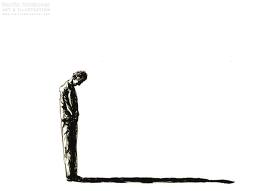
From my standpoint, this looks like a cultural avalanche. If there is something good about it, it is not yet visible to me. Today, I want to talk about technology and personal presence. It seems to me that the more there is of the one, the less there is of the other.
Let’s start with the horror stories and work up. This morning’s New York Times had an article with the headline: As Doctors Use More Devices, Potential for Distraction Grows. The article included an account of a patient who is clearly a victim of what the writer calls “distracted doctoring.”
Scott J. Eldredge, a medical malpractice lawyer in Denver, recently represented a patient who was left partly paralyzed after surgery. The neurosurgeon was distracted during the operation, using a wireless headset to talk on his cellphone, Mr. Eldredge said.
“He was making personal calls,” Mr. Eldredge said, at least 10 of them to family and business associates, according to phone records. His client’s case was settled before a lawsuit was filed so there are no court records, like the name of the patient, doctor or hospital involved. Mr. Eldredge, citing the agreement, declined to provide further details.
This is bad, certainly, but the question I want to consider is how the neurosurgeon came to be making calls on his phone during surgery. Or how a nurse came to be checking airfares. Or how the technicians running bypass machines came to be texting during a procedure.
I have a theory. It is that what people my age call “the normal mode of operating” has been fractured. Let’s take a moment and look at some words here. An integer is whole. It has not been “fractured,” although we would probably say “fractioned.”[1] You have to “break” an integer to get fractions. You can do the same with integrity, of course (integer/integrity); you can break it and so become a person of pieces, of fragments.
 It is not hard to picture a wholeness of attention. It is a romantic myth that we once had a society that was characterized by this wholeness of attention, but I do think that the duty of “seeming to attend” to what was going on did cut down on the extremes of inattention I am talking about. If you grew up in a society where attention was routinely fractured, you would never have experienced the fracturing at all. Having never experienced the wholeness of attention, you would never have experienced seeing that wholeness broken down. What you would experience, instead, is the persistent multiple claims for attention and the normal-ness, the “rightness” of that multiplicity. Maybe even the “inevitability.”
If the range of things you know you are expected to be doing in this new consciousness is in the range of 4—7, you might look at someone who was doing only three and think of him as a slacker. Someone who was doing only one—all of his attention was committed to doing or experiencing or thinking about just this one thing—might be thought of as pathetically simple. Simpleminded, maybe. Singleminded.
I’ve argued so far that “people” are like this. If people are like this, then they go on being like this when they become professionals—unless, of course, they learn to set it aside. So, in this instance, functioning as a doctor is going to have to be set aside from “normal” in some way. “When I’m being a doctor,” one would say, “I set aside the normal complexity (I’m trying to think what this person might call it—“complexity” maybe) of normal life and restrict myself to just this patient or just this diagnosis or just this procedure.” Being a doctor, then, means the temporary setting aside of the normal and everyday fracturing of attention.[2] Same thing for being a nurse or an anesthesiologist. If you don’t do that, you will be left with monitoring the procedure and believing that should something require your full attention, you will know it and attend to it in a hurry.
I’ve had pretty good doctors. Also, I’m a demanding patient. If I am not getting the focus I think the session requires, I ask for it explicitly. I haven’t had as much luck with students though. I’m a professor and I do see a lot of what I might call “distracted studenting,” just to have something parallel to “distracted doctoring.”
I get students who are, for all practical purposes, passing each other notes. They are texting each other. They are on Facebook. The very best of the ones who are not paying attention to what I am trying to get done in class are online, checking to see if there are more recent public opinion data than those I just cited. I don’t think my students are any less disciplined than my generation of students was. I do think that the tools for “being somewhere else” are much more available and much more distracting. But, much more importantly, I think that there has been a substantial erosion in the idea that one should be “here,” rather than here and here and here and there.
I want to describe why this is particularly hard for the kind of teaching I like best and try hardest to practice, but before I do that, I want to establish a reference point. It’s an over the top example, but with the absurdity comes some clarity and I think it is worth it.
Imagine that a young man and a young woman are getting married. Picture a wedding  card couple. Except that each of them has ear buds and is busy texting as the ceremony is going on. The minister, unused to what he will see as a fractured attention, stops and explains to them gently that they are GETTING MARRIED and this means something and they should pay attention to it. They look knowingly at each other, (the minister is one of those old “full attention to the one matter before us” guys) then the bride-to-be explains that they actually are tracking the ceremony carefully. They know where they are in it and what is next. When the time comes for them to say something, they will be ready, so could we just get on with the ceremony please?
Before I get back to my own classroom, let me ask you to stop and try to say just what is wrong with this couple.
How is it going? Hard, isn’t it?
The truth is, in order to say just what is wrong with it, you have to say what really has to go on RIGHT THEN that is not getting done because of the “distracted marrying.” What could they really not have accomplished before the ceremony or after; what really had to be done right then?
My kind of teaching emphasizes “concept attainment.” I teach politics, so there’s always going to be a lot of “who’s leading in the polls” and “will the cap and trade bill every get passed by both houses in the same year?” But we will also have to deal with whether Americans are really permanently strung up between procedural and substantive notions of what “democracy” means. What is the fundamental structure of the phony “pro-life v. pro-choice” argument?[3] Is the internal distribution of power in the House of Representatives more or less important than the balance of power between the House and the Presidency? That kind of stuff.
It’s hard. It takes undivided attention for a period of time. You have to find a way to disentangle the tendrils of old patterns of thought and to replant those tendrils carefully on new surfaces. You have to see what changing this idea means for that idea. You have to know whether you are really willing to live with the implications of this new notion. It isn’t easy and there is a part of it that really has to be done right then. The class session needs, by one means or another, to reach the temperature at which old ties are loosened (which is precisely what analyze means—the root verb luein means “to loosen”) and are free to be attached in new ways.
You do it then or, chances are, you won’t do it. That task requires an integrity of attention. The normal fractured (or multiple-investment) style of attention is not going to do the job. And that means that if we are going to continue to produce “people” like this, we are going to have to get those people who are also students to set aside what they think of as “the normal natural complexity of being a person” for the purpose of learning something. If we take as our norm the difficulty the doctors, nurses, and anesthesiologists have in setting this mode aside for the purpose of taking care of patients in surgery, we see that this is asking a lot of students.
In this coming term, I am going to keep this whole argument in mind and try, at the same time, to take a few small steps toward bring a focus to “what goes on within these four walls” during the time you are here. I suspect it will involve “personalizing” a relationship that has been being “depersonalized” for decades now. It will require redistributing the points awarded for performance so that the evaluation scheme of the class is not at war with my earnest entreaties to the students.
I don’t really know what these measures will look like, but I don’t think there is much time left to do it and I want to try.
[1] The verb here is frangere, “to break.”
[2] People of the old “focus on one thing at a time” mode—the fogies—might call it “inattention,” but we know it is just a new kind of attention: a lot of monitoring and attending as needed.
[3] Since no group thinks of their position as “anti-choice” or as “anti-life,” the structure of the dialogue is going to have to be torqued a little just to make discussion possible.