“Loose Talk of War.” Yeah, right.

When a political campaign is at full throttle, it is easy to think that any disagreement is mostly a partisan disagreement.  Given the current disposition of the parties, that would mean an ideological disagreement.  The current exchange on Iran’s nuclear ambitions sounds like that, but I don’t think it really is.  Here’s a thoughtful piece from this morning’s New York Times.

I think the position President Obama has taken is a discretion-enhancing attitude.  This is not at all unusual for presidents, who will be the ones to exercise discretion.  Candidates tend to take a fear-enhancing (on this case) or a condemnatory position.

This means turning the current debate about 85 degrees.  There is not a pro-Israeli party and a pro-Iranian party.  There is not a pro-military position and a pro-diplomatic position.  What we have instead is a position taken by the decision maker, the goal of which is to allow him to juggle all the balls as long as necessary—but without losing the support of the American Israeli Public Affairs Committee (AIPAC).  The Republicans are trying to scare people by imagining forthcoming horrors for Israel and to court AIPAC by taking a more bellicose stand than any sitting president—including any of the current candidates—could afford to take if he was the one who had to make the decision.

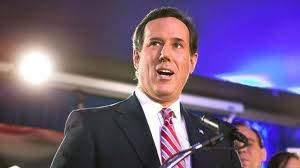
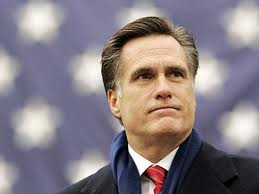
This way of looking at things requires the analyst to leave verbal style out of consideration.  No one will deny that Gingrich, Santorum, and Romney have different rhetorical styles and whatever position any of them took on the issue of Iran’s nuclear ambitions would use that style.  Ron Paul appears to have an entirely different position, the headline of which is “I won’t interfere with Israel’s Self-defense.”  I think that means, “OK guys, you’re on your own.”

But if Mitt Romney were president now and the cast of the Democratic party candidates were up against him—Obama, Clinton, Dodd, Biden, Edwards, Gravel, and Richardson—they would say the same kinds of things.[1]  They would not necessarily take the position that the Republicans are taking now, but they would take a position that they hoped would have the same effect.  Candidates want to reduce the latitude for decision of the sitting president and to move him away from powerful groups (AIPAC, in this case) and contrary to public opinions.  If President Romney cited the need to consult allies, he would get dinged for failing to put “America First.”  If he directly threatened military intervention, he would get dinged for being a warmonger.[2]

The strong language of the campaign makes this look like a war between Democrats and Republicans.  It is not.  It is not a war, it is a dance.  And it is not between Democrats and Republicans; it is between the “ins,” who get to make the decision, but who are responsible for fifty other decisions at the same time, and “outs” who have no immediate goals except winning.


[1]  I didn’t forget Dennis Kucinich.  I left him out for the same reason I left Ron Paul out.

[2]  Really though, what does President Obama’s “all options are on the table” stand mean except that he will resort to direct military action if necessary?

Posted in Politics | Leave a comment

A Defense of Dilettantes

One of the pitfalls of thinking of yourself as “a person who knows things” is that you sometimes don’t have a clear sense of just what it is you know.  I’ve been a teacher for the last fifty years or so and when my attempts to ensnare the students’ curiosity fail, I wind up standing at the front of the room giving the answers to questions very few of the students have asked.  Or, on other days—particularly in lower division university classes—thundering away about some aspect of politics that has agitated me and that could, with some generosity of spirit, be thought to belong within the course I am teaching at the moment.

That much to introduce the idea that when my subscription to A-Word-A-Day popped dilettante up on my screen, I deleted it and went on to more pressing matters.  Fortunately, my brother John knows of my interest in the word and forwarded it to me.  Not, I hasten to say, as an accusation; just as an affirmation that this word has interest for me and that the thought of me when he saw it.  Here is what it said:

MEANING:

noun: One who takes up an activity or interest in a superficial or casual way. adjective: Superficial; amateurish.

ETYMOLOGY:

From Italian dilettante (amateur), from Latin delectare (to delight). Earliest documented use: 1733.

USAGE:

“I long ago came to realize that I am a putterer, a grazer, a dilettante. I create the impression of getting a lot done by dabbling through my days: I read two pages of a book, write half a letter, paint a portion of the front porch, bake half a tin of muffins, teach a class, wash a window.” Robert Klose; Confessions of a Dedicated Dilettante; The Christian Science Monitor (Boston, Massachusetts); May 10, 2004.

Not very attractive, is it?  Obviously, I don’t feel that way about the word or I would not have tattooed it, metaphorically speaking, on my forehead.  Also, it’s not like I feel the word can be refurbished.  It is what it has become.  This post will have abundant illustrations of what it has become.  You get the illustrations by googling dilettante and choosing “images.”

I do think the word could be given a little more fiber, though.  Maybe furbished up a little.  I have two approaches in mind.  The second will be etymological.  I suppose that won’t surprise anyone.  But let’s start with an approach that is, for  lack of a better word, “temporal.”  Robert Klose, in the quote above, has a very short span of time in mind: “two pages of a book” and “half a tin of muffins” and washing a single window.  This is puttering, certainly, but there is no delight in it and I hate to see a line of words deriving from delectare, “to delight,” stoop to simple puttering.

Mr. Klose believes, apparently, that one cannot delight in projects that take longer than washing one window.  A man could not, in this usage, take delight in the times he spent with his children when they were small or the confidences he exchanges with them now that they are large.[1]  He could not take delight in the strength and warmth of his own marriage.  He could not delight in the steady endurance of friends who have hung around in times when that was not easy to do.  He could not delight in the fruits of his own work; neither the slow but growing readiness his students show to question common assumptions or the eruption of new insights.  I’m a teacher, remember.

Someone who wanted to defend the most common notions of what dilettante means would be almost certain to say that words like satisfaction or approval are used to indicate our response to outcomes like those, and he would be right.  But, first, those words don’t mean any more what they have meant over most of their histories and second, those words don’t specify what my own response to those outcomes must be.  Is there any reason, for instance, that I cannot find satisfaction with the way I have parented my children and stepchildren today and take delight in it tomorrow?  I don’t think so.

And if delight is restricted to the first spoonful of the hot fudge sundae or to the reaction to an author’s first page or to the first paragraph (only) of a blogpost, then I can see why “putterer” would be an adequate synonym for dilettante.  But, of course, I don’t see any reason why it should be limited like that.  What shall we do, for instance, if we are “ensnared?”

When I make a reference to the origins of dilettante, I usually stop at delectare, “to delight,” but in a quest for “fiber,” I want to look a little further up the tree today.  The Latin delectare is a frequentative (happens over and over, like the “sparkle,” which is a frequentative of “spark.”) of the Old Latin delicere, itself a combination of de-, “from,” and lacere, “to entice.”  Or, my dictionary says, “literally, to ensnare.”  Now there’s a notion with a little grit in it.

It is not only what I delight in, as a putterer might, but what I am ensnared by.  A snare, let me remind you, is a device for catching and holding; for not allowing to escape.  If we are looking at being ensnared in the context of being delighted, we are looking at something from which one does not wish to escape.  The question of whether I could escape if I wanted to is moot; I don’t want to.

Being enticed and consequently ensnared and consequently delighted sounds pretty substantial to me.  Let’s just say that if you have been really ensnared, you aren’t puttering.  The students I introduced in the first paragraph may or may not have had puttering in mind when they registered for my course, but if I have been able to ensnare their curiosity, to fix and hold it, they are on their way to being dilettantes and I say, “Welcome, there is room for you all.”


[1] These examples are all male examples because I am reflecting on my own life.  I do not mean to imply that women could not take the same kind of delight; only that if it is different from men, I wouldn’t know enough about it to write about it.

Posted in Education, Words | 4 Comments

Republican Polar Bears

One of the most surprising events of recent years is the death by drowning of polar bears.  Polar bears are some of the strongest swimmers in the world of mammals.  Why are they drowning?  Well, it turns out that that as the polar caps melt, the bears have to go farther and farther from their natural home to find food.  Sometimes they make it back safely; sometimes they don’t.

That strikes me as a dilemma unexpectedly similar to what the current crop of Republican candidates face.  Most of the undergraduates I teach don’t know this, but for most of the 20th Century, the Republican party was the party of social moderation and fiscal restraint.  Republican candidates campaigned by referring to their party that way (the G in GOP meant “grand,” although it is hard to remember it today) and promised that, if elected, they would govern that way.

Then the ice caps began to melt.  Party primaries became the principal route to the presidential nomination.  Discussions by party elders in smoke-filled rooms were superceded.  Then, as the parties became more ideologically consistent, the most extreme fringes of the parties took over the presidential primaries.  These extremists have long provided most of the funds and most of the workers for candidates.  Funds and volunteers are the food that has traditionally sustained candidates.  Where does that leave us? 

Any Republican who wants to be president will need to go to where the resources are, just as the polar bears must.  The distance between where the party has always lived–the prudent center–and where candidates must now go to get access to those resources has gotten larger and larger, just as it has for the bears.  Not all the candidates can manage the growing gap between the governing center and the campaigning resources and more and more of them drown in transit.  Actually, some of the best potential candidates decide not to make the trip at all.  If only that were an option for the bears!

There are two ways out of this death swim.  The party elders, if there are still party elders, will need to recover control of the party and choose candidates who don’t have to swim that far to get to the feeding grounds.  That’s probably what will happen eventually, but it isn’t going to be this year.  The second is that Republican moderates (and I know there are still Republican moderates because they complain to me that their party has forsaken them) will flow into the primaries and provide resources closer to the natural home of the Republican party.  “Closer” means that fewer candidates will drown trying to cross the open ocean between where they live–and where they will have to be if they are going to govern–and where they feed, where they must go if they are to endure the grueling nomination process.

Thinking now only of the political side of this analogy, I think that some Republicans–the elders or the voters–will have to find a way to reverse the global warming that has endangered their party.  Either that, or they will need to find a better answer to God’s question to Noah in Bill Cosby’s famous skit: “Noah,” God asks, “How long can you tread water?”


Posted in Politics | Leave a comment

What Will the General Election Be About?

New York Times CBS Poll

Feb 3—13, 2012

 Registered Voters 1064

Registered Republicans 316

Registered Democrats 368

How is President Obama Doing?

Pretty well, all things being considered. His numbers are nowhere near where they were when he was elected, all promise and post-partisanship. They are better than they were several months ago, however.

50% approve of the way he is handling his job. That was 43% last November. 50% approve of the way he is handling foreign policy. He started at 50% in February 2009; then went as low as 39% (last April) and now is back to 50%. Approval of the way he is “handling the economy” was at 33% last December and is now up to 44%. Approval of his job creation successes is at 41%; his handling of the federal budget deficit at 32%.

People are feeling better about the economy itself, as well as Obama’ s contribution to it. People who think the economy is “very good” are about 1% or 2%. You wonder what line of work they are in. The major categories are “fairly good” and “fairly bad.” 22% are now saying they think the economy is in fairly good condition—up from 10% last September. The “fairly bad” numbers have ranged from 50% to 41% in that same time period. Currently, 46% say things are “fairly bad.”

The next question is whether things are getting better or not. The largest number is people who think things are “staying just about the same,” so I add that number to those who are more positive; then to those who are more negative. People who think the economy is staying the same or improving add to77%; those who think it is staying the same of getting worse add to 65%.

Reelection Prospects

Let me start by saying that the numbers of whichever Republican wins the most convention delegates are going to go up. So any of the current four candidates will be better off than these numbers imply. Here’s why I think that. The number of Republicans who wish there were more choices of Republican candidates are at 62% compared to those who are satisfied with the current field, 32%. To that, add the trait most desired by Republican voters—the quality that is “most important in deciding who to support for the Republican nomination.”

The Republican nominee should be a “true conservative,” 22%. That’s the most important thing among the 316 registered Republicans in the poll. Another 34% say “strong moral character” is most important. The candidate who has had “the right experience” to be President is preferred by 22%. And the ability to beat President Obama, 19%. One fifth of the Republicans polled have the ability to win a general election as the highest priority. The “if the election were held today” question produces victories for President Obama against Ron Paul (50% to 39%); against Newt Gingrich (54% to36%). Mitt Romney (48% to 42%) and Rick Santorum (49% to 41%). So the President beats any of the Republican candidates so long as there are multiple candidates. The numbers will improve a lot for whoever wins the Super Tuesday contests. Currently the people think Romney has the best chance of defeating Obama (55%). Gingrich (15%) and Santorum (14%) are the only others in double figures. People also think that a Romney administration would be much more like the Obama administration than a Santorum administration, a Paul administration, or a Gingrich administration would be.

Another way to come at this question is to see which Republican candidates might be helped by which political emphases. I take it for granted that the worse the economy does, the better it is for any of the candidates, including Ron Paul. A campaign focused on economics would seem to play to Romney’s strength. Economic issues are more important, in deciding whom to vote for, by 69% to 21% for “social issues,” the alternative focus. That’s not good news for Santorum, who is the “values” candidate—39% of the Republican voters in this poll said Santorum represents “the values you try to live by.”

So a campaign focused on the economy in an economy that is not improving would be ideal for Romney. A campaign focused on values, in a climate of opinion where majorities of voters favored the Santorum position over Obama’s would be ideal for Santorum. We don’t know which way the economy is going to go, obviously. We don’t know, just to pick one example, whether a stable government in Greece can be formed and can hold to an austerity program.

We do have some clues about the values end of the spectrum, however. People support “a recent federal requirement that private health insurance plans cover.., birth control” by 66% to 26%. That religiously affiliated employers should be required to provide such plans, 61% to 31%. illegal immigrants currently working in the U. S. should be allowed to stay and apply for citizenship 42%, rather than stay as guest workers (22%) or required to leave (30%) Gay couples should be allowed to marry (40%), restricted to civil unions (23%), or receive no legal recognition at all (31%).

And that’s just a sample of the current “values issues.” My guess is that if they are clarified in the general election, support for the conservative options will drop further. That will mean less Republican money coming from social conservatives and fewer Republican foot soldiers from the social conservatives. President Obama is currently picking a fight with the Catholic Bishops, the result of which will be, I think, a growing gap between the political views of the bishops and the political views of most Catholics.

Polls are useful because they point directions. They don’t do any more than that. There is scarcely a Democrat in the country who can start breathing more easily after looking at these polling numbers. On the other hand, if I were the Obama administration, I’d have to say I would rather be in his position than anyone else’s.

Posted in Politics | Tagged , , , | Leave a comment

Beane Soup 2: Peter denies him thrice

In this series, I am pulling together little fragments of the movie, Moneyball, to form themes that I noticed and liked.  Or maybe I just invented them.  This one has to do with Peter Brand.  Peter is supposed to be the rock on which Billy Beane, the general manager, rebuilds the Oakland A’s.  And he is.  For a while.

Billy meets Pete in Cleveland where Pete has just ended Billy’s attempt to trade for Garcia, an outfielder.  Pete is willing to tell Billy that he ruined the trade because he “likes Garcia.”  But he won’t tell Billy, in a public setting, just why he likes Garcia.  The reason turns out to be that Pete likes Garcia because of the value Garcia can be shown to have using the mathematical analysis Pete knows how to use.  Except that he isn’t allowed to use it in Cleveland.  It scares the baseball people in Cleveland and they shun him.

Pete is relying on an analysis of baseball that in the movie, Moneyball,  is represented by Bill James and that, in the book, Moneyball, has a long and distinguished heritage. The scene where Pete tells Billy the truth about baseball looks for all the world like the Deep Throat scenes from All the President’s Men.  Probably, it is supposed to.  Managers misevaluate and misuse their players, says Pete, because they don’t know any better, but “Bill James and mathematics cuts through all that.”

“Cutting through all that” sounds pretty good, doesn’t it?  I hope it does, because that’s as good as it gets in this movie.

In the scene that caught my attention most recently, Pete is in the unfamiliar position of doing something with what he knows.  Keep “Bill James and mathematics cuts through all that” in the center of your attention.  Now, while you are holding on to that, add the caution, “but if it doesn’t go the way we want…”  Do those fit?

Here’s the context.  Billy can’t get Art Howe, the field manager, to play the people Billy and Pete have chosen.  Billy’s solution to that difficulty is to trade all the people Art is actually playing so he will have to play the new guys.  That means that Carlos Peña has to go and Scott Hatteberg will stay and play first.  Pete has projected that Hatteberg will be better at first.  He gets on base 20% more than Peña does.  That 20% is a reflection of the old “Bill James and mathematics” standard.  It is what Pete ought to be most confident about.

But the prospect of action and—to be fair, Pete’s friendship for Billy—have shaken Pete’s confidence.  That’s why he says that if Billy trades Peña and “things don’t go the way we want…”  Pete really shouldn’t be contrasting “the way we hope things will go” with “the way things will actually go.”  Pete has enemies everywhere and his math—not his hopes– is all he has to go on.

So Billy tries again.  “Do you project we’ll win more games with Peña or with Hatteberg at first?”  You’d think that would be the only question worth asking, wouldn’t you?  It is the only question Pete thought was worth asking until this scene.  “It’s close,” Pete says, “but theoretically, Hatteberg.”  Notice Pete groping again for somewhere to escape.  Theoretically?  Excuse me?  Pete, “theoretically” is all you have to go on.  It is what you sold Billy and it is the current approach of the Oakland A’s.  Theoretically rather than what?  Is there another way to go?

Of course there is.  The “other way to go” is what the scouts have been urging on Billy.  The scouts with their experienced eye and their intuition can tell what young player has the stuff to be an Oakland A.   That is the approach Billy destroyed in his early meeting with the scouts by pointing out that if a player had that much promise, the A’s wouldn’t be able to afford to sign him.  So Pete and “theoretically” are the alternative.

So Pete doesn’t stumble at every question.  When Billy asks him point blank, “Do you believe in this or not?” Pete says, “I do.”  It does seem odd, now that I think of it, that Pete because of his friendship with Billy and because of his wariness of abrupt action could be brought to let go of the one thing that is keeping them all afloat—“Bill James and mathematics.”  But he does.

Just one more thing.  I wrote this post in my head when I was running on the trail in Portland’s Forest Park.  I’m an endorphin runner and when I get high on the kind of painkillers the body produces in those circumstances, I think some odd things.  Mostly I forget them.  Or if not, I have the sense not to publish them.  But this one has continued to please me, so here it is.

In this scene, Peter denies Billy thrice.  Doesn’t that sound familiar?

Posted in Movies, ways of knowing | Leave a comment

So…Mitt Romney hates the poor?

I don’t much like the attention that has been paid recently to Mitt Romney’s comment about the poor.  I don’t much like Mitt either, but this is too much.  It hasn’t been that long since a staffer for an agency in Washington D. C. complained that a particular budget item was “niggardly.”  Among the people who called for his head were people who didn’t know that niggardly is an English word derived from several Scandinavian languages and that it mean “scanty” and “inadequate.”  Others apparently knew what it meant, but thought the staffer should have had better sense than to use a word that could be abused by others.  He was “insensitive,” according to this line of attack.  Not as bad as “racist,” of course, but bad enough to get you fired.

Let’s just agree first on what Gov. Romney said.  He said: I’m in this race because I care about Americans. I’m not concerned about the very poor. … I’m not concerned about the very rich. They’re doing just fine. … I’m concerned about the very heart of America, the 90-95 percent of Americans who, right now, are struggling. …

That’s what he said.  When the Obama campaign releases its response ridiculing those lines and focusing especially on the “I’m not concerned about the…poor” fragment, I say, “Oh well, that’s politics.”  When news organizations seize on the same fragment in the same way, I say, “Wait a minute.  Aren’t you supposed to be “reporting” the news?”

To my mind, this is not a test of Mitt Romney.  He is going to continue to say things that bring attention to just the parts of his campaign he wants to mute.  This is about the piling on.  This is about who is a part of the campaign to re-elect President Obama and who is part of the news business.

Here’s a scene from a western that came to my mind as I was reflecting on this episode.  The western is Blue-eyed Devil, by Robert Parker.  General Laird is running for mayor of the town of Appaloosa.  He has hired a gun hand, Chauncey Teagarden, to make sure his opponent doesn’t get nasty.  The opponent does get nasty, of course, since he is the novel’s principal villain.  Here’s the way the scene goes.  A heckler in the crowd yells at General Laird”

“I say you are a back-shooting, barn-burning, gray-bellied coward.  Anybody gonna tell me no?

“I am,” Chaucey said.

“And who the hell are you?”

“General Laird is a gentleman,” Chauncey said.  “He is not a murderous thug.  He is not going to descend to a street fight with you.”

“And you?” the man with the black beard said.

“I am a murderous thug,” Chaucey said.

That is the distinction that interests me at the moment.  I know what Gov. Romney said.  I know what he meant and so does everyone else.  I want to see Mitt’s plans, as they affect “the very poor” examined and I wouldn’t mind seeing them ridiculed.  I am sure they will continue to be ridiculed.  That’s the job of the Democratic Party, of Newt Gingrich (currently) of the committee to re-elect President Obama, and liberal interests all over the country.  They are the murderous thugs.  They have a job to do and boy are they doing it.

But in the interest of public debate, could we just have the news organizations stand pack a couple of feet?  It might give them a little perspective and there will still be room for the murderous thugs.


Posted in Politics | Tagged , , | 2 Comments

Beane Soup 1: Billy’s Goal

This is the first of series of stories that purport to be about the movie, Moneyball.  They aren’t really.  Michael Lewis made a collection of narratives out of the experiences of general manager Billy Beane of the Oakland A’s in the book, Moneyball.  Aaron Sorkin made a much smaller collection out of the book for his movie, Moneyball.  But I see so many stories in the movie that interest me.  Some of them are really there.  Some are just hints and allegations of narratives and that I have tied them together because they reminded me of a story.

I’m long past apologizing for all the stories I see in the material others have assembled.  What story it is depends entirely on when you start it—what happened first, for instance.  And who is in the foreground or the background.  And how long the story is.  And who it is “really” about.  So with this post, I begin a series of stories I have, to some extent, “found” in the movie, Moneyball, and to some extend have “extrapolated” from the movie.  My view is that they are all there and I’m just moving my flashlight around from one part of the tapestry to another.

Here’s the first one.  Billy Beane is so much the hero in Moneyball that it is hard to notice how much he changes during the story.  Let’s start with the two scenes that indicate how very successful he has been and we’ll work back from there.  John Henry, the owner of the Boston Red Sox offers Billy the position of general manager after the season described in the movie.  He tells Billy that every team that is not rebuilding itself along the lines of Billy’s strategy in Oakland is a dinosaur and will be left behind by the teams that are following Billy’s lead.  It might be that Billy doesn’t believe that or it might be that he didn’t really hear it.  It is, nevertheless, the goal that Billy was pursuing by the end of that season.  And what was that goal?

Let’s look at the second of the two scenes.  Peter Brand, who is represented in the movie as the genius behind the new way of organizing and deploying baseball teams, is sitting down with Billy after the Red Sox interview.  Peter doesn’t know whether Billy is going to accept the Red Sox offer—Billy doesn’t know either at this point—but he knows that Billy really doesn’t understand the dimensions of the triumph he has just had in Oakland. 

Peter hauls an unwilling Billy off to the film room to show him a clip of Jeremy Brown, an overweight minor league catcher.  Brown is so big and clumsy that he never runs to second base no matter where in the park he has hit the ball, but in this clip, he does.  He rounds first, falls on his face in the dirt, and scrambles frantically back to first base.  Everyone is laughing at him and it takes him a little while to realize that they are laughing because he hit the ball 60 feet over the fence and doesn’t need to scramble back to first.  He needs to take a leisurely and triumphant tour of the bases.  Peter wants Billy to see that clip because he thinks Billy is in the same spot as Brown and doesn’t know how else to say it.  Billy hit a home run, Peter thinks, and doesn’t know it yet.

That’s what the owner of the Red Sox thought, too.  And that’s what Sorkin wants us to think as we watch the story.  It is hard for us, though, because that is not what Billy wanted at the beginning of the season.  When we pick up the story, the A’s have just been eliminated by the Yankees.  The A’s lost their best three players to teams that just outbid them for these players’ contracts.  Billy’s view is that is you don’t win the “last game of the season,” you have lost.  That means you have to win the World Series or you have lost.  That’s a high standard, but the one he adopts as the story develops is a good deal higher.  What Billy comes to want to do is to change the game of baseball.

There isn’t a scene in the movie where Billy realizes that his goals have changed, but there is no question that in the first early scene with the owner of the A’s, Billy says his goal is to win a championship.  After the highlight of the season, winning 20 consecutive games, there is a scene where Billy tells Pete, “I’m not in this for a ring.  I want to change baseball.”

I think that is a remarkable transformation.  He had to overcome the visceral opposition of his scouts.  Maybe that’s what transformed him.  He had to overcome the strongly held views of manager Art Howe.  Maybe that’s what transformed him.  It is a fact, though, that the Billy Beane the movie gives us, wants to succeed at this game in the beginning of the movie and by the end of the movie, he wants to change the game entirely.

I’ve said that Billy demands that his scouts and his manager and his players change the way they think about the game.  It looks to me like Billy changed the way he thought about the game as well.

Posted in Movies, Paying Attention | Tagged , , , | 3 Comments

Win the Day

What everybody knows is that the attitude with which you approach aging matters a great deal in your experience of aging.  And if you’ve ever tried it, you know that you can’t just “adopt a positive attitude” the way you would put on a new shirt.  Unless, of course, you have the level of arthritis many old hands have and you are unable to button the shirt—in that case, the shirt and the attitude share some attributes a younger shirt-wearer would not expect.

What I know about “adopting a positive attitude” is that the task is made a good deal easier if you can find a metaphor that helps you think it through—or visualize it or extrapolate it or imagine it or whatever you do with metaphors.  A good metaphor, in this sense, is a metaphor that works for you.  You might think of death as “the enemy,” for instance.  You are fighting the good fight, like Roland at Ronceveaux.  You might check off each new disability like so many stops on the train as you near the “station.”  You might celebrate the joys of the wisdom and caring that are your part, in Erik Erikson’s schema at any rate, as an old person in the last stage of life.

Whatever works.  These are not questions of truth and falsehood.  They are questions of utility and effect.

So I thought of one today that I think will be a good one.  I’m the quarterback of a pretty good but banged-up team near the end of the season.  In honor of the victory of the University of Oregon football team in the Rose Bowl this year—the first such since 1917—and particularly in honor of their coach, Chip Kelly, I live by Kelly’s motto, “Win the day.”  “Banged up quarterback” make me think of the Steelers, so I’ll use that as my visual reference.

I really like “Win the day” because it isn’t about game day until game day.  On the first day of spring practice, “the day” is the first day of spring practice.  Here’s what needs to get done today and if you do those things and learn what you should learn from it, you won.  The next job will be to win the next day’s practice, but that’s not until tomorrow.

I like that because I am a runner, although given my times, that is more a courtesy designation than a defensible one.  What I know is that when I set out on a run, I can give it all I’ve got, in which case I will be tired and happy afterwards, or I can pull back more than prudence requires and spend the rest of the day regretting my bad judgment.  I know what “winning the day” is like on the trail.

But now I’m the quarterback of the team.  I know what play has been called, but I also know a lot about the condition of my team.  It is, as I said, late in the season.  I’ve got guys on my team who can’t sleep through the night anymore and who, consequently, are tired a lot.  I have guys whose knees are a little dicey and could run any play I called if it were slow enough.  I have guys who can’t remember the whole playbook anymore.  I have guys whose hands really hurt, sometimes, and who can’t squeeze a pen, much less a football with any velocity on it.  I have guys whose weight has gotten out of control during the season and who can’t do the stuff they could do in spring practice, when a lot of these plays were drawn up.  You get the idea.

So I come up to the line and I look over my players and I see what I’ve got to work with on this play.  That’s my first job every morning.  I look over the players I have to work with and decide on a play.  Ordinarily, I’ve got most of that done by the time I get out of the shower in the morning.

I love all these guys.  They’ve been with me for a long time.  On the other hand, we are not going to succeed if I keep asking them to do things they can’t do (any more).  I want to use their abilities and call plays the will use those abilities.  That’s the only way to succeed as a team.  That’s why I don’t call the plays as fast as I used to.  I stand at the line and watch the clock run down. I give the count, I get the ball, and the day happens—I mean, the play happens.  When I see how well it works, I will know better what play to call next.

I think I like this metaphor.  There are opponents, but there aren’t any enemies.  I’m surrounded by guys I respect, but who have gotten themselves banged up a little during a long season.  I want to count on them to do everything they can—they aren’t going to win the day if they don’t—but I don’t want to make them do things they really can’t do.

They say, you know, that getting old isn’t for sissies.  They got that right.  Oh, I forgot to say, I’m the head cheerleader too.  Not the only cheerleader, I am happy to say, but the most important one.  There is a large array of boosters, but you know how boosters are.  They pay a lot of attention to winning and losing, so they tend to come and go.  Me, I’m more a “Win the Day” kind of person.

Posted in Getting Old | 5 Comments

David Brooks Has Caused Me All Kinds of Trouble

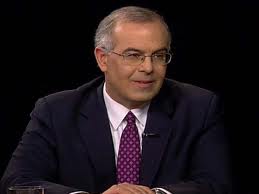
David Brooks has caused me all kinds of trouble.  When I introduce him to people—my students at PSU, usually—who don’t know him, I say he is a conservative columnist for the New York Times.  When my students choose David Brooks as the focus of their paper on columnists, they often call him “a moderate.”  Some maintain he is a liberal.  Why is that?

I’ve had the same conversation with some pretty savvy political friends.  I try to point out how really really conservative Brooks is (not Tea Party conservative), they say they don’t understand my argument and if I persist, which I have sometimes done, they think I am making it up.  It is those two kinds of experience I have in mind when I complain about how much trouble he has been for me.

I have a column in mind.  Let’s take a look at it and I will allow myself to dawdle in my analysis in the hope that that will make it more persuasive.  The column I have in mind is his January 3, 2011 piece, “The Achievement Test.”  I’ll be quoting a good deal of it in this post, but you can read it all here.

Here is the first paragraph.

“Unless something big and unexpected happens, 2011 will be consumed by a debate over the size of government. Republicans will launch a critique of big government as part of their effort to cut spending. Democrats will surge to the barricades to defend federal programs.”

You have to admit that sounds either nonpartisan or bipartisan.  Brooks often begins with “A plague on both your houses.”  That establishes that he doesn’t have an axe to grind (he does, of course; he’s a political columnist) and that his argument should be listened to in a spirit of openness, rather than of suspicion.  I am describing here what I see to be the function of this paragraph.  I do not mean to imply that Brooks does not believe what he is saying.

Here’s the second paragraph.

“This debate will be contentious, but I hope it’s not rude to mention that it will be largely beside the point. National destinies are not shaped by what percentage of G.D.P. federal spending consumes. They are shaped by the character and behavior of citizens. The crucial issue is not whether the federal government takes up 19 percent or 23 percent of national income. The crucial question is: How does government influence how people live?”

The most fundamental tool in my arsenal as a policy analyst and as a political science professor is what I call “the problem.”  I define this as a tool because the greatest value of saying what a problem really is, is that you get to say what the best solution to that problem is—and, of course, you get to ignore the problems others are putting forward.  I teach my students to note—and if it is something I am reading aloud in class, to raise their hands—the moment someone says, “…but the problem really is.”  Given my notion of “problem,” that means that the writer would rather construct this problem than any of the others he could have constructed.

When Brooks opines that the debate between Ds and Rs, as he has recounted it, will be largely beside the point, it means that he knows what “the point” is and he is about to tell us.  If I were sitting in my own class, I would raise my hand at that point.

Brooks has two versions of this, note.  Here is the first: “National destinies …are shaped by the character and behavior of citizens.”  So you guys who are wasting your time and ours arguing about what the “percentage of GDP the federal government consumes,” give it up.  We want to talk about the character and behavior of citizens.  Presumably, “character” is an enduring construct and “behavior” is determined by it.  I’m guessing, but that’s how I use those terms myself.

The second version is subtly different: The crucial question is: How does government influence how people live?”  Notice here that it is the effects of government that are at the center of the question and that “character and behavior” have been squeezed into “how people live.”  So “national destinies,” which were the effect of citizen character in the first formulation, are the cause of citizen character in the second.  It isn’t perfect, but it’s close and the directions are right.

We skip now to paragraph four:

“The size of government doesn’t tell you what you need to know; the social and moral content of government action does. The budgeteers and the technicians may not like it, but it’s the values inculcated by policies that matter most.”

I’d rephrase his first point like this: It is the social and moral content of government action that you need to know.[1]  What was in the first formulation, the effect of government action on producing virtuous citizens, is now a property of the actions themselves—it is the social and moral content of those actions that we need to know about.  Now, in the second formulation, we come back to the effects of government policies: “…it’s the values inculcated by policies that matter most.”

Notice that by now, “the good stuff” has been: a)  the effect of citizen behavior, b)  the effect of government actions, and c) a criterion of the actions themselves, apart from the effects they cause.  Hard to follow isn’t it.  Just keep your eye on the pea; don’t mind my moving the shells around.

Don’t worry, though. The master criterion is coming up.  Here it is:

“The best way to measure government is not by volume, but by what you might call the Achievement Test. Does a given policy arouse energy, foster skills, spur social mobility and help people transform their lives?”

Let’s spend just a little time on the choice of “achievement” is the criterion we ought to be looking at.  I often find it useful to arrange outcomes so that they look like a spectrum of values with the left side of the spectrum varying from -1, a very bad outcome to 0, a middlish outcome and the right side varying from 0 to +1, a very good outcome.  Some people live their whole lives varying between -1 and 0: the kids weren’t hungry today, I wasn’t harassed at work today, I got enough tips to average out to the federal minimum wage today.  Others live their lives mostly between 0 and +1: sales were good, but not quite what we projected, the value of our rental properties continues to appreciate, it’s a real satisfaction that junior was accepted at our alma mater.

Just what “achievement” means is clearer in the next paragraph where Brooks contrasts “the welfare policies of the 1960s” with “the welfare reforms of the 1990s.”  We could start by looking at “policies” v. “reforms.”  Which of those is “good?”  The Great Society was, if I recall correctly, the only time in modern American history when the proportion of Americans living in poverty actually went down.  The “reforms” of the 1990’s reflect President Clinton’s attempt to blunt the welfare issue before the 1996 election campaign.  This is the era of “the era of big government is over.”  It involved an act the left called “the most shameful act of the Clinton presidency,” and that label was used by people who knew all about Ms. Lewinsky.

It transmuted Aid to Families with Dependent Children (AFDC) into Temporary Assistance to Needy Families (TANF) and shoved the bulk of the decision making from the central government to the states.  Those are the “reform.”  And they “worked,” according to Brooks, because they were in line with “American values, linking effort to reward.”  But, of course, they “worked” only if their goal was to get poor people off of welfare.  If the goal was to reduce the number of poor people, they were, according to the last figures I saw, a resounding failure.

So what to do?  I like Brooks’ idea that it is a step in the right direction to move the R agenda away from hating big government and the D agenda away from loving it.  Brooks knows there cannot be agreement, but he wants to move from stalemate to horse-trading.  I like that.

And what would that look like?  The Republicans would make sure they favor “people have the incentives to take risks and the freedom to adjust to foreign competition: a flatter, simpler tax code with lower corporate rates, a smaller debt burden, predictable regulations, affordable entitlements.”  That sounds very much like the right edge of the  National Chamber of Commerce website.  The Democrats would favor “making sure everybody has the tools to compete: early childhood education, infrastructure programs to create jobs, immigration policies that recruit talent, incentives for energy innovation.”  Except for the early childhood education, that also sounds very much like the right edge of the  National Chamber of Commerce website.  You might just want to pop over there and take a peek.

You get to these two “new” agendas, Brooks says, by “putting the Achievement Test back at the center of politics.”   Achievement has to do, we see, with “work for welfare” programs to improve the character of the poor and with “incentives to take risks and adjust to foreign competition” for the business elites.  The -1 to 0 end of the scale is filled with people who need better character.  The 0 to +1 end of the scale is filled with people who need to be taxed and regulated less.

How Brooks continues to evoke judgments that he is a moderate truly escapes me.  Maybe the old “a plague on both your houses” gambit is a lot better than I thought.  And I thought its principal use would be as a nasty remark a President would launch at a recalcitrant Congress.


[1] I’ve taken some liberties with word order.  Check to see that I haven’t distorted the meaning.

Posted in Political Psychology, Politics | Tagged , , | 1 Comment

Explaining Matthew’s Advent Story to Children

The story of Herod’s anger at having missed his chance to kill the Christ Child has been around for a long time, assuming that the Gospel of Matthew dates from the 80s AD.  In the charged political atmosphere of the time, it was Herod’s failure that was featured.  This bad man meant evil, surely, but God intervened to spare the Holy Family.  It was a strong part of the story Matthew wanted to tell, also, because of all the Moses parallels.  The evil king (the Pharaoh) tried to kill Moses too, but quick action of his family saved him.  A lot of other babies the age of Moses were killed, however.  Moses eventually escaped from Egypt.  Jesus and his family escaped TO Egypt.

I’ve been familiar with those meanings for a while, but this year I adopted one of the time-tested devices for discovering that you’ve been missing something big.  The time-tested device is to try to tell the same story to children.  It deprives you of the language you customarily use.  It deprives you of some of the topics that you had thought were essential to the story.  It pushes you into the unfamiliar penumbra of really familiar stories.  It’s a good idea.

The new piece of Matthew’s story came when I was trying to find a way to downplay the massacre of the two-year-olds (and younger) in Bethlehem.  For children, I realized, Herod’s frustration and failure would not be the most accessible meaning.  The parallels with the life of Moses wouldn’t be in the top two or three either.  Nor would the close identification with some close-knit group–say an ethnic group– allow a celebration of how “we” escaped although there were a lot of casualties.  No group identification we are likely to have is going to protect us as persons from the horrible prospect of the malevolence of the powerful.  And you really want your own children to feel safe and cared for.

So a mother, listening to the story I have written—following Matthew’s account—is going to have to think about the feelings her children might have on hearing that a lot of little kids their age were killed just for being their age. 

That’s the dilemma.  The rest of this is where my thoughts went after that.[1]  If I were the parent, I would not want my children to be frightened by that part of the story.  I would assure them that although this did happen, as the story says, it was a long time ago and a long distance away and things like that don’t happen to two-year-olds like you.  That might have worked, but it might not, also, because I had children who asked why a lot and “why” is where you get into trouble.

“A long time ago” imagines that these same things are not happening today.  In fact, we know they are happening today.  You don’t have to read the notes of the cases coming before the International Criminal Court to know that whole villages have been put to machete and fire.  You don’t have to get into how many of the women were raped before they were murdered to see that “the horror of Bethlehem” is not something you can consign to “a long time ago.”

There is still “it doesn’t happen here,” if by “here,” you mean the part of the city you live in.  That would probably be comforting for children even if there are other neighborhoods in your city where making it through the day alive is not something everyone can count on, especially those neighborhoods where there are gangs and drugs.  The operative sentiment there, not spoken aloud, would be “Thank God we don’t live in those neighborhoods where such things happen.”  But my kids might have wondered why any children live in such neighborhoods and I am not sure what I would have told them.

It’s really more likely that by “here,” you would have meant “here in the United States.”  A parent might try to assure a troubled child by granting that there are places in the world where really scary things, like the ones Matthew describes, do happen, but not here in the U.S.  But if you were to be asked why they don’t happen here, you would be faced, even if you were a very adroit parent, with a range of unsatisfactory answers.

Is the reason why “here” is safe because we are so much more powerful than other nations?  This would be a very plausible answer for a Roman mother if she were living in the empire that granted Herod his power.  “Yes, child, this could happen to an Israelite city, but Rome will protect us from such violence.”  That places the story very reassuringly  within Matthew’s world, but even children might know that Rome became less strong and was, in fact, sacked by people with no more delicacy than Herod showed.  And even if they don’t, the strategy of assuring children that we are too strong to allow that to happen to us, places around them a set of hostile actors who would do such a thing.  They are prevented, we would say, as long as we are strong enough to prevent them, but if they are there, who is to say we will always be that strong?

Would we go on then to say that the safety we want to assure to our children is the reason we spend a lot more on military forces and equipment than anyone else?  That answer leads to the nuclear-missile-carrying submarines, and the web of missiles and missile shields and military bases and unsavory alliances and all of that.  I myself have never had children who would have pushed the puzzle of “why we are safe” as far as this, but if the answer is that we are safe because we are stronger than our enemies, the answer does lead to the subs, the planes, the bases, and so on.

And even if it didn’t, you know the kids will stumble eventually over the rants of the prophets who mocked Israel for thinking they could be safe by playing the enemies north of them off against enemies south of them.  Strategies like that, the prophets said, are fundamentally flawed and won’t, in any case, last for very long.  So if you won’t tell them when they are two, Isaiah and Jeremiah will tell them when they are twenty-two.

To tell you the truth, I never had this difficulty when I told Matthew’s story of the birth of Jesus in the language I was more comfortable with.  Telling it for children seems, in retrospect, to have stripped out some of the buffering my more familiar language provided.


[1] None of this would have happened in the ordinary course of events.  December 24th was 21 hours long and the second of the Christmas Eve services at our church ended a little after midnight.  I mention the circumstances because my imagination is ordinarily under better control than this post illustrates.

Posted in Biblical Studies, Politics | Tagged , , , | 2 Comments