So…Mitt Romney hates the poor?

I don’t much like the attention that has been paid recently to Mitt Romney’s comment about the poor.  I don’t much like Mitt either, but this is too much.  It hasn’t been that long since a staffer for an agency in Washington D. C. complained that a particular budget item was “niggardly.”  Among the people who called for his head were people who didn’t know that niggardly is an English word derived from several Scandinavian languages and that it mean “scanty” and “inadequate.”  Others apparently knew what it meant, but thought the staffer should have had better sense than to use a word that could be abused by others.  He was “insensitive,” according to this line of attack.  Not as bad as “racist,” of course, but bad enough to get you fired.

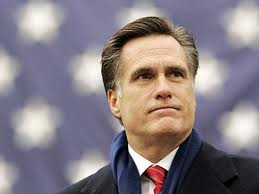
Let’s just agree first on what Gov. Romney said.  He said: I’m in this race because I care about Americans. I’m not concerned about the very poor. … I’m not concerned about the very rich. They’re doing just fine. … I’m concerned about the very heart of America, the 90-95 percent of Americans who, right now, are struggling. …

That’s what he said.  When the Obama campaign releases its response ridiculing those lines and focusing especially on the “I’m not concerned about the…poor” fragment, I say, “Oh well, that’s politics.”  When news organizations seize on the same fragment in the same way, I say, “Wait a minute.  Aren’t you supposed to be “reporting” the news?”

To my mind, this is not a test of Mitt Romney.  He is going to continue to say things that bring attention to just the parts of his campaign he wants to mute.  This is about the piling on.  This is about who is a part of the campaign to re-elect President Obama and who is part of the news business.

Here’s a scene from a western that came to my mind as I was reflecting on this episode.  The western is Blue-eyed Devil, by Robert Parker.  General Laird is running for mayor of the town of Appaloosa.  He has hired a gun hand, Chauncey Teagarden, to make sure his opponent doesn’t get nasty.  The opponent does get nasty, of course, since he is the novel’s principal villain.  Here’s the way the scene goes.  A heckler in the crowd yells at General Laird”

“I say you are a back-shooting, barn-burning, gray-bellied coward.  Anybody gonna tell me no?

“I am,” Chaucey said.

“And who the hell are you?”

“General Laird is a gentleman,” Chauncey said.  “He is not a murderous thug.  He is not going to descend to a street fight with you.”

“And you?” the man with the black beard said.

“I am a murderous thug,” Chaucey said.

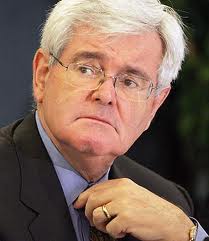
That is the distinction that interests me at the moment.  I know what Gov. Romney said.  I know what he meant and so does everyone else.  I want to see Mitt’s plans, as they affect “the very poor” examined and I wouldn’t mind seeing them ridiculed.  I am sure they will continue to be ridiculed.  That’s the job of the Democratic Party, of Newt Gingrich (currently) of the committee to re-elect President Obama, and liberal interests all over the country.  They are the murderous thugs.  They have a job to do and boy are they doing it.

But in the interest of public debate, could we just have the news organizations stand pack a couple of feet?  It might give them a little perspective and there will still be room for the murderous thugs.


Posted in Politics | Tagged , , | 2 Comments

Beane Soup 1: Billy’s Goal

This is the first of series of stories that purport to be about the movie, Moneyball.  They aren’t really.  Michael Lewis made a collection of narratives out of the experiences of general manager Billy Beane of the Oakland A’s in the book, Moneyball.  Aaron Sorkin made a much smaller collection out of the book for his movie, Moneyball.  But I see so many stories in the movie that interest me.  Some of them are really there.  Some are just hints and allegations of narratives and that I have tied them together because they reminded me of a story.

I’m long past apologizing for all the stories I see in the material others have assembled.  What story it is depends entirely on when you start it—what happened first, for instance.  And who is in the foreground or the background.  And how long the story is.  And who it is “really” about.  So with this post, I begin a series of stories I have, to some extent, “found” in the movie, Moneyball, and to some extend have “extrapolated” from the movie.  My view is that they are all there and I’m just moving my flashlight around from one part of the tapestry to another.

Here’s the first one.  Billy Beane is so much the hero in Moneyball that it is hard to notice how much he changes during the story.  Let’s start with the two scenes that indicate how very successful he has been and we’ll work back from there.  John Henry, the owner of the Boston Red Sox offers Billy the position of general manager after the season described in the movie.  He tells Billy that every team that is not rebuilding itself along the lines of Billy’s strategy in Oakland is a dinosaur and will be left behind by the teams that are following Billy’s lead.  It might be that Billy doesn’t believe that or it might be that he didn’t really hear it.  It is, nevertheless, the goal that Billy was pursuing by the end of that season.  And what was that goal?

Let’s look at the second of the two scenes.  Peter Brand, who is represented in the movie as the genius behind the new way of organizing and deploying baseball teams, is sitting down with Billy after the Red Sox interview.  Peter doesn’t know whether Billy is going to accept the Red Sox offer—Billy doesn’t know either at this point—but he knows that Billy really doesn’t understand the dimensions of the triumph he has just had in Oakland. 

Peter hauls an unwilling Billy off to the film room to show him a clip of Jeremy Brown, an overweight minor league catcher.  Brown is so big and clumsy that he never runs to second base no matter where in the park he has hit the ball, but in this clip, he does.  He rounds first, falls on his face in the dirt, and scrambles frantically back to first base.  Everyone is laughing at him and it takes him a little while to realize that they are laughing because he hit the ball 60 feet over the fence and doesn’t need to scramble back to first.  He needs to take a leisurely and triumphant tour of the bases.  Peter wants Billy to see that clip because he thinks Billy is in the same spot as Brown and doesn’t know how else to say it.  Billy hit a home run, Peter thinks, and doesn’t know it yet.

That’s what the owner of the Red Sox thought, too.  And that’s what Sorkin wants us to think as we watch the story.  It is hard for us, though, because that is not what Billy wanted at the beginning of the season.  When we pick up the story, the A’s have just been eliminated by the Yankees.  The A’s lost their best three players to teams that just outbid them for these players’ contracts.  Billy’s view is that is you don’t win the “last game of the season,” you have lost.  That means you have to win the World Series or you have lost.  That’s a high standard, but the one he adopts as the story develops is a good deal higher.  What Billy comes to want to do is to change the game of baseball.

There isn’t a scene in the movie where Billy realizes that his goals have changed, but there is no question that in the first early scene with the owner of the A’s, Billy says his goal is to win a championship.  After the highlight of the season, winning 20 consecutive games, there is a scene where Billy tells Pete, “I’m not in this for a ring.  I want to change baseball.”

I think that is a remarkable transformation.  He had to overcome the visceral opposition of his scouts.  Maybe that’s what transformed him.  He had to overcome the strongly held views of manager Art Howe.  Maybe that’s what transformed him.  It is a fact, though, that the Billy Beane the movie gives us, wants to succeed at this game in the beginning of the movie and by the end of the movie, he wants to change the game entirely.

I’ve said that Billy demands that his scouts and his manager and his players change the way they think about the game.  It looks to me like Billy changed the way he thought about the game as well.

Posted in Movies, Paying Attention | Tagged , , , | 3 Comments

Win the Day

What everybody knows is that the attitude with which you approach aging matters a great deal in your experience of aging.  And if you’ve ever tried it, you know that you can’t just “adopt a positive attitude” the way you would put on a new shirt.  Unless, of course, you have the level of arthritis many old hands have and you are unable to button the shirt—in that case, the shirt and the attitude share some attributes a younger shirt-wearer would not expect.

What I know about “adopting a positive attitude” is that the task is made a good deal easier if you can find a metaphor that helps you think it through—or visualize it or extrapolate it or imagine it or whatever you do with metaphors.  A good metaphor, in this sense, is a metaphor that works for you.  You might think of death as “the enemy,” for instance.  You are fighting the good fight, like Roland at Ronceveaux.  You might check off each new disability like so many stops on the train as you near the “station.”  You might celebrate the joys of the wisdom and caring that are your part, in Erik Erikson’s schema at any rate, as an old person in the last stage of life.

Whatever works.  These are not questions of truth and falsehood.  They are questions of utility and effect.

So I thought of one today that I think will be a good one.  I’m the quarterback of a pretty good but banged-up team near the end of the season.  In honor of the victory of the University of Oregon football team in the Rose Bowl this year—the first such since 1917—and particularly in honor of their coach, Chip Kelly, I live by Kelly’s motto, “Win the day.”  “Banged up quarterback” make me think of the Steelers, so I’ll use that as my visual reference.

I really like “Win the day” because it isn’t about game day until game day.  On the first day of spring practice, “the day” is the first day of spring practice.  Here’s what needs to get done today and if you do those things and learn what you should learn from it, you won.  The next job will be to win the next day’s practice, but that’s not until tomorrow.

I like that because I am a runner, although given my times, that is more a courtesy designation than a defensible one.  What I know is that when I set out on a run, I can give it all I’ve got, in which case I will be tired and happy afterwards, or I can pull back more than prudence requires and spend the rest of the day regretting my bad judgment.  I know what “winning the day” is like on the trail.

But now I’m the quarterback of the team.  I know what play has been called, but I also know a lot about the condition of my team.  It is, as I said, late in the season.  I’ve got guys on my team who can’t sleep through the night anymore and who, consequently, are tired a lot.  I have guys whose knees are a little dicey and could run any play I called if it were slow enough.  I have guys who can’t remember the whole playbook anymore.  I have guys whose hands really hurt, sometimes, and who can’t squeeze a pen, much less a football with any velocity on it.  I have guys whose weight has gotten out of control during the season and who can’t do the stuff they could do in spring practice, when a lot of these plays were drawn up.  You get the idea.

So I come up to the line and I look over my players and I see what I’ve got to work with on this play.  That’s my first job every morning.  I look over the players I have to work with and decide on a play.  Ordinarily, I’ve got most of that done by the time I get out of the shower in the morning.

I love all these guys.  They’ve been with me for a long time.  On the other hand, we are not going to succeed if I keep asking them to do things they can’t do (any more).  I want to use their abilities and call plays the will use those abilities.  That’s the only way to succeed as a team.  That’s why I don’t call the plays as fast as I used to.  I stand at the line and watch the clock run down. I give the count, I get the ball, and the day happens—I mean, the play happens.  When I see how well it works, I will know better what play to call next.

I think I like this metaphor.  There are opponents, but there aren’t any enemies.  I’m surrounded by guys I respect, but who have gotten themselves banged up a little during a long season.  I want to count on them to do everything they can—they aren’t going to win the day if they don’t—but I don’t want to make them do things they really can’t do.

They say, you know, that getting old isn’t for sissies.  They got that right.  Oh, I forgot to say, I’m the head cheerleader too.  Not the only cheerleader, I am happy to say, but the most important one.  There is a large array of boosters, but you know how boosters are.  They pay a lot of attention to winning and losing, so they tend to come and go.  Me, I’m more a “Win the Day” kind of person.

Posted in Getting Old | 5 Comments

David Brooks Has Caused Me All Kinds of Trouble

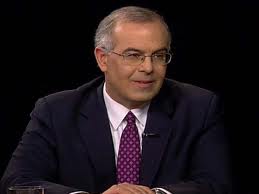
David Brooks has caused me all kinds of trouble.  When I introduce him to people—my students at PSU, usually—who don’t know him, I say he is a conservative columnist for the New York Times.  When my students choose David Brooks as the focus of their paper on columnists, they often call him “a moderate.”  Some maintain he is a liberal.  Why is that?

I’ve had the same conversation with some pretty savvy political friends.  I try to point out how really really conservative Brooks is (not Tea Party conservative), they say they don’t understand my argument and if I persist, which I have sometimes done, they think I am making it up.  It is those two kinds of experience I have in mind when I complain about how much trouble he has been for me.

I have a column in mind.  Let’s take a look at it and I will allow myself to dawdle in my analysis in the hope that that will make it more persuasive.  The column I have in mind is his January 3, 2011 piece, “The Achievement Test.”  I’ll be quoting a good deal of it in this post, but you can read it all here.

Here is the first paragraph.

“Unless something big and unexpected happens, 2011 will be consumed by a debate over the size of government. Republicans will launch a critique of big government as part of their effort to cut spending. Democrats will surge to the barricades to defend federal programs.”

You have to admit that sounds either nonpartisan or bipartisan.  Brooks often begins with “A plague on both your houses.”  That establishes that he doesn’t have an axe to grind (he does, of course; he’s a political columnist) and that his argument should be listened to in a spirit of openness, rather than of suspicion.  I am describing here what I see to be the function of this paragraph.  I do not mean to imply that Brooks does not believe what he is saying.

Here’s the second paragraph.

“This debate will be contentious, but I hope it’s not rude to mention that it will be largely beside the point. National destinies are not shaped by what percentage of G.D.P. federal spending consumes. They are shaped by the character and behavior of citizens. The crucial issue is not whether the federal government takes up 19 percent or 23 percent of national income. The crucial question is: How does government influence how people live?”

The most fundamental tool in my arsenal as a policy analyst and as a political science professor is what I call “the problem.”  I define this as a tool because the greatest value of saying what a problem really is, is that you get to say what the best solution to that problem is—and, of course, you get to ignore the problems others are putting forward.  I teach my students to note—and if it is something I am reading aloud in class, to raise their hands—the moment someone says, “…but the problem really is.”  Given my notion of “problem,” that means that the writer would rather construct this problem than any of the others he could have constructed.

When Brooks opines that the debate between Ds and Rs, as he has recounted it, will be largely beside the point, it means that he knows what “the point” is and he is about to tell us.  If I were sitting in my own class, I would raise my hand at that point.

Brooks has two versions of this, note.  Here is the first: “National destinies …are shaped by the character and behavior of citizens.”  So you guys who are wasting your time and ours arguing about what the “percentage of GDP the federal government consumes,” give it up.  We want to talk about the character and behavior of citizens.  Presumably, “character” is an enduring construct and “behavior” is determined by it.  I’m guessing, but that’s how I use those terms myself.

The second version is subtly different: The crucial question is: How does government influence how people live?”  Notice here that it is the effects of government that are at the center of the question and that “character and behavior” have been squeezed into “how people live.”  So “national destinies,” which were the effect of citizen character in the first formulation, are the cause of citizen character in the second.  It isn’t perfect, but it’s close and the directions are right.

We skip now to paragraph four:

“The size of government doesn’t tell you what you need to know; the social and moral content of government action does. The budgeteers and the technicians may not like it, but it’s the values inculcated by policies that matter most.”

I’d rephrase his first point like this: It is the social and moral content of government action that you need to know.[1]  What was in the first formulation, the effect of government action on producing virtuous citizens, is now a property of the actions themselves—it is the social and moral content of those actions that we need to know about.  Now, in the second formulation, we come back to the effects of government policies: “…it’s the values inculcated by policies that matter most.”

Notice that by now, “the good stuff” has been: a)  the effect of citizen behavior, b)  the effect of government actions, and c) a criterion of the actions themselves, apart from the effects they cause.  Hard to follow isn’t it.  Just keep your eye on the pea; don’t mind my moving the shells around.

Don’t worry, though. The master criterion is coming up.  Here it is:

“The best way to measure government is not by volume, but by what you might call the Achievement Test. Does a given policy arouse energy, foster skills, spur social mobility and help people transform their lives?”

Let’s spend just a little time on the choice of “achievement” is the criterion we ought to be looking at.  I often find it useful to arrange outcomes so that they look like a spectrum of values with the left side of the spectrum varying from -1, a very bad outcome to 0, a middlish outcome and the right side varying from 0 to +1, a very good outcome.  Some people live their whole lives varying between -1 and 0: the kids weren’t hungry today, I wasn’t harassed at work today, I got enough tips to average out to the federal minimum wage today.  Others live their lives mostly between 0 and +1: sales were good, but not quite what we projected, the value of our rental properties continues to appreciate, it’s a real satisfaction that junior was accepted at our alma mater.

Just what “achievement” means is clearer in the next paragraph where Brooks contrasts “the welfare policies of the 1960s” with “the welfare reforms of the 1990s.”  We could start by looking at “policies” v. “reforms.”  Which of those is “good?”  The Great Society was, if I recall correctly, the only time in modern American history when the proportion of Americans living in poverty actually went down.  The “reforms” of the 1990’s reflect President Clinton’s attempt to blunt the welfare issue before the 1996 election campaign.  This is the era of “the era of big government is over.”  It involved an act the left called “the most shameful act of the Clinton presidency,” and that label was used by people who knew all about Ms. Lewinsky.

It transmuted Aid to Families with Dependent Children (AFDC) into Temporary Assistance to Needy Families (TANF) and shoved the bulk of the decision making from the central government to the states.  Those are the “reform.”  And they “worked,” according to Brooks, because they were in line with “American values, linking effort to reward.”  But, of course, they “worked” only if their goal was to get poor people off of welfare.  If the goal was to reduce the number of poor people, they were, according to the last figures I saw, a resounding failure.

So what to do?  I like Brooks’ idea that it is a step in the right direction to move the R agenda away from hating big government and the D agenda away from loving it.  Brooks knows there cannot be agreement, but he wants to move from stalemate to horse-trading.  I like that.

And what would that look like?  The Republicans would make sure they favor “people have the incentives to take risks and the freedom to adjust to foreign competition: a flatter, simpler tax code with lower corporate rates, a smaller debt burden, predictable regulations, affordable entitlements.”  That sounds very much like the right edge of the  National Chamber of Commerce website.  The Democrats would favor “making sure everybody has the tools to compete: early childhood education, infrastructure programs to create jobs, immigration policies that recruit talent, incentives for energy innovation.”  Except for the early childhood education, that also sounds very much like the right edge of the  National Chamber of Commerce website.  You might just want to pop over there and take a peek.

You get to these two “new” agendas, Brooks says, by “putting the Achievement Test back at the center of politics.”   Achievement has to do, we see, with “work for welfare” programs to improve the character of the poor and with “incentives to take risks and adjust to foreign competition” for the business elites.  The -1 to 0 end of the scale is filled with people who need better character.  The 0 to +1 end of the scale is filled with people who need to be taxed and regulated less.

How Brooks continues to evoke judgments that he is a moderate truly escapes me.  Maybe the old “a plague on both your houses” gambit is a lot better than I thought.  And I thought its principal use would be as a nasty remark a President would launch at a recalcitrant Congress.


[1] I’ve taken some liberties with word order.  Check to see that I haven’t distorted the meaning.

Posted in Political Psychology, Politics | Tagged , , | 1 Comment

Explaining Matthew’s Advent Story to Children

The story of Herod’s anger at having missed his chance to kill the Christ Child has been around for a long time, assuming that the Gospel of Matthew dates from the 80s AD.  In the charged political atmosphere of the time, it was Herod’s failure that was featured.  This bad man meant evil, surely, but God intervened to spare the Holy Family.  It was a strong part of the story Matthew wanted to tell, also, because of all the Moses parallels.  The evil king (the Pharaoh) tried to kill Moses too, but quick action of his family saved him.  A lot of other babies the age of Moses were killed, however.  Moses eventually escaped from Egypt.  Jesus and his family escaped TO Egypt.

I’ve been familiar with those meanings for a while, but this year I adopted one of the time-tested devices for discovering that you’ve been missing something big.  The time-tested device is to try to tell the same story to children.  It deprives you of the language you customarily use.  It deprives you of some of the topics that you had thought were essential to the story.  It pushes you into the unfamiliar penumbra of really familiar stories.  It’s a good idea.

The new piece of Matthew’s story came when I was trying to find a way to downplay the massacre of the two-year-olds (and younger) in Bethlehem.  For children, I realized, Herod’s frustration and failure would not be the most accessible meaning.  The parallels with the life of Moses wouldn’t be in the top two or three either.  Nor would the close identification with some close-knit group–say an ethnic group– allow a celebration of how “we” escaped although there were a lot of casualties.  No group identification we are likely to have is going to protect us as persons from the horrible prospect of the malevolence of the powerful.  And you really want your own children to feel safe and cared for.

So a mother, listening to the story I have written—following Matthew’s account—is going to have to think about the feelings her children might have on hearing that a lot of little kids their age were killed just for being their age. 

That’s the dilemma.  The rest of this is where my thoughts went after that.[1]  If I were the parent, I would not want my children to be frightened by that part of the story.  I would assure them that although this did happen, as the story says, it was a long time ago and a long distance away and things like that don’t happen to two-year-olds like you.  That might have worked, but it might not, also, because I had children who asked why a lot and “why” is where you get into trouble.

“A long time ago” imagines that these same things are not happening today.  In fact, we know they are happening today.  You don’t have to read the notes of the cases coming before the International Criminal Court to know that whole villages have been put to machete and fire.  You don’t have to get into how many of the women were raped before they were murdered to see that “the horror of Bethlehem” is not something you can consign to “a long time ago.”

There is still “it doesn’t happen here,” if by “here,” you mean the part of the city you live in.  That would probably be comforting for children even if there are other neighborhoods in your city where making it through the day alive is not something everyone can count on, especially those neighborhoods where there are gangs and drugs.  The operative sentiment there, not spoken aloud, would be “Thank God we don’t live in those neighborhoods where such things happen.”  But my kids might have wondered why any children live in such neighborhoods and I am not sure what I would have told them.

It’s really more likely that by “here,” you would have meant “here in the United States.”  A parent might try to assure a troubled child by granting that there are places in the world where really scary things, like the ones Matthew describes, do happen, but not here in the U.S.  But if you were to be asked why they don’t happen here, you would be faced, even if you were a very adroit parent, with a range of unsatisfactory answers.

Is the reason why “here” is safe because we are so much more powerful than other nations?  This would be a very plausible answer for a Roman mother if she were living in the empire that granted Herod his power.  “Yes, child, this could happen to an Israelite city, but Rome will protect us from such violence.”  That places the story very reassuringly  within Matthew’s world, but even children might know that Rome became less strong and was, in fact, sacked by people with no more delicacy than Herod showed.  And even if they don’t, the strategy of assuring children that we are too strong to allow that to happen to us, places around them a set of hostile actors who would do such a thing.  They are prevented, we would say, as long as we are strong enough to prevent them, but if they are there, who is to say we will always be that strong?

Would we go on then to say that the safety we want to assure to our children is the reason we spend a lot more on military forces and equipment than anyone else?  That answer leads to the nuclear-missile-carrying submarines, and the web of missiles and missile shields and military bases and unsavory alliances and all of that.  I myself have never had children who would have pushed the puzzle of “why we are safe” as far as this, but if the answer is that we are safe because we are stronger than our enemies, the answer does lead to the subs, the planes, the bases, and so on.

And even if it didn’t, you know the kids will stumble eventually over the rants of the prophets who mocked Israel for thinking they could be safe by playing the enemies north of them off against enemies south of them.  Strategies like that, the prophets said, are fundamentally flawed and won’t, in any case, last for very long.  So if you won’t tell them when they are two, Isaiah and Jeremiah will tell them when they are twenty-two.

To tell you the truth, I never had this difficulty when I told Matthew’s story of the birth of Jesus in the language I was more comfortable with.  Telling it for children seems, in retrospect, to have stripped out some of the buffering my more familiar language provided.


[1] None of this would have happened in the ordinary course of events.  December 24th was 21 hours long and the second of the Christmas Eve services at our church ended a little after midnight.  I mention the circumstances because my imagination is ordinarily under better control than this post illustrates.

Posted in Biblical Studies, Politics | Tagged , , , | 2 Comments

Fractured Attention

From my standpoint, this looks like a cultural avalanche.  If there is something good about it, it is not yet visible to me. Today, I want to talk about technology and personal presence.  It seems to me that the more there is of the one, the less there is of the other.

Let’s start with the horror stories and work up.  This morning’s New York Times had an article with the headline: As Doctors Use More Devices, Potential for Distraction GrowsThe article included an account of a patient who is clearly a victim of what the writer calls “distracted doctoring.”

Scott J. Eldredge, a medical malpractice lawyer in Denver, recently represented a patient who was left partly paralyzed after surgery. The neurosurgeon was distracted during the operation, using a wireless headset to talk on his cellphone, Mr. Eldredge said.

 “He was making personal calls,” Mr. Eldredge said, at least 10 of them to family and business associates, according to phone records. His client’s case was settled before a lawsuit was filed so there are no court records, like the name of the patient, doctor or hospital involved. Mr. Eldredge, citing the agreement, declined to provide further details.

This is bad, certainly, but the question I want to consider is how the neurosurgeon came to be making calls on his phone during surgery. Or how a nurse came to be checking airfares.  Or how the technicians running bypass machines came to be texting during a procedure.

I have a theory.  It is that what people my age call “the normal mode of operating” has been fractured.  Let’s take a moment and look at some words here.  An integer is whole.  It has not been “fractured,” although we would probably say “fractioned.”[1]  You have to “break” an integer to get fractions.  You can do the same with integrity, of course (integer/integrity); you can break it and so become a person of pieces, of fragments.

It is not hard to picture a wholeness of attention.  It is a romantic myth that we once had a society that was characterized by this wholeness of attention, but I do think that the duty of “seeming to attend” to what was going on did cut down on the extremes of inattention I am talking about.  If you grew up in a society where attention was routinely fractured, you would never have experienced the fracturing at all.  Having never experienced the wholeness of attention, you would never have experienced seeing that wholeness broken down.  What you would experience, instead, is the persistent multiple claims for attention and the normal-ness, the “rightness” of that multiplicity.  Maybe even the “inevitability.”

If the range of things you know you are expected to be doing in this new consciousness is in the range of 4—7, you might look at someone who was doing only three and think of him as a slacker.  Someone who was doing only one—all of his attention was committed to doing or experiencing or thinking about just this one thing—might be thought of as pathetically simple.  Simpleminded, maybe.  Singleminded.

I’ve argued so far that “people” are like this.  If people are like this, then they go on being like this when they become professionals—unless, of course, they learn to set it aside.  So, in this instance, functioning as a doctor is going to have to be set aside from “normal” in some way.  “When I’m being a doctor,” one would say, “I set aside the normal complexity (I’m trying to think what this person might call it—“complexity” maybe) of normal life and restrict myself to just this patient or just this diagnosis or just this procedure.”  Being a doctor, then, means the temporary setting aside of the normal and everyday fracturing of attention.[2]  Same thing for being a nurse or an anesthesiologist.  If you don’t do that, you will be left with monitoring the procedure and believing that should something require your full attention, you will know it and attend to it in a hurry.

I’ve had pretty good doctors.  Also, I’m a demanding patient.  If I am not getting the focus I think the session requires, I ask for it explicitly.  I haven’t had as much luck with students though.  I’m a professor and I do see a lot of what I might call “distracted studenting,” just to have something parallel to “distracted doctoring.”

I get students who are, for all practical purposes, passing each other notes.  They are texting each other.  They are on Facebook.  The very best of the ones who are not paying attention to what I am trying to get done in class are online,  checking to see if there are more recent public opinion data than those I just cited.  I don’t think my students are any less disciplined than my generation of students was.  I do think that the tools for “being somewhere else” are much more available and much more distracting.  But, much more importantly, I think that there has been a substantial erosion in the idea that one should be “here,” rather than here and here and here and there.

I want to describe why this is particularly hard for the kind of teaching I like best and try hardest to practice, but before I do that, I want to establish a reference point.  It’s an over the top example, but with the absurdity comes some clarity and I think it is worth it.

Imagine that a young man and a young woman are getting married.  Picture a wedding card couple.  Except that each of them has ear buds and is busy texting as the ceremony is going on.  The minister, unused to what he will see as a fractured attention, stops and explains to them gently that they are GETTING MARRIED and this means something and they should pay attention to it.  They look knowingly at each other, (the minister is one of those old “full attention to the one matter before us” guys) then the bride-to-be explains that they actually are tracking the ceremony carefully.  They know where they are in it and what is next.  When the time comes for them to say something, they will be ready, so could we just get on with the ceremony please?

Before I get back to my own classroom, let me ask you to stop and try to say just what is wrong with this couple. 

How is it going?  Hard, isn’t it?

 The truth is, in order to say just what is wrong with it, you have to say what really has to go on RIGHT THEN that is not getting done because of the “distracted marrying.”  What could they really not have accomplished before the ceremony or after; what really had to be done right then?

My kind of teaching emphasizes “concept attainment.”  I teach politics, so there’s always going to be a lot of “who’s leading in the polls” and “will the cap and trade bill every get passed by both houses in the same year?”  But we will also have to deal with whether Americans are really permanently strung up between procedural and substantive notions of what “democracy” means.  What is the fundamental structure of the phony “pro-life v. pro-choice” argument?[3]  Is the internal distribution of power in the House of Representatives more or less important than the balance of power between the House and the Presidency?  That kind of stuff.

It’s hard.  It takes undivided attention for a period of time.  You have to find a way to disentangle the tendrils of old patterns of thought and to replant those tendrils carefully on new surfaces.  You have to see what changing this idea means for that idea.  You have to know whether you are really willing to live with the implications of this new notion.  It isn’t easy and there is a part of it that really has to be done right then.  The class session needs, by one means or another, to reach the temperature at which old ties are loosened (which is precisely what analyze means—the root verb luein means “to loosen”) and are free to be attached in new ways.

You do it then or, chances are, you won’t do it.  That task requires an integrity of attention.  The normal fractured (or multiple-investment) style of attention is not going to do the job.  And that means that if we are going to continue to produce “people” like this, we are going to have to get those people who are also students to set aside what they think of as “the normal natural complexity of being a person” for the purpose of learning something.  If we take as our norm the difficulty the doctors, nurses, and anesthesiologists have in setting this mode aside for the purpose of taking care of patients in surgery, we see that this is asking a lot of students.

In this coming term, I am going to keep this whole argument in mind and try, at the same time, to take a few small steps toward bring a focus to “what goes on within these four walls” during the time you are here.  I suspect it will involve “personalizing” a relationship that has been being “depersonalized” for decades now.  It will require redistributing the points awarded for performance so that the evaluation scheme of the class is not at war with my earnest entreaties to the students.

I don’t really know what these measures will look like, but I don’t think there is much time left to do it and I want to try.


[1] The verb here is frangere, “to break.”

[2] People of the old “focus on one thing at a time” mode—the fogies—might call it “inattention,” but we know it is just a new kind of attention: a lot of monitoring and attending as needed.

[3] Since no group thinks of their position as “anti-choice” or as “anti-life,” the structure of the dialogue is going to have to be torqued a little just to make discussion possible.

Posted in Education, Paying Attention, Political Psychology, ways of knowing, Words | Tagged , , | 7 Comments

Probably Mitt

So who are the Republicans going to pick as their presidential nominee?  If I were a betting man (I’m not) and if I put my money where my mouth is (I don’t), I’d say Mitt Romney.  The New York Times just published a survey of likely Republican voters in Iowa, the site of the first real test of R candidates.  To tell you the truth, no one likes Mitt Romney all that well.

Here’s the rundown.  These questions all had this form: “Regardless of how you intend to vote in 2012, which candidate do you think [the variable being asked about] and then a list of names.

[Who] understands the needs of people like you?  Gingrich 24%, Perry 16%, Romney, 13%.

[Who] has the best chance of defeating Barak Obama? Gingrich 31%, Romney 29%.

[Who] is best prepared for the job of president?  Newt Gingrich 43%, Mitt Romney 20%, Ron Paul 11%.

[Who] represents the values you try to live by?  Michelle Bachman 19%, Ron Paul 18%, Mitt Romney 16%, Newt Gingrich 11%.

[Who] will do the most to preserve conservative principles?  Michelle Bachman 21%, Ron Paul 20%, Newt Gingrich 18%, Mitt Romney and Rick Perry, 10%.

[Who] can be trusted to handle an international crisis?  Newt Gingrich 44%, Mitt Romney 16%, Ron Paul 10%

[Who] is qualified to be Commander-in-Chief?  Newt Gingrich 40%, Mitt Romney 19%, Rick Perry 11%.

[Who] will deal with the economy and unemployment? Mitt Romney 22%, Newt Gingrich 21%, Ron Paul 15%

On first glance, that looks really good for Newt Gingrich.  He is at or near the top of nearly all the responses.  But there are a couple of things you really need to take into account about Newt.  One is that he really doesn’t have a campaign organization.  The one he had, quit—they left en masse—and he hasn’t entirely replaced them.  Another is that he hasn’t raised front-runner money.  There is still time to do that, but it needs to get done and he hasn’t shown much appetite for that part of the campaign yet. 

A third is that Gingrich is really smart and he knows he is.  That means that the discipline candidates have to show to keep “on message” is a good deal more onerous for him than for the others and consequently, he doesn’t do it as well.  If he knew for sure that he could be president if he could just control his tongue, I think he still couldn’t do it.  He really likes “being Newt” and my guess is that he would rather be Newt than President Gingrich.

That said, it can’t be denied that Gingrich is the flavor of the month.  He wins five of those questions outright.  Romney wins one—by 1%.  On the other hand, look where Romney falls on the questions he doesn’t win.  He is second on five of them.  He is third on three more.

Perry has a second and two thirds.  Ron Paul has two seconds and three thirds.  Michelle Bachman wins the values questions, but nothing else.  What does that sequence of lower placements mean for Romney?

My guess is that Romney’s position as the default candidate—the candidate who will be chosen at the convention unless someone does something really dramatic to replace him—will hold up.  Romney gets bad grades for “saying what he really means” rather than “saying what he thinks voters want to hear.”  As a successful governor of a liberal state, he did the things that success required.  Now he wants to be nominated by a much more conservative party and he is doing the things that success requires.  He can only hope that consistency isn’t one of them.

He’s the kind of team you don’t want hanging around late in the third quarter.  He’s not going to make many mistakes.  He’s run this race before and he learned a lot from it.  He’s going to have to be taken out by someone with a better offense than he has and I don’t see that happening.  Gingrich has a high-powered offense, but he turns the ball over a lot.  Nobody seems to like Mitt best, but everyone seems to think it would be OK if he won.

Posted in Politics | Tagged , , | 2 Comments

Matthew’s Story and Really Smart People

Nobody ever said that the story of Jesus’s birth was about what you know.  The story is, like everything else in Christianity, about Who you know.[1]  I get that and I’m fine with it.  Mostly.  But the truth is that the less of any commodity there is, the more we are attracted to it and there aren’t very many really smart people in the birth narrative of the gospel of Matthew.

There are three for sure, though, counting all three magi as one.  In the order the story gives us, they are: the magi, King Herod, and Joseph.  The magi were what we would call astrologers today but that was before astronomy diverged from astrology.  The reason for studying the laws of the stars (the –onomy part) is that they would tell us things (the –ology part).  After all, you have to know a lot about stars to recognize a new one.

The new star told the magi that a new king was going to be born in Israel.  So what did they do: follow the star to Jerusalem?  Nope.  They consulted a really good political atlas and determined that Jerusalem was the capital of Israel and so, logically, where the new king would be. Then they packed up and headed for the capital of Israel to talk to the current king.

I like the magi for other things too, of course.  They promised a powerful king that they would return from their field studies to tell him what they had learned.  They had promised, from our perspective in history, to rat out Jesus.  But when they had a dream telling them not to go back to Herod at all, they obeyed.  A king as nearly paranoid as Herod very likely had agents all over the kingdom telling who was going where and why, so it wasn’t a risk-free choice to sneak back to wherever they were going—Iran, probably—against the wishes of the king, but they did it anyway.

In doing so, however, they set up the massacre of a bunch of little boys who had not reached their Terrible Two’s yet and who, now, never would.  It is hard to call Herod smart because he was also evil, but there is nothing irrational about Herod’s interest in learning the identity of the king who would supplant him and his own sons and doing what he could to safeguard his own political power.  Rome was going to judge Herod on how well he did at the one thing Rome cared about a good deal—keeping the peace.  Preventing a civil war over who was to be king in Israel would likely get messy and if it did, Herod could look forward to being booted out by the Romans even if he won the war.  So, like Pilate at the other end of Jesus’s life, Herod scoped out what his office required of him and did it promptly.

The third, in the order of the story, is Joseph.  Joseph had not done anything so far in Matthew’s story that I would call “smart.”  Lots of other good things: compassionate, obedient, thorough, prompt.  He hauled his family off to Egypt promptly when he had the dream in which the angel told him to go and if he had not, Jesus would have been among the not-yet-Terrible-Two’s who were massacred in Bethlehem.  But that wasn’t the smart part.  Joseph and his family stayed in Egypt until Herod died.  Then the angel told him it was time to go “home.”  But where to go?

In Matthew’s account, Joseph and Mary had never lived anywhere but in Bethlehem.  The onerous “journey to Bethlehem” is all Luke’s.  But whose political district would they be living in in Bethlehem.  The angel just said to go back to Israel.  It was Joseph’s job to figure out where in Israel Jesus would have the best chance of actually growing up. He picked Nazareth because Herod’s son Herod Antipas would be the ruler there and Joseph calculated that his family would be safer under Antipas than under his brother, Archaelus, who would be ruling over Judea.[2]  Why?  Did Antipas have fewer political ambitions than Archaelus, who would rule the territory that included Bethlehem?  Was he just less competent than his brother?  Had better National Security Advisors?

We don’t know, of course, but all those calculations are the kind that only a guy with substantial smarts would make and I have to say I really admire him for that.  As well, of course, for all the other things—such as postponing the period of Mary-making that would ordinarily have followed their marriage.  Good guy, that Joseph.  The patron saint of stepfathers everywhere.


[1] Many people will want to say that it is about Who knows you, but that leads into a very dark part of the woods.  Who does God not know?  See?  Now already we are into “knows-1,” one kind of knowing and “knows-2,” another kind.  I don’t think I want to spend my limited supply of bullets on the question of just how God knows whom.

[2] Raymond Brown in The Birth of the Messiah, cites the historian Josephus to the effect that Archaelus inaugurated his reign with the slaughter of 3000 people and continued until he was deposed by Rome at the request of his subjects.  Joseph’s judgment that Jesus would be safer under Antipas than under Archaelus was quite sound.

Posted in Biblical Studies, Politics, Uncategorized | Tagged , , | Leave a comment

Francis Bacon Was Right

Some years ago, Robert Reich wrote a telling and prescient book called The Work of NationsA little play, I noticed, on Adam Smith’s The Wealth of Nations.  In it, he argued that nearly anything that can be routinized can be mechanized.  He made explicit exceptions of making hotel beds and serving hamburgers.  He argued further that there are now many well-trained people in poor countries, so many jobs that can’t really be routinized can still be outsourced.  The question he left himself with was this: “What jobs pay good salaries and have to be done here in the U. S.?”

He named a few jobs, just to help people like me focus on the argument, but he really didn’t have “jobs” in mind.  He had “skills” in mind.  What do you have to be able to do to be well paid in a country that is dominated by mechanization and outsourcing?  His answer was profound and frightening; you have to be able to create works that are valued: new ideas, new plays, new products, new industries, new leisures.  You have to be curious and patient.  You have to think innovatively and write well.

He came closer to Sir Francis Bacon’s curriculum (“Reading maketh a full man, conference a ready man, and writing an exact man”) than anyone I have read recently.  Until this morning.  In this morning’s New York Times, Adam Davidson said most of what Reich had said in 331 pages in 1992 in about two pages.  Here’s what he said.

A general guideline these days is that people are rewarded when they can do things that take trained judgment and skill — things, in other words, that can’t be done by computers or lower-wage workers in other countries.

And then he said:

One of the greatest changes is that a college degree is no longer the guarantor of a middle-class existence…A bachelor’s degree on its own no longer conveys intelligence and capability. To get a good job, you have to have some special skill — charm, by the way, counts — that employers value. But there’s also a pretty good chance that by some point in the next few years, your boss will find that some new technology or some worker overseas can replace you.

Clearly, Davidson and Reich are saying the same thing.  I said as I introduced this idea that I found it “profound and frightening.”  You might have thought that was overdoing it a little.  It isn’t.  Let me tell you why.  In my off hours, since 1997 when I retired, I have been teaching political science at Portland State University.  Students take my classes, and those of the other professors in my division, because they want to “go into law” or “into politics” or, even worse, because they know the right answer and are looking for the political tools that will allow them to explain this answer to the rest of the country.

I try to tell them I can’t do any of those things for them.  I tell them I can teach them how to read and how to confer and how to write (Bacon’s curriculum).  I tell them I can invite them to unleash their curiosity and see where it leads them.  I tell some of them I can show them how to think thoughts that have never before been thought by any human being.[1]  I tell you candidly that my approach hasn’t worked very well.  I could count on my fingers and toes, if I could bend over far enough to get my shoes off, the students for whom the Hess version of the Bacon curriculum was attractive.  So I’m thinking that I’m going to try the Davidson approach.

Here’s what that would look like.  “OK boys and girls, who would like to have a good job that can’t be routinized or outsourced?  Good.  Good.  That’s promising.  How many of you would like to be architects?  Sorry, you can get access to really good Indian architects for about $10 an hour.  Oh, you were thinking of being paid more than that?  Let’s see, a lot of accounting is now being done by Xcel; a lot of conferencing by the internet; a lot of construction by dazzlingly efficient new machines.”

“Well then, boys and girls, how would you like to learn how to do things most other people will not be able to do as well as you can?  That means more than getting a bachelor’s degree because nearly a third of the population will have bachelor’s degrees.  You will need to have actually learned something.  Here are three examples of what you might want to learn. 

You might want to know how to find the crucial point in an argument more surely and in less time than most other people.  The document is 331 pages long and you have two hours to find the crux and see the implications.  You might want to learn to see the world in the way your colleagues or your rivals see the world and to use that vision to find common ground that they would never have thought of.  You might want to write lucid prose, expressing both the meaning and the sense of an idea in language tailored to engage the people you know will be reading your piece and looking for flaws.

“Does anyone hear ‘Reading maketh a full man, conference a ready man, and writing an exact man’ in there anywhere?  I can help you with that.  Here’s how we would spend out class time together if those were our goals.    Let’s get started.  The last date to withdraw from the class without any loss of tuition refund is two weeks from today.”

There is a political contest of wills that is every bit as daring as this fantasy and that derives directly from the Reich/Davidson thesis, but that will have to happen on another day.  I feel like I’m just emerging from a Doonesburyesque Sorkh Razil fantasy and I’m exhausted.


[1] I know that sounds grandiose, but it’s really just slicing the process fine enough to guarantee uniqueness.  It’s the same way candidates are awarded doctoral degrees for “original research.”

Posted in Education, Politics | Tagged , , | 2 Comments

All Reasonable Men Will Agree

Honestly, it doesn’t seem too much to ask.  I just want to say what I mean and have it taken the way I meant it.  How hard is that?

It turns out that it’s pretty hard, sometimes.  There is the matter of context, for one thing.  And then there is the little matter of interpersonal differences in communication.  Those two little items are today’s topic.

Let’s start with context.  How bad is it when your aide gives you a cue card that misspells potato(e) and you are caught on camera chiding a grade school child for spelling it without the final e-?  It’s really not that bad unless you have established a reputation for being really stupid.  Then it becomes what, in my family, we called a “nurn,” a word formed by corrupting the phrase “another one.”  It becomes, that is, yet another instance of a very familiar category.

I just googled “potatoe” to make sure.  Yup.  Dan Quayle and the “potatoe episode” come up on the first screen, even though the google prompts tried to add a final s- to it.  Dan Quayle cultivated an image of stupidity.  I don’t know why.  Maybe he thought it gave him “the common touch.”  Quayle’s father said his son majored is “sex and booze” in college and noted that it wasn’t every guy who could maintain a double major.

But what that means is that if Quayle is to be taken seriously, he has to confine himself to mistakes of another kind.  If people think of you as an education snob, the range of remarks you can make without being heard as though you were looking down on others gets small.  If you are thought of as a relentless appreciator of others, even an ambiguous remark will be interpreted in the best possible light.  If you are thought to be a racist, you really ought not to refer to a study you just read about the percentage of black coaches in the NFL.  It doesn’t really matter what you say, it will be treated as a “nurn” (another instance of an already formed category) and thus, further evidence of your racism.

Let’s look at this from the standpoint of the football fan in that last example and let’s say he is actually not a racist although he is thought to be a racist.  This fan pictures a scene like this.  Ten guys are lined up before an audience.  Each of them cites the same statistic about race and head coaching positions in the NFL.  Nine of they are judged by the audience to have conveyed some interesting fact.  You are judged to have made a racist remark.  IT’S NOT FAIR!

No.  It isn’t.  Now the question arises of just what to do about it.  I can’t really think of anything.  Get new friends?  Admit to having been a racist in the past so you can say you have turned over a new leaf?  Ask your present friends to aspire to attributional heroism—the willingness to consider each and every time  the possibility that what you said about race was NOT yet another instance of your racism?  That is a great deal of work and if you have friends who will do it, you have wonderful friends.

Probably the best thing is never to say anything about race every again.  What you say will not be “fairly” heard if by “fairly,” you mean it will be heard as if it were said by someone else.

The second case is easier in many ways. I counsel the quickest possible surrender.

This one comes from John Gray’s collection of insights in the Mars and Venus series.  This example still has quite a bit of pop for me because it was the occasion of what authors Snell and Gail Putney call a “yellow-eyed cat” experience.  That name comes from the great excitement their child exhibited upon seeing his first yellow-eyed cat.  Their own cats had blue eyes and those were the only cats the kid had ever seen.  The child was very excited when he saw the yellow-eyed cat because, according to his parents, he realized simultaneously a) that not all cats have blue eyes and b) that he had thought they did.

Here’s my yellow-eyed cat experience with life on Venus.   “On Mars,” says Gray, “When a man says he is sorry, he is saying he made a mistake.  The other man happily accepts his apology.  He feels, Okay, now that you admit you are wrong and I am right, we can be friends again.”  That didn’t just seem to me the way things are done, it seemed to me the only way things could be done.  The questions here have to do with promises made, with obligations, with good behavior and bad.

On Venus, says Gray, that’s not how it goes.  The questions do not have to do with promises made and who screwed up.  They have, instead, to do with whether the woman you have disappointed has a right to be angry with you.  In the field of that question, you tread at your peril.

On Mars, exculpation is possible.  Yes, I was late but I stopped to help deliver a baby in a car at the side of the road.  Yes, I was late, but I passed out as I was walking home and didn’t regain consciousness for several hours.  Yes, I was late but I got involved in my project and forgot I said I would be here at 5:00.

Some of those exculpations are pretty good.  The last one not so much.  But the point is that, on Mars, it is the quality of the exculpations that matters.  The good ones are accepted just as if no promises had been broken.  That bad ones are rejected, and apologies are necessary and sometimes even restitution.

On Venus, exculpations are not possible—at least, they are not possible right away.  The question is not, says Gray, whether you had a good reason for being late.  No.  The question is whether she is allowed to be upset that you were late.  It isn’t the validity of your excuses.  It is the validity of her feelings.  It isn’t about you.  It is about her.  It isn’t about whether you were at fault.  It is about whether you are willing to accept her expressions of blame, whether you were at fault or not.

I am the kind of person I introduced in the first paragraph.  I want to be judged on the basis of my work.  I want my good work to be praised and my bad work to be condemned.  I want really good excuses to be accepted and really bad ones to be rejected.  And then I realized, in the midst of all that, was that what I really really  wanted, in all those cases, was for the transaction to be about me.  That was my yellow-eyed cat experience and it carried a jolt with it.

I hadn’t ever noticed that before.  I knew that “the right question” was whether I was at fault.  I knew that “the right behavior” was to accept good excuses and to condemn bad ones.  Even after I learned “how things work on Venus,” I played the game the way you accept the frame of reference of an Alzheimer’s patient.  “Um…yes, here we are back at the farm where you grew up.  See the piggies?  See the horsies?  I’m so glad we came back to see where you were a little boy.”  I played that game and received all the benefits of it (domestic tranquility) for years before I realized that all I was being asked to do was to put her reality first instead of mine.

That doesn’t seem so bad.  It seems like something a caring friend might do.  It seems like something a caring husband might want to learn to do.  If there is a principled reason for saying that we will get around to what you care about just as soon as we have taken care of what I care about, I don’t know what that reason is.  I guess it would have to be that what I care about is more important than what you care about.

I know a lot of guys who would be willing to be more caring if they didn’t have to admit their guilt to do it.  My advice?  Do it.  Don’t call it guilt.  Call it “what you are caring about most right now.”  When you start to justify yourself, call it “what I am caring about most right now.”

Or, for you constitutional scholars, let me ask you to look at the preamble.  Hold “establish justice” in one hand and “promote domestic tranquility” in the other.  Look back and forth a couple of times.  Bear in mind that there are two systems of justice in play—forensic (Mars) and emotional (Venus), and only one system of domestic tranquility.

Make your choice and live with the results.

Posted in Love and Marriage, Political Psychology | Tagged , , | Leave a comment