No More Buildings Named after YOU

When we moved to Portland, we moved into the Wilson High School attendance area.  As a result, I am the proud father of Wilson alums. Wilson is named for President Woodrow Wilson. [1] It’s a thing in Portland. We also have high schools named for presidents Cleveland, Grant, Jefferson, Lincoln, Madison, and Roosevelt (Theodore).

Recently, some people have come to feel that Wilson is not worthy to have a high school wilson 2named after him. It’s a question that is easy to place on the agenda in today’s rather snarky climate of opinion. I began to wonder whether all the students at Wilson are worthy of attending a high school named after the creator of the League of Nations. Establishing “worthy” as the criterion is like increasing the slope on your treadmill.  Everything gets harder and when you forget that you changed it, you wonder why.
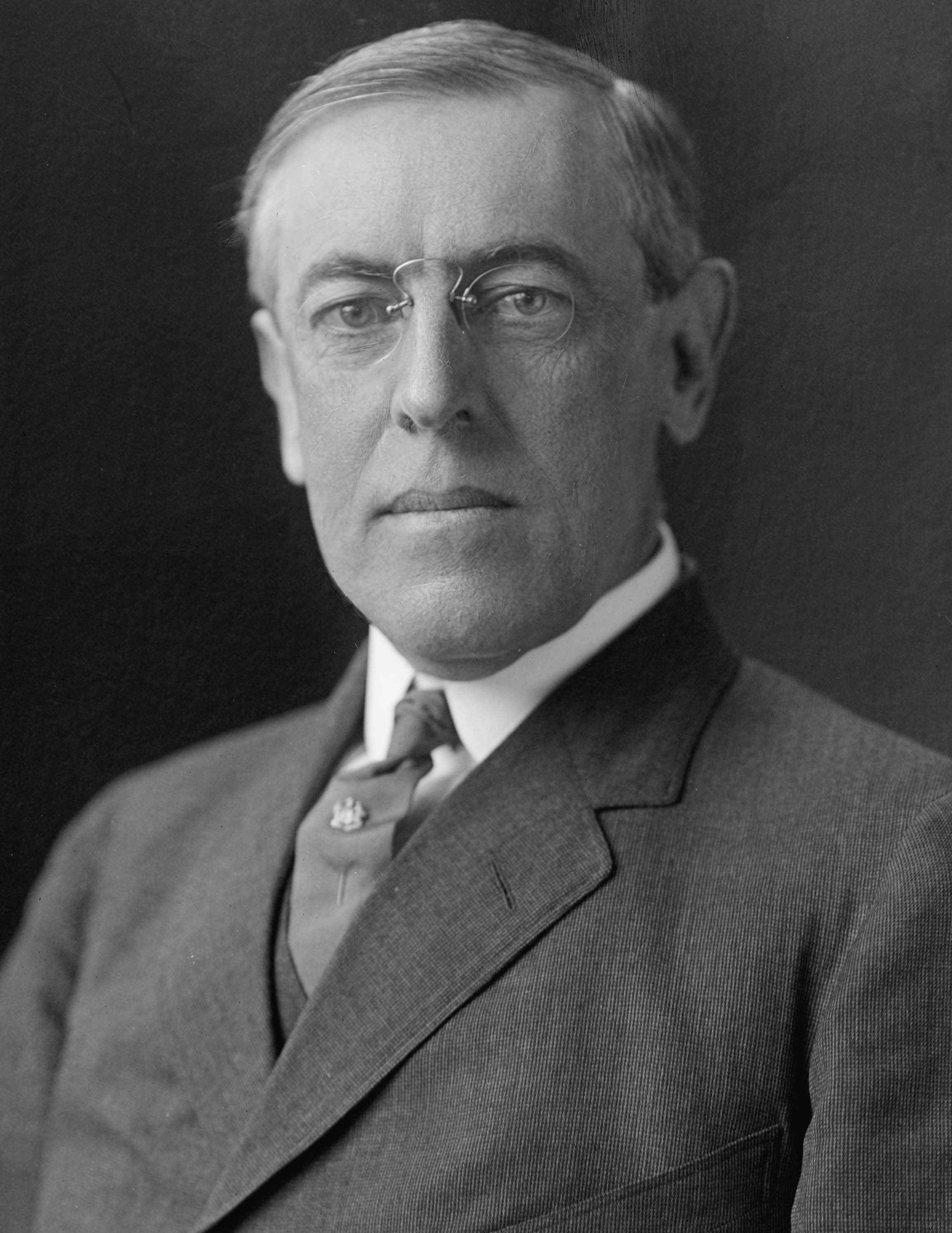
I picked up the story when one of Wilson’s teachers, Hyung Nam tweeted, “F*** Wilson and any school he’s named after.” Here’s another of Hyung Nam’s assessments: “We’d have to be ignorant about history to continue to affiliate ourselves with this man,”

It isn’t just Hyung Nam. I have three more for you.  Randy Barnett, a law professor at Georgetown University, says about President Wilson, “Truthfully, he was a bad guy, but that’s not the reason I’m saying this. I’m doing it because he held very, very repugnant views and he acted on them,”

Kendall Berry, a black student at Wilson, says, he thinks the conversation to change the name of the school has already changed the tone in history classes, with students mocking the former president.  You never go wrong mocking former presidents, I guess

And, finally, let’s look at Maddy VanSpeybroeck, a co-founder of Wilson’s Feminist Student Union. “The idea of our schools being named after a person with these ideals just doesn’t sit right with a lot of people,” VanSpeybroeck says, “Especially as feminist ideals and racial ideals are becoming more something our nation is talking about right now.”
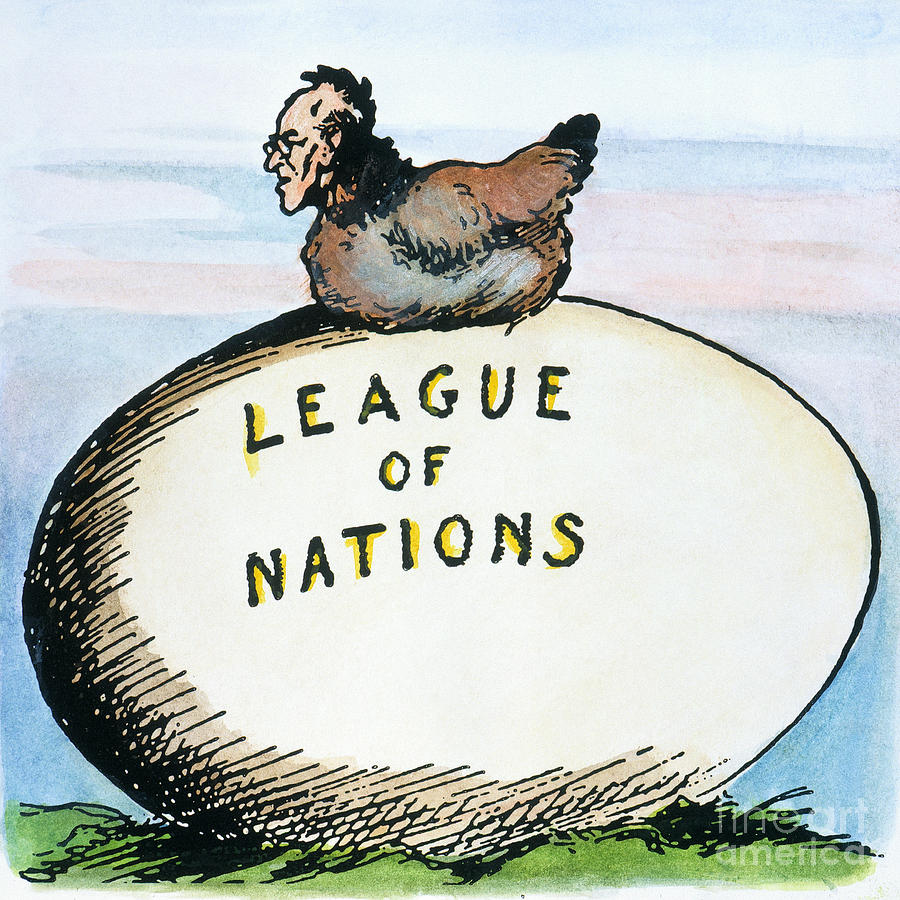
wilson 5What exactly is the issue here? Wilson High School was named after a famous American president, a man much revered by many historians because of his domestic record of progressive achievements (all pre-war, of course) and his international record of post-war diplomacy. It sounds like the kind of guy you might want to name a school after.

He doesn’t sound like the kind of guy who would be elected by people with race and gender at the top of their minds and he was not. There were other things at the top of the minds of the electorate in 1912. They were interested in extending the progressive agenda, at which Wilson was remarkably successful in his first term.

We don’t really have a progressive agenda any more, so it is easy to misunderstand. The left-wing politicians of today stretch further than most voters will allow, just to touch the coattails of the practical visionaries of the Progressive Era. It isn’t just that the American political spectrum has shifted to the right, although that is true too, but that private issues have become very important compared to public issues.

When Maddy VanSpeybroeck says “The idea of our schools being named after a person with these ideals just doesn’t sit right with a lot of people,” you have to wonder who she’s been talking to. If I had to guess, I’d guess she has been talking to her friends, for whom “feminist ideals and racial ideals” are the pre-eminent public issues. It is these issues, VanSpreybroeck says, that “our nation is talking about right now.”

I am very much afraid that she is right on that last point. “Our nation” is talking a lot about the public treatment of private matters. What, for instance,  are the implications of a law for my private religious views? Should states where majorities oppose gay marriage be forced to accept gay marriage? Should race be taken into account—or ignored entirely—on questions that involve the awarding of contracts or admission to colleges and universities.

Every one of those issues—important issues, every one of them—has a constituency. The constituency is focused and fervent and funded.  You know what doesn’t have a constituency? Finding a way to repair and maintain our roads and bridges. There are people who think that is an important issue for America, but they they are a pallid bunch compared to the people who are pushing personal purity questions. Or, how about finding wilson 3a way to support consumer spending when more and more jobs are lost to robots and third world workers? That seems pretty important to me, especially because the demands of efficiency push businesses to reduce their labor costs; then to reduce them again. Eventually, someone is going to have to get paid some money because the credit cards are getting stretched. What to do?

Or this one. Locating the U. S. successfully in a world where American interests no longer dominate, but in which we are, nevertheless, the de facto leader. That seems worth a public debate.  Or how about investing in a crash program to reduce energy production through the use of fossil fuels and shifting over to a mix of less polluting forms of energy and grids to distribute that energy to where is is needed.

There is a collection of issues I would call “public issues.” Some of these are being neglected because they have been successfully opposed by the interests who will lose out when those issues are seriously discussed. That’s politics. It happens all the time.  That’s not what I’m worried about today.

But some are being neglected because people are preferring to emphasize “private issues.” When Maddy VanSpeybroeck says that feminist and racial issues are what “our nation is talking about right now,” she is entirely correct. We are talking about collections of private issues, each of which has an intense constituency, rather than about public issues, where a broad coalition of interested parties would have to be developed and sustained over some period of time.

We are sliding very rapidly toward small ball politics. It is a politics where personal grievances, real or imagined, are dominating the agenda. What are the effects of this? I can think of two. First, we are talking about grievances (examples to follow) rather than issues, that is, questions of public policy on which we must make decisions. If you have ever been to a public meeting at which issues were discussed, you know that a small, cheap, tawdry issue that is on the agenda, will be dealt with, while a large, substantive, crucially important issue that is not on the agenda, will not.  Agenda control is absolutely crucial.

A second effect is that people who are good at that kind of politics—I call them grievance mongers [3] to distinguish them from politicians—will flourish at the expense of people who would present our current choices about real issues. Grievance mongers beat politicians in elections. They have success in legislatures and, in some political settings, in executive offices as well.

So this is serious. These issues edge out those. These candidates edge out those. These officeholders edge out those. And all the while, voters are being trained in what “really” constitutes “public debate.” It’s like training children to prefer high salt diets so that food that could, to more discerning palates, taste like itself, will hardly taste at all.

I promised an example. Was Abe Lincoln a racist? We really need to know because the views he held about African-Americans form the basis of our view of President Lincoln. Did he, in his casual remarks to Salmon P. Chase, indicate that he thought that Africans were inferior to whites. Maybe he told racist jokes in the meetings of the Cabinet.

Here are some things to bear in mind. Lincoln moved away from the question of slavery every time he had a chance. He was committed to saving the union and he did. Does anyone really think that Lincoln’s place in history should be determined only on his racial views? Why not only on his Union views? Or better yet, why not both?

Woodrow Wilson was one of the most daring and idealistic diplomats of the 20th Century. Does anyone really think Wilson should be evaluated on the basis of his racial views only? How about on his diplomatic successes only? Or better yet, why not both?

Or, to return to the “small ball” example, should a president be evaluated on his performance in office only? Or on his character only? Or both? Should the people with some of the most demanding jobs ever devised be assessed by modern grievance mongers, using the norms of another time to criticize people whose real choices they can only imagine? It doesn’t seem like a good idea to me.

[1] At the Nassau Club in Princeton, New Jersey, there is a picture of Woodrow Wilson on the wall and a plaque recognizing him as president of the Nassau Club. No other achievements are noted; not his presidency of Princeton University nor his presidency of the United States Just the Nassau Club.  Actually, his first name is Thomas.
[2]The case that the charge of hypocrisy is mostly moral laziness comes in the passage in Neal Stephenson’s The Diamond Age, where the early days of the New Victorians are described. It was way back at the end of the 20th Century. Think back. Moral values had fallen to such a level that no one was willing to take a moral stand. But, as Finkle-McGraw says, “people are naturally censorious,” and some ground for criticism must be found. It was in that way that “hypocrisy” was elevated from “a ubiquitous peccadillo into the monarch of all vices.” And here we are.
[3] The word “monger,” now almost entirely a suffix, has a pejorative feel about it and that is why I am using it. There is no reason why it should. It means “trader.” A fishmonger is someone who sells fish; an ironmonger, iron. My word “grievance monger,” by contrast is a snarly sneery sort of word.

Posted in Economy, Political Psychology, Politics | Tagged , , , , , | Leave a comment

My Inner Wormtongue

Gríma, son of Gálmód was Théoden’s chief staff.

Those of us who are familiar with bureaucratic organizations are likely to read through that line and fill in the missing word, “of” and never notice that it wasn’t there. Others may note that it wasn’t there and complain in passing about the sloppy writing. Here are my two responses: a) please note that the “of” is not there, and b) it isn’t because of the sloppy writing.

I call Wormtongue Théoden’s staff because Théoden leans on him. [1] He leans on himwormtongue 4 because he can no longer stand upright. He can no longer stand upright because Grima Wormtongue has sucked the strength out of him. How did that happen?

I am going to set the stage for this encounter in order to give Wormtongue the role Tolkien has prepared for him. [2] Then I’d like to look at Wormtongue’s disservice to his Lord, Théoden. Finally, I’d like to consider what it would mean to have “an inner Wormtongue,” some part of you that weakens you in the guise of helping you.

Théoden son of Thengal is the Lord of Rohan. He is about to be invaded by the armies of the wizard Saruman. It is a time when Théoden should be mobilizing his people and preparing for war, but he himself has sunk into self-pity and fatalism and those of his war leaders most able to meet the invasion have been killed or arrested. Rohan is ripe for the taking.

Gandalf the White knows all this, but to persuade Théoden of it, he must get past the barriers Grima has thrown up. In the crucial scene, Gandalf confronts Grima, exposes his treachery and renders him mute. Then he begins to bring Théoden to his rightful office. So that’s the scene.

wormtongue 2The second question is this: “How does Wormtongue manage to so enfeeble the once-proud lord of a warrior people?” Here are some of the ways; how many there are depends on how you divide them. The notion underlying this essay is that one’s own “inner Wormtongue” will do in your life (or mine) what Tolkien’s Wormtongue does in Théoden’s life.

Here’s the first. Saruman is preparing to attack Rohan in force. Although Théoden doesn’t know that, Éomer, one of the leaders of his army does know it. Éomer asks permission to go fight Saruman’s orcs. Théoden, on Wormtongue’s advice, says no. Éomer goes anyway. When he returns, Wormtongue throws him in jail.

This is the largest and boldest of Wormtongue’s initiatives. Théoden’s life is in imminent danger and all his responsibilities to his kingdom are being disregarded. There are two modern ideas here. If you were the president of a company that was going rapidly bankrupt and your CFO kept you from finding out, that would be like Wormtongue. Or if you were faced with a hostile takeover and needed urgently to mobilize your company to fight it off, but were kept from knowledge about it, that too would be like Wormtongue.

wormtongue 3The other side of Wormtongue’s treachery is more personal. Let’s say that in order to bring yourself back to full functioning, you needed to engage in physical therapy or regular exercise; or let’s say that most of your strength of character was atrophying because you never went into the world any more to meet its challenges. Let’s say that doing any of the things that would restore you to active functioning were discouraged.

Or, let’s let Wormtongue say it.

I care for you and your as best I may. But do not weary yourself, or tax too heavily your strength.”

And also:

Those who truly love [you] would spare [your] failing years.

Now the argument pivots and turns to uniting them (just Théoden and Wormtongue) against a common enemy—it is a social distraction.

Let others deal with these irksome guests.

The “guests” are not only irksome, but they can be characterized as enemies of the realm.  And then a scheduling distraction.

Your meat is about to be set on the board. Will you not go to it?

Théoden says that there is no time; that the army is about to take the field.

Wormtongue’s reaction constitutes a third distraction.

Are none to be left to defend the Golden Hall of your fathers, and all your treasure? None to guard the Lord of the Mark?

Wormtongue misunderstands, clearly. Théoden has in mind leading his army into battle, as you see in the picture. Wormtongue imagines that the dotard king will remain behind. [3]

Théoden says that no one will be left behind, not even Wormtongue. Wormtongue will ride into battle with Théoden. Wormtongue unleashes his final attack at this point, Théoden’s obligation to him.

“Have pity on one worn out in your service…I at least will stand by you when all others have gone.”

That gives us, in order: a) Do not put a heavy burden upon yourself, b) distract yourself by thinking of the abrasive character of these intruders, c) you really ought to keep to your schedule (it’s mealtime now), ad d) you owe me for my long years of service.

Notice that Wormtongue separates these elements of Théoden’s life, making of each one a claim. About the first, he says that no urgent need demands your attention, that you are only “wearying yourself.” About the second, he says that you need not pursue your own vital interests, because you can shift your focus to the immediate irritations confronting you. About the third, he says that nothing Théoden has to do is as important as keeping to his schedule. (Nothing suggests, by the way that Théoden is hungry. The claim in that it is dinnertime!) About the fourth, he says that Theoden should not act with the kingdom’s best interests in mind because Théoden owes Wormtongue a debt of gratitude that prevents such action.

Théoden reweaves the four threads into a stout rope and, returning the attention to the effect of Wormtongue’s tutelage, loops it adroitly around Wormtongue’s neck.

“[What these intruders are saying] seems to me more wholesome than your whisperings. Your leechcraft ere long would have had me walking on all fours like a beast.”

I will look, Théoden says, at the effects of your tenure in office. It is by those effects that I will judge you. I will not be distracted any longer.

I think Théoden’s response is the right one. Against all the distractions, Théoden asks Wormtongue this: “If I continue to do as you urge, what will become of my kingship and my kingdom?” Or, “If I accept as most important the distractions that you are offering me, one after another, and postpone dealing with the real issue, what will happen?” Or, “If I continue to attend only to the physical cost of an action to me and not to the meaning, the value, of the action, in what sense am I king?”

That’s how the king dealt with his Wormtongue.  I hope I will be able to do as well.
[1] The etymological evidence for this derivation of “staff” is mixed, I’m afraid. The Barnhart Dictionary of Etymology lists this meaning in English from the year 1000. Others identify a staff that officers carried as the source of the image. Having spent quite a few years as staff myself, I can confirm that being a staff person means getting leaned on a lot, so I’m following that line.
[2] The Two Towers. This story begins on page 501 of the Houghton Mifflin paperback I am using.
[3] Dotard is a nasty word. It is build on the intransitive verb “to dote, meaning “
to show a decline of mental faculties, especially associated with old age.” The -ard suffix is a pejorative suffix, as in drunk-ard, slugg-ard, and, very probably, wiz-ard. Or so says M Styborski at humidcity.com: “Think of “wizard” as a sarcastic Middle English way of calling someone a know-it-all.”

Posted in Books, Getting Old, Living My Life | Tagged , , , , | Leave a comment

Win the Day

When Chip Kelly was football coach at the University of Oregon, he was interviewed frequently by sports stations in Portland. He quickly gained a reputation as a terrible “interview,” as the stations put it. They kept asking him question he didn’t want to answer and he kept not answering them.

I wouldn’t say I ever thought Chip was a charming person, but one afternoon, I heard himwin the day 3 talking about “win the day.” I think the interviewer must have been pushing him about overemphasizing a winning record—I don’t remember, really—because Kelly interrupted him with an extended lecture on what “win the day” meant to Oregon.

You win a day’s practice when you keep on hustling when you are tired and learn what you need to learn that day. You win the day when you show up, still sore from that previous game, and begin to address the skills you will need for the next one. You win the day when you come to practice with an open mind, having left behind the stupid plays you made last Saturday and determined to leave the regret behind and address the day freshly.

Every one of those is “winning the day.” I think Chip became my favorite football coach that day. [1] I began that day to think through what “winning the day” would mean for me. Here’s the short form: meet the challenge you are facing right now and call it a win. Here are some everyday examples.

  • You are not facing the challenge of passing the course. You are facing the challenge of giving your whole mind to the time you have set aside for studying. You can win the day today.
  • You are not facing the challenge of reconciling with a former, now alienated, friend. You are facing the challenge of absorbing the insults or the angry passivity and not responding in kind. You can win the day today.
  • You are not facing a meaningless retirement. You are facing the challenge of investing yourself in a person or a project or a book or a movie that engages you and that feeds your soul. You can win the day today.

And here is perhaps the most famous example of all. In the movie, The Lion in Winter, wewin the day 4 see three princes in a cell, waiting for their father, King Henry, to come and kill them.

Prince Richard: (Anthony Hopkins, right) [Henry’s] here. He’ll get no satisfaction out of me. He isn’t going to see me beg.

Prince Geoffrey: (John Castle, center) My, you chivalric fool…as if the way one fell down mattered.

Prince Richard: When the fall is all there is, it matters a great deal. [2]

Richard has “winning the day” in mind. That is why it “matters a great deal,” and he is right.

Let me tell you why I have finally decided to write about this. There are two reasons. I’ll tell you about them and stop.

First, I have a friend who is slowly and quietly losing track of his life. He seems depressed sometimes, but sometimes he seems confused but not depressed. He seems to think he has a problem and he is about to address it decisively, once he gets a few things clear. He wants to know in what city he is living now. He wants to know what kind of place this is—he says, gesturing around at the room.  He says he wants to go home, but can’t remember where that is. He wants to get his wife before he goes, but when he is reminded that his wife died some time ago, he thinks and then begins to nod as if that information is familiar.

How is he going to win the day? The best answers are internal and I will be answering as an observer. [3] On the depressed days, he needs to own up to being depressed. Denying it is attractive, but it will not help him. He needs to be no more depressed than he really is. If doing something that distracts his attention from how depressed he is will help, then choosing to do that distraction is winning the day. When he is confused but not depressed, he needs to gather all the information he needs to make a plan. He has people around who will tell him the truth; people he can trust. Trusting them, in the midst of all the confusion, is the way he can win the day.

If you think of the “day” as his life, nothing looks very promising. He’s going to lose that race as we all do. But each day he is granted is a day he can win if he is willing to focus on that day itself (not on the more general process of which it is a part) and do his best and to take satisfaction in it.

win the dayI admire this man’s struggle. When you walk in off the street and look at the people you see in a retirement center, even a very good retirement center, it is easy to think of them as “losers” living in a place for losers. But since I am going there myself in a year or so, I have begun to wonder whether a lot of those people are busy winning the day, every day.

  • Can you win the day if you are wearing old people’s diapers? Sure.
  • Can you win the day if you have to constantly monitor your mouth for drool. Absolutely.
  • Can you win the day when your confusion makes you want to be cranky with the helpers on the ward? Yes, you can.

These are not questions I feel cavalier about. I’ve been there. In 2006, I had a very confusing bout with depression. I hadn’t ever been depressed before. I’ve had days where I experience what I call “downdrafts,” but this was like nothing I had ever experienced and I didn’t know how long it was going to last. I postponed from week to week the decision of whether to sign up to teach my fall courses at Portland State.  No one knew what it was “about,” if depressions are “about something.” I couldn’t sleep, I couldn’t eat, I couldn’t be fully awake—and worst of all, I couldn’t be interested in anything. What to do?

I went to see a collection of doctors, all of whom agreed that they had no idea what was going on, but they prescribed some anti-depressant medication. But now I am without any coherent narrative of what is going on and how long it will last. The depression is a hole with no dimensions and if there is a contest, it will win and I will lose.

win the day 1But I won a lot of days. Pride is an emotion and I was doing without emotions, being  deep in the hole where I was.  But if I had had emotions available to me, I would have been proud of myself on many of those nights. I looked at what faced me that day and I won the day. I assessed my work favorably. If I had had access to emotions, pride would have been justified. But even without the emotions, my conclusion was that I had done everything I could. [4]

I remember getting out of bed and walking down the hall and around the circle—kitchen, dining room, living room, hallway, back to bed. I did it once and collapsed back into bed, sweating and breathing hard. The next time, I tried to do it twice. Then three times, and back to bed, panting with the effort. Eventually, I was able to walk around the block. I won that day big time.

I exposed myself to things that used to interest me, hoping that the interest would be like a spark that would jump that little gap. It seemed, at the time, as unlikely as being struck by lightening, the legendarily improbable event, but I knew it needed only to be a little spark jumping a little gap and firing the only cylinder that was working at the moment. Every day I gave myself the chance to be interested in something. Most days, that did not happen, but every day I put myself in the place where interest might strike me, I judged that I had won that day.

Winning the day is always about something you can do. You might not be able to make the team, but you can give yourself unreservedly to practicing the skills you would need. Preparing to die properly, in a way you will be proud of, may not sound like a victory, but as Prince Richard says, “when it is all there is, it matters a great deal.” Trying to grasp the fragments of reality as they come whirling by and by holding on the them, to present yourself as the person you once were, is a superb accomplishment. To push against the meaninglessness, the sense that doing one thing is not better or worse than doing another, is the task that engaged Sisyphus. To continue to push is to win the day.

Aragorn had winning in mind as he addressed his troops before the gate of Mordor. He understood that “winning the day” was something they could do, however the battle turned out.  This was before the Eagles came–not another Chip Kelly reference–and before the Ringbearer had fulfilled his quest.  It was when things looked completely hopeless.

“The day may come,” he said, “when the courage of Men fails, when we forsake our friends, and break all bonds of fellowship, but it is not this day.” [5]

[1] One of my favorite fleece vests has only University of Oregon on it. It is black and green, colors the Ducks often use, but it is not the green Oregon uses. It is not “Oregon green.” In fact, it is “Kelly green.” I saw it in the window of the Duck Shop and laughed out loud. I went into the store and bought one and turned around and walked back out. I think they meant it as a pun. I did.
[2] In the movie, The Lion in Winter, the line ends, “…it matters.” But I learned it from President Jed Bartlet on The West Wing and I like those three extra words, “a great deal.”
[3] In the next section, I will be the subject of the report so don’t get critical prematurely.
[4] Bette was a wonderful help to me. We had not been married a year yet, but she knew the man she was married to. She says I am not to say precisely how she helped. I believe she said I would not be winning the day on which I wrote about it.
[5] One of the lines in the movie that is so good, I wish it were in the book.

Posted in Getting Old, Living My Life | Tagged , , , , | Leave a comment

The Equally Unlikely Pilgrimage of Maureen Fry

The first time I read Rachel Joyce’s marvelous The Unlikely Pilgrimage of Harold Fry, I followed Harold’s adventures very carefully. Why is his trip on foot to Berwick-upon-Tweed called “a pilgrimage?” What’s “unlikely” about it. Those seem to me good questions and even in my first reading, I got good answers to them.

A year later, when I nominated the book to my much-loved book group, [1] the pitch I gave was that it was at least two really good stories. Harold is changed into a markedly different person by taking off on this trip. But his wife, Maureen, is also changed into a different person by being left behind. Try as she might, she is unable to hold in her heart the hate that has made their marriage a bitter wasteland for decades. Harold needs to be there, apparently, for Maureen to be able to keep a good grip on that hatred and she feels the disdain leaking out between her fingers as she tries to hold onto it in his absence.

Taking Harold’s story for granted, as I read it for the second time, I find I am more and maureen 2more intrigued by Maureen. In this essay, I’d like to give a brief account of where she is when Harold leaves to mail a letter at the nearest mailbox. [2] And then I’d like to follow her through one stage after another. But let me tell you right now where she winds up. She is sitting with Harold on a park bench in Northumberland,  right on the border of Scotland. She says, “I love you, Harold Fry. That is what you did.” [3]

The story starts in Kingsbridge in Devon where Harold and Maureen live. The mailman has just delivered a letter. Maureen collects it and slides it part way across the table to Harold. That struck me immediately and I didn’t even know these people at the time. She didn’t hand it to him. She didn’t slide it all the way across the table. Why?

Sitting at the table in the next few moments, she asks Harold to pass her the jam. Harold has been profoundly affected by the letter, which says that his old friend, Queenie Hennessy is dying. He picks up a jar and hands it to her.

“That’s the marmalade, Harold. Marmalade is orange. Jam is red. If you look at things before you pick them up, you’ll find it helps”

It’s a nasty, unnecessarily hurtful thing to say. She regrets it several chapters later when she has had a chance to think about it, but Harold is gone by then.[4] I have chosen that remark as one of two markers for how bad the marriage is. Here is the other.

“Harold? Maureen’s voice took him by surprise. He thought she was upstairs, polishing something, or speaking to David.”

maureen 1That’s what Harold thinks. As readers, we know that is exactly what Maureen has been doing. Their son, David, is dead, but Maureen cleans his room every day, waiting for him to come back. She goes into the room and speaks to him. David’s death was the original issue that pushed Harold and Maureen apart and it has gotten worse over the years. Now only the silence and the hostility are left.

Maureen was once a gardener. Then, in all the tragedy surrounding David’s suicide and in all the blame she heaped on Harold, she stopped. Why? Maybe because it was a pleasure, and she could find no place for pleasure in her disaster-stricken life. Maybe because it wasn’t a pleasure any longer. Maybe because Harold enjoyed her gardening so much. [5]

So things are bad. I think you’ll agree that we have established that. It this point that the development I see as a pilgrimage begins and, like many pilgrimages, its beginning is not auspicious.

Maureen didn’t know which was worse, the numbing shock that came with the first knowledge that Harold was walking to Queenie or the galvanizing fury that replaced it.

Harold is “leaving Maureen” and “walking to Queenie.” It feels like a gross infidelity to Maureen. A reader is not likely to say that her fury has no basis at all. On the other hand, a “galvanizing fury” does something to you. It stimulates you or rouses you or stirs you. In short, it “galvanizes” you. [6] None of those responses is compatible with the frozen disdain in which Maureen has held her husband. The fury is the enemy of the disdain; she cannot have them both. Maureen doesn’t know that and, at this stage, neither does the reader.

Here’s a quick glimpse of Maureen “galvanized.”

She fetched out the Hoover, searching out traces of Harold, a hair, a button, and sucking them into the nozzle. She shot his bedside table, his wardrobe, his bed, with disinfectant spray.

And later.

She would decide to strip the beds only to realize there was no point, since there was no one to witness her slamming down the wash basket, or complaining that she could manage perfectly well without help, thank you.

Maureen goes to see a doctor next. She doesn’t really have a plan. She wants to say that Harold is walking because he believes his walking to Queenie can cure her cancer. She is hoping to build that into a case that Harold is suffering from Alzheimer’s disease and needs to be apprehended and brought home. Maureen sees this as a way of “protecting Harold” but we know she isn’t interested in protecting Harold. She is interested in finding a way of protecting her hatred of Harold.

That interview with the doctor didn’t work out very well for Maureen.

In explaining both Harold’s past and his walk, she had been forced to see things for the first time from his point of view. Harold’s project was insane and completely out of character, but it wasn’t Alzheimer’s. There was even a beauty in it, if only because Harold was doing something he believed in for once, and against all the odds.

Harold calls most nights from a pay phone. As a resource for hating Harold, these calls are not as good as his actually being there, but they do reignite her anger. The first call produces this: “Harold, you are sixty-five. You only ever walk to get to the car.”

The second call, this: “I suppose you’ve worked out how much this is all costing.”

The third call ends dramatically. Maureen’s last words are:

“This is your choice, Harold. It’s not mine and it certainly wouldn’t be David’s.” But now Maureen is trapped. Ending on such a blaze of righteousness, she has no alternative but to hang up. She instantly regretted it. She tried to ring him back, only the number wasn’t available. Sometimes she said these things but she didn’t mean them. They had become the fabric of the way she talked.

Maureen 6Maureen relies a great deal on “advice” from David. Author Rachel Joyce, seen here, has made a good choice, I think, to represent this “conversation” as if it were being held between living people.

Some time after dawn, she spoke with David. [7] She confessed the truth about his father walking to a woman from the past, and he listened…So what should I do about Harold, love? What would you do?

He told her exactly what the problem was with his father… He voiced the things she was too afraid to say.

What does that mean? Maureen is not delusional, although she sounds like it in these early passages. Her intimacy with David and her intense loyalty to him are the other side of her distance from and rejection of Harold. Maybe she feels that easing away from David would be disloyal to him. She certainly recognizes that easing away from David moves her in the direction of absolving Harold from [what Maureen maintains is] his complicity in David’s suicide.

You would expect this reliance upon David to change as Maureen moves along on her own pilgrimage and it does. About her phone conversations with Harold, we learn this.

He was so bewildering to her, this man who walked alone and greeted strangers, that in turn she said mildly high-pitched things she regretted about bunions, or the weather. She never said “Harold, I have wronged you.”…She never said, “Is it really too late?” But she thought these things all the time as she listened.

Left alone, she sat in the cold light of the night sky and cried for what felt like hours, as if she and the solitary moon were the only ones who understood. It wasn’t even in her to talk to David.

Her need to use David as a weapon against Harold and her growing admiration for maureen 5Harold’s pilgrimage and her disinclination to seek comfort from “David” all happen at the same time, over the same weeks. Finally, she finds herself pausing in the middle of what was once a routine rehearsal of events with David.

He sends postcards, and occasionally a present. He seems to favor pens. She paused, afraid she had offended David because he wasn’t replying. “I love you,” she said. Her words trickled to nothing and still he did not speak. “I should let you go,” she said at last. [8]

As Maureen’s conversations with Harold change, her feelings about him change and she finds herself acting them out at home, almost against her will.

It was that trip to Slapton Sands [with Rex, the neighbor, to whom she had finally confided the truth about Harold] that had marked her turning point. …Fully dressed, she had toppled onto the bed and closed her eyes. In the middle of the night she had realized where she was with a prickle of panic, followed by relief. It was over. She couldn’t think what exactly it was, other than an unspecific weight of pain. She had pulled back the duvet and curled into Harold’s pillow. It smelled of Pears soap and him. Waking later, she felt the same lightness spreading through her like warm water.

Maureen’s pilgrimage continues and it ends where this essay began. She is sitting with the man who is really, not just legally, her husband when she says. “I love you Harold Fry. That is what you did.” It is tempting to call Maureen’s an “internal pilgrimage” because it contrasts so nicely with Harold’s “external pilgrimage,” but to do that would distort both journeys.

It is the order of changes that distinguishes them. Harold’s changes were all external first. Then they became internal. They became, eventually, who he is. Maureen’s changes were all internal first. Then they became external. They became, eventually, who she is as well as who she and Harold can be.

Of the two, I think I am more moved by Maureen’s courage than Harold’s. Harold had his old reality stripped away from him. Maureen had to let hers go. She saw things she didn’t want to see, as in her account to the doctor of Harold’s Alzheimers, but when she saw them, she refused to deny them. She found a place—it wasn’t Harold, it wasn’t David, it wasn’t Rex—where she could stand and look at who she was and what she had done and she did that.

In a supreme and thoughtful act of love, she refused to come and bring Harold home when, in his despair, he called and asked her to.

Maureen? She was his last chance. “I can’t do it. I was wrong.”

She didn’t hear, or if she heard she wouldn’t allow the gravity of what he was saying. …”Keep walking. It’s only sixteen more miles to Berwick. You can do it, Harold….”

She and Rex had talked it over and over; if he gave up when he was so close to arriving, he would regret it for the rest of his life.”

She turned down the desperate plea of the man she had only recently begun to love again. Being together with Harold again had become almost the most important thing in her life. An earlier Maureen would have jumped at the chance to “rescue him,” but this wise and courageous Maureen refused. She loved him too much for that. She had been on her own road for a long time and that is where she had arrived. I love Maureen.

[1] The Bookies. We embarked on our own pilgrimage in 1983 and have, by this time, developed an intricate process for nominating and choosing books for the next academic year. The relevant part of process for this account is that in August, each person with a nomination makes a little pitch about why it would be a good book for this particular group to read. That is more than saying it is “a good book” or that it is about “an important issue” or that it fills in our reading profile (What, no poetry this year?). The pitch is: this is a book I think we would discuss well; let me tell you why.”
[2] “Postbox.” Sorry. It’s a British story. That means that Harold will spend a lot of time walking on “verges” and being passed by “lorries.”
[3] The word “did” there requires some recognition of what it refers to. Here is the previous statement. “You dear man…You got up and did something…”
[4] When she finally admits to their neighbor, Rex, that Harold has walked away, she has to tell him this: “The Truth is, we don’t talk. Not any more. Not properly. The morning he left, I was nagging him about white bread and the jam, Rex. The jam. It’s no wonder he walked off.”
[5] Even the gardening is restored to her as she begins to open herself to the life she and Harold once had together. “Wearing an old shirt of Harold’s, Maureen planted twenty small shoots and tied them to bamboo stakes without damaging their soft green stems…It was good to feel the soil inside her nails, and to nurture something again.”
[6] I’m just playing. “Stimulate, rouse, and stir” are three of the synonyms my dictionary gives for “galvanize.”
[7] I would have said “spoke to David” because I know that is true. Rachel Joyce is representing Maureen’s sense of what she is doing, which is the right way to write a novel.
[8] Another of the delights of Rachel Joyce’s prose. “I should let you go” is a cliché, even a euphemism for “I want to go now.” But is the most powerful and clear-headed truth about Maureen and David. She should let him go. Yes! That is what she should do.

Posted in Books | Tagged , , , , | Leave a comment

Being “thin-skinned”

At a meeting of the Northwest Corner Caucus recently, a medical friend of mine observed that an “insult” to the skin was so much easier to acquire when the skin had become thin and therefore vulnerable. I looked at him quickly to see if he had used the medical term “insult” specifically to bring it into line with the social term “insult” and it’s effect on the personal notion of “being thin-skinned.”

He had. Of course he had. But I had not. This is the first time it ever occurred to me that both “insult” and “thin-skinned” could be used in both ways—in both physical and psychological ways.

We might begin by wondering what makes something an “insult” An insult is defined as aninsult 2 attack on the body. [1] It is likely to produce an effect if the skin is particularly vulnerable. It’s only natural. The two logical treatments are a) not going to a place where your body is likely to be insulted and b) thickening up the skin so the insult does not cause damage.

I like both of those. At my age, I have a lot more choice of settings that I did when I was younger. When you are a kid, you are thrown into all kinds of situations, some of them toxic, because there is the inevitable handling of kids in batches. Elementary school recess, for instance. When you move on to your work life, you have job—no matter what it is—that requires you to do some things and be, or to seem to be someone that you are not. Often you aren’t good at those things and you know you are going to have to pay for them later in your life. But when you are old, you pretty much get to choose the settings you like best and make of them what you want.

Considering these stressful settings as analogous to full sun, I just stay out of the sun as much as I can. That’s Plan A. I just avoid insults. Plan B is thickening up my skin so the insult doesn’t do so much damage. Here, the prospects don’t looks so good. Let’s consider actual skin first, then we will move on to metaphorical skin.

My sebaceous glands used to produce a lot of the fats that kept my skin moist, but they insult 5seem to have gotten tired over the years. Furthermore, the increased permeability of the cell walls means that the moisture the cells used to contain, now evaporates more rapidly. And then too, some of the things we call “thin skin” are actually rigid skin; inelastic skin. It is inelastic because I no longer produce the collagen and the elastin I once did. As I said, the prospects don’t look that good. My skin is just going to be insulted more easily. I am going to become more thin-skinned.

There are, however, things I can do to save my actual skin. The epidermal cells are like a leaky boat, except in my cells the fluid leaks out and in the boat, the fluid leaks in. If you had a leaky boat, you would look around for some way to plug the leak. Skin moisturizers do that. They retard the leaking of epidermal fluid, so that the cells that make up the outer layer of skin are fatter. There goes “thin skin.” That’s to retarding the evaporation of the fluids, I now have “fat skin.”

So I am “staying out of the sun.” More exactly, I am limiting my exposure to the sun. I wear hats (sometimes) and put on sun block (sometimes) and don’t go out in the full heat of the day (sometimes). And I certainly don’t smear my skin with Johnson’s Baby Oil and lie out in the sun the way we did when we were young and invulnerable.

So that’s what I do for my actual skin. I thicken it and I stay out of insulting environments. How does that work for my metaphorical skin?

So how do those two strategies, Plan A and Plan B, work for my metaphorical skin? Pretty well, I think, and I speak as one who has always been thin-skinned. There are two ways of “staying out of the sun.” One is to put UV blocker on my skin. I’ve actually done that. I spent a decade and a half of so working in a legislative setting. I represented the interests of my agency before legislative committees and with governor’s advisers and at lobbyist’s parties—all places I would have dreaded going as myself. But I was not there as myself. That’s what functions as the UV blocker. There was no way I could do my job if I responded to the little personal taunts that go with that kind of work, but my job was to respond only the the little organizational taunts that would affect my agency. As I got used to it, I was dumbfounded to see that comment after comment that would have made me either angry or depressed had virtually no effect on me at all.

Why? Because I wasn’t there as myself. So I exposed myself to the “sun” of political conflict wearing the “sunblock” of my organizational identity. I was “the guy representing X organization” not Dale Hess.

insult 1Thin-skinned people are often accused of “not having a sense of humor.” This means, as a rule, that they don’t delight in the array of interpersonal aggression that can so easily be denied by calling it “humor.” “What’s the matter” they say, “Can’t you take a joke?” The joke/insult works because they know where your skin is and they know how thin it is. But if you are not in that environment as yourself, then the joke is at the expense of someone you are not (at the moment). In some cases, that really does make it funny. They are throwing jab after jab at you and none of them are landing because “you” are not there. “That guy,” the agency rep., is there.

And as you watch it safely from your organizational vantage point, you say, “Now that really is funny.

[1] A group of us gather in the northwest corner of the Multnomah Village Starbucks most mornings. There isn’t any “membership” and there aren’t any “rules” as such, but the group does stress civil discourse and on raare occasions, polices uncivil discourse. The policing amounts to “that’s not the way we do it here.” It is also true that each of us violates those rules when we are elsewhere. It is “at the Caucus” that those practices apply.

[2] Medtalk noun Any stressful stimulus which, under normal circumstances, does not affect the host organism, but which may result in morbidity, when it occurs in a background of preexisting compromising conditions

Posted in Getting Old, Living My Life, Words | Tagged , , , | 2 Comments

Premarital Sex and the Rhetoric of the Church

Now there’s a title to be proud of. It has a moral category in it. It looks like it has a moral claim in it. It doesn’t but it looks like it. For men of my generation, the expression suggests “health lectures” in the school building and practicum sessions in the parking lot in the back seats of cars. It is, as I say, a title to be proud of.

Now I’d like to try to describe what the essay is actually about. In the broadest sense, it is about the efforts of the church in the U. S. to maintain their teaching on premarital sex in a culture where the implications of “sex,” and the meaning of “marriage” have both undergone substantial revision. [1] We have failed. Here I want to look at how and why.

I’ve been thinking about this for awhile. Recently, the Presbyterian church went through a spasm of redefinition when the question of ordaining gay clergy was forced on us. A part of that debate involved conservatives feeling around for an issue that could be used against the ordination of gays. They came up with this:

“…all ministers, elders, and deacons [shall] live in “fidelity within the covenant of marriage between a man and a woman or chastity in singleness” (G-6.0106b in the church’s Book of Order). [2]

It was the first concern I had heard in many years about “chastity in singleness.” In the churches I attended and heard about, there was no discussion of the wrongness of sex before marriage because there was no consensus about it. Now, all of a sudden, chastity becomes a big deal. Why?

Well, it turns out that at the time, gays could not marry so whatever sex they had violated the “chastity in singleness” principle. Gay couples living together for twenty years were still “single”—keep your eye on the shell that has the pea under it—because they were not married. [3] The starting line of this conversation is that we don’t expect heterosexual candidates for the ministry to be “chaste”—ugly word, don’t you know, archaic concept—but we do expect it of homosexual candidates.

This was supposed to embarrass the liberals. In the way that Jesus embarrassed some hecklers by asking them to show him a coin that they absolutely should not have had in their pockets, the conservatives dared the liberals to do away with the notion of “chastity” generally. It was embarrassing. No one wanted to notice the fact that the church had long since gone silent on chastity for heterosexuals.

I tell that story—three paragraphs of your life wasted—just to say that I have been thinking about it as a rhetorical problem confronting the church since then. Now…as everyone knows, organizations simply do not change from NO to YES. It isn’t like throwing the switch and sending the train in another direction. Before you throw any switches, you attack the salience of the issue. The step between NO and YES is “does it really matter?” The current position of the churches I know anything about is that it does not.

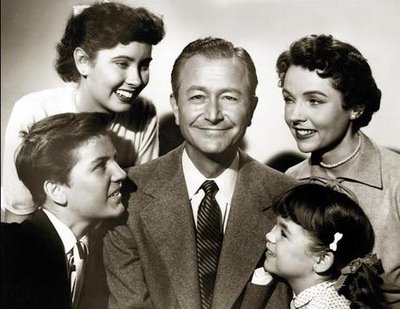
premarital sex 8Why would that be? Here are a few things to think about. The invention of “the teenage years” and the postponement of marriage have, together, made a shambles of our earlier sexual norms. Needless to say, it put a dent in the church’s rhetoric as well If you can imagine a Father Knows Best (FNB) sort of family protecting their daughters Betty (left) and Kathy (right) from “boys” until they had graduated from high school, you can see how the system worked. Father actually did know best. “Chasity” was to be protected for a relatively short period of time and ending it required the father’s permission, by way of permission to marry.

All that is gone. You heard it here first.

“Father” know longer knows best. With the invention of “teenagers,” a wholly artificial grouping in cultures with traditional work settings, your peers know best. Especially those who are “doing it.” With the postponement of marriage until the late 20s, FNB chastity, which was always a little like finding out how long you can hold your breath under water, became an endurance event. It’s not from 14 to 16 anymore; it’s 12 to 28. We have never had a norm that would work over that period of time.

Fear of pregnancy worked for a while, then the Pill became widely available. Shaming worked for awhile, but when the numbers of people participating in teen sex and talking about it got too large, shaming didn’t work any more either. You really can’t shame that many people at a time.

Furthermore, marriage was not only postponed, but brought into question as a necessary or even a desirable state. Very thoughtful men would say to women, “I love you and I am committed to a life with you and to raising any children this union might produce, but this “marriage” thing makes no sense to me at all.”

Funny couple in bed looking and peeking over sheets surprised. Young interracial couple, Asian woman, Caucasian man.

Funny couple in bed looking and peeking over sheets surprised. Young interracial couple, Asian woman, Caucasian man.

I could go on with the cascading social changes but I think that’s really enough to set the stage and I have only one more difficulty to point to anyway. This is it. “Marital” is the adjective form of “marriage.” “Premarital sex” only means “sex before marriage.” If marriage goes away—which it appears to be doing—then the prefix pre- makes no sense at all. The church has a whole bunch of sacred scriptures that presuppose marriage. What do they mean if/when “marriage” as a social institution disappears and we still want to be guided by the scriptures? [4]

Well…rhetorically, you start saying that it doesn’t really matter all that much. I called this, above, the reduction of salience. This is what Pope Francis, without question the most media-savvy pope in history, has been doing with homosexuality and the Roman Catholic church. The official position of the church is being assailed by both left and right, so the Pope says, “Aren’t there things we could be talking about that are closer to the core mission of the church?” That’s a reduction in salience.

But if sex before marriage declines in salience, then something must increase to take its place. “Let’s don’t talk about [that old topic]” we say, “Let’s talk about [this new topic] instead.” Not A, but B. So we need a really good Topic B. It needs to be engaging, so people are willing to talk about it and it needs to be appropriate to the question so it can be practiced and refined.

We chose two. The more political norm is “consensual.” The social norm is “caring.” As usual, the real meaning of the political norm is that it rules out something we feel strongly about. It rules out predatory sex of every kind. It rules out rape, it rules out managers who leverage their position with sexually attractive subordinates, teachers with students, etc. The political norm—informed consent—is met when two people both want to have sex and agree, as equals, to do so.

Nothing in the norm of consensus rules out colossal stupidity. It doesn’t rule out most premarital sex 7kinds of abuse. It doesn’t rule out misunderstandings. That’s why we have fallen so in love with the social norm, “caring.” [5] Sex is good in a serious relationship when it is a long enough relationship to consider the welfare of the persons, not just the bodies. It is good if it is one part of a relationship which has other significant parts as well. It is good if it is one way among several in which each partner cares for the welfare of the other, not excluding kinds of caring that might be personally costly.

I think the church could have tuned its rhetoric about “the new sexuality” for a long time and not come up with a better standard than that. It’s hard to say exactly what it means, but it lays down standards that are good enough to activate a partner’s concerns and possibly those of that partner’s friends. It works like the temperature setting on a heating and cooling system. It doesn’t define “an ideal temperature,” but it defines “too hot” (he AC turns on) and “too cold” (the furnace turns on) and those are worth having.

There is nothing in the Bible that imagines sexuality apart from religious faith. I know of one passage offhand that speaks favorably of sexual relations in that context. Paul says in 1 Corinthians 7 that sex—he means between husbands and wives— is the kind of thing that can ruin a perfectly good life of prayer. So you can do without sex for awhile and make more time for prayer that way. But abstinence can make you crazy over the long haul and God doesn’t want you crazy. Everything else I know about that isn’t poetry is property and purity, with a dash of obedience every now and then.

The Bible is not anti-sex. I don’t mean to say that. What I mean to say is that the sexual part of our lives, like every other part, is to be governed by the network of covenantal obligations in the Old Testament and by the fellowship of the church in the New Testament. The Bible is not friendly to is a “reduction of salience.”

premarital sex 5If the Bible is not happy with that solution and the church in our time is forced to it, then what? It isn’t pretty, it seems to me, but it is what we have. I call it, by way of caricature, “God wants you to play nicely with others.”

You can go a little way in that direction by mining the rich resources of “prefer the needs and wants of others to your own.” That serves as a guard against predatory relations, but it doesn’t do anything for stable authentic partnership. In a stable authentic partnership, you need to put your own needs into the mix with your partner’s needs AND, in my view, you need to pay attention to what IT, the relationship, needs above and beyond what the persons in the relationship need.

In the short term—the dating part of sexual selection—you make the best match you can premarital sex 6make. I was in the dating business recently (2004: I will continue to call it recent until the scars go away) and I was horrified to confront, as a Christian adult, the fact that dating is a meat market. Not “meat” in the exaggerated sense shown here, but in the sense that each is looking for valued traits in the other, and, in not finding them, continues shopping.  So I called around to my fairly impressive collection of pastor friends and I said “What do you teach at your church about Christian dating?” They said—I am summarizing many conversations here—“We don’t teach about it because we don’t know what to say.”

The church can fully support the development of strong and stable long-term relationships in which sexual relations are a major part—again, nothing here raises the question of whether a ceremony of any kind has been performed—but the church doesn’t bring anything to that question that the Lion’s Club doesn’t bring. [6] In the Mosaic Code, there were two reference points. The first was transcendent: I am the Lord your God. The second was immanent and social: therefore you shall deal fairly with your neighbor, with the visitor, with the marginal, with the vulnerable. Oh, and pay your taxes.

The stance of the church that I am describing—the one I caricatured as “God wants you to play nicely with others—has only one referent. It has the social referent. The relationships to which we are committed are not entailed in our relationship to God. There are lots of commandments in both the Old and the New Testaments, of course. They may have to do with caring relationships. They do not, by my understanding, require any particular sexual standard that has meaning in the modern—the post-Father Knows Best— era.

It’s an odd position for the church, it seems to me. We know what to do, but we don’t know what to say. For a church that lives by the Book of Order, that’s not a comfortable place to be.

[1] Just a few quick clarifications. I’ve been a Presbyterian most of my life but I was raised in a much more conservative setting. Until I started in grad school, I went to conservative colleges where “public displays of affection” (people actually knew the acronym PDA) were frowned upon. I am now approaching the age of 80 and am happily married to my third wife. Just so you know.
[2] Non-Presbyterians need to know that the Book of Order is the constitution of the premarital sexPresbyterian Church. When we ratify “constitutional amendments,” this is the document that gets changed. During this debate, I learned not only that some people could quote the regulation at G-6.0106b, but that some would “refer to it” as if it were John 3:16, which everyone knows from Tim Tiebow’s eyepatches.
[3] Adultery, by the way, was always a separate topic. Whatever appetite you might have for your neighbor’s ox or his ass or his maidservant, there are certain formal commitments to a marriage that are violated in adultery.
[4] It doesn’t need to disappear in the sense that there aren’t any more marriages. It needs only to disappear as the common presupposition of the language about sexual relations. When you say, about getting married, “some do and some don’t,” you have destroyed the presupposition of marriage and all the norms that belonged to it.
[5] I really don’t think there is a consensus on this word. It’s harder to agree on the goals than to rule out certain kinds of abuses. I just mean by it, taking the long term welfare of the other into account. I would call it “commitment” if that had more emotional richness in it.
[6] Not to play with the ancient antipathy between Christians and Lions, just choosing the Lion’s Club as a modern era, nonreligious organization.

Posted in Living My Life | Tagged , , , , , | Leave a comment

Seveneves

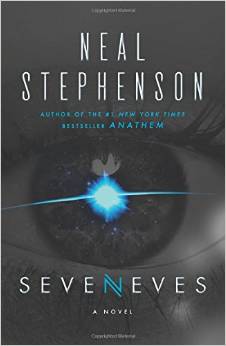
Neal Stephenson has done it again.  The key word in this essay is going to be “it,” apparently.  There is a cluster of notions swirling around and I am counting on “it” to hold still so I can capture a few of them.

seveneves 1Before we get into that, I want to tell you what kind of essay this is.  It is not about the plot of the book.  It is not a spoiler any more than the dust jacket description is a spoiler.  It isn’t about Stephenson’s technical vision, which is daring.  It isn’t about his characters which—especially the seven women who serve as the “Eves” of the human race—really hold the book together when the technovision does not.

No, this essay is about Stephenson and religion.  It’s a little dance.  He keeps denying it all, but he keeps dropping in words that belong to established religions, especially Christianity.  Ultimately, that dance is the “it” we will be spending the most time with.  It will help a great deal if you are a Neal Stephenson fan.  If not, just go read Seveneves and you probably will be.

In the first instance, the “it” in Neal Stephenson has done it again is Stephenson’s new book, Seveneves. [1]  It is HUGE.  Not so much in just the number of pages (only 862) as in the scale of the story.  In the first sentence, some mysterious “it” (they call in “the Agent” because although they don’t know what it is, it “did something,” and that’s what Agent’s do) destroys the moon, which has the effect of destroying the viability of the surface of the earth.  Part III begins, “5000 years later…”  So this is a book on the Stephensonian scale and when I said he had done “it” again, that is part of the “it” I was thinking.

But another part of that “it” is that Stephenson has an itch for someone to play the seveneves 2philosopher king.  He doesn’t take it on himself, but he sees to it that someone takes it.  Here’s a line or two from The Diamond Age, for instance.  The Speaker is Lord Alexander Chung-Sik Finkle-McGraw..  He is “an Equity Lord” of the New Victorians phyle. [2]  “That’s the whole point of being an Equity Lord, you know—to look after the interests of the society as a whole instead of flogging one’s own company, or whatever.”

I mention it because Stephenson keeps putting characters in his books that somehow stand above—I’m going to ignore for the moment that “standing above” is the meaning of superstitious—the plane on which the other actors are working.  Lord Finkle-McGraw plays that role in The Diamond Age.  And someone plays that role in Seveneves as well.  I am arguing that the “Owners” of the bar that employs Ty Lake play the role here.

In this quote below that begins, “Maybe yes…”, the identity of “it” is a little harder to pin down—at least it is hard for the speaker, Tyuratam Lake.  The question is being asked by a young man named Einstein (no relation), who is a descendant of Ivy, one of the seven Eves.

“So it is like believing in God.”

Ty Lake answers,“Maybe yes. But without the theology, the scripture, the pigheaded certainty.”

We’ll come back to “maybe yes,” but it is very Stephensonian to dis what he would probably call “institutionalized religion” in this way.  Stephenson lives in Seattle, one of the two capitals of the “spiritual but not religious” part of the country that  Patricia O’Connell Killen and Mark Silk in their book Religion and Public Life in the Pacific Northwest call “the None Zone.” [3]

seveneves 4This little outburst of Ty Lake’s tells us that Stephenson is no fan of theology or of any sacred texts bearing upon that theology, and particularly not of any “pigheaded certainty.”  Ty Lake, as we will see, has a certainty of another kind and Stephenson is OK with that.

So “believing in” the Purpose is “like” believing in God in some ways.  “Believing in the Purpose” is the “it” we are wrestling with.  So now we need to ask how it is like believing in God.  There are three ways, as I count them.

The first is that “it” has a function.  “It’s a way—the Purpose is a way—of saying there’s something bigger than this crap we’ve spent the last week of our lives dealing with.”“Red versus Blue crap?” Einstein asks.  For nearly all the book after the destruction of the earth, people live is fairly stable coalitions of good guys and bad guys.  It’s a kind of Cold War, particularly since it takes place mostly in space.  Red are the bad guys—about two and a half Eves—and Blue are the good guys, about four and a half Eves.  It is the biggest frame of reference available to us until the final tenth of the book.  So “bigger than Red versus Blue, the organizing political and cultural struggle of our time” is really big.

“Yes,” Ty Lake says, “bigger than Red versus Blue.”  The function of Purpose-with-a-capital-P is to remind us that there is a larger frame of reference that needs to be taken into account.  Here’s another look at what “larger” means.  Esa Arjun, an ally of Lake’s is fending off the curiosity of a soldier serving under him. [4]

“Sergeant Major,” Arjun said quietly, “there are more things in heaven and earth than are dreamt of in your philosophy. [5]

[Roskos]Yur snorted. “Is that a fancy way of saying it’s above my pay grade, sir?”

“Yes,” says Arjun.

“Never mind,” says Yur, “I see it now. It’s some kind of Purpose thing. Above my pay grade. You should have just told me.” He drew himself up and saluted. “What are my orders, sir?”

Yur has no idea what “it” is, but he knows what kind of thing it is, so his response is to ask what orders he has that are based on Arjun’s and Lake’s understanding of what “it” is and as we will see, they don’t know.  We know so far that “it” serves the function of reminding us that as big as Red versus Blue is, there is a context much bigger that has a legitimate call on our allegiance.

That’s the first way that “it” is like believing in God: “it” has a function.  It reminds us of the larger frame of reference.  The second way is a criterion of conduct.  There are people who are worth following because they might know what the Purpose is and their lives are marked by it.

seveneves 3Remember now that this is Stephenson.  He would really hate it if anyone discovered what the Purpose actually was.  It isn’t a destination like Heaven or a rule of conduct like loving your neighbor.  Those are all modern by comparison.  Stephenson says—has Tyuratam Lake say—that certain people are worth following.  I would say that Lake trusts these people in the most fundamental way possible.  He “believes in” these people, meaning by that expression a profound attachment that fits perfectly well within Christian doctrine.  That is how Jesus’s disciples believed in him before they thought of him as Messiah—someone who must know something and who is worth emulating.

Here is Ty Lake:  “No one has ever told me [what the Purpose is]. I have to make guesses, based on what I see from people who act like they know what it is.”

Also: “People who claim they are motivated by the Purpose end up behaving differently—and generally better— than people who serve other masters.”

To me, there is a lot there. These people Tyuratam Lake is talking about “claim they are motivated by the Purpose.”  Some of these people are his employers, but he doesn’t give them this kind of respect because they employ him; it is this other part of them.  They claim “the Purpose.”  They do this out loud. People hear them.  The second thing is that they behave differently—generally better—than…”people who serve other masters?”  Really?  Matthew 6:24?

I think that is very cagey of Stephenson.  I think he chose that phrasing on purpose.  Even people who don’t know exactly where it came from will identify the kind of statement it is.  No modern man serves people he calls “masters.”  Stephenson wants to trigger an association.  Both Theodore and Franklin Roosevelt did the same thing with “malefactors of great wealth.”  It isn’t the meaning.  “Malefactor” just means “someone who does bad things.”  But that word was not a part of the listening vocabulary of their audiences, with one notable exception.  The criminals who were crucified at the same time Jesus was were called “malefactors” in the King James Version, the commonly available version of the Bible during their presidencies.  “Malefactors” is a  “killing Jesus” kind of word.  The direct meaning is common and safe.  The associations—never pointed to—are powerful.  I think that’s what Stephenson is doing with “serving other masters.”
Finally–third and last– there is this characteristic of “those people who serve the Purpose.”  I’m going to re-use a few lines, but they are important here for context.

“Some people—some Red, some Blue, and some ambiguous folks like the Owners of my bar—maybe even some of those kind of people”—he nodded at Deep—”seem to think they know something.”

“Do they?” asked Sonar Taxlaw.

“I have no idea,” said Ty. “But from what I’ve seen, they’re not stupid. Even if they are—”

He paused, groping for words.

“Even if they are,” Einstein repeated, “what?!”

“It’s a way—the Purpose is a way—of saying there’s something bigger than this crap we’ve spent the last week of our lives dealing with.”

Again, there is a lot here.  Consider, for instance, the capital O in “Owners of my bar.”  It is capitalized wherever it appears.  What is it about Ty Lake’s employers that makes him want to—that makes Stephenson want to—give then that capital O?  And they “seem to know something.”  And “they aren’t stupid.”  We have already seen Stephenson’s anathema on “religion:”  Religion is the stuff with “the theology, the scripture, the  pigheaded certainty.”  But these people are not stupid and the say there is something to believe in and they live lives worth of it.  Even Stephenson isn’t opposed to that.

That—really—is the “it” we have been after.

[1] Stephenson likes difficult titles.  I don’t know why.  His previous book’s title was Read Me if you followed the font and Reamde if you followed the sequence of letters.  This book is about the seven “Eves,” the seven mothers of the race who survive the burning of the earth’s surface, but there is a movie “The Seven Eves” and a book The Seven Daughters of Eve, and I think he just wanted a little space.

[2]  The Diamond Age is set further into the future than Seveneves.  The enormous power of nanotechnology has solved the problem of scarcity, or at least has severed the link between povery and nationhood.  There are no more nation-states.  There are “phyles,”—self-defined groups—and the New Victorians are on the top of the pile.

[3]  Portland, Oregon, where I live, is the other capital.

[4] Arjun’s first name, Esa, was once ESA, the European Space Agency, but it has become a common first name by now.

[5]  Hamlet.  I think that’s cute and he just drops it in without comment.  It’s the only literary reference I saw in the whole book except those glancing blows from the Bible

Posted in Books, Paying Attention | Tagged , , | 4 Comments

Being a patient of corporate Persons

Every time a new part of my body goes bad—or some previous grievant goes bad in a new way—I get a new kind of doctor. I don’t get rid of the old ones. I like the old ones. I just add a new member to my team. [1] It’s a pretty big team by now.

Every member of this team is guided by a question that I admire, especially now. The question is, “What treatment, if any, would bring Dale the most relief (best protection) all things being considered?” They are knowledgeable men and women, but they are not above taking a risk now and then. Not a one of them is the kind that would wake a patient out of a sound sleep at 3:00 a.m. to “take vital signs.” They would say, “He looks OK to me. Let’s check him after breakfast.”

A week and a day ago, Bette and I flew toward Philadelphia. I didn’t make it. For whatever reasons—the debate continues—I passed out on my Southwest flight and they off-loaded me into an ambulance in Chicago. I left MacNeal Hospital—the one closest to Midway Airport— about 24 hours later with a “note from the teacher” kind of note in my pocket and a hope that Southwest Airlines would not send me back to the principal’s office.

I may write more about the physical events (probably not), but today’s account has to do with liability. Any one of “my doctors” is willing to take a chance on me; to call a given reading “good enough” (blood pressure) or “Yes, but yours just runs high (prostate specific antigen); watchful waiting is probably the best course.” None of the questions they routinely ask is, “How can I be sure that I have a good case if I am sued.”

nurses 4I was told that Southwest Airlines has a policy that when they break out the oxygen for a passenger, that passenger goes into the hospital at the first opportunity. [3] I spent a substantial part of the flight lying in the aisle, making things really difficult for the food and drink cart. I had passed out, sitting in my seat, and was drenched with a cold sweat and had a very low pulse. I’m not saying they shouldn’t have been concerned.

But by the time we got to the hospital, I was feeling pretty good—not, I was told, looking nurse 2all that good—and I was ready to go on to Philadelphia. Not so fast. Southwest was committed to getting me to the hospital. MacNeal Hospital is committed to finding out what part of my equipment was at fault. There was no evidence by the time they got hold of me that there was anything wrong with my body, but they wanted to be sure. So the blood tests, the heart monitoring, the carotid artery scan, the EKGs, and an echocardiogram too, had I not had one just before the trip.

Everything looks good. So I feel comfortable going on and there is still a flight that will get Bette and me to Philadelphia. But the doctor was not comfortable with my judgment and the best she could do for me was a note—a form, actually—saying that I had left the hospital “against medical advice.” I would have been fine with that, but I was told that Southwest Airlines would not let me back on one of their flights unless a doctor gave me a note and this doctor wasn’t going to. Yet.

So now I’m in Chicago. A very prudent doctor is not moved by my account of having been through this many times before and will not allow me to fly on to Philadelphia. In point of fact, the discussion and the testing went on, concurrently, until there were no more Southwest Airlines flights that day, which is when I gave up.

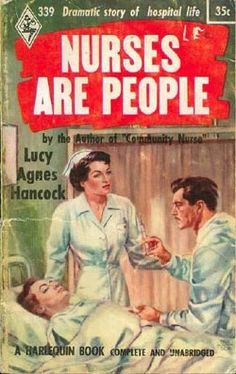
nurse 1So now I am in the hospital. It is a huge and complex social organism run by people who have no sense of the larger picture of things and who are not permitted to use their judgment even if they did have that larger picture. The nurses ask you the questions they are supposed to ask. They don’t care that the previous nurse and the one before that asked the same questions and struggled in the same way over electrocardiogenic syncope. They are no more free to skip a question than the cashier at Chipotle was free to skip the question about whether I was old enough to drink alcohol. I was 75 at the time, but she was on camera and had to ask. [4] It’s a matter of not being liable.  This book cover has in mind that nurses, as well as doctors, are people.  My idea is that nurses, if they are only corporate agents, are not permitted to be very “people-like.”

Every doctor and every nurse did what she had to do and that included the classic awakenings at midnight and 3:00 a.m. to take “vital signs.” I was asked about the surgery I had on my left shoulder in 1962, on my knee ca. 1986, on my prostate at about the same time, and on my cardiac catheter ablations last year and ten years before. I was afraid they were going to start tracking down the colonoscopies.

The airline and the hospital are corporations, therefore, by the current definition, “persons” in some sense. But the really cool part about personhood, the part that has to do with agency and discernment and, where necessary, risk taking, is not a part of corporate personhood. So Southwest had no choice but to offload me, having given me oxygen. The hospital had no choice but to hold me against my will—no “free to fly” note, remember—until they had ruled out things no well informed doctor would have ruled in.

nurses 3The collusion between the Southwest Person and the MacNeal Person kept me in Chicago all evening.  The picture is of a Yukon Person.  I got “lunch” at 9:00 p.m. I tried to explain that some of the symptoms they were worried about would clear up instantly if I could just get some food. I got a room and a roommate by 9:30 after eight hours in the emergency room, monitored by machines, but otherwise mostly unattended, but the roommate was still watching hockey at 10:30 p.m. I thought he was a hockey fan, but it turns out he didn’t know how to turn the TV off. Go Blackhawks! I gave orientations to wave after wave of nurses—some very nice, some not so much—and negotiated my freedom from a compassionate doctor who wrote and legibly signed a note that said, “Dale Hess is safe to fly on 6/4/2015.” [5]

So we didn’t actually get to Philadelphia, apart from the airport, but my daughter picked us up and we spent some truly wonderful days with her and my son-in-law and my grandsons in Princeton, where they could shoot the next version of The Truman Show if they wanted to. It is beautiful and, in the days after graduation, it was peaceful.

[1] This is not “my team” in the sense that I am calling the plays or doing the scoring. This is the team that I have assembled to keep me playing the game.
[2] I asked a nurse recently if she would return those vital signs to me when she was done with them. She stared at me over the tops of her glasses, shrugged, and went on to the next bed.
[3] I was also told that the pilot decided to go on to Chicago and not to divert the flight to Boise, Idaho. Thank you, captain.
[4] She did face away from the camera and roll her eyes and I appreciated that.
[5] She had a really clear signature. I wan’t sure she was real doctor, based on the signature, but by that time I would have taken a note from the busboy.

Posted in Getting Old, Living My Life, Society | Tagged , , , | Leave a comment

Bible “Headlines:” A Complaint


I’m going to approach this whole thing as a conspiracy.  I don’t think it is, except in the sense that all cultures are conspiracies—but I have a rant in mind and calling it a conspiracy will make it easier.  Jesus told a story that I call “the canny steward.”  Everyone else I know and every Bible I remember seeing calls it “the unjust steward.”  It’s just so wrong.

headline 1I don’t remember when they began interrupting the biblical narratives to put little names in.  The Bible I had as a little boy didn’t have it.  These are like headlines in a newspaper.  My conspiracy is going to involve the writers of these little biblical headlines.  At the meeting where they decided to do this, the convener of the meeting—this fictional person’s name is Albert Nudge—said, “I’ve called you here to discuss my idea.  I think we should give names to discrete bits of biblical narrative so people will know what they are reading.”

Bob Drudge has an objection.  “But…don’t they already know what a story is about?  And if they don’t, wouldn’t it be better for them to decide what it is about after reading it?”

Cynthia Fudge has a more technical orientation.  “But,” she says, “Can we really say that a story is ‘about’ one thing?  What if it is an allegory and there are as many meanings as there are characters?”  You see what I mean about Cynthia.

Albert has been thinking about that for a while and he is ready.  Besides, his real last name is Zimmerman.  “Nudge” is just a nickname. [1]

“Oh,” he says, “You are missing the point.  If we give it “a title,” then it will have “a point.”  And.  Wait for it. The point it has is the one toward which we have nudged them with our title.”

I’m disappointed in the lot of you, really.  Remember back when there was such a demand to translate the Bible out of Latin and into a language people could read for themselves?  The people who were opposed to that said, “No!  If you let hoi polloi read it,[2] they will misunderstand it!”  But people don’t like to be told that they aren’t allowed to read something, so a huge demand arose and this Luther guy translated it out of the Latin in which it was originally written[3] and then everybody could read it and they came to a lot of different conclusions about it.  Some were just wrong, but some were really inconvenient.”

“So here’s the thing.  Here’s why I have called you all together into this conspiracy.[4] We don’t deny ANYONE the right to read the Bible on his or her own.  We don’t give anyone an authoritative understanding of what a given story means.  We just insert a little headline that guides their minds in one direction rather than another.  Don’t you agree that some directions are better than others?”

The others agreed, I suppose.  Or complied.  Or were just nudged in the right direction.  Because there started being Bibles with little headlines announcing what the meaning of the next section was going to be.  And that brings us back to the Canny Steward.

Check it out for yourself.  Luke 16.  There’s this guy who is the CFO of a rural headlines 2corporation.  He’s been dipping into the till or letting weeds grow in the garden or something.  In any case, he knows he’s going to get fired.  So he gives sober forethought to “his next stop.”  A manual laborer?  Nope, not strong enough.  A beggar?  Nope, too proud.  Ah, but if he were a local celebrity, a person everyone owed a favor to, things could be pretty good.  And he has, at the moment, a way to make everyone indebted to himself.  It isn’t honest, of course, but it shows real insight.  He cuts the amount of money or produce each tradesman owes the corporation.  The corporation loses all that money, but the steward doesn’t care.  Every tradesman looks on the steward as a benefactor and his future—his “next life,” so to speak, is taken care of.

That’s the story.  We could haggle over what it is “about,” but Jesus told it (verse 9) to illustrate the point that using the resources you have in this life so they will have value in the next life is not a stupid thing to do.  It was the steward’s canniness in the use of resources, in other words, rather than the way he cheated his master, that was at the center of the story.  Why anyone would want to invert those two is a source of some puzzlement to me, which is why it is so easy to imagine conspiracies. “I know!” the headline writer said, “Let’s say that the story is about misfeasance in office.  We are having a lot of trouble with that these days.”

headline 3There is a story popularly called “the prodigal son.”  Luke 15.  There is a son who abused his father in a lot of ways, of which spending his pre-inheritance quickly and badly is one of the least bad.  But there is a marvelous father, who buffers the son’s re-entry into the village and who greets him warmly.  And there is an elder brother who has labored for his father in quiet resentment for years (how prodigal is that?) and who wants nothing to do with his disgraceful brother.  The contrast of the father’s attitude–God’s attitude by analogy, and the brother’s attitude—Israel’s attitude by analogy is the most prominent part of the story.  (I had to do a lot of looking to even FIND a picture that had the elder brother in it.)

What do we gain—what does Mr. Nudge gain—by diverting our attention from the magnanimity of the father and the cold distance of the other son to the partying and profligate younger son, who comes to himself and comes home?  The plausible point of the story is the elder brother; the headline is about the younger brother, by any account the least important character in the story.

There are two kinds of responses to this unhappy state of affairs.  The first is to look at a story’s name—the contribution made by Nudge and his henchpersons—and say, “OK, I see that name but what is it really about.”  That’s a worthy option.

The other is for everyone to do what Nudge has done.  Call these stories by whatever we want to highlight.  So the guy who had a really good harvest and, instead of sharing the bounty with his neighbors, built a whole new barn so he wouldn’t have to share anything at all?  Remember him?  The Story of the Evil Capitalist?  Luke 12. You see where this could go.

I’d rather not let it go there.  Let’s just treat these story names the way we (should) treat headlines in the newspaper.  They are some headline writer’s notion of what will get you to read the article.  They are not reliable guides to what the story is about.

[1] He picked up the nickname because of his enthusiasm for Malcolm Gladwell’s book Nudge, which argues that the force necessary to control a development can be extremely small if it is applied at the right place and especially at the right time.  The thrusters on a spacecraft are a good example of how little it takes if you fire them at the right time and at the right place.
[2] In English, we often say “the hoi polloi,” but hoi is just “the” in Greek, so I left it out.
[3] Nudge is devious but he isn’t very well informed.  On the other hand, I heard a lot of complaints when the King James Version of my early years began to lose out to the Revised Standard Version and every now and then, someone who hadn’t gotten the memo would ask, “But Jesus spoke King James, didn’t he?”
[4] Etymologically, people “conspire” when they are so close that their breaths—spiro—mingle (con-).  Nudge, Drudge, and Fudge are conspiring because the room is so small.


Posted in Biblical Studies, Political Psychology | Tagged , , , , | Leave a comment

Investing in Our Future

According to our long range plan, Bette and I will trundle ourselves off to a really good senior center by the time I am eighty years old. I met Bette when I was 68, so we’ve been talking about it for quite a while and as we have been talking, that remote event has become very nearly imminent. What was philosophical has become strategic and now it is tactical. I love the sequence. It seems to me just the way it ought to be.

Today, I’d like to look at the mechanics of the transition. I have thought through (and written about) the setting one leaves. And speaking of leaves, a leaf on a deciduous tree prepares for falling off its twig by forming an abscission layer. This is two lines of cells, one move prep 1on the leaf side and one on the branch side, that are stuck together with a kind of glue The glue is intended to get less sticky in the fall, so the leaf is less and less likely to stay attached. But—and this is the point—the abscission layer also protects the tree and probably, that is what it is for. When the leaf falls, there is no open wound on the twig. It is sealed and safe.

And what the leaf does by nature’s exquisite preparation, Bette and I hope to do by being thoughtful about it. We are not “falling off,” of course. If another metaphor were required, we could say we were moving to another tree. But in any case, we are leaving this tree and we want to seal off where we have been so our absence doesn’t give any difficulties to the neighborhood projects, groups, and coffee shops we will necessarily be leaving behind.

As I say, “leaving well” is important and I have given some thought to that already. Today’s idea has more to do with managing the transition to a new place. If we were to continue to use the unwieldy metaphor of moving to “another tree,” this essay would be about managing the transition to that other tree.

This is a very practical matter, so I’d like to start back at philosophy again. This is a substantial life change for us and the best way to make that change is to anticipate the new setting and all its attendant opportunities. There is no need to deplore our present setting—which is very nice—but it needs to be less desirable by comparison to our future setting.

A surprising support for this transition comes from one of Jesus’s parables—one of my favorites. You can find it in Luke 16. It is often called “the unjust steward,” but that only shows how wrong headline writers can be. I call it, in line with Jesus’s use of it, “the canny steward.” The man who had been managing his master’s affairs was about to be fired, so he looked at the resources he had access to at the moment and at the needs he was going to have in the future. Then he used the resources he had to support the needs he would have as a former employee. [1]

move prep 2Jesus thought that was smart (not right, but smart), hence my title, “The Canny Steward.” Well, as it happens, I will not be living much longer in the situation where I am now (my house) and I want to emulate the Canny Steward’s behavior in investing resources in the situation where I will be going. I don’t know where that is precisely, but according to the plans Bette and I have made, it will be a certain kind of place and we have been studying “places like that” for years now. What resources can we deploy that will ensure that we will be welcome there?

I have a third transition story to relate, but before we get there, I would like to stop and work with the principles a little. Here’s a story from Walter Mischel’s marvelous book, The Marshmallow Test. [2] This one is about Mischel himself.

So Mischel, having studied the tactics of several generations of preschoolers, did what the best of them did. He made his present practice abstract and his future practice concrete: his present practice unattractive and his future practice attractive.

Here’s the way he puts it.

Cigarettes were my continuous hot temptation, and I had to change them into something that disgusted me in order to cure my addiction. Whenever I felt a craving…I inhaled deeply from a large can filled with old, stale cigarette butts and pipe debris…I supplemented this step by deliberately reactivating that haunting image of the cancer patient [seen in the hospital corridor on his way to radiation treatment] to make the “later” consequences of smoking as hot, salient, and vivid for myself as possible. Perhaps just as important, I made a social contract with my three-year-old thumb-sucking daughter; she agreed to stop sucking her thumb and I vowed to stop sucking my pipe.

The likely consequences of his smoking were clear, but they were distant—much too distant to change his behavior. The visualizations he describes in this section bring that “distant” future close enough to be really distasteful.

That uses the mechanisms I am considering today; it just uses them in reverse. So the Canny Steward brought the unattractive features of his next life close—not strong enough to dig, he says, and too proud to beg—and caused himself to act promptly (and unethically) in his own behalf in order to prevent that kind of life. Bette and I are working at making our Senior Center future “hot, salient, and vivid,” as Mischel says, in order to prepare ourselves for it. We have not yet had to, and with any luck, will never have to, make out present lives in our home “something that disgusts us,” as Mischel did for his tobacco addiction.

On the other hand, the mechanics of the transition are what they are. Fixing on the bad aspects of the present situation and the good aspects of the future one will make you readier to make the transition. Conversely, fixing on the good aspects of the present situation and the bad aspects of the future one will make you more resistant to the transition. It’s just how we work.

move prep 4In fact, I am so confident in the diagnostic clarity of choices like these, that I would be fully confident that I knew what was going on if I saw them in full operation. If I saw a friend who was talking about the transition to a Senior Center doing things that would make it next to impossible, I would judge that, whatever she says, she doesn’t want to move out. If she, for instance: a) began collecting roomfuls of bolts of cloth for sewing projects or b) adding a new wing to the house [4] or c) began to invest in local political causes and groups that she would have to give up if she moved—then I would conclude that she is committed to staying where she is as long as she can. She might just as well dug a moat and installed a gate and a portcullis. Her intention is that clear.

I could run a series of activities that illustrated just the opposite, certainly, but I am counting on the clarity of the NOT MOVING example to make that unnecessary. Besides, I am going to be concluding with what Bette and I are, in fact, doing to prepare for the transition, and that might clarify things.

Here are three. We are looking at the libraries in the two senior centers that made the finals for us, with some knowledge what the libraries are like that only made the semifinals. Those will be important for me because I am offloading books from our house at an impressive rate and I will need a good library. [3] Bette will almost certainly volunteer in the library and if the center has any sense at all, they will put her in charge of it. [5]

Bette and I both like to share meals with friends. It will be important to make sure that there is, in the center we will be going to, a public space conducive to shared meals, and that there is good food, and that there will be opportunity for us to make our own food in our own place and invite friends. Checking out the food facilities will help us picture how we will use them and to look forward to sharing them with friends. Picturing those pleasant events will make it easier for us to look forward to them in vivid and positive ways.

Third, Bette and I both like to be in groups that are talking about things. Bette’s taste in “things to talk about” is a good deal broader than mine, but it is important to both of us. If the group is “about something” and I know something about it, I would like a chance to lead a group like that. So a place with a lot of active groups would be good and a fluid leadership structure would be good. We are looking at both of those things as we explore our options and it looks to us like the chances are really good at either one.

Of course, we will be giving up our present group participations, likely, when we take on the new set. Not our book group, of course: the Bookies will be a part of our lives as long as there are any left.   Reducing our investment in the ones we are going to have to leave and increasing our hot vivid anticipation of the ones we are going to join just seems like common sense. to me.

If anyone were watching our behavior with a view to drawing a conclusion about our “true motivation,” I really believe that he would conclude that we are preparing ourselves to move. If he listened to us talk about it, he would draw the same conclusion.

Or, possibly, if he read this post.

[1] We can pass over, for our purposes, the fact that he did this by royally cheating his master. What he did was wrong and nothing in the story says or implies that it was right. The point of the story, however, is that we, like the steward, will not continue in our present position (living) and that we would do well to use our resources to ensure that we will be well received in our future position (no longer living).
[2] This section, called “An Addicted Smoker’s Self-Generated Cure” appears on pages 136—138.
[3] The Multnomah County Library is also a good library, but I am thinking of something closer.
[4] These would be changes designed for her own use only, not changes to make the house more attractive for sale.
[5] She is an amazing librarian. I suffer guilt feelings every now and then for taking her out of circulation.

Posted in Biblical Studies, Getting Old, Living My Life | Tagged , , , | Leave a comment