
It doesn’t actually matter much what the issue is, apparently. It can be put forward this way or that way. We are going to have a Hillary v Donald campaign apparently and I would expect that “the issues,” whatever they turn out to be, are going to be presented in these two ways.
The Bookies were in Newport, Oregon for the last several days. Most years, we spend a few days together at the Sylvia Beach Hotel. [1] During that time, we walk on the beach and through a part of the north end of town.
 You don’t have to walk very far to see these two signs. There is going to be a vote, apparently, on whether to “put” (Boo!) or to “restore” (Yea!) fluoride in the water. “Put” emphasizes the novelty. This is new. It could be dangerous. “Restore” emphasizes the familiarity. We used to have this. Remember how nice it was? We could have it again if we wanted.
This is the sign that was most prominently displayed in the neighborhood of the hotel. It says two things. First it identifies the process that is being proposed. “Fluoridation” is the name of the process by which fluoride is added to a public water supply. It does not say anything about possible outcomes which, when you stop and think about it, seems odd.
The second thing it does is to postulate and in-group and an out-group. “Our” is the possessive form of “us” in the objective case and of “we” in the subjective case. We and us and ours all belong together. When they are being emphasized the way they are here, it is reasonable to presume that there is a “their,” which is the possessive form of “them” in the objective case and of “they” in the subjective case. They and them and their all belong together and they all mean “not us.”
It is reasonable to presume, from the sign, that “they”—for the purpose of in-groups and out-groups, it really doesn’t matter just who “they” are—want to put fluoride into the public water supply. “Into our water,” is the way this side would phrase it, I am pretty sure. We don’t know, from this sign, who they are or why they think fluoride should be added or what would happen if it were added. What we know is that “they” are not “us” and that “they” are trying to make a choice that rightfully belongs to “us.”
I hope you will forgive my spending a little time on this. We will be hearing it non-stop at the national level from now until November. Also, please do not imagine that these are subleties. They are clearly there and they clearly work. They are not often remarked on so they may sound unfamiliar, but they are a part of everyday discourse. They are about as subtle as a punch in the mouth.
Back to work. There really ought to be a sensible reason for dividing “us” from “them.” Here’s an example. “They want to fluoridate our water, while leaving their own water free of fluoride.” There is no reason to think that is the case in Newport, but a situation like that would certainly justify the emphasis on “our choice.”
I imagine that the case in Newport is that some residents want fluoride in the water and some do not. So the water is “our water” and the choice properly belongs to “us,” that is, to “the people who will be voting on the measure and who will be drinking the water.” So “our choice” in this formulation would mean “all of us here in Newport.” It is inclusive.
That is not what it means on this sign. Some citizens of Newport are being referred to as “they” because they have different preferences than “us” about the water. It is exclusive.
 Here’s the other sign. It just comes from the other side of the conflict, but it might almost have come from another planet. Notice first how the policy process flows. Back in the good old days, we had “healthy water.” [2] Presumably, we made the water “healthful” by adding fluoride to it. And the fluoride produced healthy water and the healthy water produced healthy teeth. They don’t say that, but you can see the healthy teeth.
This is an outcome-based argument, where the opponents of Measure 21.164 use a process-based measure. The argument is that we can do something good together and we should. The value of the outcome simply walks past the question of “whose agenda is this” or “who should be making this decision.” We all want healthy teeth and big smiles and so we should all vote Yes on 21.164.
I don’t know anything at all about politics in Newport, but I would guess that this measure is going to lose. Identifying an out-group and opposing them is easily done and it is emotionally powerful. Identifying a policy outcome we all share and trusting that the action we are proposing will achieve that outcome and benefit us all is done only with difficulty. And the power it has is the power of our common intention—the wish of all of us. That isn’t really very powerful by contrast with an appeal to “us” and to rejecting “them” because they are trying to make a decision that ought to be “ours” to make. That’s where the emotional power is.
You will be hearing more about this from me if, as I confidently expect, it is the dynamic underlying the Hillary v. Donald campaign. Are we having fun yet?
[1] The one thing you need to know about the Sylvia Beach Hotel is that each of its rooms is named after and decorated in the style of an author. They change from time to time, but only slowly. The room where Bette and I stayed is now the J. K. Rowling room, which means that it is the Harry Potter room. The room is filled with “artifacts,” including a painting of Moaning Myrtle on the wall above the toilet. But before that, it was the Edgar Allen Poe room, complete with one wall of bricks and with a pendulum over the bed.
[2] I really don’t like this use of “healthy,” although it is becoming distressingly common. “Healthy water” ought to mean that the water is healthy, which is a good thing. But no one is Newport is arguing that we would be benefitted by having diseased water. They mean “healthful,” i.e., productive of health benefits, water. We want water to be healthful because we want to be healthy.
 I like to work in the area between those. I believe that it is reasonable and also useful to say that there are “kinds” or “categories” of marriages and that each kind has the norms of growth and health that are appropriate to it and therefor the kind of consummation that is appropriate to it.
 Let’s start on the easy end of the scale and work up. Let’s say a young couple discover each other at a party by a beautiful lake and fall instantly in love. This is a really terrific feeling and their idea is that if they get married, they will continue to feel that way about each other. Marriage “locks in” the feelings of infatuation, in other words.
 The balance is important because collegiality can decay into routine or even into drudgery. There’s nothing routine about a jolt of intimacy. Intimacy can decay into volatile emotions and loss of trust because when you go that far inside [5], neither of you knows what is there. The steady friendly pace of shared work is a wonderful balance to all that volatility.

 When I think about the consummation of the kind of marriage we have, two things are immediately clear and were clear even from the beginning. The first is that it would take both of us working at it consistently to achieve it. I am thinking, for instance, of the kind of work it takes to make sure that our emotional bank account always has enough funds for us to draw on day by day. And, should it come to that, for emergencies as well.
 ine that things would continue pretty much along the lines described in the earlier chapters. This one didn’t do that. That is what makes it so good for 2016.
 Second, young people with a new vision of the kind of country we could be are the source of new values, values which are both more humanistic (not just anti-corporate) and more egalitarian.
 Point 1: We have done very well with “continuing economic disorganization.” That’s why there are so many angry voters and why authoritarian candidates are so popular. And despite the rhetorical reliance on “the 1%,” we have not done at all well in seeing our dilemma in class-based terms. Class is important in this scenario because the group, gender, and racial/ethic conflicts can all be manipulated as distractions. Class, by this analysis, can not be a distraction and I can’t think of a substitute.

 It is easy to remember the Democratic party as “the party of American liberalism,” and that is true as far as it goes. It is not so easy to remember that “the party of American liberalism” was held in power by the solid South. That Democratic party was the party of “I have a dream,” as Martin Luther King Jr. put it and also of “Segregation now, segregation tomorrow, segregation forever,” as Gov. George Wallace of Alabama put it. Both in 1963, by the way.
 to make them” in mind and search until they find a restaurant that offers that dish. They choose a “kind of restaurant:” vegetarian or Thai or, in Portland, Ethiopian and they go in and sit down and whatever happens is what happens.
 The voters have organized themselves into two cohesive voting blocks. Now they are requiring that the parties become ideologically cohesive parties. And, partly in response to that, the parties are repelling each other [5] and becoming more and more different. The politicians who succeed within these highly polarized parties are the ones who best represent the polarized electorate. What Lind means by his headline is that Donald Trump and Hillary Clinton best represent their respective parties. (I especially like this picture because of the alternation of foreground and background.)
 moderate. The Democrats were “in favor of” civil rights in the south, for instance, and they “urged the southern states” to be more fair and moderate. They did not pass binding civil rights legislation and put money into implementing it. Not in those days. It would have…you know…split the party.
 everything I want to say about the movie. This picture gives you a feeling for what Doris’s house looks like. The audience sees it. Her brother Todd, who wants to sell the house, sees it. The therapist whom the brother engages to help Doris through the process of de-cluttering, sees it. But Doris doesn’t see it.
 I will need to say just a little about how she goes about pursuing him, but it’s really the house I care about. Doris establishes a Facebook account so that Fremont will “friend her.” Facebook is a whole new thing to Doris. She has no idea how it can be honestly used, let along how it can be dishonestly used, which is what her 13 year old friend Vivian has in mind. Vivian invents a new persona for her and chooses a picture that looks nothing like Doris to dress the page up. It’s a really dumb thing to do and it turns out badly, but—and you hardly notice this on the way by—it is doing something.
 It turns out the Fremont has a girlfriend, and, as silly as it seems, Doris is shocked by it all. Fremont is two-timing her! He is being unfaithful to a romance he doesn’t even know he is having. So Doris sneaks around the city, following them. When they catch her at it—she really isn’t very good—they invite her to join them and they go to a club where the girlfriend is the singer. This is a place Doris would never have thought of going.
 special relationship with God. There isn’t really any way to say precisely what that relationship was. C. S. Lewis in his Perelandra takes a very creditable shot at imagining what it must have been like. What we need to know is that it was a relationship of intimacy and trust.

 Sports teams at their best are like that. If they cover me, they won’t be able to cover you, so you get the ball. It doesn’t mean you’re a better shot; it doesn’t mean you’re more important; it means you are open. The best quarterbacks working with the best receivers, look at the coverage and know how it will seem to the receiver and throw the ball to the place where the receiver will decide to go. That’s not obedience. It’s certainly not autonomy. It’s this third thing. It is a unity of purpose and an abundance of trust and experience: it is a relationship that words like “colleagueship” only hint at.
 On the other hand, anger is like the first stage of a space shot. The booster rocket has no idea what the mission is; has no ability to guide the space craft; can not even orient the craft in the proper direction. That is not what it is for and it is no criticism of a booster rocket to say that it is dumb. It is strong; that is its job.
 I
 Conclusion: If the terrorist recruiters ever found out who hatched this plan, this series of programs that made their lives so awful, they would hate us (“us” would be me and the American government class, I guess) but we are willing to be judged by the punishment we inflicted on them and which they so richly deserved.
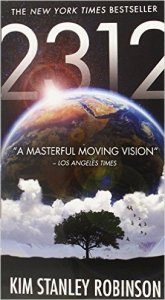
 In 2011, roughly the time when Looking Backward is set, Kim Stanley Robinson wrote 2312: A Novel. His goal is different from Bellamy’s in many ways. Robinson, who also wrote the breathtakingly technical Red Mars, Blue Mars, Green Mars series, is a practitioner of “hard SF.” [2] He’s not a reformer, really. On the other hand, the protagonist, Swan Er Hong, lives on Mercury and when she is forced to visit Earth, she is scandalized by what has become of it. It is what we all know but projected to a catastrophic future.
 Shortback’s periodization takes off from our present and moves to the present in which the novel is set. I’ll name them all and then I will pay closer attention to three of them. First, The Dithering: 2005 to 2060; then The Crisis: 2060 to 2130.; then The Turnaround: 2130 to 2160; then The Accelerando: 2160 to 2220; then The Ritard: 2220 to 2270; then The Balkanization: 2270 to 2320.
 humanitarian politics in Somalia? There were starving people in Somalia and there were TV cameras. It was the combination that made it hard for U.S., specifically the Clinton Administration, to bear. The Somalis needed food and we had food.
 She told him that she knew she had not been a good wife. She was disappointed in herself. Would he give her six more months, she wondered, and in that time she would be the wife she could be. If she did her best to be the kind of wife she approved of—her standards for her performance—and at the end of six months, he still wanted a divorce, she would raise no obstacles to his dissolving the marriage.
 She said that she was ashamed that she had not met her own standards as a wife. Perhaps you can see, by now, how breathtakingly simple this is; how many self-justifications she walked past in order to get to this statement: I have not met
 This woman and the husband who asked her for a divorce had been happily married for many years before the morning she told me this story. They are married still, and happy still, and their children have grown up and there are grandchildren. So, to use a formula more common among hobbits than among humans, “They lived happily until the end of their days.”
 Early in the second season, an angry mother releases a genetically modified plague bacterium and Tony is the only one who comes down with it. The scientist who designed this bacterium says that Tony has about one chance in fifteen of surviving it. So if you set aside your certain knowledge that Tony appears in the next episode, it seems that he doesn’t have much of a chance.
 The experimenters I read about were studying how to treat athletes at the point of exhaustion. That sounds brutal to me, but there are athletes who really want to know how much they can take. These particular athletes were cycling—on stationary bikes, I suppose. They ride until they are exhausted and then are treated by one or another intervention. In this case the two interventions were: a) drinking sugar water or b) rinsing their mouths with sugar water and then spitting it out.
 So then I got to thinking, “What if there were a “reserve of healing” that functioned by precise analogy with the “reserve of energy?” I don’t know that there is such a thing, but I would guess that there is. What would you call someone who has access to that reserve, someone who can cause the healing response to be produced? I don’t want to be stuffy, but I don’t think it would be out of line to call such a person a healer. If he “causes a healing response,” I’d be willing to call him or her a healer. If this response CAN NOT be called forth—the reserve cannot be released—unless you believe that this particular person can do it, then I would say that person is a “faith healer,” This person is someone who is able to “heal you” (call out the healing reserve) if you believe he or she can do it (if you have faith). Faith healer?
 The counter-instance is made, too. Jesus, having established a reputation as a healer, returns to his home town, Nazareth, and runs into a wall of disbelief. Maybe “dismissal” would be a better word. The villagers said, “Where did this guy get all the religious stuff. He grew up here. We know his family and so he can’t be who he says he is.” And Matthew (13:58) tells us that Jesus “did not work many miracles there because of their lack of faith. Mark says (6:5) that he could not work miracles there because of their lack of faith.

