
“We do not take well to uselessness.”
So says Wendy Lustbader in her superb Counting on Kindness: the Dilemmas of Dependency. She has older people in mind, but I would like to explore the idea today in a somewhat broader context. There is no question in my mind that she is right in what she says, but I wonder if the fact that we take so poorly to it 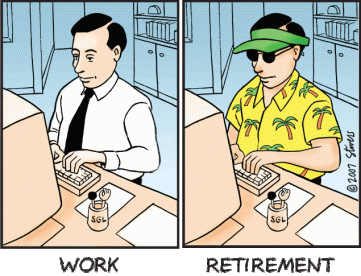 is as good a thing as she thinks it is.
Let’s take retirement first. [1] A common complaint among American men who have “retired” from their jobs is that they feel useless. [2] That kind of “usefulness” relies on the contribution you make to the company and fuses with it the regard for your work that comes from your colleagues. But it could mean that your retirement from that battlefield frees you to choose another battlefield, one that better serves the forces you still have to commit.
If retirement means only that, that you are now free to choose another engagement with other foes with increased odds of “winning,” then there is no reason whatever that a man retiring from his job would need to run the risk of feeling useless.
Unless, of course: a) doing that particular job is the only reason he values himself, b) there are no other commitments that truly engage him, and c) there are no other colleagues who assess his work and value it when it is good. If he doesn’t have any of those, then “not being at work” is not the problem he thinks it is. His problems are much deeper than he has suspected.
There is a broader context, however. “Usefulness” is a kind of doing. It is not a kind of being. Is doing really all that matters? Really? The being/doing distinction can be seen as fundamental, but that’s not the way I am thinking of it here. Anyone who engages himself or herself completely in a world (of experience) or in a task, does not rely on the activity, and may scarcely be aware of it.
Mihaly Czickszentmihaly describes the experience as “flow.” [3] When you are in a state of flow, the world goes away. The conversation you are having becomes vivid and all the rest of the world, pallid; the picture you are painting and its possibilities, both chosen and rejected, is the whole world of your experience; the concept you have almost but not quite grasped makes up all of “what you are doing” and peripherals like…oh…eating, sleeping, and being somewhere on time, simply recede into the distance.
No one, in a state of flow, wonders whether he or she is being “useful.”
There is a distinction, as well, between “who I am” and “what I do.” It’s not a simple distinction, obviously, but I would like to drop a pin in the map right there so we can find our way back.
 Another difficulty that the notion of “uselessness” hands us is, “What do we mean when we say ‘useful’?” Society is a rough and ready kind of enterprise so far as meanings go. Society is possible because “close enough” is the standard for giving and receiving meaning. But every now that then, “good enough” really isn’t good enough and I think this is one. What if, for instance, our common definitions of “useful” are merely conventional? What is these common definitions are not “useful?” What if another notion of “useful,” on being presented, would be welcomed and would benefit us all?
Here’s an example. There was quite a bit of time that elapsed between my wife, Marilyn’s cancer diagnosis and her death. During most of that time, she was disabled by cancer treatments of one kind or another and she understood that her obvious frailties made her a problem for her friends. Marilyn didn’t give up on being “useful” and she didn’t demand that her friends give up on it either. She did something better than either of those.
She actively pursued a sense of easy exchange with her friends. Her friends wanted to be with her and to console her. Marilyn did all the work that made it possible for them to do that. She actively defined the relationship between herself and her friends so that they would know they were “doing it right;” so they would be at ease from the first and would grow more confident and more effective as they went on.
Everyone looking at that scene would agree that her friends were there to “be useful to her.” And they were. And they would have done the things that she needed had she been self-conscious and spiteful or had she grown weary from the persistent demands for gratitude. But Marilyn’s notion of “usefulness” to her friends enabled her to invite them to do things for her and to receive their efforts with generosity.
So she was at least as “useful” to them as they were to her. More useful, as I saw it. I was dumbfounded. I had never considered the possibility that avoiding “uselessness” could look like that. Obviously, I had never seen it either. I filed it away so that should I ever be in that situation, I will have her strength and generosity as a guide.
When I think of “useful” in the conventional ways, what Marilyn did simply does not come into view. That is one of the reasons that conventional meanings need to be expanded from time to time. So here is an example of a different sort entirely.
I am part of a weekly discussion group where the discussion ebbs and flows. There is one member of the group who is willing to ask the “Why is grass green?” kind of question. No one knows the answer, but we all think we should so all of us pass the opportunity by and none of us asks it. But this one guy does. He would be very much surprised, I think, to learn that his contribution is “useful” to the group; it is, in fact, much more than useful. It is vital.
If he were to learn the value of what he does so that he could do it on purpose when it is needed, I think he should be designated A National Resource and loaned out, when needed, to groups whose discussions are doing more ebbing and less flowing.
Lustbader is right, I think, to point to the phenomenon of “uselessness,” especially in older adults. And the feeling of “being useless” is a very real feeling for many seniors. But we ought to ask, I think, why we have allowed our notion of what is “useful” to shrink so drastically. Why is “working for a wage” a useful thing to do, but making your home an inviting place for the grandkids or a place of refuge for their parents “not useful?” Why is making shrewd and productive investments in bonds “useful,” but making shrewd and productive investments in friendships, not? [4]
I want to leave you with an image of “retirement” to consider. I have a DVD of the movie The Twilight Zone, which, taken as a whole, is wa-a-a-y too scary for my taste. But there is one episode that features Scatman Crothers as Mr. Bloom. He’s new to this senior center. He apparently doesn’t know how the game is played, because he keeps asking questions that lead the residents to remember who they were and to take pleasure in the memories.
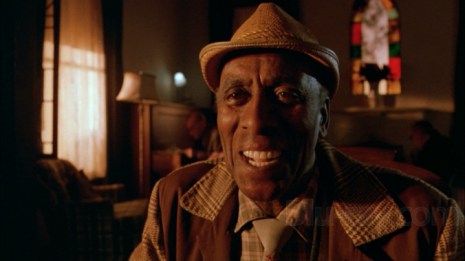 One night, all the residents (except the one holdout) are magically transformed into themselves as children. They run and play and laugh. But before the night is over, they have begun to remember also the wonderful relationships and events of which they were a part and which they will not have any access to unless they go back to their old selves. And Mr. Bloom gives them that. You can go back, he says, to “your old comfortable bodies,” but with “fresh young minds.” The next morning these old people nearly erupt from the senior center, bursting with things to do and places to go that were there all along, but which they had not been willing to contemplate.
Mr. Bloom watches all this activity with satisfaction, then ambles down the walk and along the street where he turns in at the entrance to another senior center—one that looks remarkably like the one he has just left. The residents are sitting or standing in the front yard staring into a meaningless middle distance. Bloom waves his cane in front of the eyes of one old man, provoking not so much as a blink.
“Oh boy,” says Bloom, facing the camera, “this [new assignment] is going to be a tough one.
I tell that story for two reasons. The first is that we see Mr. Bloom “retire,” leave the field, from the first nursing home. This is the only field of action in the movie until the last few seconds. Why has he done that? Because he is about to begin his campaign at another nursing home. I think “retirement” can mean that.
And then there is the question of Mr. Bloom and “uselessness.” Mr. Bloom is the antithesis of uselessness. And also the antidote.
[1] I have been waiting for some time now for a chance to return that word to its natural home. When an army “retires” from the field, it may be for any number of reasons, most prominent among them is that they want to take up a stronger defensive position elsewhere. Robert E. Lee’s refusal to “retire” from Gettysburg after the first day brought about the disaster of the third day. For us, it just means that today’s retirement helps to set the table for tomorrow’s victory.
[2] This has not been so common among American women because they much more frequently have additional commitments and they don’t retire from those. That sounds pretty sensible to me.
[3] In his book by that name.
[4] The friendships you invest in don’t need to include you at all. It is perfectly possible to invest in people so that they are drawn to their friendship with each other. Seeing their friendship flourish, you have every reason to “retire” from it and to be pleased with your work.
 Amending the soil, so that the kinds of plants you want in your yard really would help. If the moisture retention of clay is my problem, then amending it with organic matter to improve drainage is the solution.
 Montana in August 1991. A professor from the University of Montana had just given a talk opposing President George H. W. Bush’s “Operation Desert Shield.” It was a pro-Bush crowd so there was a lot of conversation afterwards. During the conversation, an old German man came up to me and said, in broken English, something that chilled my blood at the time and that I have never forgotten. He said, “I haff heard all ziss before,” and he went away shaking his head sadly. It chilled my blood because I knew who he had heard it from. He had heard if from Hermann Goering.
 Germany. For me, Mauthausen is the name of the camp, a place where Jews and other “enemies of the state” were to be sent to die. [5] The camp is now a tourist attraction, of course, complete with a very good bookstore. That was where I found The Logic of Evil: the Social Origins of the Nazi Party, by William Brustein of the University of Minnesota. These are “the stairs of death” at Mauthausen when the camp was in full operation. I walked these steps on a beautiful sunny day and could scarcely believe they were the same steps.
 But as the fear and anger are jacked up, what was once the vital middle of the spectrum comes to seem “politics as usual,” or, even worse, as “the status quo.” You hear people ay they are “against the status quo” as if it were one thing and as if whatever broke it would be better. Clearly politics as usual is not giving us back the America that was stolen from us under the leadership of the moderates. (Ronald Reagan, by the way, was one of those “moderates.”) Politics as usual is not protecting us from the threat of—in the U. S. today, that means “the existence of”—extremist groups who will count no cost too high if they can inflict even a minor wound on the U. S. It’s time to elect a “strong man.” This is a real Trump rally picture. Let’s hope it isn’t really representative.
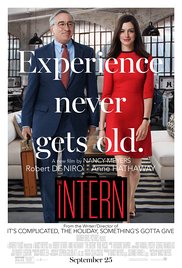 Then the question of what “empties himself” means, both in the case of Jesus and in the case of Ben Whittaker. Then, second, there is the question of what is actually emptied. I don’t know what that means for Jesus, but what it means for Ben is what the movie is about. Finally, there is the question of what is not–can not be?–emptied.
 My problem is not with understanding it. I can’t. My problem is with not caring about it. I’m not really critical of myself for failing to care, but I think all Christians are poorer if they fail to care about this fundamentally important mystery. I think we need to live with it and care about it. I would really like to understand it; that’s the kind of person I am. But even failing to understand it, I am not prepared to stop caring. How to do that?
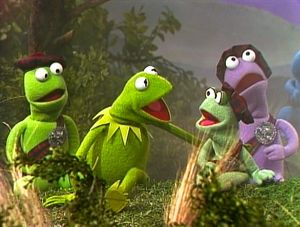 Sir Robin’s problem is the tiniest fragment of the dilemma Jesus faced in “giving up the form of God,” but since I have no idea what “the form of God” means, I don’t really feel anything about it. I really get the little frog’s problem. I can feel that one.
 The second interviewer picks up at college and asks about work history. This is the first time we, as viewers, hear that Ben was V.P. for Sales and Advertising and later was in charge of the production of the physical phone book. For New York. The second interviewer wants to know why people don’t just google phone numbers. Ben is unflappable. “Well yes, but back then people needed phone books.”
 He doesn’t “empty” those things. They were part of his old self and they are part of his current self. And they save him. They save the company, too. And Jules Ostin, the company’s founder, whose intern he is. It is not hard to track those traits in the story. [4] Ben goes into a conference room to perform a very simple task that Becky, Jules’ secretary, has summoned him to do. While there, he hears crisis discussed—a crisis for the company and also for the founder. When he reports back to the secretary, she says, “So…what were they talking about in there.” Ben replies, “I really couldn’t say.” Becky prompts, “You were in there a long time…” Ben comes back with, “I couldn’t hear a thing.” Not true, of course, because he did hear; but also not a lie because Becky knows exactly what he means.
 Second, I will really miss living in a country that is respected in the community of nations. Apart from the damage a Trump administration would do, simply winning the Republican nomination and/or the general election would be a blow to our prestige. Bette is in Germany at the moment, communing with three of her grandchildren, and she reports that the question the Germans want most to ask her is, “What are you people DOING?” This is orders of magnitude worse that Reagan who was, after all, a governor and, before that, a long time political activist. [1]
 want to argue that we are culpable. When you take a look at what would have had to happen to prevent it, it is really hard even to imagine it. We are, however, the cause. Culpable or not, we are the stewards under whose “care” this soil developed. If “sovereignty of the people” means anything at all, surely it means that.
 There is a thoroughgoing tribalism that makes policymakers who cooperate with each other to support policies that would be good for all, into “traitors.” It is only a small step to an Inquisition that begins with “Are you now compromising, or have you ever compromised with [a member of the other party.]” If you hear the House Un-American Activities Committee language there then I wrote it properly. “They” are evil and consorting with “them” is evil and you deserve punishment.
 In the first scene in which Geoff Mercer and his wife Kate appear together, Geoff gets a letter. The rest of the movie is about the ramifications of message the letter contains. I am not really certain what the ultimate effect of the news is on the Mercers. David Constantine, who wrote the short story on which the movie is based, has no interest in our knowing what it will be. Google [David Constantine, telegraph, interview] for the whole pitch by the author. Andrew Haigh, the director, doesn’t care either.
 The marriage that director Haigh shows us is not bad, really. Geoff and Kate are still interested in each other. A little. They offer all the everyday courtesies that allow for domestic tranquility. [3] She is especially attentive to him, but it to his getting through the day and his taking his meds that she is attentive. If she knows there is more in there—and maybe there isn’t—it doesn’t show up. Getting through the day seems to take all the attention Geoff has to give.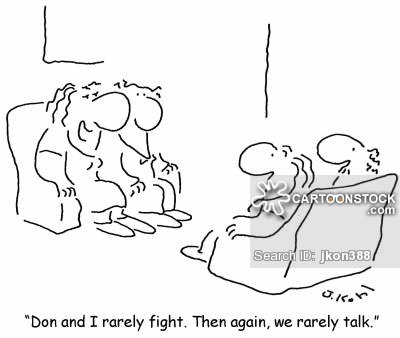
 Finally, they could have practiced the full restoration of relationship after the friction has stopped fricking. [6] You can look at the week of Geoff and Kate’s relationship that is treated in the movie and imagine that they have never so much as exchanged a heartfelt endearment. But it’s a lot more likely that they used to do that, back in the old days, and they one friction and another occurred, like so much tread wearing off a tire. A strong marriage has ways of restoring the lost tread; of repairing the wounds any marriage will suffer. And if you don’t do that, the tire will blow when you hit something unexpected on the road.
 In this piece, I would like to contrast what Brooks likes about America [1] with what he is willing to “pay” to have it. “Pay” is in quotation marks because for the most part, it isn’t Brooks who will do the paying. So here is another way to say it. Brooks thinks you should like the things he likes about America so much that you will be willing to continue to pay the price of keeping them—and it really is you, not Brooks, who will be paying the price.


 opponents rather than enemies. You can make one particular characteristic of them the vital and significant difference rather than all the characteristics of them. [2]. You can oppose them because you are competitors for a common and scarce resource.
 Sarah, the principal character in this scene, is an academic and a political activist, but she is disguised as a fundamentalist Muslim woman, which means that she is under the direct authority of the submission police. She is at the Good Woman net café to send a coded message and she is hiding in a chador. (I hope she is better disguised than this Barbie.) She knows how to be “a good woman” as we will see; in fact, her answers are so orthodox that they bring suspicion on her.
 “flaunting her hair.” And flaunting her hair suggests to Black Robe that she is representing herself as “a Catholic whore,” [5] rather than “a devout Muslim woman.”
 duties. Had he been dutiful, she would have been obedient in thought, word, and deed.
 because he justified it to me one day when I was visiting. “These stories,” he said, “are deeply philosophical.” [1]
 Now we cut to a third segment in which a moderator sits in an easy chair, taking occasional sips of coffee from a mug on the little round table in front of him. He is flanked by two philosophers. (This picture shows a different table, but otherwise it is what I had in mind.) Their job is to treat the episode and the audiences’s reaction to the episode as the familiar conflict between consequentialist and deontological ethics. Deontological ethics can be borne, they agree, by societies where there is fundamental agreement on the rules underlying social interaction, but that kind of agreement is not present in the episode from which this instance is drawn. That argues for the priority of consequentialist ethics—Laura was right to lie to her husband. But, says the deontologist, the real cost will be seen more clearly in future episodes.
 I studied “episodes” like whether the common room of the dorm was “too loud” for people trying to study and whether a girl in the dorm was taking advantage of her roommate (the roommate was the one I was working with). I showed, to the satisfaction of my committee, that the cognitive and emotional routines by which these events were handled were politically significant in two important ways.
 etter of it and left. Something will have to happen for him to re-turn, to be re-conciled, to be brought back to the table and back into discussion with the others. This is a table that keeps showing up. Interesting.
 The New York Times headline warns of “a lasting split.” In my metaphor, that means that reconciliation is either not attempted, or that it fails. So…who is at the table? The short answer is that the Republican establishment is at the table. They are the people who told angry Republican populists to swallow their emotions and vote for John McCain and Mitt Romney. Here are a few descriptions of this group from the Times article.
 Laura Ingraham, a conservative talk-show host, says, “All the things the voters want have been shoved off to sidelines by Republican leaders…and the voters [Republican primary election voters] finally have a couple of people here who are saying this table has to be turned over.”
 The Dilettante's Dilemma