
Emily Bazelon, who is as consistently feminist as any writer I know, wrote a piece for the New York Times that must have discouraged her deeply. It was published on November 15 and you can see it all here. She is being grilled by Stephen Colbert in the picture.
 The part I have excerpted does not deal with the whole topic that the headline writers thought worthy—“college educated white women.” It deals with Palma Frable of Moscow, Pennsylvania and her daughters, Abigail and Lauren.
In this essay, I am going to pick seven reasons for the Frables’ choice and reflect on them. I recommend the article very highly and you may have your own reflections to share. I will put the quotations from the article in quote blocksand the West Wing dialogue in italics.
1. Trump promises improvements in the future
Clinton also lost white women by three crucial points in Pennsylvania. The Frables help explain why. The three women are college-educated or college-bound, and they voted for Trump not because they feel left behind but to improve economic opportunity, as they see it.
Of course, Clinton promised to improve economic opportunity too. The Frables believed Trump, but they did not believe Clinton. Why? My guess would be that the Clinton/Kaine proposals sounded very much like “more of the same.” Trump’s proposals sounded like a whole new approach. He made contradictory proposals, of course, which Clinton did not, but all of the proposals were “try a new approach” in their style. The Frables are not down and out, but they would like more opportunity rather than what we have now.
2. Not the bankruptcies but the recoveries
Trump’s business record — the fact that he bounced back despite the ups and the downs — initially attracted Frable and her daughters.
Nearly everyone I know focused on all the Trump failures and, in addition to that, on his characteristic way of making other people pay for those failures. That isn’t what attracted the Frables. They were impressed by how he kept bouncing back. His failures didn’t seem to daunt him. I imagine they could picture him as an entrepreneurial president, trying new things and bouncing back from his failures.
He seemed resilient, I guess. Hillary merely endured; Trump bounced back.
3. Not Gloria Steinem feminism, but “lipstick feminism”
Frable also admires Ivanka Trump and felt she was one of the campaign’s “top three assets.” She sees Ivanka as a role model for Abigail in her own entrepreneurial interests. It’s not Hillary’s “Gloria Steinem feminism,” as Frable put it, that she values. It’s Ivanka’s sleek version of female success, which commentators have labeled “commodity feminism” — branding to sell products.
When I got to the expression “sleek version of female success,” my mind went immediately to the best treatment of this contrast I have seen. It appeared on a West Wing (Season 3, episode 14) episode called “Night Five,” right in the middle of Season 3. Here’s what you need to know about this exchange.
Celia is a temporary worker in the White House. She represents “the old feminism” in this piece. Ainsley Hayes is an attorney working in the White House. She is beautiful, aggressive, and smart—oh, and Republican. She represents “the new feminism.”
 Sam had said to Ainsley, when she showed up in the dress she had been wearing to the opera before she was called back to work that night, that she was “enough to make a good dog break his leash.” Celia was offended and accused Sam of being a sexist. This dialogue follows. Here is Emily Procter in her role as Ainsley.
AINSLEY
This [getting the treaty right] is important.
SAM
Yeah, I also think it’s important to make clear I am not a sexist.
AINSLEY
You’re Celia?
CELIA
[looking up] Yes.
AINSLEY
He’s not a sexist.
She turns back to Sam to continue the argument.
CELIA
If you’re willing to let your sexuality diminish your power.
AINSLEY
I’m sorry?
CELIA
I said, I’m surprised you’re willing to let you sexuality diminish your power.
Ainsley Hayes
CELIA
If you’re willing to let your sexuality diminish your power.
AINSLEY
I’m sorry?
CELIA
I said, I’m surprised you’re willing to let you sexuality diminish your power.
AINSLEY
I don’t even know what that means.
CELIA
I think you do.
AINSLEY
And I think you think I’m made out of candy glass, Celia. If somebody says something that offends you, tell them, but all women don’t have to think alike.
CELIA
I didn’t say they did, and when somebody said something that offended me, I did say so.
AINSLEY
I like it when the guys tease me. It’s an inadvertent show of respect that I’m on the team and I don’t mind it when it gets sexual. And you know why? I like sex. I don’t think that whatever sexuality I may have diminishes my power. I think it enhances it.
CELIA
And what kind of feminism do you call that?
AINSLEY
My kind.
GINGER
[from over her shoulder] It’s called Lipstick Feminism. I call it Stiletto Feminism.
 My excuse for including this patch of West Wing dialogue is that Ainsley Hayes, the Republican on the show, claims the right to define “feminism” the way she wants it defined, where Celia, the temp worker, is stuck on the old definition. The contrast between the two views is precisely what Emily Bazelon is trying to make clear in his article. The redhead is Kim Webster as (what else?) Ginger.
4. No history of gender discrimination
“I’ve been paid the same as men, I’ve managed men,” Frable said. “I’ve not had any trouble working with men.”
For Trump supporters that I talked to, college education didn’t seem to lead to support for the liberal women’s movement.
Palma’s experience at the workplace—which could be represented as the crowning achievement of “the old feminism”—is not experienced in gender terms at all. If you think of Hillary as an exemplar of the feminism that brought all these wonderful conditions to Palma Frable, then she is an exemplar of “some old historical movement.”
5. Christian and anti-abortion
Frable and her daughters oppose abortion as Christians. Other women called themselves pro-choice but backed Trump because they didn’t think he really opposed abortion or thought the law in states like theirs wouldn’t change even if he chose future Supreme Court justices with an eye to overturning Roe v. Wade.
This is a classic of Trump’s style. If you take all sides of an issue, as Trump has, then supporters who really want to vote for him can cite one statement or the other as their excuse. The Frables are anti-abortion as is Trump. The pro-choice women who voted for Trump heard the anti-abortion rhetoric, but didn’t think he was serious about it.
6. Feminism and the attitude toward women
All of this [Trump’s wish list] matters far more to her than anything Trump said about women or was accused of doing to them. Anyway, given Bill Clinton’s history, how can Hillary complain?
“I have disrespect for Hillary for not doing more for herself, not standing up for herself with him,” Frable said. “That’s more damaging than goofball words Trump came up with.”
This is a dramatic reversal of values. Frable disapproves of Hillary on essentially feminist grounds. She tolerated Bill Clinton’s sexual flaws when he was President and she was First Lady (that’s POTUS and FLOTUS in West Wing language) and she should not have. Just as Frable has stood up for herself in the workplace, Hillary should have stood up for herself in the White House. I suppose that means that Frable would have liked to have seen Hillary publicly condemn Bill’s behavior.
In doing what she did, Hillary seems to have lost both the “stand by your man” vote and also the “don’t be the enabling wife” vote. Politicians are accustomed to being required to “split the difference,” but it does seem odd for Hillary to lose on both sides of the argument.
7. What was the election about? Not gender or race, but about “elitism.”
Frable has close friends and clients who are ardent Hillary supporters, but she discounts the despairing social-media posts she has seen about women who didn’t support Clinton’s historic candidacy.
She thinks the election wasn’t about gender or race. It was a victory of “Middle America.” Clinton, she said, “is more the white elitist than Trump. She’s the one who had elitist celebrities stumping for her.”
This is likely an “anti-Hollywood” complaint. It is true that lots of elite CEOs and financiers campaigned for Hillary, but so did a lot of celebrities, people who represent the lifestyle the Frables oppose. Trump, by contrast, represented himself as the lone voice of truth and therefore “not really an elitist.”
Those seven points capture Emily Bazelon’s view of why Clinton lost the women’s vote in Pennsylvania, a key state in a very competitive election. This strikes me as a very telling account and I see Bazelon’s professional judgment all over it. She’s really good.
On the other hand, I am quite sure she deplores the kinds of reasons the Frable’s cite and I’d be willing to guess that she is wondering in which direction the future of feminism will take in the politics of the Democratic party.
 Ominous, isn’t it? But it is the reason I changed Kevin Quinn’s sign-off line from “my story” to “our story.” If there is an “our story” and if joining with others in the community to support it is the way people can tell whether you are “one of us,” then joining in is crucially important. Being right about the changes in butterfly migration and the reasons for it, is not crucially important.
 and professionally to the same conclusion. But I found that same conclusion, much more graphically expressed in Kingsolver’s Flight Behavior. Had Hochschild and Cramer studied Dellarobia Turnbow, they would have come to exactly the same conclusion each reached about the groups they studied.
 Two further things. There is a resentment of Al Gore the person in this remark. Gore is invited to “toast his buns” on the frost. Not a very dignified reference, surely, to a man who lost the presidency by one vote. Even “toast his toes” is not so demeaning. And all such expressions are beside the point anyway, unless the point is to derogate Gore.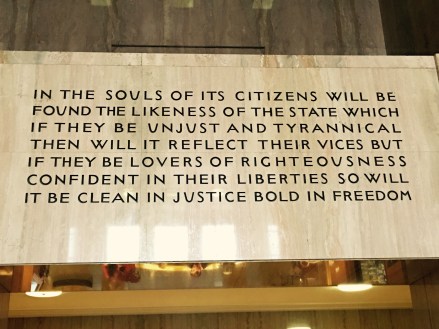
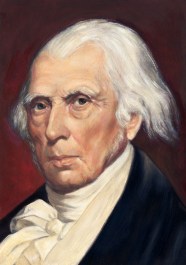 So the Framers put their hopes elsewhere. They put their hopes in the architecture of the system. I have said it this way sometimes [3]. “The Framers no more believed in the goodness of citizens than Newton believed in the goodness of planets. Newton’s idea was that if the planets were of a certain size and density and velocity and a certain distance from each other, they would just keep doing what they are doing and no “intervention” would be necessary. That’s what the Framers thought about federalism, the separation of powers, and checks and balances.”
 could produce a good state. They despaired also of forcing people to act as if they were good citizens, as if their own interests did not matter more to them than the welfare of the state. They settled on a system that would allow them to be as bad as they actually were, hoping that the long and torturous maze that confronted them would tire them out before they took over the government.
 And I want to start with three comments. First, I am grateful to Nicholas Kristof for asking the question, Timothy Keller for providing some answers, and to the New York Times for publishing it on the front page—
 that you have to have them. The other is that some doctrines that seem fully dispensable to me, seem crucially important to him.
 Then there is the question of what doctrines are really crucial. The virgin birth? Really? Keller bases his argument on the idea that if there really is a God, we have no idea at all what He is capable of. [1] Keller is right about that. We cannot know. On the other hand, we don’t need to know.
 happened or, indeed, of what “resurrection” means. You can say that Jesus acquired “a spiritual body,” but no one knows what that means. You can say he went to “heaven,” if you want to hang onto the geocentric picture of the universe which was common coinage in the time the gospels were written. You can wear yourself out on what the resurrection “was.” I wish you well. My interest is in what the resurrection “means.” It means—the witness of all New Testament writers supports this—that the life of Jesus, which was understood at the time to have ended in defeat, actually ended in triumph. God raised up this Jesus whom you crucified. (See Acts 2:36 for a concise formulation). That is what it “means.” (Skepticism is still, as you see in this picture, an aspect of a relationship, just as faith is.)
 the best response will have to be based on what it is responding to.
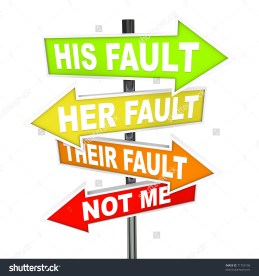 clearly identified and that it is “them.” The power of this leader does not come from any solution to the problem, but only with a way to fix the blame for it. This is very satisfying in several ways. First, if it is “their fault,” it is not my fault. Second, making them “pay” in some way for what they are doing to us is a perfectly satisfactory substitute for actually dealing with the issues. I may still be dying from the diseases my work reliably causes and still desperately poor and alcoholic, the the new problem—the gift of the leader to people like me—is that “they” don’t respect us.
 Let me describe how that would work and then you can tell me that it doesn’t solve the problem as I framed it and then I will tell you why it will work anyway. [5] I propose that we sit down with conservatives who are willing to have a civil conversation based on the different values each of us seems to have. Our job, the job he and I are working on, is having this conversation in a way that is honest and sustainable. If we succeed, it will be because of our teamwork. If we fail, “we,” not one of us, will have failed.
 But, you say, that doesn’t end the tantrum. No. It doesn’t. You are quite right. But it may well do two things that are worth doing. The first is that it may change the relationship between the policy-oriented leaders of the “Less Government” school of thought and their angry and self-destructive supporters. The second is that it may change the relationship between the “More Government” people (myself included) and the “Less Government” people.
 I wasn’t the father. She said she that had had a vision and that this was all God’s work somehow and that there was no shame in it. She also said that God said we had to name him Jesus. There haven’t been any Jesuses in my family as far back as I know. Even in this picture, all you see is my back. Luke must have taken the picture.
 I had to get everybody back home to Nazareth. When Jesus was right on the edge of the teen years, we wanted to go to Jerusalem to celebrate Passover. So I loaded everybody up again and made the trek down south and then up the hills to Jerusalem—which is a thousand feet higher than Nazareth. It’s a climb, let me tell you. And then he got himself lost and Mary and I had to go back for him. That kid! He looked me in the eye and said that we should have known he would be in “my father’s house,” he said. Pretty mouthy, I think, but the scribes at the temple seemed to think he was something special. I should have just left him with them, but that’s not my part. I am a transportation service. So I took them all back home again.”
 A Christmas Visitor. I have seen several of the main actors in other, more demanding parts, and I know they can act. It is not their fault that this movie doesn’t require them to do any. There is “the dad” (William Devaney); and “the mom” (Meredith Baxter); and a son and a daughter—and a “visitor.” That’s pretty much it.
 more visible healing. Jean has been rejecting, or at least has not been enjoying, memories of old times with her brother, John. The two kids are shown in a flashback, decorating the tree and and a direct result of their playing round, breaking one of the five points of the star. John, still in his character as “Matthew,” heals the star and in that way restores the memory to Jean. [3]
 “It is time for healing” is what George said back at the beginning. And John knows that. We don’t know how he knows. And because he knows that, John comes to them as Matthew. John is credible as Matthew, but just barely. He knows too much and even after he explains everything away, the Boyajian family is not quite convinced.
 Holies in the temple and burn incense. The angel Gabriel appears to him and calls him by name and gives him the wonderful news about the forthcoming pregnancy of his aged wife.
 Yes, you have. That’s the best answer. Remember back to Daniel 10:15?, the only previous appearance of Gabriel? [5] Gabriel was telling Daniel about the events that will mark the end of this era and Daniel was struck dumb. Well, here is Gabriel again and Zechariah is struck dumb. So…what does the fulfillment of God’s promise to Zechariah have to do with the end of the era?
 I can do that. I think the appearance is supposed to mean to Luke’s hearers what the sound of the gun at the beginning of the last lap [6] means to fans of track and field. It means that the race is almost over and if you had a move to make, this would be the right time to make it. [7] Jesus said that over and over in his ministry, but I think it is a mark of Luke’s art that he introduces it into the story of John’s birth.
 Hochschild is a wonderful choice to begin the new year. She is a sociologist at Berkeley and has written on some very sensitive topics. She came to my attention when I read The Managed Heart: the Commercialization or Human Feeling. [3] in 1979. It was an adptation of what “labor” means from the Marxist notion to a much richer sense that is broadened to include “emotional labor.” To study that, she studied flight attendants, who are paid to maintain a certain emotional demeanor and who suffer, as a result, from what Hochschild calls “charm depression.”
 The Dilettante's Dilemma