
My father has been dead for more than thirty years, but every Easter, I remember him as vividly as if we talked just last week. I am going to show you two really ordinary pictures today. They are pictures of socks. They aren’t very good socks. The elastic is getting pretty relaxed and there are some little holes up on the ankle. But they were Dad’s socks and I wear them to the Easter services at our church every year.
I want to begin by saying that these socks “represent” something. I put the word in quotes this time because I want to use it literally; the socks “make present again”—they re- + present—a certain part of my relationship with Dad and that I why I wear them at Easter.
Dad had a lot of trouble with the Resurrection. I do too. But he thought it was important so he never quit  wrestling with it. I haven’t either. Dad was in a great deal more contact with “resurrection” than any casually orthodox Christian would have been. I think Dad knew the Resurrection about as well as Jacob knew the angel he wrestled with and for most of the same reasons.
I wear his socks at Easter to honor all that wrestling Dad did and to help me remember to fight the good fight myself. More about “the good fight” in a little while.
I sometimes thought of Dad as a diver who was a long way below the surface and who was brought up to the surface too quickly. He got DCS (decompression sickness), commonly called “bends.” As his son, I never got to the depths he reached and I took a lot longer coming to the surface, so I didn’t have to confront the bends myself. Very much. Here’s how I saw that in Dad.
Dad came to maturity in a very conservative religious culture. You didn’t have to understand what the Resurrection was, but you did have to believe that it was true. That was hard for Dad because that same culture taught him to be very careful about his own integrity; not to say something was true if it was false or that it was unimportant if it was crucial. Some of the religious practices that produced seemed to me more humorous than tragic. In a church service where we were saying “what we believe,” Dad refused to submerge his own beliefs in any kind of “we” at all. He said that if the Apostles Creed began “We believe in God the Father Almighty,” and so on, he would have no trouble with it. “We” do, in fact, believe in God the Father Almighty.
But it doesn’t say that. It says “I believe in God the Father Almighty” and so on. Dad didn’t  have any trouble with that particular clause, but there were clauses that troubled him a good deal and he didn’t say those clauses. The effect was like a radio with a loose connection and some clauses would be easily audible, then some silence, then another audible phrase.
My father was a serious man and he had long ago learned the meaning of the teaching Matthew passes along on “swearing.” Let your yes mean yes and your no mean no” the Matthean Jesus says. “Everything more than that comes from the Evil One.”
As an adult, Dad got a little breathing space from some very modern Christian teachers. Of these, I think Harry Emerson Fosdick was the best known. Fosdick was “a modernist” at a time when “the modernist/fundamentalist controversy” was in full swing. There were a lot of things about Fosdick’s ministry that meant a lot to Dad, but I think it was Fosdick’s panache that really sold him. He said new things and he said them coherently and on occasion wittily. He represents the surface that Dad, following the DCS (bends) metaphor, came up to too quickly.
Here is a story that might illustrate the difference. In the community where Dad grew up, no one would have said “I don’t believe in God” but if anyone had, he or she would have become the focus of a great deal of emotional energy—some of it generous and redemptive, another part of it angry and threatening. But no one would have said what Fosdick said when a young and aggressive parishioner said he didn’t believe in God. “Tell me about this God you don’t believe in,” said Fosdick in the story I heard Dad tell dozens of times. The angry young atheist started down the catalogue of things God has done and things His followers have done that are horrible to contemplate. “Oh…that God,” said Fosdick. “I don’t believe in that God either. Let me tell you about the God I believe in.”
In making Crossroads Brethren in Christ church of Mount Joy, Pennsylvania one pole of Dad’s experience and Harry Emerson Fosdick the other pole, I am not being fair to either, but I am trying to suggest the very great distance Dad had to cover to get from one to the other. And he was forced to do it too quickly. That is how he got the bends.
Somewhere in the transition, Dad acquired the “modernist” belief that theology ought to make sense. In the world where Dad grew up, a world of German pietism, “making sense” was not a high order achievement compared, say, with accepting the mystery of grace on faith. In the world where Dad lived when I knew him, “making sense” was crucially important, but it wasn’t hard to achieve if you began with the right questions. Of course, “beginning with the right questions” isn’t all that hard if the community of Christians you live in takes it for granted that the questions can be reformulated so as to be open to modern rational answers. That didn’t work for Dad. He continued to ask the old kinds of questions and to try to answer them with the new kinds of answers. The effect of that, to finish off the bends metaphor, is that Dad was never quite at home on the surface. He didn’t become “a modernist.” He did reject the belief patterns of his youth. He touched the surface now and then; he aspired to the surface—the place where Fosdick lived—but he couldn’t live there.
And that’s why his voice turned off and on when he “recited” the Apostles Creed and that’s why he continued to struggle with the real event of the crucifixion and resurrection of Jesus of Nazareth. And I do too.
And that is why I wear Dad’s socks to our Easter services every year. But I don’t have the bends, the way Dad did, and I have him to thank for that. For one thing, I was not raised in the depths, as he was. I was raised kind of half way up. Not to do more with this simple metaphor that it will really allow, we “visited” the depths where Dad had lived. And we visited the surface where Fosdick’s successors lived. But we didn’t “live” at either place—at least I didn’t.
I also have Dad to thank for being willing to talk about these things with me. I never heard a story in which some older trusted person was willing to sit and listen to Dad’s doubts and to help him find an authentic way to a mature faith. I can’t think who in his life could have done that. I had Dad.
And in the late 1960’s I came to live at the surface. I never had to traverse the distances Dad did and at the distances I did have to travel, I had him as a guide. Dad was not a guide because he had arrived at the place I wanted to be. He was my guide because he never gave up on the questions that shaped his religious awareness from the time he was small and because he never gave up on trying to make sense out of the answers that were available to him as an adult.
So, from my late 20s onward—the way I have told the story I was 28 at the time and that is probably about right—I tried to understand the essential “truths” of the Christian faith in a way that made sense. I was free, as Dad was not, to mess around with the questions and that is how I was able to come up with “answers” that fit the questions better. Like Captain Kirk, subverting the Kobayashi Maru exercise, I have felt free to reprogram the computer and manage not to die.
But for me, too, there is the matter of the resurrection of Jesus of Nazareth. I don’t understand what it was. I don’t understand it as a template of what is in store for everyone. I don’t reject it because I don’t have an ultimate allegiance to “things I can understand,” but I do continue to wrestle with it, like Dad did, and I honor that struggle in myself as I honored it in him. Which is why I wear his socks to the Easter services and have done so every year since he died. I have worn them 32 times.
Some years before he died, Dad became more and more constrained by Alzheimer’s Disease. My guess is that the loss of cognitive function didn’t affect his life of faith at all. He still trusted Whom he trusted. Alzheimers didn’t do good things to his theology, however. He continued to wrestle with the old questions for awhile, it seemed to me, but without the reservoir of strength he had once had. And then, after a while, it seemed to me that he stopped wrestling, as if he had passed that job on to a successor.
Dad’s last years were spent in an Alzheimer’s unit at a retirement center where he was given very good care. But it was a public place, not a private place, and that is why he needed to have his name taped onto everything he was going to w ear. Of the socks I show you here, one of the tapes is still clear, as Dad had been. And one is blank, the identity has come off, as Dad became. And I think about that when I put on the one sock; then the other.
But I really don’t struggle with the bends, to go back to that metaphor, the way Dad did. I
didn’t dive as deep, the surface therefore wasn’t as far away, and I had someone to talk to. I say the whole Apostles Creed, which Dad would not do, because I know why they put some of those clauses in there—“and under the earth,” for example—and I think there were good reasons for them to do that. I participate in the process because I honor it; I don’t withdraw from the process because I can’t understand the meaning of the words. And I can afford to do that because I don’t have the bends.
Something happened to cause the disciples to change their view of what had happened in the life and death of their friend, Jesus. The various gospel writers give us little scenes that were intended to show why the disciples were persuaded that it was a real event and that Jesus was still, in the present post-Easter time, a real person. The scenes the gospel writers offer us don’t do the job of clarifying for me just what the nature of the post-Resurrection Jesus was. And it may not have answered that question for the disciples either. But without question, they did have the sense that Jesus was “back” and that the whole story of his life and death now meant something they had not understood at the time.
Whatever it was that happened—as illustrated by these scenes from the scriptures—is what I call “the Resurrection.” I believe that “it” happened in the sense that I believe that something which had the recorded effects happened. I don’t say “it” didn’t happen just because I don’t know what to call it.
You would think that would be enough, wouldn’t you? And it is, most of the time. But at Easter, it doesn’t seem to be quite enough and I wrestle again with what else it could mean. And while I wrestle, I honor my father.
I am sure I have walked a mile in his socks by now and I think I understand how he felt. Thanks, Dad.
 Let’s get the invidious comparisons out of the way right here at the beginning. McKenna Grace is much cuter than Matt Damon has ever been. OK, having said that, Good Will Hunting is a much richer movie than Gifted. Both explore the dilemma faced by a brilliant kid who wants to life a normal life. Matt Damon plays a punk from South Boston; McKenna Grace plays Mary, a little girl with no social skills whatsoever (no friends either) being raised by her uncle in Florida.
 had read the synopsis and seen a preview. But I also knew that sitting there in my chair in the theater, I could see any number of other movies. It occurred to me when we went in that I might be about to see a movie about a “gifted” uncle, who is raising a little mathematically precocious girl in pretty casual circumstances in Florida. I was ready to see that movie and it would have been a really good movie. I might see that movie when I go back to see Gifted again. I could call it The Gifted Uncle.
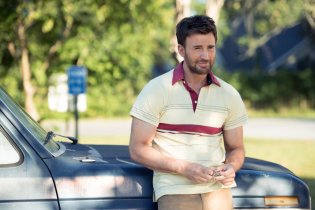 g. But if the climax of the movie is Frank’s slamming the document down on the desk in front of his unbelieving mother, then his doing nothing about that document all through the movie is enormously meaningful. You just don’t realize it at the time.
 I have no way of knowing, of course, what movie you will see when you go to see Gifted. You may want to go back and see Good Will Hunting again. I did. You may attach the principal meaning to the mother and the relationships she has had with her husband, her son (Frank) and her daughter, Mary’s mother. This particular movie is about her relationship with her granddaughter, but Evelyn is a “one interest at at time” sort of person. “Very English,” says her continent son Frank, and there is no reason you can’t just give yourself permission to see the story that stars her and her aspirations, if that is the one you want to see.
 It is gone and it is not coming back. Politicians can promise that they will “fight for us,” and as long as we are feeling powerless to control our own economic destiny, that promise will be powerful. They are empty promises. We can no longer control our economic destiny and that is probably a good thing, however uncomfortable it makes us feel.
 Consider what China has already done with solar panels. “China is now home,” Bradsher says, “to two thirds of the world’s solar production capacity.” That gets them a place at the table, wouldn’t you think? And, Bradsher continues, “because China also buys half of the world’s new solar panels, it now effectively controls the market.” I would think that would give them most of the other places at the table as well.
 voters on the basis of what we will have to do to “govern ourselves once more” or to “take control of our own destiny” or even “to return America to the leadership we once had.” I haven’t even begun to cover the slogans, and in my list, I restricted myself to only positive images. If you include avoiding negative outcomes—like “Better Red than Dead”—you can make a much bigger list.
 The nationalists will call the globalists, “defeatist.” The globalists will call the nationalists “delusional.” What I want to know is what the voters will call these two “parties.”
 If this is the wave of the future, economically, how can the American voters prepare to vote their own economic self-interest in national elections? How can they learn to respond to the globalist message when there is no hope in it for them and no way back to American global dominance?
 one thing evokes which attached it to another. Of course, associations—plausible but mistaken associations—are the root of a great deal of humor. Advertising for mattresses, for instance, is full of references that could be taken to refer to the mattress or to what one might enjoy doing on the mattress. They count on you to associate the one meaning with the other and nearly everyone does.
 I have seen that story set in Revolutionary War times and in Civil War times, but either setting presupposes the line of soldiers with muskets or rifles standing in the way of an attacking army and refusing to retreat. “They stood there,” ran one account I saw, “like they had tar on their heels.” The Tar Heels had the courage to “stand their ground,” a term that makes perfect sense on the battlefield. [2]
 down the street yesterday when I passed a car with a North Carolina plate. It said, like this one, “First in Flight.” At that point, my mind handed me a meaning of Tar Heel I had never had before. Thank you, mind. It pointed out to me that “Tar Heel” means “Last in Flight.” That’s a very good thing if you are talking about the behavior of soldiers in battle. So I started smiling and have hardly stopped. When I was still chuckling about it this morning, I thought I would share it.
 No one questions the speaker’s qualifications to speak on the assigned topic, but he is a member of an organization (the Presbyterian Church of America) which is more conservative than the Presbyterian Church USA, the home denomination of Princeton Seminary and the PCA is a great deal more conservative than the faculty and students at the Seminary itself.
 l beyond our initial expectations, many gentiles have responded positively. We could treat their interest as an occasion for “harassing them” [2]. We could see how sincere they are by putting obstacles in their way. We could cast aspersions on some other aspect of their way of life or their associations. But wait, James says, let’s not do that. They are turning to God. Let’s refuse to throw obstacles in their way.
 The expression “identity theology” is new to me, but it is an idea I have seen in practice for a long time. Sometimes, when I get sloppy, I see it in my own practice so I am not pointing fingers as a mere spectator might. I ran across this idea first in C. S. Lewis’s The Screwtape Letters, the premise of which is that Screwtape, a very senior devil, is giving advice to his pupil, Wormwood, about how to damn human souls. [4] This passage is from Letter 25.
 Some years ago, I read a fascinating review of Chariots of Fire by Ted Mahar, who reviewed movies for The Oregonian at the time. “You’re really going to like this movie,” he said, as I recall it. “You’re going to to talk to your friends and they are going to ask you what the movie was about. And at that moment, you are going to begin to struggle. What was it about, really? You know you liked it, but what was it about?”
 Last Word. Embedded in the story of Harriet Lawler, a wealthy and talented bully, who lacks only a compassionately written obituary to support her declaration that her life a success, is the inspiring story of Anne Sherman, the girl she picks on to write the obituary.
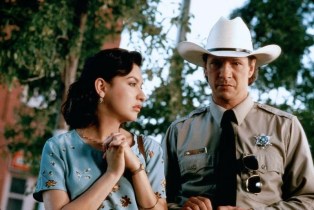 Fourth, I survey the characters who are now “minor characters” in this movie, Life for the Taking. That would include MacLaine, who is the major character in The Last Word. In this new movie, MacLaine is important only as she bears on the odyssey of Anne Sherman. In what way did each of these characters contribute to the main theme? What depth did they add? What tension? How did each help define this plot? Here are two of the main characters of one of the movies you can see in Lone Star.
 John maintains, is beautifully illustrated in The Matrix. When Neo, who is thought to be “the One,” is reunited with his body, which has spent all his previous years immersed in a tub of goo, he wonders, “Why do my eyes hurt?” Morpheus has to tell him, “Because you’ve never used them before.”
 So think about that a minute while I tell you about birdwatching. Most of the time when you are looking at a bird through binoculars, you have some idea of what it is and a broader notion of what it might be. And rather than just “seeing what is there,” you find that your mind offers you one plausible rendition after another after another. If it ought to have a yellow throat, for instance your eye will choose the yellow of a flower from the background and “place it” onto the throat so that you have a momentary glimpse of the bird with the yellow throat. And you have to be patient and disciplined to see whether the yellow you saw on the throat—you really did see that—actually IS on the throat.
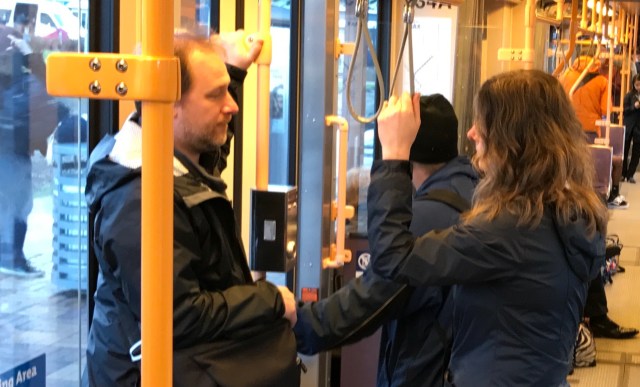 I’m guessing about the neurological strategies involved here, but I think I saw the woman’s hand being held up at what, you will agree, is an odd angle unless you see that she is holding onto a strap. Which I did not see. I could have, but I didn’t.
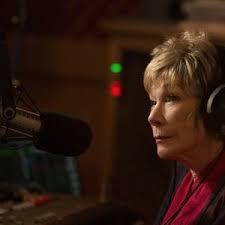 MacLaine’s character, Harriet Lawler, is a thoroughly unpleasant person. She has no respect at all for personal boundaries and respects no one at all—including her former husband and a woman who could probably be best characterized as her former daughter. She is very bright, very aggressive, and very rich so there isn’t a lot she can’t do just by wanting to.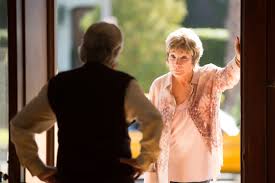
 Now I would like to say what is right with Harriet’s approach and to do that, I want to step back a little and talk about the Bible. There are people who think of the Bible as a kind of rule book, every piece of which means whatever the King James Version says it means and every piece of which is applicable to me. There is so much wrong with that approach that it is hard to confine myself to just one criticism. But I will.
 Anne is severely risk averse. She want’s to be a writer, but the very limited range of life experiences she has chosen confine her writing to that of an idealistic little girl. She has chosen a safe little occupation to support her while she “becomes a writer.” She withholds her heart from life-changing romantic involvements for the same reason. She has never gone to Andalusia, here dream vacation, for the same reason.
 Here’s an example that caught my attention recently. This was is a local neighborhood paper in Portland, in the neighborhood where Bette and I lived before we moved across the river to a different Congressional district.
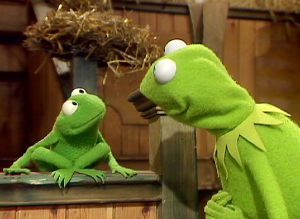
 My kids used to like it when we read Mrs. Piggle Wiggle stories. I never understood why. The children were always wrong in these stories. One they particularly liked was the “Thought You Saiders Cure,” in which the children keep “creatively mishearing” what is said. [1]

 most likely to be overlooked, aspects of Psalm 23. First, it was written by a sheep. We will need an adjective or two here, so let me offer ovine (sheep-like) and pastoral (shepherd-like) as the most useful.
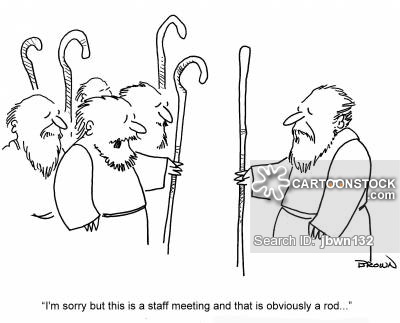 Any shepherd knows what any pastor knows: those under his care are often willful. They want what they want. Very often, they pursue what they want without reference to the dangers to themselves or to the rest of the flock. The shepherd, seeing that, would do what needs to be done. Apart from more spiritual considerations, these sheep are the source of the milk and meat and wool he relies on for his living. So what might he do?
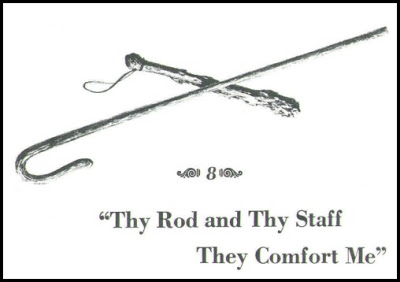 where its owner wants to prevent it from going—that makes perfect sense. I might go so far as to say that it comforts the shepherd. It does not comfort the sheep.
 The Dilettante's Dilemma