
Joseph was a righteous man. Matthew 1:18

That’s what it says right there. “Her husband (it says in the previous line) being righteous AND not willing to expose her publicly.”
OK, let’s start off with the apologies. First to Professor Jerry Hawthorne, who taught me koine Greek in college so I wouldn’t have to rely on an interlinear crutch. I’m sorry, Jerry. The fact is, I haven’t “kept up with my Greek,” as the phrase goes, and I need a crutch. This is from http://www.biblehub.com and I recommend it highly for all the reasons you can see right there on the page. [1]
Here’s how it works. The top line is a numbering system devised by James Strong in the late 19th Century. It identifies other places in the Bible where this Greek word—díkaios, in this case—appears. The second line transliterates the Greek text (line 3) into our alphabet. The fourth line translates it and the fifth line “parses” it, i.e. it gives the grammatical location of the word. We see here that díkaios is an adjective and that it is a nominative, masculine, singular (NMS) adjective, which fits Joseph perfectly.
What does “and” mean?
This text is what is “there,” so to speak. I am interested today in what it means. Particularly, I am interested in what “and” means. What is the relationship between Joseph’s righteousness and his mercy—his choosing the quietest, least painful way available to treat Mary’s “infidelity.” [2]
The people who made this little poster have no interest in “and” at all. They note that the one thing is true and also that the other thing is true. Way too little curiosity, I say.
There are two schools of thought on this among scholars of the Birth Narratives. [3] The first is that “and” means “therefore.” Joseph was a righteous man and therefore he wanted to do everything he could to show mercy to this sinful woman. Short of consummating the marriage, of course. The mercy proceeds from the righteousness. Righteousness, in this reading, is the kind of trait that produces merciful behavior.
 The second is that “and” means something more like “but,” or “even though.” Joseph showed mercy to Mary “even though” he was a righteous man. Righteous in this sense means “knowing and observing the Law of Moses.” We know what the Law of Moses says could be done—the actual practices may have varied by region and certainly varied by historical period—to Mary because of her obvious infidelity. She was, in fact, pregnant, and Joseph was not the father, so we find ourselves in “the usual suspects” territory.
The text will bear either interpretation of the relationship between Joseph’s righteousness and his personal inclinations, which is why, of course, different scholars understand the same text differently. And when texts are interpreted in several ways, it is very hard not to choose the one we like best, rather than the one that is most likely. It is very hard; trust me on that. A few highly disciplined scholars might do that [4] but the church will not and individual disciples, as a rule, will not either.
An Intermediate Course
There is an intermediate course, fortunately. It is not an alternative meaning; it is an alternative way of choosing a meaning. About that course, there is good news and bad news. The good news is that it gives us an additional key for interpreting what Matthew might have had in mind. The bad news is that to use this key, we will have to go further from the text and root around a little bit in just why Matthew might have cast this story as he did.
Here’s an idea. It is Raymond Brown’s idea again. I hate to keep emphasizing that, but he is a scholar and I am not and he is the scholar of the infancy narratives I know best and trust most. It starts with Matthew’s desire to affirm both the Law and the Revelation in Jesus Christ. Matthew is clearly the most “both/and” of the evangelists. Take Matthew 13:52, for instance, in which some scholars believe Matthew is referring to himself.
And in the spirit of both/and, Matthew has nothing to lose by bearing down hard on the righteousness (dikaiosúnë) of Joseph, meaning a careful, even a rigid, adherence to the Law of Moses. Matthew can bang that drum as hard as he pleases because the next event is that Joseph receives a revelation in a dream.
In 1:20, an angel appears to Joseph—Joseph the father of Jesus has a lot of similarities to Joseph the Patriarch as dreams go—and tells him not to be afraid to bring Mary to his home because her pregnancy has nothing at all to do with infidelity. And Joseph receives this new word and gives it primacy over the old word, the Law of Moses, and does gladly what the Law of Moses would forbid.
This relationship between the “old Word,” the word God gave to Israel, and the “new Word,” the word that Jesus embodies and proclaims, will be the theme of Matthew’s gospel generally. So it makes great sense for him to tuck it into the earliest part of his gospel, the birth narrative of Jesus.
Making a choice
That is an elegant solution to the textual problem, I think, but it brings us right to the lip of the problem I posed earlier. What are we going to do? How are we going to understand the relationship of righteousness and mercy in the story Matthew tells us. In the churches I know best, there is not much appetite for righteousness, meaning the careful observation of God’s requirements. The only thing we are really judgmental about is the fact that some churches emphasize God’s judgment, where we think the mercy of God should be favored. Judgmentalism just makes us angry.
On the other hand, we really don’t think that we should choose the interpretation we like best. We think we should favor the “best interpretation,” whatever the scholars determine that to be. That is what is behind the cherrypicking we do—not of texts, but of scholars; we just want the meaning we like best to be the best scholarly judgment. It’s sad, really, but there it is.
So it isn’t easy. But then, it wasn’t easy for Joseph either. The dilemma he faced about Mary was not easy and the message of the angel, which replaced one dilemma with another, also wasn’t easy. So it is perfectly appropriate that we begin this Advent, one based on Matthew’s account, by celebrating the courage of the legal husband of Mary and the legal father of Jesus.
[1] The site has a lot more than an interlinear text, so the way I get to this site is to google “interlinear new testament” and choose the http://www.biblehub.com site from the list.
[2] It is a shame, really, that the meaning of the word “infidelity” has shrunk so much that it now means “having sex with someone other than your spouse.” With that shrunken meaning, we can hardly see that Joseph is being asked to be faithful to God’s plan and would be committing an act of infidelity had he refused. As it happens, both Mary and Joseph are faithful.
[3] My principal source for all this is Raymond E. Brown’s The Birth of the Messiah, the best and most thorough book I know about the birth narrative. In the Revised Edition, which I am using, having worn out my first one, this discussion appears on pp. 126—128.
[4] And very likely would be punished by vigilant peers if they did not.
 it, I should tell you that this is not a spider. It is a decal representing a spider. The decal does everything you want it to do. It affects people who know they are being affected by it and people who don’t know. And everyone it affects is affected in the same way. Their marksmanship improves whether they are attending to it or not.
 device. People like to aim at targets. But targets have two disadvantages that spiders do not have. First, you know they were put there in an attempt to manipulate you. Not everyone likes that. Second, if there is a place you are supposed to hit, there is the chance that you could miss it. You could, in other words, fail. Not everyone likes that either. And besides, what good does it do anyone for you to hit a target.



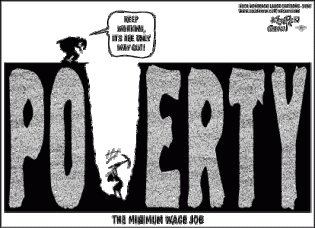 nevertheless, have views on how children should be raised, have a dilemma. I learned what the right goals of childrearing are from my parents and got a refresher course by being a parent and a step-parent. I know what is right and why it is right. I have never asked what would be the right kind of childrearing if the goal were, as in the case of the working class, to ensure that no one sinks to “hard living.” So in confronting this question, I am facing a question I have never faced before. I need to ask, of the child rearing practices of the working class, “Will they meet the goals of the parents?”
 But there are some differences as well. Lubrano’s father raised him to be a really good bricklayer, but Lubrano became a journalist instead. A father in our society in preparing the sons to do the same kind of work he does, is closing off a lot of other economic choices that the sons might prefer. That’s not true of the hunter.
 the same problem I have. We need to be able to challenge these childrearing practices on either instrumental or on normative grounds. Those are the two I introduced above. We need, in other words, to say, “I understand your adopting those practices as a way to prepare your children for working class life, but actually, they won’t have that effect.” First, I’m not really sure that is true. Besides that, I am sure I am not in a position to say it even if it were true. So the instrumental case against those childrearing practices falls apart.
 Starbucks grappling with the recent spate of sexual abuse accusations made against public figures. A small party came in to sit at the table next to us: a young couple, a small child and an infant. The mother had scarcely settled in her chair when she came over and asked us to watch our language, there being a small child within earshot.
 It’s hard to say that her fears were unreasonable, given that the topic—which, I remind you, was allegations of sexual abuse made about public figures—was potentially offensive. I good way to approach this would be to ask how likely it is that offensive things will be said, how harmful it would be if offensive things were said. Since she didn’t have any way to judge either question, she set the bar for her own action very low. These six old people might say something I would not want my child to hear and it might damage him or her. [2] I am trying to imagine the six of us having the kind of impact on this mother that this picture is intended to have.
 After the woman had gone back to her table and her infant and her preschooler and her husband, some members of our group recovered a little from the shock and engaged in a brisk game of Shoudasaid. We shouldasaid, “Everyone here is a parent and a grandparent. We don’t need your guidance about what kind of language to use.” We shouldasaid, “We will be careful not to say anything we wouldn’t want our own grandchildren to hear.” We shouldasaid, “Thanks for sharing your feelings, but we are going to have the conversation we had begun and if you don’t like it, there are other tables you might occupy.” We shouldsaid, “You want us to what? Really?”
 the meadow. The first 33 were headed to the woods to cut firewood and bring it back home by the armload. The second 33 were all a man named Per [1] who was sneaking off to meet Par [2], a beautiful Persian girl whom Per’s parents would like him to avoid. The third set of 33 trips were taken by a physicist deep in thought. She found the predictable walk to the woods and back…oh…restful. It cleared her mind to work on the space-time continuum.





 and there are only two teams the left and the right. The people who have been calling themselves umpires, are actually members of the left—they have been “irredeemably corrupted by an alien enemy.”
 woman could have been raped and her account of what happened to her could be true—UNTIL IT WAS REPORTED IN THE PRESS. Then it isn’t true anymore. When it is reported, it is an act of political aggression and the truth claim is buried in politics.
 missed most of the early discussions, but as I came to understand it, Sartre argues that life has no intrinsic meaning at all and that the task of existentialists, those who are courageous enough, is to live a life of authenticity. Authenticity as a value has the great virtue of being centered in the self and if there really is nothing else, that is a great virtue indeed.
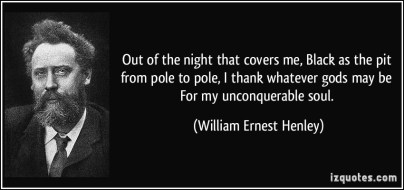 I have great respect for the effect that poem had on President Mandela. I have been affected in that way from time to time. It is a marvelous experience—not always one that feels good—and I am always grateful to have it. So I am a fan of standing up when all you really want to do is lie down.”
 It is not clear to me just why Julie will never walk alone. Will her husband Billy Bigelow, who killed himself, be walking with her? Will Julie’s cousin, Nettie Fowler, who sings this song to her, be with her? It says to have hope in your heart, which seems like a good thing, but what is one to hope for? Is an unspecified hope, a hope with no home, enough to keep you from being alone? It doesn’t seem like it, but this was the mid 1940s and maybe “hope itself”—hope with no clear referent at all—was thought to be enough.
 fair. Abraham Maslow, whose stages of development are widely cited, says that we need to be a part of a group. But after that, we need to go on to become who we are ourselves, without reference to the group. My grad school mentor, Jim Davies, used to identify these stages by saying that we need to be a part—then we need to be apart.

 iconically funny moments. Mother had seen a doctor for her regular checkup that day. On her way home, she stopped to get some groceries, including some milk. When she got home, she put the shopping bag on the table, put the milk in the refrigerator [3], went into the living room, turned on the TV, lay down on the sofa, crossed her ankles, and died. Just like that. But first, she put the milk in the…um…icebox.
 That presupposition is put even further out of conscious reach in the second stage in which you get injured or sick and then recover. You look at the picture of disability as an episode in an otherwise whole and healthy life. You might feel grateful, for a little while, to regain the full use of an injured leg, but you life goes back to normal and you count on the leg to function “normally.”
 round of satisfactions and successes. I can go back to teaching if I teach two courses instead of three. I can get back on the trail because I can still run on soft surfaces, but running on the hard surfaces of my neighborhood are a thing of the past. I can rejoin the book group with the understanding that the “discussions” are now going to include detours of personal reminiscence and repeated stories. It’s “back” you see; it just isn’t all the way back.


