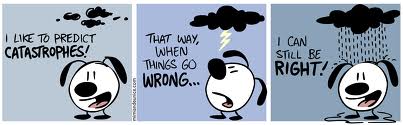
Fan base

“There’s such a thing as loyalty,” snapped the angry Jane Studdock.

There is, ma’am,” returned Andrew McPhee, “As you get older, you will learn that it is a virtue too important to be lavished on individual personalities.” [1]

I am trying to do a very hard thing. I am trying to be a fan of the team who is playing the best ball. I grew up, as you did, thinking that “fanhood” belonged to a particular team. I’m a fan of the Pittsburgh Steelers or the Cincinnati Reds or the Duke Blue Devils. I’m trying to get away from that. At my age, I probably won’t be successful, but I do admire the effort.

What would that mean?

The sports I like to watch most are professional football (I like college ball also), collegefan 1 basketball (not pro ball), and professional tennis. I’m not going to try to justify those. They are just the ones I most enjoy watching.
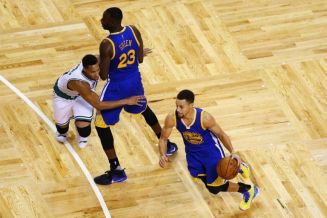
For each sport, there is a kind of game I like to watch. To some extent, it is the kind of game I understand best. Of course, I don’t like it if it doesn’t work. But if a team is playing a kind of game I don’t like, I don’t care whether it works or not.  Here, for instance, is the classic pick and roll.  Green (23) sets the pick.  If Curry gets free, he shoots.  If they adjust to him, Green will be free to “roll” and he can shoot.

What would that look like?

I like smart players (tennis) and smart teams (football and basketball). It could be argued that doing whatever it takes to win is the smart thing and that might make good sense if you are a manager. I’m just a fan [2] So if the other team’s big men are undersized and yours are not, it would be “smart” to throw the ball into your really big man under the basket and let him just outmuscle everyone and score. That’s not what I mean by smart.  It’s effective, but it doesn’t require the kind of thought I like to watch in action.

On the other hand, if they have someone who just can’t guard your center and also someone who can, they will put the better defender on your center. If you pass the ball around really well so that they have to switch and put the poorer defender on your guy, [3] and then you pass him the ball and he scores—that looks like smart to me. It’s the same two points, but I would enjoy watching it. I am a fan of that way of playing basketball and I would like my loyalty to flow to anyone who is using it.

I learned from Tony Romo’s commentary during the 2019 Superbowl, that New England fan 3ran the same play three times in a row, delivering the ball to a different receiver each time. It is a considerable strain on the defense to defend “the same play” time after time, only to have it work differently time after time. So theoretically, I could have started with a leftover, “old style” preference for Los Angeles, and have been won over by the smart play of New England.
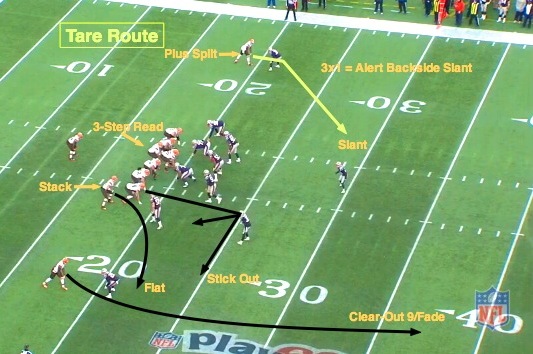
This is not that game, obviously, but just look at the “clear out route” at the bottom of the picture.  If the defensive lineman lined up opposite the wide receiver follows the wide receiver down the field, then he will not be in the flat where the tight end is going to be and the defensive back may or may not be able to get over to cover him.  Sometimes I can see that set up as I am watching.  More and more the commentators graph out some of the possibilities before the ball is snapped and refer to them in explaining the play.  You don’t have to be all that smart if all you have to do is look at what they are showing you.  On the other hand, you do have to pay attention, and you have to be willing to prefer a smart play to a dumb one.

As I am trying to build my new habits—being a fan of a style of play, rather than of a team—that would be a victory for me.

The downside of this new habit is that I need to be a more knowledgeable viewer. If I am the fan of a team, if the ball goes in the basket, it is good. If it was a bad shot—a shot the player should not have taken—it is bad whether it goes in or not. If a team is passing the ball around the perimeter because they can’t think of anything else to do with it, that it going to turn me off quickly. If, with every pass, they gain a small advantage until finally someone is free to take an easy shot, I am going to enjoy that. Similarly, if a team is passing well, but the defense is even better and no combination of passes gets an open shot—and even more if the shot clock buzzer goes off—I am going to become a fan of that defense,

If a safety misunderstands the coverage and lets a receiver get entirely open, that’s on him. If the offense pulls him to the center of the field, where he simply can’t get back to the flat to cover the receiver, that’s just a well designed play and no fault goes to the defensive back. The first instance is just bad football by the defense My loyalty starts to drift away. The second instance is just good football by everyone and my loyalty to both teams holds firm.
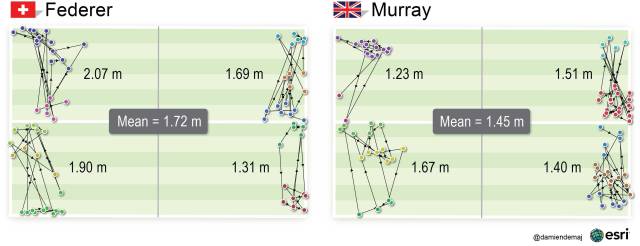
fan 2It works the same way in tennis.  If I can pull the opposing player a little wider with every cross court shot, eventually, I will get him to where he just can’t make it all the way back and if he commits to the long trek too early, I can just hit it behind him.  On the other hand, if the defensive player does more with my shot than just returning it, he can break up the whole sequence and capture the offense for himself.  I like both of those and whoever is doing it better is the one I would like to be appreciating more.

That could very well involve appreciating (being a fan of) Roger Federer in the first set, and when his tennis goes abruptly bad, which it does sometimes, being a fan of Andy Murray in the second set.  If I can do this, I will be a fan, in the fifth set, of whoever has been playing the best tennis up to then.

I have no idea if it will work, but I’d like to give it a try. Being a fan of the team that is playing the best ball or the player who is playing the smartest tennis seems like something I would like to do. I foresee getting kicked out of alumni parties, but I think I’m OK with that.

[1] Both from C. S. Lewis’s That Hideous Strength. Neither of them is talking about college basketball.
[2] I am aware, of course that “fan” is the short form of “fanatic” but I am trying to resist the idea that fanaticism must be attached to a team.
[3] Of course, I need to be able to see it and I admit that the commentary helps me learn what to look for. I also admit that the TV coverage is not a fan of that kind of watching. Still, it works often enough to engage my appreciation and, hypothetically, my loyalty.

Posted in Living My Life, Paying Attention | Tagged , , , , | Leave a comment

Asymmetrical Mutual Prohibitions

I know that’s an awful title, but I don’t get to say things like that all the time and this time I think I can justify it.  I will let you be the judge.

For one reason or another, I have been spending some time grappling with Romans 14 this year. Did you ever have the experience of listening to a song from a genre you are not familiar with? It’s an OK song, you say. Nothing special. Then you learn more about that particular kind of music and you start to evaluate it not just by “how it hits you,” but by how closely it achieves the demanding standards of that kind of music.

Wow, you say, it’s really good. That’s your brain talking. But further on down the road, you internalize those norms; they are now the norms that enable you to hear that music and appreciate it in the way that is most appropriate to the kind of music it is. It’s not “an OK song” anymore. It’s really wonderful. It moves you.

The weak and the strong

So the song metaphor is the way I am feeling about Paul’s treatment of the weak and the strong in Romans 14. I have read it all my life as having the essential meaning that the strong and the weak ought to be nice to each other. That’s not wrong—and it’s not a bad idea—but there is more there and lately I’ve been marinating my mind in just how much more there is.

There are four pieces to this tidy puzzle. What does “weak” mean? What does “strong” mean? What are their obligations to each other? How long do these obligations last?  The first three questions mean what you think they mean. That fourth one is a trap.

What does “weak” mean?

In the New Jerusalem Bible, my go-to version, the whole chapter is headed “Charityweak 3 Toward the Scrupulous.” [1] So “weak” in this context means “scrupulous,” or as we would more likely express it, “overscrupulous.” Paul is clear that what he means is things like refusing to eat meat and drink wine and and honoring special days. These very particular things are part of the faith of “the weak;” they are the style of the faith of the weak. They are completely authentic. They express their sense of what God requires. [2]

What does “strong” mean?

Similarly, “strong” means not making these distinctions. The “strong,” says Paul, making it clear that he is one of them, have “faith enough” to eat any kind of food and they honor all days equally and they feel free to drink wine. Their faith is oriented toward the view that God has provided many good things for us all and that honoring God as we enjoy them is the right way to worship.

I am sure that all sounds safely ancient and foreign, but the fact is that when we feel strongly that there is “a right way to worship” or that it is crucial to “do what God requires,” we are implying that there is a single standard. God requires/allows that we do this and not that. And since these standards are adhered to by groups in the congregation, there is also an “us and them” dynamic. When you think about it, there is every reason for any member of the Roman church to think that “we” are doing it right and that “they” are doing wrong and, should the occasion arise, to express those feelings freely.

Mutual obligations

weak 6And this is where it gets good. The obligations are symmetrical in the sense that we owe them something and they owe us something. But what we owe them is different from what they owe us. And the difference is acute when you look at it psychologically. The weak are not to “condemn” the strong. The verb is krinetō and it does not mean “judge” in the sense of “come to a decision about,” as one would judge one wine to be better than another. And the strong are not to “disdain” the weak. The verb is exethenetō and I think a good modern approximation would be “to diss.” The strong are not to diss the weak. Both verbs, by the way, are imperatives and both have the sense of a continuing action. So we would be perfectly within our (hermeneutic) rights to say, “Don’t keep on condemning/ don’t keep on dissing.” or even “Don’t keep harping on…” So obligations are mutual, but they are not even remotely symmetrical.

It is hard to be scrupulous. I have friends who, for reasons that have nothing at all to do with religious faith, cannot eat gluten or dairy or any soy product. When I think of “scrupulous,” I picture these friends examining lists of ingredients and cross-examining the cook. As always, when you engage in costly behavior, you ask yourself, “Why am I doing this?” In their case, the answer is readily available. “Because I will get sick if I don’t.”

But what if the answer is, “Because it is what God requires.”? It is extremely difficult, within a small group, to say that God requires this strenuous scrutiny and this onerous abstinence from us but not from you. And when I see you doing the things that are forbidden to me, it is extremely difficult for me not to condemn you for doing them. And that is particularly true if I would like to do them, but am not allowed to. [3] “Condemnation” is the natural response of the scrupulous to the “unscrupulous.”

It is not at all hard to be “strong.” About questions like meat and wine, one needs only to ask, “Why on earth not?” They are natural appetites, certainly, and if there is no reason not to indulge them, why not? Of course, “God has forbidden them to you” would be a good reason, but God has not done so. “We,” that is our group (not yours) have a robust faith and do not imagine God to forbid things without reason. God has made the world full of good things for us to enjoy and only the crabbed and small-minded would refuse to honor God by enjoying them.

Oops. Did is just say a discouraging word? “Crabbed and small-minded” are not weak 8condemnations, exactly. They are insults, but they are not serious insults. They are “lookings down upon;” they are trivializings. They are objections launched from the moral heights against those toiling in the lowlands. They are disdain. [4]  Archie Bunker, for instance, was supposed to be a laughingstock.  He was supposed to be the excuse for the disdain of “the strong.”  Except that America loved him.  More oops.
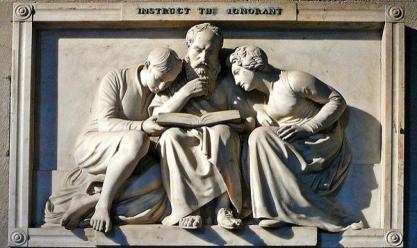
Disdain is as natural to the strong—the “underscrupulous”—as condemnation is the the weak—the overscrupulous.” There is no good single answer to how scrupulous you ought to be. [5] There is, however, a good answer to how you ought to cherish your fellow believers.

Here is where it gets dicey for the strong. First, says Paul to the strong Christians, do no harm. Don’t evaluate your behavior only on whether it is satisfying and without blame; examine it also in terms of what kind of damage it might do to the weak. You have no obligations at all to take on the rationale that the weak must use to justify their behavior, but you do have an obligation to them to refuse to do what will weaken their faith. [6]

How long, O Lord?

There is, of course, no corresponding obligation for the weak. Paul has no notion that the condemnation of the weak will damage the faith of the strong any more than the condemnation of a movie by cultural conservatives will make it less attractive to cultural liberals. The weak get to keep on doing what they are doing and the strong do not. You don’t have to be too farsighted to see that a problem will develop here.

weak 9And I think it should. Paul’s time horizon is very short. He believes that we are living in the very last days of our era, that the return of Jesus is imminent and that, therefore, there is no need to adopt long-term strategies. I have been saying to my class that Paul is a sprint coach and the marathoners don’t know what to make of him.  This is the duty of the strong as they think Paul would see it in the long run.

In the long run, the commitments of “the weak” are problematic not because they are onerous, but because their justifications are thin. If it is true, as Paul says, that there are no other gods, then meat offered to them is not contaminated and anyone with a robust faith—here, that would require a robust justification—should be free to eat it. So if there is a long run, the strong need to get about the job of enriching the understanding of the weak.

The strong believe in principles; the weak believe in practices. If there is to be a long term, let the conversations continue. Let the love of the strong for the weak encompass not only their sharing the deprivations of the weak, but also helping them see that those practices are not really required by any principle they themselves would approve of. These conversations, remember, would continue over meals that have no meat and no wine. The strong are not to put stumbling blocks in the path of the weak. But they have no obligation to leave the weak hostage to groundless superstitions either, so I say let the conversations continue.

I’ve been an educator all my life and I firmly believe that bad justifications are much more toxic that meat and wine could ever be.

[1] These little “headlines” that are being put into modern Bibles and not inspired in the same sense the original text is and sometimes they are just misleading. This is one of those.
[2] And they are, frankly, very Jewish-sounding. The notion of “holiness” as separation, as withdrawal from, as purity, is how much of the Law is defined.
[3] My parents would be angry if they found out or the other members of my group would condemn me if they found out.
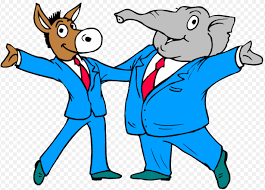
[4] At the risk of politicizing this unnecessarily, let me point out that these are the characteristic flaws of the blue culture (Democrats) and the red culture (Republicans)
[5] We get the word from scrupus, a Latin noun referring to a small sharp stone. Cicero imagined the nagging of the conscience as something like having such a stone in your sandal, but if you’ve ever passed a kidney stone, you have a much finer appreciation of what scrupus feels like.
[6] Paul is not interested, contrary to what I learned as a child in a very conservative home, in what will offend others, but in what will cause others to offend—what will be a threat to their faith. This is a much better standard, because when you learn that all you have to do to control my behavior is to say that you find it offensive, I am a goner and I know whereof I speak. Paul’s standard is much better.

Posted in Biblical Studies, Political Psychology | Tagged , , , , , | Leave a comment

Prudence, resilience, and awfulizing

The idea behind pairing these ideas is that the amount of care we exercise in preventing bad outcomes can, under some circumstances, be translated into an unrealistic and ominous assessment of what those outcomes could be.

I have had a lot of opportunity, lately, to prevent bad outcomes.  [1] I get a lot of leeway just for being old.  Failures that in a younger person might be chalked up to lack of effort are passed over because I am old.  I’m not sure that is good for me, but I am sure, as W. S. Gilbert says, that “these attentions are well meant.”  

I am often in settings where I am a customer and customers are notoriously under-criticized.  As an academic, I spent a lot of time in settings where disciplinary rivalries were well established and anything said by a member of the psychology department, for instance, might be objected to, just as a matter of habit, by a member of the sociology department.  But where I live now, I am “an academic” by contrast with the other residents, who were were in business or in other professions.  In this setting, I am granted the kind of space academics are given by people who don’t really appreciate how narrow academic specialties really are.

So, all in all, I am in the very fortunate position of not being criticized very often except by people who really know me.

The downside of being that fortunate is that I have become less adept at dealing with resile 1.jpgdifficult experiences.  I have become, to say it more briefly, less resilient.  I am going to tell about a recent experience in a moment, but before I do that I want to pause to resuscitate the verb “resile,” which really ought to be more popular than it is.

It seems odd, when you stop to think about it, that the adjective resilient is so common and the noun resilience is pretty common, where the verb resile has to be put in quotation marks (as I did in its first use, above) so people will know you said it on purpose. [2]

I had an experience recently that surprised me.  I went out for a medium-sized bike ride after surveying the weather and concluding that it was going to be a day of drippy Portland weather.  I begin this route at the point furthest from home, so when I started, I didn’t have half the route to go; I had the whole route to go.  

And I had no sooner started than it began to rain really hard.  I had several backup plans in place, but as I approached the site of each one, it seemed to me to be not much better than just continuing.  And as I continued past these checkoff points, I began to get the sense that it would be kind of like the old days to just allow myself to get good and soaked (I wasn’t cold) and just finish the route as planned.

resile 6And that is what happened.  I was soaked through by the time I got home and I was feeling absolutely exultant.  I could have felt bad for failing to predict the weather accurately or for failing to use the backup plans, but I didn’t.  I felt really good about getting through it and really paying very little attention to my discomfort.  That part felt really good and it called to my mind a lot of times I had made that choice as a younger man and had felt really good about it.

There is a time, when you are young, when you are curious about just how much you can take.  The goal in that phase is not to prevent the hard knocks but to ignore them.  You just endure them and take the discomforts for granted and draw conclusions about how resilient you are.  A part of this phase is that it happens at a time when you are much less able than you will be later to think through and therefore to prevent, those outcomes, but that isn’t all of it.  Part of it seeks those discomforts as a way of testing just how strong you are, which is something you really need to know when you are young.

So…in this model, you tend to ignore (or undervalue) prudence when you are young and to appreciate (or overvalue) resilience.  When you are old, you tend to overvalue prudence [3] and, as a result, lose your sense of how resilient you can be when it is really called for.

Agency is fundamental

Why does it work that way?  It turns out that one of the most fundamental questions we ask ourselves is, “Why am I doing this?”  “Agency” in the sense I used it above, can be understood as “doing-ness.”

I remember my first look at how powerful this question is.  In a well-known psych experiment, students were given a really boring job to do, then asked to come back later in the week and do it again.  Some of the students were paid to do it the first time and others were not.  When they were asked to come back and do it again, it would be for free.  No one would get paid.  The proportion of students who were not paid the first time and who volunteered to do it the second time was larger. Why?

In the view of the experimenters, the people who were paid the first time said, “Why am I doing this?” and answered, “Because they are paying me.”  So then next time, when there would be no pay for anyone, they asked, very sensibly, “Why would I do that?” and then refused.

But the students who were not paid the first time were in a very different situation.  When they asked, as everyone does, “Why am I doing this?” there wasn’t any obvious answer.  Many of them answered the question, “I must like it.”  That was the answer to the question.  It wasn’t accurate, but it was accepted and it accounted for the larger proportion of these students who volunteered to do it again.

Ever since I read about that experiment, I have had a real appreciation for the power of the question, “Why am I doing this?”  It is a question we can’t stop asking and the answer guides our behavior whether we are aware of it or not.

resile 3I am arguing here that when I exercise excessive prudence [4] I am answering this unavoidable question in a way that affects me.  When I am “excessively careful” about being on time, I am teaching myself that it would be really awful to be late.  When I am excessively careful not to offend anyone, I am teaching myself that it would be really awful if anyone were to take offense at what I am doing.  Or, succinctly, I am “awfulizing.” [5]  I am overstating the seriousness of the consequences of my actions or the seriousness of a threat.
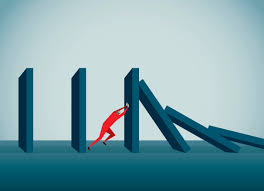
I don’t have the need, as an old man, to find out how tough I am the way I did as an adolescent.  And I have the means, as an old man, to avoid a lot of the difficulties I could not avoid as a young man.  I can avoid having an ill-tempered boss for instance, or having to fight through tiredness to complete my workday, or being hungry (or eating junk-food because I didn’t have time to eat.)  I don’t have to do any of those things now.  And if I think of those as occasions for practicing my resilience, I now have a dearth of those occasions.

As a young man, I treasured the occasions that demanded resilience because I wanted to know if I could resile adequately.  As an old man in very favored circumstances, I am in a good position to avoid those occasions.  And when I do, I teach myself that it would be really really awful to be tired or hungry or  or to have an unreasoning obedience demanded of me.  I take the commonplaces of my youth and I awfulize them.  And because they are so awful I exercise “excessive” levels of prudence to avoid them and in that way, I come to imagine that I have very little resilience.

I look at the strenuous efforts I make to avoid these challenges and I say, “Why am I doing that?”  That is, I argued above, an unavoidable question; everyone asks it whether he or she is aware of it or not.  A common answer to the question is, “Because it would be really awful if that happened.”

And that’s how I lose my resilience.

Resilience is a good thing because it helps you recover from the bad things that happen.  Knowing just how resilient you are is also a good thing because it keeps you from worrying about how you will manage when bad things happen.

And prudence is a good thing.  It keeps you from acting like a young man when you are, resile 2in fact, an old man.  You have less flexibility, less strength, a less effective immune system, poorer vision, and poorer hearing.  You have “positions” you have taken over the course of your life that you are reluctant to change unless there is a good reason, and hardly anyone is left in a position to require that you change them.

It would be foolish to pretend that those things are not true and to take them into account when you decide just what kind of an action will count as “daring.”  On the other hand, trying too little and staying too safe and being too prudent will deprive you of your resilience—you do, after all, have to hit something to “bounce back”—and losing your resilience is a catastrophe.  And losing your awareness that you can bounce back is disabling as well because it pushes you into unnecessarily prudent choices that whatever “muscles” resilience requires will atrophy.

So it turn out that unnecessary “prudence” is not prudent at all.  It leads to awfulizing, which leads to atrophy which leads to life in a very small place.

[1]  In everything that follows, I make an exception for physical difficulties, which are more common among my peers than they are among younger people.

[2]  And not, as all my kids said when they were little, “on accident.”

[3]Here, as is so often the case, the etymology of a word is helpful.English gets prudence from the Latin prudentia, which emphasizes sagacity or practical judgment; but prudentia is a contraction of the Latin providentia, which points us in the direction of seeing (vide-) ahead of time (pro- as a form of pre-)

[4]  There must be, in principle, some “just the right amount” of prudence; not too much and not too little.  The description “excessive prudence” means only that more prudence is exercised than this hypothetical “just the right amount.”

[5]  Awfulizing is a term coined by psychologist Albert Ellis. It refers to an irrational and dramatic thought pattern, characterized by the tendency to overestimate the potential seriousness or negative consequences of events, situations, or perceived threats.

Posted in Getting Old, Living My Life | Tagged , , , , | Leave a comment

Some Constitutional Amendment, Part III

I think the most important challenge facing Americans today is constitutional amendment.

That sub-headline connects the three essays in this series.  The first established new, but perfectly plausible meanings for “constitution” (lower case c-) and for “amendment.”[1]  The second surveyed just why the soil that has produced our current political impasse requires amendment and just what sort of mending would help.  

Now we are down to actually doing—that means “writing about it” in my case— some amending.  There are three pieces to this puzzle that I want to highlight.  The first is the large value discrepancies in our society.  The second is the completely inadequate system of economic distribution.  The third is the “warring tribes” model by which the previous two inadequacies are translated into the governmental impasse I referred to above.

The structure of this problem is really simple. [2]  The angry and distrustful citizens are free to elect a presidential candidate who expresses their anger.  They are willing and able to do this.  That means that mending the current constitution of the U. S. would require making them less willing or less able.  I said it was simple.  I didn’t say it was easy.

Making them less able means doing away with democracy.  Throwing roadblocks in the way of voters who are likely to vote the wrong way is the strategy of conservatism, not liberalism.  So let’s work at making them less willing and let’s start with value discrepancies.

Value discrepancies

My thinking has been changed a little since I started this series.  Since then, I have read a very good book by Pippa Norris and Ronald Inglehart:  Cultural Backlash: Trump, Brexit, and Authoritarian Populism.  My approach to the social discrepancies has emphasized culture rather than values, but Norris and Inglehart make a good case for emphasizing the values themselves.  There has been, these authors demonstrate, a “silent revolution” in values.  Many of the old values were presupposed, rather than agreed upon, and as new settings lead to new values, the old values were “transcended,” in the view of the young or “abandoned” in the view of the old.

It’s really a generational thing, according to Norris and Inglehart.  Europe and the U. S.con sol 7 have been prosperous and secure for a long time now and the “values” that were required by “the greatest generation” [3] are no longer necessary.  Loyalty to one’s country, clear gender roles, heterosexuality, the cultural hegemony of white Christianity, and other commonplaces were once taken for granted.  But now that they are no longer “necessary,” we are free to look at what they cost us. [4] and when we see that the cost is high—not that those values are no longer “necessary”—we transcend them.  That is the silent revolution.

And if you take seriously the “back-“ in backlash, this is the answer.  This “revolution” is what the backlash is about.  In the view of the old [4], we have finally gone too far.  The things we care most about are overtly rejected and routinely ridiculed by “the elites.” [5].  It is time to stand up for America and for Christianity and for an economy that works for ordinary people.  That is the “back” of “backlash.”

We can’t change those values in the short run.  They will change on their own, under the conditions that produced the “silent revolution.”  When the working classes are secure and prosperous, they will not have a grievance that can be attached by political sleight of hand to the current ruling class.  If they don’t have a grievance, it can’t be used as fuel for a revolution of any kind.

So my “solution” to this problem is to leave the values alone except where they are put into statute as applicable to everyone.  In the view of this culture, for instance, refusing to require everyone to pray in public schools is “throwing God out of the schools.”  Those values, because they are demanded of everyone, need to be opposed.

Economic distribution

Because I focus on the cultural view—and here, I am in debt to the analysis of Joan C. Williams–it is not the inadequate compensation of the working class that constitutes the political problem, it is the prospect that things are going to continue to deteriorate for their children and grandchildren.  There is a braking effect on the feelings of class resentment if the parents always have to be prepared to see their children successful in terms of the current liberal agenda.  This “braking effect” used to keep class antagonisms from hardening up, but under current and foreseen economic circumstances, there will not be upward mobility for the children—the children will not become “them” in the class system—so there is no reason not to circle the wagons and begin to return fire.

I have argued that the flaw—the “menda”—in the economy is that work can now be done so cheaply that it doesn’t sustain workers anymore.  That means that there needs to be—as in the social democracies of Europe—a floor below which we will not allow our citizens to sink.  It means breaking the link, at the lower end of the wage economy, between work and compensation.

con sol 6There really isn’t any other way to do it if there is not enough work to go around.  We don’t need to go so far as Marx’s “from each according to his ability, to each according to his need,” but we need to move in that direction. [7]  The value argument is that all citizens deserve this support.  The wealthy deserve to live in a society where they are not assaulted by egregious poverty and need.  The poor need to have their basic needs for food, shelter, and medical care met so they will not experience egregious poverty and need.
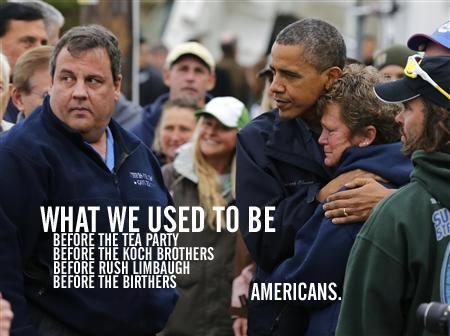
So there you go.

This will require a good deal more taxation, of course, but we have the means to pay those taxes and when they are framed as what “we deserve as Americans,” those levels can be defended.

Warring tribes

The third element of the solution wouldn’t be necessary if the first two were the sole causes of the current “menda.”  If the abandonment of the old values and the perpetuation of the new poverty were the causes of the current political warfare, then when we deal with the first two, we have eliminated the need for the third.  Except that it doesn’t actually work that way.

So long as there is an elected government that can profit by stoking the latent grievances con sol 5of the citizenry, there will be appeals of that kind by the government to the people.  Politicians will say that their constituents STILL do not have the respect they are due and STILL do not have a fair deal economically, and that those citizens should be angry about it and use their anger to keep those particular politicians in office.
The previous two “solutions” mean that the citizens need not feel the way they do feel.  The value discrepancy problem has been solved in principle.  The economic equity problem has been solved in principle.  But if appeals are made to them, the fact that they need not does not mean that they will not.  We need also to make the warring tribes model of electioneering a thing of the past.

Currently, people organize themselves into collectivities in which “we” are righteous and unrecognized and “they” are imperious and immoral.  Or vice versa.  The order really doesn’t matter.  Appealing to your own tribe as a way of securing your election will still work so long as there are still tribes.  So my solution here is to get rid of tribes.

What I want is people who are willing and able to recognize that perfectly good people see things differently and, as a consequence, you really don’t need to cherish “enemies,” as is currently the practice.  You can have fellow citizens who are your allies on this issue and your opponents—not your enemies—on other issues.  This makes changes in the nature of the conversation also.  There is no value to treating with contempt, someone whose support and understanding you will need fifteen minutes later.  There is a kind of moderation that is born of these status discrepancies. [8]

So people who will not discuss politics (and economics and cultural values) civilly with their neighbors on the grounds that it is the right things to do, will still do so because it is the prudent thing to do.  You can have my support on zoning if I can have your support on homelessness.

I have argued that the tribal model is a two-way street.  Warring tribes of citizens elect warring politicians, who boast of having no friends in “the other party.”  And politicians who try to get re-elected by appealing to these discrepancies will seen only desperate and shrill, as if they have no real program to offer.

Accordingly, the solution will require two parts.  The national parties will have to stop banning legislative contacts with the other party.  Any Democrat, for instance, would be encouraged to cultivate relationships with Republicans provided it did not damage the high priority Democratic bills.  The old wisdom used to be that we could accomplish more with bipartisan legislation, even if the credit neededcon sol 4 to be shared.  I want that back.

The second is that neighbors used to talk politics fairly peaceably before party membership became a ghetto.  Walking that back is going to be hard because it will require discussions with people who are now enemies on the grounds that they don’t need to be enemies.  “Opponents,” sure, but the friendship is not based on common membership; only on common interests and civility.

End of argument.  The problem as I and the cited authors have defined it, can be reasonably solved by the approaches I have outlined here..  That doesn’t make them any more likely, of course, but having worked my way all the way through from the beginning to the end, I feel better about it.

[1]I made a big point in the first essay that the Latin menda= a flaw or error and the process of a + mending is the removing of that flaw.

[2]  Leaving aside the mechanical problem that popular majorities (but not electoral majorities) continue to vote for liberal candidates, the problem is that the populist majority is willing and able to elect authoritarian leaders.  The solution would have to make them less willing or less able.

[3]  Tom Brokaw’s book has made that expression nearly indispensable.

[4]  Admittedly, just who “us” is shifts around a little in such a series.

[5]  Notice how “elite” shifts the complaint from either a value or a culture and places it at the feet of actual power holders, who can be rejected in one sweep as “them.”

[6] Reshaping the Work-Family Debate: Why Men and Class Matter.

[7]  The Apostle Paul thought that was perfectly appropriate as an operating practice within the church.  The Apostle Karl applied it to economies worldwide under conditions of communism.

[8]The hot book when I first began to become a political scientist was E. E. Schattschneider’sThe Semi-sovereign People, which argues that democracy is saved by what he called “cross-cutting cleavages.”That is exactly what I am hoping to restore by honoring status discrepancies.

Posted in Politics | Tagged , , , , | Leave a comment

Some Constitutional Amendment, Part II

I think the most important challenge facing Americans today is constitutional amendment.

The argument so far (Part 1) is not that we need a Constitutional amendment; it is that we need some constitutional amendment. Madison’s two solutions (allow factions to grow until they implode and put enlightened patriots in the Senate) have not held up all that well. No fault of his, of course. Mass-based political parties had not yet made their appearance on the American scene, so destructive partisan competition was the least of his worries.

Madison’s plan for enlightened patriots was dealt a significant structural blow by the 17th Amendment, which provided for the direct election of U. S. Senators. The Senate, in other words, is going to be filled by the same process that fills the House. So if the electorate at large is enlightened, thoughtful, and patriotic, then they will elect people like themselves to the Senate and all will be well.

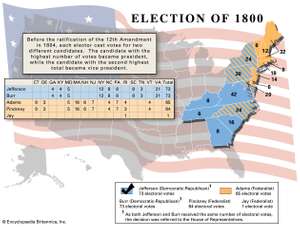
con econ 3Of course, all is not well. Here is a history of partisan conflict in the U. S. in two paragraphs. Jefferson won in 1800 by inventing a “party” with broad popular support. It was ideologically inconsistent because it welded together northern liberals and southern conservatives (the later, but justly famous Austin-Boston axis) but it was successful. The only parties that were ideologically coherent were minor parties until the 1970s when the GOP’s “Southern Strategy” became the “white party” in the south and started winning elections. The Democrats responded by ejecting their southern (conservative) wing and became a coherent liberal party.
The dominant political tradition was that you elected the “best people,” the people you aspired to be, to office on your behalf. It is worth recalling that the elegant Senator Frank Church once represented Idaho. With the decline of trust generally [1], voters came to want “representatives like me.” These are not the people I aspire to any longer; they are the people with the same prejudices and resentments I have. “He” (usually) will “fight for us.”

And that is what happened to Madison’s strategy of permitting one angry and turbulent chamber if it could be paired with one cool and thoughtful chamber.  The predicted implosion of factions hasn’t turned out too well either. So long as distances were obstacles and time was costly, factions would be hard to sustain. Skipping over a lot of intermediate improvements, let’s go straight to social media. Social media allows [2] the concurrence of interests over impossible distances with no loss of time at all. According to the Washington Post, 49% of Republicans believed in the Hillary Clinton “Pizzagate” scandal. Time and distance are, alas, no longer an obstacle to the fractionalization of American politics. [3]

So Madison’s two solutions have not held up very well. The soil he invented for us is badly in need of amendment. Madison’s “soil” was the structure of government. It wasn’t that he had such faith in electorates. Take this assessment, for instance. [4]

The latent causes of faction are thus sown in the nature of man; and we see them everywhere brought into different degrees of activity, according to the different circumstances of civil society. A zeal for different opinions concerning religion, concerning government, and many other points, as well of speculation as of practice; an attachment to different leaders ambitiously contending for pre-eminence and power; or to persons of other descriptions whose fortunes have been interesting to the human passions, have, in turn, divided mankind into parties, inflamed them with mutual animosity, and rendered them much more disposed to vex and oppress each other than to co-operate for their common good. So strong is this propensity of mankind to fall into mutual animosities, that where no substantial occasion presents itself, the most frivolous and fanciful distinctions have been sufficient to kindle their unfriendly passions and excite their most violent conflicts

Madison’s hope was that he could counteract these tendencies by governmental structure and mechanics.

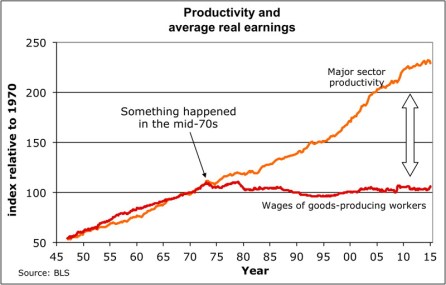
That hope has been dealt a severe blow by the direction of the post-World War II economy. Here’s the short version. For some decades after the war, wages increased as productivity increased. That’s a really good thing provided that the work is still done by human beings. But productivity has continued to increase and wages have stagnated. This is a long term trend and it means that people who do most of the work can look forward to making no progress in their lifetimes and for things to be even worse for their children. If you see the beginnings of a “faction” there, you have seen clearly.

Not only that, but automation generally, and the much more extensive use of robots even for what used to be “white collar jobs,” means that wages are just not going to do the job of sustaining the workforce. People who work with their hand or who do essentially “algorithmic” jobs [5] are being replaced by cheaper foreign workforces and by even cheaper robots. This is what the market requires; there is no governmental fix for it. Government’s job is going to have to be to intervene to support the losers these market forces create.

con econ 2This brings us back to needing “some amendment,” rather than “an amendment.” We have an economically stressed bloc of voters. They are socially stressed as well. The old standards—the way it used to be and the way it ought to be are nearly the same thing for these people—have been replaced by new ones. All the assumptions that supported a white, Christian, androcentric country have taken a hit. These voters are angry about what is being done to them. They no longer believe in electing to office people who can rise above their situation, but rather want people who are angry about the same things. “Drain the swamp” reflects the same emotional levels as “Bring the mother down.” Neither of those is going to happen.

If we have a society that is economically stressed and that has access to government—“a government as good as its people” we used to say, thinking that was a good thing—and that wants an angry and vindictive government. That is the social (and economic) soil that grows the kind of angry populism we not have.

A society like that will always produce a government like this. That process is not going to change unless there is an authoritarian coup. So we need a way to amend, to remove the “menda,” if you recall the etymology in Part I, so the society will choose better governments.

How in the world are we going to do that?

[1] Beginning all over the West in the 1970s according to Francis Fukuyama’s book Trust: The Social Virtues and the Creation of Property.
[2] I despair of using “media” as a singular noun, but just try to read that sentence as “media allow.” It doesn’t work any more.
[3] I moved over from “faction” to “fraction” there because a fraction is not an integer, i.e. it has no “integrity.” As true in politics as in mathematics.
[4] And immediately following that, a passage that the young Karl Marx admired: “But the most common and durable source of factions has been the various and unequal distribution of property. Those who hold and those who are without property have ever formed distinct interests in society. “
[5] As opposed to “heuristic” jobs, which require context and judgment.

Posted in Politics | Tagged , , , , | Leave a comment

Constitutional amendment, Part I

I think the most important challenge facing Americans today is constitutional amendment.

Think of that as sub-headline.  It’s misleading, sure, but it is supposed to get you into the body of the essay.  We’ll see.

Let’s work first on the misleading words I built into the title.  You may have noticed that although there is a capital C in the word “Constitution” in the title, there is a lower case c- in the word “constitution” in the subheadline.  That wasn’t a mistake.

The Constitution of the U. S. should always be capitalized. [1]  But anything can have a constitution.  If it has several elements that “stand together” it has a constitution [2].  A viable family has a constitution.  The United Kingdom has a constitution.  A senior center has a constitution.  And none of those are written documents.  They are the crucial infrastructure of ongoing social units.

But, of course, not everything that has a constitution has a good constitution.  The Federalists argued that the Articles of Confederation was not a good constitution.  The landscaper we consulted about our back yard (when we had a back yard) said that our soil’s constitution was poor.  And he suggested “amendments” to it.

con amd 1How you “amend” soil depends, of course, on what is wrong with it. [3]  This gets more complicated if you have something in particular you want to grow.  If you just want “good soil” and it is “too acid, you add a bunch of lime and you have “mended” the flaw in  your soil.  There are amendments for nearly anything and nearly any soil is good for growing something.  Some soils, much maligned, are good at growing moss, dandelions, and crabgrass.  Gardeners tend to call those “bad soils” which really isn’t fair, but gardeners are a constituency—they stand enduringly together—and they have a point of view.

But if you have a particular plant in mind, corn, for instance, and you want to grow it on a rocky island in the Aleutian Islands, you have other problems as well.  You have a kind of soil that can’t (a)mended and no one is suggesting that we mend the climate so that corn can be grown “too far north.”  That rocky, parched, frozen soil will (does) grow something, but it won’t grow what you want it to grow.

At that point, you have two choices.  You can go somewhere else, somewhere more hospitable to corn. [4]  Or you can decide to value what the soil and the climate will give you.

[Note to the reader.  This has gotten entirely out of hand.  I have just gone back to the title and renamed it “Part I.”  I am not going to be able to say what I want to say in one average size post, so let’s just serialize.]

James Madison had this kind of thing in mind when he wrote The Federalist #10, justly famous as a work of political theory, but written as a letter to the editor by a proponent of the new federal Constitution.  People told him that you really can’t have a popular government of a territory as large as the 13 states.  He said you could if you used the size as a feature, rather than lamenting it as a flaw.

The problem is “faction.”Madison defined a faction as follows:

By a faction, I understand a number of citizens, whether amounting to a majority or a minority of the whole, who are united and actuated by some common impulse of passion, or of interest, adversed to the rights of other citizens, or to the permanent and aggregate interests of the community.

Note that a faction is bad because the common impulse is bad.  It is “averse to the aggregate interests of the community.”.  He had two solutions.  The first was to make the electorate so large that small factions would not be a serious threat;  as they get large, they develop internal contradictions and implode. [5]

The second was to establish a two-chamber legislature where only one of the chamberscon amd 2 could be filled up with populist zealots.  The other chamber would have people “whose enlightened views and virtuous sentiments render them superior to local prejudices .”  He had the Senate in mind when he chose those glowing words and he hoped that they would take care of the hotheads in the House of Representatives.  It requires only that they have enlightened views and virtuous sentiments. {6}

These are not “amendments” in the governmental sense because they were built into the Constitution along with a process by which further amending might be done.  But they are amendments in the sense that we can amend a soil that is flawed for the crop we have in mind, which, in this case, is representative democracy, known at the time as “republicanism.”  The natural limits to the coherence of factional groups and the presence of sober-minded patriotic citizens who are part of the legislative process and the amendments to the soil and they will allow us to grow a representative democracy.

If we are committed to representative democracy as the crop and the flaws we face can be mended, we should set about mending them.  If, on the other hand, they are—as in my Aleutian Island example—beyond the reach of amendment, we are going to have to go somewhere else (hardly practical for a modern nation-state) or change our “preferences” to a crop that our soil and climate will grow.

In Part II, I want to look at what our soil and climate are and to consider what it would take to amend the soil to make it compatible once more with democratic government.

[1]  It would be nice if it were also honored, but I am trying to restrict myself to language use at this point in the argument.

[2]Not to overdose on word origins, but once you get the hang of the stit- element of words, you see it a lot.  Following Eric Partridge’s account, I derive the Latin statuere, “to set: with is “a derivative” of stare, “to stand.”The prefix com- may mean “together,” as it often does (companion) or it may be an intensive.

[3]The Latin menda is “a fault or blemish.”That is why it needs to be “removed” in some way.  That sense is still available in the Latin ex- + menda, which became emendere, which became (after the French were done messing with it) amend.The a- still represents the “removal” part of the word and the “mend” the flaw to be removed.

[4]  Although it is hard not to notice that agricultural interests with a lot of money are buying up land “too far north” for what they are growing now.  You can be as skeptical as you like about the debates of climate scientists, but big time agricultural money in being spent on land where those crops have never ever (in this epoch) been grown.

[5]This is, for science fiction fans, the psychohistory solution in the Foundation Trilogy.  Maybe that’s where Madison got it.

[6]  Rep. Madison, allow me to introduce Sen. McConnell of Kentucky, a living breathing refutation of that half of your solution.

Posted in Politics | Tagged , , , | Leave a comment

Grief sherpa

I’m a big fan of good analytical categories.  I value them in the way academics tend to, but on beyond that, I have been benefitted by them in some very personal ways.  Martin and Doka, for instance [1], distinguish between “intuitive” and “instrumental” styles of grieving.

On the other hand, the experience of grieving (the instrumental and intuitive styles are responses to the condition of grieving) is a fact.  Grief is true in your bones and in the pressure behind your eyes; it is true in the associations one word has with another; it is true in the way the numbers change on the clock.

My son, Doug, referred to me recently as “a grief sherpa.”  I think he invented the term sherpa 4on the spot, but I liked it right away.  Sherpas are not defined by their nationality.  There is no “Sherpistan.”  They are not defined by their locality although they do live in the Himalayas.  They defined by what they know and what they can do and mostly, that means what they have done before.  I think that is what Doug meant by calling me a grief sherpa—grief is something I have done before. [2]

The thing about me is, though, if I have experienced it frequently or deeply or both, I have probably written something about it.  Bette says I think with my fingers and although I’m not admitting anything, I do know what she means.  People say to me, “What was it like for you?” and very often, they wonder if, when it happened to me, I wrote anything about it.  Usually I have.

they say it much more often than they say, “How do you think I should handle this in my life?”

The notion of “sherpa-ness” took my mind right back to Leo McGarry’s description of how he could help Josh Lyman. [3]

LEO This guy’s walking down a street, when he falls in a hole. The walls are so steep. He  can’t get out. A doctor passes by, and the guy shouts up “Hey you! Can you help me out?”  The doctor writes him a prescription, throws it down the hole and moves on. Then a priest  comes along and the guy shouts up “Father, I’m down in this hole, can you help me out?”  The priest writes out a prayer, throws it down in the hole and moves on. [4]

Then a friend  walks by.  Hey Joe, it’s me, can you help me out?” And the friend jumps in the hole! Our guy says “Are you stupid? Now we’re both down here!” and the friend says, “Yeah, but I’ve been down here before, and I know the way out.”

This a great story for people who are grieving.  For one thing, it implicitly recognizes that there is a time called “afterward.”  When you are in the middle of it it feels like it is always going to be like this.  Somebody who was once in the hole you are in and who got out establishes that “afterward” is possible.

And for another thing, the friend has already jumped down into the hole.  He knows some important things (how to get out, for instance) and he has made himself available.  He is a friend.

sherpa 2This turns out to be relevant to what is going on in my life these days.  Some very difficult things have happened to friends recently.  These are friends who know enough of my life to know that I have been in the hole they are in right now.  Climbing out of that hole if really important to them; it is important, even at first, to know that it is possible and when you start to talk about climbing, you are talking about sherpas.  I called sherpas “people who know something and who know how to do something.

Here’s one that helped me.  Just a little earlier than the West Wing story I cited earlier, Josh was having a wrap-up conversation with Stanley Keyworth, his therapist.  Josh has just learned that his panic reaction had been brought on by the music he had heard.

JOSH So that’s gonna be my reaction every time I hear music? 

STANLEY No. 

JOSH Why not? 

STANLEY Because we get better.

We do.  We get better.  I knew that in an abstract sort of way, but hearing Dr. Keyworth say it, especially the way  he said it, made it seem like something I could afford to trust, maybe to risk a little, hoping that it might be true.

So my sherpa-ing amounts only to this.  I have done this before.  I know some things and I know how to do some things.  And I am willing to help.

[1]Their book is very misleadingly titled, Men Don’t Cry…Women Do, Kenneth Doka and Terry Martin, but it is a superb book

[2]  There is also an informal use he might have known about: “a civil servant or diplomat who undertakes preparatory work prior to a summit conference.”  That meaning was new to me, but if it has gotten that far, it has probably also become a verb in the same way that “caddy” became something your caddy did.

[3]  Season 2, The West Wing, “Noel”

[4]  This is Aaron Sorkin pushing as hard as he can against the narrative of The Good Samaritan.  That makes it much better when the role of the Samaritan is subverted.

Posted in Living My Life | Tagged , , , | Leave a comment

Let’s hear it for Iggy

This is a celebration of Dr. Iggy Frome.  If you watch the NBC series, New Amsterdam, you already know Iggy.  He is “the psych department” at the hospital.  So far, that has mostly required him to be empathetic and cuddly, which he is.  You hear him say “Oh, I’m sorry” and “No, that’s OK” a lot.

Iggy 4That didn’t happen in the one subplot of the one episode “The Blues” (Season 1, Episode 13) that I am going to describe here.  Three lines, all directed at Dr. Lauren Bloom, opened up a new facet of Iggy’s work and changed my assessment of him entirely. 

The first zinger was, “I wouldn’t do that.” when Dr. Bloom was about to walk out on the counseling session.  The second, in answer to her speculation “So….I’ll get suspended,” was “No, you’ll get fired.”  And delivered just right.  Nothing cuddly at all there.  You’ll have to wait a little for the third zinger, but it will be worth the wait, I promise you.

The Addict

So here’s the deal.  Dr. Bloom (Janet Montgomery) has ADHD and is an emergency room physician.  She had taken Adderall for her condition for a long time, but now the stresses of her life and work have led to her abusing it.  Her colleague and friend, Dr. Sharpe (Freema Agyeman) reports her to the head of the hospital, Max Goodwin (Ryan Eggold) and Max sets Dr. Bloom up with psychiatrist, Iggy Frome (Tyler Labine).

This is a tough deal for Dr. Bloom.  She knows she is abusing Adderall, she knows she is Iggy 2making mistakes, but she tries to tough it out and denies all the indications that she is a danger to the hospital.  The “appointment” with Iggy is an ambush.  Dr. Bloom is called to Iggy’s office to “deal with a VIP.”  It turn out that the VIP is her.  Max leaves behind a very angry Dr. Bloom,;Iggy sits down behind his desk and starts asking innocuous questions.  She can’t leave without getting fired.  Iggy’s job is to get her to face the problem, which, after the process I am going to describe, she does.  Her last line, as she breaks down in tears is, “I need help.” (37:47)  Here is Dr. Bloom in better days.

The Treatment, Phase 1

If making the case against Dr. Bloom, were the job, Iggy could have started off by detailing the evidence against her.  He has a lot of evidence, it turns out, in the folder on his desk, but he doesn’t use it.  He just asks questions that seem chatty (and are supposed to) but when you have watched this episode several times as I have, you know why he asked them and where he is going to go.

He asks her why she, a New York City girl born and bred, went to Walla Walla, Washington to go to college.  She gives a snarky answer because she is angry about the ambush (“It’s insulting”) and doesn’t yet know that she is trapped. [1]

Iggy asks if she abused Adderall.  We all know she does.  She denies it.  Never take an extra dose?  Absolutely not.  Never put a patient in danger because of overuse.  Absolutely not.  “If I did that,” says Dr. Bloom, “I would turn in my license.”  Iggy has a folder full of evidence that she bas been doing exactly that.  “So…what are you waiting for?” he asks.

For me, watching this unfold, the desire to see Iggy play gotcha is overwhelming.  She is denying an offense he can prove her to be guilty of.  But Iggy isn’t trying to convict her.  He is trying to get her to understand that she needs help and that help is available.  He can’t do that by producing a lot of evidence.

The Treatment, Phase 2

Iggy 3Iggy asks about her childhood.  Her mother was a mess, her sister a victim, and her father a saint.  The “mess” her mother was turns out to be a mess that Dr. Bloom had to clean up, beginning at age 7.   She protected her sister as long as she could, but abandoned the sister at age 12 so she could go to college.  The father’s sainthood turned out to be his business successes and the fact that he always answered the phone when she called him.

That occasions the third of Iggy’s zingers.  “You just described him as an emotionally closed-off workaholic who was in complete denial that his personal life was on fire.  Who does that sound like?

Iggy means that she is running away, just like her father did, and he wants to know what she is running away from.  It turns out that she is running away from the guilt of abandoning her mother and her sister so she could go as far away as she could get.

We see the noose tightening around Dr. Bloom’s neck.  Iggy has the evidence and Bloom knows there is no denying it.  But she has not yet seen that this is one she can’t tough out.  She makes one more try and Iggy helps her—or seems to.

He asks if she thinks she can get her Adderall use under control.  She says she can.  He asks if she thinks practicing medicine is the best thing for recovery.  She says she knows it is.  “O.K.” he says, releasing her.  “Go show ‘em how it’s done.” [2]

The Treatment, Phase 3

She goes back to the emergency room. but she is disoriented.  The image we see of her is out of focus.  She sees things in slow motion.  She looks at five bays containing people in pain with no real comprehension.  Then, without thinking about it, she digs in her pocket for the Adderall.  Then she stops.

That is what takes her back to Iggy’s office.  She closes the door and leans against it in tears and says, “Ask me again.”  He says, “What were you running from?” and this time he gets in.  Bloom’s defenses collapse.  She has seen for herself that she can’t go on and says, finally, what Iggy needs for her to say, “I need help.”

He responds, “We can do that.”

The whole episode, “The Blues” is OK.  It’s fun, especially when you know the characters. [3]  But this particular subplot really engaged me.  It surprised me.  It moved me.  And I’ll never look at Iggy the same way again.

[1]  I had the same experience with an emergency room physician in Chicago when I demanded that she release me from the hospital.  I was pretty uppity about it.  She signed a paper saying I had left the hospital against medical advice.  I asked her what the airline would do when I presented the paper to them and she said they would not allow me to fly.  At that point I realized that she had me completely under her control and I got a great deal more compliant immediately.

[2]  They do come back to that moment at the end.  Bloom says through her tears, “Were you really clearing me to go back to work? and he replies, “And let a drug addict loose in the ED.  God, no.  Are you kidding me?”

[3]  It’s not a soap opera exactly.  It’s a scrub opera.

Posted in Movies | Tagged , , , , | Leave a comment

Not being afraid

There is nothing quite like fear to inspire an ardent interest in what works.

I am going to cite today two formulations that have helped me and that I have thought about. [1]  It seems odd to me, as I look at them, that both should help because they pull in opposite directions.  I really ought, I think, to find one or the other absurd and unhelpful, but in fact I have found help in both of them.

This one is called “The litany against fear” and it is familiar because it is featured in Frank Herbert’s 1965 novel, Dune.  This litany is taught to members of the Bene Gesserit order.  It goes like this.

I must not fear.
Fear is the mind-killer.

Fear is the little-death that brings total obliteration.

I will face my fear.

I will permit it to pass over me and through me.

And when it has gone past I will turn the inner eye to see its path.

Where the fear has gone there will be nothing.

Only I will remain.[2]

This tee shirt version will help suggest how popular this litany has become, but I also chose this because it features the least helpful elements.  For me, at least.  I have two things in mind.  First, look at the verbs: I will face, I will permit, I will turn, I will remain.

Those virtually scream agency.  I am doing; I am acting.  And when you are seriouslyfear 1 afraid, agency is what you really need and besides it feels marvelous.

The second thing is the visualization.  The feared thing is coming at you and then you do something (permit it to pass) and then it goes away and you turn to see it go.  And then you stop and realize fully that it is gone and you are still here.

You can say those things all you want, but presupposing them is a good deal more powerful.  The things you might say, like “I am not afraid.”[2] don’t really work, but saying things that presuppose that you are not afraid, do work.

Everything in this litany presupposes that whatever is getting done, you are doing it.  It is your own courage that matters most because you are alone with the fear and have no recourse except to your own inner resources.

Minnie Haskins poem, at least the part of it quoted by King George VI in his famous address, is entirely different.  Here is that part.

I said to the man who stood at the Gate of the Year,

“Give me a light that I may tread safely into the unknown.”

And he replied, “Go out into the darkness, and put your hand into the hand of God.

That shall be to you better than light, and safer than a known way.”

That poem reaches a completely different part of me.  I love it and I benefit from it.  I try not to be troubled that it is entirely opposed to the Litany, which I also find helpful.

Note first that I take no actions in this at all. [3]  I ask the advice of the man who stands at the gate of the year. [4]  And then I take his advice, which is to rely entirely on an understanding that is not my own. (See Proverbs 3:5)  What I do—and it might indeed be heroic—is to give up on what I understand and to rely entirely on what God understands.  Anyone who thinks that is easy has not tried it.

fear 8To the extent I do anything at all, in Minnie Haskins picture of reaction to fear, is that I do go out into the darkness. [5]  Then I put my hand into the hand of God.  That makes sense to me as a commitment, but for me the imagery is all wrong.  I think I would put my hand up and would feel God taking my hand.  You don’t “take” God’s hand when you can’t see it.  And, of course, the theology is all backwards, as this very sophisticated graphic demonstrates.
What is good about my situation, after I have accepted God’s firm grasp of my hand (my version of the transaction) is that my way in the darkness is better than any light would make it.  It is also safer than any way I might know.

I have an understandable and prudent [6] desire to know where I am going and also a desire to be safe.  Ordinarily, knowing what you are doing and how to make good choices fit together just fine.  But not at the Gate of the Year.  The future is God’s Territory, and following Him where he wants to take us is prudent and also safe.

Minnie Haskins view of dealing with danger is irreducibly relational.  It is in the relationship that understanding and trust and safety are found.  They are the presuppositions of her vision just as “my unconquerable soul” is the presupposition of the Bene Gesserit liturgy.  I ought, I am sure, to love one of those and hate the other, but the fact is that I love them both.

[1]  At first, the “helping me” part and the “thinking about” part have had no relationship to each other at all.  But over the years, the two actions have flowed together so that now, I think I find them more helpful because of the understanding of them I have developed.

[2]  “I do not fear those pale green pants with nobody inside ‘em.  I said and said and said those words.  I said ‘em, but I lied ‘em.”  Thank you Dr. Seuss.

[3]  In the part of the poem immediately after this, I do “put my hand into the hand of God” but in doing so, “I am led.”  Again, the passive.

[4] “ It is said that the image in her poem came to her at Warmley when she was standing at an upstairs balcony window, looking down the lit driveway to the gate.”So says a writer for the Daily Telegraph.

[5]  That is, in fact, the common biblical pattern.  God told the priests carrying the Ark of the Covenant to start into the raging Jordan River and then He would stop the waters and give them safe passage.  But first, you have to step into the water.

[6]The Latin prudentia is a contraction of providentia which is a combination of pro- before, and videre, to see.”It is seeing ahead, in this word, that allows us to “provide” for good choices, which is the “prudent” thing to do.


Posted in A life of faith, Living My Life, Uncategorized | Tagged , , , , , | Leave a comment

The 12 days of Valentine Season

It does sound odd, I am sure.  But Lent sounded odd to me at first and so did Passion Week and Advent.  I think “the 12 Days of Christmas” sounded less odd than those.  A gift a day to a loved one?  What’s so hard about that?

So we celebrate Valentine’s Season around here.  I don’t do all twelve days, but I do start twelve days out.  

I do my part by giving Bette cards that say something true that is hard to say in so many words.  “I love you” would be the words, but if you have tried that, [1] you know that sometimes the message doesn’t land as solidly as you would like.  So, like me, you try other ways.  

Bette does her part by receiving the cards with pleasure (and not, thank you, Bette, with gratitude) and by trying sincerely to hear what I am trying to tell her.

My part is no more or less important than her part.  It does, in fact, take two to tango. [2]  If she didn’t do what she does, I couldn’t do what I do.

I want to show you my favorite card for this year.  It has a very unremarkable tandem bicycle on the front face of the card.  Then it has this, tucked almost discreetly into the bottom right corner.

Screen Shot 2019-02-09 at 9.02.59 AM.png

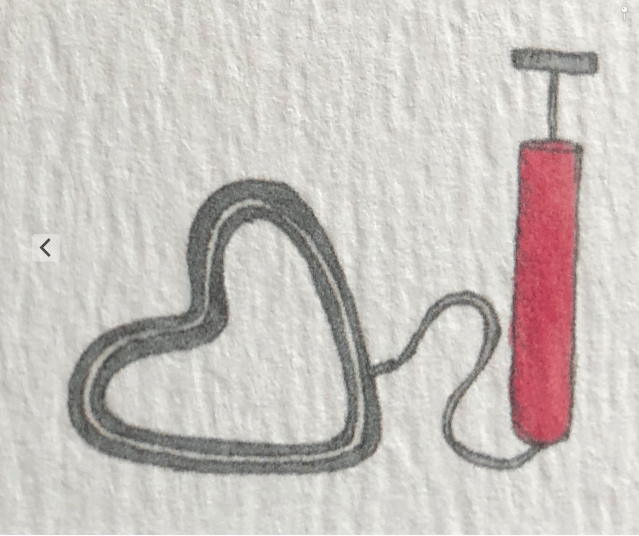
The inner tube is contorted by the artist to suggest a heart.  You could go off in the direction of just what is the inner tube of a relationship and how does it hold the pressure that allows the couple to go on down the road safely and efficiently?   I think that is kind of an intriguing question, but it isn’t the one that came first to my mind.  It isn’t the one that causes me to tear up as I was standing by the card rack and to choose to buy this card to give to Bette.

Here’s what moved me.  Every relationship I know of is porous.  If you want the right amount of air in the tire [3] you are going to have to keep putting air in it.  That’s what the handle and the pump and the hose are for.  And if it is a good relationship, you are both paying attention to whether the tire has enough air in it and you are both sharing the pumping task when it does not.

That’s what got to me.

But, of course, relationships—especially relationships of the heart—aren’t like bicycle tires.  Each of the partners has an ideal pressure and so does the relationship itself.  In maintaining the proper pressure in myself, I can do the checking and I can do the pumping most of the time.  But sometimes I don’t notice that the pressure is too low and Bette does notice.  At that point—I know this is ridiculously simple, but that’s why metaphors are so helpful—Bette can work the pump and restore the pressure.  And the same is true for the “pressure” in Bette’s “tires;”  I can check and I can help.

I understand that there are cyclists who adjust the tire pressure for the terrain they are going to cover, particularly if it is going to be irregular.  I don’t know anything about that.  I do know that Bette and I have occasions, like visiting each other’s families, for instance, where a little pressure might be needed.  That is especially true in situations where there might be a puncture and a patch would need to precede the pump.

So there’s a lot of variation.  But what there isn’t variation about is that the tires are going to lose air and we are going to want them to be kept at the right pressure and to do that, each of us is going to have to lend a hand with the air pump. [4]

And we do.  And this Valentine’s Season, I am especially grateful for that.

[1]  Bette doesn’t really hear words all that well.  It is actions from which meanings can be derived that really matter to her.  So I try to do things that will reliably imply the message I am trying to send.

[2]  So I hear.  I have never tried to tango either by myself or with a partner.

[3]  I have more often used the metaphor of burning high quality fuel in the engine (that drives the marriage, I guess) so it doesn’t fill up with gunk and start to malfunction.  Different metaphor; same point.

[4]  If the metaphor were to get entirely out of hand, each of us would have a tire pressure gauge and each would check from time to time on our bicycle.  I think that’s really too much for a Valentine’s Season card.

Posted in Love and Marriage | Tagged , , , | Leave a comment