
Not really, of course. Why would he care how I answer his questions? Still, he asks a lot of people these same questions, so I thought I might just take my turn. And it is, after all, the day after Easter.
 Nicholas Kristof, of Yamhill County, Oregon and the New York Times, drops in on prominent religious leaders from time to time and asks them news-worthy questions. I don’t like the questions very much, but nearly always, I like them better than the answers. I know that is not a fair judgment on my part. Kristof is after news-worthy columns; the interviewees are after some public witness to their faith. [1]
I have read all Kristof’s interviews and I come away from each one feeling snarky and unsatisfied. Today, I thought, “Hey. I don’t have anything to lose. Nobody’s publishing me. Nobody’s going to fire me. Why don’t I just have a go at these questions myself?” If you don’t like my answers, you can check hers out at the hyperlink below or maybe you should try to formulate some of your own.
So…here are the questions with my “responses.” They aren’t “answers” really, but they are what I would like to say if Kristof and I were to have a conversation over a beer. Let’s pick a beer from the Allegory Brewing Company, named as one of Yamhill County’s finest.
Question 1. Do you think of Easter as a literal flesh and blood resurrection. I have trouble with that.
My Response. I don’t have any trouble with it; I just don’t understand it. Something happened, certainly. Something catalyzed the disciples and sent them out into the streets preaching. What do you think that was?
By “resurrection,” you aren’t, by any chance, thinking of simple resuscitation? Nobody argues that Jesus “came back” from death in the sense of coming back to the life he had before. The texts that treat the resurrection all picture Jesus not as coming back, but as going on. There is another “kind” or “form” of life. This is President Serene Jones. I would want to interview her, too.
Is “the trouble you have with that,” by any chance, a rejection of non-natural explanations? None of the writers of our gospels believed in natural explanations at all. You wouldn’t be looking for their accounts to be cast in modern scientific parlance, would you? “Supernatural” is not even a category they used.
Question 2 But without a physical resurrection, isn’t there a risk that we are left with just the crucifixion?
My Response: No, I’m afraid it isn’t as easy as that. The cross and the resurrection are the answer to a question about just how God “so loved the world that He [2] gave his only son.” How did God do that?” That’s the question. Of all the answers, I think there are two principal kinds: the incarnational and the sacrificial. The Incarnation holds that God came to live among us in the person of Jesus Christ and that event, itself, bridges the gap for anyone who accepts that it is true. The sacrificial answers presuppose the Israelite practices of the remission of sins based on an unblemished sacrifice. We are not committed, in understanding just how God chooses our redemption, to just the cross and the empty tomb. It’s tempting to think so at Easter, but there are other answers worth considering.
Question 3 You alluded to child abuse. So how do we reconcile an omnipotent, omniscient God with evil and suffering?
My Response: I see that as two questions, really. Evil is one thing; suffering is another. Let’s look at the suffering that comes because we are mortal and live on a planet that will survive for only a finite period. I don’t know how to deal with that kind. God created humankind to be mortal—Adam and Eve were mortal—and created viruses and predators as well. And God placed us on a rocky ball with a molten core and tectonic plates. It’s not paradise.
But evil is something we choose. When God created humans, he created free will. Free will allows us to choose to worship idols and the persecute our fellow humans and we have done that. God cannot prevent evil if He is to grant the gift of free will. He does provide the means of redemption, however, as your first questions note.
Question 4 Isn’t a Christianity without a physical resurrection less powerful and awesome? When the message is about love, that’s less religion, more philosophy.
My Response: Well, you don’t find a physical resurrection powerful and awesome, do you? Would Christianity be better if you did? And is the alternative to resurrection, some disembodied notion that we should be nice to each other, as you seem to imagine it? I don’t think so.
The heart of the Christian message is that we are not on our own. God created us for fellowship, but we chose rebellion and independence instead. But God keeps coming back, finding one way after another, to invite us back into a relationship of intimate trust. With that trust, we give up independence, and become willing agents, going where we are told and doing what needs to be done. That involves what looks like love sometimes, but also what looks like justice and what looks like judgment.
Questions 5—8 deal with the Virgin Birth, intercessory prayer, and some kind of specific site for our lives after we die.
My Responses: The Virgin Birth is, again, the answer to a question. You have to ask the question first. It is: how is it possible for Jesus, who inherits the same guilt every other human inherits, to be the “unblemished sacrifice.” I just don’t ask the question. That’s not how I see the crucifixion and resurrection affecting us. It’s not about blood sacrifice for me.
Intercessory prayer is a problem when we are telling God what to do. You can say “pleading with God” if you don’t like “telling.” But when we pray, as Jesus did, “Not my will but yours be done,” then we really have no basis for empirical conclusions about “what worked” and what did not. So that question, too, is one I don’t ask.
Your third question is the “heaven and hell” question. There are lots of different notions in our scriptures of “what happens next,” of which the most prominent is “nothing.” About King David, for instance, they say “Then he died in a ripe old age, full of days, riches and honor.” In the New Testament, there are several kinds of pictures—never more than snapshots—about some eternal “site” for the people who refuse God’s invitation to the party and those who accept. I don’t put my faith in any of those snapshots. I put my faith in God’s decision to be “with me” as long as there is any “me” at all.
Question 9 [Given that I am clearly heterodox] Dr. Hess, am I a Christian?
My Response: That depends on what you mean. “Christianity” is a set of beliefs and your beliefs are not Christian. So if your question is a doctrinal question, the answer is No. But I don’t think that’s your question. I think your question is whether God has found a way to declare you truly a member of His family. It would be bizarre, I think, to imagine that God runs down a checklist, like Jiffy Lube, to see whether you match up. Does that sound to you like the God who has relentlessly pursued us all these years?
So I think God knows whether you are one of His, whether you have accepted the invitation to the party or turned it down. You may not know for sure. I certainly don’t. I do trust God to know, however, and if I am confident to leave the eternal destiny of my soul in God’s hands, I am confident to leave yours there as well.
[1] I’m mot trying to be derogatory. I am sure each person also wants more than that. Kristof, for instance, seems to have a very personal interest in the questions he is asking and the fact that he publishes them in the New York Times doesn’t exclude that. President Serene Jones may be coming as close to candor as her position, her training, and her faith will allow her to come.
[2] I use what are now called “male” pronouns to refer to God. It’s just a convenience. I don’t attribute any gender at all to God, but our language doesn’t have a pronoun for personal non-gendered beings, so all the choices are flawed.
 gospel is an arch-villain. The Jesus of John is scarcely believable as a human being. Jesus the Man is much clearer in the other gospels, so the divine powers of Jesus in John are not a theological crisis. [1] Jesus is so nearly identical with God the Father, that John has trouble representing Jesus as praying in any meaningful way. Things are not as bad as this poster portrays them, but they are bad. [2]
 Jesus considered the foot washing as a prophetic act. It wasn’t an act of sanitation, as if he had passed foot sanitizer around. It was more like Jeremiah (Jeremiah 27) wearing an ox yoke around so that when his countrymen asked why he was doing that, he would say that this is what is going to happen to Judah when the Babylonians invade. It is why Ezekiel cut off his hair and burned some and threw another portion into the win (Ezekiel 5). It is an action that is meant to teach something. Here is a view of the occasion by 14th century painter, Duccio di Buoninsegna.
 further, John tells us not only that Judas was in charge of the common purse, but that he was stealing from it. [7] Jesus, who presumably (in John’s account) knows about this, doesn’t say anything to him about it. Jesus doesn’t ask Peter to do anything about it. What would it mean to love and serve someone who was stealing from the common treasury. What would it mean for us, in our time, to love and serve someone who was stealing from the church?
 And it’s not just important people either. We are all marked, one way or another, by what we did before we came here. One guy I know used to be a teacher and his perpetual liability is treating his fellow residents as if they were his students. [2]
 judging their behavior and conclude in all fairness, that they are has-beens. That is a sobering conclusion, certainly, and people react differently to it. Some respond with depression and despair; some aggressively market to their present companions how important they used to be. And then there are those people who succeed here as naturally as they succeeded there.
 The third version of the problem looks different in a lot of ways, but it is essentially like the others. There are people here who at considerable cost to themselves, have served the needs of others all their adult lives. Had they been killed in the process of doing that, the media would have called them martyrs and many of their friends actually were killed or wounded. But these people, now friends of mine, survived and now they are here. The daily challenge, which was once just to continue to live [5] is now how to contribute meaningfully. The daring and dangerous business of providing help to people who desperately need it is yesterday’s business. Today’s business has none of that spice at all and it can taste pretty bland.
 bay, security established at home, the power structure stabilized, adequate resources supplied for the family [7]—you were providing nurture to those in need of it, sociability to those who could share it, and conflict resolution for those whose resources had run out. So…guess what. It turns out that in a CCRC, the Important Person (IP) functions are pretty much taken care of by the management. The others—the traditional skills of Unimportant People (UPs)—are the ones that are most important in this new setting and the most valuable people are the people who are good at those skills.
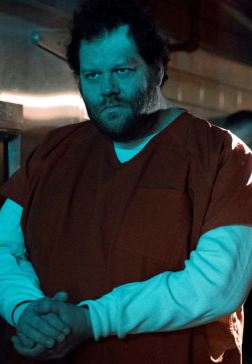 By the end, Burl has not only saved a lot of lives at the hospital, he has also outwitted the guard, Reyes.
 And Iggy, who as Burl’s counselor, knows more about what Burl wants that anyone, knows that Burl has said he wanted to change.
 The Death With Dignity Act is an instance, however, of why it is good to have a referendum as a possibility.
 them noticed is part of the business, but headlines like that first one also get the President noticed.
 This could be “the tribe I belong to” as is the case for the white working class generally. [5]
 You play your “cards”—cite the various elements of the tradition you know—at the place in the narrative where it will do what you want. Matthew makes a collection of the teachings of Jesus and has him deliver it on a mountain to make the parallel with Moses unmistakably clear.
 and the interrogations and the trials and even during the crucifixion.
 There are lots of reasons to like McTiernan’s Hunt for Red October, including Alec Baldwin’s imitation of Sean Connery’s attempt to sound Russian, but I keep thinking of Courtney Vance as Seaman Jones, the sonar operator.
 what is going on.
 less than punitive ones (or than no programs at all) and you and I ought to be on the same side of those issues, working together to achieve mutual success.
 Well…the “help” in “help him” is a different “help” than “How can I help?” They have helped Andy Keener in the sense that they have ruled out, each and every time he has come in, some more serious possibilities. That’s a help; sort of. And they treated the presenting problems each time. Max rattles off four on his way to a “solution.” The four are fatigue, heart arrhythmia, stress, and malnutrition, but we know there are more. So it is not true that Max and Colleagues have not helped, but they have not dealt with the fundamental problem, which is that Andy lives on the street and bad things happen to him.
 several days now.
 So in Henderson’s world, the commandment about killing is just an instance of his commitment to all the commandments, including the one about stealing, which is what gets him killed in the next turn of the plot.
 The little badger invented by Russell Hoban and brought charmingly to life in the illustrations of Lillian Hoban, has been my favorite badger for a long time. [1] I have liked all the Frances books, but I have had reason to use this particular one—A Bargain for Frances—because it is a finely drawn instance of a situation I have to deal with a lot. The situation is the conflation of strategy and tactics.
 been played for a sucker, she ends a little song she is singing to herself, “…Mother told me to be careful. but Thelma better be bewareful.” This is a different matter entirely. Mother’s advice is good, but it is general, and, being parental, easy to ignore. Frances’ threat “better be bewareful” is not only specific, but Frances is saying the she, herself, needs to be taken account of. She is, herself, capable of wreaking vengeance. This is a transformation of Frances’ character [3]
 This same transformation is caught in the substitution of “halfsies” for “backsies” Backsies is crucial to the con game. You make the deal and when you find out you have been defrauded, “no backsies” is a crucial part of the deal. That is why the sucker is required to accept those terms first. So Frances and Thelma take the pathetic dime that Thelma has given Frances as part of being cheated in return, and they go together to the candy store and each spends half of the dime on candy. “Halfsies” is a perfectly appropriate deal among peers who are friends and “backsies” are completely unnecessary.
 The Dilettante's Dilemma