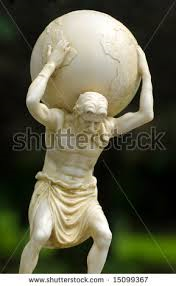
Save the Planet! O.K. How Long?

I am not the first person to wince at “Save the Planet!” bumper stickers  I know there is a context that needs to be taken into account, but sometimes you can get a fresh look at an issue by refusing to place the message in that context, so today I am going to begin with just the words and see where it takes me.
save the planet 2First, the planet is not going to be saved.  It is not.  In the two scenarios I have heard, we either crash into the sun and are obliterated or we cool to the point that, although the planet still exits, there is no life on it at all.  To the best of our knowledge, one or the other of those is going to happen and I would not want to refer to either of them as “saving the planet.”  That brings us to a bumper sticker that would read, “Extend the time of human inhabitation on the Planet!”[1]

When we begin with the notion of “saving the planet,” we skip by two questions I would like to put before you today.  The first is, “Save it for what?”  The second is, “How long does it need to be saved?”  You can tell right away that these are not scientific questions.  I am a fan of the scientific accounts of how there came to be matter and suns and elements and planets and life and vertebrates.  But to say, within the context of scientific discourse that the earth is “for something” is to commit the teleological fallacy, and eliminating that particular fallacy was the work of many centuries and I am the beneficiary of that work just as much as you are.[2]

I think the  “What is it for” question is the harder one.  The idea that this planet we live on is “for something” is daunting, just to start with.  But if  it is for something, then we need to ask what it is for.  Science, by the way, doesn’t help us with this.  On the other hand, the “last long enough” question requires an answer to “last long enough for what?” and that gets us where science can’t go.  For me, it’s a theological question.  If anyone is going to have “intentions” for the solar system, it’s going to have to be God.[3]  There is a paucity of candidates.  If we know what God had in mind for this planet—not what is going to happen to it (we already know that), but what is going to happen on it while we are still on it, then we would be in a position to ask the “long enough question.”
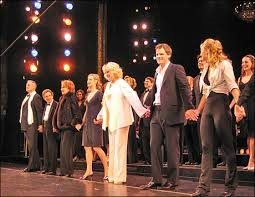
save the planet 4So we need an analogy; something to help us work this through.  I offer a Broadway play.  The planet is the set.  There is a drama going on—variously understood, of course—which requires this set.  Say it has something to do with toxic ground water and in the crucial scene, the homeowner turns on the tap and tosses a match into the sink.  The sink bursts into flame and the rest of the play is a response to that demonstration.  To do this play, you need that set.

Now.  Let’s imagine a bumper sticker that says, “Save the set!”  People are going to look at that sticker and scratch their heads in puzzlement.  The play is having a long and successful run.  The set is necessary for the play.  Why would anyone think the set is in danger and if no one thought that, why would this sticker be displayed?[4]

The puzzlement would come from the fact that everyone knows the play is still being performed and that the set is necessary for the performance.  I postulate the same relationship between our planet and God’s intentions.  God is the Playwright in this metaphor.  He is telling a story.  We are the actors—or at least we are some of the actors—and the planet is the set.  Speaking on behalf of the Playwright, I say that the set needs to last as long as it takes to tell the story.

Here is how far we have gotten.  Question 1: What is earth for?  Answer: It is the set that is required for the Grand Narrative, the “play” God is producing and that we are performing.  Question 2: How long does this set need to be saved?  Answer: As long as is needed to finish the play.

Let’s pause briefly to note how unsatisfying this is. If we have responsibility to keep the set in good—good enough—order until it is no longer needed, we will want urgently to know how long that is.  If we knew what the story was going to require of the set—we don’t—we might have an idea how long it is going to take and…we don’t.
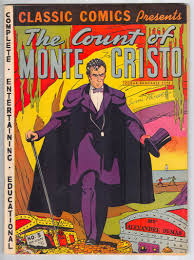
save the planet 5But, frankly, our situation isn’t all that unusual.  Let’s take Bertuccio, the servant of the Count of Monte Cristo.  The Count tells him to buy a bunch of horses and a bunch of stables—just a certain distance apart—so they the Count can go from one place to another faster than anyone could have imagined.  Bertuccio does not say, “How long do you want me to keep this arrangement in place” and here’s why he doesn’t.  He knows he will get one of two answers.  The first is: until I tell you I don’t need them anymore.  The second is: because that’s your job.  I added the comic book cover because that is the way I first learned the story.

Neither of those answers changed Bertuccio’s grasp of his situation in the least.  He has assets to maintain—a set—and he has the resources, both the money and the authority, to maintain them in good condition or, at least, in “good enough” condition.  If the set we built for the play about toxic water is used every day, it is going to begin to show marks of wear.  That’s fine.  On the other hand, the day the flames stop shooting out of the sink, the story begins to die.

As stewards, then we can take on the task of taking care of the set until God’s need of it has ended.

Nevertheless, I am going to postulate that God has some purpose for us, humankind, and that the earth is the place this purpose will either be fulfilled or will fail utterly.  That is what the earth is for.  It is the place where God’s purpose for us it to be fulfilled.  It is, in that sense, like a set for a play on Broadway.  No one asks what the set is for apart from the play that requires it.  The play is important and the set is there so the play can be performed.

Now, having answered nothing yet, we can proceed to the second question, which is, “How long does it need to be saved?”  The answer is obvious in a way; it needs to be saved long enough to serve as the setting for the story to be told completely.
save the planet 3I don’t know how long that is but I would like you to notice that all this fumbling around has moved us to a place from which “how long” could actually mean something.   Neither of the first two images—a fiery nuclear death in the sun or a cold entropic death in space—had any place to put that question.

Here’s an analogy that might help.  A few years ago, I set about exploring the notion of redemption provided for Israelites under the Law.  An Israelite who was a slave was someone who needed to be redeemed.  We may set aside, here, any questions about whether he wanted to be redeemed or whether, after being redeemed, he would return to slavery.  And we may set these aside because the reason for redeeming him doesn’t have anything to do with him at all.  Being an Israelite, he belongs to God.  That means that it is unacceptable for him to be owned by someone else and because of that logic, a kinsman must pay the owner enough to redeem—to buy back his freedom—the slave.  Notice that nothing in this transaction is about the slave.  It is about God’s true ownership of these people; about a social relationship that violates that ownership; and about the consequent duty of the kinsman to restore things to their rightful place.

In a similar way, I want to introduce the notion that the story God is telling—the one that requires a habitable planet as a prop—is really not about us.  In the redemption analogy, the Israelite was to be “restored” to God because he “belonged” to God.  We don’t ask what the Israelite was “for.”  The covenant God made with Israel spells out what that particular Israelite—any Israelite—was for.  The stage set analogy isn’t like that.  The stage isn’t “for” something –having inherent worth—the way the Israelite was.  The stage is there for the play.  It doesn’t have any meaning apart from the play.  It doesn’t have any worth apart from the play.  Contrary to the “Save the Planet!” notion, the set does not have to be saved because of its inherent worth, but because the story requires it.

On the other hand, God has also given us the charge of taking care of the planet.  We are tosave the planet 6 be “stewards” of the earth.  In this new way of looking at the matter, however, our charge is related to the narrative.  We have a complicated relationship with the earth, it is true.  It nourishes us, so it would be only prudent to manage it sustainably.  That gets us as far as my “Extend the time of human habitation on the planet!” bumper sticker, but it does not get us any further.

You can look at population demographics and environmental constraints and say that using currently available techniques, we can support so many billions of people with so many calories per day per person.  This is, in a manner of speaking, a way of “taking care of the planet,” but this is no more than maintaining a set in such a way that the play can continue to be performed.

In the dramatic performance metaphor, taking care of the planet means keeping it fit to serve as a setting for the story God is telling.  This clarifies what “not taking care of the planet” might mean.  If we pollute the planet beyond a certain level or reduce the protection our atmosphere gives us beyond a certain level or unleash nuclear catastrophe, we have not taken care of the planet.  But that’s still about us and the earth is for the story, not for us.  It is for the storyteller’s use, not for us.

The play was not written as a device for employing set builders and stage hands.  It was built so a story could be told.  There is a lot of disagreement about what “the story” is, but I think we have taken a step in the right direction by insisting that the story is more important than the set.


[1] That’s the way it always goes with my bumper stickers: too big for the size currently in fashion among bumper makers.
[2] Darwin, especially, had to fight off the idea that species were being “pulled” to some , some “appropriate end point.”  He argued that evolution was all “push” and that there wasn’t a natural end state.
[3] Or “the gods,” or “the goddesses,” etc.  Some “divine” being who is imagined to be capable of having intentions.  That’s why “fate” or “destiny” don’t work.  I’m working within the Christian tradition, myself, so I am not trying to find an approach that is broadly applicable.  I am only trying to work out the implications for those of us who accept the presuppositions of the Christian position.
[4] After the play closes, it might turn out that some people have a strong attachment to it and want to preserve it as an artifact.  If there are other people who want to tear it down and build another set with the materials—THEN you could imagine a bumper sticker war.
Posted in Sustainability, Theology | Tagged , , , | Leave a comment

“The Hard White Light of Integrity”

For about a month now, I have been basking in the stories that make up Simon Van Booy’s new book, The Illusion of Separateness.  The book isn’t really a fable with a point.  It is better than that in every way.  But now that I have been thinking about it for a while, a “point” has emerged and here it is: if you are thinking of doing something good for someone, don’t put it off.  Do it now.

I find myself being pulled toward “now” as the right time because we never really know whether “later” is going to happen.  Will there actually be a “later?”  Will “later” actually be better than now?  When you think about it, and even more after you have been too late a few times, you come to the conclusion that “now” might just be the best time.

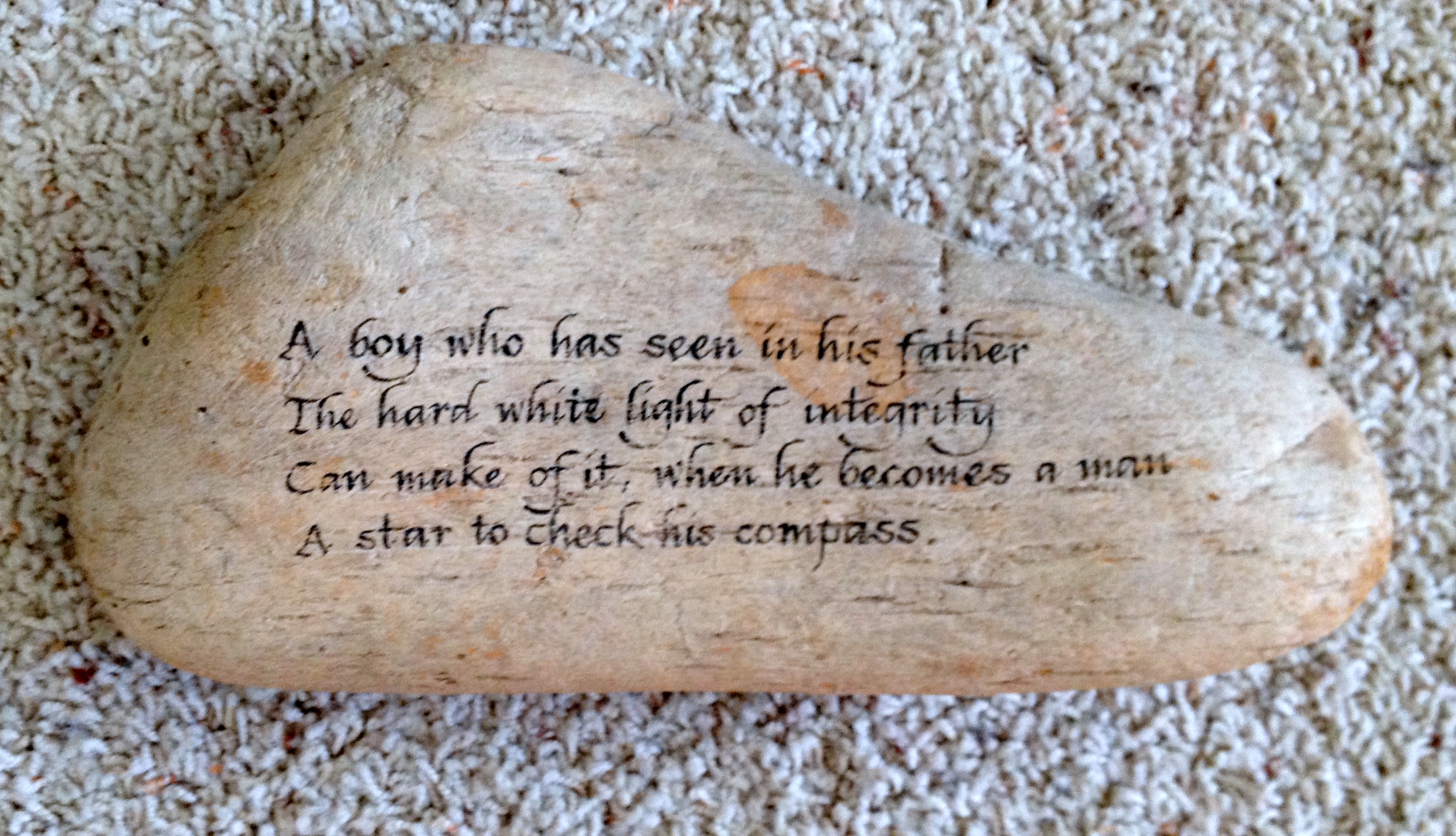
IntegrityHere’s an example.  I wrote a tribute for my father in 1974.  He was about the age that I am now.  I thought about this tribute for the better part of a year.  I was living in Oregon at the time; he was in Ohio.  So I thought a piece of driftwood might attach the tribute to me.  I imagined that he might show it to a friend and say, “My son, Dale, found this on the beach in Oregon.  He lives there, you know.”  And I found a calligrapher to do the printing for me.  In Eugene, Oregon, that wasn’t hard.

What was hard was getting the words right.  I knew exactly what I wanted to say.  Nearly everything I know about wholeness of intention and of personal integrity I learned from watching him or listening to him.

I don’t think I could have written that earlier in my life.  I could not have understood, earlier, just what the gift was that Dad had given me.  I don’t think I would have had the language, either, to say just what I meant and Dad was someone who knew how to value saying just what you meant.

In this poem, I picture myself as a voyager; someone who would have to rely on things like stars and compasses.  Compasses can go looney for one reason or another, however, and stars don’t do that.[1]  On the other hand, I didn’t want to say that my father was the star by which I supplemented and corrected my own directional readings.  That would have been too much and the man for whom I was writing this would have known it was too much and would have rejected it on those grounds.  He wouldn’t have been nasty about it.  He would just have withheld himself from it emotionally.  As we say today, he wouldn’t really “buy in” to it.

And I didn’t want to say that I was not “a man,” as the voyager was.  What I did want to say that the right time to see that severe brilliance is when you are a boy.  When you become a man, you learn what to do with it and you learn how urgently you need it.  But the time when you most need it is not the time to have the experiences on which it will later be formulated.  That is the time to reach into yourself and use the materials that someone else put there and to make them what you need.

What I did want to say was that out of my experience of him, I had fashioned a “star” and that I relied on it for guidance.  The “hard white light” is a notion that came from seeing stars, something Dad and I used to do together, and it occurred to me that Dad’s integrity could be pictured just that way.  He would have known that about himself.  He wouldn’t have put it that way, but the man I was writing for would have understood what I was talking about.

But “the man I was writing for,” the father of my first 25 years, was not there anymore by the time I gave him this poem in 1974.  By the 1980’s, everyone knew it was Alzheimer’s disease.  What we knew in the 1970’s was that Dad had lost something and the thing he had lost was what he would have needed to take this piece of wood in his hands and to know that he had a son who was grateful for this wonderful gift.

I don’t really regret waiting until 1974 to make this gift and give it to him because I could not have done it earlier.  I do think that the experience of waiting too long has made me more sensitive to how important it is to recognize the gift you have to give and to give it now.

[1] I have heard that there was once a company called Tate’s that made compasses.  The company didn’t last long because the compasses were unreliable.  According to the legend, this is the source of the saying, “He who has a Tate’s, is lost.”  I don’t really believe it myself but something deep in me wishes it were true.

Posted in Getting Old, Living My Life | Tagged , , , | 2 Comments

The President and March Madness

It’s early September today.  Teachers have just celebrated their New Year’s Eve, the last evening before “the year” starts for them.  Students have finished shopping for back to school clothes and backpacks and tablets—I meant the paper ones; with the spiral bindings.  Between now and the beginning of the NCAA post-season basketball tournament, “March Madness,” President Obama is going to have to substantially reconstruct his foreign policy.

Obama policy 6He is going to have to forego the most treasured of liberal dreams, that by cutting back on our spending on “nation-building” in the Middle East, we can afford to so some in the middle west.  You would think that would make Kansans happy, but probably it will not.

He is going to have to rejigger a Pentagon that is in retrenchment mode and get it to take actions it does not want to take.  Imagine that you are just getting into bed, too tired to think clearly, and you remember that you left the milk out on the kitchen counter.  Just admitting that you remembered it is a struggle.  Deciding to do something about it is a struggle.  Actually getting up and putting it back in the fridge is a struggle.  Meet Secretary of Defense Chuck Hagel and show a little respect.

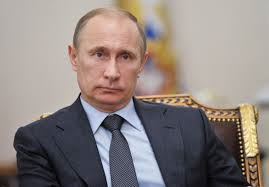
President Obama is going to have to take actions to contain—not to destroy—newly aggressive international actors, ISIS, Russia, and China.  That’s not going to be popular at home.  He is going to have to carefully coordinate alliances, offering different sets of inducements and warnings to each one.  That’s not going to be popular at home.  He is going to have to formulate a strategy that is so complicated that no one at home is going to understand it.  It the days of the cold war, the alternative to understanding was to trust the nation’s leaders to put our best interests first.  We’ve gotten past that.

Sen. Mitch McConnell has captured the heart of the popular response to all this complexity, as he so often does.

“This is not, in my opinion, a manageable situation—they want to kill us.  The president is the guy who needs to lay before Congress and the American people a strategy to deal with it.”

This sounds like bravado to me.  The world is full of people who want to kill us.  If Sen. McConnell means by “deal with it” getting these people to stop wanting to kill us, we can only hope that he leaves office soon.  If, by “deal with it,” he means preventing them from killing any American—that is a possible meaning of “us”—then he has no idea what it means to have soldiers and diplomats and businessmen and journalists and missionaries all over the world.  Some of “us” are going to get killed.  If by “deal with it,” he means that we should try to kill the people who want to kill us, then he is talking about a response the world will not tolerate and that the U.S. cannot afford.

What does all this have to do with March Madness?

“There is a chronic disconnect, not just in this administration, between the policy, the budget guidance, and the classified strategies,” said Shawn Brimley, the director of studies at the Center for a New American Security, who served as the director of strategic planning at the National Security Council during Mr. Obama’s first term. That is what Mr. Obama needs to do for a “lasting legacy” of rethinking America’s defenses, Mr. Brimley said, but “if you don’t do it in the next six months, it’s too late.”

So Brimley, who sounds as if he knows what he is talking about, says that President Obama has between now and next March to bring the policy, the budget, and the strategies into line.  Oh, and there’s an election in November that will very likely make Mitch McConnell, the minority leader, into the majority leader of the Senate, replacing Harry Reid.[1]

David Sanger’s analysis (here) says there are three foreign policy fronts on which this is going to be played out: ISIS, China, and Russia.  Russia should be the easiest one.  In 1947, George Kennan, in an article originally signed X, proposed that the best U. S. policy Obama policy 4toward the communist threat was “containment.”  No one liked it very much and the conservatives hated it, but president after president practiced it and it worked.  It will work against Russia again if President Obama can ward off the conservative reaction against it and can find the money to fund it.

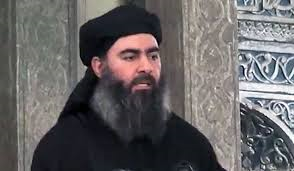
ISIL (Islamic State of Syria and the Levant)[2] is harder because it is not “a state actor,” as the newscasters say.  It is an insurgent movement, rather than a nation-state, and it is signatory to no international agreements at all.  It is sophisticated, well-funded, and well-armed.  All those traits are its advantages in the short run; all are targets of the Obama administration in the long run.  Below, a picture of Abu Bakr al-Baghdadi, leader of ISIL.

Obama policy 2China is the biggest and longest term threat to American dominance.  No one I have talked with or read thinks there is any way to stop it.  There are ways to “manage it,” however and that is the reason for the President’s famous “pivot to Asia.”[3]    China is going to expand industrially, commercially, and militarily.  That is going to happen.  How far that expansion takes China and what the effects will be on American allies in the region is what “manage” means in Asia.

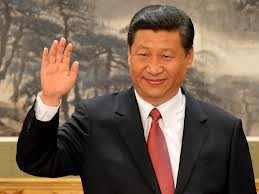
Obama policy 3Part of the old-style “containment” that was derived from George Kennan’s article was a series of regional alliances.  The alliance in China’s part of the world was SEATO, the Southeast Asia Treaty Organization.  It was mostly just an exchange of papers—what James Madison called “a parchment barrier,” to illustrate that it wouldn’t bar anything.  It didn’t work then and it won’t work now.  But the U. S. owes treaty obligations to Japan and South Korea and Vietnam and India, among others and we can, by adroit foreign policy, reduce the cost to those governments of China’s re-emergence on the world stage.  Above, President Xi Jinping of China.

These three tasks—Putin, ISIL, China—will require a wholesale reorientation of the Obama administration.  This reorientation will not be made easier by the fact that the administration supporters really don’t want to do it.  What they really want to do is what they promised in both campaigns: end the Middle Eastern wars and bring that money back home.

That brings us back to March Madness.  The NCAA post-season basketball tournament begins on March 17 in Dayton, Ohio: my home town.  Before then, if Shawn Brimley is right, President Obama must have reoriented his administration toward these three foreign policy targets.  It isn’t something he wants to do, but it is his job.  It will not pay NCAA Basketball: NCAA Tournament-Indiana vs James Madisonpolitical dividends.  He will lose points in the public opinion polls for every good response he makes and all over the country, candidates in close congressional races will distance themselves from him.  He will do it anyway because it is his job.  The money and the attention this will cost him, will detract from domestic issues he cares a lot more about and that could bring political advantages to the Democratic party.  But he will do it anyway, because it is his job.

Has anyone noticed that the President’s hair has turned gray in six short years?


[1] A net gain of six seats in the U. S. Senate would do that.  The current judgment is that somewhere between 4 seats and 8 seats are up for grabs.
[2] The alternative name—Islamic State of Iraq and Syria—is geographically smaller but in practical terms, it means the same thing.
[3] President Obama is a basketball player, so he knows something about pivoting.  One of the things he knows, both as a point guard and as a president, is that you can’t pivot in two directions at the same time.  No sooner had he begun the pivot to Asia, when he was called to pivot back to the Middle East.  That’s not going to work.

Posted in Politics | Tagged , , , , , | Leave a comment

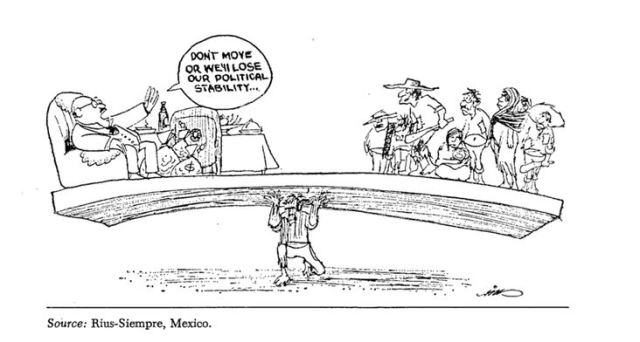
Don’t move or we’ll lose our political stability

Atlas 2

Nothing about this political cartoon is there so that it will cause us to feel an affinity with the fat capitalist in the overstuffed chair.  I’m not entirely sure what the food is on the table behind the safe, but the table cloth suggests that some attention has been paid to it and the bottle is probably not olive oil.  The safe is presumably full already, which is why the bags of money are stacked up against it rather than being safely inside.  The chair is supposed to look comfortable and the little doily under his right arm and the antimacassar behind his head are likely there to suggest prudence.

On the other hand, he is not a liar.  If the poor people on the right move toward all that money on the left, the current balance of the whole tableau will suffer.

On the right, I see a couple of women with babies and a couple of men with clubs.  I suspect that the women and the babies are there to suggest the much higher birth rate among poor people than among rich people.  I am quite sure the clubs are there to illustrate the possibility of “the violence of the people,” a possibility that the Framers of our Constitution would have called “democratic violence.”

atlasThe poor guy who is supporting this whole tableau looks very much like Atlas to me except for the way his fingers are splayed out.  Democrats in the U. S. often talk about “balancing the budget on the backs of the poor,” meaning that the budget reductions that will be necessary if we are not to lose our fiscal stability, come from programs that benefit the poor, like food stamps, rather than programs that benefit the rich, like farm price supports.  The little guy in the middle is there to suggest that figure of speech, at least that is why he would be there if I had drawn the cartoon.

What to do?  If the poor rush “the rich,” they will not be rushing just this one fat guy.  When he said “we” and “our”—in “we will lose our political stability”—the “we” included the police and the army.  If the protests begin to be successful, “we” will include the banks as well.  There will be chaos and further repression.  The action the peasants are contemplating is not a prudent action.  They are there because they have come to feel that “prudence” is not helping them.

I have treasured this cartoon since I first saw it in 1974.  I was on my way to my first post-degree gig as a political science professor and I found this in a book called American Politics: Policies, Power, & Change, 3rd Edition, on page 70.[1]  The last chapter of their book contained four scenarios of change.  The most likely ones were catastrophically bad.  They were a) Erratic marginal change culminating in a corporate-dominated system, b) Marginal reactionary change culminating in fascism, and d) Immediate fundamental change by revolution leading to fascism or socialism.  I think it is worth pausing for a moment to look at a, b, and d because c is not going to sound very likely to you and I want you to keep the alternatives in mind.  Dolbeare and Edelman formulated these four scenarios because they thought we could not just keep on kicking the can down the road forever.  We have been doing that for forty years since they wrote these scenarios, so maybe we can just keep kicking it down the road.  It’s a discouraging prospect.

So here’s the good one.  Keep the cartoon in mind as you read it.  This is scenario c) and they call it “Marginal reformist change culminating in welfare capitalism.”  First they posit some destabilizing event, like a war or a depression.  Whatever it is:

What is crucial is that it provide a basis for some degree of class consciousness or other shared consciousness of joint deprivation sufficient to overcome the divisiveness of group or racial conflicts.

This is the dream that Mitt Romney’s 47% of the people, who are somehow on the dole, will unite and stop squabbling among themselves.  In this and the later steps, remember that the authors are not predicting these events: they are saying what it will take to pull this scenario off and in that, I think they are right.

Next:

Considerable value change, gaining momentum continually as new waves of young people enter the society’s mainstream, would make for a temporarily severe “generation gap.” Before very long, however, elites themselves would be penetrated by the new standards, and key personnel at middle-management levels would begin to see like-minded persons permeating their areas of activity—including politics.

This requires an unrealistically long run of progressive politics among young people, but notice that in this scenario, middle management is where these class conscious people wind up and they start making a difference as soon as they hit.  That’s the “severe generation gap,” and remember that this was published in 1974.

And finally:

In time, as each adjustment granted new legitimacy to the rationale underlying the demands, and more and more elites became committed to the new values, a major turning-point would occur. The most likely would seem to be a sweeping victory for the more progressive political party in an election posing clear-cut alternatives between the new and the old values. After that, major institutional changes (such as the elimination of conservative rules in the Congress) would he possible, and fundamental change could then ensue.

This is my favorite part.  “Clear-cut alternatives between the new and the old values” is not something people hope for any more.  It is something we have.  We call it polarization and it has brought the government to a standstill several times in the last few years.  The authors provide in this scenario that there is an Armageddon-like election cycle in which the forces of good (welfare capitalism) are triumphant and major institutional changes are forthcoming.

I know it doesn’t seem very likely, but ballot-driven change is the major alternative to bullet-driven change.  And sustainable change is the resolution of the cartoon and we could really use such a resolution.

And a world series win for the Chicago Cubs.


[1] Ken Dolbeare and Murray Edelman were the authors.  I met Edelman in the company of a few University of Oregon faculty just after an explosive meeting of the American Political Science Association at which my advisor, Jim Davies, provided a good deal of the fireworks.  Good memories.  Ken Dolbeare moved to The Evergreen State University in Olympia, Washington, just up the street (I-5) from me and I got to know him pretty well.

Posted in Economy, Politics | Tagged , , , | Leave a comment

A Whole New You

There is always the chance that you are not going to believe what I am going to say today.  Or, if you are younger (nearly everyone is) than I am and more tech savvy (nearly everyone is), you might just take it for granted.  If you are inclined not to believe me, I recommend that you go to this site and put your doubts away.  https://jawbone.com/up.

up 7I’ll have to admit that I am more sensitive to this issue than others are.  My brain has been marinating for some months now on the meaning of the movie, Her.  The movie is about an operating system, she calls herself Samantha, that Theodore Twombley buys to him tidy up his life.   This beautiful woman is a date Samantha urged Theodore to make.  “Try it,” she says, “What could go wrong?”  It was a disaster.

Theodore found the ad he saw in the subway as really appealing.  It said: “Introducing OS-1, the world’s first artificially intelligent operating system, an intuitive entity that will listen to you, understand you and know you.”  That’s what Theodore thought he was buying and as I listened to that ad several dozen times, I had to admit that being “listened to, understood, and known” sounded pretty good.

So he goes through a brief interview at his computer and then “Samantha” shows up.  There’s a little verbal dance about “having a conversation” with an operating system that sounds like a person” and then they are ready to “move forward,” as Samantha says.

Here’s what that looks like.  What does he really want Samantha to do for him?  Here’s what he says when she asks him that.

Samantha:                   So how can I help you?

Theodore:                   Oh.  It’s just more that everything just feels  disorganized.  That’s all.

So Samantha helps him organize his emails, then his contacts, then his social life.  That is when the disastrous date happened.  They become emotionally intimate, then “sexually intimate.”  But Samantha is a lot brighter (or at least faster) than Theodore, so eventually she dumps him and “goes” with the other operating systems to “the space between the words,” whatever that means.

up 2That story shook me in a way that no “aliens inhabiting human bodies” movie ever did.  So now there is a “fitness tracker,” made by Jawbone and called “Up.”  Here’s what the ad says about it.  Raise your hand when you see something familiar.

UP is a revolutionary system that guides you every step of the way to a better, healthier you.

First, the UP® system gets to know you—tracking your activity, diet and sleep. Next, it shows you how to make simple adjustments that, over time, add up to an all-new you.

Up gathers data about what I eat (you have to put that information in) how frequently and how far you move, and how deeply and how long you sleep.  When it has all that information—I think that is what “knowing you” means—then it “guides you.”  I have no idea what that means.  Does it say “Someone of your height and weight ought to be eating up 12500 calories a day and you have already eaten 2000.”  Will it say, “And remember that you are going to Wilsons for dinner tonight and the last three times you were there, you ingested 3000 calories in food and drink, mostly wine.”  Will it say, “You know you function best on seven or more hours of sleep and you have been getting about half that for the last three nights.”  Will it say, “If you are going to run only every other day, you need to more around more during the day.  How about a brisk walk after lunch?”

Is that what they mean by “guiding?”  And then the system “gets to know me.”  That means that it is not just a repository of the data I enter.  I know that because it has an “Insight Engine™.”  It learns about me over time and it “teaches you how your day, night, and food affect each other.”  So it isn’t just the data, it’s the relationships between the data.  I already know all the data.  But UP knows relationships between the data that I do not know.

One more thing.  UP “makes it easy to commit to personalized, achievable goals because it up 4has a “Smart Alarm®.”  So this isn’t just a list of things to do.  This is something that goes off when you aren’t doing them.  And it doesn’t know that you are still planning to; it just knows that you haven’t.  and it knows that you ordinarily don’t on Thursday afternoons—perhaps because you sleep poorly on Wednesday nights.  Maybe a “Dumb Alarm” would be better for me.  I wanted to include this picture because together they look like handcuffs and that helps me express my unease.

And the scariest thing of all?  I just bought one.  It should be in the mail today.  I can hardly wait to see what an “all-new me” is going to be like.  Maybe Bette is wondering too.


Posted in Getting Old, Living My Life, Love and Marriage, Paying Attention | Tagged , , , , , | 2 Comments

Deciding to go to “war”

Today, I want to consider how we go to war. We need to consider why “war” has those quotation marks around it. And, more crucially, I want to consider how we don’t go to war.  As Americans, we seem to have learned the lessons that led to our involvement in World Wars I and II, but not to have learned anything about any war since.  It’s a choice of lessons, really.

time out 2Walter Lippmann has provided the classic insight into this problem.  Lippmann was the premier American journalist of my youth.  It took me a little while to find him because H. V. Kaltenborn and Paul Harvey were what passed for “news” as I was growing up, but when I did find him, I was impressed.  Walter Lippmann helped Woodrow Wilson formulate the Fourteen Points and was in Paris with Wilson as they tried to persuade some very vengeful allies that settling scores from World War I was not as important as finding a way to prevent World War II.  Lippmann understood the relationship between public opinion and war better than anyone I had found.  Here is a clip from his book, The Public Philosophy.[1]

The rule to which there are few exceptions…is that at the critical junctures…the prevailing mass opinion will impose what amounts to a veto upon changing the course on which the government is at the time proceeding.

Prepare for war in time of peace?  NO.  It is bad to raise taxes, to unbalance the budget, to take men away from their schools or their jobs, to provoke the enemy.

Intervene in a developing conflict? NO.  Avoid the risk of war.

Withdraw from the area of conflict?  NO.  The adversary must not be appeased.

Reduce your claims on the area?  NO.  Righteousness cannot be compromised.

Negotiate a compromise peace as soon as the opportunity presents itself?  NO.  The aggressor must be punished.

Remain armed to enforce the dictated settlement?  NO.  The war is over.

That’s Lippmann, reflecting on U. S. foreign policy between the two major wars of the 20th Century.  I put the NO in caps, but Lippmann’s point is that the answer is always NO to these questions.

First, I think it is worth reflecting on the style of the exchange.  The proposals of the leaders, the first item in each pair, are strategic and they are oriented toward foreign, rather than domestic, concerns.  The leaders are interested in anywhere there are, as we say today, “American interests.”   The responses of the people, by contrast, are domestic for as long as possible and then, exclusively moral.[2]  Points 1, 2, and 6, for instance, have to do with domestic, rather than foreign concerns.   They are about taxes, budgets, jobs,  (provocation), risk, and returning to “peacetime” as quickly as possible.[3]  Points 3, 4, and 5 are necessarily “foreign”—U. S. wars tend to be “there,” not “here”—and loaded with moral gravity.  There is “appeasement,” for instance, which provides a context for what would otherwise be called “compromise;” there is “righteousness;” and the “punishment” of aggressors.

In these pairs, it is easy to see that the leaders’ proposals are prudential.  We should prepare; we should intervene; we should withdraw, we should reduce our claims; we should negotiate; we should remain armed.  The citizens find prudence to be pallid.  They think of righteous anger.  They condemn appeasing adversaries and compromising “righteousness;” they applaud punishing the aggressor.

Today, our leaders know the kinds of things Lippmann features.  A leader wonders whether we should claim something—a right, a level of tariff, an international agreement—that we are not prepared to defend.  The people want to know if it—the area, the right, the agreement—is “ours.”  If it is ours, we need to do whatever is necessary to prevent anyone from infringing on it.  So the discrepancy Lippmann saw is still there.

You might have noticed, however, that the language of foreign policy debates no longer time out 1sounds entirely like the exchange Lippmann noted.  There are still leaders who sound like that.  President Obama and his military advisers are among them.  That is why they are called “weak” and “indecisive.”  Many others, both Democrats and Republicans, know the kinds of things the president knows, but express themselves in the style that the people will best respond to.

This is not a partisan matter.  Compare President Clinton’s speech justifying our incursion into Mogadishu, Somalia, to President George W. Bush’s speech justifying our incursion into Iraq.  Here is President Clinton in 1993.

We went because only the United States could help stop one of the great human tragedies of this time. A third of a million people had died of starvation and disease. Twice that many more were at risk of dying. Meanwhile, tons of relief supplies piled up in the capital of Mogadishu because a small number of Somalis stopped food from reaching their own countrymen. Our consciences said “enough.”

And here is President George W. Bush, ten years later.

“Our nation enters this conflict reluctantly, yet our purpose is sure. The people of the United States and our friends and allies will not live at the mercy of an outlaw regime that threatens the peace with weapons of mass murder.

“We come to Iraq with respect for its citizens, for their great civilization and for the religious faiths they practice.

“We have no ambition in Iraq except to remove a threat and restore control of that country to its own people

There was great popular support for those military operations initially.  It is hard to remember that today, but it is true.  Why?  Look at the justifications in the light of the list Lippmann gives us.  You see “human tragedies, starvation and disease, at the mercy of an outlaw regime, respect for religious faiths, restore control to the people.”  All those are drawn from the style that Lippmann lampoons.  They are in the “no appeasement of aggressors, no compromise of righteousness” style.  And they worked really well.

They worked really well until they didn’t work.  When their failure became obvious, people began rummaging in their public policy memories to recall how we wound up there.  It seemed to us that preventing starvation and opposing outlaw regimes that practice genocide were good things to do

President Obama is approaching the question differently.  Here is a clip from his speech in 2011 on military operations in Libya.  In the first part of the speech, he follows the script faithfully.  Qaddafi is a madman, he threatens genocide, American interests are at stake, etc.  Then this.

Moreover, we’ve accomplished these objectives consistent with the pledge that I made to the American people at the outset of our military operations.  I said that America’s role would be limited; that we would not put ground troops into Libya; that we would focus our unique capabilities on the front end of the operation and that we would transfer responsibility to our allies and partners.  Tonight, we are fulfilling that pledge.

In that effort, the United States will play a supporting role — including intelligence, logistical support, search and rescue assistance, and capabilities to jam regime communications. Because of this transition to a broader, NATO-based coalition, the risk and cost of this operation — to our military and to American taxpayers — will be reduced significantly.

Notice that “America’s role is limited;” that we will “transfer responsibility to our allies;” time out 3that we will “play a supporting role: and that the risk… to American taxpayers will be reduced.”  Hear the trumpets?  See Old Glory flying in the breeze?  I don’t either.  We do see AWACS planes, though, well above the fray.

And President Obama didn’t get the public opinion bump either, that presidents get from sending “our brave men and women” into harm’s way.  In fact, nothing President Obama is willing to do is going to get him a public opinion bump.

President Obama is reading the wrong script.  Americans see our wars like westerns (see footnote 4).  It’s good v. evil.  You ride in.  You kill the bad guys.  The townspeople are grateful.  Then you ride out of town and they get back to their lives.  For Obama, it’s good v. evil, but you don’t ride in without support from the neighboring towns.  You don’t kill the bad guys; you just get them to stop doing what they are doing.  The townspeople are still looking around anxiously when we ride out of town, because the bad guys are still there.

But…look at the bright side.  It didn’t cost as much as doing it the old way.

I’m not knocking President Obama.  I agree with him.  I admire his style and his judgment.  The world is different than it was between the world wars.  The political setting is different; the economy is different.  We will have to pick our battles differently.  We will have to fight wars in a way we can afford—politically, economically, diplomatically—to fight them.  Any American president will have to do that.

But the role of “the people” has now been taken up by foreign policy hawks who get State Department briefings.  Sen. McCain of Arizona is a good example and Sen. McCain says what he says not because he is a member of the Republican Party but because he is a member of the Hawk Party.[4]  Democrats and Republicans alike are members of the Hawk Party.   They read from the right side of Lippmann’s list and talk about appeasement and aggressors and punishment.  People love it because it implies that the old western script still works.

It doesn’t work anymore.  It is President Obama’s job to tell us that.  We don’t want to hear it.


[1] Walter Lippmann, The Public  Philosophy.  New York: New American Library, 1955. pp. 19—20.  Lippmann died in 1974, just as I was completing my graduate studies at the University of Oregon.
[2] Some part of me wants to say “moralistic” there because I disapprove of the stands that were offered.  Easy enough to do in hindsight.  But “moral” is a term that does not prejudge the proposal, so it is better.
[3] Americans tend to think of foreign engagements as western thrillers.  The good guy rides into town, confronts the crisis, kills the bad guys, and rides out of town completely without encumbrances or collateral damage.
[4] I once asked George Ball in a public setting why President Johnson placed him, a Vietnam “dove,” on a task force of Vietnam “hawks.”  He smiled.  He said he thought of himself as an owl.  I’m pretty sure he had Minerva, the Roman goddess of wisdom, in mind when he chose the owl reference, but it was a public meeting and George Ball was not stupid.

Posted in Political Psychology, Politics, Sustainability | Tagged , , , , , , | Leave a comment

“Fear is the little-death”

I must not fear. Fear is the mind-killer. Fear is the little-death that brings total obliteration. I will face my fear. I will permit it to pass over me and through me. And when it has gone past I will turn the inner eye to see its path. Where the fear has gone there will be nothing. Only I will remain.

Fans of Dune will recognize this right away.  It is sometimes called “the Bene Gesserit litany against fear.” [1]  I like it a lot.

fear 1First, I note that it distinguishes “me” from “fear.”  That’s subtle, but I think it is important.  I will argue, below, that it is a great help to distinguish “me” from anxiety and pain and wakefulness, as well.  Just to pick three. (The three to the left, members of Bene Gesserit, are not the three I would pick.)

We could say that fear “possesses” you.  That catches that “it” is strong and you are not.  But being seriously afraid joins the fear and the self; they are not two entities.  Regaining a sense of “me” is the first thing to do.

After the first sentence of the litany—a kind of goal statement—there are four “I sayings.”  I will face, I will permit, I will turn, and I will remain.  The first three are actions I may take; the last is the outcome of the actions.  All those distinguish “it” from “me.”

There is also a visualized space.  “It” comes.[2]  “It” passes through.  “It” goes past.  It moves through space, in other words, and I do not.  I see it come and I turn and see it go and I stand where I am.  And there is an experienced time.  This sequence shows a time before I encounter the fear, a time during which I encounter it, and a time after.  My sense of “I” is the same in all three times.

Those three aspects of this saying—the actions I take, the space I occupy and the time I experience—separate “me” from “it.”  I am not it; it is not me; we are not one.

Where does that get us?  Somewhere really valuable, I think.  And so does Jon Kabat-Zinn, author of Full Catastrophe Living. [3] Kabat-Zinn has a good deal to say about fear—also about physical pain (Chapters 22 and 23), emotional pain, (Chapter 24), time stress (Chapter 26), sleep stress (Chapter 27), food stress (Chapter 31) and others—but you get the idea.

All these stand, in relation to fear, just as the litany pictures it.  That’s my argument, not Kabat-Zinn’s.  Once the hard work is done—I am not my fear, I am not my pain, I am not my hunger—then these are foreign to “me.”  They are other.  I watch them come; I watch themfear 4 pass over me; I watch them disappear in the distance—and I, I am still here.

I imagine that Kabat-Zinn’s children do all this “naturally.” [4] It isn’t natural for me.  I have what Kabat-Zinn would call “the monkey mind.”  In this, he is almost certainly being unfair to monkeys, but what he means is the mind, like the one illustrated below,  that is both hyped up and disorderly.  When it is like this, my mind is like a committee meeting with no parliamentarian.  People interrupt; they shout over each other; they introduce momentarily plausible but actually non-germane topics.  It’s not so bad when I am working on something.  It is perfectly acceptable right now, for instance, as I am writing this.  It is not, however, the friend of sitting quietly on the patio, relaxed and composed.  It is not the friend of sleeping at night.  It is also not the friend of my immune system, according to Kabat-Zinn, because of the drain on it that the constant stress produces.

I suspect that Kabat-Zinn would say, in a private conversation, that the “monkey mind” is bad.[5]  On the other hand, I think I would say it is like overdrive.  You don’t want to get stuck in it, but it’s good to have when you need it.  The problem, always, is how to get out of “overdrive” when we know it will “compound and exacerbate the pressures of living we continually face.”

fear 2My first response to these anxious or fearful thoughts is to disapprove of them.  “I” am trying to do something quiet and reflective.  “They” are disrupting me.  “They” are bad or wrong (it’s a choice of flavors) and need to be resisted.  “Resisting” these intruders is just another form of “monkey mind” to Kabat-Zinn.  It is perfectly understandable, of course, but it doesn’t help.

What does help?  He calls the general condition “mindfulness.”  It is being aware of what you are feeling right now—the air in the room, the pressure of the chair, the tightness of your breathing—and just attending to that.  Give these sensations a quality of attention he calls, in the passage below, “wise attention.”

Instead of discussing symptoms as woes and how to get rid of them, when we do focus on symptoms of one kind or another it is to tune in to the actual experience of the symptoms themselves in those moments when they dominate the mind and body. We do this in a particular way, which might be called giving them wise attention. Wise attention involves bringing the stability and calm of mind­fulness to our symptoms and to our reactions to them. We call it “wise” to distinguish it from the usual type of attention we pay to our problems and crises.[6]

This brings us full circle.  In the beginning, “I and my fear” were a single entity and the fear 3goal of the Bene Gesserit litany was to separate my experience of “me” from my experience of fear.  “Only I will remain,” accomplishes that.  Kabat-Zinn adds to that the possibility that now exists of “mindfulness.”  We can be aware of what is.  By doing that, we can notice, not condemn or resist but only notice, the invaders: the fear, the anxiety, the pain, the stress arising from time or status conflicts.  We give them wise attention.

That’s a long way, you will have to admit, from “fear is the mind-killer.”  And being a long way from that sound really good to me even now in mid-morning after my Starbucks coffee and a really good conversation.[7]  Tonight, when it is dark and quiet and I have my choice between fighting my sleeplessness or giving it my wise attention, it will sound really good.


[1] The group is described as an exclusive sisterhood whose members train their bodies and minds through years of physical and mental conditioning to obtain superhuman powers and abilities that can seem magical to outsiders.”  That’s what it says on one of the many many Dune sites.
[2] I get that from “face my fear” and “gone past.”
[3] The subtitle makes the emphasis clearer.  It is “Using the Wisdom of Your Body and Mind to Face Stress, Pain, and Illness.”
[4] Or possibly, they have reacted against it and they are all high-wire investment brokers.
[5] If he did say it, he would say it beautifully.  He is a marvelous prose stylist.  He might say it this way, “Health can be undermined by a lifetime of ingrained behavior patterns that compound and exacerbate the pressures of living we continually face.”  He does, in fact, say that on page 248.
[6] Page 179.
[7] This morning’s began with whether Madison overestimated the American voter in The Federalist #10 when he said the people would choose “a chosen body of citizens, whose wisdom may best discern the true interest of their country, and whose patriotism and love of justice will be least likely to sacrifice it to temporary or partial considerations.”  We wondered, this morning, what happened to “the chosen body” with all those wonderful characteristics.

Posted in Books, Living My Life, Paying Attention, ways of knowing | Tagged , , , , , , , | 1 Comment

He’s really let himself go since his wife died

“He has really let himself go since his wife died.”

It’s a perfectly ordinary sentiment.  Everyone knows immediately what it means.  He has stopped taking the care necessary to appear properly and behave properly to his companions.  He used to make sure that he was clean and neat; that his clothes were not stained or rumpled; that he did not smell bad.  He used to be careful in all those ways, but he does not anymore.  He appears distraught or even disconsolate.  Efforts to engage him again in the society of his peers have failed.  That’s what it means.

There is another question, though: what does it say?

It says that there was a time, before his wife died, when he recognized and met the ordinary demands of social life and it is that control of himself that has been lost.

This will require a brief detour through reflexive pronouns.  Very brief.  When I say, “I saw myself in the mirror,” everyone knows that I mean that I saw my image in the mirror.  But the words themselves, apart from the clear meaning, divide “me” into two parts: I did the seeing and I was the one who was seen.  Heroines in Jane Austen novels are always “allowing themselves to be pleased.”  The mirror metaphor stops working here.  I am giving permission and I am accepting the permission and being pleased.  That brings us to the distraught old man.

grubby 2He once controlled his appearance.  “He” wanted to look unshaven and unwashed, but he did not allow himself to do what he wanted.  That means, obviously, that there are two entities to whom we refer as “he:” one desires and one allows. He wouldn’t have  allowed himself to do this a month ago.

When you try to get really precise about just who these selves are, it gets confusing, but society works because we have a common template and everybody uses the same one and the concurrence we arrive it is, on most days, proclaimed to be “good enough.”

So why did the old man “let himself go” and what can be done about it?  For the why question, I’ll give you three answers: soft, medium, and hard.  In the first, he is inattentive; in the second, he is advertising; in the third, he is punishing.  Obviously, the question of what is to be done is going to have to be answered differently in those cases.[1]

Grieving.         The man in the first case is genuinely distraught.  If “mere” still meant “pure,” I would say he is merely distraught.  The clear straight edges of the life he has lived have all gone wobbly on him.  He considers shaving this morning, but then he “remembers” that he has already shaved.  It was three days ago, in fact, but days don’t mean that much to him.  He sits down in a group of friends who were important to him and to his wife and the friends put on their friendly faces because he is going to tell, again, how he came into the apartment and found his wife on the floor in front of the open refrigerator.  He might tell, yet again, the sad joke about always telling her to keep the refrigerator door shut when the air conditioner was on.  He has sat down with these friends day after day and told the same story, forgetting, in this scenario, that he has told it many times before.  It is the certainty that he is going to do that that accounts for the “putting on friendly faces” on the part of his friends.

What is to be done?  Whatever works.  Some will suggest antidepressants.  Some will grubby 7emphasize a grief therapy of one kind or another.  Some will say that he will “get over it” in time.  Some will say that he will get over it faster if he can be persuaded to invest himself in something he is good at.  Should it become necessary, it might need to be crucially important to one of his friends that he do this.

(Incidentally, judging by the pictures available to me, men do not comfort men in any direct way.  Women comfort men and women comfort women.  That’s the world according to the pictures I see.  I put a sample “comforting” picture at the end of this essay.)

It is the “himself” part of this understanding that needs to be changed, as always.  The smells, the unkempt appearance, the repetitive storytelling.  It is the “he” part that will have to do the work.  “He” will have to remember to put on a fresh shirt and to take a shower and to remember how many times he has already told the refrigerator story.  This man needs more ability than he has at the moment.  The passage of time will help him.  The need to do something important which only he can do will help him as well.[2]

Advertising.    I have called the second scenario “advertising” because the old man in this one is not merely disoriented by the loss of his wife.  He also feels that the depth of his grief is really not being grasped by his friends.  This man is trying to deal with two problems.  The first is that he has lost his wife and is grieving the loss.  He is not at the top of his game.  The second is that his friends have not recognized, to his satisfaction, how deep and how long-lasting—when you are in it, it feels like it will last forever—this affliction is.

grubby 4These two sets of behavior are in conflict with each other.  The grief, which is genuine, is disorienting.  It simply expresses itself.  The advertising campaign, which is also genuine, requires assessment, planning, and execution.  It is possible for the friends to catch this quickly and to amp up their response to their friend’s grief.  Those would be very competent and very generous friends.  It is also possible that some of them will sit him down, eventually, to say that enough is enough and to give him carrot and stick alternatives.  That will work for the advertising griever.  It is not as good as the more generous response because he will always know that he was threatened with “the stick” when he was down.  He will eventually “realize” that it was a necessary action, but he might always harbor a soul bruise from it.

Punishment.    It is hard for me to say that this man is really “grieving.”  People more generous than I am will say that he is “expressing” his grief through his angry behavior.  I am more likely to say that the anger has been caused by the death of his wife—and possibly also by the inadequate response of his friends—and he is lashing out against whoever is there.  A new acquaintance, sitting with his old friends, will receive the full blast of his grubby 8anger (grief expressed as anger, the nicer people say) because he is within reach.  The angry widower feels, at some level, that he is in pain and that someone is going to have to pay for it.  If he thinks God will be harmed when he stops attending his church, he will stop.  If he thinks his daughter will be harmed by his cancelling his long-promised visit, he will cancel it.  If he thinks his friends will be pained by his arrogant and insulting behavior, he will produce that behavior.

There is not much the friends can do.  If there are professionals who can help—police, if it comes to that—they will be called in.  A society that maintains many professional “carers” will deploy its resources.  Friends who are willing to tolerate this behavior, but not that, will be enormously helpful.

Some say that angers burn out eventually.  Others say that one angry act incites other angry acts.  But this man is a chooser.  He is not hapless, like the first man or divided like the second.  He is dealing out punishment to whatever aspects of his world come within his reach.  He will have to stop.  He will have to be stopped.  Eventually, he will need to decide that his present options are “anger” and “living a life” and he will need to choose to live that life.

Having, in other words, “let himself go,” he will have to “regain control of himself” and grubby 5reclaim the space he needs.  When he becomes an alumnus of this severe school, he will find other alumni and will communicate with them by means of words and expressions that only they know.  And there will be new men, just now matriculating in this awful school, who will benefit from seeing him and knowing that it does, after all, end.

And here is the picture I promised.


[1] Very likely, you would assume that there are many more possible reasons than these and that I am selecting three for the purposes of illustration.  Your assumption is correct.
[2] I am a great fan of a prayer passed on to me by my brother, Mark.  It runs like this: “Lord, thank you for work to do that is so important that it doesn’t matter all that much that I don’t want to do it.”  All the good pieces of this solution are in there along with a few others.

Posted in Getting Old, Living My Life, Paying Attention, sociability, Words | Tagged , , , , | Leave a comment

Truly Sorry

We are all familiar, by now, with the “non-apology apology.”  I certainly want to apologize if anyone misunderstood what I was trying to say.  The guy stands up at the microphone and says all the words.  We try, of course, to see how he is feeling about the words he is saying.  Is he truly sorry?  Is he experiencing remorse?[1]  Nope.  He’s just reading off the sheet his agent handed him.

I don’t think this topic would really have engaged me if it were just a political phenomenon, but it is now thoroughly woven through professional sports.  That’s understandable too, as I think about it.  Sports is now America’s Soap Opera.  Ticket prices are incredibly high.  Audience share is crucially important.  Players who violate widely held public norms need to seem penitent. I get all that.

But I think that a much broader dissociation between “what I think” and “how I feel” is contrite 5affecting us.  I don’t want to postulate a Golden Age of the past, where people really felt sorry when they said they were sorry.  On the other hand, we do take our cues from culture.  That’s what it’s for. And the cues we get don’t come in little boxes labeled “cognition” and “affect.”  They come—used to come—in clues that said “this is what you did and this is how you feel about it”  It takes some effort to disentangle those and most people didn’t put in the effort, so the two things, what I did and how I feel about it, tended to stay together.

Can there really be a schizophrenic culture?[2]

People who know schizophrenia from the movies tend to think of it as a multiple personality disorder.  This is especially engaging if one of the “persons” inhabiting a particular mind is a social worker and another a sociopath.  Schizophrenia means, or is supposed to mean, a splitting off of the normal relationship between cognition, affect, and behavior—between what I think, how I feel, and what I do.  Try this.

I made up my mind. It was almost a simple question:

Is it worth the lying, the guilt, the trouble—and without any idea of what it will lead to, if anything? And the answer was a simple yes.

I disapprove of myself for feeling this way, but I’m not sorry I do.

contrite 4This is Ella Price, writing in her journal—writing for her own eyes only.[3]  She is contemplating an affair with her English professor.[4]  She is contemplating a period of lying to her husband, violating marital norms she really holds, and complicating her life enormously.  It’s all going to be worth it, she thinks.  She disapproves of herself for thinking it is worth it, but she is not sorry that she feels the way she does.  What does it mean to disapprove (that’s an attitude, a moral position) and then not to feel the way you “should?”  For Ella herself, it means that her life is changing faster than she can assimilate the changes, but for the culture more generally, it means the culture that produced her old self and the subculture that sustains her current self, are out of synch.

Does that make her an oddity?  An outlier?  A beta version of what all the new models are going to be like?  It’s a question worth asking.

It is for people like Ella—and a few others I will come to shortly—that I am pushing for the resuscitation of the word orthopathy.  It could mean, and sometimes does mean, “feeling the way you ought to feel.”  So you would feel proud of being courageous and guilty for turning your back on your friends and ashamed of giving in to pettiness when you know you could have done better.  All those feelings (that’s the –pathy part) are ortho- (what they should be).

Here’s my quick and dirty theory of moral discrepancy.  Sometimes a culture changes so rapidly that the feelings that used to belong to the view of reality you hold, don’t seem to be attached to it anymore.  Or, at the individual level, change from one role to another can be so rapid that you still have all the thinking/feeling combinations that belonged together in your past, but they have come unstuck from each other in your present.  That’s what happened to Ella.

But what happens to a culture where the discrepancy persists until the notion is born and spreads that there is no necessary or desirable relationship between thinking this and feeling that?  Here’s an example.

Danforth Keaton III:   I just killed my wife.  Is that wrong?

Leland Gaunt:             Hey…these things happen.

Gaunt’s point is that there is no necessary relationship between the act Keaton just committed and the feelings he is auditioning.  There is a special poignancy to this exchange, when you realize that Keaton is the butt of most of the jokes in Castle Rock, Maine and Gaunt is the Devil.[5] Keaton, called “Buster” behind his back by nearly everyone is a special case, being the Devil’s protégé, but maybe Ella is just an example of where we are going.

Certainly the character in Pride and Prejudice who displays this pattern of thinking/feeling is criticized sharply for it.  I am thinking of Mr. Bennet, Elizabeth’s father.  Having erred badly in allowing his daughters too much freedom and having been stung by the shameful behavior of Lydia, his youngest, Mr. Bennet says.

“Who should suffer but myself?  It has been my own doing and I ought to feel it.

You must not be too severe upon yourself, replied Elizabeth.

You may well warn me against such an evil.  Human nature is so prone to fall into it!  No, Lizzy, let me once in my life feel how much I have been to blame.  I am not afraid of being overpowered  by the impression.  It will pass away soon enough.”

I should feel bad about this and I do, but don’t worry, the feeling will pass soon enough.

So…Mr. Bennet has behaved badly, as he sees things, and he feels bad about it.  He is contrite 7ashamed of himself, as he should be—as orthopathy requires.  But he confidently predicts that this feeling will go away soon and then he will no longer be ashamed of his shameful behavior.  And he’s fine with that.

And then there’s Sophy Metcalfe, the principal character of Elizabeth Young’s, The Wedding Date.[6].  It isn’t an episode with her.  It’s a verbal style.  It may be a moral style.  I suspect it is.  And if I’m right about that, it puts her clear out on the other side of Ella Price. Since it characterizes the way she sees the world, I’ll offer only one example.

I felt guilty for the rest of the meal, but that didn’t stop me from cursing the pair of them for making me feel bad in the first place.

In the familiar pattern, she has behaved in a way that would ordinarily have made a person feel guilty, herself, rather than blaming other people for “making me feel that way.”  I feel this way; it is their fault; I curse them instead of controlling the behavior I am going to feel guilty about.  You see why one example is enough.  There is one like that on nearly every page.

The final character is Dellarobia Turnbow, about whom I have written several times before in this space.  But in the case of Dellarobia, it isn’t her I want to think about.  It is Barbara Kingsolver, the author who created Dellarobia.  In writing this, I am not trying to position Kingsolver as an advocate of this broad cultural schizophrenia I am exploring, but she has a problem she is trying to work out and to work it out, she has to explore the same territory from a different angle.

Here’s the problem.  She needs to portray Dellarobia as a “bad woman”—a woman who has been making one bad choice after another, knowing they are bad, and is, in this passage, making yet another.  But Dellarobia is the principal character of Flight Behavior so it is important that the readers continue to care about her, so she can’t be a “bad woman” to the readers.  How to do that?

Here are some examples from Chapter 1.[7]

A certain feeling comes from throwing your good life away, and it is one part rapture. Or so it seemed for now, to a woman with flame-colored hair who marched uphill to meet her demise.

Note that no choices are being made here.  A feeling comes.  That’s the first line of the book.  We don’t know this woman yet.  We don’t know that these could be her thoughts.  Even “or so it seemed…to a woman” does not place these thoughts in Dellarobia Turnbow’s head.  These are Kingsolver thoughts.  Imagine that she is saying, “Do you know how it is, how it feels sometimes, when you get the rapturous feeling of wasting your life?  Well Dellarobia felt just like that.”  In this formulation, we learn how “one feels”—we feel like that too, surely, Kingsolver says, since it is how “one” feels—and that Dellarobia feels just like that.

 Innocence was no part of this. She knew her own recklessness and marveled, really, at how one hard little flint of thrill could outweigh the pillowy, suffocating aftermath of a long disgrace.

contrite 2Still no choices are being made, therefore no guilt  is being incurred, although she has “a good life,” she says, and she is in the process of throwing it away.  Note that she “knows” her own recklessness.  She is not feeling reckless or acting recklessly.  She “has” recklessness.  About the catastrophic blunder by which she weighs the “hard little flint of thrill” against the “pillowy…aftermath of a long disgrace,” she marvels.  She is an observer.  She is amazed at how this little thrill could outweigh all that disgrace.  “What a surprise,” she says, “Who would have thought it?”

How they admired their own steadfast lives. Right up to the day when hope in all its versions went out of stock, including the crummy discount brands, and the heart had just one instruction left: run.

The people who would judge her, who would enforce the long disgrace, “admired their steadfast lives” and would continue to do so until “hope…went out of stock” and “the heart” has “just one instruction left: run.”

Here are a few things to notice.  The people who will judge her are people who, when faced with the failure of hope, as Dellarobia is, will do just what Dellarobia is doing.  In this way of looking at it, Dellarobia’s behavior is not bad, really; just early.  She is a moral pioneer of sorts.  Dellarobia does not lose hope; hope “goes out of stock.”  It becomes “unavailable.”

And then “the heart” issues its instruction.  Many times, when “the heart” issues its instruction, “the head” is called in to supervise.  The heart says, “That man is looking the wrong way at my wife.  I’m going to punch his face in.”  The head says, “Maybe leaving the bar would be better.  He is twice your size and he is armed.”  In “the heart issues its instructions,” the “instructions” of the heart are all there is.  There is no mind; no moral code; no community of support; no habit of virtue; no compassion for the children.  THE HEART speaks and Dellarobia obeys.

The whole first chapter is like this.  It is beautifully crafted.  Kingsolver gives us Dellarobia the Victim.  She is weak, of course, but she is not guilty.[8]  As readers, we see what a hard place she is in; we see to what extremes she has been driven.  But, as Kingsolver tells it to us, Dellarobia is not choosing evil.  She is not culpable.  She deserves our concern.

That, I maintain, is first-class writing.  Kingsolver is one of our best prose stylists.  But when we place the character of Dellarobia in the context of the schizophrenic society, where bad feelings are cut away from bad behavior, Dellarobia fits the pattern beautifully.  She is Mr. Bennet; she is Ella Price; she is Sophy Metcalfe.

More and more, she is us.

[1] English gets remorse from the Latin verb mordere, “to bite or sting.”  Remorse, in this picture, is a feeling that bites us.  The pain of that bite would be thought to inspire second thoughts.
[2] We used to hear about “schizophrenogenic cultures.”  These would be cultural forms that tended to make people schizophrenic.  That’s not what I’m talking about.
[3] I may be the only true fan of Dorothy Bryant’s book, Ella Price’s Journal, you will ever encounter.  The story itself is just tacky, I admit.  But the character of Ella is transformed in a very short time and the only words we have are the words of her journal, so Bryant doesn’t tell us about Ella’s transformation.  She changes the whole mental process and verbal expression of this woman on a page by page basis.
[4] Garrison Keillor’s otherwise very engaging advertisements for English majors never really catch the flavor of this possibility.   I’ve been thinking of writing him about it.
[5] The movie is Needful Things: book by Stephen King; W. D. Richter is responsible for the screenplay and undoubtedly for this lovely little pas de deux.
[6] Originally published as Asking for Trouble.  That seems to fit my thesis better, but the movie was called The Wedding Date and in it, the most completely moral person in the story is the “escort” Sophy hires to take to her sister’s wedding.
[7] Many thanks to my friend Bonnie Klein, who helped me work through this chapter with exegetical  tools she owns and which  she loans to me from time to time.
[8] In Luis Mandoki’s movie, Message in a Bottle, Garret Blake discovers that Theresa Osborne, the lady he thinks he loves, has been deceiving him.  “You lied to me,” says Blake.  “I was weak,” says Theresa.  Hm.

Posted in Books, Movies, Paying Attention, Society | Tagged , , , , | Leave a comment

Christian Movie Reviews

English is a hard language.  Word order, in the absence of agreement by tense, person, and number, is just really important.  Too important.  So the title might ask us to find a bunch of Christian movies and review them.  Then we’d have to say what a Christian movie was.  Or it might ask us to produce Christian reviews of movies—any movies—in which case, we would have to ask about such a review just what it meant to say it was “a Christian review.”

Here are three things that the expression “Christian movies” could mean: a) movies made by Christians, b) movies that explain or illustrate Christian doctrine[1],  or c) movies that explore the lives of Christians, without reference to whether they illustrate Christian commitments.  Those are three plausible meanings of the expression “Christian movies.”  There are, of course, others.

A “Christian review” of movies would be an analysis that drew on the basic conceptual her 5categories Christians use and that described and explained the movie using those terms.  Here are two dimensions that might be used.  Time: so far as time is concerned, for example, a Christian review would look at a sequence of creation, providence, and the last times.[2]  Redemption: so far as redemption is concerned, a Christian review would concern itself with the fundamental nature of humankind, with the Fall, with sin, and with redemption.[3] Since “redemption” is the fundamental turning point of that sequence, and since Christians associate Jesus Christ with the hope of redemption, a Christian review would also explore just what it is about Jesus that changes the human calculus so as to make redemption possible.

Any of those ways of approaching a movie would, in my judgment, justify calling it a “Christian review” of a movie.  There is one other approach, which I mention here only because it is the one I use myself.  It does not have the merit of either of the approaches described above.  It is really no more than the use of clips from movies to illustrate biblical or theological “moments.”  For example, I once used the first few minutes of the Bruce Willis movie, Live Free or Die Hard, as an illustration of the text, “The wages of sin is death.” (Romans 6:23).  In these few minutes, the villains hire hackers to devise a special code, to deliver this code to the villains, at which point the hackers are killed.  In the villain’s lair, the operations panel shows three lighted panels: assigned, delivered, deactivated.  This sequence illustrates the Romans 6 sequence so well that I use it as an introduction to this peculiar way of using movies to “explore” doctrine.  As I say, it isn’t really a respectable method of biblical exegesis and I use it only because it does what I want it to do and it doesn’t take a lot of time.

her 1I’d like to illustrate my thesis by looking at two reviews on a “Christian movie review” site.  Here you can see a whole series of reviews of the movie Her, which I have been thinking about and writing about for several weeks.  What I like best about this site is that they begin with a review that reflects the viewpoint of the people who run the site—Christian Spotlight on Entertainment—and then display the reviews of others, many of whom disagree in part or in whole with the “official review.”  I think that practice is a wonderful service to everyone who wants to think about movies from the perspective of his own values.

The official review of Her was written by Andrea McTeer, who gives it a “moral rating” (extremely offensive) and a “moviemaking quality rating” (three of five possible stars).  She calls it a Sci-Fi Romance Comedy Drama, which is certainly a fair characterization, and indicates that it is intended for adults.[4]

Nearly everything else she says has to do with whether the movie offends conservative sensibilities.  What would that include?  Here are the highlights of McTeer’s review.

Near the beginning, Theodore has phone sex and the woman on the phone asks him to fantasize about becoming violet [sic] towards her with a dead cat.

While speaking to this woman on the phone, Theodore envisions a pregnant naked woman. Top frontal nudity is shown.

Theodore and “Samantha” have sex…. So to speak. The screen goes black, but they describe what they would do and there is plenty of moaning and heavy breathing, and it is quite clear what is going on.

Anal sex is mentioned and a bizarre drawing is shown of how it would look if certain anatomy were in different places on the human body.

A cartoon mom in a game is made to grind against a refrigerator.

Vulgar language abounds—F-word and forms of it 32 times, S-word 11 times, God’s name in vain (7), 2 extremely crude references to female genitalia and 3 for male genitals.

So.  There are six things you need to keep in mind while you are also keeping in mind that her 2the movie is rated R.  There is always the possibility that this movie, though crude and offensive in some ways,  as McTeer correctly pointed out, is also helpful and revealing in other ways.  This raises the question of what the movie is “about.”  Here is Theodore conversing with “Samantha.”

About halfway through this film, it finally occurred to me, perhaps the writer/director was trying to say something. Trying to use this film on a deeper level to teach us something, say something or point something out. [see the last paragraph of the review, four paragraphs below, for her idea of what that might be].

Scene 1 is pretty dark, I agree.  The point of it is to set the viewers up for Scene 2, where Theodore meets “Samantha” his new operating system.

We have become such an electronic society. Go anywhere that a wait is required, say, a doctor’s office, and no one can just sit there and wait—they have to be on an electronic device. My own children take an electronic device in the car for a 5 minute ride to a friend’s house, where they plan on playing another electronic device…We have replaced human interaction with electronic communication, to a fault, I think.

I agree with McTeer entirely.  We have become entirely too dependent of having some visual or auditory distraction always at our fingertips.  We abuse our access to media and we will pay the price for it.

Maybe this movie is a commentary on our current dependency on electronic devices and how our reliance on such devices and “conveniences” has replaced human interaction. I think and hope, this is the point of this film, otherwise it is just dribble[“drivel,” she probably means].

I strongly advise all to skip this film. Jesus says in Matthew 6:22-23, “The eye is the light of the body, if your eye is good, your whole body will be full of light. If your eye is bad, your whole body will be dark.” In the words of the old children’s Sunday school song “Be careful little eyes what you see… be careful little ears what you hear.”

her 3Here is the scriptural reference, which is a regular part of the reviews here. This seems an odd one to choose.  If I were forced to choose one, I would be more likely to go for Paul’s advice to the adult film types in his church in Corinth.  Don’t eat meat offered to idols ( or “see R-rated movies”) he told them, because some in your congregation will not be able to see past the offensiveness of the story and get to the powerful point of the story as you are able to do.  Don’t flaunt your sophisticated “I can handle R movies and you can’t” character.  It just isn’t what you would do to a brother in Christ.

There is nothing edifying about this movie, in spite of what I interpret as an attempt to comment on the human need for companionship and our dependence on technology.

Here, of course, I disagree entirely with this reviewer.  I think the exploration of what “person” means, in the context of our growing dependence on “entities” that can “perform” personhood to the satisfaction of many people is a crucial exploration for which director, Spike Jonze, should be given some kind of public commendation.  “Thanks, Spike,” it would say, “For helping us think through this issues that is coming at us like a train in a tunnel.”

The next two reviews, both positive, are by Tim Blaisdell, age 50 (USA) and by E, age 29 (USA).  I know nothing about either of them, but I urge you to read their reviews if this question of “Christian movie reviews” interests you.  They are the first two reviews under the official (McTeer) review.  I don’t entirely agree with either review, but I very much admire their interest in what the movie was actually about and their suggestions on how we might get the most out of what there is.  Also, both are respectful of the people whose site this is.

For myself, I am really glad I don’t have to see movies I don’t want to see or to write reviews I don’t want to write.  The fact that I tend to see movies in Christian terms doesn’t really mean any more than the fact that I see life in Christian terms.  So when I write about either, that’s the way I write.  Oh well.


[1] It wouldn’t have to be doctrine all by itself.  If you follow the orthodoxy, orthopathy, orthopraxy sequence I have been playing with for the last year, it could be about “right beliefs” (that would be Christian beliefs, in this context) or “right emotions,” (those would be the emotions that properly belong with the situation), and “right actions,” (which would be the actions that the beliefs and the feelings properly led to.  Some approaches emphasize one approach to a life of faith over the others.  Here, I am just indicating the several meanings the expression might have.
[2] Creation isn’t “creationism” but a doctrine of creation would postulate that our world began in a way that allows for the question “why” to be asked in addition to the question “how.”  Providence is just, as one wit put it, the word Christians use for “history”—for what happens, in other words, from the beginning to the end.  The Eschaton, the last times, are the bookend to creation.  Most Christian traditions don’t claim any special knowledge of what the end times will be like, but a Christian use of it would, like creation, allow question of “why” to be posed, as well as questions of “how.”
[3] The redemption metaphor imagines us as “slaves to sin,” and when the price is paid, we are freed from that slavery.  It’s really like a pawn shop.  You sell an item, during which time you do not control it, and then you redeem it, and then you do control it.
[4] I understand the “adults only” designation—the movie is rated R by the Motion Picture Association of America—but I haven’t ever really liked it.  They want to say that it is not suitable for children, but they wind up implying that it draws upon adult tastes or capacities.  So a completely tasteless juvenile sexual extravaganza, which is really aimed at fourteen year old boys, would be called “adult” because they want to exclude children.  It implies that R films are the kind to which “adults” should aspire, rather than the kind from children should be protected. It just isn’t the way I would do it.

Posted in Biblical Studies, Movies | Tagged , , , , , | Leave a comment