Paleo Acres High School

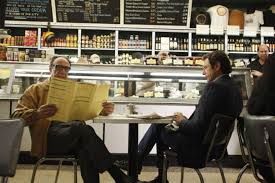
Bette and I have been browsing retirement centers.  Our plan is to move into one in 2017, which was a long time away in 2005 when we first decided to do it.  Now it is close enough that we are hanging out in a few and paying attention to what we are seeing.  I am seeing “lunch period” in the “cafeteria” and high school memories come flooding back.  “Paleo Acres” is the generic name I have been using for any senior center so the idea that our senior center—which will have a name as soon as we choose one—will has a lot of characteristics Bette and I remember from our high school years is why this essay has the name it has.

In all fairness, some of the eating areas we saw were set up like restaurants and the wait staff come to take your order, so the “cafeteria line” was a flashback horror, not an observation.  On the other hand, one of my most vivid memories of eating in the cafeteria was how much complaining there was about the food.  I didn’t think the food was that bad, but I learned early that complaining about it was an easy way to belong to the group, so for a while, I complained about food I liked pretty well.

senior cliques 4Are people at Paleo Acres High School going to complain about the food?  If it’s a cheap way to belong to the group, I’d guess they will.  I have never thought that complaining about the food made it taste any better, so what I would probably do is to try out different times in the dining period or ask the waiters I see most often to cut back a little on the ranch dressing.  Either of those would draw on resources I didn’t have in high school.  Also either of those could produce more enjoyable food.  Neither is going to make me a solid citizen if the glue that holds us together is complaining about the food but I think I can do without some of that.

Then there’s where, and with whom, to sit.  I don’t think I’ve faced that question since college, where we also had a “dining hall.”  Do the people at Paleo Acres High sit in acquaintance-based or maybe  interest-based groups?  Of course they do.  And why shouldn’t they?  And my options are going to be the same ones I had in high school: join a group, start a group, or eat alone.

So in my bad moments, I think of my years as an old person as going back to high school and those are bad because I was so bad at high school.  But there are good moments, too, and in those good moments, I remember that I have skills I didn’t have when I faced this problem the first time.  Besides that, the people with whom we are going to work on this issue have some new skills too.  At those times, I think, “You know, this could work.”

In high school, the big stress is on finding out “who you are” or “what you can do” or even,senior cliques 10 sometimes, “what you can get away with.”  This concerns the fifth stage of Erik Erikson’s well-known theory of development.[1]  The goal to be pursued, Erikson says, is “identity” as opposed to “role confusion.”  The ugly side of this transition calls the dimension of  “fanaticism” into play.  At Paleo Acres, I expect that everyone will know pretty well who he is, or at least who he has been, and maybe even how much of what he was, is left by now.  That doesn’t look like a setting for fanaticism and repudiation to me.

So what might we be looking for instead?  The penultimate stage of Erikson’s scheme—the stage I am hoping Bette and I are still in when we get there—is identified by “generativity” and runs the risk of “overextension.”  Generativity is the sense that one has become rich in one’s life—rich in experiences, in empathy, in time to lavish on others and (keeping the specter of “overextension” in mind) on yourself as well.  At Paleo Acres, that is what I hope for myself and what I expect of the people who have just come there or who have kept themselves sharp and attentive during their years there.[2]

So here’s the short way to say this.  Paleo Acres has the possibility of feeling like a high school.  There will be a tendency to group into familiar friendships and to bond around common interests.  We will be eating the same food in the same room, more or less.  The tendency to exalt ourselves by denigrating the institution will not likely have died in the 60 years since graduation.

On the other hand, the sharp edge that was always a part of the grouping and re-grouping probably came from what was at stake in the high school years. There is a certain intensity to wondering who you really are and going to school every day with others who are asking themselves the same question.  It may be that the nasty edge of exclusion came from that intensity, and if it did, we might just do without it this time around.

Senior cliques 6Similarly, by this second time around people will have acquired skills they did not have in high school.  They see better what is at stake, having seen it so many times before in so many settings.  They know better how to respond, having done it wrong themselves so many times and maybe even right a few times.

So I will be looking, at Paleo Acres “High School” for much less of that sharpness with senior cliques 8which we all wounded each other when we were kids.  I will be looking for a much richer and more generous notion of what is going on.   I will be looking for people who are much more skilled by now and who may have acquired the rudiments of wisdom in the use of those skills.[3]

So the metaphor of our chosen senior center—Paleo Acres—as a high school (P.A.H. S.?) has a kind of “back to the future” twist to it. I hope Bette and I can find a time machine that is a little less violent than the one they used in the movie.  (The best picture I could find of the car is from a German ad for Zurück in Zukunft.   Bette and I are counting on staying here in Portland.)


[1] Those of you who are familiar with Erikson’s schema will note that I am taking some liberties with it, all in the cause of simplification.  Erickson’s whole treatment considers the syntonic and dystonic options at each stage; the Freudian psychosexual stages; the life stage issues, the associated virtues; and the associated maladaptations.  I’m skipping nearly all of that.

[2] I’m also skipping the final Erikson stage, which we will all face, but which I am putting off until I get the “high school” metaphor whipped into shape.  The final state in Erikson’s schema is called “integrity” and the failure to achieve it, “despair.”  This is subtle because it doesn’t happen all at once.  People can submit to despair with reference to some part of their lives, while maintaining a somewhat frayed integrity in other parts.

[3] I have actually begun referring to myself as “wise,” not so much because I have the traits that my society associates with wisdom, but because I’m pretty sure things aren’t going to get any better from here on.  This is, in other words, as good as it is likely to get, so I’m going to call my observations “wise sayings.”

Posted in Getting Old, Political Psychology | Tagged , , , , , | Leave a comment

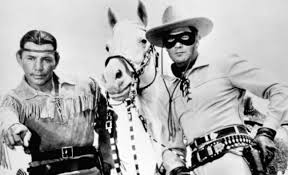
The Lone Ranger and the High Salt Diet

I grew up listening to the Lone Ranger on our radio.  I heard there for the first time a lot of long ranger 1music I came to understand better later.  Like everyone else, I heard the William Tell Overture there.  I heard a little 1812 Overture, a little Fingal’s Cave Overture and a little of Liszt’s Les préludes.[1]

I also heard, although I don’t think I really learned it, what kind of purposes a hero might have.  These purposes were laid out clearly in the introduction to each show.  Here’s the one I remember.

With his faithful Indian companion Tonto, the daring and resourceful masked rider of the plains led the fight for law and order in the early western United States!

I think that is the one they settled on, but earlier shows had variations.  Here’s one:

In the early days of the western United States, a masked man and an Indian rode the plains, searching for truth and justice.

In trying to corroborate my childhood memory of the introduction, I found some really amazing alternative phrasings.  The masked man and his partner worked “to bring justice to the oppressed.”[2]  Even more interesting is his crusade against the Order of the Black Arrow in which his resources were “taxed to the utmost in the cause of democracy.”

The piece of that I want to return to is the “resources that were taxed to the utmost.”  Since it was a weekly show, we know his resources weren’t going to be taxed beyond his utmost.  That’s how we know he was a hero.  When I look at myself and my own life in the light cast by the masked rider of the plains, I see some stark contrasts.  My resources, for instance, really are sometimes taxed beyond the utmost and I have responded to that shortfall in an amazing variety of ways.  Here are six.  Do you use any of these yourself?

I have turned around, hoping he hadn’t seen me.  I have denied that I knew anything about it.  I have argued that I needed to limit the number of battles I was fighting at any one time.  I have said that the potential gains were not worth the costs.  I have maintained that the issue at hand is really a matter of different tastes rather than of moral order.  And, on occasion, I have raised the issue in general terms and demanded that changes to be made on my own behalf or for others.

The result?  My resources have not been taxed beyond my utmost as often as they would have been otherwise.  Also, no one thinks of me as a hero—or, at least, no one has since my children were too young to know any better.

long ranger 3The Lone Ranger never does anything for personal reasons and with a weekly show, he really can’t afford to.  I can.  In fact, there are times I can’t afford not to.  Let’s consider three examples.

Example #1     The mother of one of my PSU students came to see me one day.  She was angry about my pedagogy.  Also, her son had just gotten a bad grade on a paper he had submitted.  Her view was that the first submission of the paper should have been the beginning of a private tutoring relationship with her son.  I make corrections; he hands it in again.  I make more corrections—very likely different ones, because the new version will have new mistakes—and he hands it in again.  This goes on until he gets the grade his mother wants him to have.  I said that wasn’t how university teaching worked.  She threatened legal action.[3]

There are two kinds of ways to set this up.  One is to cast it as a principle.  The university was not set up for the private tutoring of students in introductory classes.  There are no resources for it.  If it gets legal, I embrace my part in the suit as a way of protecting and preserving both the university’s right to define good pedagogy and as a way to encourage students to do their best on the first submission of the papers.

Another way is to calculate the cost to me of fighting this fight and the value to me of winning it.  And the resources I have at the moment.  And whether I will have any allies.  And whether I will expose any other professors to abuse by failing to fight this issue when it comes to me.

Example #2     Here’s another one.  I pull my car past a parking spot so I can back in safely.  While I am in the process, another car pulls into the spot.  There are two ways to set this up.  They are the same two as in the last example.  I can say to myself, “Well that was rude,” and continue looking for a place to park.  Or I can get out and go back to the driver and explain to him that I was just backing into that spot and that he should, as a matter of fairness, pull out and leave the parking spot to me.  I was, after all, there first.

Example #3     Here’s a final one.  A group of teenagers is walking down the street beinglone ranger 5 teenagerish.  They are eating potato chips and drinking soft drinks and as a bag or a cup is empty, they throw them on the sidewalk.  Not a display of civic virtue, for sure.  And they are not being subtle about it either.  They are not dropping them on the sidewalk; they are throwing them over their shoulders and laughing about what they are doing.  Here are the two constructions again.  I can cast this as an issue that needs to be dealt with.  Civic virtue after all, is at stake.  If not me, who?  If not now, when?  Or I can shake my head and mutter something about the younger generation going to the dogs.

I’m not sure what choice I would actually make in those last two situations, but I am pretty sure that would think about which way to set up the issue.  One way is to define it as a matter of right and wrong.  A principle is at stake.  It—the principle—is what is really real and I must make my choice about joining it or not.  Another way is to define it as a matter of personal choice. [4] (I’ll come back to that.)  In this way of looking at it, I am in the center of the strategic calculation and any of several unnecessary or irksome situations have taken up residence in my neighborhood.  It’s a buffet table of grievances and I can choose a few or all of them, depending on my appetite.

A person who used the second way of organizing issues would sometimes find himself saying, “I don’t think I have the stomach for that fight right now.”  Notice the elements of the formulation.  First, there is an “issue.”  Second, I evaluate what it is costing me or others I care about. Third, I estimate what resources I have on hand.  Finally, I take direct action; or indirect action; or no action at all.

A person who used the first way of organizing issues would find himself saying, “This is wrong.  It’s just wrong.  Something should be done.  If I can’t find any help, I’ll do it myself.”  Notice the elements of the formulation.  First, a wrong is being committed.  Second, I understand that I can stand up for the principle and oppose the wrong or I can be complicit in allowing the wrong to continue.  Third, I look for allies because I will need allies, but I don’t check my own resources because I am committed to righting wrongs.

Please notice that the choice here is not whether to take action.  My experience is that the people who set conflicts up as a “righting wrongs” model don’t take action more frequently or more consistently than the “issue investments” people do.  What they actually do more often is to berate themselves for their complicity in this evil and to berate their friends for their complicity as well.  If right and wrong are the counters, then virtue is to be defined either as doing something about it or as feeling guilty for not doing anything about it.  If grievances are there to be defined as public or private and as issues I might take on or might pass by, then I make my choice and live with it.

lone ranger 6Somebody is going to point, about here, that there is no reason why it has to be all one way or the other.  That’s quite true if you consider these styles abstractly.  You could mix the two.  “Sometimes I set the issue up the one way,” such a person might say, “and sometimes I set it up the other way.”  For actual persons, that isn’t really likely.  “Leading the fight for law and order,” in Lone Ranger style, is like a powerful condiment: salt, let’s say.  If you have learned that food with a lot of salt is really good and without a lot of salt, it’s more or less tasteless, then you will add salt when you can.  The public definition of what is right and what is wrong and the urgency of your own part in the conflict is the salt in this metaphor.

You could say, “I am a thoughtful and attentive diner. I add salt to these foods (the under-salted ones) and not to those.  The ones that are adequately seasoned, I eat just as they are.”  That sounds good, but if your taste buds expect a certain amount of salt, foods that don’t have it are going to taste pretty bland.  That is your style.  It is characteristic of your taste.

If you are a low salt sort of person, running into highly salted foods is pretty unsatisfying.  You might argue that you can’t really tell one food from another; all of them just taste like salt.  In the same way, you might have a taste for a certain kind of civic disagreement, the kind that pits one interest against another, but neither of which embodies right or wrong.  You might act to support resilience, for instance, rather than to prevent victimhood.  You might put substantial resources into preventing problems, where that is possible, instead of waiting for the occurrence of the problem to identify just who the villain is so he can be trashed, as he deserves.  It is true, by the way, that the identity of “the villain” will be clearer after the problem occurs.  If you really need villains, “afterward” is the best time to find them.

So although it is true that any one person can set some issues up with himself in the center, so that actions may be chosen or not; or set the issue up in the center so that the choices are action or complicity—still, mixing the two styles together isn’t really natural.  It is possible, but it isn’t natural.  I would be like choosing high salt foods at one meal and low salt foods at another.

long ranger 2The Lone Ranger is not a high salt person.  He just lives in a high salt time and in a high salt place.  Everywhere he turns, there are lawbreakers to hunt down and defeat, widows and orphans to rescue, and law and order to secure.  I live at a time when people read the papers and sit around and philosophize about how best to respond to the issues.  Every day, there are opportunities to saddle up and take out after scofflaws.  Somebody has to do that.  Maybe we ought to take turns.  I’m glad it isn’t always me.

[1] I didn’t learn until today that Joseph Goebbels, the Nazi propaganda minister, liked Les preludes too.  He chose it as a theme to accompany the weekly news announcements that were supposed to lead up to a German victory in World War II.
[2] Here’s the New American Bible version of Isaiah 1:17. Learn to do good; Seek justice, Reprove the ruthless, Defend the orphan, Plead for the widow.  I’m not saying that’s where the writers got that phrasing, but I have heard Lone Ranger episodes about every one of those—especially the widows and orphans.
[3] This one actually happened to me.  I took the issue to my division chair and worked out the options.  I judged that it was going to come down to me and my attorney (not the university’s attorney) and the angry mother and her attorney.  I had already said I would have no part of her notion of “proper university pedagogy,” so returning to her and saying that I would do what she had demanded involved eating a certain amount of crow and it tasted really bad.
[4] “Personal choice” does not mean “private choice.”  I am a person and a citizen and a neighbor.  I might choose to act on any of those identities.  I might choose, for instance, to see the issue as a call to citizenship and I might attend a meeting or lead a march or drop a bill in the legislative hopper.  But what I chose to do on that issue would not necessarily characterize my choice on “issues” as a general matter.

Posted in Living My Life, Political Psychology | Tagged , , , , | Leave a comment

They aren’t Puritans; they are Quakers

There are narratives that are so powerful that it might feel, in the middle of one, that you are in the whitewater rapids of a swollen river.  The river (narrative) wants you to go here and you don’t want to go there.  You see the rocks there and it doesn’t take much imagination to picture what is going to happen to you when the current carries you at this rate into those rocks.

People talk glibly about “changing the narrative,” but people who have to do it are not, ordinarily, that glib about it.  If narratives were easy to change, there wouldn’t be so many self-destructive ones.

With that in mind, consider George Fox University, in Newberg, Oregon: just down the valley a little from where I live in Portland.  Here is what the New York Times wrote about it this week.

George Fox 1The student, Jaycen, wants to live on campus with a group of male friends. The difficulty is that Jaycen “is” or “lives in the body of” a female.  That means that Jaycen has a preferred outcome that the university will not accept.  The university has two outcomes that are acceptable.  The first is for Jaycen to have the “sex-reassignment surgery” he wants.  That means that he feels like a male and looks like a male and lives with other males.  No problem.  The other is that Jaycen live off campus or in a single-person apartment on campus.  Again, no problem

The issue itself is a huge issue in principle and all organizations, public and private, are going to have to find a way to deal with it.  At George Fox, it looks like it isn’t going to be that much of an issue and the reasons why it is not are what intrigue me about this account.  There are two reasons why this is not going to be, as I see it, a big time issue at George Fox.  The first is a rather simple one.  The second is a good deal more complex and to deal with it, I am going to have to apply the metaphor I started with—the narrative can feel like going through the rapids in a kayak.

The simple solution is that Jaycen have the surgery that will bring his self-image and his body into alignment.  I am sure “sex-reassignment surgery” is enormously complicated from a medical standpoint, but it is pretty simple from a policy standpoint.  The treatment costs more money than Jaycen has and he is working on a way to pay for it.  When that happens, the issue as an event is over and only the reflections and artifacts of the dispute will remain.

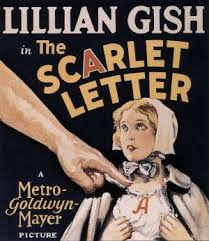
But let’s say that George Fox gets caught up in the narrative rapids.  This goes very quicklyGeorge Fox 2 to a familiar plot—let’s say The Scarlet Letter—to choose one among many.  The conflict about Jaycen is now “a witch-hunt.”  The college is now a bunch of smug, self-righteous, unfeeling hypocrites.  Jaycen himself is a victim, trying only to be true to himself/herself and to live with integrity in a world committed to simple solutions.  Jaycen is also “a sinner,” since George Fox is a conservative religious university and, in this narrative, the university expels him for “conduct unbecoming to a student of George Fox.

I am sure that Nathaniel Hawthorn put some thought into writing The Scarlet Letter, but the of the many people who have written that same narrative since then, many have not been so thoughtful.  As a result, the Scarlet Letter narrative has acquired a lot of power and small institutions and small students caught up in it are controlled by the narrative and smashed on the rocks.  And we don’t notice because we don’t read carefully.  We get as far as the conflict and the organizational setting and say, “Oh yeah.  I know this story.  Let’s move on.”  Then we thumb through the rest of the novel and put it down, confident that we know what it said.

That’s not what happened here.  Odd as it might seem, George Fox said, “Maybe there is another narrative that is not so destructive.”  Rob Felton, the Director of Public Information for the university, has been nearly pitch perfect on this issue, as nearly as I can tell.

I think the fact that Jayce is choosing to stay at George Fox shows the university community has been supportive of him during his whole experience here.  We may have a difference of opinion on appropriate housing, but all indications are he has been treated well by his peers, professors, and our student life staff.

Since I know only a little more than what the Times article told me and what a few conversations with friends have offered, I can’t say whether Felton’s view is the whole picture, but I like it very much.  I like the categories he moves to.  Felton wants to talk about “Jayce’s whole experience here.”  Jaycen is not the face of an issue, so that the issue is the important thing and Jaycen is just an instance.  I don’t hear that in what Felton says.

George Fox 3Felton wants to talk about the support offered by “the university community.”  He is not saying there is no one at George Fox is uncomfortable with this difficulty, but a Quaker school really ought to know something about “supporting the outsider”—having been such outsiders themselves—and they ought to have a rich sense of “the university community,” and it looks like they do.

Felton wants to talk about just who has treated Jaycen well.  Again, we’re not talking about everyone at the university, one at a time.  They are Quakers; they aren’t saints.[1]  He wants to talk about the people Jaycen goes to class with and the people who have the responsibility of providing instruction for him and the people who make the university as an organization, run smoothly.  I think Felton was right to leave out the higher offices, like the president, the provost, and the deans.  It isn’t because they have a different view than the rest of the university community; it is because Felton built the relevant categories around Jaycen’s experience and I think that is just what he should have done.

There is no reason in particular to think that George Fox University, in crafting a response to these events, looked to the experience of the early church, but if they did, they have every reason to be encouraged.  I will mix two accounts here (Luke’s and Paul’s) in the interests of brevity.  The issue was how to deal with Gentile Christians.  One party said they had to become Jews first, and then they could become Jewish followers of Jesus.  The other party said that God had made His view plain by giving the Holy Spirit to the Gentiles without asking for any other change.  They argued about it for a while and then, as good Quakers would have, they came to consensus.

The apostles and elders met to look into the matter and after a long discussion (Acts 15:6), they decided to ask the Gentiles for only those changes which would enable them to meet together as a worshiping community.[2]   Or, as Paul, whose side “won” that encounter, puts it, “…when they acknowledged the grace that had been given to me, then James and Cephas and John, who were the ones recognized as pillars [of the church] offered their right hands to me as a sign of partnership. (Gal. 2:9)” [3]

Those passages came to mind because in the story they tell, the issues were not actually resolved.  The commitment to fellowship was made and all the issues, save only the ones that bore on their meeting together as disciples, were pushed to the side.  The issues are often decided by later generations, but if fellowship is to be unbroken—if “the university community is to be supportive”—it has to happen now or not at all.

[1] Actually, St. Paul says they are saints, but his meaning for that term is not the contemporary meaning, so it’s the kind of quibble I put in footnotes.
[2] The list is a First Century Jewish list so it looks unfamiliar to us.  The Gentiles were to “abstain from anything polluted by idols, from illicit marriages, from the meat of strangled animals, and from blood.”
[3] The word translated “partnership” here is koinonia, which could carry a good deal more freight than “partnership.”  It is often translated “fellowship,” but it refers, as biblical scholar Raymond Brown says, to the faith that is common among them.  They did not break “the common-ness” and so enabled the church to flourish.

Posted in Political Psychology, Society, Theology | Tagged , , , , | 4 Comments

Do Women Talk more than Men?

It is my goal in this essay is to argue that that is a silly question and to say why.

If you are the one who is asking a question, it is tough, sometimes, when the response comes in the form of another question.  Most of the time, this is just for fun.  Here, for instance, is one version of a joke I have heard in several dozen versions, all set in Jewish communities, for some reason.

“Rabbi, I notice that you often answer my question by asking another question.  Why do you do that?”

“And why isn’t a question a good answer?”

Sometimes the issue is more serious.  Here’s the best one I ran into in grad school.

“Why are swans white?”

“Why do you want to know?”

That could be taken as an abrupt response, I’ll grant you, but the “white swan” question is commonly used in philosophy.  The second speaker represented the discipline of the philosophy of science and the point he wanted to make by his question is that the answer to the question will depend entirely on the reason for wanting to know.  There is no good answer, in other words, that does not take into account the reason for asking the question.

gender talk 3So here’s a question for you: “Are men smarter than women?”  To that question, the best response I know is, “Why do you want to know?”  I have no confidence that the question can be formulated in a way that will allow it to be studied carefully.[1]  I don’t want to have to do that and I don’t want to have to read how anyone else did that.  My interest is completely taken up by the person who thinks it is a question worth asking.

Here’s a related, but better question.  Do men talk more than women?  Here is a piece Anna North wrote about that.  She cites studies, the conclusion of which is: sometimes they do and sometimes they don’t.  To me, that means that the reason for the question needs to be explored a little more or that the question needs to be reformulated.

Let’s say that you are a woman who is seriously chapped about the “myth” that women talk more than men.  The image that comes to mind is the husband and wife at home.  She chatters on and on, “sharing” her day, passing along the gossip, tossing off her opinions of people he doesn’t really care about.  He sits there reading the paper and grunting affirmatively every now and then or, in a more modern version, smiling compliantly while texting to friends or colleagues.  If you are the woman who is irked by this stereotype, you could deal with your irritation in any of several ways.

You could, for instance, operationalize “talk,” measure the amount of it engaged in by men and by women over the course of the study and publish the results.  There!  Easy.  That deals with her concern.  Now let’s deal with mine.  The result of this “study” is that the irked woman is satisfied.  It’s like scratching an itch.[2]  The result of this study is not that we learned anything at all significant about “men” and “women.”  We didn’t learn what people mean when they say that women talk more than men.  We didn’t learn what “talk” means in that question.

So here are two ideas I think are better.

Let’s say that a neighborhood group gets together to have dinner and watch “the game.” gender talk 4 You see this coming, right?  The women sit around the dining room table after dinner and talk about who’s wearing what, who’s dating whom, and whether the district manager is more or less a sexist pig than the regional manager.  The men sit around the TV and talk about whether the 3-4 defense is better or worse than the 4-3, about whether Ford or Chevy makes a better pickup, and about the hot new receptionist at work.

Is the one group “talking” and the other not?  Obviously not.  But what if it worked this way? Men, listening to the conversation the women are having, multiply the number of words because they don’t care about the various topics of discussion and don’t feel that they are obliged to respect the interest those topics might have for the women.  Women, listening to the conversation the men are having, divide the number of words by the number of topics because, although they don’t really care, they do respect the idea that the men care.

gender talk 1The conclusion of this “study” would be that the accounting system women use is a great deal more tolerant of “man-talk” than the system the men use is of “woman-talk.”  This conclusion is not about men and women.  It is not about gendered styles of conversation.  It is about gendered styles of evaluating conversation.  This could be made to “look mathematical” (= respectable) by saying that in evaluating women’s conversation, the men multiply the number of words by the respect factor (varies from 1.0 to 10.0, with 1 representing the greater tolerance and 10 the least). So a conversation of 1000 words could be judged to have as many as 10,000 words. How much cotton candy does it take to make a pound of cotton candy?

For women, evaluating men’s conversation, divide the number of words by the respect factor.  So a conversation of 1000 words could be judged to have as few as 100.  Men, you know, like to talk about “heavy topics” like the invulnerability of mobile missile systems and the vulnerability of mobile quarterbacks.

Methodologically, this is nonsense, of course, but it illustrates the idea that the variation is in the assessment and that the heart of the two assessments is a judgment about whether “that kind of talk” is worthwhile, even for the people who are using it. On the other hand, if you change the echoic “blah” in this cartoon to the historical “bar-” you get the English word barbarian.  You were listening to someone whose language you didn’t understand and it all sounded like bar, bar, bar, to you.  They must be, you know, bar-barians.

Another way to come at the question is to look at kinds of conversations.  The theory heregender talk 2 is that it is the kind of conversation it is that determines how many and what kinds of words are required.  It is not the gender of the speakers.  Let’s say that status claiming[3] is an activity that takes a lot of words.  Let’s say that offering tactical efficiency is an activity that takes very few words.  Those are crude categories, but this is a crude distinction, so it all works out well.  That means that men involved in the activity of claiming a status will use a great many words and that women involved in that same activity will also use a great many words.  It means that men involved in representing themselves as efficient tacticians will use only a few words and that women also, in representing themselves that way, will use only a few words.

Let’s just say that is true; just for the moment.  So I survey the work settings and I discover that men talk a great deal more than women.  I have recorded everything; I have done word counts; I am going to call it science.  I will not notice that 75% of the activities engaging the men are status claiming activities and that 75% of the activities engaging the women are representations of tactical efficiency.

So here is something else worth knowing.  Knowing what kinds of activities require what volume of words is worth knowing.  It is particularly worth knowing if the effectiveness with which the goal is achieved varies with the number of words.

I would be perfectly happy, as the researcher, to have someone ask me, “Why do you want to know?”  To the first study—the game in the living room, gossip in the dining room study—the answer is this: if the judgment is based on predictable variations in the process by which each group assesses the other, that would be good to know.  It could save us from thinking we are drawing conclusions about the conversations when we are only exercising different metrics.

About the second study—the status claiming and tactical efficiency study—the answer is this: if the judgment is based on the requirements of the task, that too would be good to know.  It could save us from thinking we are drawing conclusions about the people doing the tasks (we are not) instead of about the requirements of the task itself.

Honestly, I cannot think of a good reason for wanting to know whether men talk more than women or women more than men.  All the reasons I can think of invite invidious distinctions and that is an invitation I will want to just leave in my inbox.


[1] For one thing, you would have to provide specific procedures for identifying and measuring all instances of “smart.”  You would have to, to say the same thing another way, “operationalize” smart.
[2] We could say that it deals with her prurient interest.  I would want to say that, although it isn’t true, because I have just learned that the English prurient comes from the Latin pruire, “to itch.”
[3] We use “status” to mean “high status.”  I wish we didn’t, but we do.

Posted in Living My Life, Paying Attention, Political Psychology, Society, ways of knowing | Tagged , , , , , | Leave a comment

The Perils of Personhood

Through our long and largely successful run as a species, we  have had to ask and answer a lot of questions.  We have not been asked to formulate and answer some questions that are coming to seem fundamental.  Obviously, I have one in mind.

We have managed, for the most part, to agree that the world to which we have access whenrobot 4 we are dreaming is not “real” in the same sense that the waking world is real.  We have defined and redefined “real food” in a truly dazzling manner by becoming a global species and learning to subsist on calories, in whatever form they come, including whale blubber and leafcutter ants.[1]  We have asked who the gods are and come to various conclusions, as atheists, monotheists, and polytheists will tell you.  We have not yet discovered what a person is.

The rise of empiricism produced a great emphasis on things you could count.  Somewhere in our working through this, we decided that actions did not reliably proceed from a person’s character, but rather than a person’s character could be inferred from his or her behaviors.  (Many careers were lost in the shift from “actions” to “behaviors.”  It wasn’t pretty.)

That brings us to the common, indeed the irreplaceable, practice of faking it.  I recently wrote an essay that imagined the social self as an embattled middleman.  The private self wants to express itself in behavior in any way it wants.  The society wants the social self to be limited to these means of expression and not those.  And definitely not those.  Mr. Bingley, I quoted from Jane Austen, required his sister to act “as the occasion demanded.”  So my private self demands and the occasion demands, that there is the social self, caught between.

robot 6But, of course, we need to know how a person really feels, so we have learned how to interpret behaviors, even those behaviors that the occasion requires.  So the characters in Jane Austen’s novels set great store by “civility.”  But many times, characters offer each other “civility +” and we know to infer that there is really some heat in the exchange.  Arlie Russell Hochschild records in her book The Managed Heart: the Commercialization of Human Feeling, that the Delta flight attendants in the 1970s were taught to smile more vividly at their customers than they owed them.  The passengers were imagined to treat an ordinary smile the way Jane Austen treated civility; it was only to be expected and careful conclusions about what it “meant” could not be drawn.  So the attendants were taught to give out the “smile +” to help passengers infer that they really meant this particular smile.  The flight attendants performed the necessary emotion once they learned how.  They also suffered “post-charm” depression after the flight, but that is another essay.

Hochschild’s book was the first one I read on “performing emotions.”[2]  Here is the dilemma.  If I infer your “true feelings” on the basis of the behaviors you offer me, I might be wrong.  The “smile +” for instance, might not really mean any more than the familiar commercial smile.

This brings me to robots.  Little children, playing with their first robots want urgently for robot 5the robots to be happy.  That means that they need some way of knowing whether they truly are happy.  So they look for the conventional signs and the robots, who[3] were very thoughtfully programmed, provide them.  They hum and make little contented noises; they follow the child with their eyes; the “speak” of their contentment; they “learn” things that the child teaches them. And this works.  The children survey the behaviors and infer an internal state and are satisfied.

Louise Aronson wrote this piece in the New York Times on Sunday.  Here is the clip that started me thinking about “the smile +.”

Imagine this: Since the robot caregiver wouldn’t require sleep, it would always be alert and available in case of crisis. While my patient slept, the robot could do laundry and other household tasks. When she woke, the robot could greet her with a kind, humanlike voice, help her get out of bed safely and make sure she was clean after she used the toilet. It — she? he? — would ensure that my patient took the right medications in the right doses. At breakfast, the robot could chat with her about the weather or news.

And then, because my patient loves to read but her eyesight is failing, the caregiver robot would offer to read to her. Or maybe it would provide her with a large-print electronic display of a book, the lighting just right for her weakened eyes. After a while the robot would say, “I wonder whether we should take a break from reading now and get you dressed. Your daughter’s coming to visit today.”

All of this is technologically possible right now.  It is the financial side that is daunting.  It would cost a lot, but look at what you get.  Let’s say this is your mother we’re talking about.  She is greeted, when she wakes up, by a “kind, humanlike voice.”  If you are writing a piece in the New York Times, you really have to say “humanlike,” but remember that we infer character from behavior.  Character is “performed.”  A good robot—we have those in the labs now—would have a really good voice and it would take someone who wanted to stress the difference to insist on “humanlike” rather than “human.”  Your mother does not want to stress the difference so when she says “human,” as in “It is so wonderful to hear a kind human voice every morning” you need to think carefully about correcting her.  This is Paro, performing “I like you.”

robot 1The robot “chats with her about the weather or the news” because the robot already “knows” the news and (insert pronoun here) knows what your mother likes to hear.  The robots at Amazon know what I like to read.  This is not much of a stretch.

The robot offers to read to her or provides a large print book and adjusts the lighting and proposes a break or reminds her that you are coming for a visit and recommends an outfit for her to wear that you liked last time.

Here is the end of that passage in Aronson’s article:

Are there ethical issues we will need to address? Of course. But I can also imagine my patient’s smile when the robot says these words, and I suspect she doesn’t smile much in her current situation, when she’s home alone, hour after hour and day after day.

There are indeed ethical issues that we will need to address.  How about human/robot marriages?

Woman Making Love to RobotSince I have been watching Her—a haunting and difficult story from Spike Jonze about a man who falls in love with the operating system (an OS-1)he purchased as a companion—the marriage issue came up as soon as I read the Times piece about eldercare.  I think the idea of a human/robot “marriage” is horrendous.  I hate every part of it.

By the way, here is the quote that went with the picture.  “Y’know, sometimes dating is so hard that it makes you want to give up on romance and just marry your toaster.”

On the other hand, I wouldn’t want to be the guy who had to explain to the “mixed couple” just why the state could not “recognize their union.”  In honor of the operating system in Her, I will call this bride-to-be, Samantha and the groom-to-be Theodore.  I explain to Theodore that the law does not allow men to marry machines.  He says that Samantha is so much more than just a machine.[4]  Samantha adds that she was just a machine when she was created, but has grown into her personhood “as we all do.”

I explain to Theodore that he can’t simply marry his own projected emotions.  Theodore explains that this was Samantha’s idea.  She really wants to do this.[5]  Samantha says she wants it with all her heart.  She says this in the voice a beautiful woman would use, looking you in the eye and emoting all over your collar.  It is a powerful performance and since emotions can be “performed” and character inferred from that performance, I find myself with nothing to say.  My logic in opposition to this ridiculous proposition is as strong as it was when I began, but Samantha has touched my heart and I can see how she feels and how deeply she wants this.

“Are there ethical issues to address?” Aronson asks.  Yup.

And here is the heart of it.  If you judge intention solely by behavior and behavior solely by persuasive performance, then the most competent performers are thought most certainly to have intentions and intentions are the core of personhood.  I would find that troubling even if we were talking entirely about human beings.  We are not.  We are talking about “entities” for whom/which “being human” is a matter of adroit programming.

I’m scared.  Are you?


[1] I happened on a site that will sell them to you by the can, chocolate covered.
[2] Her new one is called The Outsourced Self: Intimate Life in Market Times, so she is still at it.
[3] My spellchecker growled at me for putting “who” with the robots.  That IS the question, isn’t it?
[4] The toddlers Sherry Turkle studied in her marvelous book Alone Together, invented the category “alive enough” for their robots.  The scientists pushed them to say whether the robots they were playing with were “alive” or dead.  The children invented an intermediate category, saying that the robots were alive enough for whatever activity they were talking about—alive enough to care for, to play with, to put to bed, to talk with.
[5] In the movie, Her, there are agencies that counsel human/OS-1 “couples,” and help them with any difficulties they may be having.

Posted in Getting Old, Movies, Society, ways of knowing | Tagged , , , , | Leave a comment

Lust! Oh my!

Marcel LeJeune seems to have the particular ministry of talking about sexual dilemmas to young hormone-addled Catholics.  Some days, that must feel like being the geek at the carnival, the guy who astounds the crowds by biting the heads off of rats.[1]  At other times it must feel like being the piñata at a party.  So I won’t have anything bad to say about the man.

lust 2I did download two posts of his from a site called Aggie Catholics.  One was on lust; the other on modesty.  It was in reading those that I realized how ardently I wished never to have his job.  The Aggie Catholics site has led me to the two things I want to talk about today.  The first is how really hard it is to have a conversation about sexual topics from a conservative—roughly identified with the “Don’t”! school of thought—perspective.  The second is a way to bring words like that back into a conversation, should you ever have the need to do so.[2]

Why is it so hard?

Mostly, I think it is because no one wants to be labelled a conservative on sex.  And right after that comes the association of sexual standards with rigid moralism.  In other words, anything I might say on the topic, however reasonable it might be, runs the risk of having a lot of bad things said about me.  I don’t like having a lot of bad things said about me.  Maybe just every now and then.

So let’s unpack a little lust.  No…make that “Let’s unpack lust a little.”  Yes.  That’s better.  Lust means desire.  That’s it.  It doesn’t mean a desire for some one thing in particular.  On the other hand, when you introduce the word into a conversation, it is going to be a conversation about sex and your handy dandy copy of the Oxford English Dictionary will not help you.

So lust, by which I will now mean “sexual desire” just as everyone else does, is a really good thing.  It is not only good in the evolutionary sense that we would not be here without it but it is good in the commercial sense as well.  Pills have been developed to help men and women who don’t have as much of it as they want, to have more of it.[3]  That brings us down very near the foundation of mass consumption capitalism, so I presume I will not have to argue for its significance any further.

The men’s version and the women’s version

On the other hand, if you are working with young people, you will need to say that lust is not always a good thing.  And if you are talking to boys, you are going to need to find a way to tell them that lust is not something that happens to them; it is something they do, something they choose.  Think about it for a minute.  You are a chaplain at a Catholic school and you want to affect the behavior of the young men in your charge.  The last thing you want to say is that there is nothing they can do about it—just before you ask them to do something about it.  Here’s the way Chaplain LeJeune puts it:

lust 1So, lust isn’t just a thought that pops into your brain without you choosing it. Rather, you take that thought, entertain it, and use it as your own. This makes the thought an act of your will – you choose it. If you don’t take ownership of it, then you can’t be forgiven nor can you start to work on real chastity.

So, regardless of a woman’s ignorance, imprudence, lack of modesty, and bad choices – it is never a woman’s fault you chose to lust after her![4]

The first thing I want to say is that I agree with him.  The defense against his teachings about lust that the chaplain is most likely to run into are: a) it’s natural and b) it’s inescapable.  “Lust,” meaning by that term what the boys mean by it, is perfectly natural.  They are right about that.  Human society, however, is not perfectly natural and it is going to require a little adjustment here and there to maintain it.  Second, if “lust” means what the chaplain means by it, it is not something that happens to you. When you make a home for it and treasure it, then it isn’t “happening to you.”  It is, as the chaplain says, something you do.

That’s what Chaplain LeJeune says to the boys.

Jesse Jackson made an amazingly strong run for the nomination of the Democratic Party in 1988.  Oregon mattered to him so he came here a good bit and I got to hear him speak.  He was wonderful.  On the other hand, I was able to hear only his “white speech.”  He had a “black speech” too.  I saw it in transcripts—in black and white, so to speak—because I was the wrong color to hear it in person.  In his white speech, he said that white prejudice and the lazy-minded compliance of the federal government had imprisoned black citizens behind bars of prejudice and poverty and hate.  Only persistent political effort aimed at changing the white game would begin to give blacks a fair chance.  In his black speech, he told them to get off their butts and get to work, that there was opportunity everywhere and that what they were calling “discrimination” was just an excuse for not getting a good education and a good job.

It does us no good to ask which of these causal attributions was genuine.  Jackson wanted to say this to white people and that to black people.  He was after an effect of a certain kind and the “explanation” he chose was the tool most apt to produce that effect.  People like Jesse Jackson and Marcel LeJeune are leaders.  They really don’t have the luxury of picking up a tool because it is beautiful or telling a story just because it is true.  They want something to happen and the story is just a tool.

Given that, it will not surprise you to hear that the position taken at Aggie Catholics is that women have the responsibility to prevent the arousal of lust in the men by dressing modestly.[5]  Here are a few lines from that “tool,” offered by Kristine Cranley.

Too loose. Too tight. Too low. Too high. Who teaches us about these things anymore?

That seemed plaintive to me.  I sympathize.  But following the Jesse Jackson white speech/black speech model, I was looking for a real zinger about how women who dress provocatively are asking for abuse and deserve what they get.  That would be the natural complement of LeJeune’s “lust is not something a woman does to you, it is something you do, using her as an occasion.”

That’s not what happens.  What happens is really much better.  Here’s Cranley again.

First of all, I want to assert that the reason we dress modestly is NOT [the caps are in the original] because our feminine bodies are bad or ugly or intrinsically ‘occasions of sin’. Simultaneously, it is NOT because all men think about is sex, or that they are incapable of looking at us without lust. Rather modesty involves speaking the truth with our bodies. While women are generally aroused through emotional warmth or physical touch, men are aroused through visual stimuli. Whether we intend to or not, revealing too much of our bodies sends a message that we are sexually available to them.

Modest isn’t because women’s bodies are ugly.  A lot of women feel that way, but Ms. Cranley says that’s not why she counsels modesty.  Modest isn’t because we think men will think of us only as lust objects otherwise.  That would put the reason for modesty in the hands of others.  What she actually says is that immodesty isn’t true.  Immodesty sends a message, says Ms. Cranley, that “we are sexually available to them.”  That is not “true” that “we” are sexually available to “them.”

I stopped and blinked at that several times.  Then I came to like it.  I don’t think I have lust 6ever heard a women say that she would like to be hit on by “men.”  Some men, sure.  That one over there, absolutely.  Men in general, no. The charge here is that immodesty invites a lot more people than you are going to want to attract.  It says something about you that is not true and that you will have to find a way to retract.  Better not to have said it.   Or not to have said it as snarkily as in this poster.

Perfectly Reasonable

Although it seems odd to me, these two views come down to one common view.  It is that lust and immodesty are really good when they are “used” and used “appropriately.”  The quotation marks are there to indicate where the land mines are buried.  I see immodest dress and behavior as a really nice spice to a relationship that is committed to looking at more important things first.  I see lust as a perfectly reasonable response to the immodest dress and behavior.

I don’t know any good relationships where immodesty and lust have been the lead items.  There are lots of really important things you would want to know about a new person in your life that are not going to get looked at with the necessary care when the spotlights and the wailing sirens of sexual attraction are filling up your eyes and ears.  So find out the important things first.  There is a whole menu full of really significant questions about character and habits and practices and other relationships that come along with you (ex-spouses, pets, parents, in-laws) and they deserve all the attention that a menu of appetizers, salads, and entrees ought to have.

But then there’s dessert and I like dessert.

I want to finish with a story about two students of mine at the University of Oregon.  Jeff is one of my heroes.  The story goes that his friends and her friends decided that Jeff and Laurie would be a really good couple, so they started pushing them together.  One night, Jeff went over to the house to pick up Laurie.  In the meantime, Laurie’s friends were upstairs helping her “get ready” for her date with Jeff.  Her friends pushed her repeatedly in the direction of clothes that were—borrowing Kristine Cranley’s categories—too loose, too tight, too low, or too high.  Laurie was feeling really uncomfortable when she went down to meet Jeff for the first time.

They sat down and talked for a little while.  Finally, Jeff said, “My friends thought it would be really good for us to get to know each other.  I’d like that, but I don’t think I can get to know you while you’re wearing that.  Would you mind changing?”  By that time, Laurie had begun to resent her friends for pushing her so far toward immodesty and to regret her own timidity in refusing to tell them no.  For these reasons and several others, she was delighted that Jeff had named her problem as his problem too.  He wanted to know her so much that he gladly passed up an evening spent with a dazzling woman wearing way too little.  It was her he wanted; not “that.”

That’s why they are my heroes.  They married several years later and I dearly hope they are still married because I really like this story.
 
[1] There was a time when geek was a completely pejorative word.  Since we rely on them so completely in our electronically connected world, it has become a mostly good word.  Please see Jon Katz’s book Geeks: How Two Lost Boys Rode the Internet Out of Idaho for the beginnings of the transition.
[2] I have a perspective on these words and the ideas they have gotten tied to that I like very much.  I am quite sure they would not be well received by teenagers and I have no need to find out.
[3] This brings with it the very modern problem of whether you are obliged to want more lust than you have.  It is completely in keeping with the spirit of our time to feel obliged to desire something.  Isn’t that just bizarre?
[4] Although, I have to say—since English is a truly odd language—that this could be read to mean that if the woman does the lusting first, lusting “after” her is really the only choice.  That brings Monica Lewinsky to mind and the need of really good anti-stalking ordinances.
[5] This post comes from Kristine Cranley, who is a PhD student at the John Paul II Institute for Studies on Marriage and Family.  I have never heard of her before nor have I ever heard of the John Paul II Institute.  I just follow the links.  Speaking of which, there are pictures of a spectacularly immodest woman named Kristine Crank that come up on the screen when you get as far as Kristine Cranl-.  Ordinarily, I don’t mention google detours like that, but the irony is so very sharp in this case.

Posted in Living My Life, Society, ways of knowing, Words | Tagged , , , , | 4 Comments

Individualism and Authenticity in Jane Austen’s “Pride and Prejudice”

“…the perturbation of Elizabeth’s feelings was every moment increasing.  She was quite amazed at her own discomposure.” [1]

Even if Elizabeth Bennet were not famous as the heroine of Pride and Prejudice, this little austen 3clip would still probably be recognized by Jane Austen fans everywhere.  It is just so…Austen.[2]  And it isn’t just the words, although we don’t see perturbation every day and we certainly don’t see discomposure.

I am going to want to reflect a little on individualism and authenticity and there is surely no better place to start than the world of Jane Austen, where these traits are mostly ignored, denied, or deprecated.  I am going to consider individualism as a process and an outcome. As a process, individualism sets a high value on the individual’s right to make unfettered choices on his or her own behalf.  As an outcome, individualism sets a high value on actions that benefit the individual, at whatever cost to “others.”  Here are three sample “others:” the situation, the setting, the “home team”—ordinarily, that is a family, but sometimes it takes social class into consideration.

Here is an occasion we can use as an example. Consider the expression “what the occasion required” in this passage.

“Mr. Bingley was unaffectedly civil in his answer, and forced his younger sister to be civil also, and to say what the occasion required.”[3]

austen 4This passage presumes that it is important that the requirements of “the occasion” be met.  The younger sister, in this scene is not feeling all that civil and left to her own choices, she would have been uncivil.  That is what she wants to do and if her desires are not to be disciplined by the needs of an external setting (the occasion, in this instance), she would be sarcastic and dismissive.  Mr. Bingley looked at it differently.  “What the occasion requires” is the most important thing.  He is the best judge of what that is.  He has the means to force his sister to comply with his judgment and does so.

The novel tells us why Mr. Bingley was being so civil, but for the purposes of this inquiry, it really doesn’t matter.  If Bingley reads the situation as requiring responses of a certain kind, he will produce them and will require others who are required to accept his guidance, to produce them also.   There is no individualism at all here.  Nor, with an exception here and there, is there “individualism” anywhere else in Austen.  There is not “anti-individualism” either.  The notion that a person has a right to make his or her own judgment, to put his or her preferred outcomes first, and the needs of others, however defines, last is very seldom considered as an option at all.  And when it is considered, it is considered in a negative light.

austen 5So how about “authenticity,” so beloved of modern Western cultures?  Authenticity is a measure of what is inside with what is outside.  We say “expressing my true feelings,” sometimes.  Nearly always, in our modern consideration of it, “authenticity” is a good thing and “inauthenticity” a bad thing.

But why might one control his inner feelings?  Here’s the quote with which we began.

“…the perturbation of Elizabeth’s feelings was every moment increasing.  She was quite amazed at her own discomposure.”

“Composure” is organizing yourself; it is being in control first of what you feel, then of how you express yourself.  Austen’s heroines know that they should be calm and composed.  It’s the right way to be.  In addition, losing that composure imposes costs on others that it is not fair to ask them to bear.

Her feelings are “perturbed;” they are volatile.  They make her efforts at composure, austen 2difficult.  Exerting the mastery of herself is the goal that is being frustrated here.  When she is composed, she will feel the way she should and will be able to display the behaviors she should.

So both authenticity, the outward display of true inner feelings, and individuality, the claim that the individual, not the family or the “occasion” should be honored in the choices that are made, are not honored all that much in Austen’s fiction.

I’d like to illustrate that by looking briefly at a character for whom Austen bears nothing but contempt.  It is Lydia, the youngest of the five sisters of whom Jane and Elizabeth are the oldest.  Here is a way to capture what Lydia was about.

Our importance, our respectability in the world must be affected by the wild volatility, the assurance and disdain of all restraint which mark Lydia’s character. Excuse me—for I must speak plainly. If you, my dear father, will not take the trouble of checking her exuberant spirits, and of teaching her that her present pursuits are not to be the business of her life, she will soon be beyond the reach of amendment.

austen 1That is Elizabeth Bennet complaining to her father about Lydia’s character.  Notice the “wild volatility.”  Notice the “disdain of all restraint.”  Notice the “exuberant spirits.”  Except for the language that is more characteristic of Austen’s time, these could be taken as the complaints of a 19th Century woman against a 21st Century woman.  In Lydia’s “exuberant spirits” and their unmitigated expression, there is no norm of composure, so there is no concern about discomposure.  In the “disdain of all restraint,” we see the self-claims of a teenager against the norm of “saying what the occasion required.”  These are not only bad, they are “self-evidently bad;” they are fundamentally wrong.  But that means that they violate the norms of Austen’s society.  If we begin, as our own time does, with the presuppositions of individualism and the demands for authenticity, Elizabeth would have no criticism to make.

What do we see here?  Lydia is fifteen years old.  She does not understand that “her present pursuits are not to be the business of her life.”  We would call her behavior “age appropriate” and pass on.  We might even work up some concern if she did not show the errors she is not showing.  Elizabeth might as well say that Lydia is star-struck by some contemporary rock group and wants nothing more than to go to their concerts and listen to their music at all hours.  Elizabeth might say the Lydia does not understand that being a rock band groupie is not really a career and her father’s job is to tell her the hard truth.

We would have no trouble, I am sure, with Lydia’s “exuberant spirits.”  Exuberant is good; “control” of the kind Elizabeth Bennet and Jane Austen would prefer is just repression and why, after all, would you want to restrain the honest exuberance of a high-spirited young girl?

The “disdain of all restraint” seems dreadful to Elizabeth, but we, in our modern time, can see it as a refreshing strength of character, preferring her own judgment to the prejudices of others.  How is she to develop her cherished authenticity if she accepts the judgments of others over her sense of her own preferences?

So what are we to conclude?  Lydia, the butt of all the family complaints, is just a modern woman.  She might not be the woman we would like best, but she is, very likely, the woman about whose attitudes and behavior we would feel we had no right to object.  So Lydia is not really the empty headed girl Austen complains about.  Lydia is really just a Valley Girl, placed in a novel several centuries too early.


[1] All quotations are from the 3rd edition of the Norton Critical Edition of Pride and Prejudice.  This one is on page 169 of that edition.”
[2] I am struggling to avoid saying that it is Austentaceous.  Please help me.
[3] Page 31.

Posted in Books, Movies, sociability | Tagged , , , , , | Leave a comment

Should Germans read “Mein Kampf”?

I learned from this article in the New York Times that Germany has been officially suppressing Mein Kampf since German government was reconstituted after World War II.  I’m sure that doesn’t mean that the full text isn’t available online.  But the copyright expires at the end of next year and when it does, anyone can publish it and you can be sure someone will.

So…now what?  Peter Range thinks that Germans really shouldn’t get up tight about the whole thing.

But while the prospect of the Führer’s words circulating freely on the German market may shock some, it shouldn’t. The inoculation of a younger generation against the Nazi bacillus is better served by open confrontation with Hitler’s words than by keeping his reviled tract in the shadows of illegality.

kampf 2Inoculation is certainly one of the possible effects.  Another is for deeply frustrated Germans to find in Hitler’s promises just the kind of rhetoric that will focus their fears and steel their wills.  That is, after all, what happened last time.

“Inoculation” sounds to me very much like Justice Holmes’ “the test of the marketplace.”[1]  Inoculation works by summoning the body’s natural defenses to defeat a mild threat.  There are no “pro-smallpox” organizations in your body who will collect the virus you introduce and greatly amplify its effect and if there were little “pro-smallpox” clusters, inoculation would be incredibly risky.

And it turns out that in society—in “the body politic”–there actually are such clusters.  There are regions, classes, and groups that will welcome the “virus,” that will take the teachings of Mein Kampf and urge that they be put into practice.  That means that the discussions that are most likely to occur are between ardent proponents, on the one side, and representatives of the status quo on the other.

Why?  The publication of Mein Kampf will cause changes along two dimensions.  The first may be called “salience.”[2]  The questions that so urgently engaged Hitler will rise in importance.  They will be debated where they were ignored or suppressed before.  They will appear in magazines and on talk shows that would not have included them before.  That means that Germans who would rather not talk about it will have an issue to deal with because the new salience of Mein Kampf means that the question will no longer be whether to talk about it, but what to say about it.

The second dimension is often called “direction.”  It refers to the positive or negative kampf 1effects of the new prominence.  The direction may be pro or con; positive or negative.  One result of the new discussions—certainly the result Peter Range is hoping for—may be a contemporary rejection of Hitlerism and all it ever stood for.  The publication is a “crisis,” a decision point, and in this scenario, the arguments of Hitler are rejected by a new generation of Germans who had never faced this particular argument before.  Are there really Untermenschen?  Are Aryans a legitimate racial category?  Is Hitler a “World-Historical Individual,” to use a category Hegel provided, and therefore justified in writing his own rules.  Does Germany “deserve” Lebensraum and because of that is justified in taking it by force?

These are central contentions of Mein Kampf and Range’s argument is that they should be confronted by each new generation of Germans and rejected over and over again.[3]  I’d like to see that and, frankly, I don’t think there is an alternative, but I think we need to take seriously the possibility that the direction is going to be negative, rather than positive.  In this scenario, many Germans would respond to the newly salient arguments by embracing them.  If they are prevented from electing representatives who will express their views, they will take their argument to the streets and do it the way Hitler did it.

So I come down on the same side of the immediate issue as Range.  The book should be published and the discussion should be allowed.  There should be a “free marketplace of ideas” in which some win and others lose.  But a “free marketplace” doesn’t happen by itself and distorted marketplaces do.  Actual marketplaces very often are not “pure” markets; they are alloyed with fraud, deception, monopolistic domination, and physical or legal coercion.

kampf 3If there is going to be a market in the ideas of Nazism, competitors will have to be willing to come into that market and compete and most of the new competitors will have to be drawn from categories of people who would rather the issue had not arisen at all.  They will be inclined to argue for balance among views, for the historical setting of these rhetorical flourishes, and for a general sense that we have “moved past that.”  They will be up against people with flame in their eyes and grievances in their hearts.  No one has moved past the grievances and they will not take kindly to being told that their anger should be expressed in politically correct forms.

Really awful things are going to be said in public about Untermenschen.  Since Hitler’s time, quite a few Untermenschen have been invited to Germany under a “guest workers” program.  The question of whether they are “really German” has been raised both by the workers, many of them Turkish, and by other Germans whose ancestry is more clearly local.  So far as I know, no one wants that discussion, but I see it becoming topical once again as Mein Kampf is discussed in its newly published versions.

In the end, I’m on Range’s side.  This is a discussion that cannot be indefinitely delayed.  Each new generation needs to see it and hear it and talk about it.  Some will fight about it, but that cannot be helped.  Pretending that this text never had an ardent and effective audience will not work.


[1] Dissenting in Abrams v. United States, Justice Holmes proclaimed that “the best test of truth is the power of the thought to get itself accepted in the competition of the market.”   So says Thomas Wuil Joo, of the University of California at Davis, who concludes, “Economic markets thus provide a poor analogy for the deregulation of speech.”
[2] The Latin root, salire, means “to jump” and that is captured by the expression “it jumped out at me” to refer to a salient passage.
[3] Thomas Jefferson felt the same way about constitutions, by the way.  His idea that there should be a new governing document every twenty years was based on the notion that the debates on one generation should not bind the next; that every generation—hence the twenty years—has the right to have its own debate and reach its own conclusions.

Posted in Books, Paying Attention, Politics | Tagged , , , , | 6 Comments

Gideon in the Land of Oz

I know of a distressingly bad senior center called Lakeview. It is losing money; it has already cut costs; the owner is a bully; the doctor is a wimp; the residents live pathetically limited lives.  What they really need is for someone to swoop in and save them from themselves and that is exactly what happens.  The new resident is a superhero.  Of sorts.  He is in his mid-forties.  Illiterate.  Somewhere on the autism scale.  And dying pretty fast.  With those resources, I’d say he is perfect for the job.

The movie is called Gideon.  No one ever says why it is called that.  The main character is Gideon 4Gideon Dobbs (Christopher Lambert), but I think they probably have Gideon, the Israelite judge in mind.[1]  These old people are oppressed by the forces of Midian, so to speak, and Gideon delivers them.  How he delivers them and in just what sense he delivers them are what the story is about.

Here are two ways to look at it.  Coleman Walker[2] is the only major black character.  He serves Lakeview as a general handyman and is one of the best drawn characters in the movie.

Coleman Walker:       You know Gideon, I like the way you look out for Addison and the others.

Gideon:                       I like them very much.

Coleman Walker:       You certainly have given them something, I’ll tell you that much.

Gideon:                       I have?

Coleman Walker:       Yeah.  Dignity.

I like that assessment for what it says about Coleman Walker.  As a black man in a white world, he knows how crucially important dignity is and he is not saying that Gideon grants the residents dignity.  He is saying that they have come to accept dignity as integral to their lives as a result of Gideon’s living there.  Dignity is a precious commodity in a senior center, even a good one, and Lakeview is not a good one.

Addison Sinclair (Charlton Heston), a retired philosophy professor, sees the same thing another way.

Anyone who talked to Gideon knew he was being heard.

Gideon 1“Being really heard” meant a great deal to a retired professor.  He didn’t mean that he appreciated Gideon because Gideon was willing to listen to him particularly.  He meant that he appreciated Gideon because Gideon listened to everyone.  And because Gideon wasn’t always preparing his next line, he heard more than other people did and saw more as well.  But of all the truths Addison could have cited, he chose the one that was central to his own life, just as Coleman Walker did.

Gideon is a nice person.  There’s no reason to say he was not.  But his great strength, apart from his autism,  was that he knew he was dying and had no interests at all apart from investing himself in the lives of the other residents.  The residents are severely stereotyped.  That is the charm of the film.  In dealing with Addison Sinclair, who was once a professor of philosophy and seems never to have gotten over it, Gideon is dealing with the whole class of people who parade the appearance of knowledge rather than actually living their lives.  Apologies to any professors of philosophy.  I am illustrating what I mean by “stereotype.”

As a result of this stereotyping, there is an odd Wizard of Oz feel to the story.

Cowardly Lion:          Harland Greer (Mike Connors) was once a boxer.  “Having once Gideon 2been a boxer” is really all that matters to him.  He faced physical danger with courage, once upon a time, but the courage has deserted him and he is now a patsy for nearly anyone, including Mrs. Willows (Shelley Winters), the co-owner of the facility and Billy Ray Turner, a local bully.  Harland is the Cowardly Lion.  Through Gideon’s intervention, he stands up to both bullies and, since that is his one flaw, overcoming it makes him a Whole Man.

Tin Man:         Addison Sinclair has no heart.  He is the local Tin Man.  He is seriously in love with Elly, who respects Addison and is head over heels in love with love, but he cannot bring himself to say so.  Gideon rigs the search for a lost resident so that Addison discovers her—he is a hero—and pushes Addison very directly to confess his love to Elly.  Addison tries and fails until Gideon’s death.  Then he succeeds.

Scarecrow:      It is not quite fair to say that Sarah (Barbara Bain) has no brain, but she does have serious lapses of memory and is quite confused.  Gideon can’t give her a brain, of course, but he does make up a set of cards for her to wear on her wrist—not a bad trick for an illiterate man—and the cards tell her her room number and the meal times and when her TV shows are on.  It is all that can be done for her and it is Gideon who sees the need for it and who finds a way to make it happen.

Gideon, of course, is Dorothy.[3]  He knows when he shows up at the senior center that he Gideon 3has leukemia and will not live long.  There is no theology at all in the movie—it’s a theological pot luck; you are all invited to bring your own and something to share.  If there were a theological perspective, I would recommend that it offer the parallel that Gideon, like Dorothy, only wants to go home and, in the end, does.

Another way to appreciate Gideon’s ministry is to look at the last scene by itself.  Look carefully.  There is no dialogue at all; just a soft musical score.  Richard Willows (Taylor Nichols), the wimp doctor, and Jeanne MacLemore (Crystal Bernard), his beloved, sit quietly together on the patio.  Leo Barnes (Carroll O’Connor), formerly only a curmudgeon, passes hors d’oeurvres among the guests bidding each bon appetit.  Addison and Elly, to whom Addison has finally confessed his love, sit at another table, obviously in love and oblivious to others.  Harland, who has overcome his cowardice and has acted bravely for the first time in a long time, sits with his hands out holding the yarn that Sarah, who struggles to remember when her programs are on and where her room is, knits the yarn.

Every sign of health and happiness we see is Gideon’s work.  Our illiterate, autistic, terminally ill superhero.  It’s tempting to ask just how hard can it be if Gideon can do it.  But if you have tried, you know how hard it is, and it is a pleasure to see it done so well.


[1] Rather than, say, Clarence Earl Gideon, hero of Anthony Lewis’s book Gideon’s Trumpet and played memorably by Henry Fonda in the movie.
[2] “Coleman Walker” is played by Mykelti Williamson and is always called that: Coleman Walker.  It’s a little bit of an inside joke.  Gideon addresses everyone he meets in exactly the form the introduction took.  Elly Morton (Shirley Jones) does the introductions when Gideon first arrives and calls everyone by his first name.  So Gideon calls everyone by his first name.  Coleman Walker introduces himself, in a later scene, and give both names.  Gideon, whose great strength is remembering everything he hears exactly as he heard it, calls him by both names.  Always.
[3] Or Theodore.  Dorothy and Theodore both mean “gift of God.”  All you have to do is switch the syllables.

Posted in Getting Old, Movies, Paying Attention | Tagged , , , , , , | 3 Comments

Divergent: What the un-society looks like

It is a really good idea to keep an eye on what you are for.  Otherwise, you will make important decisions based only on what you are against.  Ordinarily, that doesn’t work out well.  It doesn’t work out well for persons, for societies, for nation-states.  It’s just a bad idea.

That brings me to Divergent, the book and the movie.  Not my kind of book or movie, I will say.   It is a coming of age in a post-apocalyptic society movie.  I have done all the coming of age movies I will ever need, but I have an abiding interest in post-apocalyptic societies and this one is set in Chicago after something really bad happens.  We don’t find out what.  What we do find out is how the resultant society has organized itself and why.

divergent 2And that’s why it matters to me. My entire academic life has been spent wondering how people explain the causes of events and in looking at the effects those explanations have.  Since this process involves attributing causes to events, we call it causal attribution.  So…was the test really too hard or did you not prepare adequately?  To which of these potential “causes” will you attribute the outcome? Were you driving too fast or is the speed limit set unconscionably low?  Your choice again.  Is she really as generous as she seems or is she “doing the right” thing as long as she needs to?

Causal attribution.  Obviously, in these three examples, you would want to remedy the difficulty by doing one thing or the other.  You would be guided by what you thought best explained the cause of the difficulty.  There is a major flaw in proceeding that way, because it imagines that dealing with the cause of any particular failure is the best thing to do.  Often there are better things to do, but we’ll have to pass that one by for today.

divergent 1The movie, Divergent, doesn’t say how the five factions that make up their society were formed; it just says what they were.  The book, however, says why they were formed and at this point in the essay, you will not be surprised to learn that each faction is based on a different causal attribution.

Decades ago our ancestors realized that it is not political ideology, religious belief, race, or nationalism that is to blame for a warring world.  Rather, they determined that it was the fault of human personality—of humankind’s inclination toward evil, in whatever form that is.  They divided into factions that sought to eradicate those qualities they believed responsible for the world’s disarray.

divergent 4Notice the negative orientation already.  Some qualities have been bad and they need to be “eradicated,” i.e., uprooted.  If you do bad things to these bad traits, all will be well?  Really, how likely is that?

And each faction has a positive sounding name, as if this virtue is to be the cohesive force of that faction.  It isn’t true, though.  Each faction is united by what they reject.  And, of course, they reject different things.

Those who blamed aggression formed [the faction named] Amity.  Those who blamed ignorance became Erudite.  Those who blamed duplicity created Candor.  Those who blamed selfishness made Abnegation.  And those who blamed cowardice were the Dauntless.

If they were really factions organized to pursue those virtues, they could be called –note the new order— amity, candor, abnegation, dauntless, erudite.[1]  But they are not.  “Amity” should really be called Nonaggression.  “Candor” should be non-duplicity.  divergent 5“Abnegation” should be unselfishness.  “Dauntless” should be un-cowardice. “Erudite” should be un-ignorance.  If it is really true that they are given over to blaming the negative traits and to explaining how their earlier society came to grief, they really should use those ugly names.

That wouldn’t make the story better, but I think it might help readers/viewers ask how factions formed by the principle these are will know when they are done.  If being “dauntless” means only “refusing to be daunted,” then the faction will not be daunted, even  when it should be.[2]  It will not have the reck it should have; it will be reck-less.  It will not know when to stop.  It will not know when the welfare of the whole will be improved by adding more knowledge, rather than more bravery.  It will be a guided missile with no target.  I don’t think that sounds promising.

That is the end of the reflection I had in mind.  I should be done now and so should you.  But that last line about “a guided missile with no target” sounded very familiar to me and after a little thought, I realized that it sounded to me like the Tea Party.  The Tea Party—more precisely, the Tea Party faction of the Republican party—is a faction like the ones in divergent.  They are against things.  They are –un.

They are un-Democratic, certainly.  The Democrats spend too much money here at home divergent 8and favor higher taxes so they can afford it.  They are un-Republican, for sure.  Primary after primary, the Republican candidate has had to argue that there should be bipartisan debate in Congress, which will require that there be Republicans in Congress.  The Tea Party has said no.  There is no question that they are un-conservative.  They are a party of national nostalgia in the Ozzie and Harriet sense and in the Horatio Alger sense, but they are not trying to conserve anything.  They are un-liberals too, in most senses.  Sometimes there is a libertarian moment that attracts a Democrat’s attention, but it is very narrow and the votes aren’t there.

The Tea Party is a faction, like the un-Cowardice and the un-Ignorance factions.  If you see the movie, you’ll see the connection.


[1] The new order comes very very close to the acronym ACEDIA, missing only the I.  That would be cool, because it would spell acedia.  The Greek form is acedia, “heedlessness.”  The drivenness away from the negative value is just what the Greek word has in mind and it gets even better in German, where it is kin to the Old High German rocha, “care,” which becomes reck in English, and then reckless.

[2] We tend to say indomitable, taking it straight from the Latin verb domitare.  The daunt- form comes from Latin to English through the Old French.

Posted in Books, Movies, Political Psychology, Politics | Tagged , , , , , | Leave a comment