
Today, I want to look at the kind of guidance our language gives us on depression, especially whether it can best be conceived of as active or passive. But before I do that, I have a very small admission to make. I have never heard anyone describe the experience of “being depressed” in the way I experience it. For me, most often, it is a conclusion I draw when I notice how my inner editor—a hypothetical agent over which I have no control at all—has organized my perceptions and my memories. “Oh, look at that,” I say to myself, “I am (being) depressed.” [1]
So my experience of (being) depressed may be unusual, but I think the processes I use to get out of it are pretty ordinary. Also, they have worked pretty well so far.
What the metaphor looks like
In the sentence, “I am depressed.” what part of speech is “depressed? I’m not all that good at this sort of thing, but I would say that it functions as a predicate adjective, as “orange” would in the sentence, “I am orange.”
 On the other hand, if you were the tongue in this picture, you could just as accurately say that you “were” depressed, but you would be referring to the effect that the little popsicle stick is having on you. “It is depressing me,” the tongue would say, “therefore. I am being depressed” Notice that “depressed” is clearly a verb now. The parallel sentence would be, “I am being strangled,” in which “”depressed” and “strangled” each describe an ongoing action being aimed at you.
So…I kind of like the verb version better. The adjective version describes you: remember that depressed = orange so far as the grammar goes. The verb version describes an action that is being taken and in which you are the object; remember that depressed =strangled.
And one of the reasons I like it is that it raises the question of the origin of that action. Who or what is depressing you?” The other version doesn’t ask that question. And it leads fairly directly to the next question which is, “What can you do to get him/her/it to stop?”
I think that is a better question, but even that better form of the question is not quite as simple as I have made it sound so far. Imagine that I was going to an event that required wearing a tie and the dress code of this event required that the tie be really tight around the neck. Presuming that I am the person who tightened the tie around my own neck, the direct answer to the question “Who is doing this to you?” is “I am doing it to myself.” On the other hand, there is a distal force [2] that is not me and that requires that the ties I wear be really tight. So another useful answer to the question, “Who is doing this to you?” is “They are.”
I do feel pressed down (de + pressed) from time to time and this last time the experience struck me as having some interesting online parallels. I have three principal ones in mind. Let’s see how the similarities hold up.
Other Readers
If you order a book from Amazon, they will tell you that other people who ordered this book also ordered, or also looked at, these other books. A friend recently asked me to read The Wonder by Emma Donoghue. When I looked it up on Amazon, I was informed that customers who bought this item also bought Do Not Become Alarmed: A Novel, by Maile Melde and A Visit from the Goon Squad, by Jennifer Egan, and Give a Girl a Knife: A Memoir, by Amy Thielen. These books are “brought into my view” together as a result of my looking up The Wonder.
You have to stop a minute to think how strange all this if you take it seriously. It isn’t mind reading or palm reading. Amazon’s computer is guessing that an interest in one book indicates a probable interest in certain other books.
Here is the analogy that struck me. I have lived a long time and have many experiences. I have organized these experiences into categories, although I didn’t do it intentionally and I don’t know what the names of the categories are. Here’s what I know: when I take an action or receive an action or have a vivid memory, a whole batch of “similar” memories and tastes and associations come to mind. If I do something really dumb, like asking a friend how his father is getting along only to find out that the father died over a month ago, I’m embarrassed. I get through the occasion, but after that—sometimes for days after that— I am bombarded by “similar screw-ups.”
 This is the way my inner organizer arranges my experiences for me. It is very much as if I had asked for a book called Captain Klutz and was referred to a list of books with that theme. Except these “books” are all about things I have done. These may be things I have never before considered to be related to each other, but somebody—whoever is organizing and presenting these other experiences to me—thinks they are related.
Coins
Imagine further that all one’s experiences can be represented as if they were coins with a heads (positive) side and a tails (negative) side. Clearly, one side of the coin is not more true than another. Let’s say I got tired of a job and decided to leave it for another one. But part of the same experience is that someone in the hierarchy had a grievance against me or thought I wasn’t doing my job well. “I got tired of it so I quit and went on to another job” is the heads side of that coin. “I screwed up and got fired” is the tails side.
When I do something like ask about my friend’s father who, as everyone else in the group knows, died last month, it is a faux pas. I am embarrassed. I apologize. But as I am walking home afterward, I see that all the coins have been turned so that they are all tails. These are completely unrelated events. There is the time I dumped tomato soup on my clean white shirt and the time I lost my cool and insulted an obnoxious guest and the time I went to a friend’s birthday party on the wrong night. Here I am, present in hand, and I am the only “guest.”
There is not, to my mind, any topical similarity at all. They are just things that this inner organizer gathers together and puts in a category of some sort and presents to me—like so many books at Amazon—one after another after another.
Peripheral Advertising.
A lot of web sites are paid for by advertising. They are able to customize the advertising to you because they know what you have been doing on your computer. Here’s an example that still makes me smile. I wrote an essay called “Attractive Older Women” and I searched around in Google images to find a good example I could put in the essay. Shortly afterward, advertising started showing up on the websites I used. These were ads “about” (not “from”) attractive older women in the Portland area who are looking for men who aren’t afraid of commitment. This went on for months.
 Some one in the Gorithm family (Al, probably) is monitoring my use of the computer and notices that I was searching for images of attractive older women and concluded that I was in the market not just for the pictures, but for the women. I search for images every time I put an essay up on my blog site. I’d hate to think that each of these searches is taken as an indication of an “interest” that can be commercially exploited. But that is what I do think.
I think that if I wrote an essay about new cars—maybe I’m just studying what kinds of words are used to sell cars these days and comparing it to the words that were used when I was younger—pictures of cars on the lots of local dealers would start showing up in the advertising space. I think that’s how it works.
And that’s why I think the process might be a good indication of how that inner processor of mine works. The part of that process I’m thinking about in this essay is concerned about fears or anxieties or guilt of shame (now new cars or old women), but I think the process is analogous. I think there is something like an algorithm that monitors my experiences and serves up “related products.” I think that if I saw a situation on a local train and thought I ought to intervene, but then didn’t, I would leave the train feeling ashamed.
Words like “coward” and “culpable” and “complicit” and the pictures that belong to my life’s experience of those words, would start to show up in my mental “ad space.” I would think of times when I showed good judgment by not getting involved in someone else’s fight, definitely “heads” memories. And I would find that all those coins had been flipped over by this inner advertiser and now all those coins are tails. I remembered it as careful judgment, but when I look back, I see that it was cowardice.
I hate that.
On the other hand, looking at these coins and at these “suggested books” and at the peripheral advertising is the way I find out that I am depressed. Some people look “inside themselves” as if there were a tag or a sign. Or they just feel depressed. What’s the matter, Alex?” “Oh, I don’t know. I’m just depressed.” These people FEEL depressed. I notice it when I see that all the coins are tails up and the books are all about being a klutz. At that point I realize that however well I thought I did in responding to my friend, I realize when I see what “books” are being presented to me, that I must be depressed and it’s going to take a while to get “un-depressed.”
What I do when I notice
Sometimes it is true that I am being “depressed”—”held down.” It is also true that I wish I were not being held down. On the other hand, I know what to do about it. It isn’t instantaneous, which would be nice, but it is reliably effective. There are things I can do that are kind of like “pushing back” or at least “getting out from under the thumb.”
They aren’t magic. I do things (actions) I am proud of. Sometimes I have to do quite a few of those. And I hang out with people (associations) who like and respect me. And I don’t talk about how I am feeling. I just let the natural effect of these actions and associations do what they always do.
And then I’m OK until I screw up again.
[1] I got to thinking about this kind of possibility when I read Daryl Bem, a social psychologist who said that what we call “insight” or “introspection” is really using the same kinds of clues about ourselves that our friends use. The example exchange I remember best goes like this. Q. Do you like rye bread? A. I guess I do. When I have a choice of breads, I always choose it.
[2] In my line of work, “proximal” is a word used to describe the immediate cause (the tie) and “distal” is used to describe the mediated cause (the requirement).

 This is the “Profiles in Courage” rebuttal. The Mayor has said that he couldn’t “do the right thing” because it would cost him his office. The reporter comes back hard, “Maybe you should have made your fight and taken your licking,”
 The Mayor is the exemplar of “democratic accountability” as Banfield sees it. There is no way for voters to choose a party (and the party’s nominee) unless the party makes good on its promises. There is no way for the party to make good on its promises unless its officeholders “do the right thing.” Being so committed to the revitalization of downtown that you cause a race riot is not the right thing. Alienating the working class voters in the inner suburbs and turning the Mayor’s office over to the other party is also “not the right thing.”
 his career, became famous for such books as The Unheavenly City, The Unheavenly City Revisited, The Moral Basis of a Backward Society, Here the People Rule, Political Influence, Civility and Citizenship, and City Politics .Here,very early in his career, I think he was just trying to make a buck. This was written in 1959, which accounts for some of the ethnic stereotypes and some old words (“Negro”), but the political principles work just the same way now that they did then. Here is Banfield as a very young academic.
 represented as performing a series of actions that pointed beyond their plain meaning. For that reason, they are not called miracles; they are called “signs.” [1] That means that they point to some meaning beyond themselves. What they have in common is that they look at some major element of Jewish practice—we are going to be looking at the wedding at Cana for our example—and then declare it to be surpassed by the present ministry of Jesus. So each of the signs “means something” in the same way; they point beyond. The meanings themselves differ as the occasions differ.
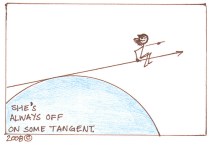 I am calling those tangential. I am not arguing that they are mistaken; only that they don’t help John establish the point he is making. John has a use for this story and for this use, the central symbol is the six jars of water. All this water is necessary because “the Jews” [2] needed to ritually purify themselves. John’s point is that because of Jesus, all that water is superfluous. You can do something else with it, since you don’t need it for ritual ablutions. So why not turn it into some really superior wine?
 It is not only the right of these peoples to throw off the yoke of tyranny, but it is their duty to do so. [4] This is true of all peoples—all collections of politically self-conscious people—so it is the general case. Someone arguing against Jefferson would have to argue that although it is true of mankind generally, it is not true of the British colonies in North America; or he would have to argue that Locke’s notions of contract were not valid even in their general sense.
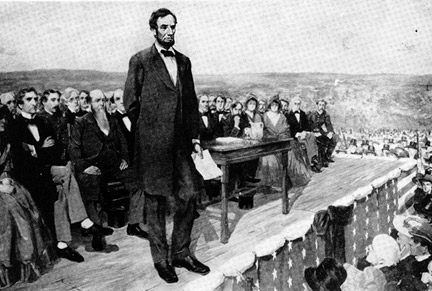 Lincoln has no use at all for the hypothetical equality of peoples, equally freed from their allegiance to a tyrant. What he needs is an understanding that puts white people and black people in the same scale—Lincoln had signed the Emancipation Proclamation in January of that year—and finds them to be equal in worth. It would be a violation of “Nature and Nature’s God,” to use Jefferson’s phrase, for one man to own another.

 issue of The Christian Century. That’s where I am going next, but I want to make one final point about arriving at 2 (after having experienced 5). When you know you can’t keep it, there are several things you could do as a response. You could devalue it. “Because it won’t last, it isn’t really that important.” You could strain to hold onto it. “I want to feel this way for as long as I can.” Or you could just enjoy every second of it, knowing that won’t last.
 The second point is that I don’t have any experience at all of putting my wife in God’s hands. I don’t have that experience with Bette; I did not have it with Marilyn. I want to go back now to the advice to Mike, which I liked so much, and to pick up the part I left out. Here is the whole quotation with the deletion in bold.
 Susan Carpenter (Naomi Watts) is trying to raise two small boys: Henry (Jaeden Lieberher) and Peter (Jacob Tremblay). Peter is a perfectly normal little kid, which means he has to come somehow with the fact that Henry is a genius and a competent manager of events and a superb caregiver and an action-oriented empath. Something is fundamentally wrong with Susan. We never find out what it is, but it keeps her in the dead end job she has as a waitress, it keeps her from writing and illustrating the children’s books, for which she has a real gift. It does not keep her from playing war-themed video games.
 s worked. So when he dies suddenly—sorry to just drop it in like that—he leaves behind the red notebook you see him with in the picture. This is the Book of Henry. In it, he argues very powerfully that his mother’s job now is to murder the stepfather, having already fraudulently produced a document that says in the event of his death, he would like Susan Carpenter to have custody of the stepdaughter.
 In fact, the best Susan Line is not “No, you are only a child.” Her best line is just afterward, when she leaves the shelter from which Henry’s ambush should have happened and tells the stepfather that she knows everything about what he has been doing and that she will see to it that he pays the price. The evil stepfather is also the local chief of police, so the likely consequences of saying this are ugly. He waves her off and starts to leave. She orders him to stop and turn around and face her and when he does she gives her best line—the best Susan Line: “I just wanted you to see who you’re up against.” Amazing!
 I think that to appreciate the power of Susan’s renunciation of Henry’s thinking—not just of the conclusion Henry reached but the simplicity of the route he took in getting to that conclusion—you have to appreciate how attractive intervention is made to seem. The stepfather next door is a brute and the girl who lives with him is completely helpless. The husband at the grocery is a jerk and “deserves what he gets.” That’s the way the narrative is set up. There is no anxious wrestling with the consequences of other possible choices.
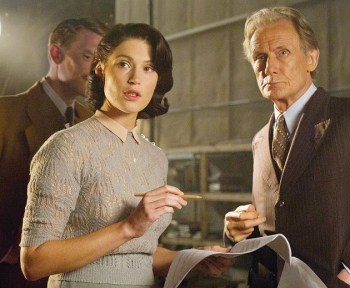 Both plots are there, but the movie can’t be “about” both of them. What to do? There are two early scenes that offer beginnings to this story. In the first, a [2] loutish husband sends his wife off to make enough money to pay the rent. In the second, a group of British moviegoers watches a truly terrible propaganda movie in a theater. If the last scene matches one or the other of those in the way a second parenthesis “matches” the first, then I would say that inclusio is in play and decide in favor of that theme.
 So let me tell you what the last scene means. Michael and Mary are lovers, which is just a little odd, since they just recently divorced and married other people. The people they married Robert (Aiden Gillen) for Mary and Lucy (Melora Walters) for Michael, were their lovers when they were married to each other.
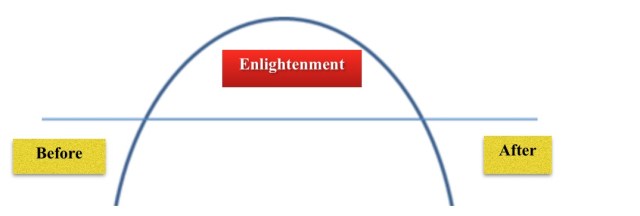
 Historically, Reason was contrasted with Authority, particularly the authority of the Catholic Church, as an alternative basis for society. I don’t think that is the best set of alternatives for today, but even that set is suggestive. Consider, for instance, that “God says everyone shall be paid enough to live on.” We might even throw in “Thou shalt not muzzle the ox that treads the grain. Deuteronomy 25:4 and several New Testament citations). We would say that this is ordering society on the basis of “revelation,” as the Church understands what God is commanding. That is not rational in any narrow sense of the term. [3] On the other hand, the market system isn’t rational either. “People will be paid whatever employers are forced to pay them to insure for themselves a skilled and stable supply of labor” is not rational. Even in an un-distorted market it would not be rational and no one thinks that the current market for labor is “un-distorted.”
 This meets the broader standard of “rationality” you will notice—the one that was met by saying that doing what the Church said God wanted you to do is “rational”—although it does not meet the narrower standard.
 am thinking of it as analogous to the death of the canary in the coal mine, which is a major event for the canary, but for the miners, it is only an indication that things are not safe. But we have decided, apparently, to vote with our hearts, not our heads. And we have decided not to elect someone who will do what the office requires, but instead to take actions that make us feel good. And we have decided that words and acts—anything, really—that shows how angry we are is all we will require of the person we choose to organize the domestic economy and to deploy the military. That is how the majority that chose Donald Trump was assembled.
 “Jews.” [2] The interviewer’s first question had to do with Franken’s home town, a suburb of Minneapolis called St. Louis Park. He observed that a lot of other famous and accomplished people came from that same little suburb and asked Franken what was special about it. “Jews,” said Franken. Great line; great timing; great delivery. The whole place went nuts. [3]
 I know what it costs me, for example, to walk by the expression “your analysis” pretending that I did not also hear it as “urinalysis.” Or to bypass “gray day eggs,”you know, the really large ones, which were apparently laid on overcast days. Or to ignore the liabilities of the Taipei personality, very common in Taiwan, I understand, but associated with vulnerability to heart attacks. I went to see a new doctor last week, an ENT and he hadn’t read Lord of the Rings and I had to just stuff all the Ent jokes for nearly an hour.
 And most of the time it doesn’t matter at all. It makes a better story that way and all the “facts” that really matter are still what they were. No harm, no foul, we say. And that may be true. In that telling.
 mind during this shower. Things like this have happened before, so I wasn’t startled by it and I didn’t rush out of the shower to write it down because I knew I would remember it, like Poincaré’s Conjecture, which came to him as he was getting on a bus and which he didn’t bother to write down until the end of the trip. [3]
 Raymond E. Brown, the Catholic scholar whose lectures and books are very likely the ultimate source for whatever it is that happened in my shower this morning, has a different image of this unity and multiplicity. He imagines that the life of Jesus is like a jewel, whose multifaceted beauty cannot really be fully appreciated until it is seen from all sides. One facet is featured as you look at it from this side; another facet when you look at it from another side. (An-other side, not as we often say today, “the” other side.)
 the significance of Jesus—is a little more aggressive than Brown’s notion of the multifaceted jewel. When, in Brown’s metaphor, you don’t appreciate all the facets, you miss part of the beauty. When, in Hess’s metaphor, you don’t use all the chair’s legs, you get dumped unceremoniously on the floor. So, this notion that came to me this morning is a notion with, as they say today, “an attitude.” It is a response to something.
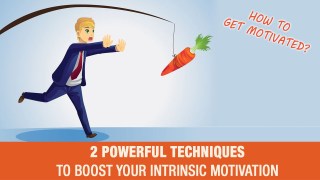 You would think that a rewarded action would be more likely to be repeated than an unrewarded action, and that is certainly true, but how on earth would we know whether an action was rewarded? In the neighborhood where I lived for a long time, there was an old man who walk around with rubber gloves and a plastic bag and picked up trash. It wasn’t his job. He wasn’t paid for it. So far as I know, he wasn’t thanked for it very often. Was his action rewarded?



 one thing from another. It’s a harvest metaphor, so if your mind runs to separating wheat from tares, you are thinking along some very old lines. Also you were raised reading the King James Bible.

