What to say to the climate change deniers of Texas and Florida

This is the prime moment for environmentalists who have been screaming their heads off about the urgency of the need to change our practices and begin to deal seriously with the global warming catastrophe. This is the time when they—“we” actually—have a chance to make a difference by doing and saying the right thing.

What is the right thing to say?

It is, “I’m so sorry about the catastrophe that has overtaken you. I will do everything I can to see to it that immediate help and long term funding ease the pain you and your family are experiencing.”

That’s it. Nothing more. There are more things we might want to say, but that is all that should be said to the citizens of Florida and Texas. There are other things that might be said to their representatives and to members of the executive branch who are responsible for enforcing laws that bear on environmental pollution. But to the citizens, “I’m so sorry….” is it.

EPA Direct Scott Pruitt has said that raising the question of climate change is “insensitive.” He is right. Now is not the time. On the other hand, whatever it is we do allow ourselves to say should set up the crucial policy discussions that will be needed later. [1]

The point I want to make is more emotion-centered than argument centered, however, so I am going to “make my case” so to speak, in a different way. I’m going to use some scenes from a book and a couple of movies that I think make the emotional case I want to make.

Spanglish

There is a scene in James L. Brooks’ film Spanglish where the grandmother, who gave up alcohol so she could deal with her daughter’s marital crisis successfully, manages, for once, to keep her daughter from saying more than she should.

What the daughter does say is this, ““I’m just so glad you’re back.”

That doesn’t seem like much, does it? But her husband has just spent the night at his climate 3restaurant with one of the most beautiful women in the world and the wife interrupted her affair long enough to notice. She hopes desperately that the husband has had an affair. She thinks that would somehow make it easier for the marriage to survive her affair. Here are the grandmother and the wife in urgent conversation. I’m not even going to bother to identify the parts. It begins when the husband comes home. We, as viewers, have already seen what it cost him to continue to be faithful to his wife.

Oh, God, it’s him. He’s gotta tell me everything\

No.

Oh, yes.

Do you know that right now, you are your own worst enemy?That you can’t trust one thought in your brain. Then trust me and only allow yourself to say one thing to him.
One thing. “I am so glad you’re back.”

But I have to know whether he touched her. And where he touched her and how he touched her..and how he felt afterwards,whether they held hands…when they left.

Just those words, if you want to have a prayer of coming out of this.

Jesus, do I need a little makeup?

You need a hose.But you don’t have the time. It’s fine that you look like that.It’s genuine. You can use genuine.

The husband walks in and finds a disheveled and anxious wife in the entryway. He knows what kind of conversation she wants. He doesn’t know she is capable of postponing it.

It’s late, Deborah.

I just wanted to say…

I can’t sleep upstairs with you.I just can’t for now.

“…I’m just so glad you’re back.”

That one line and no more. None of the other things she desperately wanted to say. There will be time for those later if she really needs to know. Spoiler alert: Nothing she will learn, later, will help her in the slightest. But at that time, saying that one thing and no more, preserves the possibility of more substantive conversations later.

And that’s why I want environmentalists to say to Floridians and Texans who are in great distress right now, “I’m so sorry about the catastrophe that has overtaken you. How can we help?” And no more.

Pruitt’s Strategy

What Pruitt actually wants is for there to be no discussion, ever, of climate change. That is why he has systematically eliminated any reference to climate change from the EPA website, according to the Washington Post. If he were more politically astute, I think he would bait environmentalists and try to get them to behave like the injured wife in the story. No caring. No compassion. No help. Just, “I told you so.”

climate 1And if we did that, the moment would go by when the argument can be put aside just for now and simple humanitarian assistance given—without a ruler across the knuckles for once. And the resentment of elite know-it-alls in exacerbated and Trumpism gets stronger. You can see why Pruitt would like that. You can see why I wouldn’t.

Very likely, Pruitt and I know the same thing about the resistance of Trump voters to having their knuckles whacked. The strongest part of the Trump coalition is white males with less than a college education who supported Trump by a jaw-dropping 67% to 28%., the largest of all the demographic splits among white voters. And what we know about this crucial voter class is that they have fierce resentment toward those who “disrespect them,” to use the current vernacular.

The resentment of “elites” is so strong that they would—and do—willingly vote against their own economic interests just to stick it to the elites. You can find that in half a dozen contemporary books and maybe a hundred articles. It’s just true. Finding a way to appreciate it is the issue for environmentalists.

Flight Behavior

Here’s one. Here is Dellarobia Turnbow, heroine of Barbara Kingsolver’s Flight Behavior. She is trying to explain the divide on climate change to a scientist who has come there to find out why the Monarch butterflies decided to winter in Tennessee this year.

Ovid says, “You think…it’s a territory divide? We have sorted ourselves as the calm, educated science believers and the scrappy, hotheaded climate deniers?”

Dellarobia replies, “I’d say the teams get picked, and then the beliefs get handed around.”
“Team camo,” she says, referring to [her husband] Cub’s team. “We get the right to bear arms and John Deere and the canning jars and tough love and taking care of our own.”

“The other side,” [she doesn’t even know what to call the other team but contemporary conservatives call them Limousine Liberals], “wears I don’t know what, something expensive. They get recycling and population control and lattés and as many second chances as anybody wants.” Dellarobia doesn’t have a name for the “other team,” but she knows they are rich (wear something expensive, lattés, second chances) and progressive (recycling and population control).

The great thing about this exchange, as it bears on my current difference of opinion with Scott Pruitt, is that Dellarobia is talking and Ovid is listening. Further, I think Dellarobia is right. The teams get picked and “then the beliefs get handed around.” The relevant beliefs at the moment have to do with whether the nation will mobilize behind these disaster-ridden areas. The beliefs Tomás Relegado wants to talk about now should be talked about later and with different people.

Needful Things

The other picture I want to give you comes from Fraser C. Heston’s film Needful Things. [2] In this scene, Danforth Keaton III, who is “disrespected” throughout the movie by being called “Buster,” shows up in the center of a crowd and he is strapped with explosives.

“Hi,” he says, imitating the AA protocol, “My name is Dan and I’m here to blow up your fucking town. You’re all going to pay big. Pay h-u-u-u-ge!

Sheriff Pangborn tries to defuse the moment.

“Be calm, folks. Don’t give him a reason.”

That turns out to be no more than a straight-line for Keaton.

“I got a reason, you shithead. I got a lifetime of reasons.”

I want to offer you that picture so we can look at it in detail. Keaton is just about to blow himself up. [3] And his pitch, the whole of his interest, is that “they” and going to pay. Is he really capable of looking past all the cost to himself just so that he can do something that will cost others? Of course he is. A large part of the conservative demographic votes in exactly that way.

The second point I would like to draw your attention to is that the grievances have so climate 4accumulated—“a lifetime of reasons”—that present events cannot be made the reason for deciding what to do. In that way too, I think Keaton illustrates the resentments of the right wing.

I’m with Sheriff Pangborn. Make the present moment the crucial moment. Don’t raise the larger questions at the time of crisis. Don’t try a self-interest argument with anyone who is so bent on causing others pain, that he is willing to undergo any amount of pain himself to do it.

Conclusion

So in place of argument, I want you to spend some time looking at these three pictures and thinking about what they mean. That is certainly what I have been doing. The second two, Flight Behavior and Needful Things, illustrate how thoroughly fixed the climate change denial is. It’s not a matter of data. It’s a matter of showing their contempt for the people who don’t have any respect for them.

The scene from Spanglish argues that what we need to say to the citizens—remember that I am hoping for another message to the congressmen—is only this: “We are so sorry. How can we help.” Period. Nothing more. My argument is that saying only that will help sustain, in the long run, the kinds of conversations Scott Pruitt wants to defer forever.

[1] And that is the concern of Tomás Regalado, the Republican mayor of Miami.“This is the time to talk about climate change. This is the time that the president and the E.P.A. and whoever makes decisions needs to talk about climate change,” Mr. Regalado told the Miami Herald. “If this isn’t climate change, I don’t know what is. This is a truly, truly poster child for what is to come.”
[2] Based on Stephen King ’s book of the same title.
[3] If I had already sold my soul to the Devil, as Keaton has, I’m not sure I would be all that eager to die, but there is no reasoning with him at this point and that is, in fact, the point I want to make.

Posted in Communication, Political Psychology, Politics, Uncategorized | Tagged , , , , , , | Leave a comment

Two Systems of Forgiveness

Do you know when you have effectively forgiven someone who has offended you or against whom you hold a grievance? Not necessarily.

I am going to describe two systems of “grievance-processing” here. The most important MSDMIBE EC006thing I want to say is that if there are indeed two (or more) and if they operate independently, it is crucially important that we know that. Not knowing it makes us all look foolish.

I want to argue that there are two systems and that they work differently and are seen differently by the participants and others. [2] This little clip of dialogue is from Robert Redford’s film, The Milagro Beanfield War. It is Ruby’s fault that Charlie spent the night in jail. Charlie has spend his jail time polishing up his complaint. Ruby, who has spent the time collecting money to bail him out, thinks the grievance should have dissipated some time during the night.

Ruby: (Sarcastically): “Thank you, Ruby, for bailing me out.

Charlie: I’d be a hell of a lot more grateful if you hadn’t gotten me in in the first place. Or at least if you had bailed me out sooner.

Ruby: I had no cash. I had to wait for the bank to open.

Charlie: Oh, I see. So I have no reason to be sore.

Ruby: No, you had all night to get over it.

Do grievances just “go away,” do you think, or does something have to be done to fix them? The answer given to that question indicates which of two understandings of forgiveness seems right and normal to you. I’m going to call one system “forensic” because of the easy analogies to courtroom practice. I’m going to call the second “relational” for reasons that aren’t as easy to describe. After a brief description of each, I will launch into my thesis.

The forensic and relational systems

The judicial or forensic system is easily understood by everyone. The agreement that it ought to be applied to people is not as broad as the understanding. There is an offense of some sort. The state has them all defined and most of time people know when they have violated a law. You are charged with something by impartial agents. [3] You are convicted by other impartial agents. You ‘serve your time’—that’s the appealingly broad expression I am going to use to refer, in this system, to jail time—under the watchful eyes of yet other uninvolved agents. And finally, you are excused by someone, speaking for the state in all its interests, and pronounced “free.” You have, in the much too often used expression,”paid your debt to society” and are now permitted to live among your fellows on the same terms. That’s the judicial model; familiar isn’t it?

The Roman Catholic church, as even Protestants know from all the movies, follows aforgiveness 6 similarly formal system. You confess your sins to the priest, [4] he prescribes some act of penance (and possibly of restitution—the movies aren’t as clear about that) and then pronounces, on God’s behalf, that you are forgiven and restored to full fellowship in the church. I hope that account isn’t too far wrong; I am trying only to illustrate a non-state version of the judicial system.

So everybody is with me so far.

But, I am arguing, there is another system. It may be is widespread use—I suspect it is—but it isn’t talked about. Or if it is talked about, the elements of the system are called by other names. This is an informal or, as I said above, “relational” system.

In this system, you know that there has been an offense when someone tells you that he or she is offended and/or begins to behave the way people do when they are offended. These would be offenses against custom or some notion of “good taste” rather than against a law.

Many times, good practice argues that the offender—the person who has been informed that he has offended—apologize. [5] The offender need not take the offense seriously—he may not yet know just what it was—but he is determined to take the offended person seriously and to deal with the state of his or her feelings.

Common practice diverges at this point. Among some people, it is absolutely necessary that you pronounce the words of forgiveness, whether you have forgiven the offender or not. Among others, it is possible to “receive” the apology and for the offended person to confess that he or she is not yet able to forgive, but that he or she hopes to be able to in the future. The implication of this formula is that there is an intention to forgive, as there might be an intention to get in shape, but it is going to take work to get there. By using this formulation, the person implies that he or she intends to do that work and to arrive at the requested forgiveness.

Then, odd as it may seem, the next step is the resumption of the relationship in some form. It may be a crimped and distant form; it may be a tense and wary form; it may be an apparent resumption of the old relationship—but only in public settings where the offended person and the offender happen to be together. [6]

And then, finally, the relationship in its old undamaged form is resumed and there may even be a period of “better than normal”—a compensatory increase in warmth and affection, as if to call attention to the return to normality.

There are two

That was the easy part. Now let’s get to work. If there is only one system, it is the forensic system. There is no way for people to live in ignorance of the forensic system, since it surrounds them in society, so it is natural to apply it to relationships between persons. I’m not arguing that it is a good thing to do; I am arguing that it is common and that it is natural.

forgiveness 7If there is only one system, then the behaviors of the other person will be evaluated using the norms of that system. This is the step where I lose people, so let’s imagine that a well-known rugby player, Jonah Lomu, for instance, is referred to as the dirtiest basketball player in the league. I know that makes it seem silly, but if you really believe that the only game there is is basketball and if, with that in mind, you watch Lomu doing this, you will be driven to that kind of criticism.

But if there are two (or more) kinds, then you evaluate by using the standards appropriate to that kind; you judge the behavior within its own system of standards. So criticizing a practitioner of the forensic style as “heartless” or “cold” or (even worse, as “linear”) is the most natural thing in the world. If there is only one system and it is the relational system, then the steps of the forensic model seems as “wrong” as Jonah Lomu’s “basketball moves.” Criticizing a practitioner of the relational style as unpredictable or cruel or whimsical is the most natural thing in the world If there is only one style and it is the forensic style, then the person who ignores or denies all the well-known markers of forgiveness and restoration is a terrible person.

One and a half solutions [7]

The first solution is knowing that there are two systems. That makes it possible to assess the characteristic behaviors of each style by the norms appropriate to them. A practitioner of the relational style, like Ruby in the opening dialogue, will be judged as better than or worse than other practitioners of that style. A practitioner of the forensic style, like Charlie in the opening dialogue, will be judged as better or worse than others like himself. Fine.

So now everyone understands everything. Now we can get to the hard part where the two styles are mixed. Charlie, or someone like him, is emotionally abusive to a friend and then “fixes” it with a heartless “request” for formal forgiveness. He has done the right thing and is dumbfounded that the friend is furious. Ruby, or someone like her, is emotionally affirming, a way of signaling that the period defined by the offense is over. No offense has been recognized, no apology has been given, but clearly, the relationship is back to normal so far as Ruby is concerned. She is dumbfounded that Charlie continues to hang on to a grievance when he should have gotten over it by now.

The half solution involves how one such person can deal with another. There is always empathy, of course. I know you to be forensic in style so I model my asking for or granting forgiveness in the style I know you will understand. I know you to be relational in style, so I model the restoration of the relationship—with no reference to “offenses” or “forgiveness”—in a style I know you will understand.

I think that “solution” is clear, but I am not sure it is good. I have two concerns. One is forgiveness 9that it is really hard to do. Picture this. A man finds that his wife has been sleeping around in the neighborhood with his friends. What he wants from her is some sign of remorse and a good faith promise that she won’t do it again. What he gets after each episode is…oh, “enhanced affection” from his wife. Whatever it is that he likes best about the relationship, there if more of it for him for awhile. This is perfectly in keeping with his wife’s understanding that what she did was emotionally hurtful to her husband and now she is making up for it by being emotionally receptive to him. There are no “offenses” here; I was mean so now I am being nice.

Picture this. A wife finds out that her husband has been sleeping around the neighborhood with her friends. She confronts him and he admits that he has done wrong. He apologizes and she forgives him, but for reasons she cannot quite grasp, the relationship never returns to full power. The offense as been dealt with completely, so far as formal steps will allow, but he is still distant and easily offended and she feels like “it” isn’t over yet.

I have great sympathy for this this husband and this wife. They have already received what I have to give them, which is understanding. She understands that he is a forensic person; he understands that she is a relational person. But when it comes to healing the rift between them, that understanding just doesn’t get the job done.

So I will leave them with my sympathy and no more. I don’t know what else to give them. There is one more theoretical step, however, and I want to tuck that in before I punch out. It is that each system can also be judged by whether it works, not just by whether it is familiar.

I, as a forensic style person, am wasting my time by complaining about the practices of relational friends IF what they do, actually works. There are, as Rudyard Kipling says, “four and twenty ways/of making tribal lays/ and every single one of them is right.” If it works, it works. What criticism can there be of a sequence of steps that does, in fact, produce genuine reconciliation and restoration of relationship?

Unless you can’t do it, yourself. You can approve of it. You can suspend any criticism of it. But you can’t go so far as to internalize its benefits as the two empaths in my example did. You are stuck. Good luck. Don’t forget to write.

[1] Note the two formulations. You may hold a grievance, for reasons of your own, against someone who has not offended you. There is no “crime” here, but someone is nevertheless being charged with it. Or there may be a crime and the charge is just the first of many necessary steps in dealing with it.
[2] And written about it differently by counseling psychologists and perhaps even by theologians. But every treatment of this matter I have seen begins and ends within the same system. That may be the source of some of our misunderstandings.
[3] I mean only that there is no need for them to have been personally offended by what you did. You didn’t do it to them. They are impartial in that sense.
[4] In Ireland last May, we visited a Catholic church where the confessional was called forgiveness 1“the reconciliation room.” I liked that It had never occurred to me before that you could name the room after the outcome, rather that after the process.
[5] I am thinking of a real apology here, not the non-apology apologies that have become so common in political life. “I’m sorry if what I did offended you.” Really? You are conditionally contrite, waiting only until better data arrive? I don’ think so.
[6] This is very common in family settings where there are so many reasons to be together other than the choice of the two people to be together. The two might be taking turns in schlepping the kids. They are not “together” in the old sense, but some face has to be put on the relationship anyway.
[7] I own that subtitle to a book title. The movie, Their Finest, draws on Winston Churchill’s famous speech. “Let us therefore brace ourselves to our duties,” said the Prime Minister, “and so bear ourselves that, if the British Empire and its Commonwealth last for a thousand years, men will still say, ‘This was their finest hour’.” The book on which the movie was based was about propaganda films for World War II and it was called Their Finest Hour and a Half.


Posted in Communication, Living My Life, ways of knowing, Words | Tagged , , , , | 1 Comment

The Call of Moses as a Fish Story

Yup. Moses. [1] Not Jonah. [2] Our lectionary calls for the reading, at the September 3 service, of the story of the call of Moses. The sermon was actually based on a parallel scripture in Matthew, but I was completely taken by the reading from Exodus. I heard it as a large and simple story, almost a plot outline. It sounded preposterous and the more preposterous it sounded, the better I liked it. Today, I’d like to show you the overall arc of that plot outline and a few pictures that came to mind. I am thinking of the pictures as Postcards from the Edge and I am thinking today only of sharing the enjoyment they gave me.

To begin with, let’s imagine that the version of Exodus 3 we now have was composed in Babylon in the 6th Century B. C. for the needs of the Israelite exile community. Maybe some of that is true; maybe all of it. And let’s specify a particular author, so it will be easier to attribute the intentions of an author to him. I’m thinking of a name like Joseph bar Jonah. [3]

So Joseph writes up the story of the delivery of the Hebrew people from slavery in the land of Israel and since they are slaves [4] in Babylon at the time, there is no reason for him to get all subtle about it.

The Burning Bush

The bush appears to be on fire, but it is not being consumed by the fire. Moses, the fish story 1nobleman turned shepherd, had seen a lot of bushes on fire, but never one like this. It struck him as odd and he went to see it on the grounds that it was a natural oddity. I was an anomaly. It was The Anomaly.

God waited to see whether Moses would go check out the bush. God didn’t know and had to wait, like Joseph bar Jonah’s readers, to find out. When Moses did turn aside, the first job was to change this encounter from a simple natural anomaly to a profound spiritual interaction. And that needed to happen quickly because Moses was about to get the job offer of his life and the whole thing was completely implausible.

God’s Name

Joseph bar Jonah didn’t need to convince his readers of the power of a name. A name in that society was like the combination to the safe in our society or access to the passwords or authority to write checks on someone else’s account. Knowing a name was a big deal.

Now…Moses didn’t know God’s name. Nor did the Israelites, to whom it would matter, since this God was their ticket out of slavery. [5] Nor did the Pharoah know the name of this god. It wasn’t familiar to him even when he was told what it was and, didn’t see any reason why he should consider it to have authority.

And the name God gives to Moses is completely impenetrable. I have been told by people who know a great deal more Hebrew than I do that the name God gave to Moses can be rendered “I am who I am” or “I will do what I will do.” [6] Those can be used as if they were a name, Yahweh, but knowing that name does not entail having a power over that being.

On the way to using the name Yahweh (or just YHWH), God identifies Himself historically. He says, “I am the God of Abraham, Isaac, and Jacob.” We don’t know just what that meant to Moses, with his high-grade Egyptian education. Bar Jonah tells us that Moses’s mother and father were Levites. That means that he is in direct descent from Levi, the son of Jacob. So “I am the God of ….Jacob” means I am the God of your family in particular, as well as all the other families.

Now the children of Jacob, i.e. the children of Israel, had been in Egypt for about 400 years by that time [7], so “direct descendant” didn’t mean anything very obvious, even in a tight clan society. And that’s why the same claim didn’t move the elders of the Israelites in Egypt.

So…this is the fish story part…Moses was sent by a God he didn’t know to proclaim imminent release of the Israelites on behalf of a God they didn’t know either and all this was to be accomplished by persuading a polytheistic ruler that he should honor the wishes of a god he had never heard of and had no reason to obey. It is a lose, lose, lose proposition.

God’s Deeds

fish story 2But as I said, the name God gave to Moses can be understood as “I will do what I will do” and the doing accomplished things that the name could not. Moses was scarcely willing to believe in the project himself, so God gave him three tricks to do. One has to do with a walking stick that turns into a snake and then back; one with a hand that is terribly diseased and then healthy; and one about water that turns into blood when you pour it out. Moses can, apparently, picture being persuasive in Egypt if he has these tricks in his repertoire. They certainly work for the elders of Israel the same way they worked for Moses. They didn’t believe in the name, but they did believe in the deeds.

That must have stung bar Joseph’s readers just a little, because they had the name. But when the army of the foreigners came to haul them away, there were no deeds. Maybe bar Joseph is trying to plant the question, “So…where are the deeds?”

And the Pharoah, as I said, saw no need to honor the extravagant requests of an unheard of deity, but Moses’s tricks were more powerful than those of his own mages. That’s something to think about. And then God brought awful plagues upon the land and the people, just the plagues Moses predicted. So this unheard of God is a god of deeds and He can make you an offer you can’t refuse.

[1] “An extravagant or incredible story,” according to my online Merriam Webster Dictionary, first used in this sense in 1819.
[2] A “great fish” according to the author of Jonah. A “whale” according to the Matthean Jesus, using one of the translations of the Greek, kētos, which could be translated “whale, sea monster, or huge fish.” I am a fan of the translation “sea monster,”myself. It dramatizes all the right things and runs no risk at all of pretending to be scientific.
[3] The parallels with Jesus’s disciple Simon bar Jonah are intentional, though hardly necessary. If you’re going to tell a fish story, you might as well have fun with it.
[4] Not in the same sense as in Egypt, but they couldn’t go home and they couldn’t be the set apart nation, Israel, in Babylon—especially since the site of the Temple was in Jerusalem.
[5] And, according to Genesis 6:3, that is not the name God had used in His dealings with the Israelites, but rather El Shaddai. You see what I mean about this name thing.
[6] And since they are the same verb, they can be mixed and matched. So a scholar could, on good linguistic grounds, propose that God has told Moses that His name was “I am what I will do” or even “I will do what I am.” Either one can be supported by appeals to the history of Israel.
[7] Genesis 15:13. I’m not making a historical argument here, just passing along bar Jonah’s study notes.


Posted in Biblical Studies | Tagged , , , | Leave a comment

Garbage Time

Yesterday I attended a meeting at which a lot of appropriate things were said.  After that, the meeting deteriorated into a free for all of bad questions and posturing. It is that latter part of the meeting that I am calling garbage time.

I’d like to speculate a little about how to understand meetings like these, and especially the contribution that the notion of garbage time brings to that understanding. Then I’d like to offer an abrupt change of perspective that was given to me for free by Barbara Tyler. [1]

How the idea of “Garbage Time” helps

It gives you a way to think about the good part of the meeting. There is a purpose to be achieved, let’s say. You are here to describe a program and I am here to understand the program. We have a common interest. That’s the part of the meeting that is like the game.

garbage 2Real issues are at stake. One team is going to win and another will lose. I want to be on the winning team so I subordinate any other interest I might have to the team’s needs. Ordinarily, for instance, I’d rather score than rebound, but winning tonight is going to require more rebounding, so I pass up my shot and get in position for the rebound. This is so clearly what the team needs that I might not even be conscious that I am doing it. But if you see me doing it, you will know how to understand it.

But when that part of the game is over—we are so far ahead that we couldn’t really lose or so far behind that we couldn’t really win—the reason for all that discipline is over as well. Now I can take the shots I had wanted to take and maybe some shots I shouldn’t ever take. I take them now. It’s garbage time.

I think that participants at a public meeting make judgments just like that one. There is a time when the success of the meeting is up for grabs. We may succeed if we focus carefully and we will surely lose if we allow our discipline to lapse and our individual interests to take precedence. So we keep ourselves from doing the things that will cause us to fail. Instead, we do the things that the meeting requires. That’s how we all win at a public meeting. We keep the benefits high and the costs low.

The notion of garbage time helps to clarify, by contrast, the real game part of the meeting is and when it is no longer “a real meeting;” it is only garbage time. So these function as indicators. When we see these things starting to happen, we conclude that the real meeting is over. In a game, inappropriate shots and lax defense and missed assignments are all indicators we can rely on. What can we rely on to help us identify garbage time in a public meeting. [2]

I think examples might be more useful than categories here. I have two in mind.

Let’s say that I am a resident attending the meeting and that I was, in my career, the master of some skill that bears on this meeting. Accounting or programming or systems analysis. Because it is garbage time, I spend a good deal of time informing the other residents of my skills and I imply that if there is anything wrong with the information being presented, I will find it.

Is that an indicator that it is garbage time? Probably.  Going on and on about my skills seems needlessly self-aggrandizing to me but what we really need to know is whether this account would have been withheld earlier in the meeting—when the game was still in doubt. But if it is true—I am postulating that it is true for the purposes of this example—that she would ordinarily have disciplined herself to the purposes of the meeting and would not have made all those personal claims, then the fact that she did make the claims could be taken as an indicator that the “real contest” part of the meeting had ended and that garbage time had begun. And that is what we are looking for; we are looking for indicators of the transition.

Or, for our second example, let’s say that some explanation is made about changes in the garbage 3cost of parking. A resident is recognized and goes on for awhile about how rich our area is in public transit and how, as a result, there is very little need for a resident to have a car at all.  That’s the real way to deal with increases in parking fees!. Let’s imagine that this resident is well-known for his pro-mass transit views and nearly always expresses those views in private or small group conversations. It seems odd to us that this familiar pitch would be made again in a public meeting and that the time of the meeting would be taken up by what is, essentially, a public service announcement. But if it is true that this resident would not have allowed himself to make this pitch in a public meeting during “game time,” then his willingness to allow it now is yet another indicator that we have arrived at garbage time.

When things like that start happening, it represents the judgment of the attendees that the useful part of the meeting is over and the willingness to exercise discipline on behalf of the common goals begins to decline markedly. And of course, since the value of the meeting as a public meeting declines rapidly when people begin to use the common time as a time of personal grievances or private aggrandizement. So the more garbage there is, the more garbage there will be.

Another Perspective from the Tyler Coffee Klatch

All of the ideas so far begin with the public meeting. I have always begun with the meeting itself. We are having a meeting because there is a goal to be achieved by meeting together. The meeting is the primary thing and although it is true that the proceedings tend to get frayed toward the end, we can chalk those off to fatigue or frustration.

But Barbara Tyler said that she thinks some people go to the meeting specifically for the garbage time. That struck me immediately as quite likely. But I am raising it here because it is an analytical game changer. It starts at the other end of the process. It begins with the reasons to go to the meeting, not with the purpose of the meeting. I was really struck by that. I’m still excited by it.  It’s like discovering a new species.

In this view, people go to the meeting with no interest in the announced topic at all, but with the confident expectation that at the end of whatever focused consideration there is, there will be a time for the public airing of private grievances and the public posturing about past accomplishments and the public chastisement of anyone who has run afoul of that resident in the past. And the time of the meeting—garbage time—when those kinds of contributions are common is the reason for attending the meeting at all.

garbage 1Of course, I don’t want to argue that there are, in fact, people who think of the meetings that way. I don’t know whether there are or not. I don’t think I know anyone about whom I would say that—that they attend meetings just waiting for garbage time. On the other hand, this is a way of looking at the meeting that starts at a different place entirely. It understands the meeting as a way for individuals to meet their individual needs in public and that way of understanding the value of the meeting had never occurred to me and likely never would have.

[1] Ordinarily, I take good ideas wherever I find them and just tuck them into the narrative, but this one came as part of what I called Barbara’s Coffee Klatch, when I wrote about that gathering on our first anniversary here, so I’ll just go ahead and own up to where I got it.
[2] It isn’t anger, by the way. Sometimes, it seems that the presenters are not playing their roles well. They are withholding information the meeting needs, or demeaning the askers of inconvenient questions or pretending to “answer” a question by repeating the same non-answer that has been given several times before. I have seen groups get really angry at being treated that way. The temperature goes up and the volume goes up, but this is a natural part of the deliberations and no one leaves because of it. In fact, the agitation might have some entertainment value.

Posted in Political Psychology | Tagged , , , | Leave a comment

The Descent into Tribalism

David Brooks wrote a really good overview of the Trump and Comey controversy on June 9. I read it and valued it and filed it in my mind. But one small clip from that article has continued to float up to my consciousness and I’d like to give it further thought today.

Comey emerged as a superb institutionalist, a man who believes we are a nation of laws. Trump emerged as a tribalist… who simply cannot understand the way modern government works.

I like the contrast between institutionalism and tribalism. There is no way to have what has often been called “a government of laws and not of men” without people who are committed to making institutions work to the benefit of the public. Tribalism is another kind of thing entirely.

I don’t know exactly what Brooks meant by tribalism, but I know where tribalism goes if it is not contained and I don’t want to go there. Let’s consider President Trump’s pardon of Sheriff Joe Arpaio of Maricopa County, Arizona as a case in point. Why did he do it and what does it mean?

tribalism 2Sheriff Arpaio was convicted of “flagrant defiance of another judge’s orders in a long-running case over the former Maricopa County sheriff’s targeting of Latinos in Arizona,” according to Joan Biskupic, a CNN court reporter. The court said that Arpaio was violating the constitutional rights of Arizona citizens and he said he didn’t care and wasn’t going to quit. Hence the arrest and conviction.

By no coincidence at all, a big part of President Trump’s campaign was strongly anti-immigrant. He may have felt very much the way Sheriff Arpaio felt and he may have wanted to communicate his support for Arpaio to his constituents. I think a presidential tweet would have accomplished that or a “Sorry to hear about your conviction” greeting card. Trump issued a pardon.  Why did he do that?

Here’s a possibility. Trump used the resources of the office of President to rescue another member of his tribe. It is the common tribal affiliation that would matter in this way of reading it. It is not that Arpaio was tried and convicted. It is that he was tried and convicted for doing things Trump approves of or at least that he is confident his constituents approve of. Clearly, that brings a new standard to light. It is not whether you have violated the law or not, according to this new standard, it is whether you have done so “in a good cause.” If harassing U. S. citizens on the grounds that they look Hispanic is “a good cause,” then it doesn’t matter that it is against the law. You can be charged for it and tried for it and convicted for it and you really don’t care because there is always the presidential pardon to rely on.

You have to wonder whether that would cover treason “in a good cause” too. Would it cover the assassination of doctors who perform abortions? Would it cover the use of attack dogs and fire hoses against black protesters in the South? If the issue is tribal—a matter of the cause and not of the law—is there any way to tell what is permissible anymore?

I don’t see how.

The legal perspective is that it is illegal to murder people. It is illegal to murder them in a good cause and also in a bad cause and also on behalf of no cause at all. It is the means—murder—that is wrong and the defense that you did it in a good cause does not make it right. Murdering “in a good cause” might be very popular politically, but it is still wrong and it is still illegal. That is the perspective that “a government of laws and not of men” brings to the table.

If we are headed for legal immunity for the people Trump likes, how far are we from thetribalism 1 Hatfields and the McCoys. [1] On the one side of this divide would be the laws of the land and the men and women charged with seeing to it that it is obeyed. On the other would be the people who are immune from legal prosecution for anything they do on behalf of their tribe. It would mean looking at Eliot Ness and Al Capone as the heads of two tribes fighting for supremacy in Chicago. The fact that one represented the law and the other a criminal organization is not brought to light in this conflict of tribes perspective.

I don’t want to go there.

I have been careful in this essay not to try to say what tribalism is—or institutionalism either—but where this emphasis on tribe could take us. It might be, for instance, that President Trump doesn’t care as much as he seems to about Sheriff Arpaio and a great deal more than he seems to about Robert Mueller. Mark Joseph Stern wrote in Slate.com that Trump may be sending a signal to the witnesses Special Prosecutor Robert Mueller will be calling in his investigation of possible collusion between Russia and the Trump campaign.

Comey, the man Brooks referred to as “a superb institutionalist” was fired by President Trump, apparently for not being loyal enough. Trump wanted to make sure The FBI director was “on the team”—was part of the tribe—and Comey wouldn’t make that commitment. Special Counsel Mueller was appointed to look into the matter and given that he has very broad powers to collect information and to subpoena witnesses, he could very well make himself a nuisance.

And he does not appear to have a tribal affiliation. And he will be subpoenaing people who do have a tribal affiliation. Are these members of Trump’s tribe going to be required by law to tell the truth in public? Will they have to admit to having broken the law? Will they break the law by refusing to admit that they broke the law?

To all of these speculations, the tribal answer is, “Don’t worry, be happy.” You can do what you need to do and say what you need to say because the pardon that is wielded by the head of your tribe is going to be available to you no matter what. Or, as one writer put it, “The message of the Arpaio pardon to the Mueller witnesses is, “I’ve got your back.”

In these circumstances, a “crime” against the law is just a speed bump provided that it was done on behalf of the tribe. A government of men, you see, and not a government of laws after all.

tribalism 3I know that is where tribalism goes. I don’t know if we are taking large steps in that direction. It looks like it. People who stand up for the integrity of the law will be accused as being members of “the other tribe.” The Tribe of Anti-Trump. That is, after wall, what Capone said to the members of his organization who were not Anti-Ness enough. It is what members of the McCoy Clan said to family members who were not Anti-Hatfield enough. It is what President Nixon meant when he urged the people of his administration to “take one for the team” and go to jail. But he didn’t pardon them.

And Trump should not either.

[1] This famous feud involved two rural families on the West Virginia-Kentucky border in the years between 1863 and 1891. Wikipedia has a great line about it: “The feud has entered the American folklore lexicon as a metonym for any bitterly feuding rival parties.”

Posted in Politics | Tagged , , , , | Leave a comment

The Incredible Trump

“Caught in the blast of gamma radiation, brilliant scientist Bruce Banner is cursed to transform in times of stress into the living engine of destruction known as THE INCREDIBLE HULK. “

With a start like that, you have every reason to think that this essay is either a parody or a rant. It is neither. Except for the assist from Marvel Comics in establishing the basic metaphor, this is a fairly mild-mannered analysis. Let’s see how it goes.

What does “incredible” mean?

And let’s begin with “incredible.” The “incredible” in Incredible Trump means that youmechanism 4 can’t believe what he says. He is not credible. That’s the old basic meaning, but it isn’t the meaning that is reflected most in current usage.

The “incredible” in current usage means that the truth is so amazing that you will be tempted not to believe it (“credit” it) at all. And that is what it means in the Incredible Hulk; it means that the story of his prowess is so fantastic [1] that it is hard to believe. Same word. Different meanings entirely.

Why is Trump incredible?

If you imagine, as I am, for the purposes of this essay, that there is a “real Donald Trump,” then I will say that he is a Bruce Banner-like character. Eats lunch, sits and talks to people, plays golf, makes decisions. But then he “goes somewhere else” and “he”—IT, by then—is not Bruce Banner any longer

As the Hulk, he does things that are terribly destructive, but when this fit is over, he is Bruce Banner again and he is overcome with guilt and remorse. I retain the “guilt and remorse” element to keep the parallel with Banner.  I realize there has been no actual evidence that Trump has had these feelings himself.  The analogy I would like to play with is that when Trump hits the criterion condition—the blurb says “times of stress”—he “is transformed” [2] and then he “is” IT.

mechanism 3Let’s look at what that boundary condition means because as much fun as it is to have an enormous monster with great pecs and a bad disposition, it is less fun to have a Chief Executive who frequently leaves the common human condition and does “incredible things.”

What kinds of events have counted as “stress” so far? I can think of two broad categories. One is failure; the other is ridicule.

Now most of the damage so far has been done in tweets [3] so let’s add the tweeting environment to the “stress condition.” And let’s look at some examples just to see if this makes any sense. “The media” say that there weren’t many people attending Trump’s inauguration. This is a way of belittling him, one of the boundary conditions, and late at night, he read this and tweets a false crowd estimate and an attack on all the ordinary estimates. This is the act of an IT. It denies truths that can be shown to be true; it attacks people whose cooperation will be crucial to governing.

The Trump leaves a trail of destruction behind him, but at the time, there is nothing else he could have done. That one point is the principal value of the Hulk metaphor. He can’t help it. He is transformed. Note the passive form of the verb.

When and Why?

“Times of stress” says the clip from the internet on which I base my entire grasp of the Hulk. I think for Trump, the analogous conditions are failure and disapproval. Let’s explore those.

hulk 5President Trump has not had a major legislative victory yet and probably won’t ever have one because his inability to win the early battles causes him to declare war on his teammates. Trump needs to be seen as a winner. That means that high profile programs need to be passed by the Congress. But when the early votes fail, he experiences “signs of stress” and begins to attack his team members. Trump has major conflicts going on now with Paul Ryan, the Speaker of the House and with Mitch McConnell, the majority leader of the Senate.

No one—Trump included—thinks that going to war with the two most important congressional allies you could have, will make passing he program any easier. It is not a tactic for Trump. It is a fit. He changes into the Hulk and becomes “a living engine of destruction.” Analysts who try to see what sense it makes as a tactic us using a bankrupt metaphor.

I’m going to stay with this, so you might just as well settle in. The point I am trying to make with this metaphor is that this is not a choice Trump makes. Watch Bruce Banner turning into the Hulk and ask yourself at what point does Banner decide this is a good idea. He does not. The stress has the same effect on him that the failure of a high-profile commitment has on Trump. He become “IT” and starts tweeting.

The second trigger is disapproval. Trump despises the people who criticize him. He has no regard for the criticism itself. So, for instance, when he was criticized for his late and tepid “condemnation” of the white racist violence in Charlottesville, he turned on the critics. Disapproval of an action IS disapproval of him. It is personal, not programmatic. Disapproval raises the stress levels and you know what happens when the stress levels get too high. A change takes place; the intemperate violence begins, reprisals are threatened and carried out. And—again—this is not instrumental. It is not a means to an end. It is the inevitable behavior of that kind of person—not the Banner person, but the Hulk person.

What to do?

The administration has no ready solution for this radical personalization of the processes of government. It will continue to be very difficult for President Trump to fill the empty positions in his administration because people come there to administer programs. This erratic personalization of issues is not consistent with the formulation and the pursuit of administrative goals, so people will not want to serve.

The Republican party has no ready solution either. Throwing their lot in with President Trump means not only abandoning traditional Republican values, but abandoning values at all. Values are long lasting things, so they don’t adapt readily to Hulkish outbursts.

And the Constitution has no ready solution. The 25th Amendment imagines ways to cope with “presidential disability” but in no circumstances has that been imagined as erratic and recurring. Woodrow Wilson faded at the end of his presidency and other people, notably his wife Edith, stepped up to prevent constitutional crisis. Nancy Reagan played a very large role at the end of the Reagan presidency. That’s not what we are looking at here.

There are circumstances in which some body to be named by the Congress or the presently constituted Cabinet, could act to remove the President—substituting their judgment of his “fitness” for his own—but all the arrangements imagine that there will be a “condition,” not that there will be recurrent episodes of “being transformed” into an “engine of destruction.”

This is, in fact a new kind of thing. And what I like best about the Hulk metaphor is the way is discards explanations that would otherwise be futile. What did he mean? What is he trying to do? Does he have a goal in mind? What could it possibly be? All those go away. Another stress-fueled episode has occurred and he has been transformed and will do, under those conditions, whatever he chooses.

It’s a new kind of issue, I think, and this Hulk metaphor offers some clarity, even though it does not offer hope.

[1] This is another example of the escalation of adjectives so common in the English in our time. It is common to say that something was “fantastic,” meaning that it was very good. That draws our attention away from the more focused meaning, “having the characteristics of a fantasy.” Fantasies, of course, are not true, however nice they might be. You could play both sides of that, just for the fun of it, if you wanted to. The announcement is made that President Trump is going to shut down the government if he doesn’t get funding for the Wall. An excited conservative might rejoice, “That’s fantastic!” to which a liberal might reply, “Oh yes. That’s exactly what it is.”
[2] All the blurbs use the form “transforms,” as “he transforms into the monster.” But that blurs the nature of the transaction. It is important to say that he is transformed—use the passive voice—and is therefore powerless to affect it.
[3] I am considering only the damage to the presidency. Much greater damage is being done by putting in charge of federal agencies people who are opposed to the lawful pursuit of the agency mission.

Posted in Political Psychology, Politics | Tagged , , , , | Leave a comment

Holladay Park Plaza, Year 1

A year ago today, Bette and I moved into Holladay Park Plaza and I want to tell you a little about it. For me, there is always the question of what to call today. I have been celebrating the various month marks as we have gone along, so we celebrated our tetramensiversary (four) and our sesamensiversary (seven) and our decamensiversary (ten) “Anniversary” is the handy word for today, but if I wanted to stay with the monthly count, I think I would choose dodecamensiversary as the right word for today. That ought to mean “12 months.”

Bette and I did a lot of planning in anticipation of our move here. I wrote three sets of
essays about the process, so it wasn’t something we did without a good deal of thought. On the other hand, there isn’t really any way to know what it is like to live here apart from living here and we have now done a year’s worth of that.  We live in a high-rise part of HPP.  This sketch shows the East Building, which is being built right across the street from us and which we have watched since they first broke ground.  Beautiful!

I think my one line summary is that living here is easier to do than I thought and harder to Year 1describe than I thought.

Let me deal with the thinking part first. I have written a fair amount about the major aspects of HPP in preparation for some first anniversary essays. I was thinking of following one of my favorite acronyms, PERSIA, and telling you about the political, economic, religious, social, intellectual, and aesthetic aspects of our new home. Having re-read what I wrote, I realize I simply don’t understand the experience. I thought it was better than I learn that be reading my own writing than to post it and have you all tell me.  So…maybe next year.

Instead, I’d like to celebrate today by painting a picture or so and telling a story or so.

There are too many interesting people here for us to have met them all in our first year. The most common get to know you setting is dinner and the most common arrangement is to reserve a table with the new people you would like to get to know. We’ve been doing that for a year now and we haven’t gotten around and besides that, some new people have become residents since we have.

Bette and I have joined several kinds of activities and when you start an activity, you pick up a new kind of resident—a colleague. A colleague isn’t just a friend; a colleague is someone who is trying to get done the same things you are.  Every ongoing commitment, whether it is the library, in Bette’s case, or the Plaza Singers in mine, gives you a new set of people who care about what you care about.

In closing this brief reflection off, I’d like to paint two scenes for you to think about. In the lobby outside the dining room, there is a little alcove with chairs set around. There is also a very advanced one-cup-at-a-time coffee maker, so people wander in and get a cup of coffee and stay to talk. It’s like a cracker barrel at an old country store.

Early in the morning, there is a group I call Barbara’s Coffee Klatch, after Barbara Tyler, who presides there every morning. It is a women’s group both in the sense that most of the participants are women and also in the sense that the conversations have to do with relationships and extended families and medical events and proposed travels and so on. Anyone is welcome who wants to have that kind of conversation and I stop by there most mornings to catch up on things.

In the afternoon, in the same place, there is a group I call Drasko’s Seminar, after Drasko Jovanovic, who presides there every afternoon. It is a men’s group both in the sense that most of the participants are men and also in the sense that the conversations have more of a debate style to them. Some observation is made and then challenged and then supported, and so on. One recent topic was, “Is Donald Trump capable of making a decision?”  It was a serious question, carefully phrased, and backed up with decades of experience at the federal level.  IMG_0323.jpgThere are travelogues as well, because quite a few of these men have lived a lot of places, but we keep coming back to the question on the floor.


I like those two scenes because they suggest the variety of ways there are to live here. I prefer Drasko’s kind of discussion, myself, but I benefit a great deal from hearing what is said in Barbara’s and a place that has both is richer.  This truck was very important to us in August of last year.  I happened on it today and remembered just how important.

Our goal in coming to Holladay Park Plaza while we were still active was to get our chance to be a part of the robust life of the place, to help solve whatever problems we found, and to help formulate problems that had not yet been formulated, but that should have been. We have done that in this year. We have, in the words of one of the staff who is well-placed to see, “hit the ground running.”

I don’t have any goals for next year apart from continuing to do what we are doing, to make whatever contribution we can make, and to enjoy the company of a diverse and active set of friends.

I do hope to understand, better than I do now, what makes this place tick. But understanding sometimes takes longer and I’m not in a hurry. It’s only Year 1.

Posted in Getting Old, Living My Life | Tagged , , , | Leave a comment

The Solar Eclipse at Holladay Park Plaza

Thank goodness there is no “right way” to watch a solar eclipse. And I think a lot of people felt that way. It didn’t seem to me that up on the roof, the part of the 16th floor, which surrounds the inner rooms, there was the kindof gentle correction that goes on about most things here.  People who live here have lived a long time and most of us have some idea about how things ought to be done.  I think it is gift we share with each other that we don’t talk about it all the time.  We did that really well today.

eclipse 1

So people came up the the penthouse to watch whatever was going to happen. Some sat in the auditorium and watched the coverage on television and that was fine. Some people came up from the assisted living floor who looked like they were glad to be part of the general population for awhile.  Most of the rest of us milled about next to the east wall of the roof area and chatted about all kinds of things–sometimes including the eclipse.

eclipse 4Even if you went up to the 16th floor for the purpose of watching the solar eclipse, you found a lot of competing claims on your attention. Here are Holladay Park Plaza (a really good senior center on the east side of Portland, Oregon) we make a lot out of events. So there was a whole table full of edible puns for us to enjoy. There were the dark Oreo cookies set on top of the light Oreo cookies. There were Starburst candies. There was a large container of ice and water sitting next to a large container of ice and a dark tea of some sort. [1] There were Sun chips, cut-out cheese moons, that you could mount on dark crackers. You could eat away the whole eclipse time if you wanted.  This shows the roof from the west.  We were up there just on the other side of the brown sign.

There were groups of people sitting or standing together—all with the correct eye gear—and facing in the direction of the rapidly diminishing sun. Some looked at it as if it were interesting; others as if it has somehow been an assignment. Most engaged in a conversation that could have taken place anywhere and interrupted the flow of conversation with an occasional glance at the event. I think those are all good ways to enjoy the eclipse.

I have no idea why the first bit the shadow took out of the sun happened at the upper right “corner”—you know what I mean. Or why the last little bit of shadow exited at the lower right corner. It intrigued me.

And I hadn’t thought of how different the quality of light falling on the earth would be, but of course it would be different. My son, Dan, called during the event and said it looked to him like the sun at evening and as soon as he said it, it started to look like that to me as well.  A lingering dusk just before noon.

From the roof, we watched the traffic on the interstates thin out—but not slow down—as IMG_0431.jpgif only a few people felt that nothing was going on that needed their attention. We watched the construction of the building just east of us slow down and then stop entirely. It was still light enough to see how to cover the rafters with big sheets of plywood, but maybe a little break in the action would be appreciated.

I heard conversations from people who were still very much engaged with the previous solar eclipse, as if that one was somehow more real and more vivid in their minds than the one that was going on at the moment. That struck me as odd at first, but then I thought that we all linger over those parts of our lives that continue to engage us and we don’t necessarily privilege the insignificant things that are going on right now over the truly significant events of a decade or so ago.

I heard conversations that bore passingly on the fact that there will not be another total eclipse that can be viewed from this part of the country until 2169. “So this will be my last one,” is a line I heard, in one version or another, several times and one I said to myself several times.  Will I see the Cubs win the pennant again?  Will I see Roger Federer win another major?  I think there is a time I would have considered hearing or having these thoughts to be morbid, but now I know they are just another form of calendar.

eclipse 3I found myself interested in whether people would think of the closest approach to totality as the end of the show or the intermission. I thought it would be fun to watch when the general exodus began. It began almost as soon as the bright crescent of the sun started to increase again, but by that time, I had thought how many other variables ought to be considered. A lot of people had been sitting out in the sun for a long time by then. Quite a few had been standing for awhile by then. The restoration of the sun may not have seemed all that different from the occlusion of the sun; not that much to hang around for.

I watched it for a long time, but when I caught myself wondering how many minutes it would be until the shadow exited the sun’s surface entirely, I realized that I wasn’t fully engaged in it anymore and very shortly after that, it occurred to me that it would be fun to write a short blog about the experience.

[1] It took almost no prompting at all to get the organizer to begin referring to the dark tea as Totali-Tea and to the water, right next to it, as Near Totali-Tea.

Posted in Living My Life | Tagged , , | 2 Comments

With malice toward none

WITH MALICE TOWARD NONE WITH CHARITY FOR ALL WITH FIRMNESS IN THE RIGHT AS GOD GIVES US TO SEE THE RIGHT LET US STRIVE ON TO FINISH THE WORK WE ARE IN TO BIND UP THE NATION’S WOUNDS TO CARE FOR HIM WHO SHALL HAVE BORNE THE BATTLE AND FOR HIS WIDOW AND HIS ORPHAN TO DO ALL WHICH MAY ACHIEVE AND CHERISH A JUST AND LASTING PEACE AMONG OURSELVES AND WITH ALL NATIONS.

malice 1

And that is what it looks like on the wall of the Lincoln Memorial. It is one of the best-known paragraphs in American history. It was presented to a Republican Congress not at all ready to embrace it. The Republican majority in Congress at the time was called “Radical Republicans,” a designation no one ever gave Lincoln.

In the wake of the Charlottesville, Virginia catastrophe and particularly in the wake of President Trump’s vacillation in response to it, statues are coming down all over the country. In Helena, Montana, they are removing a fountain, of all things. These statues are called “Confederate statues,” although some are and some aren’t.

I’d like to reflect a little today about what kind of a response to all this will help us in the long run—I am aware that elections occur in the short run—and what a way forward might look like.  I am really eager to sense that there is some way forward.

Cherishing the Peace

I’d like to begin with a re-appreciation of President Lincoln’s goals. The fighting part of the Civil War (the War of Northern Aggression in many southern history texts) lasted another month after Lincoln addressed the Congress. The end of the war was imminent, but there was a lot of killing left to do and I read the first phrase of Lincoln’s admonitions to include all that killing. “Strive on,” he says, “to finish the work.”

But Lincoln wasn’t all that big on war and he wasn’t all the big on ending slavery. [1] He was big on ending the threat to the union and he didn’t mean, by that, just ending the secession. He wanted the wholeness back.

Which is why he went on to say he wanted to bind up the nation’s wounds. What wounds did the nation have? The president who offered to protect slavery in the states that currently had it—to protect it by a constitutional amendment —would not have sanctioned a crusade to remove all public notice of the Southern leaders. Nothing about that binds up the wounds of the nation. These men were patriots in their own minds and in the minds of many of their citizens, slave-holding and not. Let the wounds be bound up.

Lincoln also wanted to care for the veterans and their families. These are persons who need to be comforted and healed; not just the nation, but the people. Now it turns out that the best will in the world could not heal both the white victims of the war and the black victims of slavery. But the best will in the world also didn’t have much chance to try. Lincoln was assassinated the month after this address to the Congress and the Radical Republicans did not have the best will in the world.

malice 6So even Lincoln’s program under Lincoln’s leadership would have failed in the short run, but Lincoln wasn’t really in it for the short run. He calls, in the final clauses, not only to achieve a just and lasting peace among ourselves, but also to cherish that just and lasting peace. I don’t think Lincoln would have achieved it, but I do think he would have cherished it and I think that is where we have fallen down in our time.

I don’t think we cherish it anymore. And I think the failure to cherish it is at the heart of the festering cultural wound the South clings to and reveres.

Irish Nationalism

I spent some time in Ireland this year and one of things that surprised me was the fervor with which many Irish clung to their traditional culture, especially the music. Then I discovered that the English, in their centuries-long failure to subdue the Irish people, had tried to eradicate their culture. They already had complete dominion in political and economic spheres, but that apparently wasn’t getting the job done. Playing the Irish harp, for instance, or teaching the playing of the Irish harp were capital crimes.

malice 3I saw the result of that during my visit. Every way of embracing and cherishing Irish culture was at the same time a rejection of the Anglicization project. If it didn’t take all ten fingers to play the harp, I think one of those fingers, a finger with its own significance, would have been raised meaningfully against the English. That is the present day expression of all those years of denial and derogation.
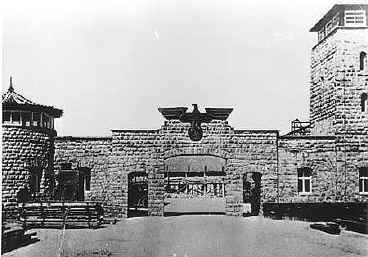
So it didn’t work there either.

Mauthausen

Now what narrative will rescue the heroes of the Southern story from the quagmire of treason and treachery? I don’t know. I have some ideas, which I will share in due time, but what I really care about is who is going to participate in the crafting of that story. If it is only the recalcitrant bitter-end whites, it will not be a tolerable story. If you add the moderate industrial and post-industrial leaders, it will be better, but still not robust enough to survive Klan violence. What is needed is the participation in the story by the victims. “The South” needs to be able to say, “This is our story and we will protect it.” That means it can’t ignore slavery, but it also means it can’t be about slavery.

Let me add two footnotes to this consideration. I have seen only one official German/Nazi malice 4(you see the problem) death camp. It was in Mauthausen, Austria [2] But I saw it twice because I took the Elderhostel bicycle tour twice and it was the historical site featured on that day. Before we went out to see the camp, we saw a film about the era and the camp itself. It wasn’t a preachy film, but the condemnation was consistent and powerful. The first time I sat through the film, these processes were attributed to “the Germans.” The second time, some years later, they were attributed to “the Nazis.”

What a good idea, I thought. They are building a narrative that makes sense in a modern Western pro-democratic Germany. It didn’t sound to me like any attempt to evade responsibility, just to be clearer, now that the time allowed it, about whose ideology and whose initiative accomplished this. [3]

I know that not all of you are going to like that shift. It depends entirely, I am sure, on what you want to put in the foreground and what in the background. And a few other things, like why are you making that choice and what do you imagine the results of that choice to be. Things like that.

Common Southern Narrative

That is one of the ways of moving toward a Common Southern Narrative—a narrative that not only has an honorable place for most of the people of that period, but also a narrative devised by and supported by most of the people of our period. That means that some southerners will be singled out for “the Nazi treatment.” They would be people more than usually cruel or insensitive to the plight of the slaves; people who didn’t really care about the state sovereignty question except as a tool to keep the slaves; or people who violated some trust they had as members of the United States government.

That would free other Southerners, who would have done anything to avoid rebellion malice 5against their country, except, of course, being unfaithful to their state. They would be the Southern Statesmen in a Losing Cause. They would be “the Germans.” Their statues could be revered because of their place in the Common Southern Narrative. These statues would be protected in every relevant way, both verbal and physical, by the whole coalition who put the Narrative together.

Common Slavery Narrative

The second idea is my backup plan. It is based on the absurdity that it is fine to acquire and sell slaves, but horrible to acquire and use slaves. This idea puts the slave sellers and the family fortunes they amassed side by side with the slave buyers and the fortunes they amassed.

At this point, let me introduce James De Wolf (1764—1837) of Bristol, Rhode Island. You can look him up on Google; that’s how I know what I know about him.

[He was] a United States senator and a wealthy merchant who, at the time of his death, was reported to be the second richest person in the country..

The DeWolf family’s complicity in slavery continued after 1820 in other ways, too, as the family maintained slave plantations in Cuba and James DeWolf invested his slave trade profits in textile mills which used slave-produced cotton. Today, there are as many as half a million living descendants of the people traded as chattel by the DeWolfs.

So my second strategy would be to focus on the slave trade—the very part that is relegated to he background by the Common Southern Narrative—and extend it to the North as well. Not many people would want to do that, I am sure, but it is a perfectly valid alternative to the Common Southern Narrative. It is the Common American Narrative, with the Nazis of the North deprecated along with the Nazis of the South.

Conclusion

I’m not proposing either of these two solutions. They seem daunting to me, particularly with the White House-inspired resurgence of the White Power movement. But I do want to say this. What we are doing isn’t working. If the Civil War was about slavery and nothing else and if all the Southerners who participated in it were pro-slavery and nothing else, then there is no redemption for the culture and history of the South. Southerners will not live without heroes and a history they can be proud of. They don’t need to be proud of all of it. The rest of us, after all, manage to be proud of “the Westward Movement” without considering only how many Native Americans had to be sacrificed to it.

So it can be done. It just can’t be done by Southerners. And it won’t end. And I want it to end. And vilifying the few and valorizing the many will help. Even in the South.

[1] Read his justly famous letter to Horace Greeley if there is any doubt in your mind about that.
[2] Mauthausen isn’t the name of the camp. It is the name of the town. That means that there is, I have seen it myself, a Mauthausen McDonalds. And that is what is says on the sign. Ich liebe es.
[3] Nothing about that focus on the Nazis denies that many Germans thought it was a wonderful idea, but it wasn’t pitched to the Germans as a wonderful idea. It was hidden in the shadows wherever possible and the change in emphasis takes some account of that.

Posted in Political Psychology, Society, Sustainability | Tagged , , , , | Leave a comment

Really bad political arguments

In his column of August 12, which is an important contribution to today’s debates, Frank Bruni introduces Professor Mark Lilla, of Columbia University. Lilla comments that “classroom conversations that once might have begun, I think A, and here is my argument, now take the form, Speaking as an X, I am offended that you claim B.

It was that phrasing, I think, that caught my imagination.  I felt like I had just seen a horror movie.

Lilla has liberals in mind, because liberals are the ones that have been boxing his ears lately and Bruni cites him because these same liberals have been boxing Bruni’s ears, too. Today, I would like to reflect on the reasons that arguments can be set aside because they aren’t being made by the right people.

Status distortion

Like so many other “truths” of our time, this one is true as far as it goes, but it has gone too far. Later in his column, Bruni says that “race, gender, sexual orientation [and] class” inform…how we see the world. That is true, of course. It is true of every person; it is true all the time. It is true of the person making the argument and the person refusing to hear it. It is true.

bruni 6Bruni also agrees that the “check your privilege” exhortation rightly asks us to recognize that. I know that when I make an argument, the argument is affected by who I am and the experiences I have had and the same is true for you. That is as far, I think, as that truth should go.

But it doesn’t stop there and in this column, Bruni looks at some of the places it should have stopped, but did not. [1] He tells about a scuffle just up the road from me at the Evergreen State College, where “a white biology professor, Bret Weinstein, disparaged the particular tack of a day of racial healing. He raised valid points, only to be branded a bigot and threatened with violence.”

Bruni wrote about that incident and then he, in turn, got this: “I don’t need one more white male criticizing young people of color.” But I think maybe she does. If Weinstein was treated unfairly, then this reader—I am imagining her as a young woman of color—urgently needs people like and unlike herself to call attention to the unfairness. The idea that Bruni has no right to his views because he is of the wrong sexbruni 7 and color don’t sound right to me. Didn’t we write some things in the Civil Rights Act of 1965 about disparaging people because of their sex or color? Is that why it sounds familiar?  Clearly the dueling tee shirts point the direction of our future.

And I think this small, but important truth, should also have stopped before it came to this event, too.

Mark Lilla…got a big, bitter taste of this last year, too. He was scheduled to give a talk at Wellesley College on “Identity Is Not Politics” and someone scrawled on a poster advertising the talk: “White men: stop telling me about my experiences!”

But what if Lilla did not want to talk about her experiences? What if he wanted to talk about whether the commitment to identity politics has been good of bad for the Democratic party? There would need to be at least two positions, with at least one proponent for each. And who should these proponents be? They should be people with no sexual orientation, no country of origin, no race, no partisan affiliation, etc. Does that leave anyone? Because using this identity politics filter, who you are—that’s the race and sex and all that—makes what you have to say worthless. “Oh, you’re just a..[fill in the blank].  Or for upperclassmen, “just another [fill in the blank.]  Upperclassmen have heard it all before, you see.

Later in the article, Bruni cites with approval the work of Phoebe Malz
Bovy, author of The Perils of Privilege. You need to be careful to “check your privilege at the door,” says Bovy and Bruni agrees. I agree too, but privilege is not uniquely distorting. It is just especially obnoxious. Ignorance and hatred and apathy are all distorting, too, and I would dearly love to see them checked at the door.

bruni 2I think these instances are ugly and that is why I have cited them. But even more ugly to me, and I say this as a former professor [2], are the “classroom conversations” Lilla points to that take the form of “Speaking as an X, I am offended that you claim B.” Lilla says that the form of assertion precludes much more useful forms, such as “I think A and here is my argument.”

That second form, which was once taken for granted in universities, leads to a comparison of assertions and the facts and logic that sustain them. There is, of course, room to do all that badly and I have seen it done badly, but even when I see it being done badly, I know that it could have been done well. Of the first form (Speaking as an X…), I have nothing good to say. Not only is “what I say” set aside without any consideration of its merits, but even “the way I know things”—therefore potentially anything I could know—is set aside as well.  Here again, it is the parallels in this set of pictures that attracted me.

You could argue that I could just do the same thing in return. I could just set asidebruni 3 whatever you say both on the grounds of “how you know things” and also “what you know.” Those are just aspects of “who you are.” And I could. Now the two of us, completely heedless of the worth of anything the other might say, stand there and waste each other’s time. [3]

And then there is the flaw—the really hideous flaw—contained in the first part of the formula: “Speaking as an X…” The racism or classism or sexism (take your pick) embedded in that formula is truly awful. It begins with “we are all alike.” All of us white Ivy League professors are alike and all of us Hispanic agricultural workers are alike and all of us stay-at-home Moms are alike. That’s just how it begins. Everyone in any of those categories would reject that, to be sure, but it is firmly implicit in “Speaking as an X…”

Of course, you are not just an X. You are also a Y and a Z. Will you claim the right to speak for all the members of all those categories, or just for the people who, like you, are X and Y and Z? And then, of course, you are not all the X’s, you are just one particular X and you are unique. So maybe speaking for yourself would be a good idea.

And as bad as it is to claim that your personal identity is dissolved without residue into the category X, it is even worse that you have invited me to claim that I am a Y, just a Y and nothing more. And that is a separate and additional offense.

So…clearly, I need to bail out of this argument before it achieves escape velocity.  The short and simple point is that identity politics presupposes identity rhetoric–not personal identity, which would be bad enough, but group identity–and destroys the basis for any dialogue we might have had.

[1] It is striking that in writing this article, Bruni feels compelled to stop and identify himself as gay. I understand why he would do that, as a rhetorical matter. He is going to be lecturing “victims” and he wants to establish his own credentials as a victim before he dos that. Still, his need to make that claim for himself seems odd in the setting of this particular column.
[2] So…you know…my experience is distorting my judgment.

[3] Unless, of course, I am the teacher in this setting. In that case, it would be my job to teach about the erosive character of that whole orientation toward dialogue.


Posted in Education, Politics, Society | Tagged , , , , | Leave a comment