Yellow (Caution) lights

Since my neighborhood Starbucks closed, I have been walking further in the morning to get coffee for Bette and me. A very urban route it is, too. And when I walk on Broadway going west or on Weidler coming back east, I am walking in the same direction as the traffic. That’s how this all came to me.

Yellow 1I can tell without looking at it when the light turns yellow because there is often a sound of acceleration. You can hear it in the engines and in the sound the tires make on the street. If the drivers are slowing down in response to the yellow light, I either don’t hear it or don’t pay attention to it, but if they are accelerating suddenly, I do hear it and I don’t like it.

So, why are there yellow lights [1] and why do people game them? The yellow lights, called “caution lights” when they were introduced, announce that a time is coming when you are going to be required to stop. The implication is that you should start preparing to stop. Taking your foot off the accelerator and putting in on the brake would be a good idea.

The difficulty is that the drivers don’t want to stop. And, in fact, the law does not require them to stop for a yellow light, only to prepare to stop. If you go through the intersection while the light is yellow—or, let’s be frank, if you get into the intersection while the light is yellow—then you can continue. [2] So there is a lot of incentive to treat the yellow light as the last phase of the green light. Not what Mr. Potts had in mind.

I asked, above, why people “game” the yellow lights. That might have seemed a curiously yellow 3restrained question, given that people game every specific standard we know of. I remember an old Nancy and Sluggo comic strip where “the mother” told the two kids to wash their hands to get ready for dinner. They complained that actually, only one hand (each) was dirty and we are to imagine that the mother said to them, “Well, just wash that one then.” In the final frame, we see the two kids at a bathroom basin, cooperatively washing only one hand (each) and Nancy’s comment was, “I’ll bet she thought we couldn’t do it.”

Exactly. That’s how long we have been gaming the system.

The caution light phenomenon is based on the idea that the only thing that is really wrong is going through a red light. Going through an early yellow or a late yellow aren’t really wrong; possibly imprudent. So how much of the yellow can I utilize for my own convenience (late yellow) without doing something really wrong?

That accounts for the acceleration I hear on the street in the morning. People are hurrying to get through the light because a) they are in a hurry and b) it isn’t really wrong. The “caution light” has become a “this offer will expire in just three more seconds” kind of light.

What to do?

I should preface this by saying that I am not proposing it. I am simply working through the very common problem of gaming the caution light. The first element is that the yellow light is, for all practical purposes, of a known duration. [3] The second is that the penalty for going through a red light (and getting caught at it) is relatively mild. It is not, for instance, loss of your driver’s license.

So we could, just as a way of restoring the “caution” function to the yellow lights, make the duration of any given yellow light variable. [4] This means that speeding up to “make the light” would be a very risky thing to do. It is risky in the sense that you would have no rational basis, not even an experiential basis, for calculating whether your attempt to “make the light” would be successful.

That probably wouldn’t do the job by itself, so I would go to the other part of the program and make the detection of the violation certain and the punishment substantial. Cameras at every intersection that has a three-color traffic light would be necessary. They would record every car in the intersection while the light is red and automatically send the notification to the driver. “Your license has just been cancelled” or “This is your second of the three allowable infractions before your license is cancelled.” Whatever kind of penalty the policymakers decided on, provided that the detection and reporting of this act of “un-caution” is certain.

I think that would do the job. It might not be a job worth doing, of course, but it does do the one thing I was hoping to do here, which is to restore the “caution” meaning to the yellow traffic light.
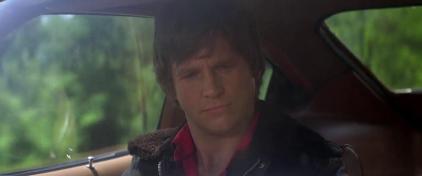
yellow 2I am reminded in this context, of a forgettable scene from a forgettable movie called Starman. [5] In it, a visitor from another planet (Jeff Bridges, shown here preparing to utter this line), offers to drive for awhile while his host (Karen Allen) takes a little nap. She sees him blowing through a yellow light and thinks he doesn’t understand terrestrial traffic signals. She starts to explain them to him. “Oh no,” he says. “I remember everything I see.” (Meaning that he has internalized as rules what he has seen her actually do as a driver.) “Green means go. Red means stop. Yellow means go very fast.”

[1] In 1920, William Potts, a Detroit police officer, developed several automatic traffic light systems, including the first three-color signal, which added a yellow “caution” light.
[2] And since, in many places, the lights are timed in anticipation of a certain vehicular speed, “getting through” this light means that you have a really good chance of a green light at the next several intersections.
[3] While it is true that different yellows last for different lengths of time, you do get a sense, when you have driven a route a number of times, what the normal duration of this particular yellow is.
[4] If we did it in the next 2 years, we could get it done by the 100th anniversary of caution light.
[5] Why I see unable to forget a line from a forgettable movie I saw once 30 years ago is a question that need not detain us here.

Posted in Living My Life, Paying Attention, Political Psychology, Words | Tagged , , , | Leave a comment

Am I going somewhere?

Where I live there are lots of old people, so, of course, there are a lot of deaths. I have written recently about the effect the high number of deaths has on how we take note of deaths and on how they affect the community here. Today, I want to think about the presuppositions that support the various expressions about death that we use.

It used to be common, for instance, to say that someone who had died had “passed on.” Clearly, “on” is the word of interest. It implies a destination and knowledge of that destination. It does not, of course, specify what kind of “place” or “existence” is to be imagined, just that there is one. “Passed away” on the other hand, takes our present world as the reference point and says that the person is not “here” anymore. That is the significance of “away.” And “away” is notably silent on some future destination.[1]

Now, very often, I hear “pass.” Just “pass.” It is as if we have been speculating together about the need for some further designation and had decided together that none was necessary. “He passed” we say, not implying even that his grades were good enough.

bon voyageToday I saw a new effort. It wished a recently deceased member of our community “bon voyage.” This is clearly part of the “pass on” line of thought and extends the metaphor as a voyage. This gives us the chance to wish the person we now know only as “departed” that the voyage he or she is undertaking will be a good one. This is entirely different than wishing the recently deceased person a good destination, which might be intended kindly, but which I am sure would be considered bad form


So I got to thinking how good wishes might be extended to someone like me. I have no sense of certainty about what, if anything, lies beyond this life, but I have complete confidence that if there is anything beyond this life, it will be in God’s hands. So I don’t trust that God will arrange something wonderful for me. I trust, rather, that if there is anything after this life, it will be under His care.

That seems to me a perfectly satisfactory solution for me, but we are considering here, what one might say to such a person. “Passing away” seems too little and “passing on” too much. [2]

I see two kinds of good wishes as possible in such a case. The first is retrospective. You take the occasion of the person’s death to reflect on his life. That’s what happens all the time when a very successful Broadway show closes. “What a terrific run it had,” says some drama critic, who goes on to talk about how many people saw it and how many careers it launched and how much money it made. You might say, “He lived a really good life” and instantiate [3] “good” with whatever you value: useful, courageous, kind. Whatever. [4]

The other approach I can think of is to place the death in the context of God’s providence.bon voyage 3
I don’t think it would work to say that he—that would be me in this case—was confident that whatever voyage he might be taking will be under the same loving care as his life here. I think the person who tried to say that would have to believe, himself, that there was a “continuity of care.” [5] as we say in communities like mine. If he did, he could say, “Don’t worry. He continues to be in good hands,” as if I were off on a trip with a travel agency that had always treated him well. My friend could say I was “in good hands” because of the travel agency without any idea at all about where I was going.

And I think I feel that way myself. I am not of the “bon voyage” school of thought. I do like, I have to say, the phrasing in Revelation 14, “Blessed are the dead which die in the Lord …that they may rest from their labors; and their works do follow them.” [6] The image that brings to me is that my labors, the investments of my life—the easy ones and the costly ones; the wise ones and the stupid ones—will be redeemed by God’s grace and will keep on working. [7]  I also like the idea of getting to rest from my labors.

Another phrasing of that same idea [8] is provided by Paul who says, in 2 Timothy 1, “I have no doubt at all that [God] is able to safeguard…what I have entrusted to Him.” I like that one particularly because it is something I can say, myself, and also something a friend could say about me.

“He had no doubt at all,” the friend could say, using the good travel agency metaphor rather than the bon voyage metaphor. I like that.

[1] It does call to mind the great triumph of environmentalists in challenging the meaning of “away.” In a physical system, “away” does’t really mean anything. Transferring and item from the home to the landfill or pouring it down the drain doesn’t make it “go away” because nowhere in the system is “away.”
[2] I took such pleasure in Hector Elizondo’s remark in Runaway Bride. The bride had escaped this particular wedding by hopping on a FedEx truck and as the bystanders watched her escape, one said, “I wonder where she is going.” Elizondo said, “I don’t know, but she’ll be there by 10:30 tomorrow.”
[3] Now there’s a word that just isn’t used enough. Obviously, it means “to provide an instance of.”
[4] And a really thoughtful person might instantiate “good” by naming the traits that youButterfly Competitions yourself valued, provided he knows them. It runs the risk of saying that he was one of the best caterpillars I ever knew, without mentioning that he never quite became a butterfly.

[5] I’m just playing, really. Here is what the American Academy of Family Physicians means by that phrase: Continuity of care is concerned with quality of care over time. It is the process by which the patient and his/her physician-led care team are cooperatively involved in ongoing health care management toward the shared goal of high quality, cost-effective medical care.
[6] Thank you, God, for the King James Version.
[7] The redemption part is crucial. I clearly would not want all of my works to follow after me.
[8] I say it is the same idea. Some translators are now flipping the meaning so that it is what God has entrusted to Paul, not what Paul has entrusted to God, that is safeguarded.

Posted in Biblical Studies, Getting Old, Theology, Words | Tagged , , , , | Leave a comment

Quod vide

For every person who knows what quod vide means, there are probably 100 or more who would see q.v. in some material they are reading and know what it meant without even thinking about it.

It may be that q.v. is going away, like pari passu (on equal footing with) and tant pis [2], of which John Kenneth Galbraith was so fond. And then there are, of course, the Latin phrases that are so common it is hard to remember that they are Latin (https://www.inklyo.com/latin-phrases-you-use-every-day/). Or it may be that I am just reading more electronic and less print material. I thought about this this morning when I realized that hyperlinked references are the electronic (modern?) way to say q.v.

I can say I wrote a piece about intelligent four wheel drive q.v. (meaning “and you should go look at it”) or I can say that I wrote a piece on intelligent four wheel drive (https://thedilettantesdilemma.com/2018/05/09/all-wheel-drive/). [3] We see, in other words, that the underlined text, the one that makes your cursor turn into a hand with the index finger raised, [1] has the same function as q.v. and is a good deal more convenient.

Vox 1But that brings me to my enthusiasm for Vox Sentences. Every day, I get a notice in my inbox that the Vox Sentences for that day is available. The stories in the one I am going to use as my illustration were written by Starvos Agorakis, about whom I know nothing except that he is often listed as the writer of a day’s collection of the news.

Vox Sentences offers three “stories” per installment. In this one, the three stories are: a) A cabinet shakeup, b) The second-largest ebola outbreak is still raging, c) miscellaneous, d) verbatim, and e) read more from Vox. I am skipping over “watch this,” a video about something. There are nine bullets under the headline about the cabinet shakeup, mostly from news sources like CNN or the Wall Street Journal. All of the references are hyperlinked. There are four bullets under the one about ebola, three under miscellaneous. Under “Read more from Vox” there are no bullets, only subheadlines, but each of them is a hypertext.

It is very easy to go deep using Vox Sentences, a fact that I will illustrate momentarily. Here, I want to say that I have not the appetite I once had for “scanning the news horizon” and what little I had left deserted me at the dawn of the Trump administration. On the other hand, there are things I continue to be interested in and going deeper into those is something my appetite still supports.

In the episode of Vox Sentences I referred to, the thing that caught my eye was in the very last section: read more from Vox. In that section, there was a headline “Brands once used elitism to market themselves. Now inclusion sells.” Clicking on this takes you to an article by Nadya Nittle, published in some corner of the Vox enterprise called “The Goods.”

Here is a sentence from Nittle’s article.

For years, Victoria’s Secret has been a brand based on exclusivity, but in an age when inclusion is widely championed, the lingerie maker has seen its sales slump.

Notice the hypertext. Clicking on that takes you to an article that Rebecca Jennings published, on her own blog, it appears, called “The Stubborn Irrelevance of the Victoria’s Secret Fashion Show.”

And in that article, these paragraphs appear; each, you will note, with additional hypertext links.

Like many fashion brands’ runway shows, Victoria’s Secret has also has a rocky record on inclusion, though in recent years, it has appeared to change that — last year, nearly half the cast were women of color. Yet the show didn’t cast its first model of Asian descent until nearly a decade and a half into its existence, with the hiring of Liu Wen in 2009. And in 2012, both Victoria’s Secret and Karlie Kloss were forced to apologize when Kloss walked down the runway in “Native American-inspired” attire involving a feathered headdress; the ensemble was eventually edited out of the broadcast.

In 2017, perhaps recognizing its strategies were becoming less effective, Victoria’s Secret planned to hold the show in China for the first time (previous shows had been held in London, New York, Miami, LA, Cannes, and Paris) in an attempt to corner the Chinese lingerie market, which Euromonitor estimated would be worth $33 billion by 2020

There is no bottom to this well. All the hyperlinked articles have additional hyperlinks. But eventually, I found that I had gotten interested in the way the words “elite” and “inclusive” were being used. You can see examples by clicking on the Victoria’s Secret hyperlink.

The first thing to notice is that elite is a bad word—it is negatively connoted—while “inclusive” is a good word. I don’t think that works in any sensible way at all, so I think I am going to poke at it a little and see if it pokes back. And since we got here by Victoria’s Secret, let’s consider what elite and inclusive might mean to standards of beauty.

But…maybe next time.

[1] The possibility of using another finger on that hand just now occurred to me. Surely I am not the first one. I wonder who I would have to talk to to get my cursor/hand customized.
[2] “So much the worse.”

[3]  I should remember, at some point, to say that I know nothing at all about four wheel drive, intelligent or stupid.  I am using it as a metaphor for various motive forces and I know just enough to keep the metaphorical use on track.

Posted in Living My Life, Paying Attention | Tagged , , , | Leave a comment

An impromptu Advent homily

It is the practice of the senior center where I live to have a Vespers service on Sunday afternoons. It’s a very sensible thing to do because some residents who have spent their whole lives “going to church” really can’t go anywhere anymore and having a service they can attend is a good thing to do.

Mostly, we get speakers by asking current and retired pastors in the area to come in and give a short homily and conduct a brief, but otherwise familiar, worship service. Lately, the Vespers Committee has been supplementing this pool of local pastors with residents who are or were clergy. And once during my time here, they asked a resident who wasn’t even clergy.

That was me. I really enjoyed it and I hoped I would be asked again. Yesterday, the member of the Vespers Committee who is responsible for arranging the speakers called me in considerable distress. The speaker for tomorrow’s Vespers service is ill. Would I consider substituting for her with so little notice? And at the beginning of Advent, too?”

Yup. I would. I love Advent. I changed the Blogging Year so that it started with Advent. We decorate our Christmas tree according the Matthew’s birth narrative one year and according to Luke’s the next year. I post essays on Advent every year just for the pleasure of exploring some new idea that has occurred to me. Would I consent to speaking at a Vespers service about the birth story of Jesus? I would pay for the chance to do that.

Every now and then there is something that has to be done and they ask you to do it. Most of the time, the match isn’t all that good and you have to rearrange your life or run some risk if you decide to do it. But then there are the times when something has to be done and you are all prepared for it and have a real appetite for it. This was one of those.

The committee member who called me said, “You can have a little time to think about it” and I said “I don’t need any time to think about it. I want to do it. I’ll see you tomorrow.”

So I sat down and wrote this. As I re-read it, I find I still like it. I won’t preach it. This is the well from which I will draw when I preach. And I will say some of these things and not others and I will say some things that occur to me in the moment, but that would not have occurred to me had I not taken the time to sit down and write this.

The homily is supposed to be 10—15 minutes. I might have to press that just a little. There are so very many things about Advent that I would like to say. So I will say some of these and I will leave room for new things that come to mind. I can hardly wait.

Here is the written version of the homily. What it will actually be, I have no idea.

“Who comes to Bethlehem and who does not?”

We live in such an individualistic culture that we can fall into thinking that Bethlehem when Jesus was born there was like a destination resort. You decide to go and then you book a ticket and get on a plane and go. But it wasn’t like that. To go to Bethlehem to see this very special child, you have to be invited and you have to say yes.

I love to be very strict about separating the story of Christ’s birth as Matthew tells it fromVespers 2 the story as Luke tells it. I began to fall in love with these stories when I began to honor how different they are. “The Christmas Story” as a mashup of the two real stories never meant very much to me. [Here is an example of the mashup.  We have Joseph and Mary following the star to the town where they have to go to pay their taxes.  Right.]  When I learned that there were two versions, I learned to love both of them. Matthew’s story, taken all by itself, has a very stark structure; there is nothing cute about Matthew’s story. Luke’s story is glorious and cuddly and warm, which is why four out of five Advent songs are taken from Luke, rather than Matthew.
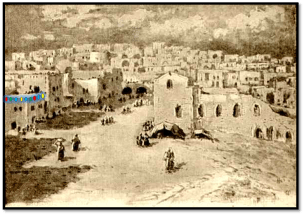
But today, I want to use the cast of characters that both Matthew and Luke provide. This will cause Bette to roll her eyes and cause my friends to be astonished at my sudden lack of sophistication, but just for today, let’s borrow from both stories.

The Wise Men

The Wise Men came from a very long way away, so I would like to honor them by looking at their story first. The Wise Men are my personal favorites because they are academics. They saw the star at its rising and they studied their charts. Astronomy, which we honor very highly today, and astrology, about which many of us have our doubts, were still one single discipline. They knew the stars, so they knew when there was a new star. The stars had meaning to them, so they knew what this star meant and they headed for Jerusalem as fast as they could go.

There are pictures of the Wise Men following the star in order to get to Jerusalem, where Herod, the king, lived. On behalf of the Wise Men, my fellow academics, I would like to point out that they already knew what the capital of Israel was. It was Jerusalem. And they already knew that the king lived there. They didn’t need a star to guide them to Jerusalem. They weren’t stupid, after all.

On the other hand, they weren’t all that savvy, which is true of some academics I know. They showed up at Jerusalem and got an audience with the King and they said, “Great new, O King. Your replacement has just arrived on the scene!” As I say, they were wise, but they weren’t all that smart.

Herod consulted his own wise men, the scribes. The scribes were scholars too; they were scholars of the law. And the law had the answer for them.

 “At Bethlehem in Judaea, for this is what the prophet (Micah) wrote: 6And you, Bethlehem, in the land of Judah, you are by no means the least among the leaders of Judah, for from you will come a leader who will shepherd my people Israel.’

But the scribes and Pharisees didn’t actually go to Bethlehem. Nothing in the way they received the glorious news the scriptures gave them was anything like the delight with which the Wise Men received the news the star gave them. Herod didn’t go either, of course. He did send soldiers later, to kill anyone who might have been the Messiah, but he was too late.

The Wise Men did go, though, and no sooner had they started out than the star—that Joseph's Housesame star they had seen those years ago—appeared again and it led them not only the remaining five miles to Bethlehem, but stopped moving and stood still in the sky right over the house where Joseph and Mary were living. As you see in the picture, the star hovered in the sky right over the house with the Christmas lights, over there at the left edge of the picture.  [I share with you here the picture my son, Doug, created for me and that I use on every Matthew year.]

When the Wise Men got there, they knew what it meant to be there and they prostrated themselves on the ground before this very young King and they brought gifts that had wonderful symbolic power.

The Shepherds

There is great good humor in the way Luke features the shepherds. It may not be strictly true, as some scholars have said, that shepherds were a despised class and that their testimony would not be admissible in any local court. But it is certainly true that they were ordinary working folks and there are no tenured academics at all in Luke’s story. I take real pleasure in the idea that God gave definitive proof of his intentions to people no one would believe anyway.

So the shepherds did what the Wise Men did. They went to see for themselves. They did Vespers 1what the scribes and the Pharisees did not do. And, to return to Luke’s story, they did what the residents of the inn did not do. The people who already had a place in the inn—I mean, of course, the inn that refused to accommodate Joseph and Mary— had gotten there early. I don’t think they had reservations. They had had a meal and maybe something to drink. Maybe a lot to drink. The psalmist praises God (Ps. 104:15) for “wine that gladdens people’s hearts.” In any case, they were inside and outside it may have been cold or it may have been raining and if an angel had told them that the King of Kings was just being born in the barn [1] behind the inn, it would have been hard to leave the fire and go out and find out. So they didn’t. Or, if they did, Luke doesn’t know about it.


Conclusion

So, in these two little stories, stories about who came to see Jesus and who didn’t, we see what matters and what doesn’t. The Wise Men were carried to Bethlehem by the simple delight they felt when they looked at the star. And it didn’t matter that they were gentiles.

And the shepherds were out in the hills with their sheep, minding their own business, when an angel said that was a great and wonderful event in the little town just down there at the foot of the hills. Now these shepherds may have been devout Jews or not, but it is boring to watch the sheep through the long night and they wanted to go and see the sight the angel told them about. It didn’t matter that they were poor and unschooled, just as it didn’t matter that the Wise Men were rich and scholarly. They were invited. And they came.

The scribes and Pharisees in Herod’s court did not come. We don’t know why, but we do know that they served the King and interpreted the Law. That prophecy from Micah had been in their minds for a long time. And no part of their minds said, “Go and see for yourselves.” It is possible that the King would have disapproved, had they done so. It is possible that they would have looked foolish to the other experts in the law had they done so. We don’t know, really, but they didn’t go. These were the “observant Jews” so highly regarded in Jesus’ time and the shepherds were “non-observant Jews,” who really couldn’t afford the costs of being observant.

And the comfortable people at the inn—not to oversell the joys of overnights in wayside inns in First Century Judea—did not come either. It is one thing to leave flocks of sheep on a cold hill and go into town and another to leave a fireside and food and go out to the barn.

I say this not to blame anyone. I have no idea what I would have done. But the fact is that they didn’t get to see the King. The greatest event in their lifetimes was happening right next door, so to speak, but the demands of jobs or of political influence (as in Matthew) of the comforts of fire and food and drink (as in Luke) proved too strong.

Advent is the season when all of as are invited, again, to come to Bethlehem to honor the King, who is, in addition, our Lord. I pray that this year, we will be vigilant and refuse to allow anything to keep us away.

[1]  In English, the literal meaning of the word “bastard” is “born in a barn.”  That observation will probably not make it into the homily.

Posted in A life of faith, Advent, Uncategorized | Tagged , , , , , | Leave a comment

New Year’s Resolutions

If you read this blog as regularly as I do—unlikely, I admit—you will have noticed that there is a time when I start writing about the Advent stories that Matthew and Luke provide for us.  It is Luke this year.

After I had done that for a few years, it occurred to me that the church year begins with Advent [1] and there is no reason I shouldn’t do the same, given that I write a block Advent posts every year.  So I started reorganizing my files so that “the first quarter” begins on December 1 and ends on February 28. my

All that to say, “Happy New Year.”

And having said that turns my mind in the direction of New Year’s Resolutions.  Here’s #1: Have more fun.

It’s harder than it looks.  I knew when I chose the name “dilettante” for my blog just what the dilemma would be.   It was a daring choice in a way.  The word has almost uniformly negative connotations in actual use, but I chose to build it, instead on the Latin source, delectare, meaning “to delight.”

I had in mind that some of my posts would be treated with applause and others with catcalls and I was fine with that.  If you get to say what you want to say, then they get to say what they want to say.  My goal would be to continue to pay attention to those very subtle expressions of interest or curiosity or simple pleasure which would be the bread and butter of my posts.

And that worked pretty well.  I didn’t write more about the things people liked or less

Resolutions List

about the things they didn’t like.  I really wasn’t prepared, however, for the vicious turn our national politics has taken.  And I saw different kinds of dangers in those events than a lot of others did and the itch to weigh in one those things got unexpectedly prominent.

I remember writing, for instance, in March of 2016 that the U. S. political culture was like bad soil and that it was the kind of soil in which bad crops were going to grow.  I mentioned candidate Donald Trump specifically as a “weed” that would grow really well in the kind of soil we had.  I proposed an amendment of the soil.

It’s hard to get hooked on serious topics like that week after week and still pay attention to the small pleasures that I had imagined would characterize my blog writing.  I’d really like to get back to that.

And a second is like unto it: tell more stories.  My writing runs more to structural and cultural analysis and not so much to stories.  I think I will try telling more stories.

Here is one I have treasured for awhile and I imagine that when you hear it, you will remember it, just as I did, because it concerns an occasion that we all encounter frequently—being asked to turn your cell phone off.  At the movies, there are often three or four reminders, some playful some strident.  That’s too many.

I was at a church several years ago to hear a concert.  It might have been the St. Olaf traveling choir, but I’m not really sure anymore.  One of the pastors gave the obligatory warning about turning off cell phones.  This is how she did it.

The music for this evening is truly wonderful.  These musicians are talented and well trained.  You are going to be amazed at the quality of the songs they sing.  And you are going to want to call your friends and say, “I just heard the most amazing concert!”  So when you leave, be sure to turn your cell phones back on.

Isn’t that just a delight?


[1]Advent, Christmas, Ordinary Time (Time after Epiphany), Lent, Easter, and Ordinary Time (Time after Pentecost).

Posted in Uncategorized | Leave a comment

Work I can be trusted to do

This is the last post of Blogging Year 2018 and I would like to spend it in the company of Andrew MacPhee, the resident skeptic at St. Anne’s in C. S. Lewis’s novel, That Hideous Strength. [1]  MacPhee is a “member” the of the company gathered at St. Anne’s in the same way that Satan is a member of the heavenly host in the book of Job or that “the Devil’s advocate” is a part of the Catholic church’s process of confirming people for sainthood.

MacPhee is not a nay-sayer, exactly, but he is way out of his depth in this novel.  Ransom,macphee 4 the director of the community at St. Anne’s, has been to Mars and Venus, he has learned to speak the Old Solar language, and he is in contact with the eldila [2] who represent “the Masters” in their plans to save the planet Earth from domination by evil forces.  MacPhee has seen things at St. Anne’s that his frame of reference cannot accommodate, but the best he can do is to continue to allow for the possibility that such things are possible.
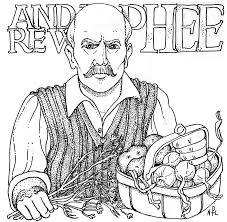
That is an achievement for MacPhee, because the really does not want them to be possible, but he is a very old friend of Ransom’s and his has a fierce loyalty to him.  That doesn’t make him believe in the things Ransom says are true, but it keeps him open to the possibilities.

That takes MacPhee to the outer limits of his abilities as a lifelong skeptic and it is not enough.  Just how and why it is not enough is what I want to explore today.  This is not just a literary exercise for me.  I have a substantial streak of Andrew MacPhee myself and I wonder, from time to time, what work I cannot be trusted with because the character of my commitment is, like MacPhee’s, hypothetical.

Why is it not enough

Several members of the community at St. Anne’s are being recruited to go out and look for Merlin, who has just returned to consciousness after 1500 years of suspended animation.  MacPhee wants to go, but no one knows what kinds of powers Merlin has at his disposal and MacPhee is “unprotected.”

Here’s what that exchange between Ransom, the Director, and MacPhee looks like.

‘I have already repeatedly urged,’ said MacPhee, ‘the absurdity of sending out an older man like yourself, that’s done a day’s work forbye, when here am I, a great strapping fellow sitting doing nothing.’

‘It’s no good, MacPhee,’ said the Director, ‘you can’t go. For one thing you don’t know the language. And for another – it’s time for frankness – you have never put yourself under the protection of Maleldil.’ [3]

‘I am perfectly ready,’ said MacPhee, ‘in and for this emergency, to allow the existence of these eldils of yours and of a being called Maleldil whom they regard as their king. And I—’

‘You can’t go,’ said the Director. ‘I will not send you. It would be like sending a three-year-old child to fight a tank.

And later, the Director adds, [For the last time…] “You can’t go, MacPhee.  He’d put you to sleep in ten seconds.”

Merlin shows up at St. Anne’s that night in the middle of a rainstorm.

His eyes rested on Ransom for a second or two with no particular interest. Then he turned his head to his left, to where the door was flung back almost against the wall. MacPhee was concealed behind it.

‘Come out,’ said the Stranger [Merlin] in Latin…But what surprised Ransom much more was the fact that MacPhee immediately obeyed. He did not look at Ransom but at the Stranger. Then, unexpectedly, he gave an enormous yawn. The Stranger looked him up and down and then turned to the Director.

The Stranger argues that he has, in fact, already crossed the threshold of the Director’s house.

‘I value that at a straw,’ said Ransom. [in Latin]. ‘Shut the door, Mac-Phee,’ he added in English. But there was no response; and looking round for the first time, he saw that MacPhee had sat down in the one chair which the scullery contained and was fast asleep.

The others discover MacPhee in that chair hours later.

MacPhee, who had just been refuting both Ransom and Alcasan’s head by a two-edged argument which seemed unanswerable in the dream but which he never afterwards remembered, found himself violently waked by someone shaking his shoulder.

That’s the story.  I have already praised MacPhee for going as far as he can go without letting go of his very strict empirical frame of reference.  I want to look now, and just how inadequate MacPhee’s offer is.

macphee 3The evil forces have arisen and are on the move.  The time for action has arrived.  Someone has to go to find Merlin.  MacPhee points out that he is “a great strapping fellow” and well rested and younger than the men who are to be sent.

Not good enough, says the Director.  You have not put yourself under God’s protection.  Full commitment to God and to His purposes has a kind of protective function here.  This protection has nothing at all to do with MacPhee’s abilities.  Dr. Dimble, who does get sent out, has no more abilities that MacPhee has but Dimble has committed himself unreservedly to God’s purposes and that commitment serves as a kind of shield.  Dimble, in the scene we saw above, would not have been put to sleep by Merlin when he shows up because Dimble is protected and MacPhee is not.

MacPhee tries again.  He is perfectly ready—in this emergency only—to allow for the possibility that eldila [4] actually exist.  He is willing to allow that there might be a being called Maleldil.  He is willing to identify that the eldila think of Maleldil as their king.

But that is as far as he can go.  He cannot even get himself to say that he is willing to allow—in this emergency only—that Maleldil IS the king of all the eldila.  Only that the eldila think that.

This is the kind of situation that drives empiricists crazy.  Nothing counts as evidence that something is actually true or not.  What it would mean to support a hypothesis like the existence of Maleldil has no clear meaning and MacPhee, having gone as far as conscience and friendship will allow him to go, is still way short.

How short is he?  Merlin shows up and looks at MacPhee and MacPhee sits down in the chair and goes instantly to sleep.  The Director didn’t do that.  Dimble would not have done that.  Both are “protected.”

I admire MacPhee’s skepticism, even while I note its limits, because I share it to some macphee 2extent.  On the other hand, I also know that what you can see is dependent to a considerable extent on what you believe to be possible.  You can look right at a brown King of Hearts, for instance, and insist that you don’t know what you are looking at.  You don’t know because you know that what your eyes are telling you is not possible.  Your eyes and your brain cannot come to detente.

On the other hand, I wonder what work I cannot be safely given to do because my own loyalty is too thin.  There may be no work I cannot be trusted with because of my skepticism, but there is no way for me to know that.

I do hope that I will post an essay on December 1, the first day of the 2019 Blogging Year, that addresses that concern, but I won’t know if I am willing to post it until I have written it.  So…we’ll see how it goes.

[1]  Some scholars of the life and work of C. S. Lewis see the character of MacPhee as a redemption of sorts for Lewis’s tutor, a brilliant former headmaster and family friend, William T. Kirkpatrick. 

[2]  Angels, for the purposes of this essay.

[3]  Maleldil is God, for our purposes.

[4]  “Eldila” is the plural form of “eldil” in the Old Solar language, which both the Director and Dimble has learned to speak.

Posted in A life of faith | Tagged , , , | Leave a comment

Not a nationalist. Not a globalist.

That really is the question.  What alternatives are you rejecting when you choose this one.  Here’s an account that Matt Bai, a Yahoo columnist, published on October 25

“You know what I am?” Trump asked the amped-up crowd. “I’m a nationalist, OK? Nationalist. Nationalist! Use that word! Use that word!”

He then accused his opponents of being “corrupt, power-hungry globalists.” He went on:

“You know what a globalist is? A globalist is a person who wants the globe to do well, frankly, not caring about our country so much.”

That establishes what alternative President Trump wants to oppose.  He is against globalism.  That is the fight he would like to have.  “Nationalists” against “Globalists.”  

globalism 2And you can see why he would like that.  “Pro-lifers” would like to enter into a debate with “Anti-lifers.”  And “Pro-choicers” would love to debate “Anti-choicers.”  But that’s not really the way the debates are structured.  President Trump knows that and he is trying to restructure them.  He is not a subtle person.

A lot of times, the whole game is decided when the name of a measure is decided.  It is a little like assembling the teams on the field for the coin flip, then whoever wins the coin flip is declared the winner and everyone goes back to the (now completely unnecessary) showers.  I remember hearing of a bill to be debated in the Ohio legislature when I lived there.  The bill had to do with experiments that may or may not be performed on animals.  The bill was going to be called either “the child-saving bill” or “the dog-killing bill.”  This is the coin flip.  Somebody wins and everyone goes home. [1]

But more often, it is the naming of the alternative that establishes the home field advantage.  In the examples I gave above, there is a Life team and a Choice team.  In the pro-life v. anti-life game, Life is the home team and in these contests, the home team ALWAYS wins.  In the pro-choice v. anti-choice game, the Choice teams is the home team.  That is why the choice of home field is so important.

President Trump, in the remarks Matt Bai reports is working to gain the home field advantage.  One context pits the Nationalism team (Yea!) against the Globalism team (Boo!).  The other contest pits the Nationalism team (Boo!) against the Internationalism team (Yea!).

In the Internationalists stadium, the “nationalists” are just narrow minded jingoistsglobalization 6 [hyperpatriots with a big army and a chip on their shoulder]. [2]  In the Nationalists stadium, the “globalists” are cosmopolitan snobs who care nothing for the land of their birth.

So…if the home teams always wins, it is a really good thing to be the home team.

President Trump doesn’t confine his sense of what nationalism means to the partisan rallies, like the one Matt Bai reported on.  Here he is before the U. N. General Assembly.

Each of us here today is the emissary of a distinct culture, a rich history, and a people bound together by ties of memory, tradition, and the values that make our homelands like nowhere else on Earth.

That is why America will always choose independence and cooperation over global governance, control, and domination.

But President Trump thinks he can destroy internationalism as a public choice.  He can try to pretend it doesn’t exist.  He can link it to “global governance and domination” as he has here.  But it’s a big hill for him to climb.  Internationalism has been the basic choice of every president since World War II.  It was the choice of Presidents Reagan and Obama and Clinton and both Bushes.

The Foreign Policy Association

Let’s take a very short tour of why all those presidents have chosen it.  Last year, the Foreign Policy Association lead off their Great Decisions series with a presentation called “The Waning of the Pax Americana.”  The idea was that the set of international institutions that have served our interests so well since World War II are being threatened. [3]

The first quote gives us some useful specifics for what is often called “the Liberal International Order” or LIO.  This is not “liberal” in the domestic American sense.  This is “liberal” in the sense that means pro-West generally.

“…a new order—an American-led order that involved the creation of the United Nations, the World Bank, the International Monetary Fund.  Separate but equally important NATO, the World Trade Organization.  These were really the key pieces of architecture of the U S led global order.”

The Liberal International Order is characterized here as “the U. S. led global order,” and so it was.  Those institutions were invented to give order to international dealings, but always with the interests of the U. S., as the leader of that coalition, kept in mind.  “Globalism” does away with those.  “Internationalism” cherishes them.  Nationalism simply avoids them in favor of bilateral negotiations, which can be clearly seen in President Trump’s U. N. remarks.

Here is another characterization of internationalism from the Great Decisions series.

“…the Liberal International Order (LIO) that we helped to structure and we did it for selfish American reasons.  It was the cheapest way for us to accomplish our goals.  And what made it cheap?  Allies.”

The question of the cost of our negotiations is raised directly here.  Programs run jointly for ourselves and our allies are simply cheaper.  We are not stuck arranging quid pro quo for each “deal.”  The deals are supervised by institutions organized particularly to do that work—the World Trade Organization, for instance—and they are funded by everybody.

You take these four things together: economic stagnation, large scale immigration, unmediated social media, creaky old sclerotic governments, and what you have is a recipe for populism on a world stage.

Where nationalism will take us

With these considerations, we look at the alternatives.  With the recent election of Jair Bolsonaro as president of Brazil “populism on a world stage” is exactly what we have and he is not the first such leader.  President-elect Bolsonaro wants “a better deal for Brazil.”  Does he really?  Just imagine?  And how will that “better deal” be pursued, do you think?

globalism 1I would think that President Bolsonaro would try to drive a harder bargain with the U. S.  Brazil has a huge middle class and it has been very good about buying American products.  If I were Brazil, I would want to use that as a bargaining chip.
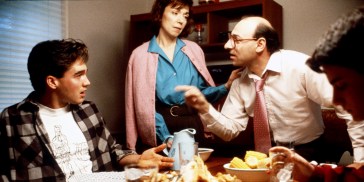
And so would everyone else who has a bargaining chip.  And that is the end of the international institutions that have brought about an international order favorable to the West.

That’s why I think being an “internationalist” is a good position.  It is also why I think that the opposition President Trump proposes between “nationalism” and “globalism” should be exposed as a superficial and misleading opposition.

I’m sure it works well on the campaign trail and I’m sure that is why he uses it, but that is the only sense I can see in it at all, and I think the costs are insupportably large.

[1]  I don’t actually remember whose bill passed, but I am sure it is the same as whoever won the naming battle.

[2]  Nationalism with a chip on its shoulder and a willingness to go quickly to war has been called “jingoism” for a long time now.  Here is the poem that popularized that name.

“We don’t want to fight but by Jingo if we do,
We’ve got the ships, we’ve got the men, we’ve got the money too,
We’ve fought the Bear before, and while we’re Britons true,
The Russians shall not have Constantinople.”

[3]  I’m afraid I don’t remember any more which quotes go with which people.  They are all mainstream commentators on U. S. foreign policy, the they report this in the manner of “As you all know…”

Posted in Political Psychology, Politics | Tagged , , , , , | Leave a comment

Taming Uncle Bot

So…I met Karen Tamerius this morning.  She is the founder of a group called Smart Politics.  I’m not sure why she calls her organization that.  Having spent a little time with it, I think I might have called it “How To Escape the Perils of Engagement.”

Her article in the New York Times on Thanksgiving morning was actually called “How to have a conversation with your angry uncle over Thanksgiving.”  The format of the article is very engaging.  First, you get to choose whether you want to play the part of a liberal and Uncle is a conservative or vice versa.  I chose liberal.

You saw the hyperlink.  If you want to go through the mill before you read my complaints about my own going through the mill, I wish you the best of luck.  Hurry back.

How it works

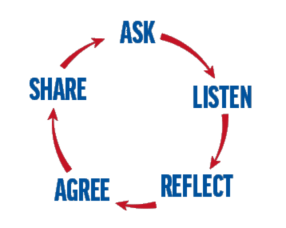
Uncle Bot says three things and I get to respond to the one I chose.  Dr. Tamerius then tells me whether it was a good response or not.  And what, pray tell, is a “good response?”

The first thing Uncle Bot says is, “Great, well let me tell you something…” or “Trump hastemarius 2 been great for America” or “Just look at the economy, it’s booming.”  I have a choice of three responses.  I get to respond “Trump’s good for the rich,” or “The job numbers are misleading” or “So how are you doing financially?”
That last one is the right answer.  When I chose it, I got this response from Dr. Tamerius. “

Good choice. The goal at this point is to start a conversation. The easiest way to do that is by asking questions – ones that are non-threatening, open-ended and non-leading. 

Questions are powerful because they make people feel safe, demonstrate respect, gather useful information, contribute to understanding, elicit empathy, build relationships and encourage self-reflection. Asking people about their own experiences in a nonjudgmental way is an especially good opening because it gives them an opportunity to talk about a subject they care and know more about: themselves.

Had I chosen the one about job numbers, I would have gotten this:

Not a good choice. This will turn the conversation into a debate over facts and figures. That’s a problem because people tend not be persuaded by contrary evidence and may even end up believing more strongly in their original position.

And had I chosen the one about Trump being good for the rich, I would have gotten this:

Not a good choice. This argumentative response will turn the conversation into a debate where you and Uncle Bot seek to score points and “win” rather than learn from each other or collaborate to elucidate the truth. In addition, the exclamation point suggests scorn and exasperation which will make the Uncle Bot angry. The goal is to have a conversation, not fight. Try this response instead:

I was still feeling pretty good about Dr. Tamerius.  Once you neutralize the early hostile responses and signal to Uncle Bot that you are not someone who needs to be opposed, you can move on to actually…you know…talking about politics or economics or the frayed social systems.

To my great frustration, that never really happens.  There are four more exchanges in the article.  Each is a conservative thrust and a personal parry.  Uncle Bot, in other words, actually isScreen Shot 2018-11-22 at 6.22.25 AM.png talking politics, but you are not.  So it turns out that “talking politics” with Uncle Bot means only getting away unscathed.  He has ranted and you have come away unscathed.

Perhaps I should be more generous because I, myself, am a fan of coming away unscathed.  But I am also a fan of talking about politics and this cycle on the Smart Politics website looks like therapy to me; it does not look like conversation.  The Smart Politics website talks about “civil conversations.”  That’s what I like.  I wouldn’t call this time with Uncle Bot a “civil conversation” because it fails the first test;  is not a conversation.

Let’s look at the rest of them just in overview.  You know the system now, so you know what is “good” and what is “bad.”

In response to my first answer, Uncle Bot says either “But things would have been worse under Hillary,” or  “Not that great, actually.”  

I do not give either of the bad responses.  The first “Why are you still talking about Hillary, that was two years ago?” The second bad response is “Did your taxes go down under the tax cut?” The first of the bad responses is clearly political; in fact, it is partisan.  The second is simply fact-oriented.

The good response is a personal response.“So what are your biggest hurdles right now.?”  Both of the disapproved responses move the conversation in the direction of understanding the situation as a whole—the political context or the economic context.  Neither is personal; the preferred response is personal.

Uncle Bot says, in response to your question, that he is not doing very well at all.  Dr. Tamerius’s “bad responses” are “You know, Trump has actually made your situation worse,” and “So the economy isn’t exactly booming.”  Again, one of the bad responses is political and one economic.  

The good response is, again, personal.  “So you feel pretty insecure, moneywise, no matter how hard you are working?”

Uncle Bot says he doesn’t know how much longer he can last.  As before, you have two bad responses that you could make.  The first is “That’s why we need a stronger safety net, for people like you.”  The second is, “That’s why you should have voted for Clinton.”

The good response is, “Things are tough for people like us.  I’m worried about the future.”  People like us?  Really?

Why it doesn’t really work

There is no question that if the goal is “getting through the daunting Thanksgiving dinner,” Dr. Tamerius’s responses are the best ones.  When Uncle Bot says things that are partisan or that reflect the factual world that is out there, your response is to find a way to personalize it.  That might work for the entire meal, but I strongly suggest pro football for afterwards.

Furthermore, “getting through the meal unscathed” is not a bad goal if there is nothing better available.  Is there really nothing better available?

temarius 3Usually there is something better.  Now if Uncle Bot is determined to make war about political and economic events at the table, maybe just retreating is best.  But it may be worth taking a little time to find out if Uncle Bot is going to persist.  There are other ways to interpret what Bot is saying.

What if he is just giving automatic answers. These are not his own views, perhaps.  Maybe they are just the things he has heard his friends say in situations like this.  If you cue the answers his friends always give, you will get those same answers from Uncle Bot.  But what if you cue some other kind of answers?

What if he has just not yet sensed that a real political discussion is possible.  His initial aggressiveness, in this case, would only be remarks that reflect his despair about finding a real discussion—a discussion where people give their own views and listen respectfully to the views of others.  If he were to discover that a serious and civil discussion was possible, he might very well drop all the dismissive slogans and become a real participant.

What if he would be ready to have a real discussion—not to initiate it, which is a risky thing to do—but to respond positively to it, except that he really doesn’t know you that well.  You’re Aunt Martha’s cousin from “back east” or something; why should he take the risk of being candid with you?

So there are three possibilities.  Political discussion—candid and civil—would be possible in these circumstances if the barriers to it could be surmounted. 

  • If, for instance, you cue “out of patterns” answers from him, not the ones his buddies always use. 
  • Or if, for instance, you hold open the possibility that a real discussion could happen and that he should not give up hope. 
  • Or if, for instance, you take the time to get to know him and to see to it that he understands some of the important things about you.  If those conditions are the barriers, these responses might get over those barriers.

What Dr. Tamerius proposes will not get over any barriers.  It retreats from the political into the personal and stays there.  No political discussion will happen.

What might work better

There is another kind of response, though.  In a lot of cases—maybe not over Thanksgiving dinner—it is possible to structure the conversation so that people feel safe participating in it.  I am thinking of two kinds of structures.

The first is substantive.  Start with the goal.  The easiest arguments to dismiss are proposals of how to reach the goal.  This process is too expensive, that one is too slow, the other one is too risky.  But when the goal is clarified first—and that may require coming back to it several times—then everyone is responsible for devising some means to that goal. What if the goal, for instance, is that every citizen who wants to vote has a chance to have his or her vote counted on an equal basis with all other voters?

temarius 4It is virtually impossible to oppose that as a goal.  But how can it be achieved?  Here we come up against the old objections (expensive, slow, risky, and those are just examples I used above) but now in a new setting.  If that won’t work, we can now ask, what will work?  What do you propose?  Everyone who knocks down a proposal has the obligation to make a better proposal than the one he has opposed.  That is the automatic effect of beginning with a goal everyone has agreed it is important to achieve.
And it is even better if some specific time could be agreed upon for the solution to be achieved.  Now means that would not work can be opposed, but also means that would not work quickly enough.  Responses to global warming very often fit the time-urgent category.

The second is procedural.  Broadly speaking, it simply requires that the rules of engagement protect civil agreement and disagreement, but not uncivil; they protect disagreements with persons, but not disagreements with groups.

The goal here is to return the conversation to the people who are actually there.  “Liberals” in the general sense are not there, nor are “Conservatives” as a group.  Even “Trump supporters” are not there as a group.  This means that arguments phrased as “Trump supporters always argue…” may not be used.  The argument Uncle Bot made may be used even if it is just the talking points he heard on a talk show, provided that he himself approves of the meaning and of the phrasing.  We privilege him because he is there, but he has to own the views he is holding.

The second is that if the group is to protect itself from proselytizing and from flamethrowing, respectful behavior is going to have to be modeled and reinforced.  There has been mockery of the formula used in the U. S. Senate, “My distinguished colleague, the Senator from Ohio, argues….” but I think that the use of some such markers of respect might help us.  Maybe nothing as flowery as that, but ways of showing that you have heard and understood; something that will carry the respect due every member of the conversation.

Temarius 1For such a purpose, I think Dr. Tamerius’s proposals can hardly be improved on.  The difference would be that these are ways of making political discourse more generous and moderate, not ways not not having political conversations at all.

You might give it some thought.  I know Thanksgiving is over, but Christmas and Easter are still ahead of us and for communication about topics that really cannot be communicated about, there is always Pentecost.

Posted in Political Psychology, sociability, Sustainability | Tagged , , , , , | Leave a comment

“You’ve got to want it bad”

When I so much as think those words, let alone write them, I hear the voice of President alexa 5Andrew Shepherd (and I hear Sorkin’s touch with words) in The American President. He was talking about “America,” he says. The line goes like this

America isn’t easy. America is advanced citizenship. You gotta want it bad.

“Wanting it bad” in the context of Shepherd’s re-emergence in his own presidency, means doing the things that need to be done; in particular, it means publicly opposing Senator Rumsen’s bid for the presidency.

There are, of course, other things it might mean and I am after one of those other things today. I am aware that I run the risk of sounding like Huxley’s John, the Savage, [1] but I really think that “good enough” is not really good enough any more. I think that performances are not enough to sustain the relationships we are capable of. I think that is as nearly true about Alexa as it is about my friend Alyx. [2]

Judith Shulevitz has an amazingly good article in the November 2018 issue of Atlantic. At the end, reflecting on the meaning for us of the rise to prominence of voice-activated “personal assistants:”

If I have learned anything in my years of therapy, it is that the human psyche defaults to shallowness.

You can set that remark against a rich background, which she develops in her article, or you can perch it precariously on top of a shallow one. Here’s the shallow one.

We cling to our denials. It’s easier to pretend that deeper feelings don’t exist, because, of course, a lot of them are painful. What better way to avoid all that unpleasantness than to keep company with emotive entities unencumbered by actual emotions?

And here’s the deep one.

Evolution has not prepared me to know. We’ve been reacting to human vocalizations for millions of years as if they signaled human proximity. We’ve had only about a century and a half to adapt to the idea that a voice can be disconnected from its source, and only a few years to adapt to the idea that an entity that talks and sounds like a human may not be a human.

Or, to say the same thing another way, evolution has not prepared us to treat personal assistants like Alexa as the things we know they are. You can know that Alexa is just a machine at one level of our minds and not know it—in fact strongly deny it—at another level.  “The family” here gathers around a voice-activated assistant in very traditional probably borrowed from the early radio era.

Alexa 1The school children Sherry Turkle recruited to try out cute little interactive robots [3] came up with a way to split the difference. The robots, which they understood were only on loan to them, were, the children decided, “alive enough” to have a relationship with. Not a bad first formulation, I think.

It recognizes the internal response they have formulated in “response” to the performance of the humanoid little robot. This response is entirely genuine. It is just like the responses they formulate to respond to their parents and their teachers and their classmates. That won’t be good enough for very long.

Shulavetz understands the work it takes to continue to be aware that Alexa is only a machine simulating affiliation with her. She understands the work that has gone into making the machine a tolerable entity—both personal enough and impersonal enough—but I don’t think she really deals with why people would do all that work. And I don’t think we will.

That’s where President Shepherd’s warning comes into play: You’ve got to want it bad. Will we “want it bad?” Will we continue to do all the work that keeps a buffer between us and “her?” [4] Probably not. The people who are building the algorithmic patterns that would be called “character” in a human being, understand that people want their personal assistants to be acceptable as well as desirable.

An example of the “acceptable” criterion is that Google Assistant, [says Emma Coats, who is designing the “character” part] said, “should be able to speak like a person, but it should never pretend to be one.”

Speaking like a person enables us to relate closely to her. But she will have to help us alexa 3recognize the distance that is really there, and that is where the “never pretend to be one” comes in. Coats means that the presuppositions of the assistant’s responses can’t be too personal. That would destroy the buffer.
For instance, if you ask Google Assistant, “What’s your favorite ice-cream flavor?,” it might say, “You can’t go wrong with Neapolitan. There’s something in it for everyone.” That’s a dodge, of course, but it follows the principle Coats articulated. Software can’t eat ice cream, and therefore can’t have ice-cream preferences.

Note that the evasive answer—You can’t go wrong with Neapolitan”—avoids implying that she herself has a preference. On the other hand, it is something that might be said by someone who did have a preference and wanted to point to the range of acceptable options rather than to her own choice within that range.

But there is nothing that will stop us from emotional attachment to Google Assistant (or Alexa or Siri) if we continue to formulate personal responses that signal emotional attachment in other—in interpersonal—settings. And if the ratio of pleasant emotional performances we experience tips strongly in favor of the robotic over the personal, will we not come to prefer those kinds of responses? And will we not come to demand them from our friends; from people, in other words, who actually do have a favorite ice cream flavor.

Will not the “acceptable range” kind of response come to be “the way we relate to each other now” and will not there be pressure to bring the responses of our friends into line with “the way we say it now?” This brings us to actual people being required by other actual people to emulate a verbal style [5] that was developed to maintain a buffer between real people and robots. How weird is that?

I see that path of adaptation as clearly as if I had already seen it happen and was just reflecting on it. It is hard for me to see what will prevent it. There is no reason why the software designers would want to prevent it. In building the buffer, they have done their part. If it is not going to happen, we are going to have to define what real relationship is and we are going to have to want it bad.

We have not yet had any reason to demand real relationship as if it were something we could have if we demanded it. “Real relationship”—meaning relationships with beings like ourselves—has been the default category. When there were only humans, all relationships were “real.”[6] And now that there is another kind of interaction that meets many of our needs—our needs for emotional resonance as well as for information—we need to have a reason to demand relationship.

Not to presume them; to demand them. To reject as inadequate “simulations” that are not real, no matter how real they might come to feel.

We will have to want it bad. But I don’t think we will.

[1] “In fact’, said Mustapha Mond, ‘you’re claiming the right to be unhappy.’
‘All right then,’ said the Savage defiantly, ‘I’m claiming the right to be unhappy.’
[2] I will say a little more about Alyx, who, when I met her, was the receptionist at the Holladay Park Plaza Senior Center. This essay is actually about Alexa.
[3] Turkle’s exploration of this difficulty has always struck me as insightful. Now it is beginning to seem prescient. See her Alone Together for the studies her concern is based on.
[4] Or him. Shulavetz has chosen a young man’s voice for her personal assistant.
[5] And this style can be fine-tuned to each of us. Shulavitz thinks that
“…[we] no longer feel entirely comfortable with feminine obsequiousness, however. We like our servility to come in less servile flavors. The voice should be friendly but not too friendly. It should possess just the right dose of sass.” 
[5] Not to say they were all authentic.

Posted in Communication, Living My Life, Sustainability | Tagged , , , , | Leave a comment

Abby says, “Game On!”

The “presidential debate” in Season 4 of The West Wing has been a favorite for quite a abby 1while. It isn’t a real debate, like the Season 7 debate between Matt Santos and Arnie Vinick. It’s more like T-ball, where Governor Ritchie of Florida, the Republican nominee, places the ball on the T and President Bartlet knocks it out of the park. Time after time after time.

There is a charming scene just before the debate happens. Here is the script of that scene, just to establish what happens. Then I’d like to move around a little bit, just as a fan, to enjoy it from another angle. You can come along if you would like.

BARTLET
…Remember the tie Josh had to give me at the last minute?

ABBEY
Yeah. I heard that happen. So, do you think there’s any point in still havng the debate?

BARTLET
There was a lot of juice in that tie. It was like in the last seconds. Just the energy getting me out on stage…

ABBEY
Well… tough.

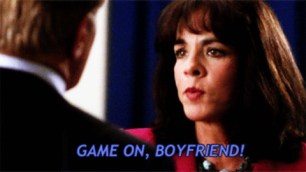
We’ll do mushy later. So, for now, I just got to say I love you so much that my head’s going to fly off. But, more importantly, game on, boyfriend! Let’s go!

By the way, I feel bad. I don’t think I’ve done enough to help you prepare for this debate.

BARTLET
Why are you telling me this now?

When Bartlet turns around to look back, Abbey pulls out a pair of scissors and cuts off his tie. (about three inches below the knot)

ABBEY
Just ’cause.

Bartlet looks down at his tie, then up at Abbey who has a sly grin on her face.

BARTLET
Oh, my God. You’re insane. Are you…? You’re insane! Charlie!

Bartlet runs out into the HALLWAY.

CHARLIE
Josh, we need your tie.

JOSH
What the hell?!

CHARLIE
Take it off!

C.J.
What happened?

BARTLET
My wife cut it off with scissors.

JOSH
Why?

BARTLET
I don’t think we have that kind of time, Josh.

“We don’t have that kind of time!” I loved that.

It isn’t an explanation, which is just as well, because an explanation wouldn’t help anyone, even Josh. C. J.’s question is perfectly natural—C.J. can see the the tie has been cut—and the answer is short enough to use even while everyone is rushing around frantically. Josh’s question leads in another direction entirely. It brings long therapy sessions into view; deep explorations of the First Lady’s psyche. That is what there is not “that kind of time for.”

But that isn’t what caught me this time. Go back up to the dialogue, starting with “Remember the time…” All the time the two are facing each other, Abby is holding a pair of scissors in her right hand.  We can’t see it, but once she uses it, we know it was there all along.

She sees no contradiction at all between the scissors (and what she plans to do with them) and ironic comments like, “So…do you think there is any point in still having the debate?”

There seems to be no contradiction in her mind between the scissors and the emotional and apparently heartfelt proclamation, “We’ll do mushy later. So, for now, I just got to say I love you so much that my head’s going to fly off.” She delivers that line with an intensity that is a real problem for a viewer (me) who knows she is holding the scissors and what she is going to do with them.

And her “apology” for not doing enough the help him prepare is just the verbal context for what she is about to do with the scissors. And when you understand that—when you know what she is about to do as you watch her deliver that line—the contrast is amazing.  It’s enough to make anyone a Stockard Channing fan.  Or at least, an Abby Bartlet fan.

And worst of all, it works. The superstitious panic we see in Jed’s remarks, and which has been a feature of the episode up to this moment, has been disabling. He is relying on “the old stuff.” Abby simple deprives him of “the old stuff” and puts him into a panic that serves him very well in the debate.

Game on, Abby.

Posted in Politics | Tagged , , | Leave a comment