
Not much of a question, from a theological point of view. Yes. God is still there. A God who is everywhere is “there,” whatever you had in mind when you used that word.
But the question is not very often asked from a theological point of view. It is asked from an experiential point of view and the circumstances that wring that kind of question out of a Christian can be appallingly bad. [1] I have two circumstances in mind.
The first is the “presence,” the taken for granted presence of God in the life of a believer. You have been taught, as a proposition, that God is there and nothing in your life has made you reconsider the proposition. You have been taught that these feelings are evidence of God’s presence and you are taught what to do when those feelings aren’t there. These little remedies are aspirin-sized remedies for what amounts to a religious headache. For the person in this picture, it is not a headache.
That kind of “presence” doesn’t really answer the question because in that circumstance, no question has really been asked. For instance, “Which way is up?” is kind of an entertaining question until your first serious bout with vertigo. Then it is a lifestyle question.
The second is the “presence” of God when you can’t feel anything at all. This can be acutely traumatic. The gap between Jesus’ first prayer in Gethsemane (Is this really necessary?) and his second, (Your will be done.) shows how severe the loss of the sense of God’s presence can be in someone who has counted on it.
“Are you still there” can be a wrenching cry of the soul. I know that. I don’t want to minimize it in any way. But I do want to understand it better. To do that, I am going to offer a simple structural version of the problem and then tell a couple of stories that illustrate it. [2]
Here is the structural version
You can’t experience “God” directly the way you experience the wetness of water directly. You have an experience of some sort and you attribute that experience to God. It reveals the presence of God in your life (and affirms, logically, that there is such a God) or it means that God is acting on you to support you or to give you some job or other to do. We learn these attributions as groups of Christians. We teach them to each other; we fine-tune them for each other; we explain the anomalies for each other. These social structures are what sociologist Peter Berger calls “plausibility structures.” All communities of every kind whatsoever use such structures.
It does, however, conflate the experience with the attributed source of the experience. I know God is there when I think these things or do these things or have those feelings, etc. If you keep “God” and the means by which you experience God, separate, then you are staving off any possible disaster. But people really don’t do that. They make the experience and the way they explain the experience to themselves into one thing. You know they aren’t, but it is very hard to keep them separate.
Hunt for Red October
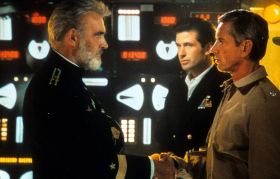 There are lots of reasons to like McTiernan’s Hunt for Red October, including Alec Baldwin’s imitation of Sean Connery’s attempt to sound Russian, but I keep thinking of Courtney Vance as Seaman Jones, the sonar operator. He knows that the Russian submarine, the Red October, is there because the sounds he hears through his headset and the squiggles he sees on his monitor tell him the sub is there. He is listening to the sound of the engines. But the whole point of Red October is that they have a new “silent drive” and when they turn it on and all the engines off, the Red October “disappears.”
If Seaman Jones had conflated the existence of the Red October with his experience of the Red October, the beeps and he squiggles, he would have every reason to believe that the Red October was no longer there. He could have said, “It is gone” but he is too savvy for that. What he says is, “It disappeared.” That is precisely correct.
Apollo 13
Ron Howard’s Apollo 13 gives us a less savvy observer. Dr. Chuck (Christian Clemenson) has the job of monitoring the vital signs of the three astronauts. He can look at his monitors and read off the blood pressure, and pulse, and bladder pressure of all three astronauts because they are “wired up” with sensors and the information is communicated to Dr. Chuck in Houston. For Dr. Chuck, the beeps and the squiggles ARE the astronauts. These blips and squiggles are the actual experience Dr. Chuck has; it reveals to him the condition of the astronauts (and affirms logically that there really are astronauts) [3] He completely conflates the existence of the astronauts with his current modality for experiencing them.
That makes him look like a fool when the astronauts, under considerable stress from the damage to their spacecraft, decide that they have had enough of the world knowing way too much about the functioning of their bodies, and they rip off the sensors.
Dr. Chuck, who, as I said, is not as savvy as Seaman Jones, exclaims “They’re gone!” It is not a philosophical conclusion he has reached. He is looking at his blank screen, the only evidence he has had of the existence of the astronauts, and his immediate reaction is that the astronauts are no longer there. And if you conflate [4] what you know with your way of knowing it, that is what you open yourself to. I recommended, above, “keeping them separate” (paragraph 8) as a way of “staving off disaster.” Dr. Chuck doesn’t do that and has the immediate experience of disaster.
Fortunately for him, Gene Kranz (Ed Harris) is in charge of the operation and he knows what is going on. “It’s just a little mutiny,” he tells Dr. Chuck. And then adds, needlessly, “I’m sure they are still there.” He is sure they are still there because he has a larger understanding of what is going on. He knows how anxious and angry the astronauts are and he knows how the connection is maintained between the monitors they are wearing and the blips and squiggles on Dr. Chuck’s monitor.
Don’t be Dr. Chuck
I wish that I, as a Christian, were more like Gene Kranz when apparent disaster looms. Unfortunately, the only times I can really count on being like Gene Kranz are when things are proceeding the way they should and my faith is not called into question. When all the things that cause me to attribute to God a loving care for my life (and for all lives) disappear, I revert to Dr. Chuck mode. Now, of course, I am theologically sophisticated, so I don’t say out loud what Dr. Chuck says. I don’t say it. But it is where I am and in my sickness of heart, I initiate whatever Plan B operations come to hand.
I wish I didn’t. I know better. Eventually, my Gene Kranz self—or more likely the community that plays the Gene Kranz part for me—comes back and I say, “No…I’m sure He’s still there.”
[1] As always, I do not mean, by specifying Christians, to exclude the experience of people of other faiths or of no faith at all. I am referring to the context I know best.
[2] If you can get over my dealing with such an intimate experience by making references to movies, you should be OK with this essay. Otherwise, please don’t read to the end and then get angry.
[3] Quoting myself from paragraph 7.
[4] It just now occurs to me to wonder if the unnecessary and potentially disastrous condition of conflating the means of knowing something with the thing that is to be known, should be called “conflatus.” There is a certain satisfaction in that phrasing and just might help you let go of it.
 less than punitive ones (or than no programs at all) and you and I ought to be on the same side of those issues, working together to achieve mutual success.
 Well…the “help” in “help him” is a different “help” than “How can I help?” They have helped Andy Keener in the sense that they have ruled out, each and every time he has come in, some more serious possibilities. That’s a help; sort of. And they treated the presenting problems each time. Max rattles off four on his way to a “solution.” The four are fatigue, heart arrhythmia, stress, and malnutrition, but we know there are more. So it is not true that Max and Colleagues have not helped, but they have not dealt with the fundamental problem, which is that Andy lives on the street and bad things happen to him.
 several days now.
 So in Henderson’s world, the commandment about killing is just an instance of his commitment to all the commandments, including the one about stealing, which is what gets him killed in the next turn of the plot.
 The little badger invented by Russell Hoban and brought charmingly to life in the illustrations of Lillian Hoban, has been my favorite badger for a long time. [1] I have liked all the Frances books, but I have had reason to use this particular one—A Bargain for Frances—because it is a finely drawn instance of a situation I have to deal with a lot. The situation is the conflation of strategy and tactics.
 been played for a sucker, she ends a little song she is singing to herself, “…Mother told me to be careful. but Thelma better be bewareful.” This is a different matter entirely. Mother’s advice is good, but it is general, and, being parental, easy to ignore. Frances’ threat “better be bewareful” is not only specific, but Frances is saying the she, herself, needs to be taken account of. She is, herself, capable of wreaking vengeance. This is a transformation of Frances’ character [3]
 This same transformation is caught in the substitution of “halfsies” for “backsies” Backsies is crucial to the con game. You make the deal and when you find out you have been defrauded, “no backsies” is a crucial part of the deal. That is why the sucker is required to accept those terms first. So Frances and Thelma take the pathetic dime that Thelma has given Frances as part of being cheated in return, and they go together to the candy store and each spends half of the dime on candy. “Halfsies” is a perfectly appropriate deal among peers who are friends and “backsies” are completely unnecessary.
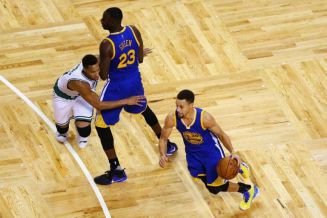 basketball (not pro ball), and professional tennis. I’m not going to try to justify those. They are just the ones I most enjoy watching.
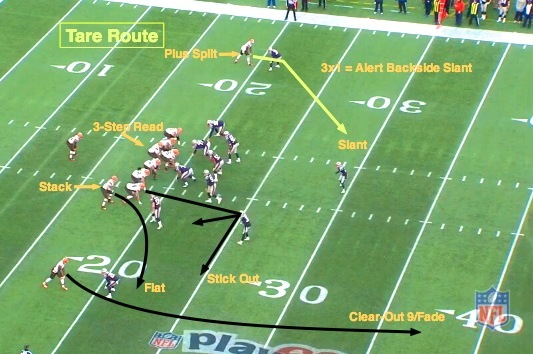 ran the same play three times in a row, delivering the ball to a different receiver each time. It is a considerable strain on the defense to defend “the same play” time after time, only to have it work differently time after time. So theoretically, I could have started with a leftover, “old style” preference for Los Angeles, and have been won over by the smart play of New England.
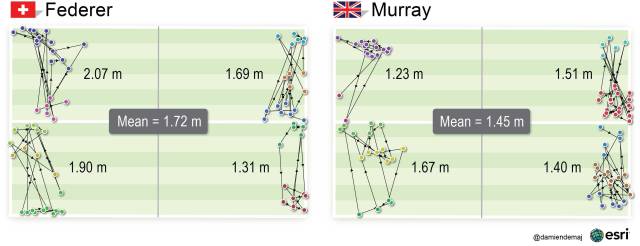 It works the same way in tennis. If I can pull the opposing player a little wider with every cross court shot, eventually, I will get him to where he just can’t make it all the way back and if he commits to the long trek too early, I can just hit it behind him. On the other hand, if the defensive player does more with my shot than just returning it, he can break up the whole sequence and capture the offense for himself. I like both of those and whoever is doing it better is the one I would like to be appreciating more.
 Toward the Scrupulous.” [1] So “weak” in this context means “scrupulous,” or as we would more likely express it, “overscrupulous.” Paul is clear that what he means is things like refusing to eat meat and drink wine and and honoring special days. These very particular things are part of the faith of “the weak;” they are the style of the faith of the weak. They are completely authentic. They express their sense of what God requires. [2]
 And this is where it gets good. The obligations are symmetrical in the sense that we owe them something and they owe us something. But what we owe them is different from what they owe us. And the difference is acute when you look at it psychologically. The weak are not to “condemn” the strong. The verb is krinetō and it does not mean “judge” in the sense of “come to a decision about,” as one would judge one wine to be better than another. And the strong are not to “disdain” the weak. The verb is exethenetō and I think a good modern approximation would be “to diss.” The strong are not to diss the weak. Both verbs, by the way, are imperatives and both have the sense of a continuing action. So we would be perfectly within our (hermeneutic) rights to say, “Don’t keep on condemning/ don’t keep on dissing.” or even “Don’t keep harping on…” So obligations are mutual, but they are not even remotely symmetrical.
 condemnations, exactly. They are insults, but they are not serious insults. They are “lookings down upon;” they are trivializings. They are objections launched from the moral heights against those toiling in the lowlands. They are disdain. [4] Archie Bunker, for instance, was supposed to be a laughingstock. He was supposed to be the excuse for the disdain of “the strong.” Except that America loved him. More oops.
 And I think it should. Paul’s time horizon is very short. He believes that we are living in the very last days of our era, that the return of Jesus is imminent and that, therefore, there is no need to adopt long-term strategies. I have been saying to my class that Paul is a sprint coach and the marathoners don’t know what to make of him. This is the duty of the strong as they think Paul would see it in the long run.
 difficult experiences.
 And that is what happened.
 I am arguing here that when I exercise excessive prudence [4] I am answering this unavoidable question in a way that affects me.
 in fact, an old man.
 have been prosperous and secure for a long time now and the “values” that were required by “the greatest generation” [3] are no longer necessary.
 There really isn’t any other way to do it if there is not enough work to go around.
 of the citizenry, there will be appeals of that kind by the government to the people.
 to be shared.
 Of course, all is not well. Here is a history of partisan conflict in the U. S. in two paragraphs. Jefferson won in 1800 by inventing a “party” with broad popular support. It was ideologically inconsistent because it welded together northern liberals and southern conservatives (the later, but justly famous Austin-Boston axis) but it was successful. The only parties that were ideologically coherent were minor parties until the 1970s when the GOP’s “Southern Strategy” became the “white party” in the south and started winning elections. The Democrats responded by ejecting their southern (conservative) wing and became a coherent liberal party.
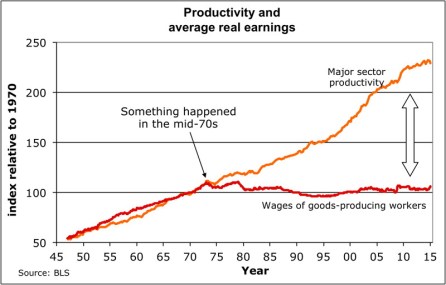 This brings us back to needing “some amendment,” rather than “an amendment.” We have an economically stressed bloc of voters. They are socially stressed as well. The old standards—the way it used to be and the way it ought to be are nearly the same thing for these people—have been replaced by new ones. All the assumptions that supported a white, Christian, androcentric country have taken a hit. These voters are angry about what is being done to them. They no longer believe in electing to office people who can rise above their situation, but rather want people who are angry about the same things. “Drain the swamp” reflects the same emotional levels as “Bring the mother down.” Neither of those is going to happen.
 How you “amend” soil depends, of course, on what is wrong with it. [3]
 could be filled up with populist zealots.

