
Today’s reflection concerns the ‘backlash” that is a familiar part of every news medium. If you could divide news sources cleanly into liberal and conservative (you can’t) you could say that conservative sources emphasize the “back” and liberal sources, the “lash.
Let me offer an example from my years of teaching at Portland State University. [1] During some of those years, I used a text in which the chapter on U. S. foreign policy began with an account of the attack of 9/11. I asked the students, just as an exercise, to substitute the word “reprisal” for “attack.” Then we would talk about it a little.
 One result of this discussion was the open amazement expressed by some students that Arab nations had grievances against the U. S., and yet “reprisal” clearly presupposed that. The word requires that we had done (at least as they saw things) something bad to them and this was the bad thing they were doing to us in return. “What did we ever do to them?” was the first question to come off the pile. It wasn’t an objection; it was an honest question based on near-total ignorance.
A backlash is like a retaliation is one way. It imagines that some offense has been committed to which this action is the response. In the political setting, which is of interest to me here, there is the further supposition that some burden had been placed on a particular population, then another burden, then yet another. And finally, it is just too much. There was once an expression “the straw that broke the camel’s back;” now often shortened to “the last straw.”
When Joseph Welch rebuked Senator Joe McCarthy with, “At long last, sir, have you no decency?”—it was the “at long last” that suggested the addition of one offense to many others. In considering “backlash,” we are in the “at long last” area.
But if you ask people today just what offense the practitioners of the cultural backlash are protesting, the room goes suddenly quiet. Why is that? I think the reason is that people today are as clueless about what conservatives have lost as my students were about what Arab nations had lost. So let’s look at that.
What has been lost?
The chart below, the source of which I no longer remember, shows the correlations between “traditional” and “secular-rational” values. If I wanted to emphasize the findings, I would provide a good deal more information about the study, but I want only to borrow the category names. These statements are phrased so as to be compatible with “traditional” values. [2] If you look at the prompts (forgetting the actual numbers) you see an emphasis on God, on obedience, on patriotism, and respect for authority. Abortion is clearly opposed.

If you asked conservative voters why they were participating in the great cultural backlash represented by the Trump administration, they would say that they want “back” these precious values that had been taken away from them.
All the readers of this blog I know personally are decidedly liberal, so I will ask you to stop and take a breath and note that all these numbers establish is the there are voters with grievances and it suggests what some of those grievances are. There is no need at this point to argue about whether we think these people have a right to feel aggrieved.
The lower part of the chart does the same thing using a different value dichotomy. Here the categories are “survival values” and “self-expression values.” Again, the prompts are phrased so as to be acceptable to “survival values.” Again, I am interested only in the category names. This is “liberal backlash.” After 9/11, “we” chose a Muslim woman as Miss America as quickly as we could.
You can see here that economic and physical security are highly valued. Trust is hard to come by, as is participation in public affairs (the petition). These people are both less happy and less gay. [3] If these people have seen their own economic status decline (they have), have withdrawn from public affairs, and are untrusting in general—trusted people are drawn from face to face settings–you can see that things are not going well for them. Homosexuality is widely accepted—they would probably say “flaunted”—where earlier in their lives is was silenced and opposed. And they are not not happy. At least, they are not as happy as the people who emphasize self-expression, who also make a good deal more money than they do.
These (Traditional/Survival) are people who highly value economic security but have lost it. That helps to explain their relative disinterest in “self-expression values” and very probably their opposition to those who believe self-expression is very important. The world used to be a much more welcoming place for people with “survival values” and now it is not. It is not hard to see why they think that something valuable has been “taken away” from them.
Who took it?
If that were a serious question, it would be vexingly complex, but it is not a serious question. The question of whether you are now without something you value and deserve and the question of “who took it?” are really the same question and are answered at the same time. “They” took it away from you, although they had no right to.
Culturally, “they” is “Hollywood liberals.” [4] Socially, it is the “professional/managerial class.” [5] Politically, it is the Democratic Party. Ordinarily, you don’t have to distinguish; you just gesture and everyone in your tribe gets the idea.
The major message of the Republican party in recent years is that invaluable ordinary  people, the left-behinds, have been defrauded of what they are due by the Democrats and their allies. For that reason, the question of “Who took it?” seldom comes up. Who took it and that it was unfairly taken from you are part of the same message.
That brings us back to backlash, understanding, on this pass, not only the “lash” which has always been clear to liberals, but the “back” which is not nearly as clear as it should be. Knowing what the problem is is still a long way from solving it, but it is better than trying to solve it without knowing what it is.
[1] It isn’t that I don’t teach there anymore. I still substitute for class sessions when old friends are out of town. My official title at PSU since my retirement is “adjunct professor emeritus.” Really.
[2] The “secular-rational” phrasings reverse the values, e.g. the second would would read “It is more important for a child to learn independence and determination than obedience and religious faith.”
[3] It’s an old joke, but I was so close I stopped by just to say hello.
[4] Vice President Pense made a special detour in his address to the graduating class at Liberty University, just to blame “Hollywood liberals” for meddling in state affairs in the south.
[5]Many thanks to Joan Williams, Reshaping the Work-Family Debate: Why Men and Class Matter, for her clarity on that matter.
 You wouldn’t know it by reading the speech [1] but there is a serious policy issue embedded in the Vice President’s remarks.
 by the laws of the state on the other is a dicey business.



 Nicholas Kristof, of Yamhill County, Oregon and the New York Times, drops in on prominent religious leaders from time to time and asks them news-worthy questions.
 argues that Jesus “came back” from death in the sense of coming back to the life he had before.
 gospel is an arch-villain. The Jesus of John is scarcely believable as a human being. Jesus the Man is much clearer in the other gospels, so the divine powers of Jesus in John are not a theological crisis. [1] Jesus is so nearly identical with God the Father, that John has trouble representing Jesus as praying in any meaningful way. Things are not as bad as this poster portrays them, but they are bad. [2]
 Jesus considered the foot washing as a prophetic act. It wasn’t an act of sanitation, as if he had passed foot sanitizer around. It was more like Jeremiah (Jeremiah 27) wearing an ox yoke around so that when his countrymen asked why he was doing that, he would say that this is what is going to happen to Judah when the Babylonians invade. It is why Ezekiel cut off his hair and burned some and threw another portion into the win (Ezekiel 5). It is an action that is meant to teach something. Here is a view of the occasion by 14th century painter, Duccio di Buoninsegna.
 further, John tells us not only that Judas was in charge of the common purse, but that he was stealing from it. [7] Jesus, who presumably (in John’s account) knows about this, doesn’t say anything to him about it. Jesus doesn’t ask Peter to do anything about it. What would it mean to love and serve someone who was stealing from the common treasury. What would it mean for us, in our time, to love and serve someone who was stealing from the church?
 And it’s not just important people either. We are all marked, one way or another, by what we did before we came here. One guy I know used to be a teacher and his perpetual liability is treating his fellow residents as if they were his students. [2]
 judging their behavior and conclude in all fairness, that they are has-beens. That is a sobering conclusion, certainly, and people react differently to it. Some respond with depression and despair; some aggressively market to their present companions how important they used to be. And then there are those people who succeed here as naturally as they succeeded there.
 The third version of the problem looks different in a lot of ways, but it is essentially like the others. There are people here who at considerable cost to themselves, have served the needs of others all their adult lives. Had they been killed in the process of doing that, the media would have called them martyrs and many of their friends actually were killed or wounded. But these people, now friends of mine, survived and now they are here. The daily challenge, which was once just to continue to live [5] is now how to contribute meaningfully. The daring and dangerous business of providing help to people who desperately need it is yesterday’s business. Today’s business has none of that spice at all and it can taste pretty bland.
 bay, security established at home, the power structure stabilized, adequate resources supplied for the family [7]—you were providing nurture to those in need of it, sociability to those who could share it, and conflict resolution for those whose resources had run out. So…guess what. It turns out that in a CCRC, the Important Person (IP) functions are pretty much taken care of by the management. The others—the traditional skills of Unimportant People (UPs)—are the ones that are most important in this new setting and the most valuable people are the people who are good at those skills.
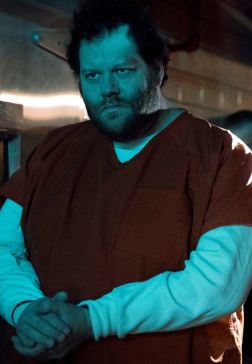 By the end, Burl has not only saved a lot of lives at the hospital, he has also outwitted the guard, Reyes.
 And Iggy, who as Burl’s counselor, knows more about what Burl wants that anyone, knows that Burl has said he wanted to change.
 The Death With Dignity Act is an instance, however, of why it is good to have a referendum as a possibility.
 them noticed is part of the business, but headlines like that first one also get the President noticed.
 This could be “the tribe I belong to” as is the case for the white working class generally. [5]
 You play your “cards”—cite the various elements of the tradition you know—at the place in the narrative where it will do what you want. Matthew makes a collection of the teachings of Jesus and has him deliver it on a mountain to make the parallel with Moses unmistakably clear.
 and the interrogations and the trials and even during the crucifixion.

