
Very often it seems that one of America’s tribes want to see the vulnerable (undeserving) cared for (coddled) and the other wants to spend as little tax money (government resources) as possible on the nanny state (compassionate social programs). And sometimes there are issues that line up just that way. I want to spend more or social programs and you want to spend less. Period.
But there are also issues where much more compassionate programs cost a good deal  less than punitive ones (or than no programs at all) and you and I ought to be on the same side of those issues, working together to achieve mutual success.
There is a lovely instance of such an issue in Season 1, Episode 11 of the NBC series, New Amsterdam. [1] Dr. Bloom, who is in charge of the emergency room, introduces Dr. Goodwin (the director of the hospital) to Andy Keener, who spends a lot of time at the New Amsterdam hospital, and is therefore “ a frequent flyer.” Dr. Goodwin (Max) responds the way he responds to every situation, “How can I help?” Here is scene 1. Max is in the blue scrubs in this picture. Dr. Bloom is on the right.
Dr. Lauren Bloom: You said you wanted to know the next time a frequent flyer came in.
Dr. Max Goodwin: Yeah, frequent flyers mean we’re not doing our job.
Lauren: Well then, you’re in luck. Meet the Amelia Earhart of frequent flyers: Andy Keener.
Max: (to Andy) How can I help?
Nothing complicated so far. But in the next scene, Max arrives at a dollar figure; this is what “treating” Andy Keener has cost the hospital this year. [2] Here’s that clip.
Max: Did you know that Andy Keener has been in this hospital over 100 times.
Lauren: He’s a frequent flyer
Max: If my math is correct—and I’m pretty sure that it is—Andy Keener has cost New Amsterdam $1.4 million this year. And we haven’t done a thing to help him.
 Well…the “help” in “help him” is a different “help” than “How can I help?” They have helped Andy Keener in the sense that they have ruled out, each and every time he has come in, some more serious possibilities. That’s a help; sort of. And they treated the presenting problems each time. Max rattles off four on his way to a “solution.” The four are fatigue, heart arrhythmia, stress, and malnutrition, but we know there are more. So it is not true that Max and Colleagues have not helped, but they have not dealt with the fundamental problem, which is that Andy lives on the street and bad things happen to him.
So Max deals with it head-on. “ Mr. Keener, I’m prescribing you a home.’
The case so far is that effective medical treatment requires the solution Max has invented. But when we get over to social policy, conservatives are going to get really uncomfortable. The hospital is renting an apartment for a homeless person? And then when we get to spending policy—what we want to spend tax dollars on—the fiscal conservatives are going to get uncomfortable. On the other hand, the savings are dramatic, and you would think the fiscal conservatives would like that.
The role of the several kinds of conservatives is played by the “dean” of the hospital [3] In this discussion, Max gets to be the fiscal conservative. Max is a tax and spend liberal, so the Dean is momentarily confused.
Dean Fulton: So…who is Andy Keener and why are we renting an apartment for him?
Max: Andy is a…um…frequent flier. His homelessness has cost this hospital $1.4 million this year alone and many of those costs will go away if Andy just has a full-time place to stay. I mean, renting this man an apartment is actually going to save this hospital money.
Dean: So you suddenly decided to care about money?
You see the Dean’s incredulity in the bold “you.” You, of all people, have decided to spend less? Max is on good ground. If the apartment cost $1000 dollars a month, the hospital saves $1,388,000 every year. This should make the Dean happy once he gets over his surprise that Max is doing this. Max’s medical rationale, after all, is pretty good at the level of the hospital, Max’s answer is pretty good. “ Well, I care about money when it’s only going to one patient when it should be going to thousands.”
So now we turn to social conservatism.
Dean: This is socialism. This is exactly what’s wrong with our whole healthcare system.
Max will not be redirected, “You’re right Somebody really should fix it.” But, of course, “somebody ought to fix it” does not change the subject and it doesn’t take account of the political character of the Dean’s objection. So the Dean gets more specific.
Dean: So this guy abuses the system and he gets a free apartment. What about all the other guys who are working their asses off? You think this is fair to them?
Max: It’s not fair to them, but it’s smart business for us. We’re talking about saving over $1 million a year. That’s a million dollars that could be spent on those very people who are working their asses off, who do deserve more.
Max agrees with the name socialism, but he doesn’t really care. Max agrees with the unfairness to people who are badly off, but not quite as badly off as Andy, but he justifies it as a smart business decision for the hospital. On those grounds, it is really hard for the Dean to object.
That really ought to end the episode. If the writers didn’t care about any more than the policy preferences of liberals and conservatives, the story would end there. It doesn’t, though, and there is this final scene, which I have enjoyed. Max goes to the ER and finds Andy in a bed.
Andy: You going to take away my apartment?
Max: No. I don’t know what to do.
Andy: I…I guess I just like it here.
Max: …You are always welcome here…when you’re sick. And when you’re not sick we have a lot of people that we have to take care of, and that’s just the way it has to be.
Andy: I’ll…I’ll leave. No problem.
A visitor: Excuse me. Sorry, does anyone know how to get to the ICU? [4]
Andy: Oh, dude, you can’t get to the 12th floor from this building. You gotta take the elevator to the 3rd floor, then take the breezeway to Harriman. Then you take the second set of elevators to 12. Then you walk to the end of the hall.
Visitor: Thanks, man. You’re a lifesaver.
Max: Do you[also] know how to get to the oncology ward?
Andy: Of course. I’ve had many the nonexistent tumor examined there.
Max: How would you like to start paying off that apartment:?
Andy: How?
Max: By spending a little more time at New Amsterdam.
They turn him into a guide for new patients, where, we are led to believe, he functions superbly.
[1] You get “Amsterdam” by damming the Amstel river in the Netherlands, by the way, or so they told us when we visited there. Maybe it’s just a tour guide joke.
[2] I couldn’t find a way to make that dollar figure reasonable, so, rather than lose the narrative, I just translated it into “lots of money.”
[3] I have no idea why a hospital should have a dean, but you need to know that Dean is not his first name.
[4] This little intervention out of nowhere is narrative fraud. I don’t care. I like it.
 several days now.
 So in Henderson’s world, the commandment about killing is just an instance of his commitment to all the commandments, including the one about stealing, which is what gets him killed in the next turn of the plot.
 The little badger invented by Russell Hoban and brought charmingly to life in the illustrations of Lillian Hoban, has been my favorite badger for a long time. [1] I have liked all the Frances books, but I have had reason to use this particular one—A Bargain for Frances—because it is a finely drawn instance of a situation I have to deal with a lot. The situation is the conflation of strategy and tactics.
 been played for a sucker, she ends a little song she is singing to herself, “…Mother told me to be careful. but Thelma better be bewareful.” This is a different matter entirely. Mother’s advice is good, but it is general, and, being parental, easy to ignore. Frances’ threat “better be bewareful” is not only specific, but Frances is saying the she, herself, needs to be taken account of. She is, herself, capable of wreaking vengeance. This is a transformation of Frances’ character [3]
 This same transformation is caught in the substitution of “halfsies” for “backsies” Backsies is crucial to the con game. You make the deal and when you find out you have been defrauded, “no backsies” is a crucial part of the deal. That is why the sucker is required to accept those terms first. So Frances and Thelma take the pathetic dime that Thelma has given Frances as part of being cheated in return, and they go together to the candy store and each spends half of the dime on candy. “Halfsies” is a perfectly appropriate deal among peers who are friends and “backsies” are completely unnecessary.
 basketball (not pro ball), and professional tennis. I’m not going to try to justify those. They are just the ones I most enjoy watching.
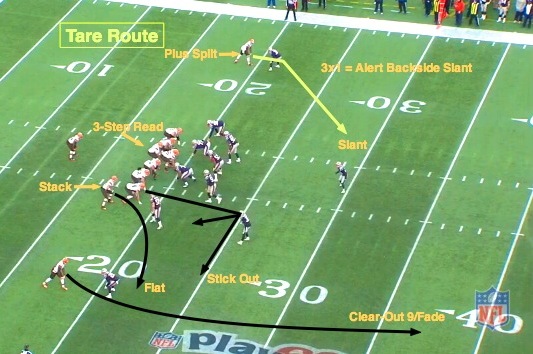 ran the same play three times in a row, delivering the ball to a different receiver each time. It is a considerable strain on the defense to defend “the same play” time after time, only to have it work differently time after time. So theoretically, I could have started with a leftover, “old style” preference for Los Angeles, and have been won over by the smart play of New England.
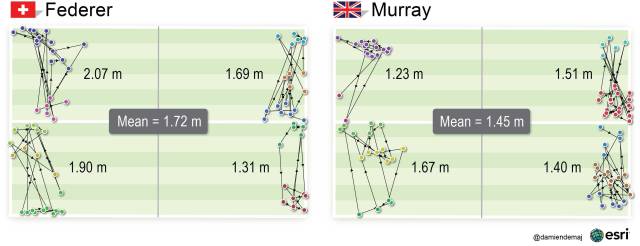 It works the same way in tennis. If I can pull the opposing player a little wider with every cross court shot, eventually, I will get him to where he just can’t make it all the way back and if he commits to the long trek too early, I can just hit it behind him. On the other hand, if the defensive player does more with my shot than just returning it, he can break up the whole sequence and capture the offense for himself. I like both of those and whoever is doing it better is the one I would like to be appreciating more.
 Toward the Scrupulous.” [1] So “weak” in this context means “scrupulous,” or as we would more likely express it, “overscrupulous.” Paul is clear that what he means is things like refusing to eat meat and drink wine and and honoring special days. These very particular things are part of the faith of “the weak;” they are the style of the faith of the weak. They are completely authentic. They express their sense of what God requires. [2]
 And this is where it gets good. The obligations are symmetrical in the sense that we owe them something and they owe us something. But what we owe them is different from what they owe us. And the difference is acute when you look at it psychologically. The weak are not to “condemn” the strong. The verb is krinetō and it does not mean “judge” in the sense of “come to a decision about,” as one would judge one wine to be better than another. And the strong are not to “disdain” the weak. The verb is exethenetō and I think a good modern approximation would be “to diss.” The strong are not to diss the weak. Both verbs, by the way, are imperatives and both have the sense of a continuing action. So we would be perfectly within our (hermeneutic) rights to say, “Don’t keep on condemning/ don’t keep on dissing.” or even “Don’t keep harping on…” So obligations are mutual, but they are not even remotely symmetrical.
 condemnations, exactly. They are insults, but they are not serious insults. They are “lookings down upon;” they are trivializings. They are objections launched from the moral heights against those toiling in the lowlands. They are disdain. [4] Archie Bunker, for instance, was supposed to be a laughingstock. He was supposed to be the excuse for the disdain of “the strong.” Except that America loved him. More oops.
 And I think it should. Paul’s time horizon is very short. He believes that we are living in the very last days of our era, that the return of Jesus is imminent and that, therefore, there is no need to adopt long-term strategies. I have been saying to my class that Paul is a sprint coach and the marathoners don’t know what to make of him. This is the duty of the strong as they think Paul would see it in the long run.
 difficult experiences.
 And that is what happened.
 I am arguing here that when I exercise excessive prudence [4] I am answering this unavoidable question in a way that affects me.
 in fact, an old man.
 have been prosperous and secure for a long time now and the “values” that were required by “the greatest generation” [3] are no longer necessary.
 There really isn’t any other way to do it if there is not enough work to go around.
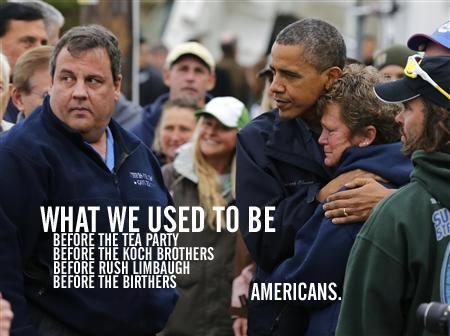 of the citizenry, there will be appeals of that kind by the government to the people.
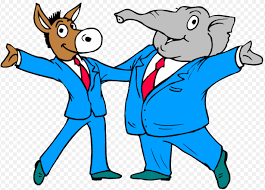 to be shared.
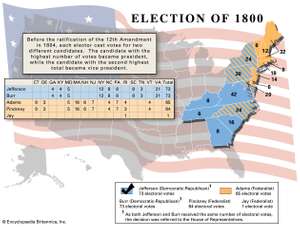 Of course, all is not well. Here is a history of partisan conflict in the U. S. in two paragraphs. Jefferson won in 1800 by inventing a “party” with broad popular support. It was ideologically inconsistent because it welded together northern liberals and southern conservatives (the later, but justly famous Austin-Boston axis) but it was successful. The only parties that were ideologically coherent were minor parties until the 1970s when the GOP’s “Southern Strategy” became the “white party” in the south and started winning elections. The Democrats responded by ejecting their southern (conservative) wing and became a coherent liberal party.
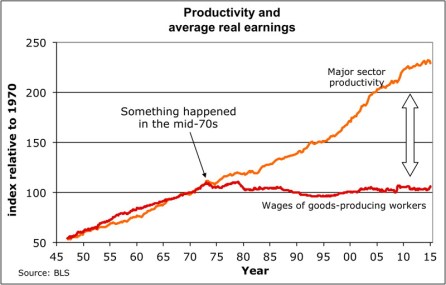 This brings us back to needing “some amendment,” rather than “an amendment.” We have an economically stressed bloc of voters. They are socially stressed as well. The old standards—the way it used to be and the way it ought to be are nearly the same thing for these people—have been replaced by new ones. All the assumptions that supported a white, Christian, androcentric country have taken a hit. These voters are angry about what is being done to them. They no longer believe in electing to office people who can rise above their situation, but rather want people who are angry about the same things. “Drain the swamp” reflects the same emotional levels as “Bring the mother down.” Neither of those is going to happen.
 How you “amend” soil depends, of course, on what is wrong with it. [3]
 could be filled up with populist zealots.
 on the spot, but I liked it right away.
 This turns out to be relevant to what is going on in my life these days.
