When Green Chri$tma$ came out in 1958, I was about twenty years old. I thought it was the funniest broadcast parody I ever heard. I memorized it immediately—not much of a trick at twenty, really—and performed little impromptu snatches of it with friends and family. It was AGAINST the commercialization of Christmas. Can you imagine? In 1958?
Now, in 2014, you can just google Freberg, Green Christmas and hear the whole thing and  if you are my age or so, you can just check off the products that are being referred to, one after the other. What is it, for instance, that is “hot” as that kind of product “ought?”
But…of course…a lot of life has intervened between 1958 and 2014. I still love the skit and I still remember most of it, but a couple of things have come slowly to my mind since the fifties. One is that I have become a good deal more sensitive to the -zation suffix. “-ize” is an action suffix; something has been done to a word that has been “-ized.” A “personalized” birthday card, for instance, was impersonal and then you “-ized” it and now, if you did it well, it is “personal.”
It is easy and accurate to say that Christmas has been -ized and if it is an egregiously commercial “holiday” it has been commercialized. But as a personalized birthday card was impersonal before you personalized it, Christmas was something before we commercialized it. And before it became a celebration of the birth of the Christ (Christ-mas) it was, by various names, the Festival of Sun-return. And some very enterprising Christian missionaries sacralized it and it became Christmas. I’m fine with that. I still celebrate Sun-return. Everyone who is affected by Seasonal Affective Disorder during Portland’s relentlessly gray winters also celebrates Sun-return. I also celebrate Christmas, mostly Advent in my case, and enjoy them both.
Green Chri$tma$ scandalized a lot of people. It was played only twice in New York [City] by one disc jockey, and the station’s sales department threatened to have him fired if he played it again. Robert Wood, manager of KCBS-TV in Los Angeles, told Freberg it was “sacrilegious,” which it might well have been although we would need to know Wood’s religion to be sure.
Sacrilegious? Really? Let’s look.
SCROOGE AND CHORUS:
Christmas comes but once a year,
So you better cash in,
While the spirit lingers,
It’s slipping through your fingers,
Boy! Don’t you realize
Christmas can be such a
Monetary joy!CRATCHET: Well, I guess you fellows will never change.
SCROOGE: Why should we? Christmas has two s’s in it, and they’re both dollar signs.
You really have to like Cratchet, played by long-time Freberg associate Dawes Butler. He is so sincere it almost makes your gums hurt. And Freberg’s Scrooge is so really really awful. It is immediately satisfying to be opposed to Scrooge. You find yourself backing into agreement with Cratchet as you are backing away from Scrooge. But, of course, backing into a position is not a good way to understand the position you are about to take.
Cratchet’s position is that Christmas has a meaning, a purpose. He doesn’t say what it is, of course, and Scrooge is not denying that Christmas has a purpose. In Scrooge’s world, the purpose is commercial; in Cratchet’s, the purpose is…well…benevolent. Christmas means good things. Here’s his introduction to the idea.
CRATCHET: But Mr.Scrooge…
SCROOGE: What? Who are you?
CRATCHET: Bob Cratchet, sir. I’ve got a little spice company over in East Orange, New Jersey. Do I have to tie my product in to Christmas?
SCROOGE: What do you mean?
CRATCHET: Well, I was just going to send cards out showing the three wise men following the Star of Bethlehem…
SCROOGE: I get it! And they’re bearing your spices. Now that’s perfect.
CRATCHET: No, no… no product in it. I was just going to say, “Peace on Earth… Good Will Toward Men.”
 I have nothing against “good will toward men.” Toward women too, using the current notion that “men” is a necessarily gendered term. But according to nearly all modern translations, what the angel host proclaims is “…on earth, peace for those [God] favors.” That might not be the most culture-affirming meaning, but it is very much like Luke’s gospel. In Luke, it is the infant child’s mother who says, “My soul proclaims the greatness of the Lord…He has routed the arrogant of heart, He has pulled down princes from their thrones and raised high the lowly. He has filled the starving with good things and sent the rich away empty.”
Unless Cratchet has a lot more stuff to him that I hear, he’s not going to be much attracted to this particular proclamation. And the angel who gives the message before the heavenly hosts even appear isn’t all that full of “good will toward men” either. “Look,” he says, “I bring you news of great joy, a joy to be shared with the whole people.” It is, in other 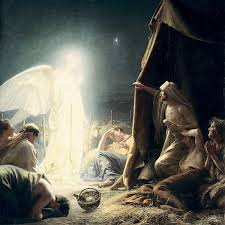 words, good news for Jews. It is good news for anyone who has been awaiting the arrival of the Jewish messiah, the one who will take “the throne of his father, David.” But you have to notice that nearly all the people who have been waiting for the Jewish messiah are Jews.
This is not to say that there are not Jews in East Orange, New Jersey Nor is it to say the Cratchet does not know these Jews and wish them the very best of the season. Cratchet is a really good guy. Not just in comparison to Scrooge. He is a good guy. But “peace on earth, good will to men” is not the message of the Season in any of the scriptures we have.
So Freberg winds up, very uncharacteristically, in the middle of the road. He offends the various advertising departments by being “anti-commercial.” He asserts that “Christmas has a meaning,” but doesn’t go so far as to say what it is. And Scrooge, although he is not a nice person, triumphs over Cratchet. We know that because of the little choral war in the last few bars, in which “Joy to the World” alternates with “Deck the Halls with Advertising” and the last sound you hear is the ringing of the cash register drawer.
But here’s the beautiful thing about America. Freberg satirizes two products in a very recognizable way: Coca Cola and Marlboro Cigarettes. There are other references as well (“Ty-ne-Tim chestnuts roast hot, like a chestnut ought” for instance) but these two are blatant. Within six moths, both companies asked Freberg to create an advertising campaign for them and Freberg actually did one for Coke.
So the commercial collegiality swallows up even a lampooning by one of the most astringent and certainly the funniest satirist of his time. Ain’t it grand?
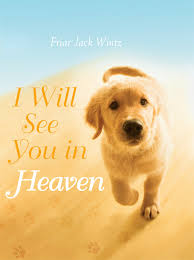 ond Noah’s ark, in which a breeding remnant of all species was included. It gets us to the inclusion of all animals and, depending on just what the Pope had in mind by “creatures,” all living beings whatsoever.