
Who is really well placed to act in loco parentis?
That was a big deal question when I was in college. Mothers and fathers sent their children off to far away institutions, some of them hoping that the college would act for the welfare of their progeny as they would have. That hope is captured by the Latin expression, which means, “in the place of the parent.” This was not very often the wish of the progeny, as I recall, who were all to happy to be away from home and free to begin crafting a new identity. [1]
Is the sense of the word place that I want to use today. For me, Wheaton, Illinois where I was an undergraduate, was a different place than Englewood, Ohio, where I had lived with my parents. But that’s not really all “place” means. In very status-oriented settings, where there might be servants to take account of, “place”could mean both things at the same time. Here’s an example from Dorthy Sayers’, Busman’s Honeymoon.
“Bunter,” said Lord Peter Wimsey, “You’ve got some beer for Puffett in the kitchen.”
“Yes, my lord”
Mr. Puffitt, reminded that he was, in a manner of speaking, in the wrong place, picked up his curly bowler and said heartily, “That’s very kind of your lordship. Come on, Martha. Get off your bonnet and shawl and we’ll give these lads a ‘and outside.”
And even today, we will hear someone say, “Of course, it’s not my place to…” Most often, that means that some appropriate person—often a parent—should do something that the speaker thinks should be done. The little tag “Of course…” indicates that the person is putting himself or herself in loco parentis and knows that isn’t quite proper. It is not his “place.”
Because I’m your mother, that’s why
This familiar appeal to authority can be heard at the very end of many parent/child transactions. [2] This is not new information to the child. The child knew this was true all along and may even have known that this final discussion-ending pronouncement would be used eventually and may even (even) have been counting the steps until it arrived. The child knows this is his mother; he knows the mother is in distress; he is riding and perhaps celebrating, the waves of the events that precede its use.
 And what are those “waves of events.” As specific tools, they vary, of course, from one parent to another, but as kinds of tools, they are pretty common among parents who are trying really hard to be “modern” [3] and “positive.” These tools involve amazing levels of “polite request” and “expressions of appreciation” for the children’s compliance with those requests that sometimes occurs. The tools involve praising a child for doing something he has no sense of doing at all. This has the effect of weaponizing the child, who now knows what behavior he is currently foregoing and therefore what behavior will bring him the attention he craves. The kid who was perfectly happy looking out the window, learns, for instance, that he has been passing up jumping up and down on his seat.
All this politeness and all this reinforcement of “positive” (really, just “not negative”) behavior are attempts to postpone or to avoid getting to that last stop at which the mother says, “…because I’m your mother.”
A MAX mother
Let me use, as an example, the events that brought this to my mind most recently. I was riding a MAX train—that’s light rail for you non-Portlanders—a few weeks ago. I was trying to keep my bicycle, hanging from a hook behind one of the seats, from swinging out into anyone’s path, so I didn’t see the mother and her three children get on. They established themselves across the aisle from me; there was at least one child in a baby carrier the size of a town car and there were two older children running interference.
I am going to be critical of this mother’s interactions with her children not because they were so egregious, but because they typified a style I have seen in use for some years now and which I particularly dislike. [4]
The first thing that caught my attention was the use of “Please” and “Thank you.” To a  little girl standing on her seat, the mother say “Would you sit down please?” and, when the little girl sat down, “Thank you.” Why is that a good thing to say, I wondered.
And then, to the little boy, who was sitting beside her looking out the window, “You’re doing such a good job of sitting in your seat, Jason. Thank you.”
Why do parent talk like this to their children? If you imagine that they are, basically, a group of peers out on a trip, it would be easy to say that politeness is better than impoliteness, courtesy better than discourtesy. And that’s true, of course, but when you lay out those alternatives, you are buying the premise that these are peers out on a trip. It is under those circumstances that courtesy and discourtesy are the important notions. And in this scenario, no one, please note, is in loco parentis.
And if you are a young mother who is a fan of this style of child-rearing, you will certainly want to object. The most common objection I have heard is that it is better than “the alternatives,” by which the defender normally means abrasive, punishment-oriented parenting. But, of course, that is “the” alternative only if you hold to the “peers out on a trip” model, in which no one is in loco parentis. I don’t like that ugly threatening parenting style either and I don’t want to do anything to justify it.
Whatever parenting style is used, I would like to see it justified by saying that it works. That is a better justification, I think, than that it is polite. It achieves the desired control of the children’s behavior, it makes available to the children all the kinds of experience that are appropriate in the setting, it protects passersby from the din of unceasing parenting, it leaves the parent in good enough shape to all the other things she needs to do. Those four are the effects I have in mind when I say that a style of parenting “works.” [5]
Does all this “politeness” work? No. I don’t think it does. I think it teaches the children that what the mother tells them to do is, essentially, a request for a favor. This puts the child in a very uncomfortable place. He may grant it, in which case, the mother owes him something. What? He may refuse to grant it, without any notable consequence to himself (until, late in the series, we begin to approach “Because I’m Your Mother!”). The child is being trained to regard what his mother tells him to do as the starting point of a protracted negotiation. Very often, this negotiation is much more entertaining than any other course of action available to the child–much more than sitting quietly and looking out the window, for instance.
I began to think about this some years ago when the suffix “OK?” began to be added to requests and even to orders given to small children. [2] It may have been that the first use of the added tag, “O.K?” was to soften the sound of what otherwise would have been an order to one’s children. That’s what it sounded like to me at the beginning. But as it became a longer and more emotional add-on, it took on the role of seeking permission. “Sally, sit down on your seat, is that OK with you?” [6]
So a child in this scenario, is empowered to place a tax—think of it as a tax on the attention of the mother— on every transaction. The child receives the income generated by the tax; the mother and the siblings pay the tax. The passersby pay the tax as well. It is asking a lot, I think, to require that the child will forego this very attractive situation and most children don’t, particularly when no one is in loco parentis.
What would work better
 What would work a good deal better, I think, is for the parent—we have been considering the mother here, but there is no reason it couldn’t be the father—to take the role of the parent, to be in loco parentis. That means that she has special authority to organize the behavior of the group, to dole out rewards and punishments as needed. She can be as sweet-tempered as the situation allows her to be, subject to getting the work done successfully. And let me remind you that “successfully” has independent metrics for the safety of the children, the health and welfare of the mother, and the safety of non-belligerent parties, such as neighbors and passers-by.
“Because I’m your mother, that’s why” is changed from the fraught and unhappy last stage, to the presuppositions of all the interactions the project requires. “Because I’m your mother” is taken for granted in all considerations bearing on the health, safety, and welfare of the group. It is not an excuse for bad manners. Rather, it provides the extra space in the relationship where politeness can be offered without the danger that it will be taken as appeasement. When the children are, as in the example above, “taxing units,” the costs of all the transactions will be driven up.
A Wise Man Once Said
Finally, I’d like to remember the reflections of one of my favorite pediatricians. He was in practice for a long time and as someone who dealt all day every day with parents and children, he was in a position to reflect on what worked and what didn’t. Over the years, he became wary of prescriptions about child-rearing that were too specific or that promised more than they could deliver.
He said that all the good parenting styles he saw—many, many different styles—had two elements. They had clear standards that the parents and the children understood in the same way and they provided consistent loving support to the children as they negotiated and then internalized the system. Those two things.
Now in fact, this pediatrician is my older brother, Karl. I say that only to give you a chance to disregard my use of his wisdom on the grounds that I am related to him. But Karl shared that insight with me a long time ago and I have used it as the basis of my own thinking about this problem for a long time as well. So my advice to you is, before you disregard it on the basis of our family connection, try it on and see if it works as well for you as it has for me.
[1] Even those of us who knew that loco meant “place,” smiled to ourselves as this distant extension of parenthood was called “loco,” a point we thought was too appropriate to deserve further comment.
[2] I don’t remember using it, myself, although some of my kids read this blog and will correct me if I am wrong, and I don’t remember hearing men resorting to “…because I’m your father” in the same way. Maybe the role discrepancy doesn’t get as wide as it does for mothers. Or maybe I just haven’t noticed.
[3] I think that mostly means, “not the way my mother was.”
[4] Before you waste the energy pointing out to me that getting a bunch of small children safely from Point A to Point B is hard enough and that she may have had a very tiring day before the episode I saw, let me grant all of that. I don’t mean to be critical of the women I saw on the train. She did call to mind an approach to parenting of which I do want to be critical.
[5] I did my own years as a parent of three small children and I know that you can’t always manage to achieve all these goals. Still, I think it is important to keep them as goals so you will be able to keep track of the tradeoffs you will be forced to make
[6] Originally just OK with a very slight upward inflection to indicate that it was a question, but fairly quickly, a much more elongated O-Kaaaaay? with the drawn out a- and a much greater upward inflection. The short OK might have been a request for confirmation that the direction had been received. The long one sounds like supplication to me.
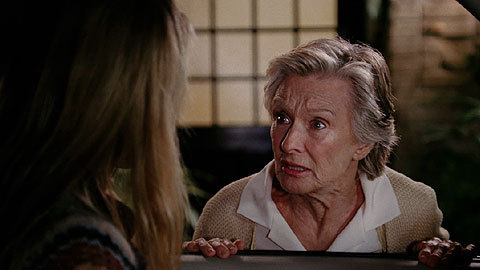 restaurant with one of the most beautiful women in the world and the wife interrupted her affair long enough to notice. She hopes desperately that the husband has had an affair. She thinks that would somehow make it easier for the marriage to survive her affair. Here are the grandmother and the wife in urgent conversation. I’m not even going to bother to identify the parts. It begins when the husband comes home. We, as viewers, have already seen what it cost him to continue to be faithful to his wife.
 And if we did that, the moment would go by when the argument can be put aside just for now and simple humanitarian assistance given—without a ruler across the knuckles for once. And the resentment of elite know-it-alls in exacerbated and Trumpism gets stronger. You can see why Pruitt would like that. You can see why I wouldn’t.
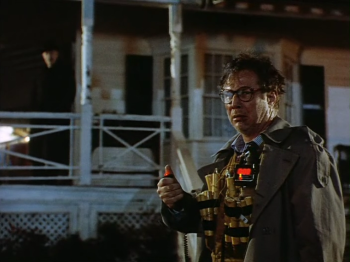 accumulated—“a lifetime of reasons”—that present events cannot be made the reason for deciding what to do. In that way too, I think Keaton illustrates the resentments of the right wing.
 thing I want to say is that if there are indeed two (or more) and if they operate independently, it is crucially important that we know that. Not knowing it makes us all look foolish.
 similarly formal system. You confess your sins to the priest, [4] he prescribes some act of penance (and possibly of restitution—the movies aren’t as clear about that) and then pronounces, on God’s behalf, that you are forgiven and restored to full fellowship in the church. I hope that account isn’t too far wrong; I am trying only to illustrate a non-state version of the judicial system.
 If there is only one system, then the behaviors of the other person will be evaluated using the norms of that system. This is the step where I lose people, so let’s imagine that a well-known rugby player, Jonah Lomu, for instance, is referred to as the dirtiest basketball player in the league. I know that makes it seem silly, but if you really believe that the only game there is is basketball and if, with that in mind, you watch Lomu doing this, you will be driven to that kind of criticism.
 that it is really hard to do. Picture this. A man finds that his wife has been sleeping around in the neighborhood with his friends. What he wants from her is some sign of remorse and a good faith promise that she won’t do it again. What he gets after each episode is…oh, “enhanced affection” from his wife. Whatever it is that he likes best about the relationship, there if more of it for him for awhile. This is perfectly in keeping with his wife’s understanding that what she did was emotionally hurtful to her husband and now she is making up for it by being emotionally receptive to him. There are no “offenses” here; I was mean so now I am being nice.
 “the reconciliation room.” I liked that It had never occurred to me before that you could name the room after the outcome, rather that after the process.
 nobleman turned shepherd, had seen a lot of bushes on fire, but never one like this. It struck him as odd and he went to see it on the grounds that it was a natural oddity. I was an anomaly. It was The Anomaly.
 But as I said, the name God gave to Moses can be understood as “I will do what I will do” and the doing accomplished things that the name could not. Moses was scarcely willing to believe in the project himself, so God gave him three tricks to do. One has to do with a walking stick that turns into a snake and then back; one with a hand that is terribly diseased and then healthy; and one about water that turns into blood when you pour it out. Moses can, apparently, picture being persuasive in Egypt if he has these tricks in his repertoire. They certainly work for the elders of Israel the same way they worked for Moses. They didn’t believe in the name, but they did believe in the deeds.
 Real issues are at stake. One team is going to win and another will lose. I want to be on the winning team so I subordinate any other interest I might have to the team’s needs. Ordinarily, for instance, I’d rather score than rebound, but winning tonight is going to require more rebounding, so I pass up my shot and get in position for the rebound. This is so clearly what the team needs that I might not even be conscious that I am doing it. But if you see me doing it, you will know how to understand it.
 cost of parking. A resident is recognized and goes on for awhile about how rich our area is in public transit and how, as a result, there is very little need for a resident to have a car at all. That’s the real way to deal with increases in parking fees!. Let’s imagine that this resident is well-known for his pro-mass transit views and nearly always expresses those views in private or small group conversations. It seems odd to us that this familiar pitch would be made again in a public meeting and that the time of the meeting would be taken up by what is, essentially, a public service announcement. But if it is true that this resident would not have allowed himself to make this pitch in a public meeting during “game time,” then his willingness to allow it now is yet another indicator that we have arrived at garbage time.
 Of course, I don’t want to argue that there are, in fact, people who think of the meetings that way. I don’t know whether there are or not. I don’t think I know anyone about whom I would say that—that they attend meetings just waiting for garbage time. On the other hand, this is a way of looking at the meeting that starts at a different place entirely. It understands the meeting as a way for individuals to meet their individual needs in public and that way of understanding the value of the meeting had never occurred to me and likely never would have.
 Sheriff Arpaio was convicted of “flagrant defiance of another judge’s orders in a long-running case over the former Maricopa County sheriff’s targeting of Latinos in Arizona,” according to Joan Biskupic, a CNN court reporter. The court said that Arpaio was violating the constitutional rights of Arizona citizens and he said he didn’t care and wasn’t going to quit. Hence the arrest and conviction.
 Hatfields and the McCoys. [1] On the one side of this divide would be the laws of the land and the men and women charged with seeing to it that it is obeyed. On the other would be the people who are immune from legal prosecution for anything they do on behalf of their tribe. It would mean looking at Eliot Ness and Al Capone as the heads of two tribes fighting for supremacy in Chicago. The fact that one represented the law and the other a criminal organization is not brought to light in this conflict of tribes perspective.
 I know that is where tribalism goes. I don’t know if we are taking large steps in that direction. It looks like it. People who stand up for the integrity of the law will be accused as being members of “the other tribe.” The Tribe of Anti-Trump. That is, after wall, what Capone said to the members of his organization who were not Anti-Ness enough. It is what members of the McCoy Clan said to family members who were not Anti-Hatfield enough. It is what President Nixon meant when he urged the people of his administration to “take one for the team” and go to jail. But he didn’t pardon them.
 can’t believe what he says. He is not credible. That’s the old basic meaning, but it isn’t the meaning that is reflected most in current usage.
 Let’s look at what that boundary condition means because as much fun as it is to have an enormous monster with great pecs and a bad disposition, it is less fun to have a Chief Executive who frequently leaves the common human condition and does “incredible things.”
 President Trump has not had a major legislative victory yet and probably won’t ever have one because his inability to win the early battles causes him to declare war on his teammates. Trump needs to be seen as a winner. That means that high profile programs need to be passed by the Congress. But when the early votes fail, he experiences “signs of stress” and begins to attack his team members. Trump has major conflicts going on now with Paul Ryan, the Speaker of the House and with Mitch McConnell, the majority leader of the Senate.
 describe than I thought.
 There are travelogues as well, because quite a few of these men have lived a lot of places, but we keep coming back to the question on the floor.

 Even if you went up to the 16th floor for the purpose of watching the solar eclipse, you found a lot of competing claims on your attention. Here are Holladay Park Plaza (a really good senior center on the east side of Portland, Oregon) we make a lot out of events. So there was a whole table full of edible puns for us to enjoy. There were the dark Oreo cookies set on top of the light Oreo cookies. There were Starburst candies. There was a large container of ice and water sitting next to a large container of ice and a dark tea of some sort. [1] There were Sun chips, cut-out cheese moons, that you could mount on dark crackers. You could eat away the whole eclipse time if you wanted. This shows the roof from the west. We were up there just on the other side of the brown sign.
 if only a few people felt that nothing was going on that needed their attention. We watched the construction of the building just east of us slow down and then stop entirely. It was still light enough to see how to cover the rafters with big sheets of plywood, but maybe a little break in the action would be appreciated.
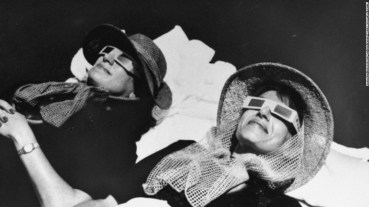 I found myself interested in whether people would think of the closest approach to totality as the end of the show or the intermission. I thought it would be fun to watch when the general exodus began. It began almost as soon as the bright crescent of the sun started to increase again, but by that time, I had thought how many other variables ought to be considered. A lot of people had been sitting out in the sun for a long time by then. Quite a few had been standing for awhile by then. The restoration of the sun may not have seemed all that different from the occlusion of the sun; not that much to hang around for.

 So even Lincoln’s program under Lincoln’s leadership would have failed in the short run, but Lincoln wasn’t really in it for the short run. He calls, in the final clauses, not only to achieve a just and lasting peace among ourselves, but also to cherish that just and lasting peace. I don’t think Lincoln would have achieved it, but I do think he would have cherished it and I think that is where we have fallen down in our time.
 I saw the result of that during my visit. Every way of embracing and cherishing Irish culture was at the same time a rejection of the Anglicization project. If it didn’t take all ten fingers to play the harp, I think one of those fingers, a finger with its own significance, would have been raised meaningfully against the English. That is the present day expression of all those years of denial and derogation.
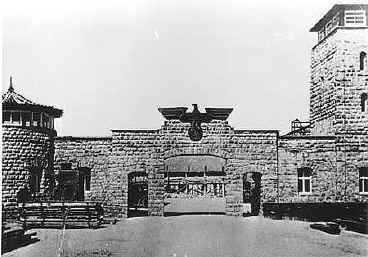 (you see the problem) death camp. It was in Mauthausen, Austria [2] But I saw it twice because I took the Elderhostel bicycle tour twice and it was the historical site featured on that day. Before we went out to see the camp, we saw a film about the era and the camp itself. It wasn’t a preachy film, but the condemnation was consistent and powerful. The first time I sat through the film, these processes were attributed to “the Germans.” The second time, some years later, they were attributed to “the Nazis.”
 against their country, except, of course, being unfaithful to their state. They would be the Southern Statesmen in a Losing Cause. They would be “the Germans.” Their statues could be revered because of their place in the Common Southern Narrative. These statues would be protected in every relevant way, both verbal and physical, by the whole coalition who put the Narrative together.

