
This is the last post of Blogging Year 2018 and I would like to spend it in the company of Andrew MacPhee, the resident skeptic at St. Anne’s in C. S. Lewis’s novel, That Hideous Strength. [1] MacPhee is a “member” the of the company gathered at St. Anne’s in the same way that Satan is a member of the heavenly host in the book of Job or that “the Devil’s advocate” is a part of the Catholic church’s process of confirming people for sainthood.
MacPhee is not a nay-sayer, exactly, but he is way out of his depth in this novel. Ransom, the director of the community at St. Anne’s, has been to Mars and Venus, he has learned to speak the Old Solar language, and he is in contact with the eldila [2] who represent “the Masters” in their plans to save the planet Earth from domination by evil forces. MacPhee has seen things at St. Anne’s that his frame of reference cannot accommodate, but the best he can do is to continue to allow for the possibility that such things are possible.
That is an achievement for MacPhee, because the really does not want them to be possible, but he is a very old friend of Ransom’s and his has a fierce loyalty to him. That doesn’t make him believe in the things Ransom says are true, but it keeps him open to the possibilities.
That takes MacPhee to the outer limits of his abilities as a lifelong skeptic and it is not enough. Just how and why it is not enough is what I want to explore today. This is not just a literary exercise for me. I have a substantial streak of Andrew MacPhee myself and I wonder, from time to time, what work I cannot be trusted with because the character of my commitment is, like MacPhee’s, hypothetical.
Why is it not enough
Several members of the community at St. Anne’s are being recruited to go out and look for Merlin, who has just returned to consciousness after 1500 years of suspended animation. MacPhee wants to go, but no one knows what kinds of powers Merlin has at his disposal and MacPhee is “unprotected.”
Here’s what that exchange between Ransom, the Director, and MacPhee looks like.
‘I have already repeatedly urged,’ said MacPhee, ‘the absurdity of sending out an older man like yourself, that’s done a day’s work forbye, when here am I, a great strapping fellow sitting doing nothing.’
‘It’s no good, MacPhee,’ said the Director, ‘you can’t go. For one thing you don’t know the language. And for another – it’s time for frankness – you have never put yourself under the protection of Maleldil.’ [3]
‘I am perfectly ready,’ said MacPhee, ‘in and for this emergency, to allow the existence of these eldils of yours and of a being called Maleldil whom they regard as their king. And I—’
‘You can’t go,’ said the Director. ‘I will not send you. It would be like sending a three-year-old child to fight a tank.
And later, the Director adds, [For the last time…] “You can’t go, MacPhee. He’d put you to sleep in ten seconds.”
Merlin shows up at St. Anne’s that night in the middle of a rainstorm.
His eyes rested on Ransom for a second or two with no particular interest. Then he turned his head to his left, to where the door was flung back almost against the wall. MacPhee was concealed behind it.
‘Come out,’ said the Stranger [Merlin] in Latin…But what surprised Ransom much more was the fact that MacPhee immediately obeyed. He did not look at Ransom but at the Stranger. Then, unexpectedly, he gave an enormous yawn. The Stranger looked him up and down and then turned to the Director.
The Stranger argues that he has, in fact, already crossed the threshold of the Director’s house.
‘I value that at a straw,’ said Ransom. [in Latin]. ‘Shut the door, Mac-Phee,’ he added in English. But there was no response; and looking round for the first time, he saw that MacPhee had sat down in the one chair which the scullery contained and was fast asleep.
The others discover MacPhee in that chair hours later.
MacPhee, who had just been refuting both Ransom and Alcasan’s head by a two-edged argument which seemed unanswerable in the dream but which he never afterwards remembered, found himself violently waked by someone shaking his shoulder.
That’s the story. I have already praised MacPhee for going as far as he can go without letting go of his very strict empirical frame of reference. I want to look now, and just how inadequate MacPhee’s offer is.
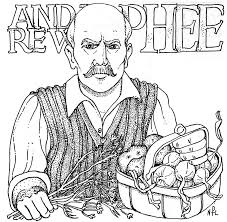 The evil forces have arisen and are on the move. The time for action has arrived. Someone has to go to find Merlin. MacPhee points out that he is “a great strapping fellow” and well rested and younger than the men who are to be sent.
Not good enough, says the Director. You have not put yourself under God’s protection. Full commitment to God and to His purposes has a kind of protective function here. This protection has nothing at all to do with MacPhee’s abilities. Dr. Dimble, who does get sent out, has no more abilities that MacPhee has but Dimble has committed himself unreservedly to God’s purposes and that commitment serves as a kind of shield. Dimble, in the scene we saw above, would not have been put to sleep by Merlin when he shows up because Dimble is protected and MacPhee is not.
MacPhee tries again. He is perfectly ready—in this emergency only—to allow for the possibility that eldila [4] actually exist. He is willing to allow that there might be a being called Maleldil. He is willing to identify that the eldila think of Maleldil as their king.
But that is as far as he can go. He cannot even get himself to say that he is willing to allow—in this emergency only—that Maleldil IS the king of all the eldila. Only that the eldila think that.
This is the kind of situation that drives empiricists crazy. Nothing counts as evidence that something is actually true or not. What it would mean to support a hypothesis like the existence of Maleldil has no clear meaning and MacPhee, having gone as far as conscience and friendship will allow him to go, is still way short.
How short is he? Merlin shows up and looks at MacPhee and MacPhee sits down in the chair and goes instantly to sleep. The Director didn’t do that. Dimble would not have done that. Both are “protected.”
I admire MacPhee’s skepticism, even while I note its limits, because I share it to some  extent. On the other hand, I also know that what you can see is dependent to a considerable extent on what you believe to be possible. You can look right at a brown King of Hearts, for instance, and insist that you don’t know what you are looking at. You don’t know because you know that what your eyes are telling you is not possible. Your eyes and your brain cannot come to detente.
On the other hand, I wonder what work I cannot be safely given to do because my own loyalty is too thin. There may be no work I cannot be trusted with because of my skepticism, but there is no way for me to know that.
I do hope that I will post an essay on December 1, the first day of the 2019 Blogging Year, that addresses that concern, but I won’t know if I am willing to post it until I have written it. So…we’ll see how it goes.
[1] Some scholars of the life and work of C. S. Lewis see the character of MacPhee as a redemption of sorts for Lewis’s tutor, a brilliant former headmaster and family friend, William T. Kirkpatrick.
[2] Angels, for the purposes of this essay.
[3] Maleldil is God, for our purposes.
[4] “Eldila” is the plural form of “eldil” in the Old Solar language, which both the Director and Dimble has learned to speak.
 And you can see why he would like that.
 [hyperpatriots with a big army and a chip on their shoulder]. [2]
 I would think that President Bolsonaro would try to drive a harder bargain with the U. S.
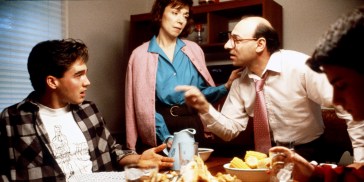 been great for America” or “Just look at the economy, it’s booming.”
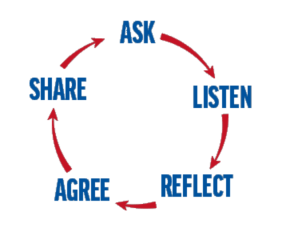 talking politics, but you are not.
 Usually there is something better.
 It is virtually impossible to oppose that as a goal.
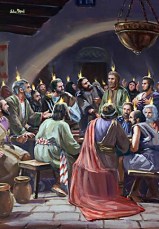 For such a purpose, I think Dr. Tamerius’s proposals can hardly be improved on.
 Andrew Shepherd (and I hear Sorkin’s touch with words) in The American President. He was talking about “America,” he says. The line goes like this
 The school children Sherry Turkle recruited to try out cute little interactive robots [3] came up with a way to split the difference. The robots, which they understood were only on loan to them, were, the children decided, “alive enough” to have a relationship with. Not a bad first formulation, I think.
 recognize the distance that is really there, and that is where the “never pretend to be one” comes in. Coats means that the presuppositions of the assistant’s responses can’t be too personal. That would destroy the buffer.
 while. It isn’t a real debate, like the Season 7 debate between Matt Santos and Arnie Vinick. It’s more like T-ball, where Governor Ritchie of Florida, the Republican nominee, places the ball on the T and President Bartlet knocks it out of the park. Time after time after time.
 them, so you have to assert some functional role for each. We hear this all the time, “Back when I was young and naive….” someone will say, implying that his present views have somehow escaped that naiveté. “My Sunday School teacher always said…” is the beginning of a rejection of that position—or, more likely, a caricature of that position—and a celebration that it has been discarded. [2] Sometimes you hear a narrative placement like, “Our parents always insisted that we…” and this is particularly true if the speaker is trying to assert the continuity of those early practices with his current practices.
 So I became a liberal. Kind of. [5] And like a lot of liberals who had once been conservatives, I belittled the conservative views. This was my first experience with “I’m glad I am not there anymore” (IGIANTA). The liberalism I graduated to had a great deal of anti-conservatism in it and I enjoyed both the breadth of scholarship to which my new liberal appetites directed me and also the regular belittling of the views I once held. [6] I told “fundy” (fundamentalist) jokes the way we used to tell “dumb blonde” jokes.
 become a blood sport. This isn’t something Donald Trump did. This is the social change that gave us Donald Trump. Years of economic stagnation have left their mark. The effectiveness of ridicule and disparagement of one’s political colleagues pioneered at the national level by Newt Gingrich and widely adopted by Republicans has also left its mark. The moral condemnation of many traditional voters as “haters” of one kind or another has become standard practice by liberals and that, too, has left its mark.
 There are some particular issues that have defined Neaera’s life [2] but the thing that intrigued me about this observation of hers is the transition from “time endured” to “life lived.” She calls this transformation “metabolism.” She goes through a whole day without this transformation of minutes into living; she experiences it as not having enough time, but when she becomes a winner and begins to reflect on her life, she knows that isn’t what it was. She felt time-starved, but she wasn’t, really. She was “life-starved.” Here, as played by Glenda Jackson.
 passivity, it requires that she help plan the heist, that she cooperate with William G., whom she know only from the context of this proposal, that she sneak the turtles to the coast and set them free. And then, presumably, come back to her own life, which she characterized, early in the book (p. 43) as “I seem to go on doing what I do.” Ben Kingsley here as William G. along with a woman who wants very much to be his girlfriend.
 them.
 I want to make a comment or two about the song and then I want to return to the “sensitivity problem.”
 trashy people.
 Long before the body is cold, some manufacturers of “outrages made to order,” a specialty of the house in Macedonia, has begun circulating the rumor that the Secretary had, in fact, killed the Vice President.
 style of service she offered as a barista and taught as a manager of baristas. But to do that, I will have to tell you a little about her so you don’t imagine that the kind of service she provided was disembodied and abstract. It was not. She embodied that quality of customer service herself and she made it a part of nearly all the waves (it is tempting for me to think of them as “generations”) of baristas who were fortunate enough to come under her pedagogy.
 They would begin to add the personal touches to the transactions. One I remember is the change from “What is your name?” if a name needed to be taken for an order, to “May I have your name for the order?” Little things; classy things. They just began to creep into the language and behavior of the new people, which is why the group called it “the Jennifer Effect.”

