
This is President Obama, at an Obama Foundation event this last October. The man makes so much sense.
There is this sense [among some young people] that the way of me making change is to be as judgmental as possible about other people.. If I tweet or hashtag about how you didn’t do something right or used the wrong verb, then I can sit back and feel pretty good about myself, “Hey, did you see how woke I was? I called you out.”
The question he focuses on is, “Did you see how woke I was?” Note that the question is addressed to other members of the movement or the group or even just the clique. This question asks them to pay particular attention to the fact that I have gone beyond them; I have reached out to new targets or reached out in new ways with my condemnation of our common opponents.
The psychology behind this is familiar. It is also fundamental. Here’s an example from Neal Stephenson’s The Diamond Age. Lord Finkle-McGraw is explaining why, in an age of moral relativism, hypocrisy was considered the worst of all vices. [1]
…for people are naturally censorious and love nothing better than to criticise others’ shortcomings.
This is the point Obama was making.
I grew up in a pietistic religious culture. Some of the very “wokist” things were internal experiences that would be entirely unknown if you did not tell the group about them. Whatever your group favored particularly, you did more of it and criticized people who did less of it. There was a good deal of “praying for the lost” that, in a political setting, would have been instantly recognized as the most nefandous slander. [2 ]Similarly, there was a good deal of display of what counted for virtues in that setting. I don’t mean to be unkind, but the structure is similar. You build up your group by dissing other groups and you build yourself up within your group by doing more and better than others.
Pietists are, “naturally censorious.”
 A significant part of my grad school experience at the University of Oregon was spent dealing with “the third consciousness.” That is a political application of the much more general phenomenon of “conscience raising,” of which “being woke” is the current manifestation. In conscious raising you don’t reject specific contrary views or the whole system of “conventional wisdom.” [3] Instead, you “transcend” them, as if by going further, your view builds on the strengths of all previous views but picks up none of the weaknesses. There was a lot of “transcending” of gender roles when I was in grad school. These were called, for the purpose of transcending them, “gender stereotypes.”
What can I say. People are naturally censorious.
The option President Obama held out in his remarks is “making change.” Given that it was Obama speaking—a man whose public life was prominently connected to making change—we know what kinds of things he was talking about. Still, making change involves a) triumphing over your opponents, b) persuading them or c) trading them something they want for something you want. Beneficial change is very seldom achieved and never sustained by simple conquest.
When you give up on simple conquest, the other two options require that you begin by seeing things from the other’s point of view. You can’t persuade them if you don’t do that. You can’t even make mutually beneficial trades with them if you don’t do that. Neither of those requires that you agree with them, but you do have to know where they are coming from. “Calling them out” isn’t going to do that for you.
A lot of the behavior I see called “woke” has no beneficial effect at all in terms that President Obama would call “change.” It does raise your status among the other members of your group who may wish they were as woke as you. It does, also, unfortunately, harden the defense against your position among those whom you will need to persuade or trade with, since you cannot conquer them.
One thing you can be sure of is this. Anyone who is committed to doing the hard work of persuasion and reconciliation and compromise in the service the nation is never going to get called “woke.” And those people are our only hope.
[1] Lord Finkle-McGraw is a Brit, so I left him the s- in “criticise.”
[2] Stephenson uses a lot of words I didn’t know and which, I discovered on looking them up, are perfectly good English. This one was used by Lord Finkle-McGraw
[3] That phrase in one of John Kenneth Galbraith’s signal achievements. It is a shame that many who use it, use it with less care than he did and even he wasn’t as careful as I would have liked. Very often “conventions” develop for good reasons and rejecting them on the ground that many people accept them has always seemed thin to me.
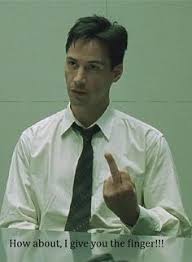 harmful to the group. He apologizes and the subsequent silence seems to go on and on. Why is that? It is because there is a predefined and expected response from the group. Because this response is predefined, the meaning of the silence is “We do not accept your apology.” The apology and the assurance of forgiveness are two elements in a single social circuit. There is a need, therefore, for the required response to be offered so that the circuit is completed.
 The first point to make is that watching murder mysteries, particularly good murder mysteries, is something we all do. Reading the gospels to appreciate the inner connections is not something we all do. We are tuned, as experienced watchers of murder mysteries, to notice what the camera shows us. In that, we are helped by cinematic conventions. [2] And the more confident we are about those conventions, the more they help us see clearly what the director wants us to see.
 as we are in seeing that the cigarette pack is or is not still on the bar, we would be much more acute readers of the gospels. Here we have St. Agatha Christie.
 One more quick example. This one fits the murder mystery metaphor more closely. Luke tells us that Elizabeth’s husband went home, after his vision in the temple, and impregnated her. Fine. This union produced John the Baptist. But then Luke pauses to say that Elizabeth then went into seclusion for five months (Luke 1:24b). If we had our murder mystery sensibilities available to us, we would wonder why he bothered to tell us that. And if we were seriously wondering, we would be more ready to notice the payoff, just a few verses later, when Gabriel uses the news of Elizabeth’s pregnancy as the guarantee of his message to Mary.
 Ms. Warren makes a point about the relationship between Advent and Christmas that is often made for the relationship between Lent and Easter.
 that requires investing my imagination in one or the other (but not both) of the two stories we have: Matthew’s and Luke’s.
 I think that will be enough context for a reflection on this text.
 Is the climate of the earth changing as a result of human activity?:
 because the motive is political, but if he is defended, is the motive not political?
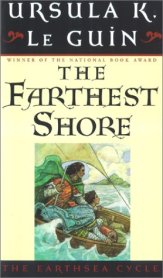 There is a lot to like about the book. It is the third of her EarthSea Trilogy. [1] I liked it first because it was a really good story and because I had already invested deeply in Ged, the Archmage of Roke Island. But even at first, I knew there was more. The central myth of this story resonates powerfully with some other, some more central, myth.
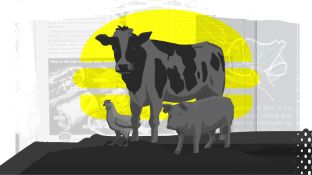 And if case you missed any of that, Ms. Joy adds: “The power of the $4.6 trillion global carnistic industry is unprecedented.”
 might be worth saving. That is the take home lesson of some thought experiments reported this week on VOX by Kelsey Piper.
 people could be scared into responsible environmental action or enticed into it, I would have chosen “scared.” If we are contemplating big changes, I would rather rely on sticks than carrots. But this research suggests that it takes some carrots just to keep the question before us at all.
 Then there came the shift that I associate with Thomas Frank’s book, What’s the Matter with Kansas?
 power by being beautiful at every public appearance, sooner or later someone would begin to speculate on what it must cost her to have to be beautiful all the time.
 Behaving outrageously when you are outraged must feel pretty good, but being required to behave outrageously no matter how you are feeling, likely does not satisfy anything fundamental.

