I have been working for some years now on Ursula LeGuin’s book, The Farthest Shore.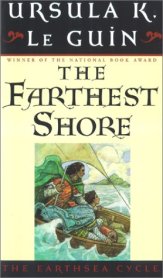 There is a lot to like about the book. It is the third of her EarthSea Trilogy. [1] I liked it first because it was a really good story and because I had already invested deeply in Ged, the Archmage of Roke Island. But even at first, I knew there was more. The central myth of this story resonates powerfully with some other, some more central, myth.
Eventually, I came to see that I had fit it into a “sin-and-salvation” framework and that is why it was so powerful for me. You don’t really need to know the plot, except as a framework for today’s remarks, but briefly, it is this.
A proud mage (Cob) who had been humiliated, vowed revenge and in wreaking it, opened “a hole” in the world and through this hole, out into nothingness, flowed light and beauty and meaning. Alerted first by what seem unrelated symptoms of disease—individual, social, political—Ged and his helper, Arren, locate the source of the evil and Ged, by spending all of his powers of magic, closes the hole and restores the world. He empties himself [2] in completing that task and is not longer the Archmage. In fact, he is no longer a mage at all. As a very wise man on Roke Island says of him as a summary, “He is done with doing. He goes home.”
Very early in this story—on page 6 of the volume I have—young Arren is meeting Ged for the first time and is telling him the story that his father, the prince of Enlad has sent him to tell. This is the way it goes.
“Then in the New Year, in the Festival of Lambs that we hold in Enlad, when the shepherds’ wives come into the city bringing the firstlings of the flocks, my father named the wizard Root to say the spells of increase over the lambs. But Root came back to our hall distressed and laid his staff down and said, ‘My lord, I cannot say the spells.’ My father questioned him, but he could say only, ‘I have forgotten the words and the patterning.’ So my father went to the marketplace and said the spells himself, and the festival was completed. But I saw him come home to the palace that evening, and he looked grim and weary, and he said to me, ‘I said the words, but I do not know if they had meaning.’
The two failures—by the wizard, then by the prince—are distant effects of the crack in the world, through which light and meaning escape. The wizard fails completely. He has forgotten the words and the patterning. This is for a spell he learned early and which he has used annually for most of his life. The prince is more powerful and has greater integrity and he can say the spells, but look what he says. Even as he said them, he says, he doubted that they meant anything.
Why might that be?
Of the reasons why it might be hard to do, I have two kinds of reasons in mind. The first is the inner rationalizer of which Jonathan Haidt has written so persuasively in The Righteous Mind. For the purposes of making this point, it might be just as well to imagine that there is some part of you—let’s call it IT—that wants things or fears things and it is your job to make some sense of that. Haidt talks about the rider and the elephant. The elephant goes where he wants to go and the rider’s job (that’s you) is to give a plausible account of that course of action. Problems like that make up the first reason. I have written about those in another context. I just didn’t want to skip over them here without admitting that they exist..
The second reason is another kind of thing entirely and that is the kind I want to deal with here. In this second case, agency is not lost. You intend and choose and do just as you always have. But the sense that what you choose matters slowly decays. At that point, you realize that the choices you made have always required the sense that they took place in a matrix of meaning; the actions you took were the right actions, given the larger context of meaning.
I had my first small lesson in this important truth when I broke up with my first girlfriend. It was near the end of the term. We both knew the relationship didn’t have a future. We decided—oddly, it seems to me now—that it would make less of a mess if we just pretended to continue the relationship for the last week or so of the term.
That was when I learned how much of the excitement of the relationship had been borrowed from a projected common future. We, as a relationship, were “going somewhere.” We were “becoming something,” we thought. That gave the things we did together weight and significance. I learned that because as we continued to go through the motions of “still being together,” it was a chore. We did what we chose to do, but it was a long slog without the meaning that had given it life.
That was when I learned that “the larger context of meaning,” which I referred to above, didn’t deny agency at all. It just made it pointless.. That is when you realize that there is a feedback function. The actions not only produce effects, but they produce the emotions that belong with those effects. It is not that the emotional resonance is the reason you are making the choices, nor even that the emotional resonance is necessary to your continuing to make those choices. But without that feedback, your sense that what you are doing matters gets…faint.
This is clear in the case of the prince of Enlad. Unlike the mage, he could remember the words of the spells and the gestures of the patterning. But always before, doing those things connected him to the intact order of the world, of EarthSea, which is founded on magic. This time, he sensed no connection at all. That doesn’t mean, as I noted above, that the connection was not there, but the automatic reassurance that it was there—the taken for granted assurance— was missing this time.
In EarthSea, these early failures are the result of the seductions of the world-destroying mage, the one who opened the hole in the world and who calls people to come to him, to deny death, to “live forever.” Arren falls for that enticement, not because he has doubts, but because he is young and vulnerable. Ged feels the pull too, but he is old and wise and strong and recognizes it for what it is. It is false; he knows who is offering this “live forever” message. [3] And it is wrong. Living forever is wrong and so wanting to live forever is wrong, however natural it might be as a desire.
“How is it,” Ged asks of Arren (page 208), “that he does not call to me? It is because I will not listen. I will not hear that voice again.” And then, in summary: “…I who am old, who have done what I must do, who stand in the daylight facing my own death…I know that there is only one power that is real and worth the having. And that is the power, not to take, but to accept.”
And that is how Ged is able to operate by duty so he is not as dependent on the emotional feedback that resonance that tells us even as we are doing them, that our acts have meaning.. For Ged, that is the whole answer. For many of the rest of us, including the prince of Enlad, we need to know that the “good things” we are doing, have meaning. We need the confirmatory feedback without which only the heroes among us can manage at all. [4]
[1] This “trilogy” now counts four full length books, several novellas, and some short stories in the tri- of trilogy.
[2] People with my kind of background will hear the kenosis passage in Philippians 2 lying behind that word.
[3] I mentioned above “a proud mage who had been humiliated and who had vowed revenge.” Ged is the one who humiliated him and the one on whom the mage seeks revenge.
[4] Mother Theresa of Calcutta is a good example. She received “a calling” to serve the poor of Calcutta from a source that was wholly persuasive and from which she never heard again. She prayed and pled for “confirmatory feedback” and never got any. So she continued to do what she knew was her duty. A hero.

 harmful to the group. He apologizes and the subsequent silence seems to go on and on. Why is that? It is because there is a predefined and expected response from the group. Because this response is predefined, the meaning of the silence is “We do not accept your apology.” The apology and the assurance of forgiveness are two elements in a single social circuit. There is a need, therefore, for the required response to be offered so that the circuit is completed.
 The first point to make is that watching murder mysteries, particularly good murder mysteries, is something we all do. Reading the gospels to appreciate the inner connections is not something we all do. We are tuned, as experienced watchers of murder mysteries, to notice what the camera shows us. In that, we are helped by cinematic conventions. [2] And the more confident we are about those conventions, the more they help us see clearly what the director wants us to see.
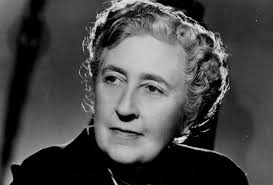 as we are in seeing that the cigarette pack is or is not still on the bar, we would be much more acute readers of the gospels. Here we have St. Agatha Christie.
 One more quick example. This one fits the murder mystery metaphor more closely. Luke tells us that Elizabeth’s husband went home, after his vision in the temple, and impregnated her. Fine. This union produced John the Baptist. But then Luke pauses to say that Elizabeth then went into seclusion for five months (Luke 1:24b). If we had our murder mystery sensibilities available to us, we would wonder why he bothered to tell us that. And if we were seriously wondering, we would be more ready to notice the payoff, just a few verses later, when Gabriel uses the news of Elizabeth’s pregnancy as the guarantee of his message to Mary.
 Ms. Warren makes a point about the relationship between Advent and Christmas that is often made for the relationship between Lent and Easter.
 that requires investing my imagination in one or the other (but not both) of the two stories we have: Matthew’s and Luke’s.
 I think that will be enough context for a reflection on this text.
 Is the climate of the earth changing as a result of human activity?:
 because the motive is political, but if he is defended, is the motive not political?
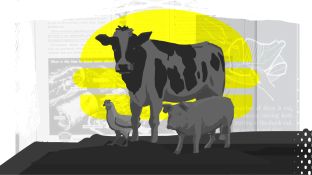 And if case you missed any of that, Ms. Joy adds: “The power of the $4.6 trillion global carnistic industry is unprecedented.”
 might be worth saving. That is the take home lesson of some thought experiments reported this week on VOX by Kelsey Piper.
 people could be scared into responsible environmental action or enticed into it, I would have chosen “scared.” If we are contemplating big changes, I would rather rely on sticks than carrots. But this research suggests that it takes some carrots just to keep the question before us at all.
 Then there came the shift that I associate with Thomas Frank’s book, What’s the Matter with Kansas?
 power by being beautiful at every public appearance, sooner or later someone would begin to speculate on what it must cost her to have to be beautiful all the time.
 Behaving outrageously when you are outraged must feel pretty good, but being required to behave outrageously no matter how you are feeling, likely does not satisfy anything fundamental.
 Ms. Schroeder is concerned about the vulnerability of white males, her sons in particular, to the extremist appeals that are available online. Certainly she should be and so should we all. But I would like to take her column as a starting place and to think about just what we have on hand to oppose it.
 if you are no supposed to could be construed as heroic. Affirming all people despite their differences probably cannot be called “heroic” no matter how hard you try.
