
You may have heard about the fuss kicked up by Amber Lynn Gilles at the Starbucks in San Diego. The short version is that she didn’t wear a mask, as store rules required her to do, and was not served. I don’t think her story is really unusual, but several aspects of the narrative caught my eye. For one thing, someone started a GoFundMe account in the barista’s name. For another, the New York Times wrote about the encounter which is how I heard about the rationale.
That’s the short version. I would not like to perform a brief detour to apologize to any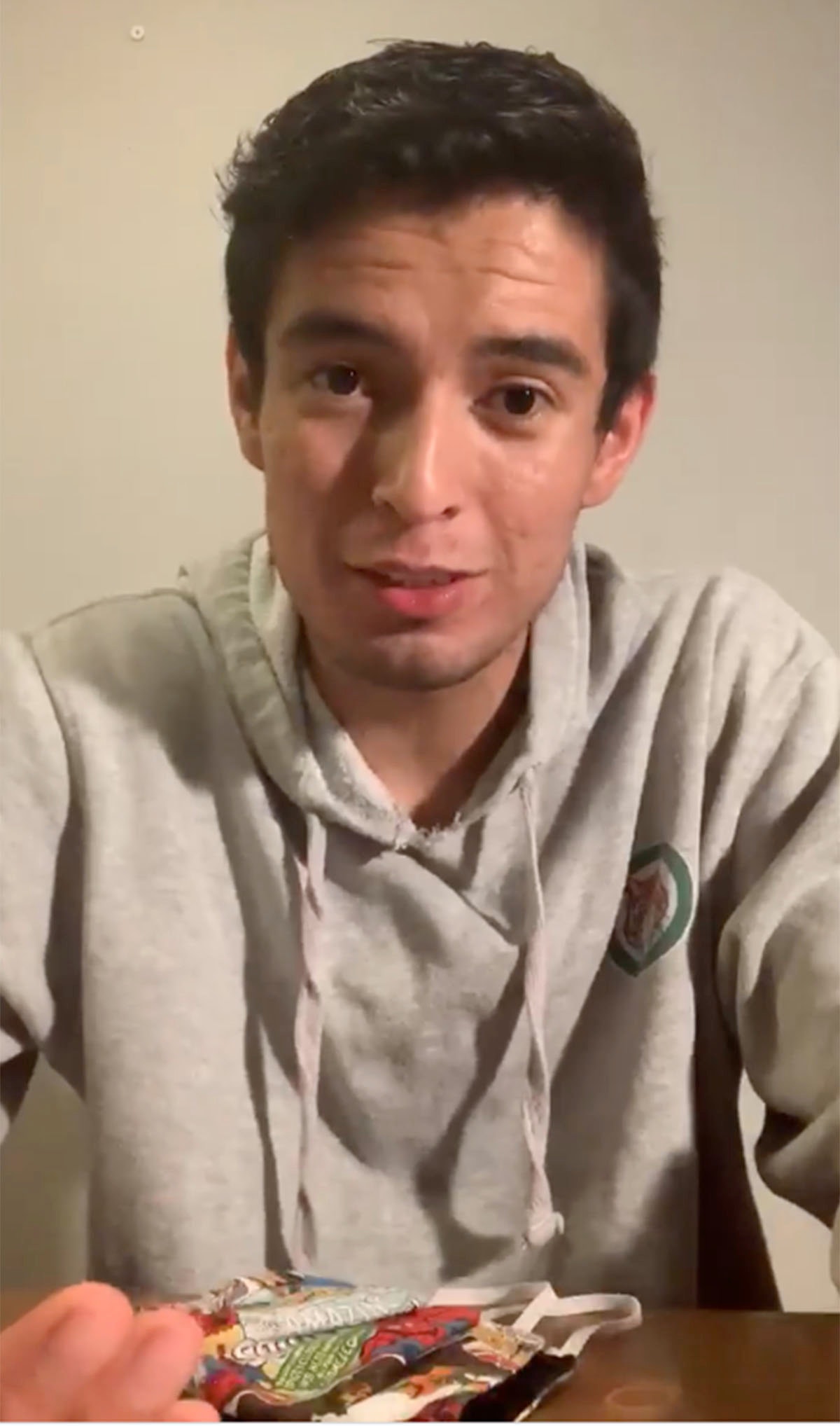 friends—not “former friends” I hope—named Karen. [1] On my own behalf, I will say that I have heard “Over hill, Over Dale” all my life and have learned to think they must be referring to someone else. And finally, I allowed myself a little fun in the title “Klan of Karens” on the grounds that the first two K’s in KKK, are a reference to the Greek work kyklos, meaning “circle.” So a circle of “Karens”—emphasizing the current meaning, an emphasis on personal entitlement—would still be a KKK.
Now back to the story for the long version. There is a lot approve of in this story, like Starbucks policy and the behavior of barista Lenin Gutierrez (pictured at the right). Also, of course, a lot to disapprove of. But rather than doing either, I would like to pay attention to the several responses Ms. Gilles unleashed. I am going to take them in the order that they interested me, so don’t try to string them together as a narrative. You can do that with the hyperlink.
Masks are Stupid
Let’s start with masks.
“They are stupid,” said Ms. Gilles, “and so are the people wearing them.”
It is possible, I suppose, that saying “masks are stupid” means that they look stupid, a way of saying they make me look stupid. But more likely is the charge that they are stupid because they don’t work and/or they are unnecessary.
To poke a little at whether they work, we would need to know what they are supposed to do. They are supposed to keep the people around you free from any infection you might otherwise have shared with them. That means that it requires some such methodology as contact tracing to determine whether the people in our wake are being infected and that is not the kind of information Ms. Gilles is at all likely to have.
It is more likely that she intended to say that they were not likely to keep her from getting sick. (Her direct comment was, “I don’t need one.”) But on beyond that, there is the question of whether Starbucks should be permitted to protect their employees from people like her. I don’t think even Ms. Gilles would say that, but given the nature of her charge—they are stupid and so are the people who wear them—she doesn’t have to.
Ms. Gilles said that she was “denied and discriminated against.
This is what Starbucks is charged with. Surely there is no debate about the first part. She demanded to be served even though she was not wearing a mask and Starbucks said no. She was denied. Ordinarily “denied” connotes that one was denied something he or she had a right to. No one says, “They denied me entrance to the theater because I didn’t have a ticket.” The whole charge really ought to have the form: denied X because of Y even though Z specifies that I have the right to X. Following that form would have required Ms. Gilles to say just what she was denied or to say that Starbucks had no right to deny it.
“Discriminated against” is a little more complicated and that complexity is brought to us by the loss of meaning of “discriminated.” “Discrimination” was still mostly a good thing when I became acquainted with the word.
 It is a facility that marked off people who could tell the good stuff from the bad stuff. A person was said to have “discriminating tastes.” [2] The resolutely bad meaning of the word comes from the expression “invidious discrimination.” If you are going to use “discrimination” to mean “the ability to tell the good from the bad or from the merely mediocre,” you are going to need an expression to mean “discrimination I disapprove of,” and that was the function of “invidious,” which means “malicious, hostile, or damaging.”
It is the addition of “against” that enables Ms. Gilles to say that something bad had happened. [3] But in the absence of a standard, she can only mean that she didn’t like the decision. To say more, she would have had to say that Starbucks should not have had the standard they do have.
Next comes Ms. Gilles justification of her behavior.
“I didn’t harass anyone,” she said. “I called them out because I’m frustrated.”
There are three points of interest here. The first is what “harass” means and the related question of who gets to say what it means. The second is the substitution of “called them out” for “harassed.” The third is her explanation of why she did it: she was frustrated. [4]
Lenis Gutierrez, the barista, describes it this way.
“…she started “cursing up a storm” and called people “sheep” before walking out. A few minutes later, she came back, he said, and asked for his name, took a photo of him and said she would call the corporate offices.”
My guess is that her feelings of frustration came from the barista’s request that she put on a mask. The sense that she had “called them out” more likely came from her coming back, taking his picture, and threatening to call the corporate offices. That is the part she likely identified as “calling them out” and the part also that required her to specify her motivation.
A reader of the story might wonder why her doing all that did not fall under the label harassment. I wonder that. And how is “calling them out” different?
Ms. Gilles final salvo was more institutional. This is what she posted on her Facebook page:
“Meet lenen from Starbucks who refused to serve me cause I’m not wearing a mask. Next time I will wait for cops and bring a medical exemption.”
I think Ms. Gilles understands that the two actions she threatened are empty. What will the cops do if they come? Will they say that the CDC shouldn’t have recommended masks and that San Diego County should not have required them? It doesn’t seem likely. And what kind of “medical exemption” might she have in mind? “My doctors says I am free to infect as many people as I like?” That doesn’t seem likely either.
If a “Karen,” like Ms. Gilles—Leah Asmelash of CNN says that “a Karen” is “a potent moniker for someone decidedly out of touch”—were just one unusual person using unusual rationales for her demands, I wouldn’t have bothered with this. I do think, though, that her behavior and even the kinds of justifications she provided for it, are increasingly common and I think they are deplorable.
[1] I would like to make an immediate exception on behalf of a dear stepdaughter of mine, whose name is spelled “Karyn” and who is, most emphatically, not a “queen of entitlements.” That is, apparently, the principal meaning of the current phrase, “Such a Karen.”
[2] That use comes from the 1620s. The sense of discrimination “against” and “against” for unfair or malicious reasons comes from the 1860s.
[3] Although, in all fairness, the root of the word is the Latin cernere, which means to separate; dis- only adds “apart” to the root. So separating one kind or quality of things from another. Bette once had a job watching the green beans come down the line and separating the bad ones from the good ones. She did this by being discrimination. There is always, I guess, the question of how the rejected beans felt, being discriminated against like that.
[4] Not to sound any older than I really am, but when I got acquainted with the word, “frustrated” meant the failure or an attempt to do something. It didn’t say anything at all about how you felt about the failure. In its current use, “frustrated” is the name of a feeling. So Ms. Gilles doesn’t even have to say that she was frustrated; all she has to say is that she was “feeling frustrated.”
 start, but it came to my mind because one of the routes I frequently ride goes past the intersection of Sandy and 57th, where this statue is normally located. I guess parts of it are still located there.
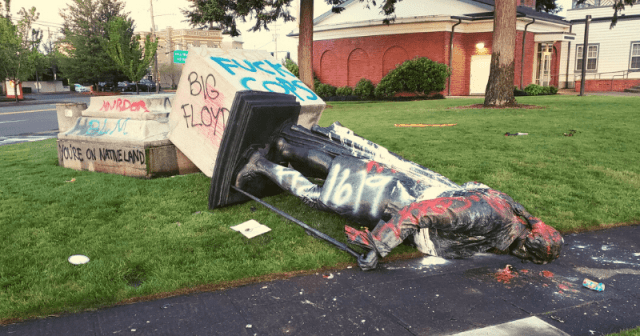 But let’s look at where this leads us. Racism is just today’s fetish. [4] What about tomorrow’s? Let’s say that sexual fidelity is the next virtue. This is sexual fidelity as it was understood in the late 18th Century, of course. Cadres of zealots, now comb through the “great men and women of our past” and locate those who offended sexual fidelity. It is time now for their statues, the erection of such statues serving as the kind of honor we pay them to remind ourselves of how important that particular virtue is, to be torn down. They are no longer worthy to represent us.
 America, emphasizing its white and black components. A lot of Union soldiers died to get the Union troops to Texas. Before that, a lot of abolitionists were punished by their communities for urging inconvenient actions regarding slavery. This would be a great time to celebrate them.
 This is no more the time for deploring the evils of slavery than it is the time to dwell on the ugliness of early adolescence when celebrating a young woman’s nineteenth birthday. We all know there were those times. One of them might have been yesterday. The bills for some of them might not yet have been paid. But they are not the matter at hand, the birthday, and they will not keep us from celebrating the end of slavery together,
 although Blow does not use her name— told a black man, a bird-watcher, that she was going to call the police and tell them that he was threatening her life. Blow could plausibly say things about what Ms. Cooper knew for sure and what her motivations were. It is possible to learn those things about Amy Cooper, the person. But when she is made an instance in a more general accusation about “white women,” the meaning of the charge evaporates. It is not true about “white women” and no listing of actual instances could make it true about the whole category.
 As a (nearly) life long professor of political science, I used to field questions like this in class and the first thing I wanted to know from the questioner was, “Why do you want to know?” I would ask that because some reasons for wanting to know can be satisfied, even within the context of a political science class. Other reasons have no hope at all of being adequately addressed. In the case of President Trump, I have three answers in mind and none of them can be fully addressed by the social institutions we have now.
 being the greatest. This is giving “talking points” to people who was to “hit back.” These people are aggrieved, remember, and whatever they do, is something “back.” They are “retaliating.” Notice the re- in retaliating; It represents the “back” in “hitting back.” And not only does it give talking points, it gives permission to say things like that. These are social slurs or ethnic slurs or class slurs. These are things that until recently, were not OK to say in public. The avalanche of Trump lies addresses these two problems: it justifies language that used to be “bad manners” and it scripts the charges against their enemies. And…of course…their truth of falsity is not an obstacle. Not for a man who tells 15.6 lies a day.
 The most recent response by the press is to aggressively call President Trump’s lies for what they are. This doesn’t work either. This is equivalent to the referee starting a fight with a pitcher who threw a beanball or with a defensive end who laid a late hit on the quarterback. The referee cannot become a participant and still adjudicate quarrels between players. The New York Times cannot challenge the Trump administrations claims as intentional and unconscionable lies without being “an opposing player.” The guy in the yellow shirt, no matter how severely he was provoked, is no longer refereeing the game.
 Admiral McRaven, speaking on the 76th anniversary of D-Day said “those wartime leaders inspired Americans with their words, their actions, and their humanity.” In contrast, he said,” “Mr. Trump has failed his leadership test.”
 more make public announcements that they feel they are allowed to make. Broadening the boundaries of the things people are allowed to say about President Trump could be devastating and may be under way. The patriotism card is compromised by the Joint Chiefs; the national intelligence card is compromised by the complaints of recent intelligence leaders; the party elders’ card is compromised by the clear refusal of some to adhere to the leadership and the announcement by some that they are going to vote for a Democrat this time. The Republican candidates will have to find a way to navigate these difficult currents but the permission structure opens a lot of options.
 expect to find.
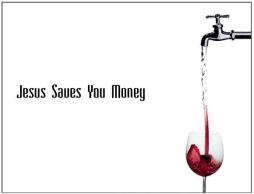 t for me to do the same. To help in that, I invented my “Blogging Year (BY)” which runs from December 1 to November 30, taking the date of the ending year. So I am currently in BY 2020 and in December, I will begin BY 2021.
 Wheaton College, one of my several alma maters fired Larycia Hawkins (left), a political science professor, for a very public, but ill-defined offense. (December 2015) The theological faculty voted unanimously that she had not violated her obligations to the college in anything she had said or had done. The crux of the issue was really, what do we mean when we say “God?” The face of the issue was this professor’s wearing a hijab in solidarity with her “sisters.” One of the things she did was, apparently, conduct unbecoming an evangelical.
 addresses him directly from “heaven” and urges him to stay. He makes every appeal he can, but every appeal shows that he has no idea what living Truman’s kind of life is like. He has never been there. And that brought the power of the Incarnation to mind. “He pitched his tent among us” is a claim that is central to Christianity and it is utterly unavailable to Christof. Here Truman (Jim Carrey) makes one of the best exits ever.
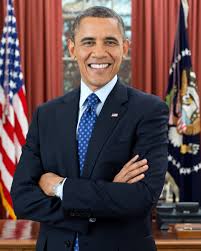 When I started in 2010, we were half way through Obama’s first term and I assumed, as most people did, that I was only one quarter of the way through his whole presidency. The first political blogs took the Obama presidency and the kind of politics in which it was set, for granted.
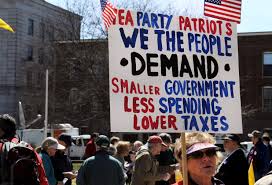 thought it would and it stymied the Speaker of the House, John Boehner and that was when I discovered Arlie Russell Hochschild’s book about the Tea Party. Strangers in Their Own Land helped me understand why “the Tea Party”—which was about to become the Donald Trump gang—wasn’t going to go away. [1]
 that was new to me. There was nothing democratic about how clans worked. The clan chief was the principal legislative, executive, and judicial force. That is why clans worked, internally, and why there was always warfare between the clans. I learned while I was there that Clan Donald was one of the major clans of the period and it made me feel right at home. President Trump’s inclinations are all clan leader. He wants, in what is supposed to be divided government—that’s what Madison thought is was— to have in his government only “people he trusts fully.” What he trusts these people to do is not always clear, but it appears to have very little to do with the impartial administration of the law. That is why he has turned to firing inspectors. Here, Dr. Amy Acton of Ohio makes a contribution to democratic politics.
