Remembering Bonnie Zawacki, Part II

In Part I, I passed along to you Bonnie Klein’s recollections of herself as a college student; Bonnie Zawacki, studying causal attribution with me at Westminster College.  The two of us—Bonnie and I—talked about building a new lens, a lens that allowed us to see our own lives in a new way.  Bonnie remembered the surprise she felt when she discovered the categories she had created in trying to give a structure to her experience.  That was our common work in class.bonnie college grad pic0001[1]

I warned you that there was a dark side, too and I’d like to turn to that dark side today.  In the previous post, we considered what it would mean to “lower the threshold of perception.”  We looked at Albert’s day in school and why he says “Fine,” when his mother asks him how things went that day.  For Albert to have some data, with which he could answer his mother’s question, he will have to lower the threshold of perception that prevents him from “noticing” the bullying, the dreary Spanish class, and the daunting lunchtime.[1]

Shifting now from Albert back to Bonnie Zawacki, we see that Bonnie takes the Political Behavior class, a part of which involves lowering the threshold of perception so that she sees a lot of things she has not seen and formulates these new data into categories.  As categories, they seem much larger and more permanent.  Because they are all made up of failures, they may seem more menacing as well.  What is Bonnie supposed to do with those new structures?

Here’s the way Bonnie Zawacki put it:

If the purpose of [this] course is to make us aware that we can move our thresholds up and down, 1) is this reasonable[?] and 2) why don’t you aid us in raising them if you’re going to teach us to lower them?  HUH?[2]

Then, later:

My threshold had indeed been lowered: I was sensitive to social manipulation, saw the alienating character of institutions, and understood that the methods and demands of those institutions were not always or necessarily in my best interest.  But then the course was ending.  I couldn’t go back to my ignorance (didn’t want to go back) but I didn’t know a way to protect myself from the hits my lowered threshold permitted and the “HUH?” at the end of that question makes me remember that I had been taking some hits, though I couldn’t possibly remember what they were.  It appears I felt left on my own to deal with my sensitivities.

Bonnie discovered some questions in her notes that she apparently wrote there rather than asking them of me.  Here’s one: “How much do you intend to lead our morals, or are you just trying to make us think?”  The underlined words were underlined in her notebook.

free the studentsQuestions and comments like these point out the dark side of teaching a class like this in the way I had chosen to teach it.  My goal was to open students’ eyes to a little of what they routinely ignored.  I wanted to give them choices where before they had seen no occasion for choice.  The picture to the left shows a lot of dialogue balloons and no dialogue.  That happened a lot at the beginning of the term.

Remember that “nothing at all had happened” in Albert’s school day and that everything, therefore, was “fine.”  I wanted to help them build, out of all the frictions they had been taught to explain away, stable prominent categories of persons or character traits or institutional practices or lapses of judgment or systemic characteristics that kept them from reaching the goals they were aware of pursuing.  That leaves the questions Bonnie asked: “OK, I build these structures.  Now what?”

There isn’t any adequate “now what” that I am aware of.  There are two ways of resolving the dilemma this approach provides.  Both resolutions are worse than the dilemma, it seems to me.  The first way is that I provide the answers to the question, “Now what?”  There were ten other students in Political Behavior the year Bonnie took it.  They represent a substantial segment of the bright, highly motivates, highly individualistic students that a good liberal arts college will collect.  So to Becky, I would say, “I see that you have devised some interesting and troubling problems as a result of your journal work.  Here is what you should do to resolve them.”  And to Amy, “Well, Amy, that is really troubling.  Clearly you are going to have to make some changes.  Here’s how you should begin.”

Are you bothered yet?  I am, and I didn’t even get down the page to Dave.

The second way is to forget what you learned about your own patterns of perception, categorization, and causal attribution.  Honestly, I suppose that was the most popular approach the students actually adopted, but I can’t see recommending it.  Let’s start with Becky again.  I say, “I see that you have uncovered some shortcomings in the way you attend to yourself and your social environment.  I thought that your discovery that you routinely attribute the flaws of your female friends to their oppressive environment and the flaws of your male friends to their inherent sexual nature explained quite a few of the journal entries you submitted.  It is problematic, though; I can see that.  So I recommend that you forget that this pattern of attributions is something you do and just go back to doing it in an unconscious way.”

free at lastMy hope was always that the students would take whatever of the new reality they found to be attractive and useful and pursue it to the best of their abilities.  They get all the benefits that way and become intimately acquainted with the mistakes they make and the consequences of those mistakes.  If there is another way to make a liberal arts education work[3], I don’t know what it is.


[1] It costs Albert a lot of energy to keep “not noticing” these events, by the way.  I don’t want to say he “represses” them because that gets me into a whole pattern of discourse I don’t want.  Imagine that Albert is the CIA and that he has “locally embedded spies” who notice all these things going one.  Albert needs to find a way to keep these spies from reporting their findings to headquarters.  He needs, in other words, to keep threatening them about what will happen if they do or keep rewarding them for their silence.  The cost of either of those will be high.  That is why it costs Albert to keep “not noticing.”

[2] Bonnie Klein, reading after all this time what she had written, admitted that that “HUH?” expressed some anger and frustration she was willing to share with her notebook, but not with her professor.

[3] They call them “the liberal arts” because they are the arts that are necessary if people are to exercise their freedom.  I think of them, myself, as “the liberating arts.”

Posted in Education, Political Psychology, ways of knowing | Tagged , , , , | 2 Comments

Remembering Socrates

“The unexamined life is not worth living,” said Socrates.  I don’t think I would go qunexamined life 1uite that far, myself.  I do think I would say that in most cases, the properly examined life is “better” than the alternatives. 

This comes to mind because I am stuck between Part I and Part II of Bonnie Klein’s (the veteran high school English teacher) recollections of herself as Bonnie Zawacki (the late teenage college student).  At the end of “Remembering Bonnie Zawacki—Part I,” I promised dark things in the next post, but the most interesting of those dark things is Bonnie Zawacki’s complaint that I taught them how to lower the threshold of perception (as that threshold controlled certain questions) but I didn’t tell them what to do with all that new data.  In that, she was completely correct.

I have some things to say in my defense—in my defense against Bonnie Zawacki’s charge; remember that Bonnie Klein and I see this issue in precisely the same way by now—but before I say them, we are going to have to take on Socrates’ notion of what is worth living and what is not.  Ludwig Wittgenstein has another idea entirely in mind, as you see, but he is going to have brilliant-philosophy-posters-7to wait his turn.

Let’s begin with the contrast Socrates draws between “examined” and “unexamined.”  This is a light switch sort of contrast; either you “examine” your life or you don’t.  I like the principle because it does away with “unexamined” as a value.[1]  It does not, unfortunately, distinguish between “overexamined” and “underexamined.”  It also does not distinguish between “well-examined” and “poorly examined.”  We could call those, respectively, the amount of examination (too much/too little) and the quality of examination (high quality/low quality).  When I asked for the “properly examined life” in the first paragraph, these dimensions are what I had in mind.

Socrates didn’t say that the maximally examined life was better than the optimally examined life.  At least he didn’t say it in this quote.  My wife, Bette, was introduced to my family in the summer of 2005.  I was 67 years old at the time and I felt that introducing a brand new wife to a collection of people who have known you all their lives is potentially perilous.  Bette won the hearts and minds of my family with one line, “Sometimes Dale…well…you know…he over-processes things.”

I deny it.  I say that I am the kind of person who really needs to process things—how do I think, how do I feel, what causes what, who is responsible—more than most people do.  More to the point of today’s story, however, is that I was also the kind of teacher who wanted people to process things more than they had, up until then.  Maybe I thought that if it was good for me, it must be good for them.  However it started, it was unquestionably sustained by the several generations of students who said, “This is the most valuable thing I ever learned,” or sometimes, “Wow!  This is soooo cool.”

I don’t want to waste a paragraph on under-processing.  In collectivist societies, the group does a lot of the processing and individuals don’t need to.  In individualist societies, like ours, individuals need to do more of this “examining of their lives” for themselves; even so, some need it more than others.  I’ll just say that if you can overdo it, you can underdo it.  That takes care of the amount of examination.

The quality of examination is another question.  No one will have any trouble accepting the idea that high quality examination is better than low quality examination.  But what makes an examination of your own life, “high quality.”  My idea is that it is worthwhile to start with what you are trying to do and why.  Also, with what you are not trying to do and why.

Most of us live lives where we order off the menu.  We don’t start with the universe of things we would like to eat and then judge the menu by the proportion of that universe it includes.  We look at the menu and decide which, of the things on the menu, we would like to eat and order that.  The menu us just a metaphor.  I think nearly everyone lives a menu-driven life.  The Goths that hang around our high schools, for instance, have a menu of ways of dramatizing their disdain for convention and they choose off of that menu what they will do on any given day.  Even the Goths don’t start from scratch.

Focusing on the menu is a way of ignoring other things and, in some circumstances, “other things” really should not be ignored.  Leading a well-examined life is a way of probing, from time to time, for things that we would like to have on the menu.  Part of my work in Political Behavior, at Westminster College, was to ask off-the-menu questions.  Let’s consider Albert.

Did you ever wonder what a high school student meant when he said, “Fine.”  “Hi, Albert.  It’s good to see you home so early.  How was school today?”  Albert thinks for a moment and then says, “Fine,” and leaves the room.  He might mean just that he doesn’t want to talk about it.  On the other hand, in that moment when he paused, he might have run through all the things that happened, looking for something unusual; something that could be singled out and given as an answer to the question.

bullies at schoolSo let me invent a school day for Albert.  Some of the guys in his class pushed him around a little as he was going to his first period class.  It was just recreational pushing; nothing serious.  It’s what they do more often than not.  Spanish class was awful.  Most of the kids haven’t done the assignment and Ms. Gonzalez has to spend a lot of time complaining about it and then a lot more time doing their homework for them orally in class.  That’s mostly what happens in Spanish.  Lunch was routinely awful: greasy chicken and gravy and deep-fried tater tots.  Albert sat at a table by himself and pretended he was reading a book; he had found it more likely that he would stay out of trouble if people thought he was reading.

That’s pretty much what happens when Albert goes to school.  It is those things that he means when he says, “Fine,” meaning that nothing so unusual has happened that it ought to be singled out.  The events of Albert’s day came right off the menu.  He managed that day’s menu of events as well as he could and that’s the end of that.

That’s a good way for Albert to get through the day, but it isn’t a very good way for Albert tocafeteria understand the day.  To understand the day, Albert is going to have to allow himself to become aware of some things that aren’t on the menu.  What would happen, for instance, if he was met at school by people who were glad to see him?  How would it be if Spanish class were not so awful?  What if there were good things to eat at lunch and pleasant interesting people to sit with for lunch?

Asking those questions moves the threshold of awareness down.  It allows information and values and hopes and fears to come across the threshold and into your life and onto the pages of your journal.  If you had a journal that was organized around what you were trying to do—that’s the kind of journal the causal attribution journal (CAJ) is—then you could get out of the menu.  You could say what you wanted to happen and what you were trying to do as you entered school and in Spanish class and at lunch and you could see that those things you wanted were not happening.

That’s the kind of thing “the examined life” brings to you if you do these two things: a) organize the examination around what you are trying to do and b) expand the menu beyond “how it always is” to “how it could be.”  If you are recording failed initiatives in your CAJ—and that’s what it’s for—you now have a series of entries that begin (negatively) with “Wanted to go into school without being pushed around” or (positively) with “Wanted to meet people as I come to school who are glad to see me.”  Eventually this series gets a category name, either a negative one which will have “bullies” in the title or a positive one that will have “friends” in the title.

You now know a lot more than you did.  That’s good.  Unless, of course, it’s bad.  How to you respond to knowing all those things?  How does your mom respond to your knowing all those things?  What if there’s nothing you can do about it?  What if you respond by becoming persistently depressed or angry?

There are lots of possible outcomes and some of them are not good.  And those are the “dark things” that Bonnie Zawacki had in mind.  We’ll take a look at them next.


[1] Members of collective societies—not individualistic ones like ours and like Socrates’—might feel that it is “our life” not “my life” that needs to be examined and that there is some collective rationality that will do it.  Maybe “the traditions of the elders” provide the kind of examination of our life that is needed.

Posted in Education, Political Psychology, ways of knowing | Tagged , , , , | Leave a comment

Remembering Bonnie Zawacki

Beyond any question, the most exciting project of my fifty years of teaching was helping students understand causal attribution.  “Causal attribution” is just giving a reason why something happened—it is attributing a cause to an event.  This has been on my mind recently because I have received an amazing account of one phase of my teaching from a former student, now a dear friend.  It has helped me see what I have been doing by looking at it from her side.

Bonnie Zawacki was a student of mine for one class.  It was called Political Behavior at Westminster College, where I was teaching at the time.  The experience I am going to think about today has been relayed to me by Bonnie Zawacki Klein, who, after forty years of thinking about it, has shared with me how the course struck her as a young student at Westminster.  Bonnie has amazing credentials for writing these notes, but I am going to hold off for just a little while in saying what they are.

So these are the notes taken by Bonnie Zawacki and recovered, forty years later, by Bonnie Klein.  In the title of this piece, it is Bonnie Klein who is remembering Bonnie Zawacki.  This is Bonnie Klein at our house in Portland just a few years ago.PENTAX Image

About the course, Bonnie said, “It gave me a lens for looking at the world.”  I liked that a good deal although there is an important sense in which it isn’t true.  What I did was to offer Bonnie a reason to look at the world a little more reflectively and some help in constructing for herself a “lens” that would help her do that.

If there had been a tagline for the course, as there is for nearly everything today, it would have been “What’s stopping you?”

To help answer that question, I asked students to keep a causal attribution journal (CAJ).  The first element of the journal asked, “What are you trying to do?”   It’s an oddly revealing question.  We all see the world in the light of what we are trying to do.  The events we are drawn to and the categories we use most reveal what our interest is.  In 1957, psychologist Jerome Bruner wrote a much-cited article about “category accessibility.”  Here is a paraphrase of what he said: “If you are out looking for apples, anything that “might be an apple” comes readily to your attention and you check it out to see whether it really is an apple.”

It is this phenomenon that makes the CAJ so insidious.[1]  College students have become masters of intentions they are supposed to have and they will readily tell you what they are.  But a student who says she is out looking for apples but who readily notices fence posts (and ignores “might be apples”) is not, in fact, looking for apples.  She is looking for fence posts or for something that might be mistaken for a fence post.  That is why “might be a fence post” phenomena come to her attention.

So when Bonnie told me what she was trying to do, each of us had a way to look at that statement on the basis of what she recorded in the journal.  It is in that sense that I helped her build a lens.  I helped her look on the one hand, at what she said she was trying to do, and on the other, at what she was seeing and how she was explaining to herself why she was not successful.

And why was she not successful?  Remember the tagline, “What’s stopping you?”  That means that something was stopping her.  It was the requirement that in every journal entry (I used the letter W to represent “wanted to”) there was also a (D), which represented “didn’t, or “was not able to.”  So every line of the journal represented a failed intention.  A number of the students pointed out to me that it got irksome after a while, but Bonnie was not one of those students.

The third necessary element of the journal was the explanation, which I represented as b2, in which the b- stood for “because.”[2]  It is the b2 which gives the entry some pop because it says why you failed.  This is the journal’s second claim to insidiousness because just as college students learn to say what they are intending, they learn to say what went wrong.  Some students, to pick a very common example, explain a failure by saying the task was too hard; others by saying that they didn’t try hard enough.

I don’t care all that much about the truth of either assertion, but I care very greatly that the student have an opportunity to look at the collection of causal attributions she has given—that is the b2 part of the journal entry—and notice how she explains things to herself.  It is that reflection that builds the lens that Bonnie said I provided for her but which, in fact, she built for herself in my class using the CAJ.

“I felt something turn in me,” said Bonnie Klein, remembering the experience of Bonnie Zawacki.  We had been reading Dorothy Bryant’s little novel, Ella Price’s Journal, and at one point, Ella imagined driving her car into a bridge abutment and “ending it all.”  That image crystalized a lot of things in Bonnie’s mind simultaneously.  Here’s how she put it:

To think that we actually had the power, consciously and abruptly, to end our lives…made life less of a fact, less a given.  And if life is tenuous, then there are choices to be made about it.  I doubt I articulated anything like this at the time.  I just felt something turn in me.  For a class whose scope included personal and social awareness and their interrelationship, this small image was a strong contributor to my understanding that “things aren’t necessarily what they seem.”  And that’s one step closer to understanding what the possibilities are!

If Bonnie and I had had this conversation at the time she was a college student, I would have tried to talk her out of the notion that life is “tenuous.”  I would have said that life is much less static than we take it to be; that it is much more malleable than it appears.

She would have agreed with that restatement, I am sure, because you simply cannot formulate the frustrations of your ordinary life into one pattern after another after another without realizing the extent to which you contribute to events that seem “external to you” when they happen.  The experience of “building a new lens for herself” (that’s how I would put it) and seeing that life is “much less of a fact, less a given” are just two parts of the same experience.

I want to move to one more step in Bonnie’s experience before I finish this reflection.  In the next post, I’d like to look at some of the darker parts of her experience.  The step I want to take today involves the gathering together of journal entries into categories.  The easy way to say it is that it involves categorization.  Here’s Bonnie Klein again.

I can’t believe all I have found in my notes.  Do you know that, before I wrote to you the first time[3] I looked at this notebook for information and directions for keeping the CAJ…Today I see, first, a couple pages of journal entries!  Some are samples and some are my own.  And I see what I think are my categories.  And some suggested outcomes from the categorization.  And what adds up to a theoretical explanation for keeping the journal in the first place.  All that on the CAJ was there and I had lost the eyes to see it!  (emphases in the original)

“I see what I think are my categories,” Bonnie says.  Of course they were her categories.  After she wrote the journal entries, her next job was to notice carefully which ones “belonged together.”  Entries that belong together are the common elements of a category and right away, students feel the need to give a name to the category.  I don’t remember which category names Bonnie invented, but I saw a lot of categories called: boyfriend/girlfriend troubles, boring classes, fraternity/sorority issues, dining hall, roommate, parents, and noisy library.

We all build categories just to get through the day.  That means that not many new things happen to us  Or, to say it another way, the same kinds of things happen to us and they happen over and over again.  That is the effect of seeing an event as belong in a category with what we will call “similar events,” although we are the ones who first discovered the similarity.

Each journal entry is a record of something I tried to do and failed to do and a reason why I failed.  That means that categories are entire collections of things I tried to do and failed to do—but the reason for failure now applies to the entire category.  I have seen a student review her journal entries and find twenty or so entries in a month that had the attribution “because my roommate was inconsiderate.”  I have seen that student look at the overwhelming evidence that she has compiled but never noticed and sit back in her chair and look at me in amazement and say, “That’s a really big problem.  I didn’t know that.”

Attending to the small frictions of your life rather than ignoring them brings you information you did not have before.  Categorizing those frictions into categories organizes those frictions into structures so prominent that they are hard to ignore.  And the repetition of events within a category is a little like having the same toe stepped on over and over again.


[1] I mean this in the sense of the second meaning my dictionary app gives, “operating in a slow or not easily apparent manner,” not in the sense of the first meaning given, which is “characterized by treachery or slyness.”  I was charged, every now and then, with being insidious in the first sense, even though I explained how the journal worked on the first day of class.    Students mostly didn’t believe me.

[2] There was also a b1, which was very useful is some contexts, but which need not detain us here.  A complete single entry, like “Wanted to get to class on time because I hate to disturb the class by coming in late, but I didn’t because my mother called me as I was leaving for class” would be coded Wb1(D)b2.

[3] That first time was about 2005.  She was starting to teach a new course and wanted to use some aspects of the journal method with her high school students.  She called to ask if I would “talk her through” how the CAJ worked.  We became friends that day and have been friends ever since.

Posted in Political Psychology | Tagged , , , | 1 Comment

Getting in Shape and Staying in Shape

getting in shape 1So here are a few dumb questions.  Do you have enough fuel?  Are you tall enough?  Do you really think she cares that much about you?

I have no wish to pejorate—ordinarily, I would have said “minimize” or something, but I just learned pejorate and I want to get comfortable with it—the concerns underlying these questions.  There is nothing wrong with the concerns; it is the question that are dumb.

If I were part of the conversations in which these questions were asked, I would want to know—and so would you: enough for what, enough for what, and “cares enough to do what, exactly?”  Enough fuel to get home after the little fuel pump light comes on the dashboard.  Sure, I’m only a mile from home.  Enough height to be allowed to ride something at Disneyworld.  Yup.  I’m still a little over 6 feet tall, although not as much over as I used to be.  Does she are enough about be to water my plants while I’m on vacation?  Sure.  She’s an old friend and she likes plants.

Once you add the missing information, everything works.  What information is missing when we as whether we are “in shape?”  “In shape for what?” seems like a good guess.  We routinely aspire to “getting in shape” and to “being in shape.”  We assure our friends that we are not really “out of shape,” although, we admit, we might look like it.  Does everyone have the same thing in mind?

getting in shape 2Let’s come at this from the back side.  It was pretty puzzling on the front side.  I need to walk a mile to get the bus stop.  I need to sit through a mind-numbingly obtuse committee meeting for three hours.  I need to stop by a local senior center and spend some time with a few friends who do not have the mental acuity they once had and who might or might not know who I am when I show up.  I need to get to three appointments at different parts of town in the same day.

Am I “in shape?”

Here’s one way of looking at it.  There are some things I must do or that I have chosen to do.  If I can do them, I am “in shape.”  I am in good enough shape, that is, to do the things I must do.[1]  Let’s say that I am.  I am able to walk the mile to the bus stop, although I need to allow a little longer than I once did.  I am good enough physical shape to do that.  I am in good enough emotional shape to endure the three-hour meeting, all the while playing the part I need to play and refusing to make the meeting less effective because I am there.  I have enough loyalty and enough empathy to see my elderly friends at the senior center.  I’m not all that big on loyalty and empathy, perhaps, but I know what it will take to do this particular act and I know I have at least that much.  I can track when the appointments are and where they are and get to all three of them without debilitating anxiety and without undue levels of anxiety.  We could call that “executive function,” which is what the lecturer at the Pre-Alzheimer’s Support Group called it.

So I actually am in shape.  I have the cognitive, conative, affective, and behavioral abilities to do all those things.[2]  To me, that way of saying that I am “in shape” makes a lot of sense.  I am not under the illusion that it is going to become a common way to use this all too common phrase, but I like it anyway.  This picture is one of the kinds of “being in shape” have in mind.

If I am not in shape, there are two kinds of things I can do. I can getting in shape 3increase my capacities so that I can do things like these without exhausting myself or my friends.  Conversely, I can reduce the demands to what I am currently in shape for.  I’ve experienced both of these and you probably have too.  In 2006, I suffered a periodic and mostly unexplained disorientation.  This happened to me while I was in the middle of living an ordinary and not very demanding life, but I did have some obligations to meet.  I would call the convener of the meeting and say that I would come if I were able and I would stay as long as I was able, then I would go home.  On the other side, I have increased my cardiovascular fitness and learned some techniques of concentration and simplified my schedule so that I can manage them.

“Not being in shape” is like a wall.  You can learn to get over the wall at the regular height of six feet.  That’s probably the best idea, all other things being equal.  Or you can move the height down to four and a half feet.  Clearly, what we have been calling “in shape” is a ratio between your abilities and the challenges you will have to meet.  My idea is that if you know it’s a ratio, you have two chances to be in shape and I like that.  Do you?


[1] It will simplify quite a few sentences if I can just say that I am going to treat things I am obligated to do, things I would like to do, and things I am required to do as the same kind of “must.”  That means that moral and legal obligations and internal and external sources will all get dumped in the same pile.  Ordinarily, I don’t do that.

[2] All those are common except conative, which refers to the facility for intention.  It is the past participle of the Latin verb conari, “to undertake, to attempt.”  I cannot imagine how we let a word like that slip away.

Posted in Living My Life, ways of knowing | Tagged , , | Leave a comment

Why Social Services Fail

It is a part of the malady of our time that we try to see everything as a question of having the necessary skills.  Somewhere in the middle of my grad school experience, at a time when everything seemed to be too complicated, I ran across Fritz Heider’s book, the Psychology of Interpersonal Relations.  He calls his approach “naïve psychology”[1] and he uses pretty uncomplicated words.  He asks whether a person might be “willing” and also “able.”  He is open to the idea that a person might be able, but not willing and also that he might be willing, but not able.  That didn’t see too complicated to me.

Here’s a little clip to consider.  I found it as I was cleaning out my desk after fifteen years at Portland State University.[2] I have no idea where it came from.  I don’t have any trouble see why I wanted to keep it, though.

This small sample survey examines probation officers’ aims and strategies when working with street prostitutes within the context of the Street Offences Act, and the results of their work.  It indicates that the officers fail in their main aim of encouraging street prostitutes to stay within the law because of the women’s intention to do otherwise.

You need to look at this from the probation officers’ point of view.  The officers have certain duties, apparently, deriving from the Street Offences Act—the spelling of offences makes me think this is a British example.  Their job is to “encourage” prostitutes to obey the law.  Again, the language is our friend.  Encourage is based on the Latin cor, “heart” and the French noun courage, spelled like the English courage, but pronounced a lot prettier.  It means, obviously, “to give heart to.”  The OED gives us “to inspire with courage sufficient for any undertaking; to embolden, make confident.”

The probation officers are required to imagine that these prostitutes are willing to give up their parole officertrade, but not able to do so.  They don’t have the heart to do this; they don’t have the courage; they are not bold enough.  That perspective is what “encourage” gives us.  The officers’ job is to “encourage” the prostitutes.

The difficulty, as it is identified in this little clip, is not that they are not able—to borrow Heider’s categories—but that they are not willing.  They are able to do what the officers want, but they do not want to, so they don’t.

I don’t mean to make light of prostitution as a public problem.  Everyone I have talked to who knows anything about prostitution, particularly street prostitution, believes that the life of street prostitutes is truly awful and that most of them would leave that life as soon as they could.  They are not, according to my friends, unwilling.  They are unable.

I know that.  But I just can’t help finding this little clip funny.  It makes me smile.  The officers are doing everything they can to encourage the prostitutes to do something they do not want to do.  So…they aren’t doing it.


[1] That’s what his critics called it, too.

[2] I am not an “adjunct” anymore.  I am a “Visiting Scholar” now.

Posted in Political Psychology, Words | Tagged , , | Leave a comment

What are pejorative words for?

In 1893, Robert Louis Stevenson wrote a book called Catriona—a book I had never heard of until today.  Nor did I know until today that the word I had in mind to begin this reflection on language, pejorative, was a form of the verb, pejorate.  Here’s Stevenson.

You do not appear to me to recognise the gravity of your situation or you would be more careful not to pejorate the same.

To pejorate is to make worse.  A “making worse” word is pejorative.  With no more to go on than that, I would assume that every society would meliorate words that point to what they value most and pejorate words that point to what they value least.  Presumably, there will be a range of words between these ends that are not so loaded with society’s values.  Everyone would understand that these are between-the-extremes words.

The Tsarnaev brothers, who planted the bombs near the finish line at the Boston Marathon, were caught “on film,” we still say, by cameras that are now routinely putSecurity Cameras in public places.  What shall we call these cameras?  I think they are commonly called “security cameras” and if they are there to make us more secure, I can see the point of that designation.  I think I would prefer that they be called “surveillance cameras.”  Surveillance is what they actually do—or, more precisely, what they enable.

If we imagine a single society with a single set of values, which is the way I set up the dilemma, this society would want to pejorate surveillance.  That is the direction in which “Big Brother is watching you” lies.  No one wanted to see the woman taking her child out of the back seat of the car and shaking her in anger.  But there was a camera there, so people did see it and if they see it, the law (in some states, Oregon being one) requires that they act on it.  Surveillance is the process by which your dog is shown to have crapped on my lawn.  Surveillance is the end of private meetings, where candor can be tolerated, and the beginning of long “walks in the park,” which provide an alternative in totalitarian societies.

There are, in short, reasons to pejorate surveillance.  Unless, of course, it is necessary for our survival.  If we are threatened by enemies foreign and domestic, we will want to invest in the technologies that can promise security.  Cameras, which can catch enemies doing things when they believe they are unnoticed, can help us be more secure.  This single society, with its one set of values, has every reason to meliorate security.  We have a responsibility to protect ourselves and have only ourselves to blame if we fail to do everything we can.  We are not only vulnerable to our enemies, but irresponsible as well. Sex Worker 2

Societies like ours are not simple, of course, and different parts of the society have different values to emphasize.  Clearly, that is true about the surveillance/security dilemma.  Let’s try another area.  Women who make a living by selling sex could be called whores.  The word is confined, the OED says, to “coarse and abusive speech.”  Or these women could be called sex workers—just one of the many divisions of a modern workforce.  A society that wanted to discourage the sale of sex would want pejorative terms.  Whore is an ugly word.  It is coarse and abusive.  It is pejorative.  That’s why a society would want to use it.  The disapproval of the practices it names is built into the language itself.

So why would anyone be opposed to using such a word?  Is there really a pro-prostitution community in the U. S.?  If by “pro-prostitution,” we mean people who defend it as a valuable part of a complete society, I think the answer is No.  The case I have heard for terms like “sex worker” is that it helps to protect the women who are in the trade.  “Whores” are non-citizens for most purposes.  They do not have access to help from the police, from social services, from health services.  They are routinely abused by their employers, as well as by their clients, and have nowhere to turn.

If, on the other hand, they were “sex workers,” they would just be doing another kind of work. Sex Worker 1 They would not be invisible.  They would not be separated from society or from the services that societies provide for other kinds of workers.  A term like “sex workers” does not ameliorate the practice of prostitution, but it does ameliorate the women themselves.  It makes their lot better.  It helps make available to them the services that are available to all other citizens.  That is the signpost function—the “significance,” we say—of the term, “sex workers.”

What this means is that we would expect every community to establish what is “in bounds” and what is “out of bounds” by means of pejoration and melioration.  The good path, the path we ought to follow, would be laid out with little lights along the path.  Wandering off the path would bring you to the place where bad words would and should be used to characterize you and what you have done.  This would be true in each and every community which has a common language and a common set of values.  The values would be in conflict, we would imagine, so the languages adopted would be in conflict.

This gets us away from debates about whether that particular instrument is a “surveillance camera” or a “security camera” and it would bring us closer to the language values that each of these words exemplifies.  It would do the same for “whores” and “sex workers” and I think that might be helpful.  

Posted in Politics, ways of knowing, Words | Tagged , , | 2 Comments

Gay Children with Anti-Gay Parents

I am in Hawaii today because I am trying to illustrate to myself that I am no longer teaching at Portland State University–or anywhere else.  That being the case, be alert for present tense verbs that have to do with my teaching–“what I try to emphasize for my students…”–and convert them all to past tense verbs.  Please.

One of the wonderful advantages of teaching there is that they let me teach a course in political psychology, which I have studied, practiced, taught, and cared about intensely since 1972.  It is articles like today’s in the New York Times that help me remember why I like it so much and how really valuable it can be.  It shows quite a few people pushing and shoving to place their own view of what needs to be done right in the center of the debate.  Fine.  In the process, they obscure and distort views that really ought to be taken into account.

It is the “taking into account” that matters to me.  I really don’t have a horse in this race.

Here’s the background.  California passed a law last year banning “gay conversion therapy” for minors.  Gay rights advocates celebrated and they should have.  But there are some other sides that their celebration overlooks.  Here are several.

One.  This ban separates willing buyers from willing sellers.  Libertarians ought to hate that.  Capitalists ought to hate it.  Our experience of that strategy in our prohibition of alcoholic drinks and of drugs and of prostitution ought to make us wary.  People who want a product and people who want to sell a product will find each other.  Preventing them from finding each other is onerous and expensive.  That is not to say it should not be done.  Some transactions are so costly to everyone that trying to prevent them is a proper task for government.  Is this one?

Two.  You would think that the parents of those minors would have views the government should take into account.  There is no question that the legislature of the state of California thinks its views about “curing gay children” are better than the views of their parents.  The truth is that parents have a way of influencing their children that is hard for governments to catch or to prevent.  Having said that, it is also true that “therapy” can be an awful experience for the “patient.”

But so-called gay cures are notorious among gay men, with many saying they suffered deep harm when their parents pushed them into counseling that left them filled with anguish and guilt.

These gay men were children whose parents had a theory about the gender orientation of their children.  They certainly thought it could be changed.  They probably thought it was “sinful.”  These children had not much say about being forced into “therapy” and their view as adults is that it cost them and continues to cost them a great deal.  That means that the legislature has to protect these children from their parents if they are to be protected.  It means that government has to say it should trump the values of the parents in this case.  Neither of those is very attractive.

Three.  Is homosexuality “natural?”  I touched on that a week or so ago in a post called “Unnatural Acts.”  And here it is again.  One side wants to establish that sexual orientation is “largely inborn” and therefore cannot be changed.  That describes the current consensus among scholars.  On the other hand, no matter when you grew up there was, as you were growing up, a vigorous debate about whether “what children are like” is a result of factors that are “largely inborn” or “principally cultural.”  It was called “nature v. nurture.”

I haven’t heard a scholar argue for a long time now that some behavior is the result of one rather than the other.  Our view of “what children are like” has come to grips with the fact that there is no “nature v. nurture.”  It is nature and nurture–always.  Sometimes more of the one; sometimes more of the other.

That’s fine for scientists, but it doesn’t hold up very well in policy debate.  The people who are against “gay therapy” argue that it doesn’t work and that it can’t work because it is “natural.”  It’s like trying to talk someone out of being a mammal.  The people who are for “gay therapy” argue that it is “cultural,” the result of some kind of disordered background.  Each side is arguing what you would expect them to argue.  Both leave behind the scientists who know that nature and nurture are always part of the same equation.

I offer the example of “identical twins raised apart,” which has been studied so much that some now refer to it as ITRA, as if everyone will know what that means.  These studies show that there is a genetic component to whatever trait is being studied and an environmental or “parenting” trait.  Of course there is.  Who would think there would not be?

Four.  The role of the state?  I’ll just give you these two paragraphs from the article.

In its brief to the court, Liberty Counsel said: “The state has gone far beyond regulation of the profession to taking sides” in a scientific dispute.

Arguing for the law to take effect, the California government called it “an unremarkable exercise of the states’ power to regulate professional conduct.”

Five.  We come, finally, to the question of whether a therapy “works.”  I know it is important to ask this question, particularly given the state’s responsibility for licensing therapists.  Still…there is the question of why placebos work.  When you do a careful study, one group gets “the treatment” and another group, also randomly chosen, gets “a treatment.”  This second designation means that the second group gets treated exactly like the first, except that the real intervention is withheld.  If “the treatment” is effective, we will see substantial increases in what we are studying: more concentration, more discipline, more self-affirmation, and so on.

But the placebo group, who went through the routine but didn’t get the treatment is often found to be substantially benefitted.  It is not unusual to see substantial improvements in 30% of the group who, according to the protocols of the research, was not treated at all.  But something worked for them.  What was it?

I offer this well-known conundrum as a question worth asking when the state is trying to decide what therapies “work.”

The proponents are arguing their cases, as they should.  But a lot of us are not proponents and we need to see what each side obscures as well as what it highlights.  No reason for us to be duped just because we were not paying attention, right?

Posted in Political Psychology | Tagged , , , | Leave a comment

God Bless Oregon

The question the federal government wants to ask Oregon is this: Do you really think you can persuade Oregonians to be sensible about their health?

Oregon’s Governor, Dr. John Kitzhaber (M.D.) has been saying “Yes,” but if he is the only one saying it, we Oregonians are going to lose a whole lot of money and we don’t have a whole lot of money.

So here’s the deal, as described by New York Times reporter Kirk Johnson on April 12.

Under an agreement signed with the Obama administration last year, and just now taking shape, Oregon and the federal government have wagered $1.9 billion that — through a hyper-local focus on Medicaid — the state can show both improved health outcomes for low-income Medicaid populations and a lower rate of spending growth than the rest of the nation. If Oregon fails on either front, the consequences are grave, potentially tens of millions of dollars in penalties a year, bleeding a state budget still wounded from recession.

So we get this right or we are looking at “tens of millions of dollars in penalties a year.”  Can Oregon be sensible about spending money on “health?”  Less, we hope, on “health care.”  Here’s an example that will help to place the question.  Let me note at this point that I served in Oregon government under Governor Kitzhaber.  I say that not to alert you to any possible bias but only to tell you that I have seen him give this pitch any number of times and he is extremely persuasive.

Mr. Kitzhaber, in an interview in his office at the Capitol, said the anecdotal interventionist health care story he imagines is that of a poor 92-year-old woman who develops congestive heart failure in a heat wave because she has no air-conditioner.

“Under the current system, Medicaid will pay for an ambulance and $50,000 in the hospital,” he said. “What it won’t pay for is a $200 window air-conditioner, which is all she needs to stay in her home and out of the acute medical system.”

Everyone agrees that it is prudent to spend the $200 rather than the $50,000.  Not everyone agrees that when you start spending money on preventing things, you have no easy way to stop spending.

Let’s say, for instance, that this woman is not the only senior citizen who would like to have the state buy an air conditioner for her.  Very sensible people will  say that this expenditure is justified by all the money it will save.  I’m not quite that sensible.  I picture the process by which someone will serve as an advocate for this woman.  The very moment the advocate begins to focus on the air conditioner and not on the money the state will save, the whole program begins to teeter on the brink of insolvency.

The bad thing about preventing health crises is that you never really know what the relationship is between what you did (as a state) and what did not happen.  Let me stop and emphasize that again.  It is the value to us of what did not happen that matters most.  The Feds have, of course, aggregate goals for health spending and health savings.  It is meeting those aggregate goals that will determine whether Oregon wins or loses.  I get that.

But the decisions are not made in the aggregate.  Let me illustrate.  In Eugene, home of my alma mater, the University of Oregon, there is a Community Advisory Council.  It is their job to spend money to make things not happen.  How about this?  Stock gift cards at the doctors’ offices and give them to pregnant women who agree to “go tobacco free” and thereby save the state a lot of money on neonatal costs.  You spend the money on the gift cards; you give them out; then you wait for something (the increased cost of treating their babies) not to happen.

How about treating the moss in low-income housing?  How about getting people to walk more and drive less?  No one denies that those are good ideas, but in every case, the state puts out the money and then waits for some event to fail to happen.  Will there be, for instance, a reduction in the money we spend for cardiovascular care for the people who are walking more and driving less?

It might work.  The states are often called “the laboratories of democracy,” especially when a state does something that actually works.  Maybe this will work in Oregon and then everybody else can try it.  That’s not normally the way it goes, but maybe it will be this time.

The advantage is that Oregon is a collegial state.  Not “collectivist,” really; just used to cooperating on things everyone cares about.  We also do a lot of planning and we do a lot of measuring of results.  We’re good at it and we’ve been doing it for a long time.

On the other hand, Oregon is a state bristling with class antagonisms.  We are, in that way, like all the other states.  I once saw a state senator come out of his chair with anger at a meeting of the Senate Education Committee, of which he was a member.  A very sensible sounding bill had been introduced and the committee was having hearings.  “So what you are proposing,” the Senator said, “is for middle class people to tell poor people how they should raise their children?”  The proponents said No, but he had nailed a nasty truth and the bill died shortly afterwards.

Poor people in Oregon like to live their lives the way they want to.  They don’t care all that much about aggregate federal health costs.  They don’t want to be told by some bureaucrat–even a very local bureaucrat–how they should act.  That applies to a host of behaviors that have direct and predictable healthcare costs.

Gov. Kitzhaber is betting that we can get people to do the things that simple self-interest would ordinarily get them to do.  If we can do that, a lot of healthcare costs can be avoided and Oregon stands to be a policy leader yet again: less spending on healthcare and better health outcomes.

I’m a Kitzhaber fan and I am a very proud Oregonian, but I don’t know that we can get this one done.  I agree with  Mark Pauly, of the University of Pennsylvania, who said, “We don’t know whether Americans are ready for coordinated care, but Oregon keeps trying.  God bless them.”

God bless us all.

Posted in Politics | Tagged , , | Leave a comment

Unnatural Acts

In the war currently being waged about gay rights (are there any?), there are people who say there is nothing at all wrong with homosexuality and people who say there is everything wrong with it.  It almost goes without saying that the proponents don’t have the same ideas about just how something gets to be “right” that the opponents have.  The result is that those of us on the sidelines of this fight get to hear a lot of really bad arguments.

Most often, I don’t have strong views about social claims of right and wrong.  It’s not my department.  I’m sure someone is covering that.  I tend to have stronger feelings about how cases are made.  A patchy and disreputable case on behalf of a social value I favor will probably make me angry.  A case that bad on behalf of a value I oppose will leave me dyspeptic.

unnatural 3The U. S. Supreme Court has recently heard two cases that have engaged the gay and anti-gay communities.  The odd commonality these cases have is that no one seems to want to defend them.  The State of California is not defending its Proposition 8 measure, which defined “marriage” in exclusively heterosexual terms.  The federal government is not defending the case that its 1996 Defense of Marriage Act (DOMA), which allows other states to refuse to recognize legally binding marriages made in other states, is unconstitutional.

People don’t have trouble saying that they do or don’t like gay and lesbian marriages. It is in saying that they are “right” or that they are “wrong” that has proved difficult.  Are they wrong because they have bad effects?  “Bad” compared to what?  And according to whom? Are they wrong because they are illegal?  Lot of things used to be illegal and are legal now because people wanted the values embedded in those laws to be changed and went out and changed them. 

The most interesting part of this argument, to my mind, is the charge that homosexuality is “unnatural.”  Let’s spend a little time with that argument.  “Natural” is the adjective form of “nature.”  So a charge that something is “unnatural” is a charge that it is not to be found in nature.  Homosexual behavior is, in fact, found in nature.  If you look up this article in the New York Times, you can see the hyperlinks.  The first one takes you to a set of studies by the World Health Organization (WHO).  The scientists at WHO who study this regard the expectation that homosexuality occurs naturally the way climatologists regard the claim that the atmosphere is warming.  It isn’t something they debate about among themselves.

The good part about the argument that homosexuals ought not to be allowed to marry because homosexuality is “unnatural” is a good claim because it asks questions that can be studied.  Does homosexuality occur naturally or not?  It does.  OK, that’s the end of that.  It isn’t “unnatural.”  (Some things are not unnatural, but they are very difficult.  I have an examplea cup too far here.)

People can still say it is wrong, of course, but if you can’t say it is wrong because it is harmful, you are left looking for some other basis.  Sacred texts are very persuasive for the communities who have pledged themselves to honor those texts, but there are so many sacred texts and sacred communities and government in the U. S. is formally secular.  People expect to be free to practice their religions and to be free from the demands that they practice any religion at all.  So saying that homosexuality is “wrong” is the very broad sense is hard to do.[1]

There is another meaning of “unnatural,” however.  This meaning does not have to do with nature as such, but with human nature.  Humans have, by this argument, “a nature” and things work best when we honor the nature we have.  We violate this foundation of our species not when we do things that are “against nature,” but when we do things that are against our nature.[2]

I haven’t read anyone in a long time who thinks there is “a human nature” in the sense that we can say what it is.  Some people are still hospitable to the idea that there is such a thing, but no academics I have seen recently want to say what it is.  Ethnologists have had a shot at it.  Animal behaviorists have had a shot; evolutionary anthropologists have had a shot; philosophers have had a fusillade.

hobbes on leviathanFor my own contribution to this issue, I would like to ask two questions.  The first is, is “natural” good?  If you think it is good, you will talk about “violating” our nature.  If “natural” is good, then being in conformity with our nature is good and deviating from it is bad.  That’s why we say “violate.”  On the other hand, we believe a lot of bad things will happen if we allow our human nature free play.  Philosopher Thomas Hobbes said that without society—without, that is, constraining our nature by social regulations—our lives would be “solitary, nasty, poor, brutish, and short.”

According to these philosophers, we can “transcend” our natures by making agreements—society—among ourselves.  This view holds that our nature is not good in the sense that what we do “naturally” is the right thing to do, but that a part of our nature is the ability to make social contracts to constrain our conduct.

Two football players were convicted recently in Steubenville, Ohio for raping a girl at a party.  Is what they did “natural?”  Would they have said that what they did was a perfectly natural thing to want to do, even had they been sober, and that the court that found them guilty was “unnatural” because it was a social construction?  Would violent retaliation by the girl’s family be natural, and the laws against that retaliation invalid because they went against nature?  Are questions like this useful questions?

I said there were two questions.  The first was, “Is natural, good?”  Here’s the second.  What does it mean to talk about the “nature” of a radically evolutionary species like ours?  It’s an awkward question, really.  You can take a given population and demonstrate “what they are like” for ten thousand years.  That is their nature.  But then something happens.  Tools happen.  Agriculture happens.  Moving from the forests to the savannah happens.  Language is created.  Then languages.  Tribes are linked together into clans.  We learn to live in oppressively hot and prohibitively cold environments and the bodies of the survivors in those environments adapt to its demands.

Are all those our nature?  Surely not.  Would it make more sense to say that our nature, such as it is, is innovative?  We are the species that has adapted so well to so many kinds of environment that we have learned how to buffer ourselves against the most extreme environments.  We are the species that has learned how to live in small nomadic groups and in large ordered groups and in huge impersonal societies.  It’s the adapting, rather than any particular adaptation, that characterizes us. We are a “grab the brass ring when it comes around” kind of species and “grabbing it when we have a chance” is our nature.

It is a little difficult to picture our adaptation to stable agricultural communities as a kind of “brass ring” that we “grabbed,” but we really didn’t need to do it.  Many early groups chose not to do it.  They continued in social forms they found more “natural” even as their brothers, the agriculturalists, came to feel that the production and consumption of foodstuffs was “cooperating with nature.”

It is hard for me to think that “human nature” is a very useful idea.  It is sabotaged in the short run by the way we define ourselves as members of our societies.  That feels pretty natural to us.  It is sabotaged in the long run by how aggressively we have pursued opportunities—I have given language, tools, and agriculture as instances—which have fundamentally changed who we are.

So I ask these questions and find no ready answers to them.  I’ve done this for a long time.  It seems so…well…so natural to me.


[1] It is not hard to do in a fundraising letter, of course.  Saying it is right and needs to be defended is the other way to write a fundraising letter.

[2] Theologians, by the way, come at this from an entirely different side.  Christian theologians can and do say that humankind has a “nature” and a Creator, whose “image” we share,  and that we have allowed that image to become seriously corroded, but that there is a way to get the crud off of it and so on.  None of this is empirically verifiable, of course, but it hangs together very nicely given the first premises.

Posted in Living My Life, ways of knowing, Words | Tagged , , , , , | Leave a comment

Angleworms

Why are they called “angleworms,” do you suppose?  Right after I learned that theyangler 1 are not native to North America, I began to hope that we had imported them from England and that they might rightfully be called Angloworms.  It was not to be.  Partly, I was hoping to put it in my file next to Anglophile; partly, I was hoping I could salvage the –gloworm part and put it in a popular song.  That was not to be either.

They are called angleworms, it turns out, because anglers use them.  “Fisherfolk,” we now say, sometimes, but it isn’t just catching fish. The first disciples Jesus recruited were “fishermen,” but they were not anglers.  To be anglers, you have to use a hook and the most prudent anglers put bait on the hook as well.

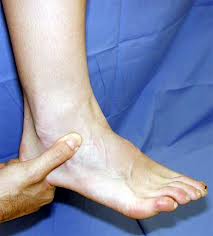
angler 3It is, in fact, the “angle” of the hook you use that makes you an angler.  The Old English form is angul and it means “fishhook.”  But angul is a version of ankle, which derives, ultimately from the Indo-European ang-, which is a variant of the verb ank-, meaning “to bend.”  The ankle is the bendy part joining the lower leg and the foot.  I remember that even though my own ankles are not as bendy as they once were.  A fishhook is not bendy, but it has been bent and unless it is overmatched by a sizeable and energetic fish, it stays bent.

The worms you use to help you lure fish to your hook, thence to your frying pan—the worms you use in your angling—are angleworms.

Note: This is mere whimsy, of course, but I once did ten year-worths of thangler 2ese for my daughter, Dawne, who dutifully sent me a Word-A-Day calendar on my birthday every year.  There were no readily available pictures online back then and I know Dawne would like them better with pictures.  Here you are, E. B.

Posted in Words | 2 Comments