Horizons

All my life, I have been a sucker for horizons. “Horizons,” I once thought to myself, “are just the earth in profile.”

With a horizon, you get beyond the welter of particular features and see the broad horizons 1incontestable outline of things. And after that, and without losing any awareness of it, you can attend to a good deal of complexity without losing your sense of the vision as a whole.

Back when I was studying humor more systematically than I am now, I ran across this from Max Eastman’s The Enjoyment of Laughter.

The mind should approach a body of knowledge as the eyes approach an object, seeing it in gross outline first, and then by gradual steps, without losing the outline, discovering the details.

I was so excited I just put the book down and went for a walk. It said a great deal about me that I had never heard that said before and it may or may not be true that, as Eastman says, “the mind should.” I think it is most certainly true about my mind and that I why I call myself “a sucker for horizons.” It is that “gross outline” that always grabs me.

I have recently been grabbed again and that I what I would like to think about today.

I have recently been grabbed by the level of generalization that Peter Stearns routinely uses. He provides the kind of horizon I seem to crave. I recently wrote that he is “my guy” on gender relations , referring to his excellent historical analysis of gender relations in the West. [1] Lately, I have been heading and listening to [2] his course on world civilizations. All of the world civilations, not just ours.

horizons 3And it isn’t just history. In preparing for a Bible study course that begins in September, I have been studying the Old Testament prophets. And all of a sudden, it occurred to me that there were three major categories of those prophets. Only three. There were the pre-Exilic, whose message was that God is going to punish (“discipline” in some of the prophets) you for your godless ways. And then there were the Exilic prophets, who said to Israel, “Your sentence is almost up. God is going to restore you to your homeland.” And there were the post-Exilic prophets who, with the exception of Jonah, said, “The holiness of the temple and the city and the worship of Yahweh have all been compromised while you were gone. Put things back to the way they should be.” [3]  This is someone’s notion of what the prophet Amos looked like.  He was one of the pre-Exilic prophets.

Three kinds. No more. Each with a characteristic message. I will get a good deal deeper into a study of those prophets before next September, but I will always have that horizon available to me. Which kind of prophet—and therefore which kind of message—are we talking about? Given that there are, you know, only three kinds.
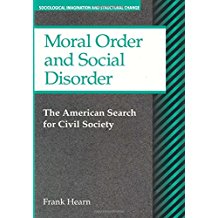
horizons 5When I hit my first communitarian sociologist, Frank Hearn, I was fascinated by his allocation of all kinds of “social problems” to one of three places. His own preference as a sociologist is that most problems be considered as “social problems,” by which he means problems rightly referred to communities using their own local institutions. But that means that he has to have a nasty name for the practice of referring those social problems to other places, where they really shouldn’t be. [4] Problems that are rightfully social, but that are referred to the polity instead, have been “politicized.” Problems that are rightfully social, but have been referred to the economy instead, have been “commodified.” Three places to put problems: no more. Horizon.

Recently in the New York Times, David Brooks in his column and Ross Douthat, in his column, referred to a book by Patrick J. Deneen, a political theorist at Notre Dame. Deneen’s book is called Why Liberalism Failed. Note the past tense of the verb. Deneen says that of the three systems active and plausible in the 20th century, communism and fascism have already failed. The third, liberalism [5] is failing right before our eyes. Why is that? Notice again the three and only three. Horizons again.

In Deneen’s view, liberalism is not a sustainable system. Here are three small clips from his work. [6]

The ancient claim that man is by nature a political animal and must…through the … practice of virtue learned in communities, achieve a form of local and communal self-limitation–a condition properly understood as liberty–cannot be denied forever without cost.

Note the identification of “local and communal self-limitation” as the meaning of “liberty.” That sounds odd, certainly, but if the alternatives are distant and bureaucratic limitation, on the one hand, or unrestrained individualistic excess on the other, then it is a definition worth taking seriously.

If my analysis is fundamentally accurate, liberalism’s endgame is unsustainable in every respect: It cannot perpetually enforce order upon a collection of autonomous individuals increasingly shorn of constitutive social norms, nor can it continually provide endless material growth in a world of limits.

I think this quote is truly helpful. It puts the two requisites down together. Liberalism has to be able to do one or the other, he says. Then he says that we cannot enforce order on individuals who have no access to “communal self-limitation” (see the previous paragraph). That is not sustainable. Nor can we provide endless material growth, which Deneen sees as the other alternative. There are, in short, only two ways out of our current dilemma and we can’t do either of them. That is his point.

If I am right that the liberal project is ultimately self-contradictory, culminating in the twin depletions of moral and material reservoirs upon which it has relied even without replenishing them, then we face a choice.

Here he points to the choice we have. If we can’t do the one (communal self-limitation) or the other (endless material goods), then we have a choice to make.

Ross Douthat’s complaint is that Deneen doesn’t go on and say just what choice that implies, but I think that is more up Douthat’s alley than Deneen’s and I imagine that Douthat—and very likely, David Brooks as well—will get around to it.

As dismal as this may seem, I find it refreshing. We can swim in or drown in the horizons 4complexities of today’s policy proposals. DACA or not? Amnesty or not? Enhanced legal immigration or not? But all of these questions take the present political system—the old classic post-medieval Liberal system—for granted. And Deneen says that system is running out of fuel and can’t be saved.  I’m sure this picture is an ad for a business of some kind, but note the similarity to Deneen’s communalist picture of liberty.

That means that all such questions are really just one kind of question. That question is, “Can we find a way to undo either of the limitations Deneen sees and if not, to what kind of system do we go as an alternative?” Is there a post-Liberal system?

Liberal or post-Liberal. Horizons.

[1] I think it is unfortunate that the title is Be a Man! A much better notion of what he is writing about is conveyed by the subtitle: Males in Modern Society.
[2] His Great Courses title is A Brief History of the World. Does that suggest “horizons” to you?
[3] Oh, and kick the squatters off of your ancestral lands.
[4] And in a stroke of wit, he made these names not only pejorative, but also ugly.
[5] Liberalism in this very historical use refers to the political and economic institutions that replace the feudal system. All modern liberals and conservatives are “Liberal” in this sense and so is capitalism and so is democracy.
[6] I used to run out and by books that look as interesting as this one. Now I search the electronic storerooms for an article-length version of the book’s argument. I am quoting here from an article he contributed to the journal First Things: A Monthly Journal of Religion and Public Life, back in 2012. It is called “Unsustainable Liberalism.”

Posted in Politics, Sustainability | Tagged , , , , | Leave a comment

This is your id speaking. Listen up!

I’ve been thinking about healthcare recently. I’m going to say some things I haven’t heard anyone else say. That is often not a good sign. As usual, I am going to start at several apparently unrelated starting points and as usual, I am going to try to bring them within speaking distance of each other.

Psychiatry

I don’t know much more about Freudian therapy than you can easily get from books andid 1 movies. [1] The picture I am relying on here is the patient lying on the couch free-associating in the presence of a fully present therapist. The “free” of free associating means, in part, that the little boxes in which we keep the thoughts and feelings that contradict each other are all opened at the same time in free association. And they associate with each other, not in the dark safety of the mind but in the public space between the therapist and the patient. Both hear the patient say things neither has ever heard before. [2]

Now I want you to picture President Trump as the therapist and the conservative core of his support as the patient. The patient is being encouraged to say, out loud, feelings and beliefs that have been publicly frowned on for many decades now. But instead of thinking that exposing them will rob them of their insidious power over the patient, the idea here is that it will reformulate them as public policy and give them a great deal of power over everyone. In fact, it will give them the power of law.

Federalism

Since the Great Realignment began around 1970, the two major parties have become much more internally consistent that ever before. [3] Now we have, not two parties, each of which has a right-ish wing and a left-ish wing, but a left wing party and a right wing party.

That is easy to see in a red state and blue state map of the United States. And year after id 3year, red states want to do red state things and blue states want to do blue state things. And every year, each color has to put up with federal regulations that requires them to be much more similar than they would really like to be. This tension between the national administration of national systems and the state preferences which express the political culture of their own states, is the heart of the federal bargain.

Healthcare

For example, some states think that “welfare services,” thinking particularly of medical services at the moment, need to be earned. This the the cri de coeur of the red states. “Working” is good. Receiving benefits apart from working is bad.

The red states have been slapped on the wrist for many years now by the Great Father in Washington, who says that their hearts can cry out all they want, but their Medicaid administrators may not withhold medical benefits by enacting a work requirement. Note carefully that this is a constraint on the behavior of healthcare administrators in red states. It has nothing to do with what I called earlier, the cri de coeur of those states.

So the first thing to notice is that those states want, year after year, to do this. They want it when the economy is booming and they want it when the economy is busting. Only the rationales change; the desire stays the same. During liberal administrations and conservative administrations, they want this. And because it is a federal requirement—you may not, however much you want to—make the availability of medical services contingent upon “work” or “looking for work.” [4]

And why do they want to do this? One answer is that it is the right thing to do. They hold a view of “working” that is essentially moral. Work is what establishes your full membership in society. [5] Work establishes the income that will allow you to purchase medical services or at least the insurance that will pay for the medical services. And if it doesn’t, you will still have done your part and therefore deserve the additional money the state contributes to your care. That’s what I mean when I call this stance “the moral view.”

And I mean to distinguish this “moral view” from the practical view. If you wanted to design a system that provided medical care to people who need medical care, this is not the way you would do it. What might be called “the red state prescription” will not only withhold medical care from many who need it, but it will also cost more than it would cost of offer treatment. Here’s an excerpt that explains why. You can see the whole article here.

Other states [in addition to Indiana] are considering similar proposals, but a recent redesign of West Virginia’s Medicaid program offers reason for caution. In 2007, West Virginia asked Medicaid-eligible individuals to sign a personal responsibility agreement to qualify for enhanced benefits. The agreement required beneficiaries to keep medical appointments, take medications, avoid unnecessary emergency department visits, and participate in health screenings.

Those who didn’t sign it — or couldn’t hold up their end of the bargain — had their benefits cut, and were enrolled in a basic plan that restricted prescription drug coverage, limited access to mental health and substance-abuse services, and excluded weight management or nutrition education programs. Both children and adults were subject to the agreement, which raised a basic fairness question: Children might be at the mercy of unreliable parents or guardians to follow the rules.

Less than 15 percent of those eligible signed the agreement, and more than 90 percent of children with Medicaid had benefits restricted. A central motivation of the program was to reduce emergency department use, but over all, people were more likely to visit the emergency room. There was no clear improvement in health or healthy behavior. The experiment was scrapped in 2010.

I’m pretty sure that this predictable ineffectiveness is not known in these red states, but I wonder if it would make any difference if it were. “Morality” as the source of public policy really doesn’t lead to “effectiveness” as an outcome. Here is the pitch, as I understand it.

If it’s the right thing to do, then it’s the right thing to do.

And besides, the people who will be harmed by it are not morally worthy people. Weid 4 know that because they aren’t working. Further, they are not working because they choose not to work and in that choice, they forfeit their claim to society’s help.
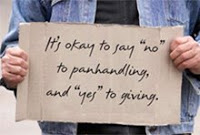
And the federal requirements that we fund their chosen inactivity are now being rescinded by a conservative administration in Washington which “gets it.” This administration understands how resentful we are that we have had to fund all this laziness in our states and now we get a chance to do it our way. [6]

Nothing I have seen in federal policy has taken any account of the persistence of this red state desire. I have heard it criticized as cruel and also as ineffective. But eventually, some account is going to have to be given of why they continue to want to do this. Decade after decade, they have the same policy preferences. Does federalism mean that eventually, they get to do what they want to do? Or does federalism mean that the citizens in those states are protected against their governments by national programs that constrain them?

Conclusion

After many years of national administrations hostile to “work requirements,” the redid 5 states are finally being allowed to do what they have wanted to do for so long. It is this “permission,” that called to mind the image of Dr. Trump as the therapist and “the red states” as the patient. Dr. Obama kept telling them how they should feel—compassion, for instance, toward those not able to find work—and made them feel ashamed of how they did, in fact, feel. Dr. Trump is allowing those states to say out loud what they have felt for so long and is giving them permission to build systems tying work to medical service.

I think the red states will find, as Khular says in the excerpt above, that it doesn’t really work. But I’m not sure they will care.

[1] It isn’t that I haven’t studied it. It is that the climate at the University of Oregon when I was there was actively anti-Freudian. The Rogerians and the behaviorists and the cognitive therapists were all opposed to it, although for different reasons.
[2] I can see why that would be helpful. I get some of the same jolt less expensively by talking candidly to friends who routinely disagree with me and with each other.
[3] I think of Paul Ryan as the true exemplar of the Republican consensus, not Donald Trump.
[4] I am fully aware of the difference. When I moved to Oregon, I received unemployment compensation for awhile and the requirement was that I continue to “look for work.” So I did. I applied for and had interviews relating to jobs I wouldn’t have taken if they were offered to me. And side by side with those, I spent time getting to know the people who knew people who would eventually open the door for public policy work. So I do actually know the difference.
[5] “Real work,” that is, not being “a paper pusher.” The prejudice in favor of physical or at least difficult work is very common among the working class whites who form the hardest of the hard cores of Trump support. See Joan C. Williams, Reshaping the Work Family Debate: Why Men and Class Matter’ .
[6] Even if it hurts good people to punish the shiftless in this way, there is a theoretical perspective that sheds some light on it. It is called “altruistic punishment.” See the piece by James H. Fowler of UC Davis in the Proceedings of the National Academy of Sciences, 2005.

Posted in Political Psychology, Politics, Sustainability | Tagged , , , , | Leave a comment

Pick two

You can have it fast and you can have it good and you can have it cheap. Pick two.

I heard this from a patient on The Good Doctor who said he was in real estate and cited the “pick two” aphorism as a commonplace in his industry. The surgeon responded, “It won’t be cheap.”

It does seem hard, in American politics, to get all three of anything. I remember how positively I responded to Bill Clinton’s line on abortion. “Safe, legal, and rare.” [1]  And I was reminded of that difficulty recently as I see the Democrats casting about for a presidential nominee for 2020. Why is this so hard?

First, it is hard because the animosity between the Bernie faction and the Hillary factionDemocratic Presidential Candidate Bernie Sanders Campaigns At Pennsylvania's AFL-CIO Convention has not yet abated. Some of that animosity appears to be no more than personal grudges projected onto public issues. What could have been a perfectly normal division within the Democratic party between the ideological left and the pragmatic center, got blown out of proportion by the personal attachments of the campaign supporters. Hillary’s people need to get over blaming Bernie’s people for “denying her the election.” Bernie’s people need to get over their resentment of Hillary’s persistent tacking to take advantage of the winds of the campaign season

But down below the personal animosities, there is a true tension within the party. Most of the Democrats I know would really love to be socialists if they thought they could get away with it. If there is going to be a party of the programmatic left, it will be the Democrats. The argument is that Trump will be massively unpopular [2] by 2020 and that the kind of gains the Johnson administration was able to build on the ashes of the Goldwater failure in 1964 will be available again in the ashes of the Tump failure in 2020.  This argument adds to the preference for programmatic left wing reforms, the always seductive, “Now is the time.”

On the other hand, Democrats who are more moderate in their social and economic goals as well as more pragmatic in their political ambitions, urge winning as a first step. First win back the presidency and the Congress, this argument goes, and then we will talk about what to use them for. At the very least, we will be able to begin rolling back the worst of the Trump excesses and as a common core of progressive social goals is agreed upon, we can do them next.

2016 Election ClintonThis argument agrees that the Republicans may be very weak in 2020 as a result of the expected Trump implosion but they make the case that winning seats is more important than the success of the programs so dear to the left wing of the party. And you don’t have to say out loud that you don’t share those goals if you can just make the case that it would be risky to pursue them.

This is essentially the dilemma Bill Clinton faced in 1992. He was up against an incumbent president, the heir of the very popular Reagan administration and also up against a radical and unresponsive Democratic left wing. It took him some bare knuckle work, mostly in private, and a lot of reconciliation, mostly in public, to get the party back together.

But that was then. This is now. Clinton was up against George H. W. Bush, who was, whatever you would like to say about his politics, a gentleman. The 2020 Democratic nominee will (probably) be up against Donald Trump, who is engaged in what looks remarkably like an adolescent rebellion. The Democrats cannot oppose Trump the way they opposed Bush.

Furthermore, the tribalization of American politics has progressed much further since Clinton’s time, even since Obama’s time. 2020 is going to require a warrior, not a reconciler. And if he [3] is not belligerent in the policy sense, he still must be stylistically belligerent; he must be seen as someone who “fights for” his party. He can count on his excesses being forgiven by the members of his party where he could not count on his restraint being forgiven.

And this isn’t as easy as you might think. The Republican party and the Democratic partypick 2 4 are not the same kind of thing at all. The dominant voice of the Republican party is now a movement-oriented voice, something like jihad. The Democratic style is collecting groups of voters who are willing to sign on for the campaign, like a state militia. The Democratic party works like the United Nations, not like Al Qaeda. [4]

If getting belligerent, as I say, above, will be required of him, the Democratic candidate also needs to cultivate the constituent “nations” that make up the party voters. He needs to be seen as a warrior fighting for the interests of each crucial part of the party and to fight for each in a way that makes him acceptable to all. Good luck with that.

So the next Democratic nominee needs to be a programmatic leftist and a pragmatic centrist and a warrior who leads his party against the enemy.

Pick two.

[1] It’s a phrase worth celebrating. Not only is the rhythm easy to enjoy, but it also distributes the goods nicely. Lefties like “legal;” righties like “rare,” and everybody likes “safe.”
[2] Not among his core constituency. Nothing will do that. But the Democrats don’t need Trump’s core constituency to win back both the Congress and the White House.
[3] I’m perfectly capable of using “he” as a neuter pronoun when it doesn’t really matter, but in the case of the Democratic party in 2020, it really does matter. The Democratic candidate in 2020 will certainly be a man and in all likelihood, a white man.
[4] We commonly refer to Trump’s “base” or “core constituency.” That is actually what the word “al-qaeda” means so there is a very satisfying irony there.


Posted in Politics | Tagged , , , , | 2 Comments

Time on and time off

Nearly all the words I know about work presuppose there is a task to be done and a place to do it. Whatever else there is—the person who is supposed to do the work, for instance,—gets pushed to the margins and the focus on him or her gets blurry.

So “Time on” is addressing the work to be done because it needs to be done. “Time off” isn’t the same thing as doing the job, but the phrase still takes its meaning by reference to the job. When the job is central, “off” and “on” both refer to the relationship between the “worker’” and the job.

I’m not working anymore. How do I get time off?

work 1Of course, the fact that I am not “working” anymore doesn’t mean that there aren’t things I want to do. In fact, there are things I commit myself to accomplish and they highlight that task-focused center and they push my focus on myself to the blurry periphery. It’s a very familiar feeling and most of the time, I like it.

 

But part of the reason I like it is that I choose it. [1]

Next problem. This time, I, the worker, am in the center and the “job to be done” is at the periphery. I said, above, that I am “not working anymore.” That is true, but part of the reason for that is not all the parts of me work anymore. To save you a medical overview, let me just say that I can’t always be confident that I am going to be able to get up and move around, nor that I will remember how to run the video and soundboard in the auditorium, nor that I am going to remember everything I once knew about American foreign policy.

Those particular problems aren’t all that big for the Great Decisions course because those are programs and I can manage to get myself in gear for them. I collect myself and then there is the mild and familiar stress of presenting material and responding to questions. Most of my days aren’t like that and some days I get up with real deficits to consider. And that’s where my new plan comes in.

I start with me and choose the “jobs” that fit me best. [2] This involves a fundamental reorientation, so I’m not saying it is easy. I’m saying it is simple. Here’s the basic principle: every condition of mind or body matches really with some tasks and not with others. Choose the one it matches best.

All my working life took the opposite principle for granted. The work is there and needs Stressto be done—sometimes there is a deadline—and you need to do to yourself whatever you need to do to get it done. Solitude, alcohol, stimulants, brainstorming…whatever. So starting from the other end, “What job best fits what I have to give right now?” is a whole new thing. Sometimes I am frazzled and can’t focus on anything. That is the basic fact. But there is a collection of errands or chores to do that require virtually no focused thought. I can do them just as well when I am scattered as I can when I am cogent. So I choose those.

I’m lightheaded. My doctor prefers that I say that instead of saying that I have vertigo because he isn’s sure I do have vertigo. She and I do agree that there are some times that I can’t count on being able to stand up. I’m not sleepy; it’s just that my vertical orientation is being challenged. Is that a problem for me?  Nope. There’s a bunch of sitting down things that need to be done. I can manage to get myself carefully downstairs to the circle of chairs and sofas around the coffee pot, for instance, and talk to whoever else sits down there.

If I am depressed, I can do the things that have, in the past, pulled me out of the hole. If I on the upswing, being optimistic and full of energy, I can try to use it to help someone rather than for self-aggrandizement. If I’m feeling unusually pacific, I can do the things I have put off because they will lead to conflict. If I am understimulated and feel like a little tussle might be activating, I can pick an activity which takes “ready to rumble” as an entrance requirement. Those activities are the ones I routinely keep away from, but maybe on this particular day, it will be just the right thing.

The examples could go on and on and my examples will be different from yours. The point is this: if you start with what you are  able to do and match the job to yourself (rather than vice versa), you can arrive at a really satisfying match. It would be like arriving for work every day brimming with energy for just the things that day’s work will require of you. How likely is that? But if you start at the other end—not with the job, but with the self—it’s pretty likely.
So Why Work?

So why does there have to be any “work” at all?  Let me make the case for and against work 4tranquility by showing you this picture.  The case for: wouldn’t it be great to be able to be like this some part of every day?  The case against: wouldn’t it be awful to be like this all day every day?

I’m going to skip over the broadest answer to the question about work, which is a response to the question of what human beings are like in the most fundamental sense. [3] As a way of bypassing that, let me make a comment or two about why I need “work.”

I need to be doing the things that feed me and keep me healthy. I need, for example, to know who I am and I need to know that being who I am is OK. [4] I need to do the things that send back confirmatory signals. I need to do the things and be with the people who will confirm my identity and my acceptability. [5] So every day, I choose things to do that I approve of and that seem to me to reflect the kind of person I am.

That is my work. It is why I need to be doing something. Sitting around and letting my mind and my body get flabby and useless doesn’t meet the fundamental standards of what I need, so I don’t do them. Eating or reading too much “junk food” doesn’t meet the standards. Looking out for my own welfare only and not also for the welfare of those around me doesn’t meet the standards.

Now, of course, I myself don’t always meet the standards, but falling short of a clearly defined goal does give the kind of feedback that can help me on the next try. And the great value of choosing the best work you are capable of that day—a day defined to take account of whatever debilities you have that day—is that there is no day when you can not do your best.

And, with a little practice, you can learn to be proud of the smallest achievements if they are all you were capable of at the time.  Well…OK….with a lot of practice.

[1] In a sense. So I “choose” to be in charge the Foreign Policy Associations’s Great Decisions discussions. I like that. But then, one week I have to hassle a double scheduling of my room and the projector blows a fuse another week, and a few dissidents dominate the discussion on a third week. I don’t like any of those and I didn’t choose those particular experiences—except that, in a sense, I “chose” them when I “chose” to organize the program.
[2] So somebody is going to say, “So…why pick any jobs at all?” That’s a really good question and I have a really good answer—for me. I don’t have a good answer for anyone else, although I have suspicions that could be elaborated into a theory that applied to everyone equally.
[3] If I went that way, I would have to say that humans are inherently goal-oriented and then I would have to say what would count as a goal and then I’d have to write a lot of things I don’t know anything about.
[4] That’s the plainest version I have ever come up with of Putney and Putney’s formulation (in The Adjusted American: Normal Neuroses in Self and Society) that we seek “an accurate and acceptable self-image” and that we seek to expand them through our actions and our associations.  There are theological implications that could be drawn from the language I am using here, but I think they are superficial.
[5] That does include, by the way, people who think I did something wrong and that I have the strength to be told that and the energy to starting doing it right.

Posted in Getting Old, Living My Life | Tagged , , , , | Leave a comment

IOYK

“I’m Old, You Know.” Since the time I invented that acronym, I have learned that it also can man “if only you knew.” There are lots of circumstances in which this particular excuse is more or less appropriate, but I am going to consider its overuse. But first, let’s clear out some of the underbrush.

“Reasons” and “Excuses”

IOYK 2For reasons I can no longer recall, a big distinction was made, where I grew up, between “a reason for something” and an “excuse.” By usage, I learned that a reason you gave for something was one or the other. I never heard anyone say that a reason was so inadequate that it could not serve as an excuse or that a reason was so compelling that it did serve as an excuse. The old usage is still in place, I notice.

“…I’ve heard an incredible number of reasons why restaurant owner’s businesses are struggling or failing. 99 out of 100 times, that “reason” really isn’t a reason at all, it’s an “excuse”. There’s a big difference, and I’ll tell you what it is. [1]

If “excuse” is the reason why the discussion is being pursued [2], then some reasons are good enough to achieve it and others are not. “I’m sorry I was late for dinner. I had a heart attack on the way home and the hospital wanted to keep me overnight for observation.” I like that one. “I’m sorry I was late. The #8 bus was late getting to my stop and the traffic was unusually heavy.” I don’t like that one so much, particularly when it is delivered by someone who is frequently late and always has a low grade reason for it. So, you know, take an earlier bus.

Use and Overuse

“Old” isn’t much of an excuse all by itself. It is the practical implications of “old” that provide the utility. “Old and therefore forgetful” for example “excuses” the failure to write down an appointment. “Old and therefore frail” excuses attending a party that will require standing for long periods of time and also excuses being part of the moving crew summoned to help a downsizing friend. [3] “Old and therefore frequently ill” excuses commitment to long range plans.

When you begin with IOYK, those are the gains that the excuses buy you. But what does it cost you to buy those benefits? What is the cost to you?

We tend to look at the effect of the excuses we offer. That seems a reasonable thing to do. IOYK 5For one thing, the IOYK excuse functions as a kind of euphemism. It is a socially acceptable reason where “the real reason” might not be so acceptable. If there are parties you don’t want to go to or projects that aren’t really worth doing or jobs you would rather leave for someone else, saying those things in those ways will get you into trouble. Or reasons for not texting an “old person.”  Using IOYK will not. People accept it more or less at face value and don’t take it personally.
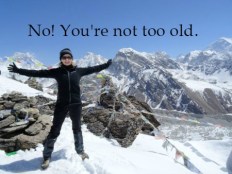
So it takes real discipline to keep from overusing it.

But I think there are good reasons for trying not to overuse it. First of all, while we are attending to the effect of the excuse on others, we are not noticing the effect of the excuse on ourselves. It is the premise, the hard to notice foundation of the excuse, that causes us all the difficulty. The overuse of this particular excuse requires that we present ourselves as old more than is strictly necessary. The network of implications we have devised—old and therefore frail, for instance, or old and therefore forgetful—acts just the same way on us as it does on them.

It does. Jonathan Haidt says is a line that made me decide to buy his book [4], “I then lied so quickly and convincingly that my wife and I both believed me.” It forms connections in our minds. We now think of ourselves as “old” more than we would have otherwise and while it is true that we are old, it is also true that we are active, inquisitive, empathetic, and capable of sustained action should the occasion require.

All these things may be true of us and calling our own attention disproportionately to the one that provides the best excuses will weaken us in the long run.

IOYK 3And not only that, but the people to whom this reason is presented and who accept it as legitimate—they accept it, that is, as an excuse—will also learn the broader premise we are using. “He thinks of himself as old” our friends will learn to say, “…and so he would probably not like to be invited to the party or told about the project.” And, of course, our friends talk to each other too, so this assessment of what we might respond to spreads across our friendship network, with the result that many invitations may simply be not offered. “He always says No,” our friends will say as they consult each other, “and he will say he is too old.”

Inculpation [5]

Dr. Shaun Murphy, the principal character in ABC’s The Good Doctor, is autistic and in a recent episode, he encountered his first autistic patient. A rich and complex story ensues, but at the end, the autistic doctor has this word of advice for his autistic patient, “You need to make more mistakes.” That is what backing away from the overuse of IOYK will mean for us.

If we focus the appropriate attention of the whole range of our traits—not only old, but also, as in the series above, “active, inquisitive, empathetic, and capable of sustained action”—then we will be more overtly interested in more things. That means we will not over-learn the one premise we are using—IOYK—and will, instead keep the whole series alive in our minds and in the minds of our friends.

It does seem a shame to give up on an excuse that works so well, but when we think about what it costs us, maybe using it a little less would be a good idea.

[1] I got this familiar treatment from Brandon O’Dell, a restaurant consultant.
[2] I would prefer “exculpation” myself. The root, culpa is a Latin word meaning fault or blame. The prefix ex- gives us “out of” or “away from.” So an exculpatory reason is one that takes away the blame. That seems clearer to me.
[3] Not Matt Damon, who downsized not only his character, but also himself in his recent movie, Downsizing. Someone else.
[4] The Righteous Mind: Why Good People Are Divided by Politics and Religion. See page 54.
[5] One of the many good reasons for using words like “exculpation” is that is makes it possible to flip over to “inculpation” when the time comes. The relationship between inculpation and exculpation is completely transparent.


Posted in Getting Old | Tagged , , , , | Leave a comment

The Good Patient

I have very slowly become a fan of the ABC show The Good Doctor. The friction that is patient 4the basis of the show—Dr. Shaun Murphy is better than everyone else at the hospital in diagnosis and treatment and worse than everyone else in interpersonal relations—is hard for me to manage. I also thought that they would settle on a format and just crank each week’s episode through that format and be done with it.

They haven’t reused a format so far—or I didn’t catch it—and they keep making the friction worthwhile. So I’m still watching. [1]  Still writing about it, too.

DYLAN KINGWELLThis one is called “Point Three Percent,” [2] and in it we meet an amazing boy. Evan Gallico (Dylan Kingwell, who also plays Steve Murphy, Shaun’s brother, when they both are young). [3]  Evan is committed to protecting his parents. That is the common element of the several strategies he adopts. He is bright and caring and perceptive. He is not the kind of kid you want to see die of cancer.

He tells Dr. Murphy that he already knows he has cancer. The parents have gone to great lengths to keep him from finding out, but he found out anyway. Here is how that goes.

Shaun: You have cancer.

Evan: Yeah, I know. Hey, it’s OK. I’m not afraid to die.

Shaun: You’re not?

Evan: Well, the dying part will suck if it hurts, but I’m not afraid about the actual death part.

Shaun: Because you believe you’re going to heaven? [4]

Evan: Because I don’t. If I believe in Heaven, then I’ve got to believe in God and then I got to believe God made me sick. How messed up is that? It’s just easier to think that it’s all random and when it’s over, it’s just…over.

So that’s where Evan is and why he is there. I want to come back and touch on his theological reasoning later, but I want to look at the second confrontation first—this one with his parents.

Evan: Dad, I know all about the cancer. I have for a long time.

Mr. Gallico: I am so sorry.

Evan: It’s OK. [Looks out the door to the hallway and sees Dr. Murphy there] …because I’m not gonna be alone. Grandma’s going to be there, too. Auntie Arlene. Uncle Jim, if he figures out how to stop swearing…

[Looks out the door again and he and Shaun hold a gaze briefly, then Shaun walks away]

The common element in Evan’s world is not heaven or not. It is protecting his parents as best he can. He protects them first by pretending that he doesn’t know. When, as a result of Dr. Murphy’s investigations, it is no longer possible to pretend, he pretends to believe in heaven and populates it with people who will be meaningful to his parents.

Evan is completely persuasive in each of his narratives. It is only the viewers and Shaun Murphy who see both performances and are forced to realize just how much they are performances. Evan’s love for his parents is shown in his protecting them from knowing that he knows he is dying and also, when that is no longer possible, protecting them from the despair they imagine he must feel. I love him wholeheartedly.

On the other hand, his theological calculations skip over free will. There are a lot ofpatient 1 things God can no longer do once He has committed Himself to free choice in his creatures. That is what intervenes between “if I believe in Heaven, I’ll have to believe in God” on the one hand, and “then I’ve got to believe that God made me sick,” on the other. Evan believes that whatever happens must be the will of God because God can do anything. But it seems to me that God limited the playing field a great deal by creating people capable of saying Yes or No to Him.

Then there is the further question of whether a bad thing is pointless. Job wondered that same thing and came to the opposite conclusion. In 42:3 , Job says,”I was the man who misrepresented your intentions with my ignorant words. You have told me about great works that I cannot understand, about marvels which are beyond me, of which I know nothing.” That is not where Job began, but it is understandable given the argument he has just made. Evan doesn’t get that far. It is either good or random for him. I am willing to praise him for his love of his parents and to admire him for his candor to his doctor.

But I think his theology leaves something to be desired.

[1] There is always something about an episode that isn’t really about the plot, but that catches my attention. Last October, I wrote one on what “honesty” and “candor” mean. See October 13
[2] Although if memory serves, it was actually .003%

[3]  They help us through that by having the president of the hospital (Richard Schiff) say, “He looks exactly like your brother, Steve.”

[4] We are not given any clear theology that Dr. Murphy holds, but his way of saying “die” is “went to heaven.” He saw his rabbit “go to heaven” when his father threw it against a wall. He say his brother, Steve, “go to heaven” when he fell off the roof of a train. Six episodes in, I still have no idea whether Shaun has any beliefs about God at all.


Posted in Movies, Theology | Tagged , , , , | Leave a comment

Matthew pairs Jesus and Moses

Matthew spends a lot of time in his gospel presenting Jesus as the new Moses. It has not moses 1been lost on scholars, for instance, that in Matthew, Jesus’s first sustained teaching was on a mountain. Moses went up the the mountain (Sinai) the get “the Law” from God. Jesus went up a mountain to give a series of contrasts to that Law, each of which began, “You have heard how it was said to our ancestors…” and then continues, “But I say this to you…” [1]

This pattern of presenting Jesus as the New Israel can be seen all through Matthew’s gospel and is widely commented on. The structure of the gospel of Matthew is in five large “books”shapes his gospel—everything between the birth narrative at the beginning and the passion narrative at the end—into five large “books”—each containing a narrative of the ministry of Jesus and a discourse. Many scholars think that in structuring his gospel that way, he is suggesting that Jesus in not only the new Moses, but that the gospel is the new Pentateuch (five books).

moses 2This device of Matthew’s is, as I say, widely recognized in his gospel, but it is not widely recognized in his narrative about the birth of Jesus and it is noticeable there as well. You would think that a writer who thinks of himself as a teacher has a point to make, he would work it into every part of his writing, even the birth stories. And he does. Here are some examples.


The Birth Narrative

I argued in a previous essay on Matthew’s birth narrative (Was Joseph a Righteous Man?) that Matthew emphasizes the “righteousness” of Joseph as “scrupulous adherence to the Law of Moses” and that he could afford to do that because Joseph was just about to receive a “new commandment,” one that superseded the demands of the Law of Moses. It is the Old Law/New “Law” contrast that Matthew has in mind.

Today, I want to add to that pattern, the next dream Joseph gets. “Get up right away and collect your wife and your little boy and leave your comfy house in Bethlehem and go to Egypt. Now.” Why Egypt? Well, Egypt is close and safe. Today we would say that Egypt didn’t have a treaty of extradition with Judea, but for that time, we can just say that it is the kind of place people went to hide out. [2] So Egypt isn’t an implausible place for Joseph (et. al) to hide out.

But Matthew has more in mind. Matthew introduces that parallel by saying, “This was tomoses 3 fulfill what the Lord had spoken through the prophet: I called my son out of Egypt.” (Matt 2:13) So…what prophet is Matthew talking about? It is Hosea (11:1) where Hosea, in using the expression, “my son,” means Israel. And Matthew knows that Hosea meant Israel. So how does he manage to appropriate it so that it refers to Jesus?  I can argue all I want that in Matthew, Jesus would have been a little boy, but I can’t find any pictures in which he is not an infant.

The switch is perfectly clear. It could be put in language that is much too bald by attributing some sentiment of this sort to Matthew. “Hosea, in talking about “my son” meant the people, Israel, but to my mind, it is also true of His son, Jesus.” [3] But I think Matthew wants more than that. He wants us to see Jesus as “prefigured” in the scriptures and that is the way he brings it to us.

The mechanism that makes this change work is not “prophecy” in the predictive sense, as when I predict that it will rain tomorrow. It is more like what is called today “a cueing phenomenon.” One way to picture this is that the Egypt reference in Hosea draws a line on a blank page and then Matthew draws a parallel line referring to Jesus. This is not “fulfillment” in the sense of a prediction being fulfilled; rather, it our minds to an area where some new thing will be said. [4]

“Oh…right,” we say, “Israel, God’s son, came from Egypt at God’s call. I knew this thing moses 4about Jesus sounded familiar.” Placing Joseph’s family in Egypt allows Matthew to re-appropriate the scripture, “From Egypt, I have called my son.” For Matthew and/or for his readers, this is a sign of the providential working of God to bring us the Messiah just as he had promised.

The Slaughter of the Hebrew Children

Once in Egypt, the Israelites multiplied to the extent that the Pharoah was frightened at how many of them there were, so he ordered that the male babies be killed by the midwives. Moses was saved by prompt and providential intervention, but a lot of Hebrew babies were killed. This functions, again, as a prompt for the Jewish Christians in the church Matthew was writing to. The birth of Moses was accompanied by the death of many Hebrew babies.

moses 5This is the first line on the paper. Remember the “slaughter of the innocents by the Pharoah in Egypt?” And then the parallel line. Well, there was a slaughter of Israelites at the time of Jesus as well, this one engineered by Herod the Great. [5] And we say, “Oh, right. I knew that sounded familiar. This story of Jesus is so very much like the story of Moses.”[6]


Summary

In making these distinctions, I am following a different line of argument than Matthew is. It may well be that Matthew thought the events of Jesus’s life happened because they had been “predicted” in the sense that God had planned them. I don’t know how Matthew thought of them. It is quite clear, however, that Matthew, not just in the infancy stories but throughout his gospel, is drawing a parallel between the history of Israel and the life of Moses, on the one hand, and the story of Jesus on the other.

This parallel approach requires Matthew to use a lot of what are today called “scare quotes.” [7] So Matthew, in arranging these parallels says that “the Law” was brought from the mountain by Moses, but that Jesus gives a new “Law,” also on a mountain, which is about the renewing of God’s grace and favor.

[1] This particular phrasing is the New Jerusalem Bible.  The argument in general is based on Raymond E. Brown, The Birth of the Messiah.
[2] In Stan Freberg’s History of the United States, Volume 1, he has Ben Franklin refusing to sign the Declaration of Independence because “I don’t want to spend the rest of my life ‘writing in Europe’.” The phrase “writing in Europe” was, at the time, a euphemism for banishment or even just a temporary escape from the Americas.
[3] Some say that Matthew believed that Hosea, filled with God’s Spirit, really meant to refer to “my Son, the Messiah” and didn’t realize it himself. That’s further than I can comfortably go. I would rather say that Matthew sees the powerful parallel and adapts Hosea’s text to his own message.
[4] This is a notion of “prophecy” I have never had before nor have I ever seen it before. So I’m really excited about it at the moment. Ordinarily, that means that tomorrow it will either be shown to be old hat among scholars or to have been decisively discarded years ago. Today, I really don’t care.
[5] The total of Israelite babies who would have been killed in Herod’s massacre is estimated by scholars to be somewhere around 20. That is based on the likely population of Bethlehem at or around 6 B.C. and the proportion of the population likely to be 2 years old or less
[6] And, in addition to that, there were apocryphal stories, which Matthew may very well have known, in which the Pharoah’s “wise men” understood that a deliverer of the Israelites was going to be born and that the prudent thing would be to kill all the male infants. This is an alternative rationale for the killing off of Hebrew boys in Israel and it is one much more like Herod’s killing off Jewish boys in Judea.
[7] The function of “scare quotes” is sometimes to indicate that the writer doesn’t believe the term is warranted. In this use, the quotes are the equivalent of the expression “so called.” But at other times, it is simply a marker that this word, which we are used to seeing one way, can, in fact, be used in another way.

Posted in Advent, Biblical Studies, Theology | Tagged , , , , | Leave a comment

Do revolutions eat their children?

Usually, yes. They do. I don’t think it is unavoidable, though, and I’d like to think about it with you today. The “revolution” I have in mind today isn’t really a revolution in the strict sense; it is the women’s liberation movement. I do think there are some common elements, however, and those will the the subject of today’s essay.

How revolutions work

Here is a perfectly acceptable introduction to this expression. I found it on Yahoo Answers and in some other circumstances, there are things I would quibble with but it’s just fine for today. The question posed was, “What does the saying mean: ‘Revolutions eat their children’?”

In general, it refers to the fact that after the initial successful revolution, there comes a period of revolutionary justice. Initially, the revolutionary justice is applied to the members of the old regime. Then, as the revolutionaries begin to fight each other for power, the same techniques that were used to justify the necessity of killing and imprisoning the former rulers are now used to justify the killing of the members of the revolution that have fallen out with the powers that be.

However complicated the actual dynamics of a society might be, the need for revolutionary fervor requires that those dynamics be simplified. We are good—at the very least, our aims are good—and those people are bad. Now it is true that they oppose our legitimate aims, but that isn’t why they need to be cast into outer darkness. They need to be cast into outer darkness because they are evil. Did I mention that there is some simplification involved.

It isn’t that these people “do evil things;” it is that they “are” evil. And it isn’t that they domoderates 8 “some evil things” along with all the good things; all the things they do are evil because they, themselves, are evil. And their evil character is obvious. It doesn’t require group decision making or the preponderance of the evidence or anything like that. It is obvious to everyone.

Well…in practice, things are more complicated and the people running the revolution—not, as a rule, the people who started it, but the people who took it over from the ones who started it—do some morally ambiguous things. They also make mistakes. It would be hard not to.

In the next step, a well choreographed sequence, someone who has the long-term success of the revolution at heart, points out those actions endanger the success of the revolution. This phase of the revolution requires an infallible directorate of some kind. If, as this friendly partisan points out, they have gone too far, then they are not “infallible.” So either the claim of infallibility has to go or the person who raised the obstacle needs to go. Given the choice, they turn against their former comrade and he goes to the guillotine or to the Gulag or into exile, which resolves the problem in the short run. The very very short run.

moderates 6And there are more people, it turns out, who were true blue revolutionaries but who really hate to see this good-hearted friend of the revolution killed for “crimes of good judgment” and they object. At which point they follow him to the guillotine (or wherever) because the logic of infallibility still prevails.  And that is how the revolutions eat their children.


Revolutions produce dictators

But revolutions produce a great deal of disorder and in the long run, people really demand order. Not just an end to the killing, although that would be nice, but a return to the days when things worked. You could go to work or raise a family without being taken by the mob. At that point, some strongman domes along. Napoleon ended the revolutionary fervor in France, Hitler ended the period of national disgrace in Germany, Stalin protected “socialism in one country” in the Soviet Union. There’s always somebody, when it goes that far.

But what would it be like if it didn’t go that far?

So now let me come back to the current phase of the gender wars in the United States. There have been a lot of very famous men recently, who have seen their careers implode because of accusations of sexual harassment. In noting that, I am not saying that they should not. For some of these men, the career-imploding decisions happened a long time ago and justice has been tardy. But then, the logic of expansion takes over. It turns out that the sense of power that comes from successfully accusing a man of misbehavior is a very heady sense. Also, it’s the right thing to do. And also, if you don’t, you are letting down your sisters. And also, if enough women want to get in on that experience, they create a logic that drives downward the standard for the crimes you can be accused of.

In this phase, accusation is very nearly the same thing as conviction so the scale of those moderates 5convicted moves from hardened sexual predators to occasional predators to men who suffered instances of bad judgment to people who were insensitive to the response a woman might have had to what had appeared to be a consensual act at the time. So when I say that accusation feels so good—it is “empowering”—that it drives downward the standard for crimes committed, it is movement along this scale that I have in mind. [1]  I found this a fascinating collection of familiar faces and Cosby was well into his practice of predation by this time.

I suspect that there are quite a few women who would like to see the men whose offenses are at the “misunderstanding” end of the continuum spared the treatment that is so richly merited by the men at the “predator” end. In practice, this would amount to distinguishing sexual “felonies” from sexual “misdemeanors.” It would separate misunderstandings from intentional violations of women who make no secret of their opposition.

I am going to say in the next section that those women, the ones I imagined in the previous paragraph, should stand up and make their views known. That will mean “reasoning with the mob” in the revolutionary metaphor I have been using, but at the very least, it will involve trying to talk reason to your sisters who are angry at the moment.

If they don’t

But before I get that far, let’s imagine what will happen if they don’t. Following the revolutionary model, there will be two kinds of responses. The first is that people will distort their own lives and thoughts to avoid appearing of interest to the prosecutors who are running the movement by this time. In the time of the French Revolution, for instance, an alternative pack of playing cards was invented, one in which the face cards did not refer to royalty. By the logic of the movement, people who are caught playing with the “old cards,” the “royalty-affirming” cards, will be found guilty and punished.

The second response is that the anger of those who are punished and of those who resent the loss of any predictable social order at all, will provide a backlash. They will become hospitable to anyone who offers to set things right again—Napoleon, Hitler and Stalin all promised that. And after that, there will be some decisively new regime. A monarchy was restored in France; the party leadership became the new elites in the Soviet Union; a democratic government was forced upon Germany by the Allies after a humiliating military defeat. This is the backlash phase.

If they do

Both those phases are unfortunate and, taking the long view, unnecessary. What is needed is for the moderate center of the movement to stand up at the right time and say “enough is enough.” The joy of accusation, the thrill of empowerment, needs to be confined to those men who are operating on the left edge of the spectrum. The people on the right edge need to be defended by the women who, themselves, were a part of the misunderstanding and would like to see communication improved. As a rule, if you are going to improve communication, you will need someone who is willing to talk with you. The threat of the guillotine very seldom produces that kind of willingness.

There is a sense in which all this seems a reasonable thing to do and in one sense, it is. But something else is going on as well. There is a line that could be drawn between premeditated predation in the Bill Cosby style and the misunderstanding a man and a woman had at a party. But that line is not going to be successfully drawn by men for what seem to me to be obvious reasons. (More in a moment.) It is going to have to be drawn by women who see the value of drawing that line and who are willing to pay the price.

There is a logic here that has nothing to do with sexual relations. Adam Serwer, in a recent Atlantic article, makes the same point about President Obama and the wave of anti-immigrant hostility. James Zogby, of the Arab American Institute, is quoted in Serwer’s article. In opposition to the charge that Obama should have spoken out more forcefully against the anti-Muslim hostility, Zogby says:

“I would say that the people he needs to speak to see him as the problem. It was the responsibility of the Republicans to speak out and they didn’t.”

And why was it the responsibility of Republicans? Because it is their movement that is going somewhere they don’t want it to go and because they have the status (we are Republicans, too) to counsel their own partisans. They would be saying something like, “As people who have been with movement since the beginning, we ask you not to drive it into absurdity, not to ruin by your excess, what we all valued in the beginning.”

Women and drawing the line

moderates 7It is the job of the women who care about where the relations between the sexes are going who have the responsibility to speak up. Why not the men? Because they have a prominent interest in not being accused of things and therefore their testimony can be readily set aside. Why not the hard left edge of the feminist movement? Because they are concerned narrowly with “punishing all the bad guys.” They are the revolution in its accelerated form. It is not their job to stop pursuing evildoers. It is their job to care about the unity of the movement and that is why they should listen to their more moderate sisters about how much is too much.

Otherwise, the feminist radicals will destroy the feminist moderates and that is what they mean when they say that “the revolution eats its children.” I’ve always thought it would make a clearer metaphor to say that the revolution eats its parents, but that isn’t how the saying goes.

That means that a substantial body of women need to stand up and say that these acts are evil and should be punished and those are mistakes and should be remedied and these over here are failures to anticipate how women might respond. Those need a little loving care and a little gentle instruction.

The radical edge of the movement puts all those together because the the speed and the breadth of the avalanche require it. But women who would like to save the feminist movement from destroying itself need to speak up now.

There really isn’t anyone else who can.

[1] Eventually, you get to the position taken by Jessica Bennett in the Sunday New York Times of December 17 that “society” has so schooled women that even their saying Yes isn’t really saying yes. That comes very close to the infantilization of women, in my view, and I would hate to see any of the women I care about tarred with that brush.


Posted in Paying Attention, Politics, Society, Sustainability | Tagged , , , , , | Leave a comment

Recharge your battery!

There is a new ad by a product called 5 Hour Energy that I found really appealing—until I had a chance to think about it. [1] Then I found it appalling. Today I’d like to write about the appalling part.  I’m thinking along the lines of: “The understimulated life is not worth living.”  Something like that.

The idea is that over the course of the day, your “battery,” your sense that you have enough “power” to do all the things you have to do, runs down. In the picture below, you see people wandering around with just so much juice left in the battery.
The guy at the left with the tie and the beard has 46% left. The woman to his left, with the red blouse and the glasses, has 79%. I have stopped imagining that anything in these pictures is left to chance, so I pause to note that the blonde with long hair at the right of the picture has only 27%. The men in the middle have 19% and 12% respectively.

Screen Shot 2017-12-13 at 7.22.22 AM.png

There is no way to tell what time it is [2] but there is nothing in this picture or in the voiceover that goes with it to suggest that the alertness of any of these people would be improved by a good night’s sleep. Anyone with a good video management program could make this picture suggest that it is the end of the work day and everyone is, understandably, tired and hoping for some rest. That’s not what we have here. This is all times on all days and rest is not an option to be considered. Stimulants, now called “energy” are what is needed. Apparently.

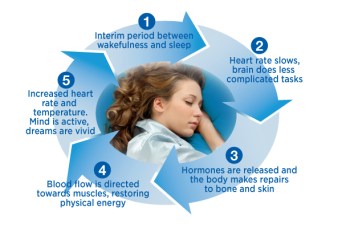
5 hour 6This is a very large change is how we have understood what we need to have to do our work during our workday. There was once the very general sense that you needed to do what was necessary to get a good night’s sleep because that was the foundation of a good day’s work.  Consider Point 4 in this chart.  From a commercial standpoint, that is a terrible plan because it provides no chance at all to sell energy drinks. [3] Nothing in this picture cues the reflection, “I’m really dragging today. I need to be sure to get a good night’s sleep tonight so I am more alert tomorrow.”

One of the fundamental falsities of this metaphor is that it imagines that you “have” 5 hour 2and battery and that “it” needs to be charged up so that “you” will feel energetic. In fact, you ARE the battery and the recharger—both, simultaneously—and if you were really determined to stay with the metaphor, all you need to do is to make sure the battery charger part of you is still connected to the house current. The only way I know to do that is to sleep adequately and to eat well and to exercise wisely. You, the battery recharger, will work just fine if you do that and you, the battery, will have all the portable energy you need.

Unfortunately, that is a lifestyle fix. Nobody wants to change a favored lifestyle, particularly when the culture generally and the advertising world particularly are busy praising you for being stressed out. It’s a badge of honor that you wear yourself out and have no time for anything but work. Fortunately, we have a product for you. [4]

Destructive Metaphor

I have pointed to a few uses of this metaphor that seem to me to point in the wrong direction. But there are also some things in the metaphor itself that trouble me. One is that you might be feeling draggy for any number of reasons. Your blood pressure might be low. Your blood sugar might be low. An extended period of stress may have left you without any energy at all. All those causes are common and all have solutions that are appropriate to them. The battery metaphor lumps them all into one sensation and offers one solution. It tells you that “your battery is low” and precludes those other questions.

This is like having a doctor who is all about treatment and who has no interest at all in diagnosis. The battery metaphor simply obliterates the diagnostic phase and proceeds directly to treatment. And there is only one treatment.

I know this lament isn’t going to do any good. Ads mutate like viruses. The “low battery” gambit is just the latest one. If there are long term costs to using products like 5 Hour Energy (and that seems likely to me) [5] there will be a backlash of sorts against those products or those ways of selling products and then the ads will mutate to the next form, whatever that will be. I’m just glad to have had the chance to think my way through this one. I will be as surprised by the next one as everyone else.

On the other hand, if I could sleep like this [6] I don’t think I could possibly have an energy problem.

[1] I can’t find a way to hyperlink it, so I encourage you to do what I did. Go to YouTube and search for [5 hour energy ad] and from the list, choose “Get back to 100% with 5 Hour Energy.”
[2] Which is certainly a good idea if you are trying to link the need for a boost with a feeling you have, rather that with any more general matters, like what time of day it is.
[3] It does sell mattresses and sleeping pills, but that work is already done and there are still products to sell.
[4] You can hire people to do what you no longer have the time to do including changing your oil and preparing your family’s dinner, just as you can “get by” on too little sleep by abusing stimulants. Who needs a lifestyle change?
[5] It is currently of no interest to the Food and Drug Administration because it is 5 hour 3neither a food nor a drug. It is a “food supplement” and they don’t study the effects of those until they start making people sick.

[6]  Just an excuse, really, to put this great puppy picture in.

Posted in Economy, Living My Life, Paying Attention, Uncategorized | Tagged , , , , | Leave a comment

Wise Men. Not too smart though.

I am going to write today about the geopolitical savvy of the Wise Men.[1] They were academics who studied the stars and when they saw one that portended a new king of the Jews, they knew immediately where to go. That’s in Matthew’s account. [2] That’s where the subject of this essay comes from. The title comes from The Matrix, where the Oracle knows all about how much Trinity (Carrie-Anne Moss) likes Neo (Keanu Reeves). [3] The scene goes like this:  Actually, all the stuff I care about happens in the first minute of this clip.

The Oracle says to Neo, “You’re cuter than I thought. I can see why she likes you…” Neo has no idea what she is talking about. “Who?” he says. And the Oracle continues as if she had not paused for his question “…not too bright though.”

It’s the flavor of that answer that I want you to hear in the title. They are wise, of course, but not that smart.

Wise

No one actually knows where the Wise Men were from. There was a lot of astrology being studied in Persia, so that wouldn’t be a bad guess. It’s a long way from Teheran, just to pick a city in Persia (present day Iran) to Jerusalem (just to pick a city in Israel.) [4] Herod, the king of the Jews, lived in the capital city of the Roman province of Judea, and the Wise Men, being well informed, knew that already.

That brings us to all the pictures and all the songs about the Wise Men “following the star.” OK, you tell me. Why, exactly, do you need a star to guide you to Jerusalem. We live here. Herod lives there. Let’s go and tell him the news.

And Matthew doesn’t say the Wise Men followed “a star” as an orienting device.wise men 1 They said “We saw his star as it rose…” To get what that means, you have to give up the regular rotation of heavenly bodies. They were not saying, “We saw Venus come up again and we were so excited.” They are sawing, “A new star—a never before seen star—appeared in the heavens.” And they are saying. “We know from where and when it appeared, just what it means. It means there is a new king, an heir apparent.”  Here is the traditional “following the star through the desert” picture.  What a waste.

So this appearance was a one-time event. We saw it. We understood it. We set up our caravan and headed out for Jerusalem. I call them wise because they saw the star and knew what it meant and also because they knew that the King of Judea would be in Jerusalem.

Not too smart though

Now we come to their arriving at the scene expecting Herod to be ecstatic that he is going to be replaced. Let’s imagine a modern corporate setting in which the boss brings in a young person and introduces him or her to the current occupant of the office as “your replacement.” How would we imagine the current occupant might respond?

And Herod had sons all lined up to take the kingship. [5] So these academics from the East might have done a little homework on their way to Jerusalem. Herod is a violent despot inclined to kill family members. What shall we tell him?

W. H. Auden has captured this very nicely in his poem, For the Time Being. Auden gives Herod a little speech in which he refers to the coming of the Wise Men:

Today, apparently, judging by the trio who came to see me this morning with an ecstatic grin on their scholarly faces, the job has been done. “God has been born,” they cried, “we have seen him ourselves. The World is saved. Nothing else matters.”

One needn’t be much of a psychologist to realize that if this rumor is not stamped out now in a few years it is capable of diseasing .the whole Empire, and one doesn’t have to be a prophet to predict the consequences if it should.

The star and the dream

Joseph's House.pngNot to knock the Wise Men too much. The star did reappear to them in Jerusalem and it guided them the remaining five miles to Bethlehem. Not only that, the star “stopped” and it “stood over” the house where Joseph and Mary and their little toddler, Jesus, were living. [6] It’s difficult for us moderns to understand just what itmeans for a star to stand “over” a house. My son, Doug, has another idea. He thinks the Wise Men just went to the house with the Christmas lights on.  Right there on your left, on Main Street.


The Wise Men, in any case did follow the star as they should have and they did stop at the right house as they should have. Not only that, but they heeded the warning the received in a dream that they should not return to Herod as he has asked. We know why Herod wanted them to return to him; he wanted them to rat out the little boy that the star represented. On the other hand, there is no telling what a violent and despotic king like Herod might have done to the Wise Men. So on grounds of prudence as well as obedience to the warning in the dream, they avoided Jerusalem and went home by an alternative route.

So I’ve always like the Wise Men. I like it that they were academics. I like it that they were observant and smart. I don’t hold it against them because they were not also street smart. My wife’s favorite academic is observant and scholarly but, occasionally, not too smart.

1] I’ll keep the capital letters in Wise Men so that you will always know I am talking about the academics who saw the star and headed off to Jerusalem, which was the capital of Judea.
[2] I study Matthew’s story in the odd-numbered years.
[3] You don’t actually have to be an oracle to know that.
[4] About 1300 miles along Route 1. Of course, we don’t know what route the Wise Men (and the whole traveling group that went with them to serve their travel needs and to guard all that gold, frankincense, and myrrh) really took.
[5] It didn’t work. Caesar demoted them all to the position of Tetrarch and gave them only a part of their father’s kingdom each.
[6] So Jesus was born at their house in Bethlehem at the same time the Wise Men saw the star. I think that’s the way the astrology worked. The physical appearance of the heavenly body was a manifestation of the physical appearance of the person who was represented by the star. So, astrologically speaking, Jesus and the star were “born” at the same time and the Wise Men saw the star “at its rising,” i.e. just as it came onto the scene.  So he would have been as old as all that travel plus all the time the Wise Men spent in Jerusalem.  Probably two or three.


Posted in Advent, Biblical Studies | Tagged , , , | Leave a comment