
I am so glad it is over! Ever since I claimed the right to vote for the candidate who seemed best to me [1] I have voted for Democrats for President and I will this time, too. I will say, though, that I liked Joe Biden better before the convention than after.
I am not naive about these things. Conventions—even virtual conventions—should be 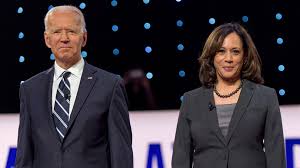 about achieving certain outcomes for the party and for the ticket. To do that, you aim the right message at the right target. I get that. I am not a target. I get that. I’d say 80% of the messaging was aimed either at suburban women, who defected disproportionately to Trump in 2016, or to racial and ethnic minorities, from whom Obama-level turnout will be needed. I get that.
Still. It was too much for me. If I had to summarize the whole pitch, I would name it MR. ROGERS FOR PRESIDENT. [2]
I understand that there is also a party platform. I will read it carefully. I will try, as I read it, to remind myself that it is an aspirational document. I know the goals stated will be genuine, but I know something else about goals. Genuine though each goal is, each one enters a vicious and heartbreaking process of triage when President Biden and his advisors look at what is actually possible.
And the means of achieving these goals are even worse. The means that should be used and that will be used are the ones that at the time and in the situation, will be most likely to achieve the goals. We have no idea—THEY have no idea—what those are at the moment. So promising to use a particular means is even dicier that promising to achieve a particular goal.
So as I read the platform, I will read it as a fan, cheering “my team” on and hoping they “win the game,” But I will be critical of each and every goal statement because they are competitors with each other. President Obama wanted, for instance, a banking regulation bill and a healthcare bill. When it care right down to it, he couldn’t have both. That’s not his fault. That’s just triage. I will try to keep that in mind as I read the platform.
I will say that “Build Back Better” is an inspired slogan.
Biden urged President Trump to stop lying to the American people. I think that’s a great idea. Unlikely, but easy to approve. The rationale was that “they can take it,” meaning that we, the American people can bear up under the weight of the truth; we don’t need to be lied to.
Well…I am no fan of being lied to, but I am not sure how much truth the American people are prepared to hear during a campaign season. If I thought the American public as a whole were ready to hear the truth—I don’t—I would urge politicians I care about not to promise things they can’t deliver. There is very little, for instance, that the Biden/Harris ticket can do about the wealth-creation process inherent in capitalism. It’s a game and it rewards players who play it well and punishes players who play it poorly. [3]
Most of that game is beyond the reach of any administration. So “telling the truth” does not include promising to reform the economy in ways no presidency can achieve absent a prolonged national crisis, and I’m not at all sure the COVID-19 crisis is enough. It includes a progressive tax policy, thoughtful incentives for international trade, and minimum wage support. It does not include restoring the former strength of the labor unions. It does not include substituting American-made goods for imported goods that are better and cheaper.
The difference between wealth-creation, which is largely a market function, and wealth distribution, which is open to the deployment of a national consensus is a big difference. I know the campaign season is not the time to talk about using the tax system to rebalance the distribution of incomes, but that is the part of the process government can affect and our hopes for a fairer and more equal (not the same thing) society are based on that role that only government can play.
I like it that the campaign, particularly Biden’s and Harris’s speeches, went way out in saying what goals they were going to aspire to. When they shifted over to what they were going to promise to do—to actually accomplish—I think they went way to far and I stopped listening seriously.
On my own behalf, let me say again a) that I know I am not the target audience, and b) that I will read the platform carefully. The convention speeches are no my only source of information.
Finally, I know it is important to set up character attacks on Donald Trump. To do that, you have to show that the Democrats who are running for office are not like him. Even so, the persistent drumbeat of empathy and grief and family and personal values finally got to me. It was so Oprah. There was not enough resolution to do what the country needs, not enough for me, at least.
I am entirely committed to the Democratic party as the bearer of my hopes for the country. Even should the Republicans succeed in rescuing their party from the people who kidnapped it and are holding it for ransom, I will still prefer the perspective of the Democrats.
But really, could we talk about how the govern the country? Just a little?
[1] The crisis for me was 1960, when I was strongly attracted to John F. Kennedy and wound up voting for R. Milhous Nixon. During the campaign I never so much as heard a conversation that included the possibility of voting for a Democrat and a Catholic and as I entered it polls, I said, “Maybe they know something I don’t.” That was the last time and, although it was 60 years ago, it still embarrasses me.
[2] I am a big fan of Mr. Rogers. He did what he did superbly well, but a big part of his success what preventing others from using him for other purposes.
[3] And/or cheat in any of the approved ways, such as paying no taxes. So although it is a game, it is a rigged game.

 So let’s return to Orolo’s axiom, considering frustration as an event; it is the failure to achieve something you were trying to achieve.
 are entirely taken up with the strategy and tactics of achieving a particular goal, it is hard to consider at the same time whether it is a viable goal. Persistent frustration of your efforts (failure to achieve the goal) is an excellent time to consider whether is a good goal for you to have.
 Then the headline writers took over and we got this: Debunking Three Viral Falsehoods about Kamala Harris. Note that these are “viral falsehoods.” [2] The falsehoods are viral. And I thought, as I once thought about the fun party, “Wow! That happened fast.”
 have been allegorized on the spot, especially by Mark and Matthew. You hear a suggestive phrase and it blossoms almost immediately into an allegory where each part of the story represents some identifiable part of the real world.
 Hell! Or, more properly, “Retreat? Hell…” The rest of the line in “We’re just attacking in another direction.”
 Dr. Birx was criticized by Crazy Nancy Pelosi.” Speaker Pelosi is one of the least crazy people on the American political scene. She is inconvenient at times and she is quite forceful. She would be crazy not to be.
 picture—you know he is not going to do what he was asked to do. How do you know that? Because there is nothing on the teleprompter. What’s a teleprompter? Well…do you see how Santos’ face is (nearly) framed by a window. It is extremely significant that there is nothing on the window. To understand how important that is, you need to know what is supposed to be on the window. Santos’ speech withdrawing from the race is supposed to be there.
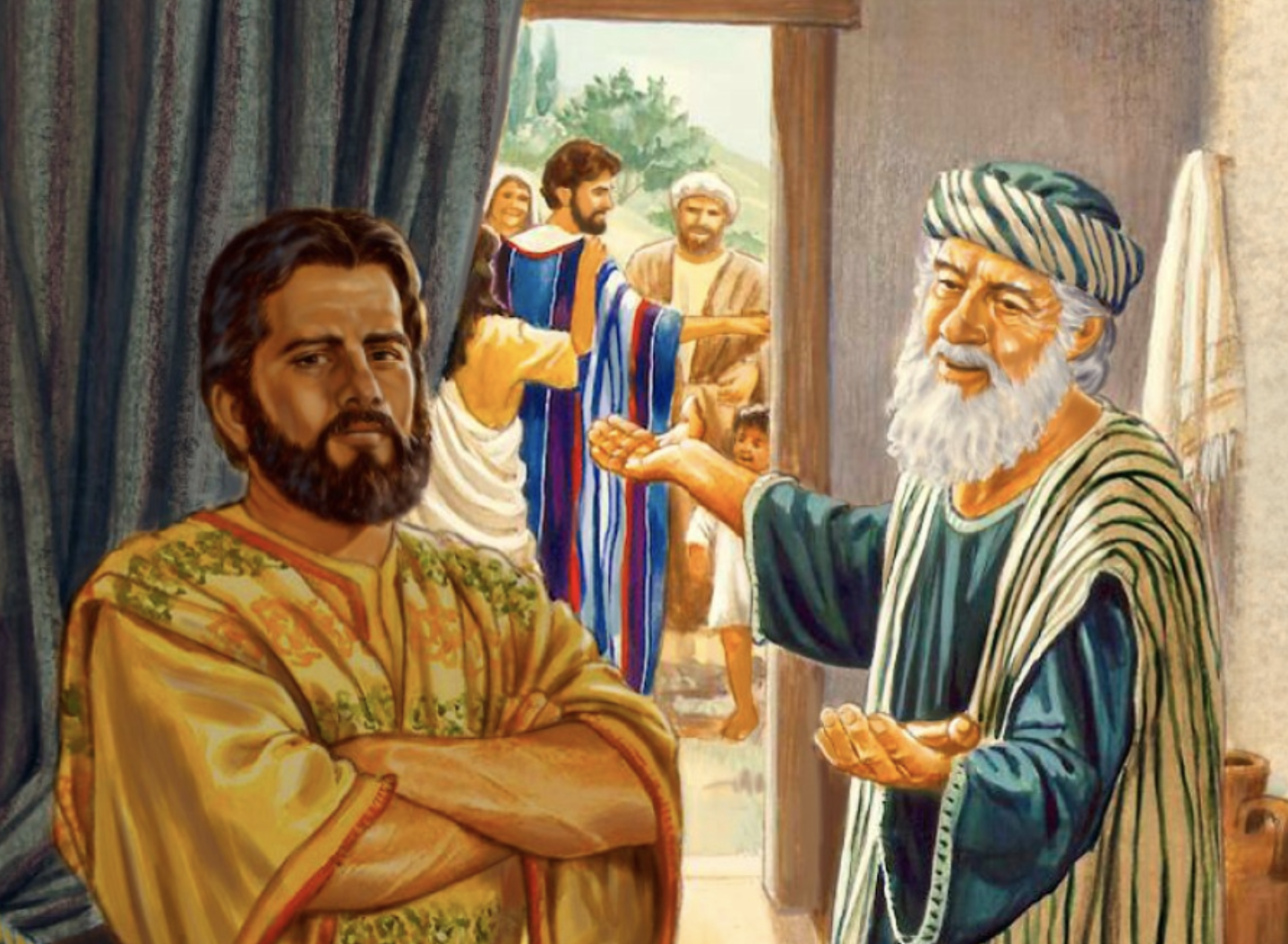 You see, Jesus adapted the parables he told based on the conventions of parable-telling. He devised these conventions by listening to parables his whole childhood and early adulthood. He liked some and didn’t like others. He saw possibilities in some that others had not seen or had not used. He didn’t start off in Mark 4 by explaining what a parable was; he began by using an established form—a popular, rather than a scholarly form—to preach to the crowds.[3]
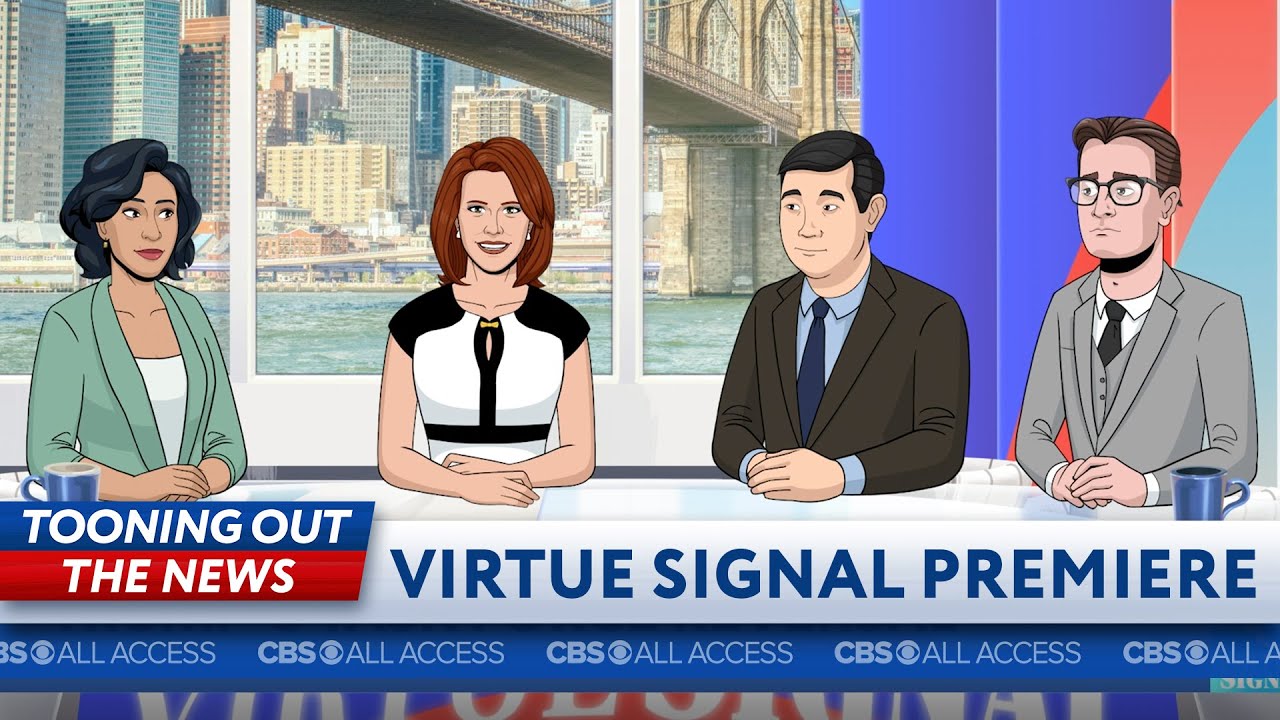 A says, in other words, “We need to do something about the callous treatment of black protesters.” B says, “Let’s talk about why you want place before the neighborhood the claim that you are a virtuous person.” A says, “Let’s talk about a public crisis.” B says, “No, let’s talk about a private motive.”
 I have lived in a society where other things were prized, however. Take purity in purchasing foods, for instance. You could be “righteous” for purchasing only virtuous goods. [3] You could be righteous by purchasing virtuous goods from virtuous stores. You could be righteous by investigating the conditions under which the food was produced and by buying only foods produced without the exploitation of workers. You could be righteous by buying food only from companies who use their profits in ways you approve.
 various kinds at Portland State University, there arose an interest in putting a limit on the number of terms a legislator could serve. [2] “Why do you want to do that?” I would ask the students who were advocating it. Well, they said, we want to reduce the power they wield in the legislature. Really, I said, and who do you want to have that power instead of them? Ordinarily, that caused a brief pause in the conversation.
 People who think of “government” as office holders and regulations and votes will say that there was no government in the first two settings and that it was introduced in the third. But if you think of government as a function, there is as much government in the first two scenarios as there is in the third. All the government is self-government in the first. All the government is self-government and where that fails, social government, in the second. All the government is self-government in the third, except where that fails and social government is brought in, and also except for where social government also fails and structures wielding formal coercive power are brought in.
 In societies that emphasize the power of social institutions, the power of social norms to clarify conflicts and in many cases, to resolve them, is much prized. In the U.S., we have allowed such institutions to wither. [4] In the symbolic representation I used earlier, that removes B from the A + B + C palette, so conflicts in A move rapidly to C. Individual disputes, are more and more mediated by political agencies, in other words, which are often not well-equipped to deal with them. If I saw a lot of that, I might very well argue that “that government is best that governs least,” meaning that I want less regulation of interpersonal behavior. But if I were to say that very often, it would bring me to lamenting, instead, the lack of self discipline or the atrophy of mediating institutions that requires that much government. Arguing against the constraints of government in this situation is like arguing against the constraints of a tourniquet. It brings you to wondering what the tourniquet if for.
 recognize that the white linemen are dogging it on the plays where a black man is carrying the ball. What Julius does is to relocate that grievance so that it is part of the job of his superior, the captain of the team. And what Gerry does is to accept the challenge not as a white player but as the captain. As a white player, he had done everything that can be demanded of him, but as captain, he has been complicit in the behavior of his white teammates. He has not called them for their bad football behavior (not blocking) because calling them out on that would be seen as a racial matter—and when he does it, it is seen that way. But as captain, he really doesn’t have a choice.
 Perceiving the new relationship—as yet unnamed—Thelma says, “I can see that when I play with you, I will have to be careful.” Thelma might have meant that now each can harm the other, so at least a grudging respect, is required. Maybe Thelma meant that now that Frances has claimed the right to personhood on the same grounds as Thelma, they will have to treat each other as competitors, each taking advantage of the other when the occasion arises. Russell Hoban, the author, doesn’t speculate. He leaves that to me.
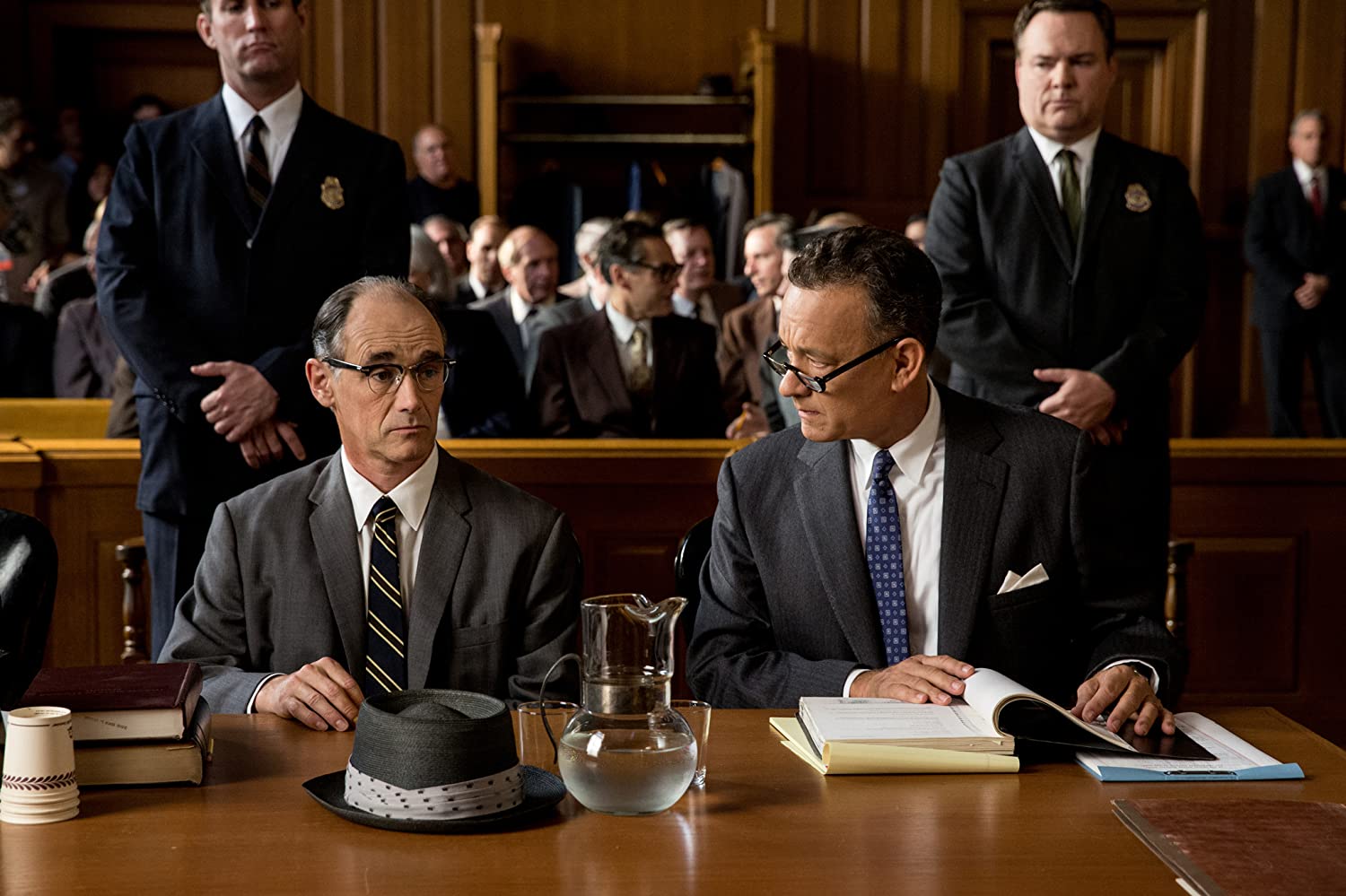 Spies” had a recurring line that made me like him immediately.

