Eggs and Omelettes

As I write this, it is getting dark in Washington D. C. There are still pro-Trump rioters inside the Capitol and darkness does odd things to riots.  On all the channels I have watched, the reporters and commentators are asking, “How did it come to this?”  I would like to reflect right now, before it gets dark in Washington, on how it came to this.

I think that Trump [1] is very careful about some things and entirely cavalier about others. The maintenance of his image is what he is most careful about.  There is no telling what a man like this is, but it is clear that he cares about how he seems.  “If you hit him,” said one of his campaign aides in 2016, “he will hit back harder.  He can’t help himself.”  And, of course, if he can’t help himself, he can’t help us.

When you choose a risky course of action, you must always ask how close to the edge you are willing to come.  You must ask what is the likelihood that you will go over that edge.  And you must ask how bad it would be if you did.

There is a perspective on these questions that I have always heard attributed to Lenin.Referring to the bloodshed occasioned by the Bolshevik takeover in Russia, he said, “You can’t make an omelette without breaking eggs.”  It’s catchy.  It’s easy to repeat.  But it doesn’t say why making an omelette is that important and it doesn’t specify that these eggs are human lives.  So I would translate Lenin’s aphorism as, “The supreme value of the omelette is so great that the sacrifice of the eggs is of no concern at all.”

I began to worry about this during the 2016 campaign when Trump said he might not be willing to recognize the results of a failed election.  He might just take over the government anyway because it was clearly the will of the American people. [2]  He also said that he had friends who were very upset and who believed firmly in the 2nd Amendment.  He came right up to the edge of calling directly for the assassination of Hillary Clinton.

Now come to the present moment in Washington.  It will be dark in fifteen minutes.  Thereare still protesters inside the Capitol.  The protesters are in Washington because Trump told them to come.  I doubt very much that he had in mind the possibility that they would break through the barriers and take a crowbar to the doors, but had some prudent staffer suggested the possibility to him, I think he would say it was a risk he was willing to run.  There is that thing about eggs and omelettes.

So first, I don’t think this is a strategy that Trump is following.  I think he has done what he has needed to do to seem undefeated and unrepentant in public.  Whatever that is, he does it.  He is not thinking of consequent action; he is thinking of blustering.

Second, if he had imagined what possibilities were opened up by bringing together a crowd of protesters who believe the election was fraudulent, he would have said it was worth the risk.  Called upon by President-elect Biden to stand up for order and peace, he reassured his crowd today that the election was, in fact, stolen from them, and that he had, in fact, won by “a landslide.”  Then he told them to go home.  Right.

If a few of his followers, fueled by righteous anger, get out of hand, that is worth the risk.  If he gets to continue to blast and incite, it is worth the risk.  “But Mr. President, what about all those eggs?”

Those eggs are the common property of the American people.  They are a commitment to the peaceful transition of power, to the rule of law, to constitutional democracy, to our image of leadership in a world where democracy is a sometime thing.  Is it really worth the risk to those common values?

Well…how important is the omelette?  To Donald Trump, the omelette is all that matters and his image is the omelette.

It’s dark now in Washington.

[1]  I stopped saying “President Trump,” which has been my practice over the last four years, when he called the Secretary of State in Georgia and instructed him to “find him” another 11,800 votes.

[2]  It is clear, now, that he thinks the people who show up at his rallies are typical of the American people.  He knows what the American people want because he listens to the crowds at the pro-Trump rallies.

Posted in Political Psychology, Politics, Uncategorized | Tagged , , , | Leave a comment

Balance of Power?

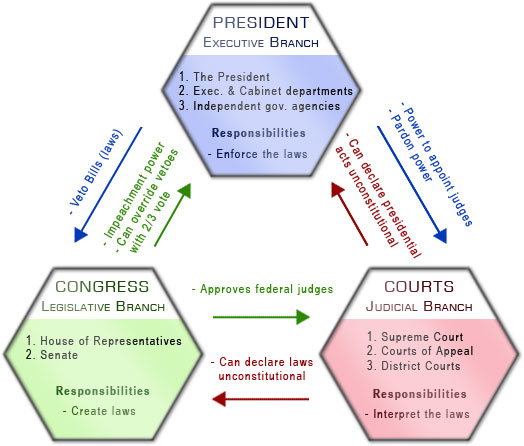
The government of the United States was built to be a balancing act.  Just what elements of this mechanism are supposed to be “in balance” have changed from one time to another.  Early ideas were that the largest states were to be balanced against the smallest.  That’s why we still have an Electoral College.  Then there was the idea that the elites should be balanced against the people.  Madison’s vision of that is quite vivid.  Then, after the rise of mass-based political parties and universal suffrage, the idea was that “balance” could be achieved by dividing the government between the major political parties.

It isn’t ridiculous.  The logic is the same as requiring ⅔ of the House and Senate to override a presidential veto.  If it is so good an idea that extraordinary majorities can be mustered for it, then the President should not be allowed to forbid it. [1]  In the same way, each party could theoretically dominate the national government so it could do extreme things, so  that putting the Congress in the charge of one party and the Executive in the charge of the other is just a prudent measure.  And if, as in the case of the veto, they feel something is so important that they can devise an extraordinary majority, then they can still act.

As I write this, there is speculation that the voters of Georgia might vote Republican in the Senate elections on the grounds that the House and the Presidency are already in Democratic hands and wouldn’t it be safer to make sure that they can’t do everything they would like?

That argument, which has not been ridiculous over the years of our republic, is ridiculous now.  What they call “divided control” of Congress—Ds in one house, Rs in the other—is, in our time a guarantee that there will be no action at all.  Increasingly, over the last thirty years, the goal of each party has been to frustrate the will of the other.  We don’t have “bipartisan cooperation” any more, so that if a policy is a good idea, some members of one party and some members of the other party will get together and pass legislation.

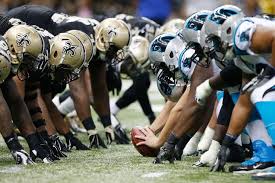
Just to get a picture of how far we now are from that long-honored ideal, try to imagine that the offensive and defensive lines in a football game were to decide on just what yard line the football should be and then, cooperatively put it there.  That’s not how it is done in football and no longer done in government.  If you want the ball to be further that way than it is—you will call it “advancing the ball” probably—then I want it not to be there.  In fact, I want it to be further in the other direction.  The war of offensive and defensive lines is not a policy dispute.  No one ever thought it was.  But neither is proposed legislation a policy dispute and there was a time when it was.

If the Democrats do not win the two Senate seats in Georgia today, they will be handing Mitch McConnell the means and the opportunity to forbid any legislation at all.  He already has the motive.

So the question about “divided government” today is just this.  Do you want the government to be capable of passing legislation?  Just that. [2]  The Republican stamp on a bill in enough to kill it in the House; the Democratic stamp is enough to kill it in the Senate.  The alternative is the systematic abuse of the Executive Order by presidents who know better, but who have no alternative.

Will the country be governable this year?  That is the question in today’s elections in Georgia.

[1]  “Veto” is straight Latin.  First person singular, present, active, imperative: I forbid. (it).

[2]  It is possible that a band of liberal Republicans and conservative Democrats could agree to vote together and run the whole Senate.  It would take four of them to do it.  It hasn’t ever been done at the national level, but it was done in Oregon some years ago.  Observers were amazed.

Posted in Politics, Uncategorized | Tagged , , | Leave a comment

“Give me a break”

Trump’s recent phone call to Georgia is iconic.  It puts on display nearly all the things that are most characteristic of Trump [1] and most dangerous to democracy.

Here is the account of the call as it appears in the New York Times.  As this call shows, Trump has no notion at all that Secretary of State Raffensperger is an elected official doing the job he was elected to do.  “Give me a break” is a request that Raffensperger change the votes as reported (and verified) so that they are different from the votes actually cast.  It is the logic by which one might ask a bank for a better deal on a loan.  There is, in this request, no awareness at all that Raffensperger has done all he can legally do and is satisfied that the job has been done fairly.

But “give me a break” isn’t the only sin this recording preserves although it might be the only crime.  Here is what I would call another sin: he generalizes inappropriately from his own experience.  Heather Cox Richardson [2] puts it this way:

He insisted that there was simply no way he could have lost in Georgia, and cited the size of his rallies there as proof.

So Trump had rallies in Georgia and a lot of enthusiastic Trump supporters came to them and Trump cites their numbers as proof that he really won the election.  It almost seems as if he doesn’t understand that there are other rallies that other people attend and direct their enthusiasm in other directions.

Trump cites the rumor that they are shredding ballots in Fulton County.  Secretary Raffensperger responds: “Mr. President, the problem you have with social media, they — people can say anything.”

Raffensperger is guessing that is where Trump has encountered the rumors.  His willingness to speculate that there is a source—any source at all—is an act of generosity, but it is wasted.  Trump responds:

“Oh, this isn’t social media. This is Trump media. It’s not social media. It’s really not, it’s not social media. I don’t care about social media. I couldn’t care less. Social media is Big Tech. Big Tech is on your side, you know.”

“Not social media.  Trump media.”

Finally, there is the exchange with, Ryan Germany, a lawyer for the Georgia Secretary of State’s office, who is also on the call.  Germany knows what has happened and is not willing to spin it.  That part of the conversation looks like this:

TRUMP: Now, do you think it’s possible that they shredded ballots in Fulton County? Because that’s what the rumor is. And also that Dominion took out machines. That Dominion is really moving fast to get rid of their, uh, machinery.

RYAN GERMANY,(lawyer for Georgia secretary of state’s office): This is Ryan Germany. No, Dominion has not moved any machinery out of Fulton County.

TRUMP: But have they moved the inner parts of the machines and replaced them with other parts?

GERMANY: No.

I think it is the brevity of Germany’s answers that appeals to me.  He is confronted by wheedling, by bullying, by allegations of crime, by “data” that are just asserted.  Germany says, “No”

I want to give the last line of this encounter to Secretary Raffensperger.  “Well, Mr. President,” he says, “the challenge that you have is the data you have is wrong.”

[1]  I have been rigorously careful to refer the Mr. Trump as President Trump.  The call to Secretary of State Raffensperger (Georgia) was one step too far for me.  It’s just “Trump” from now on.

[2]  In her January 3 post “Letters from an American.”

Posted in Politics, Uncategorized | Tagged , , , | Leave a comment

“The” Christmas Story

“The” Christmas Story

I have never been a fan of “the Christmas story.”  I honestly don’t know why.  I know why I am not a fan of it now and it is a real temptation to project those reasons back into my past and to “discover” that that is why I was not a fan of it back then.

The truth is, it never made sense to me as a story.  I didn’t put it that way.  I just knew I wasn’t drawn to it.  It was great for inducting my kids into the beauty of it.  They loved it.  Different things at different ages.  There were angels and shepherds and Wise Men and Joseph and Mary in a stable with all those animals and all that.  What’s not to like?  

So I have had an inarticulate dissatisfaction with the “story,” and at some point along the way, I discovered Raymond E. Brown’s The Birth of the Messiah.  About a third of it is given over to the Birth Narrative (BN) as Matthew tells it and the other two thirds to the BN as Luke tells it.  That seemed strange to me.

So I adopted the practice of reading one account one year and the other the next year.  It was like scratching an itch I had not known I had.  The surprise and the pleasure combined were powerful.

I still read Brown like that.  One account each year.  By now, I have assigned Matthew to the U. S. political years.  The politics is so much more prominent in Matthew.  Then the other account in the other year.  I read each account five times in a decade and every time I read it, I find things I am ready to see now that I had not been ready to see before.  Along with that, I pass over things that I am now taking for granted.  And as I have read other scholars, I sit less firmly on some of the things Brown says.  It’s all good.

So now I have two “Christmas stories.”  The muddiness and lack of clear narrative shape which I now think were the things that bothered me at the beginning—and that I had no idea of at the time—have just gone away.  In their place, I have two crisp clear dramatizations of how the birth of the Christ child came about.

This year, I taught a three-session mini-series on the BN as Matthew tells it.  The first session was about what Matthew is trying to tell us when he says that Joseph was a righteous man but/and (the Greek is kaì) he wanted to avoid embarrassing Mary, who unaccountably got pregnant.  It’s an important point.  It isn’t just about the conjunction.  It is about what righteousness means to Matthew and what he wants to tell us about Joseph.

The second session was about building rival groups into the story.  The Wise Men and the Scribes are as different as the Sharks and the Jets.  And Matthew makes them more different from each other than he would have to because each group helps to define the other.  When, for instance, the magi see the star in Jerusalem, it fills them with utter delight.  Without that, would we have noticed that aligning the prophecy about the Messiah and the news brought by the magi would mean virtually nothing to the scribes?  The gentiles were ecstatic; the Jewish scholars were not.

The third session was about the lengths Joseph had to go to to keep the identity and the whereabouts of his son secret.  It began, after awhile, to sound like a witness protection program to me, so that is what I called it.  Off to Egypt in the middle of the night.  Going back to Israel afterwards, but not to a place where they were known and not in the territory of the nastiest of Herod’s sons.

Those are three episodes in a story that makes no sense at all in the light of the narrative Luke gives us. And, as I will say next year, vice versa.  But it makes perfect sense of how Matthew sees Jesus and how he wants us to see Jesus.

Emphasizing how different and how powerful each of the narratives is was a big deal for me.  It took a story I really wanted to like and made it one of my favorites,. Well…two of my favorites.   So imagine my surprise when I discovered people who liked the story just as it was.  They took the elements of these two stories and put them in the blender and were delighted by the results.

To the child laid in a manger, you add the exotic recognition of foreign scholars and the celebration of a sky full of angels.  To the dreams of Joseph, you add the visitation of Gabriel to Mary.  There is no reason now for anyone to be confused, since God has revealed his plan to both, but on the other side, you get two distinct revelations of God’s intention—one to Joseph and one to Mary.  These events, which could be seen as alternatives, are added up like so many jelly beans in a jar.  The more jelly beans the better, right? Who doesn’t love jelly beans?

So I have learned, each Christmas, to step more softly.  I am not as cheerleader for the “two narratives” approach, the way I used to be.  I honor, as best I can, the fully complementary goals of the writers.  Luke’s way has a lot to be said for it.  It is so incredibly Jewish, for one thing.  And we have a new way to assess the meaning of the events of Jesus’ birth because all the same ones happen to his cousin, John the Baptizer.  The magi recognizing the little Jesus in Bethlehem and old Simeon recognizing the infant at the temple n Jerusalem and two ways of getting the one thing done.

I say, no harm, no foul.

Posted in Biblical Studies | Tagged , , | Leave a comment

Naughty and Nice

This is the kind of post I think I had in mind when I started all this in 2010.  Yesterday, the words to “Santa Claus in Comin’ to Town” came to my mind and I noticed something I had never noticed before. [1]  There is a list of people Santa is keeping.  On this list are people who are distinguished by having two traits in combination.  They are naughty and nice. [2]

The song doesn’t specify just why Santa wants a list of these people.  A lot of bad books and even worse movies have been made about the combination.  You can imagine what the search for illustrations turned up!  The general sense of these books and movies would, if taken seriously, bring Santa’s character into question, so I will not pursue it further.

Moralists of every stripe—parents in particular, I suppose—have treated the crucial categories of this song as if they were mutually exclusive.  You can see why.  If the parents, who have a mysterious connection to Santa Claus, can define what  “nice” means and what “naughty” means, they have a great tool to affect the behavior of their children.  Carrots and sticks are well-known reinforcers of behavior.

I can understand the behavior of the parents.  Simple self interest would do it.  What I can’t understand is the resistance of so many of my friends as I showed them the text [3] and they persisted in believing that “naughty” and “nice” were shown in the lyrics to be opposed to each other.  As if, you know, there were two lists.

The song says there is one list.  There is a reassessment period where the data are rechecked, but only one list.  The list contains not the names of children who are naughty OR nice (wouldn’t that be everyone?) but the names of the children who are naughty AND nice.  Apparently, in the view of Messrs. Coots and Gillespie, these traits fall nicely together.  As they should, given their combination by “and.”  Still, it is hard to see the simple truth of the text when you are accustomed to seeing it as meaning something else.  And I don’t think all of this deficiency can be laid at the foot of the Trump era.  Some, but not all.

Well, it has changed my view of the song, for sure.  After all these years of believing the
commentators that this was a rewards and punishments song, I have now paid attention to the text itself (always a good idea) and have noted to my surprise that it doesn’t say what everyone says it says.  What is actually says is that there are dimensions to Santa Claus that have not yet been fully appreciated, even though the textual evidence has been sitting there in public for more than eighty years.  I am the only one I know who will be singing this song this year with a new and intriguing understanding of what it says about Santa Claus.

Unless, of course, you would like to join me.

[1] The song was written in 1934 for J. Fred Coots and Haven Gillispie so it is a few years older than I am.

[2]  Etymologically “naughty” can be traced to “having nothing” and “nice” to “knowing nothing.”  So these would be poor and ignorant children.  It shows the limits of etymology, doesn’t it?

[3]  Really, if you search hard enough, you can find later versions where the “and” is replaced by “or.”  You see this all the time in contested biblical texts where it is referred to as “scribal amendment.”  I am not sure who does that work for pop singers, but it seems unlikely that it was the inconsistency of the two categories that bothered them.

Posted in Getting Old, Uncategorized, Words | Tagged , , , | Leave a comment

The most lied about President

It was a professional conversation.  About long-term financial planning, mostly.  We had done all the work and the comments being made were “on the way out the door comments,”  In some way, the topic of President Trump came up and I said that he was clearly the most consistently lying president in our history.  “Yes,” agreed the professional, “and the most lied about.”

I had one of those moments you see in the movies where I kept moving and everything else remained frozen in place.  I felt as if some kind of a spell had been cast.

Say what?  The most lied about?

Three impressions came piling in on me at once.  The first was the ease with which he said it.  It was a “talking point.”  He already had that handy.  It wasn’t a realization; it wasn’t a conviction.  It was a line that was current in the political crowd he identified with.

The second was that although “lying” is something we could know, “being lied about” is not.  How would you do that?  Would you sum all the lies that everyone told about President Trump and compare it to the number of all the lies told about all previous presidents?  Really?  Would you calculate an average number of lies per 100,000 of population?

It really isn’t something anyone could know and yet it was tied, conversationally, to something everyone could know—the absolute count of lies, how they were false, and the evidence establishing that they were false—because they are all matters of public record.  The huge discrepancy between the two notions—he lies/he is lied about—really struck me.

The third thing that struck me is that this professional is not clever in his speech.  He is well-informed and trustworthy (both very valuable) but his style is not the quick quip or the subtle turn.  This line, cute as it is, really didn’t sound like him.  So the third thought was, “Where did he get that?”

I don’t know.  I really don’t want to know.  But it reminded me immediately and vividly of a scene in Barbara Kingsolver’s book, Flight Behavior.  Here is the line I want to end up with: “Al Gore can come toast his buns on this,” 

There is a context, of course.  Dellarobia, the principal character, and her husband, Cub, are being drawn in different directions by a flare-up in the culture war.  Ordinarily, there is only one culture in Feathertown, Tennessee, but the inexplicable arrival of thousands of Monarch butterflies, followed immediately by dozens of lepidopterists, has changed all that.  The scientists hired Dellarobia to do some work for them and she has been listening to what they say to each other.

So when she says to Cub, “it’s due to climate change, basically,” [1] she knows she is close to the edge of the chasm.  Cub isn’t sure what “climate change” is. “What’s that?” he says.  After hesitating a little—she senses what is at stake—she says, “Global warming.”

That brings us to the line I cited at the beginning.  When Dellarobia says “global warming,” Cub kicks up a cloud of frost from the ground and says, “Al Gore can come and toast his buns on this.”  A line like that really doesn’t sound like Cub and it isn’t his.  It is a line from Johnny Midgeon, a local radio host, who uses it every time a winter storm comes through.  In Midgeon’s world, frost on the ground is a refutation of “global warming.”

So when I reflected that the line about “Trump is the most lied about president” didn’t really sound like the person who said it, I remembered Cub and how quick he was to use Johnny Midgeon’s line.  Cub is part of a group of locals who listen to Midgeon and who use his one-liners to keep the reality of the world at bay.  Just quoting the lines at the right time deals with the topic (It’s ridiculous!) and shows that you are part of the group.

I don’t know if the financial professional I was talking to is really a part of such a group, but his remark is what Cub’s reliance on radio host wit reminded me of.  And I think that it why it was so powerful for me.  It wasn’t a “slip of the tongue.”  It was the practiced reliance on a one-liner that is presumably shared among a group of like-minded people.

I smiled at him on my way out the door and said, “See you in March,” but my mind was screaming, “Danger, Will Robinson.

[1]  Here’s the earlier part of the quote.  “And Dr. Byron’s not the only one wondering. There’s more to it than just these butterflies, a lot of things are messed up. 

Posted in Communication, Political Psychology, Uncategorized, ways of knowing | Tagged , , , | Leave a comment

Performative Behavior

I got this paragraph from Ross Douthat, the New York Times columnist, this morning.

The Republicans behaving radically are doing so in the knowledge — or at least the strong assumption — that their behavior is performative, an act of storytelling rather than lawmaking, a posture rather than a political act.

I read the rest of the article, but it was hard because all I really wanted to do was come back and read that paragraph over and over.  “Their behavior is performative.”  Performative rather than what?  Douthat doesn’t say, but here are a few that come to my mind.  

  • Performative rather than utilitarian.  
  • Performative rather than strategic.  
  • Performative rather than logical.

I really want to say “Performative rather than serious.” but it is, in fact,  really serious that so many Republicans are acting out their belonging as partisans (Republicans) at a time when the country really needs them to act as citizens.

Douthat says that performative behavior is an act of storytelling, but I think it is worse than that.  It is an act of loyalty.  Maybe it’s just herd behavior, but at the very least it is rationalized as loyalty.  “The Trump” requires that we hold out to the end; that we say loyal and silly things.  You reason with this guy; he’s too much for me.

Here are two examples.

Ken Blackwell, a former Ohio secretary of state, who will be casting an electoral vote for Mr. Trump, said,  “It’s almost laughable that anybody would think that President Trump should prematurely concede.”

Prematurely.  The long-term effect of this silliness will be to redefine the time for a concession to the last gasp.  Anyone who does not will, using Mr. Blackwell’s picture, have lost heart.

President Trump said yesterday that he is disappointed that not one court—including the Supreme Court—has had the courage to examine an electoral challenge on the merits.  

Courage.  It is a failure of courage, apparently, that all these courts fail to seriously consider Trump’s efforts to overturn the election.  It is not following out the normal standards of the law, it is not impartial jurisprudence, it is not responsible decisionmaking.  It is “cowardice.”

This wholesale subversion of language is a problem for me.  The whole subversion of the crucial processes that underlie democracy is a problem for me.  But if this is all play-acting and they know they are play-acting, maybe it isn’t so bad.  It’s just “performative behavior.”  [1] Maybe when the stage lights go down, Messers Trump and Blackwell will say, “Well, we gave it a shot.”

But what I fear, and expect, is that the normal processes of democracy have been weakened.  The courts will be judged on whether they have shown courage.  The concession of defeated opponents will be “premature” until the most bizarre challenges—legal, legislative, populist—have been exhausted.  

That language is now available.  It is modeled.  It is held up for approval, and people will have to decide actively not to use it. Before, it just didn’t occur o anyone.  I think that is asking a lot. 

[1]  And we are the ones that are odd for trying to reason with them.

Posted in Politics, Words | Tagged , , , | Leave a comment

Civic Capitalism

“Socialism” doesn’t work

Socialism does work, of course.  All you have to do is look at the bloc of democratic socialist countries in northern Europe and you can see it for yourself.  In fact, even “socialism”—i.e., the word “socialism” works in Europe.  It is not argued for.  It is taken for granted by both liberals and conservatives.

But it has never meant in the United States what it means in most of the rest of the world and I think it is time to stop trying.  Those of us who are fans of the extensive (expensive, too) social programs in western Europe need to give up on the word and try something else.

I have a candidate.  “Civic Capitalism.”

For the rest of this essay, I would like to argue that this is a good name and that we ought to start using it.  In fact, if we are really serious about it, we should hire Frank Lunz, on of the most successful word-sculptors of our time, to do the job.  Lunz was the one who changed the designation “estate tax” to “death tax.”  Imagine that.  He changed the question from what the tax is on to when you pay the tax.  When he was done, it sounded like a tax on dying.  He’s the guy we need to sell the name Civic Capitalism.

What’s good about the new name?

I’ve already demonstrated what is bad with the old name.  Republicans have made it the rough equal to Soviet-style communism.  Thanks to them, policies that move in the direction of a more efficient sharing of national resources work like a poster that says, “Stalin for President!.”

So mainstream politicians cannot come out for “socialism,” even if that is what they mean.  Of course, a lot of people are willing to come out in favor of “capitalism,” but commonly, that means, “the system we now have.”  It is not the system we now have.  What we have has been wittily called “capitalism for the rich and free enterprise for the poor.”  What is most insightful about that witticism is that people who have amassed power are unwilling to allow the market to work its magic.  They want to rig the conditions governing the production and distribution of goods and services so that they favor their own enterprises and not those of others.

There are two ways to sell the virtues of capitalism.  The outside one—the systemic one—is that supply and demand will act on each other so that each is held in check.  When you overproduce, the price goes down until you have to quit and then the market rebalances itself.  When you overprice, consumption goes down until the price comes back into balance.  It’s magic! Or, as Adam Smith said, it is “the invisible hand,” meaning that God actually controlled market dynamics.

The other way is to call it “free enterprise.”  Free enterprise is a way of arguing that government has no legitimate business “interfering” with the market.  It is an anti-regulatory approach that doesn’t even bother to ask what the purpose of the regulation is or what the outcome will be if there is none.  It is what laissez nous faire actually means.

But don’t you have to ask, at some point, why anyone would want to regulate an economy that worked for the welfare of all?  I would.  And do we really want to say that we elect legitimate governments to protect us from the depredations of foreign governments but not from the depredations of domestic corporations?  I don’t.

Which brings us to civic capitalism.  Capitalism is the most successful wealth-creation regime ever invented.  The firms that benefit most from it have no obligation to their workers, except so far as government regulations and protections go, and virtually unrestricted obligation to reward their principal owners.  Further, they have no ability to exercise care for the economic system as a whole.  And no reason to.

Nothing in that description, you notice has anything to do with the owners and workers in their civic capacity.  It has nothing to do, that is, with citizens.  That is the additional focus provided by what appears in my title as an adjective; it is “civic” capitalism.  That is the kind of capitalism it is.  It is not socialism in any way.  It is capitalism that exercises an active and competent regard for the welfare of the citizens of the nation.

Since there is no way for the firms the make up the heart of the economic system to do that (even if they wanted to), it is a job that should be undertaken by the government that citizens choose and that government should put the welfare of the citizens first.  That’s the deal.  The capitalist economy is free to provide as much wealth as it can provided that the government has access to as much of that wealth as is needed to support a certain kind of life for its citizens.

There is no way to produce the resources without capitalism.  There is no way to redistribute it adequately without government.  

And the basis on which each American receives these resources is that they are a citizen.  “Being an American” in this sense of the term means that you have a claim to some share in the national wealth.  You could call it a “citizenship stipend” if you had to call it something. [1] This share supports your ability to be active on your own behalf and to support [2] the political economic cooperation that makes the system work.

“The national wealth,” which I mentioned in the previous paragraph, is the share of resources produced that belongs to the government for the purpose of sustaining the welfare of the society.  Substantially higher levels of taxation will be required for that, of course, but there is no other source of the money needed to support the system.  We tax the rich for the same reason Willie Sutton paid the bulk of his attention to banks.  It’s where the money is.

Civic capitalism is society-supporting capitalism.  It is sustainable capitalism.  It does not seek an equalization of resources.  People who have natural advantages and who are lucky or who outwork their peers are going to wind up with more money, as they should.  Everyone who works hard and succeeds will be better off economically than anyone who does not work hard and/or does not succeed.

But these successful people will have advantages no successful person now has.  These people will be free to live in a society where the most brutally toxic social ills have been addressed.  The poor can house themselves and the hungry can feed themselves and the ill can get access to medical treatment because the society as a whole has decided that support is owed to citizens just because they are citizens.

Conclusion

I could go on.  I almost did.  Then I remembered that the announced goal of this essay is to propose “civic capitalism” as the term Americans should use to refer to the political/economic system that Europeans call democratic socialism.  I have proposed the term and described what I mean by it.  I have given the rudiments of the case that can be made for it.  So I think I will pause for a little while.

[1]  And you should call it something because its enemies will call it “the dole” if you don’t.  Or even if you do.

[2] In a republic, that means “require your elected leaders to support…”

Posted in Communication, Economy, Politics, Sustainability | Tagged , , , , | Leave a comment

The Seductions of Narrative

Some years ago, I ran my best half marathon time ever.  There were some special circumstances in this race.  I can think of two classes of such circumstances.  I’m going to tell you what they are because I am still confident that they are true.

But this essay is not actually about them.  It is about the pressure on me—some of it I experience, some of it I can only infer—to make this a better story.  The more times I tell it, the more pressure there is to make it a better story.  The further I am from the event itself, the more permission I feel to give in to the pressure.  It is that gradually acquired sense of permission that I call “seduction” in the title.  That’s what this essay is about.

I am the first example; the gospel according to Matthew is the second.

The Half Marathon

I think my time was 1:32 and a few seconds.  I was in my mid-50s somewhere and it was markedly the best half marathon I had ever run.  It was the Lake Oswego Half Marathon.  If you live anywhere in the vicinity of Portland, Oregon, you will know Lake Oswego.  I got trapped at the start in a bunch of young greyhounds who were running together and enjoying themselves.  It would have taken a lot of energy to break out of the pack, so I didn’t.  I was dumbfounded to hit the 9 mile mark in 63 minutes.  I never had any intention of running that fast.  By that time, the bunch had loosened up a bit and I detached myself from it and slowed down some.

That’s half the story, but it isn’t the fun half.  Within a mile or two of leaving the group, I

started to feel the grind of the race.  I was tired and it was a long way yet to the finish line.  At that point, looking around for something to distract me, I saw a girl running alone way up ahead of me.  Maybe half a mile or so.  From my distance and with my need for distraction, she looked really attractive to me.  OK, I said, let’s see if you can get a little closer. [This isn’t her, of course, but you get the idea, and they did get the blonde ponytail right,]

So I did get closer and several miles later passed her.  I regretted that but she had begun to slow down even more than I had and I really needed to focus on what would get me up the last hill.  So she and the young greyhounds combined to produce my best half marathon time ever.

The Cheerleader

That’s the kind of “attractive” this girl looked like to me from half a mile back.  Now as I said, I have told this story quite a few times in the last 20 years or so.  The point of this second half of the story is that I fixed my attention on an attractive young woman and used that to run faster than I otherwise would have.  Given that that is the point, let me ask you this:  How attractive was the young woman?

At this point, we leave the attempt to describe accurately what happened.  If I am right about “narrative seductions” it is a lost cause anyway.  As the narrative focus takes over, I leave the area of the question “What really happened?” and go over to “What does this story need?”  My argument, as it pertains to Matthew and me, is that as the story is retold over and over, the grip the teller has to the specific and accurate details begins to loosen.  Not only that, the commitment to remember the details clearly and to tell them accurately also flags a little.

For me, that means two things.  The girl gets more and more attractive and the place in the race where she shows up gets more and more dramatic.  I can fill in what the girl looked like from the “cheerleader type” characteristics I have put together from a long career of teaching in elementary and secondary schools and from seeing movies where cheerleaders were treated as a “type.”  So I can say confidently that this girl had a great body, beautiful long blonde hair, and a graceful easy stride.  I “remember” that she wore her hair in a ponytail and that it was curled.  (Was it actually curled?  How would I know?)

The point of making her so attractive is the comedic effect.  Here’s this tired old guy running a long race and he looks ahead and sees this vision of loveliness and it so inspires him that he runs the race faster than he would have otherwise.  It makes me a comic figure and the more attractive she is, the more comic I am.  The story really needs her to be really attractive and in the telling and re-telling, I respond to that pressure, whether I feel it or not. [1]

And when in the race did this girl show up?  I don’t really remember, but it has to be after I left the young greyhounds, because I didn’t need her until then.  Also, in the last mile or two there was a nasty and unexpected hill.  You come around a corner somewhere between 10 and 11 miles (the race is 13.1) and all of a sudden, there’s this hill.  Oh no!  I can’t get up that hill!  Can I?  I have to!  Now that would be the perfect time for the girl to come into sight.  I come around the corner and there is the hill—but there is the girl too.

From the standpoint of the story, that is ideal.  If the girl had shown up a couple of miles earlier, while I was running through an undistinguished farmland, it would have been a waste of narrative resources.  Much better to delay her until I have seen the hill and was feeling the despair.

Matthew’s Scribes

Now for a change of scene.  We are still talking about narrative seductions and we are still talking about the writer as the one vulnerable to them.   But we are not talking about cheerleaders anymore; we are talking about the way Matthew describes the role of the scribes in the Birth Narrative he offers.

It occurred to me this year that Matthew intended to set the Jewish scribes against the gentile magi—to build up two solid blocks of “these guys” and “those guys.”  What I need to do now, in the materials, I am preparing, is to focus on the polarities.  This is not to say that the magi and the scribes have no commonalities.  Both groups are made up of learned men, for instance.  It is only to say that I am not going to emphasize those commonalities; I am going to attend to the traits that distinguish them from each other.  And I am going to argue that in doing that, I am following Matthew’s lead.

Here are the elements that come to mind.

  • The magi were gentiles and the scribes were Jews.  That’s the easy way to start.  
  • The magi were scholars of “nature;” [2] the scribes were scholars of the Law (both written and oral).  
  • The magi were so moved by the star at its first appearance, that they travelled immediately to Jerusalem and when the star reappeared to guide them to Bethlehem, they were “filled with delight.”  The scribes are described as people who have knowledge of the scriptures, but who have no personal attachment to it at all. [3]  
  • The magi are free to act independently on whatever their findings show.  The scribes are called in to offer their expert advice to the king and the topic is where the king’s replacement is to be born, so the king might be a little touchy about what they tell him.  They are, in any case, immediately responsible to Herod and the magi are responsible to no one at all.  
  • The magi carry through the project.  They find and worship the Christ child.  They give highly symbolic gifts. We never hear another word about the scribes.  For Matthew’s purposes, they are called in for their special knowledge; they give it and then go home.
  • The magi receive guidance in a dream—the same kind of guidance Jacob has been relying on—and so are able to evade Herod on their way home.  The scribes, as I said, have no further part in the story. [4]

Matthew’s distortions and mine

No one ever argued that if the events Matthew discovered had been captured by a good video camera, it would look just like Matthew’s account.  Of course it wouldn’t.  Matthew is duty bound to emphasize some things and to skip over others.  He is telling a story after all.  And I, following Matthew’s lead, am trying to catch the main elements of the story and the way they relate to each other and to further emphasize those elements.

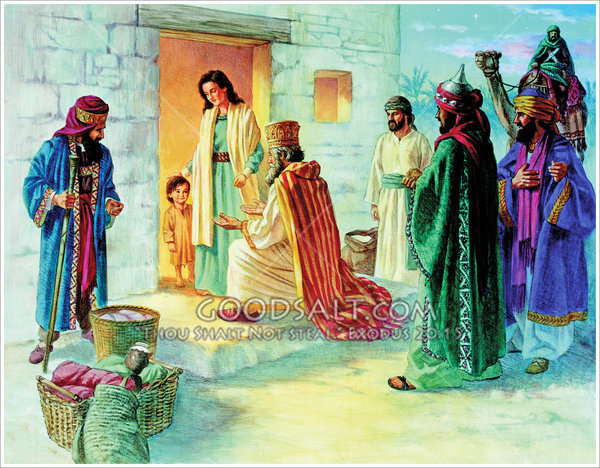
That makes the scribes blacker and the magi whiter (those are moral, not ethnic judgments); it makes them less diverse and a group.  But it does what the narrative “asks” to have done; it is why the narrative provides inducements. [This picture tells us more than we really know, but you would be surprised how hard it is to find a picture where Jesus is a little boy and where the magi come to a house to see him, so I’ll take it.]
Now if the facts of the case are materially important; if we really need to play the journalistic accuracy off against the thematic clarity, then there are reasons to be more careful.  But always, there are the selective inclusions and exclusions that will make it a better story.  They work on your mind like gravity works on your body.  You have to have a really good reason for working against them.  And I do sometimes.

[1]  And, not that I think about it, there are all kinds of attractiveness—the classic, the erotic, and the athletic come to mind—and I would be a very odd kind of storyteller if I did not allow the response of my audience to move my account in one of those directions or the other.

[2]  When you believe that “natural events” tell us about human events, it tells you how “nature” was conceived of at the time.  As moderns, we can say that we understand differently than they did, but we cannot say that 

[3]  You could argue that Matthew’s lack of interest in their emotional involvement in this quest is not fair and is, in fact, a part of Matthew’s prejudice against them.  That might very well be.  My interest here is only in relaying how Matthew portrayed the two groups.

[4]  They do in Luke’s account, of course.  We are looking at Matthew this year.

Posted in Biblical Studies, Living My Life | Tagged , , , | Leave a comment

Hector lives

There are so many things to like about Steven Spielberg, but among those I cherish his one-liner about The Terminal.  A reporter asked him whether the part of Viktor Navorski (played by Tom Hanks) was “a Christ story.”  I didn’t hear the tone of the response, of course, but I imagine it as a little on the snappish side.  “Why would I write a Christ story?,” he said.  “I’m a Jew.”

Why indeed?  I’m guessing that was not the first time he had been asked that question.

On the other hand, I caused my children to despair (mock despair, I hope) by finding “Christ stories” all over the place in books and movies where they were sure it was no part of the author’s intention.  There is always the chance that they were right, of course, but I would like to plead my case and then I would like to offer an example from the TV series, Longmire.

Jerome Bruner says in a well-known article about perception, [1] that if you are out looking for apples anything that catches your eye as a “could possibly be an apple” will be brought to your attention, where it will be more rigorously examined.  Is it really an apple or no?. [2]  I would deny that I am “out looking for Christ stories,” but I admit that there is a collection of properties that bring Christ’s story to mind.  And then I examine the story more rigorously to see if it really does strike me that way.  This one does.

So that’s really my defense.  If, for whatever reason, an author presents a character who, through no fault of his own, is forced into a situation where he or she must pay a fearful price in order that someone else might receive a great benefit or avoid a great punishment, then it is not my fault that the little red “Christ story alert” light goes on in my brain.  I see what I see.  What the author put there for me to see is their business, not mine.

Hector

The Hector I am talking about [3] is a vigilante on the TV show, Longmire.  Hector (played by Jeffrey De Serrano) [4] is Cheyenne, he is an ex-boxer, and he does bad things to people who do bad things to his people.  In this Christ story, I am telling, no one actually plays the part of Christ.  It isn’t Hector.  Hector was a thug and he was killed by another thug.  On the other hand, part of his thuggery was killing bad guys and knocking their teeth out.  He is not a Christ figure.  The hat belongs to Sheriff Longmire.

On the other hand, Henry Standing Bear (Lou Diamond Phillips, in the best role I have ever seen him in) knows a good deal about Hector’s career.  He knows it from a distance and he is required to “not know” a good deal of what he does know, but after Hector is killed, Henry is faced with the breadth of Hector’s activities.  And every new action that Hector is discovered to have taken is a generous, taking care of the women and the children kind of action.

That is where we come to the first significant post-Hector fact.  Henry puts a sign on a big sheet and hangs it on the rock wall where people have placed requests for Hector’s help.  As you see, the sign says, “Hector Lives.”  It does not say “Hector is alive!”  Why doesn’t it say that?  How can “Hector Lives” possibly be different from “Hector is alive!”

I don’t really know the answer, I’m afraid, but I am confident that for some reason, “is alive” is more specifically physical than “lives.”  The phrase “is alive” directs my attention and memory to welfare of Hector’s physical body.  Maybe it shouldn’t, but it does, and the writers knew it would.  “Hector lives!” by contrast, makes the claim that some part of Hector’s life continues.  In this case, it is his mission.

Henry is simply unwilling to say that Hector’s mission has ended.  Hector has ended, however, so if the mission is not to end as well, there will have to be a new “Hector” and it is Henry.

The first time we see this new arrangement, we see Henry visiting a physically abused mother and her young son.  Henry is wearing a costume, but he presents himself as someone who knows what the problem is and who is prepared to help.  He knows what the problem is because the boy has left a plea at “Hector’s wall.”  The contents of the note are confirmed by the cuts and bruises on the woman’s face.  The costumed Henry says, “Meet me in the part at noon.”

But noon comes.  The woman and her son arrive.  No costumed person is there waiting for them.  Only Henry Standing Bear.  They are confused and begin to retreat.  Henry asks them to wait.  Then he says the words that caught my attention and that quieted the woman’s fears.  He says, “Hector sent me.”

Did he?

I don’t see an easy answer to that, but I now see how much better “Hector Lives” is than
“Hector is Alive.” “Hector Lives” can mean that the things Hector  cared for will continue to be cared for.  That is, in fact, what it does mean here.  Henry was moved by discovering the many acts of generosity and care Hector performed—along with the simply thuggery.  Henry isn’t a thug, but he is generous and caring, so he “becomes” the personification of (that part of) Hector’s mission.

A Christ Story

It was something about the phrasing of Henry’s reassurance that caught me.  A little poking around located what it was.  It was this: “Brother Saul, I have been sent by the Lord Jesus…”

I had to look up the rest of it.  That line was delivered by a disciple of Jesus named Ananias.  Ananias lived in Damascus.  He was a member of a new and rapidly growing sect called “The Way,” followers of Jesus Christ—the Jesus who had been so ignominiously crucified in Jerusalem.  Saul was a Super-Pharisee with a pocket full of warrants and he was out arresting followers of “the Way” and when God called Ananias to go and heal Saul, Ananias reminded God of that.  

‘Lord, I have heard from many people about this man and all the harm he has been doing to your holy people in Jerusalem. 14He has come here with a warrant from the chief priests to arrest everybody who invokes your name.’ 

Seems reasonable to me.  But God said, “Go anyway.”  So Ananias did.

Had there been a “Jesus Lives!” sign anywhere on the road between Jerusalem and Damascus, it would have made a really good graphic close for this essay.  But there wasn’t one.  And I don’t really need it.  This is a Christ story, after all.

At least it is for me.

[1] Jerome S. Bruner, “On Perceptual Readiness,” Psychological Review, Vol 64, No. 2, 1957

[2]  The same thing is true of things you a fearful of.  Is that a branch in the path or a snake?

[3]  Not, of course, the Hector that Achilles killed, although there are some similarities.

[3]  De Serrano is probably Native American too, but no one seems to want to say if he has a particular tribal affiliation.  Besides being a Native American, he is also very likely an Indian, since he grew up in Cleveland.

Posted in Advent, Movies, Theology, ways of knowing | Tagged , , , , | Leave a comment