
“I’m Old, You Know.” Since the time I invented that acronym, I have learned that it also can man “if only you knew.” There are lots of circumstances in which this particular excuse is more or less appropriate, but I am going to consider its overuse. But first, let’s clear out some of the underbrush.
“Reasons” and “Excuses”
 For reasons I can no longer recall, a big distinction was made, where I grew up, between “a reason for something” and an “excuse.” By usage, I learned that a reason you gave for something was one or the other. I never heard anyone say that a reason was so inadequate that it could not serve as an excuse or that a reason was so compelling that it did serve as an excuse. The old usage is still in place, I notice.
“…I’ve heard an incredible number of reasons why restaurant owner’s businesses are struggling or failing. 99 out of 100 times, that “reason” really isn’t a reason at all, it’s an “excuse”. There’s a big difference, and I’ll tell you what it is. [1]
If “excuse” is the reason why the discussion is being pursued [2], then some reasons are good enough to achieve it and others are not. “I’m sorry I was late for dinner. I had a heart attack on the way home and the hospital wanted to keep me overnight for observation.” I like that one. “I’m sorry I was late. The #8 bus was late getting to my stop and the traffic was unusually heavy.” I don’t like that one so much, particularly when it is delivered by someone who is frequently late and always has a low grade reason for it. So, you know, take an earlier bus.
Use and Overuse
“Old” isn’t much of an excuse all by itself. It is the practical implications of “old” that provide the utility. “Old and therefore forgetful” for example “excuses” the failure to write down an appointment. “Old and therefore frail” excuses attending a party that will require standing for long periods of time and also excuses being part of the moving crew summoned to help a downsizing friend. [3] “Old and therefore frequently ill” excuses commitment to long range plans.
When you begin with IOYK, those are the gains that the excuses buy you. But what does it cost you to buy those benefits? What is the cost to you?
We tend to look at the effect of the excuses we offer. That seems a reasonable thing to do.  For one thing, the IOYK excuse functions as a kind of euphemism. It is a socially acceptable reason where “the real reason” might not be so acceptable. If there are parties you don’t want to go to or projects that aren’t really worth doing or jobs you would rather leave for someone else, saying those things in those ways will get you into trouble. Or reasons for not texting an “old person.” Using IOYK will not. People accept it more or less at face value and don’t take it personally.
So it takes real discipline to keep from overusing it.
But I think there are good reasons for trying not to overuse it. First of all, while we are attending to the effect of the excuse on others, we are not noticing the effect of the excuse on ourselves. It is the premise, the hard to notice foundation of the excuse, that causes us all the difficulty. The overuse of this particular excuse requires that we present ourselves as old more than is strictly necessary. The network of implications we have devised—old and therefore frail, for instance, or old and therefore forgetful—acts just the same way on us as it does on them.
It does. Jonathan Haidt says is a line that made me decide to buy his book [4], “I then lied so quickly and convincingly that my wife and I both believed me.” It forms connections in our minds. We now think of ourselves as “old” more than we would have otherwise and while it is true that we are old, it is also true that we are active, inquisitive, empathetic, and capable of sustained action should the occasion require.
All these things may be true of us and calling our own attention disproportionately to the one that provides the best excuses will weaken us in the long run.
 And not only that, but the people to whom this reason is presented and who accept it as legitimate—they accept it, that is, as an excuse—will also learn the broader premise we are using. “He thinks of himself as old” our friends will learn to say, “…and so he would probably not like to be invited to the party or told about the project.” And, of course, our friends talk to each other too, so this assessment of what we might respond to spreads across our friendship network, with the result that many invitations may simply be not offered. “He always says No,” our friends will say as they consult each other, “and he will say he is too old.”
Inculpation [5]
Dr. Shaun Murphy, the principal character in ABC’s The Good Doctor, is autistic and in a recent episode, he encountered his first autistic patient. A rich and complex story ensues, but at the end, the autistic doctor has this word of advice for his autistic patient, “You need to make more mistakes.” That is what backing away from the overuse of IOYK will mean for us.
If we focus the appropriate attention of the whole range of our traits—not only old, but also, as in the series above, “active, inquisitive, empathetic, and capable of sustained action”—then we will be more overtly interested in more things. That means we will not over-learn the one premise we are using—IOYK—and will, instead keep the whole series alive in our minds and in the minds of our friends.
It does seem a shame to give up on an excuse that works so well, but when we think about what it costs us, maybe using it a little less would be a good idea.
[1] I got this familiar treatment from Brandon O’Dell, a restaurant consultant.
[2] I would prefer “exculpation” myself. The root, culpa is a Latin word meaning fault or blame. The prefix ex- gives us “out of” or “away from.” So an exculpatory reason is one that takes away the blame. That seems clearer to me.
[3] Not Matt Damon, who downsized not only his character, but also himself in his recent movie, Downsizing. Someone else.
[4] The Righteous Mind: Why Good People Are Divided by Politics and Religion. See page 54.
[5] One of the many good reasons for using words like “exculpation” is that is makes it possible to flip over to “inculpation” when the time comes. The relationship between inculpation and exculpation is completely transparent.
 the basis of the show—Dr. Shaun Murphy is better than everyone else at the hospital in diagnosis and treatment and worse than everyone else in interpersonal relations—is hard for me to manage. I also thought that they would settle on a format and just crank each week’s episode through that format and be done with it.
 This one is called “Point Three Percent,” [2] and in it we meet an amazing boy. Evan Gallico (Dylan Kingwell, who also plays Steve Murphy, Shaun’s brother, when they both are young). [3] Evan is committed to protecting his parents. That is the common element of the several strategies he adopts. He is bright and caring and perceptive. He is not the kind of kid you want to see die of cancer.
 things God can no longer do once He has committed Himself to free choice in his creatures. That is what intervenes between “if I believe in Heaven, I’ll have to believe in God” on the one hand, and “then I’ve got to believe that God made me sick,” on the other. Evan believes that whatever happens must be the will of God because God can do anything. But it seems to me that God limited the playing field a great deal by creating people capable of saying Yes or No to Him.
 been lost on scholars, for instance, that in Matthew, Jesus’s first sustained teaching was on a mountain. Moses went up the the mountain (Sinai) the get “the Law” from God. Jesus went up a mountain to give a series of contrasts to that Law, each of which began, “You have heard how it was said to our ancestors…” and then continues, “But I say this to you…” [1]
 This device of Matthew’s is, as I say, widely recognized in his gospel, but it is not widely recognized in his narrative about the birth of Jesus and it is noticeable there as well. You would think that a writer who thinks of himself as a teacher has a point to make, he would work it into every part of his writing, even the birth stories. And he does. Here are some examples.
 fulfill what the Lord had spoken through the prophet: I called my son out of Egypt.” (Matt 2:13) So…what prophet is Matthew talking about? It is Hosea (11:1) where Hosea, in using the expression, “my son,” means Israel. And Matthew knows that Hosea meant Israel. So how does he manage to appropriate it so that it refers to Jesus? I can argue all I want that in Matthew, Jesus would have been a little boy, but I can’t find any pictures in which he is not an infant.
 about Jesus sounded familiar.” Placing Joseph’s family in Egypt allows Matthew to re-appropriate the scripture, “From Egypt, I have called my son.” For Matthew and/or for his readers, this is a sign of the providential working of God to bring us the Messiah just as he had promised.
 This is the first line on the paper. Remember the “slaughter of the innocents by the Pharoah in Egypt?” And then the parallel line. Well, there was a slaughter of Israelites at the time of Jesus as well, this one engineered by Herod the Great. [5] And we say, “Oh, right. I knew that sounded familiar. This story of Jesus is so very much like the story of Moses.”[6]
 “some evil things” along with all the good things; all the things they do are evil because they, themselves, are evil. And their evil character is obvious. It doesn’t require group decision making or the preponderance of the evidence or anything like that. It is obvious to everyone.
 And there are more people, it turns out, who were true blue revolutionaries but who really hate to see this good-hearted friend of the revolution killed for “crimes of good judgment” and they object. At which point they follow him to the guillotine (or wherever) because the logic of infallibility still prevails. And that is how the revolutions eat their children.
 convicted moves from hardened sexual predators to occasional predators to men who suffered instances of bad judgment to people who were insensitive to the response a woman might have had to what had appeared to be a consensual act at the time. So when I say that accusation feels so good—it is “empowering”—that it drives downward the standard for crimes committed, it is movement along this scale that I have in mind. [1] I found this a fascinating collection of familiar faces and Cosby was well into his practice of predation by this time.
 It is the job of the women who care about where the relations between the sexes are going who have the responsibility to speak up. Why not the men? Because they have a prominent interest in not being accused of things and therefore their testimony can be readily set aside. Why not the hard left edge of the feminist movement? Because they are concerned narrowly with “punishing all the bad guys.” They are the revolution in its accelerated form. It is not their job to stop pursuing evildoers. It is their job to care about the unity of the movement and that is why they should listen to their more moderate sisters about how much is too much.
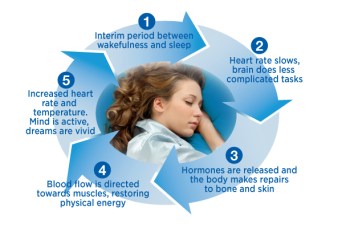 This is a very large change is how we have understood what we need to have to do our work during our workday. There was once the very general sense that you needed to do what was necessary to get a good night’s sleep because that was the foundation of a good day’s work. Consider Point 4 in this chart. From a commercial standpoint, that is a terrible plan because it provides no chance at all to sell energy drinks. [3] Nothing in this picture cues the reflection, “I’m really dragging today. I need to be sure to get a good night’s sleep tonight so I am more alert tomorrow.”
 and battery and that “it” needs to be charged up so that “you” will feel energetic. In fact, you ARE the battery and the recharger—both, simultaneously—and if you were really determined to stay with the metaphor, all you need to do is to make sure the battery charger part of you is still connected to the house current. The only way I know to do that is to sleep adequately and to eat well and to exercise wisely. You, the battery recharger, will work just fine if you do that and you, the battery, will have all the portable energy you need.
 neither a food nor a drug. It is a “food supplement” and they don’t study the effects of those until they start making people sick.
 They said “We saw his star as it rose…” To get what that means, you have to give up the regular rotation of heavenly bodies. They were not saying, “We saw Venus come up again and we were so excited.” They are sawing, “A new star—a never before seen star—appeared in the heavens.” And they are saying. “We know from where and when it appeared, just what it means. It means there is a new king, an heir apparent.” Here is the traditional “following the star through the desert” picture. What a waste.
 Not to knock the Wise Men too much. The star did reappear to them in Jerusalem and it guided them the remaining five miles to Bethlehem. Not only that, the star “stopped” and it “stood over” the house where Joseph and Mary and their little toddler, Jesus, were living. [6] It’s difficult for us moderns to understand just what itmeans for a star to stand “over” a house. My son, Doug, has another idea. He thinks the Wise Men just went to the house with the Christmas lights on. Right there on your left, on Main Street.
 fraction thereof I could manage. I was supposed to run 1776 miles between the 4th of July in 1976 and the 4th of July in 1977. This was to be the kind of thing joggers did to commemorate 1776, the year the Declaration of Independence was signed. I had fallen behind during the winter and I was taking long runs several times a week and no matter how long the run was, I added that little half mile around new faculty circle—just to get the extra milage. And so I wouldn’t be thinking of them as just more running, I called them “victory laps.” This is Brittain Lake. The western part of the victory lap passed just uphill from the edge of this picture. And the picture below–that’s me in 1977 finishing the 1776th mile–is on the far side of the lake.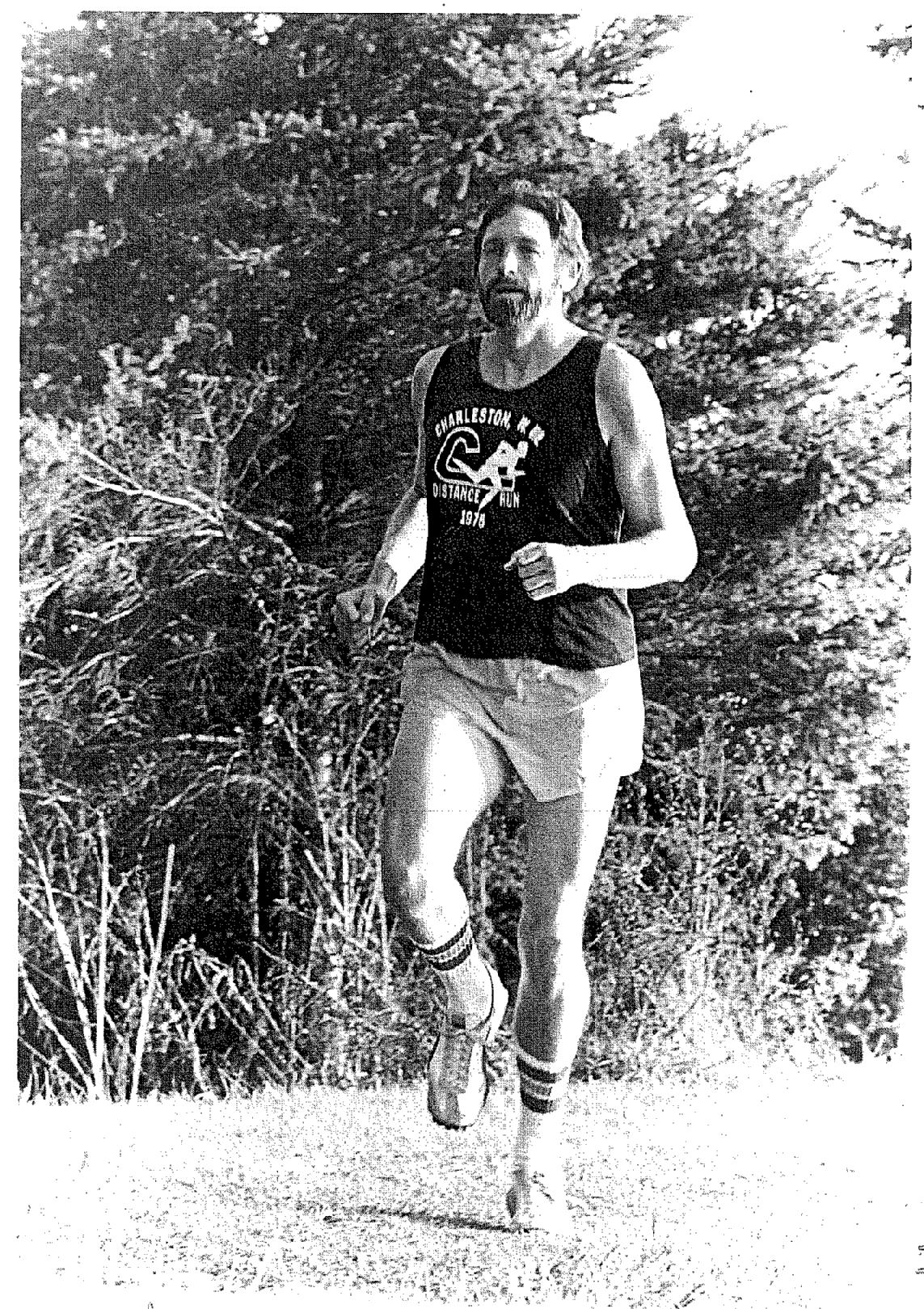

 Invictus, President Mandela (Morgan Freeman) instructs his head of security, Jason Tshabalala in the need for white people in the security detail. “Forgiveness starts here,” says Mandela. In the second one, Pay It Forward, Arlene McKinney (Helen Hunt) comes to the railroad yard where the homeless gather to offer forgiveness to her mother, who lives there. There are more than 40 seconds of wordless images, showing first the mother’s face, then the daughters, as both women realize what has been done. Here is Angie Dickinson as the mother, talking to the reporter who broke the story.
 I have found very few people in the category I would call “non-Christian” who are not members of some other faith. But there are some–really, there are– who have had so little contact with Christianity than they have no feelings for or against it. They are the missionaries’ dream of primitives who have no religion at all. Blank slates waiting to be written on.
 think it will offer the largest challenge. A bunch of Christians with different backgrounds, different traditions of scriptural interpretation, different ways of making their faith make sense, will see these simple film fragments differently. And these differences may be fanned into disagreements. There is no way of telling, really.
 describing—and have thought there was no way they could get there with integrity, I’d be happy to offer my own experience to them as an encouragement. [6] I can do that because I am aware, more than most people, of how I got where I am. I like being where I am even while I know it won’t do for everyone what it has done for me. Robin the Brave, here, with Princess Melora.
 what I feel and what I know and what I do are always in some kind of tenuous balance—very much like the BOSU ball shown here.
 I began my trip toward this destination while watching an episode of The Mentalist. Patrick Jane, who has done his share of onstage magic, asks why it is that magicians are accompanied on the stage by beautiful young women in skimpy outfits. The reason he gave is that the more time the audience spends looking at the assistant, the more leeway the magician has for managing his feats of illusion without being caught at it. The presence of the young woman means that the “eyeballs,” in the current phrasing, are going to be over there while the things the magician cares about are over here.
 topic from the violence against blacks to whether Robert E. Lee should be revered as a patriot (Virginia, his highest loyalty) or decried as a racist and a traitor. Similarly, CHEB changed to topic from the rising militancy of the White Supremacy movement to “a clash of forces” in which both sides—remember that is the pro and anti Robert E. Lee “sides”—have honorable people. As horrible as those statements are, they are the assistant. What is the magician doing while I am gazing spellbound at the assistant?
 means. Particularly, I am interested in what “and” means. What is the relationship between Joseph’s righteousness and his mercy—his choosing the quietest, least painful way available to treat Mary’s “infidelity.” [2]
 The second is that “and” means something more like “but,” or “even though.” Joseph showed mercy to Mary “even though” he was a righteous man. Righteous in this sense means “knowing and observing the Law of Moses.” We know what the Law of Moses says could be done—the actual practices may have varied by region and certainly varied by historical period—to Mary because of her obvious infidelity. She was, in fact, pregnant, and Joseph was not the father, so we find ourselves in “the usual suspects” territory.
