
There is a new ad by a product called 5 Hour Energy that I found really appealing—until I had a chance to think about it. [1] Then I found it appalling. Today I’d like to write about the appalling part. I’m thinking along the lines of: “The understimulated life is not worth living.” Something like that.
The idea is that over the course of the day, your “battery,” your sense that you have enough “power” to do all the things you have to do, runs down. In the picture below, you see people wandering around with just so much juice left in the battery.
The guy at the left with the tie and the beard has 46% left. The woman to his left, with the red blouse and the glasses, has 79%. I have stopped imagining that anything in these pictures is left to chance, so I pause to note that the blonde with long hair at the right of the picture has only 27%. The men in the middle have 19% and 12% respectively.
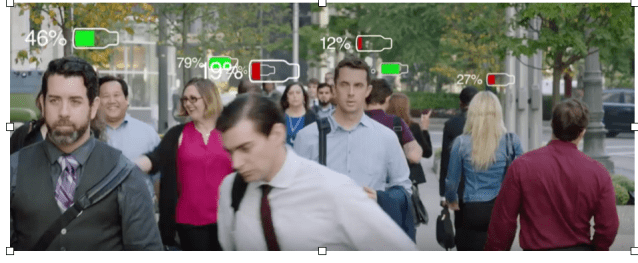
There is no way to tell what time it is [2] but there is nothing in this picture or in the voiceover that goes with it to suggest that the alertness of any of these people would be improved by a good night’s sleep. Anyone with a good video management program could make this picture suggest that it is the end of the work day and everyone is, understandably, tired and hoping for some rest. That’s not what we have here. This is all times on all days and rest is not an option to be considered. Stimulants, now called “energy” are what is needed. Apparently.
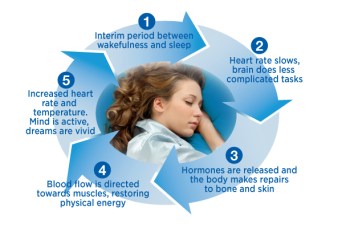 This is a very large change is how we have understood what we need to have to do our work during our workday. There was once the very general sense that you needed to do what was necessary to get a good night’s sleep because that was the foundation of a good day’s work. Consider Point 4 in this chart. From a commercial standpoint, that is a terrible plan because it provides no chance at all to sell energy drinks. [3] Nothing in this picture cues the reflection, “I’m really dragging today. I need to be sure to get a good night’s sleep tonight so I am more alert tomorrow.”
One of the fundamental falsities of this metaphor is that it imagines that you “have”  and battery and that “it” needs to be charged up so that “you” will feel energetic. In fact, you ARE the battery and the recharger—both, simultaneously—and if you were really determined to stay with the metaphor, all you need to do is to make sure the battery charger part of you is still connected to the house current. The only way I know to do that is to sleep adequately and to eat well and to exercise wisely. You, the battery recharger, will work just fine if you do that and you, the battery, will have all the portable energy you need.
Unfortunately, that is a lifestyle fix. Nobody wants to change a favored lifestyle, particularly when the culture generally and the advertising world particularly are busy praising you for being stressed out. It’s a badge of honor that you wear yourself out and have no time for anything but work. Fortunately, we have a product for you. [4]
Destructive Metaphor
I have pointed to a few uses of this metaphor that seem to me to point in the wrong direction. But there are also some things in the metaphor itself that trouble me. One is that you might be feeling draggy for any number of reasons. Your blood pressure might be low. Your blood sugar might be low. An extended period of stress may have left you without any energy at all. All those causes are common and all have solutions that are appropriate to them. The battery metaphor lumps them all into one sensation and offers one solution. It tells you that “your battery is low” and precludes those other questions.
This is like having a doctor who is all about treatment and who has no interest at all in diagnosis. The battery metaphor simply obliterates the diagnostic phase and proceeds directly to treatment. And there is only one treatment.
I know this lament isn’t going to do any good. Ads mutate like viruses. The “low battery” gambit is just the latest one. If there are long term costs to using products like 5 Hour Energy (and that seems likely to me) [5] there will be a backlash of sorts against those products or those ways of selling products and then the ads will mutate to the next form, whatever that will be. I’m just glad to have had the chance to think my way through this one. I will be as surprised by the next one as everyone else.
On the other hand, if I could sleep like this [6] I don’t think I could possibly have an energy problem.
[1] I can’t find a way to hyperlink it, so I encourage you to do what I did. Go to YouTube and search for [5 hour energy ad] and from the list, choose “Get back to 100% with 5 Hour Energy.”
[2] Which is certainly a good idea if you are trying to link the need for a boost with a feeling you have, rather that with any more general matters, like what time of day it is.
[3] It does sell mattresses and sleeping pills, but that work is already done and there are still products to sell.
[4] You can hire people to do what you no longer have the time to do including changing your oil and preparing your family’s dinner, just as you can “get by” on too little sleep by abusing stimulants. Who needs a lifestyle change?
[5] It is currently of no interest to the Food and Drug Administration because it is  neither a food nor a drug. It is a “food supplement” and they don’t study the effects of those until they start making people sick.
[6] Just an excuse, really, to put this great puppy picture in.
 They said “We saw his star as it rose…” To get what that means, you have to give up the regular rotation of heavenly bodies. They were not saying, “We saw Venus come up again and we were so excited.” They are sawing, “A new star—a never before seen star—appeared in the heavens.” And they are saying. “We know from where and when it appeared, just what it means. It means there is a new king, an heir apparent.” Here is the traditional “following the star through the desert” picture. What a waste.
 Not to knock the Wise Men too much. The star did reappear to them in Jerusalem and it guided them the remaining five miles to Bethlehem. Not only that, the star “stopped” and it “stood over” the house where Joseph and Mary and their little toddler, Jesus, were living. [6] It’s difficult for us moderns to understand just what itmeans for a star to stand “over” a house. My son, Doug, has another idea. He thinks the Wise Men just went to the house with the Christmas lights on. Right there on your left, on Main Street.
 fraction thereof I could manage. I was supposed to run 1776 miles between the 4th of July in 1976 and the 4th of July in 1977. This was to be the kind of thing joggers did to commemorate 1776, the year the Declaration of Independence was signed. I had fallen behind during the winter and I was taking long runs several times a week and no matter how long the run was, I added that little half mile around new faculty circle—just to get the extra milage. And so I wouldn’t be thinking of them as just more running, I called them “victory laps.” This is Brittain Lake. The western part of the victory lap passed just uphill from the edge of this picture. And the picture below–that’s me in 1977 finishing the 1776th mile–is on the far side of the lake.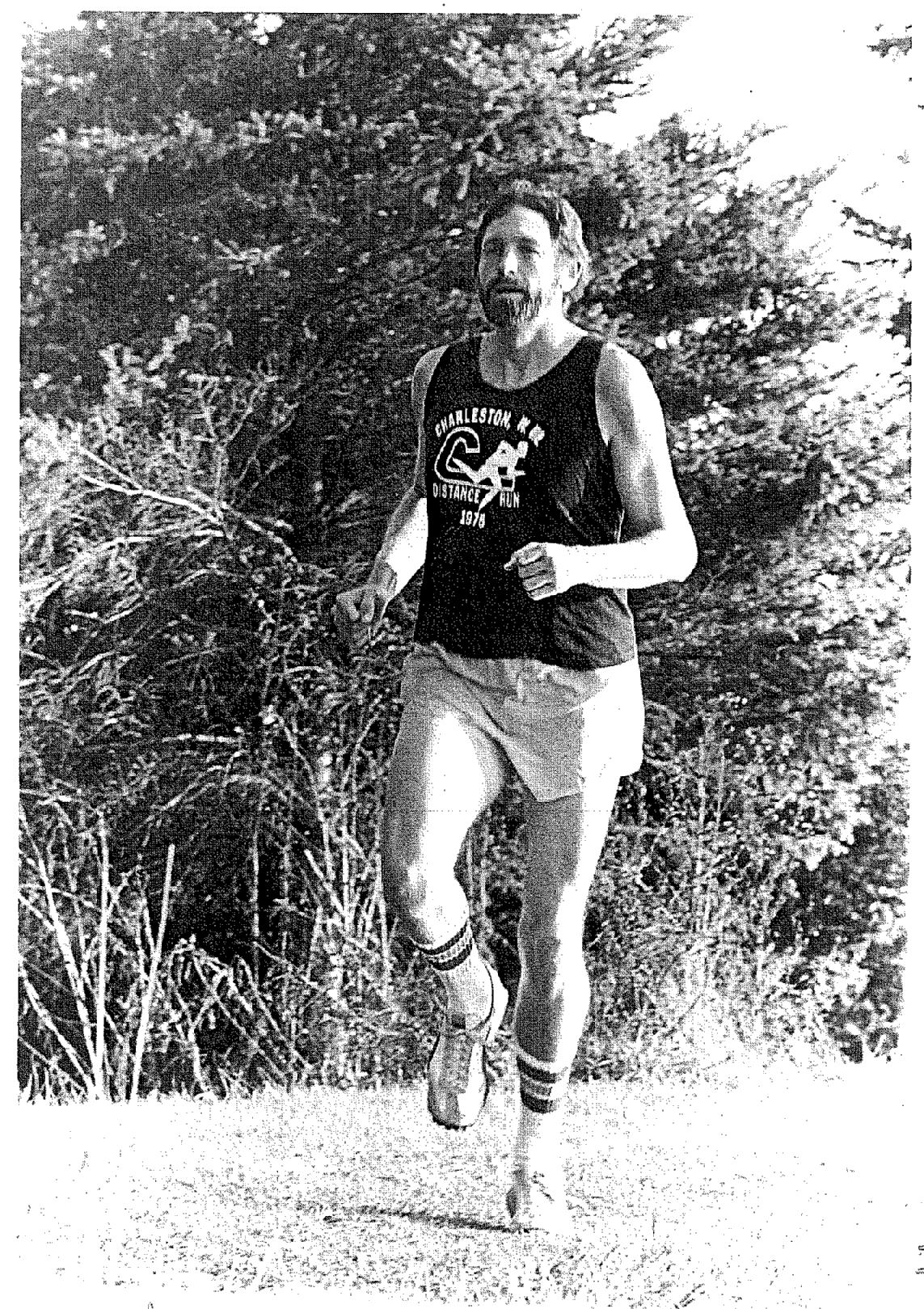
 Invictus, President Mandela (Morgan Freeman) instructs his head of security, Jason Tshabalala in the need for white people in the security detail. “Forgiveness starts here,” says Mandela. In the second one, Pay It Forward, Arlene McKinney (Helen Hunt) comes to the railroad yard where the homeless gather to offer forgiveness to her mother, who lives there. There are more than 40 seconds of wordless images, showing first the mother’s face, then the daughters, as both women realize what has been done. Here is Angie Dickinson as the mother, talking to the reporter who broke the story.
 I have found very few people in the category I would call “non-Christian” who are not members of some other faith. But there are some–really, there are– who have had so little contact with Christianity than they have no feelings for or against it. They are the missionaries’ dream of primitives who have no religion at all. Blank slates waiting to be written on.
 think it will offer the largest challenge. A bunch of Christians with different backgrounds, different traditions of scriptural interpretation, different ways of making their faith make sense, will see these simple film fragments differently. And these differences may be fanned into disagreements. There is no way of telling, really.
 describing—and have thought there was no way they could get there with integrity, I’d be happy to offer my own experience to them as an encouragement. [6] I can do that because I am aware, more than most people, of how I got where I am. I like being where I am even while I know it won’t do for everyone what it has done for me. Robin the Brave, here, with Princess Melora.
 what I feel and what I know and what I do are always in some kind of tenuous balance—very much like the BOSU ball shown here.
 I began my trip toward this destination while watching an episode of The Mentalist. Patrick Jane, who has done his share of onstage magic, asks why it is that magicians are accompanied on the stage by beautiful young women in skimpy outfits. The reason he gave is that the more time the audience spends looking at the assistant, the more leeway the magician has for managing his feats of illusion without being caught at it. The presence of the young woman means that the “eyeballs,” in the current phrasing, are going to be over there while the things the magician cares about are over here.
 topic from the violence against blacks to whether Robert E. Lee should be revered as a patriot (Virginia, his highest loyalty) or decried as a racist and a traitor. Similarly, CHEB changed to topic from the rising militancy of the White Supremacy movement to “a clash of forces” in which both sides—remember that is the pro and anti Robert E. Lee “sides”—have honorable people. As horrible as those statements are, they are the assistant. What is the magician doing while I am gazing spellbound at the assistant?
 means. Particularly, I am interested in what “and” means. What is the relationship between Joseph’s righteousness and his mercy—his choosing the quietest, least painful way available to treat Mary’s “infidelity.” [2]
 The second is that “and” means something more like “but,” or “even though.” Joseph showed mercy to Mary “even though” he was a righteous man. Righteous in this sense means “knowing and observing the Law of Moses.” We know what the Law of Moses says could be done—the actual practices may have varied by region and certainly varied by historical period—to Mary because of her obvious infidelity. She was, in fact, pregnant, and Joseph was not the father, so we find ourselves in “the usual suspects” territory.
 it, I should tell you that this is not a spider. It is a decal representing a spider. The decal does everything you want it to do. It affects people who know they are being affected by it and people who don’t know. And everyone it affects is affected in the same way. Their marksmanship improves whether they are attending to it or not.
 device. People like to aim at targets. But targets have two disadvantages that spiders do not have. First, you know they were put there in an attempt to manipulate you. Not everyone likes that. Second, if there is a place you are supposed to hit, there is the chance that you could miss it. You could, in other words, fail. Not everyone likes that either. And besides, what good does it do anyone for you to hit a target.


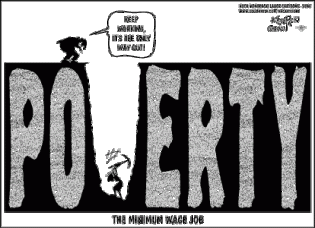 nevertheless, have views on how children should be raised, have a dilemma. I learned what the right goals of childrearing are from my parents and got a refresher course by being a parent and a step-parent. I know what is right and why it is right. I have never asked what would be the right kind of childrearing if the goal were, as in the case of the working class, to ensure that no one sinks to “hard living.” So in confronting this question, I am facing a question I have never faced before. I need to ask, of the child rearing practices of the working class, “Will they meet the goals of the parents?”
 But there are some differences as well. Lubrano’s father raised him to be a really good bricklayer, but Lubrano became a journalist instead. A father in our society in preparing the sons to do the same kind of work he does, is closing off a lot of other economic choices that the sons might prefer. That’s not true of the hunter.
 the same problem I have. We need to be able to challenge these childrearing practices on either instrumental or on normative grounds. Those are the two I introduced above. We need, in other words, to say, “I understand your adopting those practices as a way to prepare your children for working class life, but actually, they won’t have that effect.” First, I’m not really sure that is true. Besides that, I am sure I am not in a position to say it even if it were true. So the instrumental case against those childrearing practices falls apart.
 Starbucks grappling with the recent spate of sexual abuse accusations made against public figures. A small party came in to sit at the table next to us: a young couple, a small child and an infant. The mother had scarcely settled in her chair when she came over and asked us to watch our language, there being a small child within earshot.
 It’s hard to say that her fears were unreasonable, given that the topic—which, I remind you, was allegations of sexual abuse made about public figures—was potentially offensive. I good way to approach this would be to ask how likely it is that offensive things will be said, how harmful it would be if offensive things were said. Since she didn’t have any way to judge either question, she set the bar for her own action very low. These six old people might say something I would not want my child to hear and it might damage him or her. [2] I am trying to imagine the six of us having the kind of impact on this mother that this picture is intended to have.
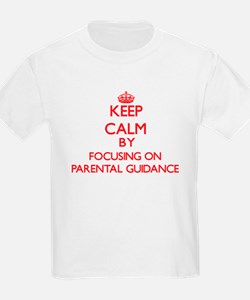 After the woman had gone back to her table and her infant and her preschooler and her husband, some members of our group recovered a little from the shock and engaged in a brisk game of Shoudasaid. We shouldasaid, “Everyone here is a parent and a grandparent. We don’t need your guidance about what kind of language to use.” We shouldasaid, “We will be careful not to say anything we wouldn’t want our own grandchildren to hear.” We shouldasaid, “Thanks for sharing your feelings, but we are going to have the conversation we had begun and if you don’t like it, there are other tables you might occupy.” We shouldsaid, “You want us to what? Really?”
 The Dilettante's Dilemma